Call Us
+86 136 6007 9809
Call Us
+86 136 6007 9809

Black Oxide Surface Treatment for Fasteners: Engineering Solution for Corrosion Protection in Industrial Applications
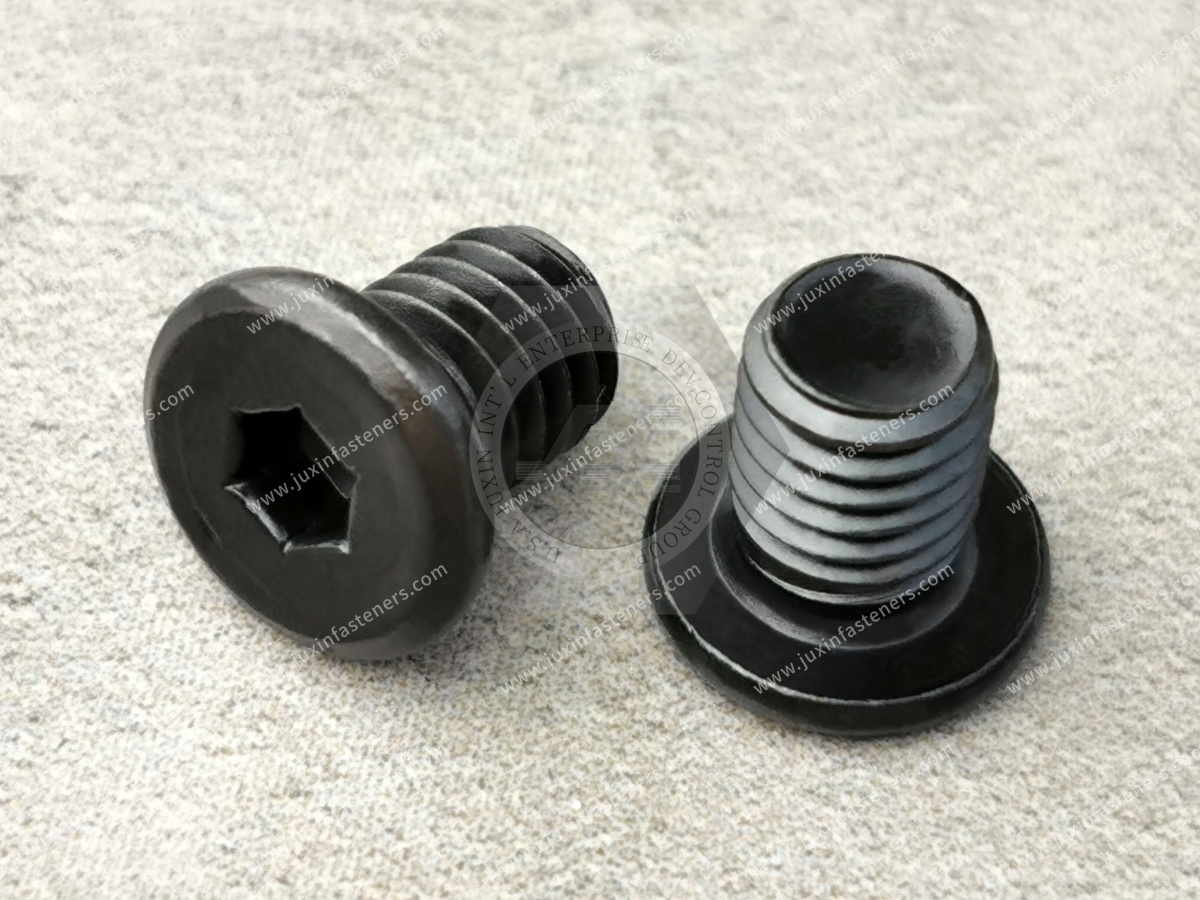
In modern manufacturing industries, fasteners such as bolts, screws, nuts, and threaded components require not only mechanical strength but also reliable surface protection. Among various surface engineering technologies, black oxide coating (blackening/bluing process) remains one of the most widely used surface treatments for steel fasteners and industrial fastening systems due to its low cost, dimensional stability, and mature industrial applications.
However, different black oxide processes produce significantly different performance in corrosion resistance, process efficiency, and environmental compliance. This article provides a technical analysis of black oxide surface treatment for fasteners based on international industrial engineering practices aligned with ISO and DIN standards.
Product Specification
Black Oxide Surface Treatment for Fasteners: Engineering Solution for Corrosion Protection in Industrial Applications
In modern manufacturing industries, fasteners such as bolts, screws, nuts, and threaded components require not only mechanical strength but also reliable surface protection. Among various surface engineering technologies, black oxide coating (blackening/bluing process) remains one of the most widely used surface treatments for steel fasteners and industrial fastening systems due to its low cost, dimensional stability, and mature industrial applications.
However, different black oxide processes produce significantly different performance in corrosion resistance, process efficiency, and environmental compliance. This article provides a technical analysis of black oxide surface treatment for fasteners based on international industrial engineering practices aligned with ISO and DIN standards.
1. What Is Black Oxide Treatment for Fasteners?
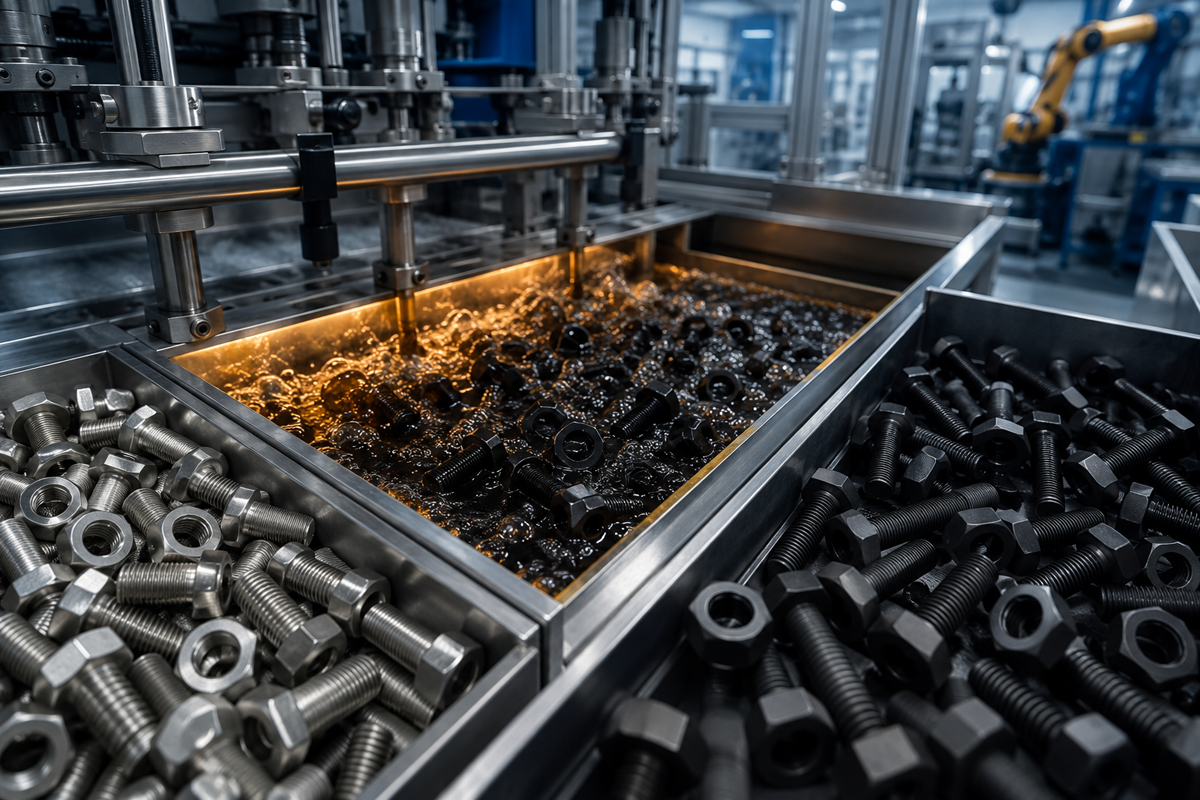
Black oxide coating for fasteners is a chemical conversion coating that forms a protective oxide layer on steel components without altering dimensional tolerances.
Depending on the process, it forms:
Blue-black iron oxide film (bluing process)
Magnetite oxide layer (Fe₃O₄ black oxide coating)
The main function is:
To improve corrosion resistance, enhance appearance, and maintain the dimensional precision of steel bolts, screws, and threaded fasteners used in industrial applications.
2. High-Temperature Black Oxide Process for Fasteners (DIN/ISO Industrial Practice)
2.1 Process principle
High-temperature black oxide treatment is performed in a strong alkaline oxidizing solution containing sodium nitrite or sodium nitrate under controlled industrial conditions.
Typical operating temperature:
135–145°C (industrial standard practice)
Under these conditions, steel reacts to form a dense protective layer of magnetite (Fe₃O₄).
2.2 Industrial process flow (ISO/DIN-aligned practice)
The standard industrial process for black oxide fasteners includes:
Surface degreasing (alkaline or solvent cleaning)
Water rinsing
Acid pickling and neutralization
High-temperature black oxide treatment
Post-treatment sealing (oil impregnation or chemical passivation)
2.3 Advantages of industrial fasteners
Mature and widely adopted process in industrial fastener manufacturing
No dimensional change after treatment (important for ISO/DIN threaded fasteners)
Stable surface appearance and improved wear resistance
Suitable for carbon steel and alloy steel bolts
Low equipment investment cost
2.4 Limitations
High energy consumption due to elevated temperature
Environmental concerns due to nitrite-based chemistry
Wastewater treatment required for compliance with EU environmental regulations
Multi-stage process increases production cycle time
Strict pre-cleaning required for precision fasteners
3. Room-Temperature Black Oxide Process for Fasteners
Cold black oxide systems are widely used for small-batch fasteners and maintenance applications, especially for DIN/ISO standard components that require lower production costs and greater flexibility.
3.1 Chemical systems
Industrial cold black oxide systems for steel fasteners include:
Copper–selenium systems
Copper–sulfur systems
Copper–selenium–sulfur systems
Copper–manganese–sulfur systems
These systems generate a thin conversion layer composed of:
Copper oxide (Cu₂O)
Copper sulfide (CuS)
Iron-based oxide compounds
3.2 Process flow
Typical cold black oxide process for fasteners under industrial practice:
Degreasing (ISO-compatible surface cleaning)
Water rinsing
Rust removal (acid activation)
Water rinsing
Black oxide conversion
Final rinsing
Sealing (oil, passivation, or water-based protective coating)
3.3 Limitations
Thin coating layer (≤0.2 μm)
Limited corrosion resistance compared to hot black oxide
Lower film adhesion stability
Chemical bath instability over time
Limited suitability for high-load structural fasteners

4. Waste-Heat Black Oxide Technology for Fasteners (Modern Automotive & OEM Standard)
Waste-heat black oxide technology is increasingly used in automotive OEM fastener production lines, especially in Europe, where energy efficiency and environmental compliance are critical.
4.1 Process principle
Applicable temperature range:
160–500°C (residual heat after heat treatment such as tempering according to ISO/DIN heat treatment practice)
Process flow:
Heat treatment (tempering of high-strength bolts)
Immediate immersion in organic blackening solution (10–30 seconds)
Drying using residual heat or controlled airflow
4.2 Coating mechanism
Unlike traditional Fe₃O₄ oxide formation, waste-heat blackening forms:
Organic polymer composite protective layer
Metal–organic hybrid surface film
This layer provides:
Corrosion resistance barrier
Decorative matte black finish
Sealed surface protection for industrial fasteners
4.3 Advantages
Energy-efficient process using residual heat
Fully compatible with automated fastener production lines (ISO automotive supply chain)
No wastewater discharge (environmentally compliant)
Suitable for carbon steel and alloy steel fasteners
Stable performance in mass production of high-strength bolts (ISO 898-1 class fasteners)
4.4 Limitations
Requires sufficient residual heat in fasteners
Not suitable for small parts with low thermal energy
Thin organic film limits wear resistance
Lower abrasion resistance compared to traditional Fe₃O₄ coatings
5. Performance Comparison of Fastener Black Oxide Systems
Process Type | Coating Structure | Corrosion Resistance | Industrial Efficiency | Environmental Compliance |
High-temperature black oxide | Fe₃O₄ oxide layer | Medium | Medium | Moderate–Low |
Cold black oxide | Cu-based conversion film | Low–Medium | High (small batch) | Medium |
Waste-heat black oxide | Organic composite coating | High | Very High | High |
6. Industrial Application in ISO/DIN Fastener Systems
In real engineering applications, black oxide-coated fasteners are widely used in:
Automotive structural fasteners (ISO/DIN bolts and screws)
Machinery assembly systems
Precision threaded components
General industrial equipment fasteners
Automotive engine and chassis non-stainless steel fasteners
Performance depends on:
Base material of fasteners (carbon steel/alloy steel)
Surface cleanliness before treatment
Sealing process after blackening (oil, passivation, or polymer coating)
Service environment (humidity, chloride exposure, vibration load)
7. Engineering Optimization of Black Oxide Fastener Systems
Modern industrial development focuses on:
Improving adhesion between the oxide layer and the steel substrate
Enhancing chemical stability of black oxide baths
Reducing environmental impact in compliance with EU REACH standards
Expanding coating system compatibility for different ISO/DIN fasteners
Establishing standardized performance testing for black oxide coatings
8. Engineering Fastener Surface Solutions from JUXIN FASTENERS
At JUXIN FASTENERS, we provide engineered surface-treated fastening systems for global industrial markets, including:
Black oxide-coated fasteners for industrial machinery
High-strength ISO/DIN standard bolts with surface engineering solutions
Automotive-grade fastening systems for OEM applications
Corrosion-resistant structural fasteners
Custom-engineered surface treatment solutions for threaded components
Our engineering philosophy focuses on:
Delivering fully engineered fastening systems that comply with international ISO/DIN industrial standards, not just individual surface coatings.
Conclusion
Black oxide surface treatment for fasteners remains a widely adopted industrial solution due to its cost efficiency, dimensional stability, and mature manufacturing process.
However, performance varies significantly depending on the process type:
High-temperature Fe₃O₄ black oxide remains the most stable industrial solution
Cold black oxide is suitable for flexible and small-batch production
Waste-heat black oxide represents a modern, energy-efficient OEM solution aligned with ISO/DIN manufacturing systems
For engineers and procurement specialists, selecting the correct black oxide fastener system requires balancing corrosion performance, production efficiency, environmental compliance, and application requirements in accordance with international industrial standards.
Product Packaging
Packaging Standard
At Juxin Fasteners, we apply standardized export packaging to ensure product protection, traceability, and compliance with international logistics requirements.
1. Standard Export Packaging
Unless otherwise specified, all products will be packed according to our factory standard export packaging, which includes:
Moisture-resistant inner protection
Poly bag or small box packing as required
Reinforced export cartons
Clear labeling with part number, specification, batch number, and quantity
Palletizing for sea or air shipment when necessary
Our standard packaging is designed to ensure safe transportation, efficient warehousing, and long-distance international shipping.
2. Customized Packaging Options
We also provide customized packaging solutions according to customer requirements, including but not limited to:
Private labeling
Customized barcodes
Specific carton dimensions
Retail packaging
Special pallet configuration
Customer-specific marking and identification
So that you know, customized packaging may involve additional costs and extended lead time depending on the complexity of the requirements.
3. Compliance & Quality Assurance
All packaging processes are controlled under our ISO 9001 quality management system to ensure consistency, traceability, and product integrity throughout the supply chain.
Product Pictures
Hot Products
Contact Us
Tel.:
+86 020 8621 0320
+86 020 3121 6067
E-mail:
Technical Support:
Navigation
SEND INQUIREY