Call Us
+86 136 6007 9809
Call Us
+86 136 6007 9809

Bolt Tightening vs Nut Tightening in Automotive Assembly
Engineering Solution for Torque Control, Structural Fastening, and Production Consistency
Keywords: automotive fasteners, torque tightening method, torque-angle method, bolt vs nut tightening, weld nuts, weld studs, rivet nuts, press nuts, automotive assembly fasteners, structural joint design
1. Introduction: Why Bolt vs Nut Tightening Matters in Automotive Manufacturing
In modern automotive manufacturing, fastening systems play a critical role in vehicle safety, durability, and structural integrity. Whether in chassis assemblies, body-in-white (BIW), or powertrain mounting systems, the reliability of automotive fasteners depends directly on controlled preload and a consistent tightening strategy.
Product Specification
Bolt Tightening vs Nut Tightening in Automotive Assembly
Engineering Solution for Torque Control, Structural Fastening, and Production Consistency
Keywords: automotive fasteners, torque tightening method, torque-angle method, bolt vs nut tightening, weld nuts, weld studs, rivet nuts, press nuts, automotive assembly fasteners, structural joint design
1. Introduction: Why Bolt vs Nut Tightening Matters in Automotive Manufacturing
In modern automotive manufacturing, fastening systems play a critical role in vehicle safety, durability, and structural integrity. Whether in chassis assemblies, body-in-white (BIW), or powertrain mounting systems, the reliability of automotive fasteners depends directly on controlled preload and a consistent tightening strategy.
A common engineering question in production and assembly design is:
Should we tighten the bolt or tighten the nut?
Although this may seem simple, on real automotive assembly lines it can significantly affect torque accuracy, preload consistency, tooling selection, and even the fatigue life of the joint.

2. Common Torque Tightening Methods in Automotive Assembly
In automotive fastening engineering, three main tightening strategies are widely used:
2.1 Torque Method
The most traditional method is where a predefined torque value is applied to achieve the clamping force. However, due to variations in the friction coefficient, preload scatter can be significant.
2.2 Torque + Angle Method (Torque-Angle Method)
This is increasingly the preferred solution in modern vehicle production. After an initial snug torque, the fastener is rotated by a defined angle.
Advantages:
Reduces sensitivity to friction variation
Improves preload accuracy
Can reach 80% or more of bolt yield strength
Suitable for high-performance chassis joints
2.3 Yield Point Tightening Method
This method intentionally brings the bolt into the plastic deformation region near the yield strength for maximum clamp load efficiency, commonly used in critical structural applications.
3. Engineering Question: Tightening the Bolt vs Tightening the Nut
In conventional assemblies, the nut is typically rotated while the bolt head is fixed. This is mainly due to accessibility and the convenience of tooling.
However, in automotive design and production, there are two possible tightening modes:
Rotate the nut (standard method)
Rotate the bolt (reverse method)
When Bolt vs Nut Tightening Becomes Critical
This issue arises especially in:
Chassis confined structures
Suspension mounting points
Body-in-white joints
Areas with limited tool access
In these cases, engineers may be forced to:
Hold the nut with a fixture and rotate the bolt
Or rotate the nut using long-reach tooling
This raises a key question:
Does tightening the bolt produce a different preload compared to tightening the nut?
4. Theoretical Analysis: Stress, Friction, and Load Distribution
4.1 Stress State Comparison
From a mechanical perspective, both tightening modes subject the bolt to:
Axial tensile stress (preload force)
Torsional shear stress (from thread friction)
Theoretically, if:
Thread friction coefficient is identical
Bearing surface geometry is identical
Then the resulting stress state should be equivalent.
4.2 Why Real-World Results Differ
In practice, differences occur due to:
(1) Friction Coefficient Variation
Bolt head bearing surface and nut bearing surface often differ in:
Surface roughness
Coating condition
Contact angle imperfections
(2) Bearing Surface Geometry Differences
For example:
Flanged bolts (ISO/DIN standard)
Flanged nuts may have a different effective friction diameter
This leads to different torque-to-preload conversion behavior.
(3) Manufacturing and Assembly Tolerances
Even small differences in:
Washer condition
Surface flatness
Lubrication state
can significantly influence the final preload.
5. Design and Assembly Considerations in Automotive Fastening Systems
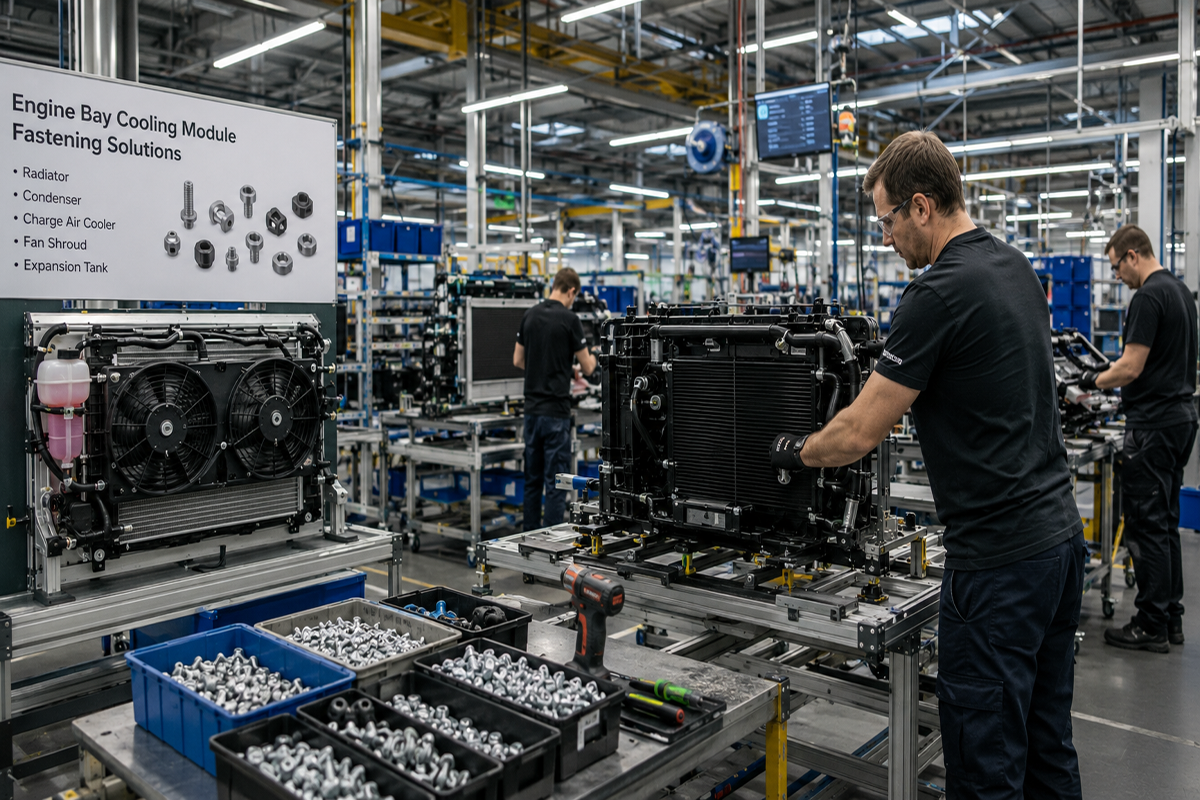
5.1 Installation Direction and Space Constraints
Bolt insertion direction strongly affects assembly efficiency:
External insertion (preferred)
Internal insertion (space-limited and difficult alignment)
5.2 Tool Accessibility and Torque Tool Selection
Bolt tightening often allows shorter sockets
Nut tightening may require deeper sockets and longer extensions
This impacts:
Tool rigidity
Torque accuracy
Cycle time in production lines
5.3 Confined Fastening Systems in Automotive Structures
In many automotive structures, one side is fixed permanently:
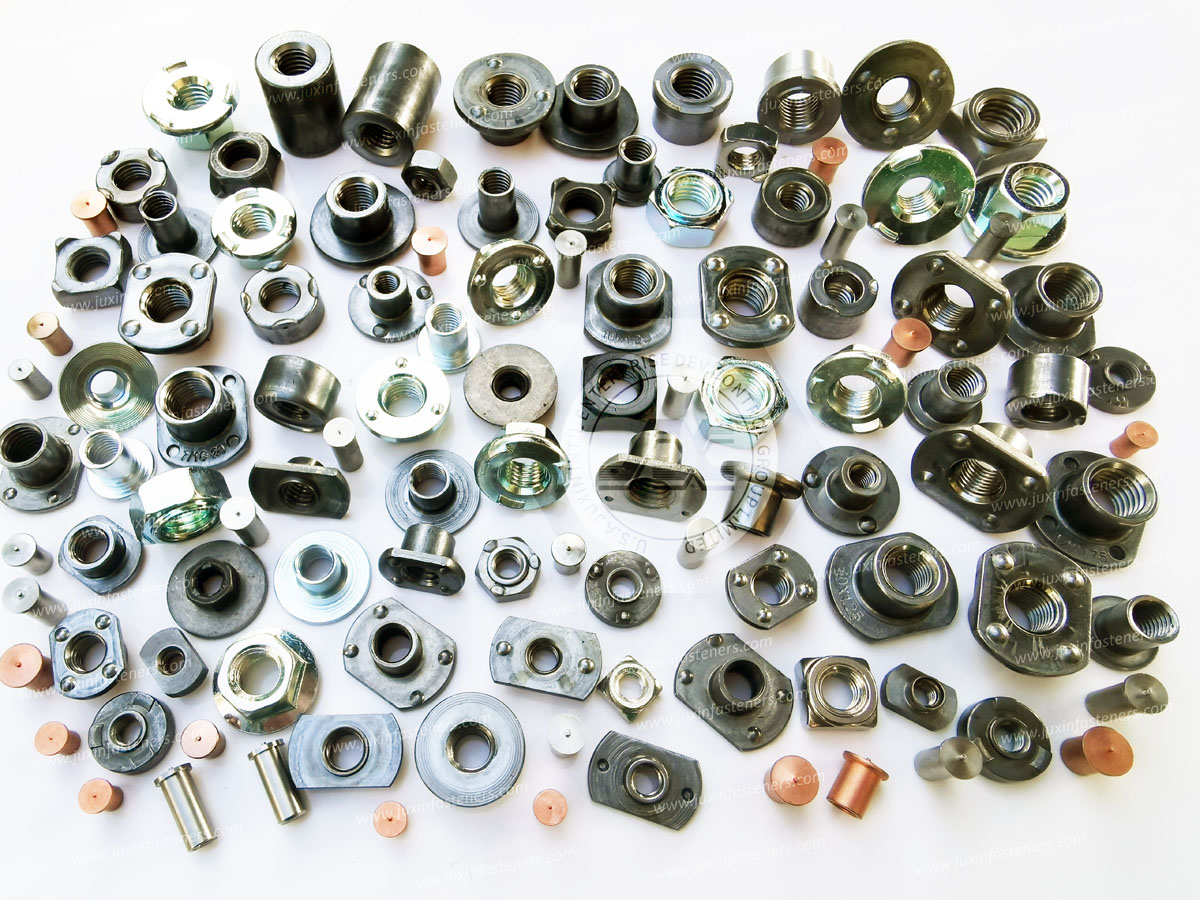
Weld nuts
Rivet nuts
Captive nuts
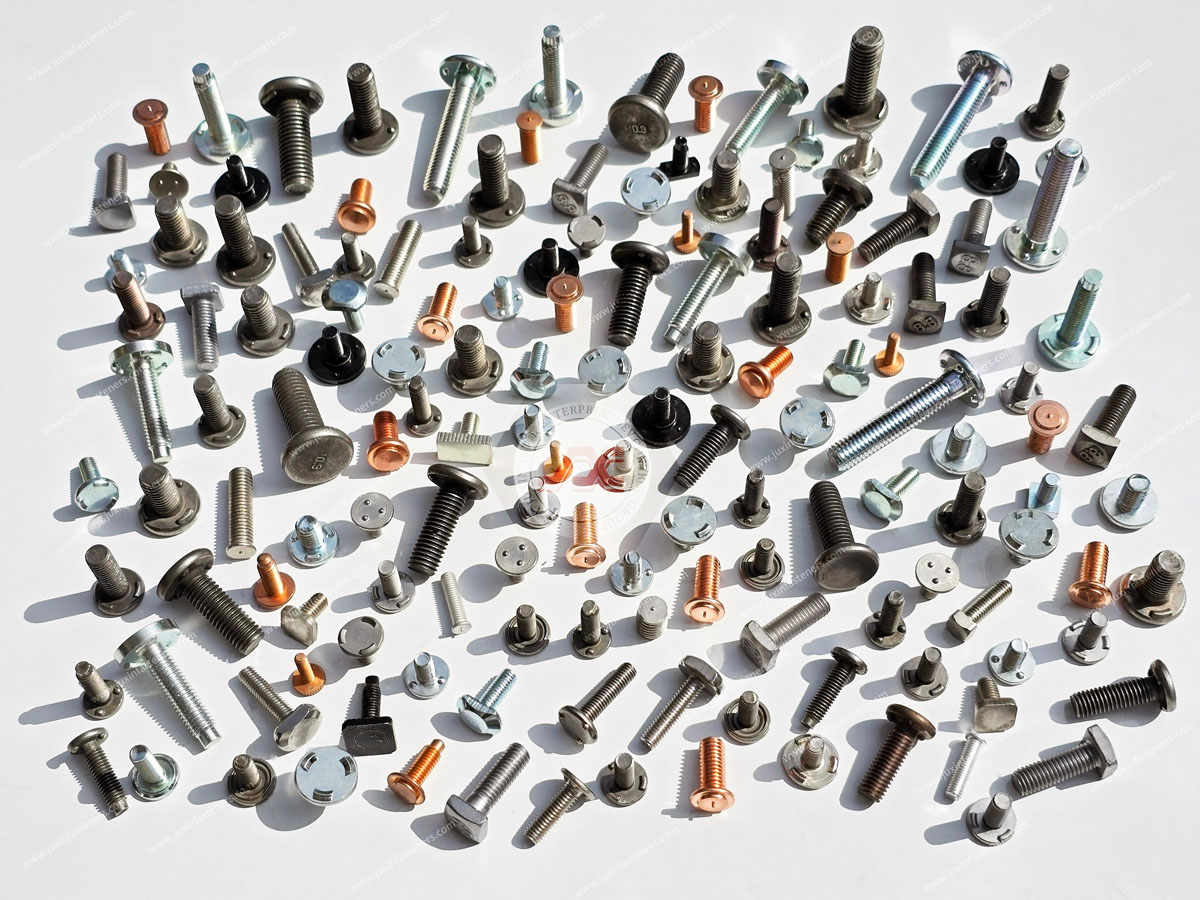
Weld studs
Tapped holes
In these cases:
Only one component can rotate
The debate of bolt vs nut tightening becomes irrelevant
For example:
With a weld stud system, only the nut can be tightened
With a weld nut or press nut, only the bolt is driven
6. Experimental Validation: Torque-Angle Method Comparison
A comparative study was conducted using a torque-angle tightening strategy:
Standard condition:
Torque: 180 Nm + 90° rotation
Nut rotation method: final torque ~310 Nm
Bolt rotation method:
Final torque reached: ~406 Nm
Nut rotation reference: ~331 Nm
Key Result:
Bolt tightening produced approximately:
+22.6% higher torque output
This confirms that tightening direction significantly affects torque evolution curves in real assembly conditions.
Additional Field Observation
Batch production data showed torque scatter ranging:
319 Nm to 407 Nm
Metallographic analysis confirmed:
No plastic deformation in the thread region
Bolt remained within elastic range
7. Engineering Conclusion and Assembly Rule Control
The study confirms:
1. No strict standard prohibits bolt or nut tightening
Both methods are technically acceptable.
2. However, consistency is critical
Once a process is defined:
If the design specifies nut tightening → production must follow
If design specifies bolt tightening → must remain consistent
3. Main engineering principle
“The tightening method must be fixed during the design stage and strictly maintained in mass production.”
Otherwise, significant variation in preload may occur.
8. JUXIN Fasteners Engineering Solutions for Automotive Assembly
As a professional supplier of automotive structural fasteners, JUXIN FASTENERS provides optimized solutions for controlled tightening environments:
8.1 Weld Nuts for Automotive Body Assembly
Stable torque transfer
Ideal for confined BIW structures
Compatible with torque-angle tightening systems
8.2 Weld Studs for High-Strength Connections
Eliminates nut accessibility issues
Improves assembly automation efficiency
Widely used in chassis and underbody structures
8.3 Rivet Nuts (Blind Rivet Nuts)
Suitable for closed-section structures
Enables single-side installation
Ideal for lightweight vehicle platforms
8.4 Press Nuts and Clinch Fasteners
High repeatability in sheet metal joints
Eliminates welding distortion
Supports high-volume automated production
8.5 High-Strength Bolts and Structural Nuts
Designed for torque-angle tightening systems
Controlled friction coefficient options
Suitable for yield-controlled fastening applications
9. Conclusion: Engineering Control Determines Fastening Reliability
The difference between tightening a bolt and tightening a nut is not simply a tooling preference—it is a system-level engineering decision affecting:
Preload accuracy
Torque consistency
Structural fatigue life
Manufacturing repeatability
In modern automotive manufacturing, the key is not whether to tighten the bolt or nut, but to ensure:
The tightening strategy is defined early, standardized, and strictly controlled in production.
With advanced fastening solutions such as weld nuts, weld studs, and rivet nuts, engineers can eliminate ambiguity and achieve highly reliable, repeatable structural connections in automotive assembly systems.

Product Packaging
Packaging Standard
At Juxin Fasteners, we apply standardized export packaging to ensure product protection, traceability, and compliance with international logistics requirements.
1. Standard Export Packaging
Unless otherwise specified, all products will be packed according to our factory standard export packaging, which includes:
Moisture-resistant inner protection
Poly bag or small box packing as required
Reinforced export cartons
Clear labeling with part number, specification, batch number, and quantity
Palletizing for sea or air shipment when necessary
Our standard packaging is designed to ensure safe transportation, efficient warehousing, and long-distance international shipping.
2. Customized Packaging Options
We also provide customized packaging solutions according to customer requirements, including but not limited to:
Private labeling
Customized barcodes
Specific carton dimensions
Retail packaging
Special pallet configuration
Customer-specific marking and identification
So that you know, customized packaging may involve additional costs and extended lead time depending on the complexity of the requirements.
3. Compliance & Quality Assurance
All packaging processes are controlled under our ISO 9001 quality management system to ensure consistency, traceability, and product integrity throughout the supply chain.
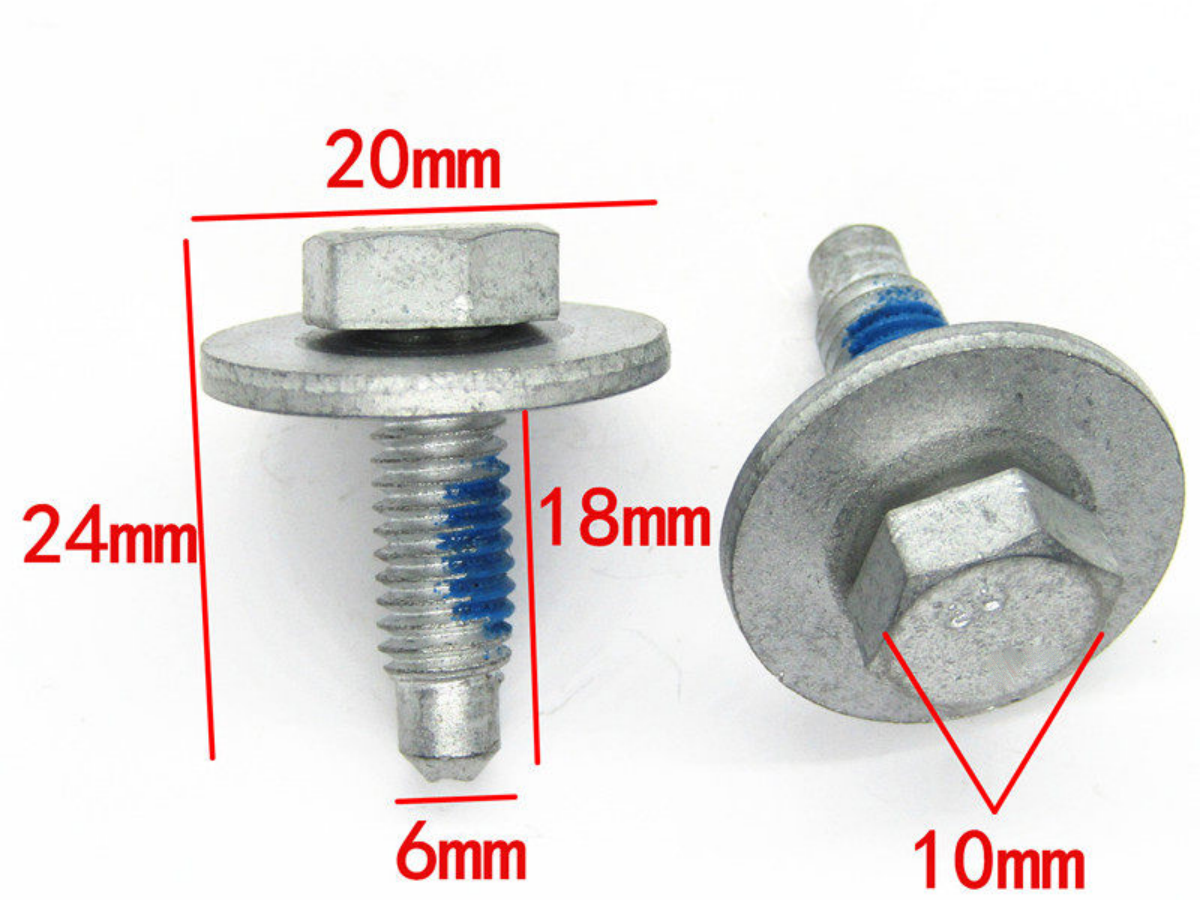
Product Pictures
Hot Products
Contact Us
Tel.:
+86 020 8621 0320
+86 020 3121 6067
E-mail:
Technical Support:
Navigation
SEND INQUIREY