Call Us
+86 136 6007 9809
Call Us
+86 136 6007 9809

Why Are High-Strength Bolts More Susceptible to Hydrogen Embrittlement?
Understanding the Risks, Failure Mechanisms, and Prevention Strategies for Critical Fastening Applications
Hydrogen embrittlement remains one of the most challenging failure mechanisms affecting high-strength fasteners in demanding industrial environments.
From wind turbine towers and automotive chassis systems to heavy equipment, petrochemical facilities, and structural steel assemblies, unexpected bolt failures are often traced back to hydrogen embrittlement rather than conventional overload.
Product Specification
Why Are High-Strength Bolts More Susceptible to Hydrogen Embrittlement?
Understanding the Risks, Failure Mechanisms, and Prevention Strategies for Critical Fastening Applications
Hydrogen embrittlement remains one of the most challenging failure mechanisms affecting high-strength fasteners in demanding industrial environments.
From wind turbine towers and automotive chassis systems to heavy equipment, petrochemical facilities, and structural steel assemblies, unexpected bolt failures are often traced back to hydrogen embrittlement rather than conventional overload.
A common observation across these industries is that hydrogen embrittlement primarily affects Grade 10.9 and Grade 12.9 bolts, as well as other high-strength structural fasteners. In contrast, lower-strength fasteners such as Class 4.6, 5.8, or 8.8 bolts are significantly less vulnerable.
This raises an important engineering question:
Why does increasing bolt strength often increase the risk of hydrogen embrittlement failure?
Understanding the answer is essential for engineers, OEM manufacturers, procurement specialists, and maintenance teams responsible for selecting reliable fastening solutions.
What Is Hydrogen Embrittlement?
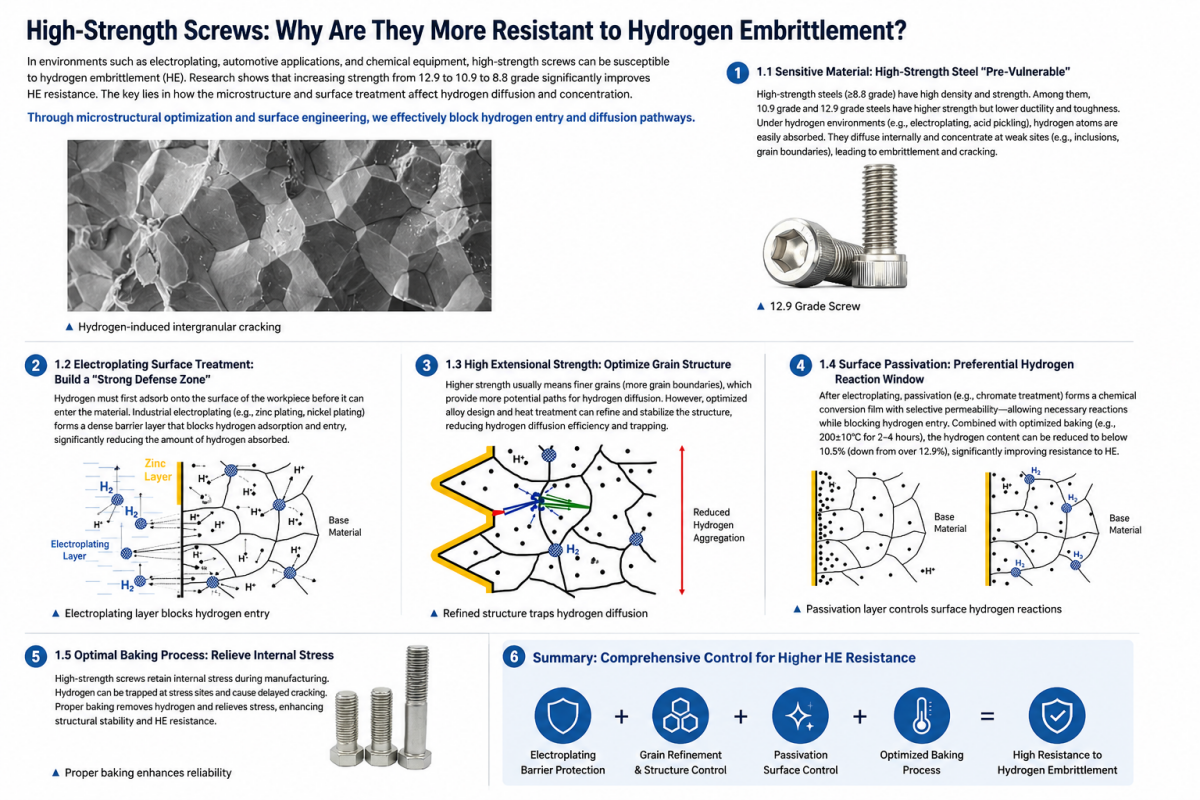
Hydrogen embrittlement is a material degradation process in which atomic hydrogen enters steel, reducing its ductility, toughness, and load-bearing capacity.
Unlike conventional mechanical failure, hydrogen embrittlement often causes:
Delayed fracture
Sudden brittle failure
Cracking without visible deformation
Unexpected fastener breakage under normal service loads
In many cases, affected bolts may fail hours, weeks, or even months after installation despite appearing fully compliant during assembly.
This phenomenon makes hydrogen embrittlement particularly dangerous in safety-critical applications.
Four Conditions Required for Hydrogen Embrittlement
Hydrogen embrittlement does not result from a single factor.
Instead, four conditions must typically exist simultaneously:
1. Hydrogen-Sensitive Material
2. Hydrogen Introduction
3. Tensile Stress
4. Suitable Temperature Conditions
When these factors combine, the risk of delayed fastener failure increases dramatically.
Why High-Strength Bolts Are More Vulnerable
1. High Hardness Creates Hydrogen Traps
Most high-strength bolts are manufactured from quenched and tempered alloy steels.
Common materials include:
42CrMo4
35CrMo
SCM435
SAE 4140
SAE 4340
After heat treatment, these materials develop martensitic or tempered martensitic microstructures that provide exceptional tensile strength.
However, these microstructures also contain:
Dislocations
Vacancies
Grain boundary defects
Residual stresses
These imperfections act as microscopic hydrogen traps.
Once hydrogen atoms enter the steel, they accumulate within these regions and weaken atomic bonding.
The result is a significant reduction in fracture resistance.
2. Hardness Above HRC 32 Significantly Increases Risk
Industry experience has consistently shown that hydrogen embrittlement susceptibility rises sharply when hardness exceeds approximately HRC 32.
Typical ranges include:
Fastener Grade | Typical Hardness |
Class 8.8 | HRC 22–32 |
Class 10.9 | HRC 32–39 |
Class 12.9 | HRC 39–44 |
As hardness increases:
Ductility decreases
Toughness decreases
Crack resistance decreases
Hydrogen sensitivity increases
For this reason, Grade 12.9 bolts represent the highest-risk category for hydrogen embrittlement failure.
3. High Preload Accelerates Hydrogen Migration
High-strength bolts are designed to operate under substantial preload.
In many structural applications, installation preload reaches:
70%–90% of the bolt's yield strength.
Thread roots naturally create stress concentration zones.
These highly stressed regions attract hydrogen atoms through a process known as stress-assisted diffusion.
As hydrogen accumulates near the thread root and crack tip, localized embrittlement occurs.
The resulting crack can propagate rapidly even when the applied load remains below the fastener's design strength.
4. Reduced Ductility Leads to Sudden Failure
One reason hydrogen embrittlement is so dangerous is the lack of visible warning signs.
Traditional overload failure typically involves:
Yielding
Stretching
Necking
Progressive deformation
Hydrogen embrittlement behaves differently.
Microcracks form internally and propagate rapidly through the steel with little plastic deformation.
The bolt may appear completely normal until a catastrophic fracture occurs.
For critical applications such as:
Wind turbine fasteners
Automotive suspension bolts
EV battery structural fasteners
Construction anchor bolts
Heavy machinery bolts
This type of failure is unacceptable.
How Does Hydrogen Enter Bolts?
Electroplating Is the Primary Source
Hydrogen is most commonly introduced during manufacturing processes such as:
Acid Pickling
Acid cleaning removes scale and rust but simultaneously generates hydrogen on the steel surface.
Electroplating
Common coatings include:
Zinc Plating
Zinc-Nickel Plating
Cadmium Plating
During electroplating, hydrogen ions are reduced into atomic hydrogen.
Some hydrogen escapes.
Some diffuses directly into the steel substrate.
For high-strength bolts, this creates a significant risk.
Service Environment Exposure
Hydrogen may also enter fasteners during service through:
Corrosion reactions
Marine environments
High humidity conditions
Hydrogen sulfide exposure
Chemical processing facilities
This phenomenon is known as environmental hydrogen embrittlement.
Surface Coatings That Reduce Hydrogen Embrittlement Risk
For critical structural applications, many OEMs now prefer hydrogen-free coating technologies.
Zinc Flake Coatings
Common systems include:
Dacromet®
Geomet®
Zinc-Aluminum Flake Coatings
These coatings are applied without generating hydrogen by electrolysis.
Benefits include:
Excellent corrosion resistance
No electroplating hydrogen risk
High durability
Automotive OEM approval
As a result, zinc flake-coated bolts are widely used in:
Wind energy projects
Automotive chassis systems
EV battery assemblies
Construction equipment
Heavy-duty industrial machinery
Mechanical Galvanizing
Mechanical galvanizing is another effective alternative.
Because no electrochemical hydrogen evolution occurs, hydrogen absorption is significantly reduced compared with traditional electroplating processes.
The Critical Importance of Dehydrogenation Baking
When electroplating cannot be avoided, dehydrogenation baking becomes essential.
Industry best practice recommends:
Grade 10.9 Bolts
Baking temperature: 190–220°C
Minimum duration: 2–4 hours
Grade 12.9 Bolts
Baking temperature: 190–220°C
Minimum duration: 4–24 hours, depending on specification
Most importantly:
Baking should begin as soon as possible after plating.
The longer hydrogen remains inside the steel, the more difficult it becomes to remove.
Many automotive and industrial fastener standards require dehydrogenation treatment immediately following plating.
Design Strategies for Preventing Hydrogen Embrittlement
Successful prevention requires a combination of material selection, manufacturing control, and engineering design.
Select Appropriate Strength Grades
Avoid unnecessarily high bolt strengths whenever application requirements allow.
In many applications, properly designed Grade 8.8 bolts provide sufficient performance while reducing the risk of hydrogen embrittlement.
Optimize Surface Treatments
Prefer:
Zinc Flake Coatings
Dacromet Coatings
Geomet Coatings
Mechanical Galvanizing
over conventional electroplating when possible.
Control Installation Preload
Avoid excessive tightening torque that increases tensile stress concentration.
Use Quality Heat Treatment
Proper tempering improves toughness and reduces hydrogen sensitivity.
Specify Certified Fastener Suppliers
Reliable manufacturing controls are essential for high-strength structural fasteners used in safety-critical applications.
Choosing the Right High-Strength Fasteners for Critical Applications
The pursuit of higher strength should never come at the expense of reliability.
For many demanding applications, the optimal solution is not necessarily the highest-strength bolt available, but the fastener system that best balances:
Strength
Toughness
Corrosion resistance
Fatigue performance
Hydrogen embrittlement resistance
By combining appropriate material selection, hydrogen-free surface coatings, controlled heat treatment, and proper installation practices, engineers can dramatically reduce the risk of delayed fastener failure.
High-Strength Fastener Solutions from Juxin Fasteners
Juxin Fasteners supplies a comprehensive range of high-performance fastening solutions for global OEM and industrial applications, including:
High Strength Bolts
Grade 8.8 Bolts
Grade 10.9 Bolts
Grade 12.9 Bolts
Structural Bolts
Heavy Duty Fasteners
Zinc-Nickel Plated Bolts
Dacromet Coated Bolts
Zinc Flake Coated Fasteners
Automotive Fasteners
Wind Energy Fasteners
Custom Engineered Fastening Solutions
Our engineering team works closely with manufacturers, procurement professionals, and design engineers to deliver fastening systems that meet the highest standards of performance, safety, and long-term reliability.
Product Packaging
Packaging Standard
At Juxin Fasteners, we apply standardized export packaging to ensure product protection, traceability, and compliance with international logistics requirements.
1. Standard Export Packaging
Unless otherwise specified, all products will be packed according to our factory standard export packaging, which includes:
Moisture-resistant inner protection
Poly bag or small box packing as required
Reinforced export cartons
Clear labeling with part number, specification, batch number, and quantity
Palletizing for sea or air shipment when necessary
Our standard packaging is designed to ensure safe transportation, efficient warehousing, and long-distance international shipping.
2. Customized Packaging Options
We also provide customized packaging solutions according to customer requirements, including but not limited to:
Private labeling
Customized barcodes
Specific carton dimensions
Retail packaging
Special pallet configuration
Customer-specific marking and identification
So that you know, customized packaging may involve additional costs and extended lead time depending on the complexity of the requirements.
3. Compliance & Quality Assurance
All packaging processes are controlled under our ISO 9001 quality management system to ensure consistency, traceability, and product integrity throughout the supply chain.
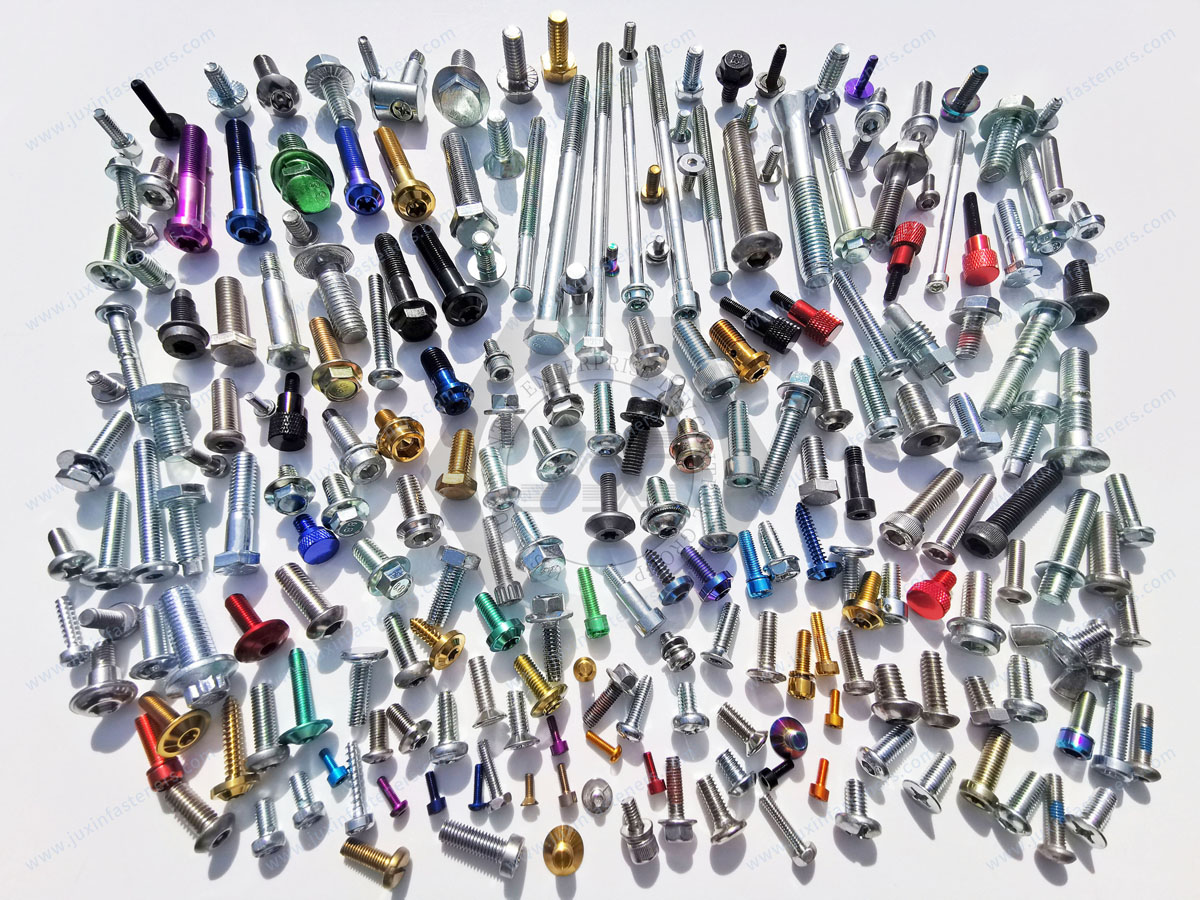
Product Pictures
Hot Products
Contact Us
Tel.:
+86 020 8621 0320
+86 020 3121 6067
E-mail:
Technical Support:
Navigation
SEND INQUIREY