Call Us
+86 136 6007 9809
Call Us
+86 136 6007 9809

The Cost of a Single Bolt: Failure Mechanism Analysis and Engineering Solution for Grade 12.9 High-Strength Fasteners
In fastening engineering, strength grades define reliability, and Grade 12.9 high-strength bolts represent the upper tier of mechanical performance in industrial fastening systems.
Product Specification
The Cost of a Single Bolt: Failure Mechanism Analysis and Engineering Solution for Grade 12.9 High-Strength Fasteners
In fastening engineering, strength grades define reliability, and Grade 12.9 high-strength bolts represent the upper tier of mechanical performance in industrial fastening systems.
With a minimum tensile strength of 1200 MPa and yield strength above 1080 MPa (ISO 898-1 standard classification), these fasteners are widely used in:
EV battery pack structural systems
Wind turbine main shafts and hub connections
Radar slewing bearings
Heavy-duty industrial power transmission assemblies
However, the higher the performance class, the more catastrophic the consequence of failure. In critical structures where ISO/DIN high-strength fasteners are applied, even a single bolt failure can trigger system-level collapse.
This article provides a technical failure analysis and prevention solution for Grade 12.9 high-strength fasteners, based on real-world engineering cases and industrial inspection data.
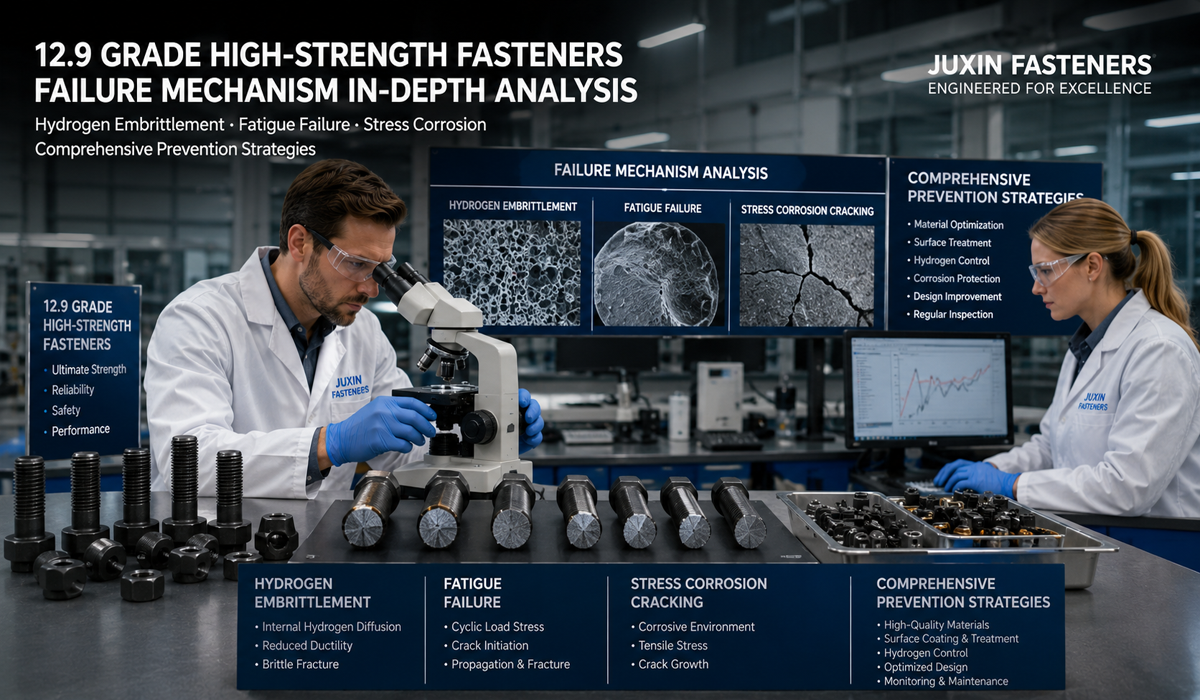
1. Hydrogen Embrittlement: The Silent Time Bomb
Hydrogen embrittlement is one of the most dangerous failure mechanisms in ISO 12.9 high-strength bolts.
It typically occurs under static stress below yield strength, but manifests as delayed brittle fracture—components appear intact after installation but fail unexpectedly days or months later.
Failure Mechanism
Hydrogen atoms diffuse into the metal lattice during processes such as:
Electroplating
Acid pickling
Improper surface treatment
They accumulate at grain boundaries and internal defects, generating internal stress that causes:
Localized embrittlement
Crack initiation without plastic deformation
Sudden brittle fracture
Typical Engineering Case
A Grade 12.9 bolt failed at the head-to-shank transition zone. Fracture characteristics included:
Bright gray crystalline fracture surface
No corrosion products on the fracture face
Measured hydrogen content ~1.2 ppm
Surface hardness reaching 495 HV0.3 due to carburization
Severe stress concentration at the underhead radius
Failure Characteristics
Flat fracture surface with no necking
Intergranular fracture morphology
“Fish-eye” or chicken-claw-like secondary cracking
Common in thread root or fillet transition zones
Prevention Strategy
For DIN/ISO high-strength fastening systems, engineers should implement:
Strict control of electroplating and acid cleaning processes
Use of low-hydrogen surface systems (e.g., zinc flake coating / zinc-aluminum coating systems)
Post-plating baking treatment (190–220°C, ≥4 hours) for hydrogen diffusion removal
Improved underhead fillet geometry to reduce stress concentration
2. Fatigue Fracture: Slow Structural Degradation Under Cyclic Load
Fatigue failure is the most common and most destructive failure mode in high-strength bolted joints (ISO 898-1 Class 12.9).
It occurs at stress levels significantly below static strength and cannot be detected easily by conventional inspection.
Failure Mechanism
Under cyclic loading:
Micro-cracks initiate at stress concentration zones
Crack propagates gradually with each load cycle
The remaining cross-section suddenly fails when the critical threshold is reached
Typical Engineering Case
In a radar azimuth drive system, M24×150 high-strength bolts (Class 10.9/12.9 equivalent) failed during installation and service.
Fracture analysis revealed:
Crack origin at the thread root
Distinct beach marks (fatigue striations)
Line-source crack initiation pattern
Presence of phosphate residue layer on the thread surface
The phosphate layer resulted from improper pre-treatment cleaning, significantly reducing fatigue resistance.
Failure Characteristics
Beach marks/fatigue striations
Curved crack propagation lines pointing to the origin
Crack initiation at the thread root or fillet radius
Prevention Strategy
Engineering-grade solutions include:
Thread root polishing (Ra ≤ 1.6 μm)
Shot peening or thread rolling to introduce compressive residual stress
Use of rolled thread bolts instead of cut threads (critical improvement factor)
Anti-loosening systems such as prevailing torque nuts or pre-applied adhesive fasteners for vibration environments
3. Stress Corrosion Cracking (SCC): The Combined Effect of Load and Environment
Stress corrosion cracking occurs when tensile stress and a corrosive medium act simultaneously, leading to brittle fracture at relatively low stress levels.
Failure Characteristics
Presence of corrosion products at the crack origin
Detection of S and Cl elements in the fracture zone
Intergranular or quasi-cleavage fracture morphology
Crack propagation along thread root zones
Typical Engineering Case
A railway brake clamp system using Grade 12.9 fastening bolts (ISO high-strength class) failed during service.
Investigation revealed:
Severe surface corrosion
Fracture initiating at the thread root
Presence of chloride and sulfur contaminants
Installation environment: humid underground parking structure
Material selection not suitable for corrosive exposure
Prevention Strategy
For corrosion-sensitive applications:
Select corrosion-resistant materials (e.g., 316L stainless steel fasteners per ISO 3506, or titanium fasteners for extreme environments)
Avoid galvanic corrosion between dissimilar metals
Apply protective coatings (zinc flake, Dacromet-type systems)
Implement cathodic protection in severe marine or underground environments
4. Engineering-Level Failure Prevention System (Full Lifecycle Approach)
Reliable performance of Grade 12.9 high-strength fasteners (ISO/DIN systems) requires control across the entire lifecycle:
4.1 Material Selection
SCM435 / SAE 4140 alloy steels with high purity
Strict control of sulfur and phosphorus content
Clean steel production processes to reduce inclusion defects
4.2 Heat Treatment Control
Precise quenching temperature control
Controlled cooling rate to ensure uniform martensite
Optimized tempering process to balance strength and toughness
Mandatory pre-treatment descaling to avoid phosphate or oxide residues
4.3 Surface Engineering Strategy
Low-hydrogen coating systems preferred over conventional electroplating
Controlled coating thickness and adhesion stability
Hydrogen diffusion baking when required
4.4 Assembly and Service Control
Use calibrated torque tools or hydraulic tensioners
Avoid manual “experience-based tightening.”
Conduct bolt preload inspection for critical joints
Implement vibration monitoring in dynamic systems
5. Engineering Insight: Failure Origin Is Often Manufacturing, Not Design
Industrial data shows:
More than 50% of fastener failures are linked to heat treatment and surface process control.
This highlights a key engineering reality:
Design defines potential
Manufacturing defines reliability
Even the best-designed ISO 12.9 fastener system will fail if:
Hydrogen control is inadequate
Heat treatment is unstable
Surface integrity is compromised
Conclusion: High-Strength Bolts Require High-Control Engineering
The reliability of Grade 12.9 high-strength fasteners is not determined solely by material grade, but by:
Hydrogen management
Fatigue-resistant surface engineering
Stress concentration control
Corrosion-compatible system design
For engineers working with critical structures—EV battery packs, wind turbines, aerospace mechanisms—fastener selection must move beyond strength rating and toward:
Full lifecycle ISO/DIN-compliant fastening system engineering
Because in structural safety:
There is no such thing as a “small component failure.”
Product Packaging
Packaging Standard
At Juxin Fasteners, we apply standardized export packaging to ensure product protection, traceability, and compliance with international logistics requirements.
1. Standard Export Packaging
Unless otherwise specified, all products will be packed according to our factory standard export packaging, which includes:
Moisture-resistant inner protection
Poly bag or small box packing as required
Reinforced export cartons
Clear labeling with part number, specification, batch number, and quantity
Palletizing for sea or air shipment when necessary
Our standard packaging is designed to ensure safe transportation, efficient warehousing, and long-distance international shipping.
2. Customized Packaging Options
We also provide customized packaging solutions according to customer requirements, including but not limited to:
Private labeling
Customized barcodes
Specific carton dimensions
Retail packaging
Special pallet configuration
Customer-specific marking and identification
So that you know, customized packaging may involve additional costs and extended lead time depending on the complexity of the requirements.
3. Compliance & Quality Assurance
All packaging processes are controlled under our ISO 9001 quality management system to ensure consistency, traceability, and product integrity throughout the supply chain.
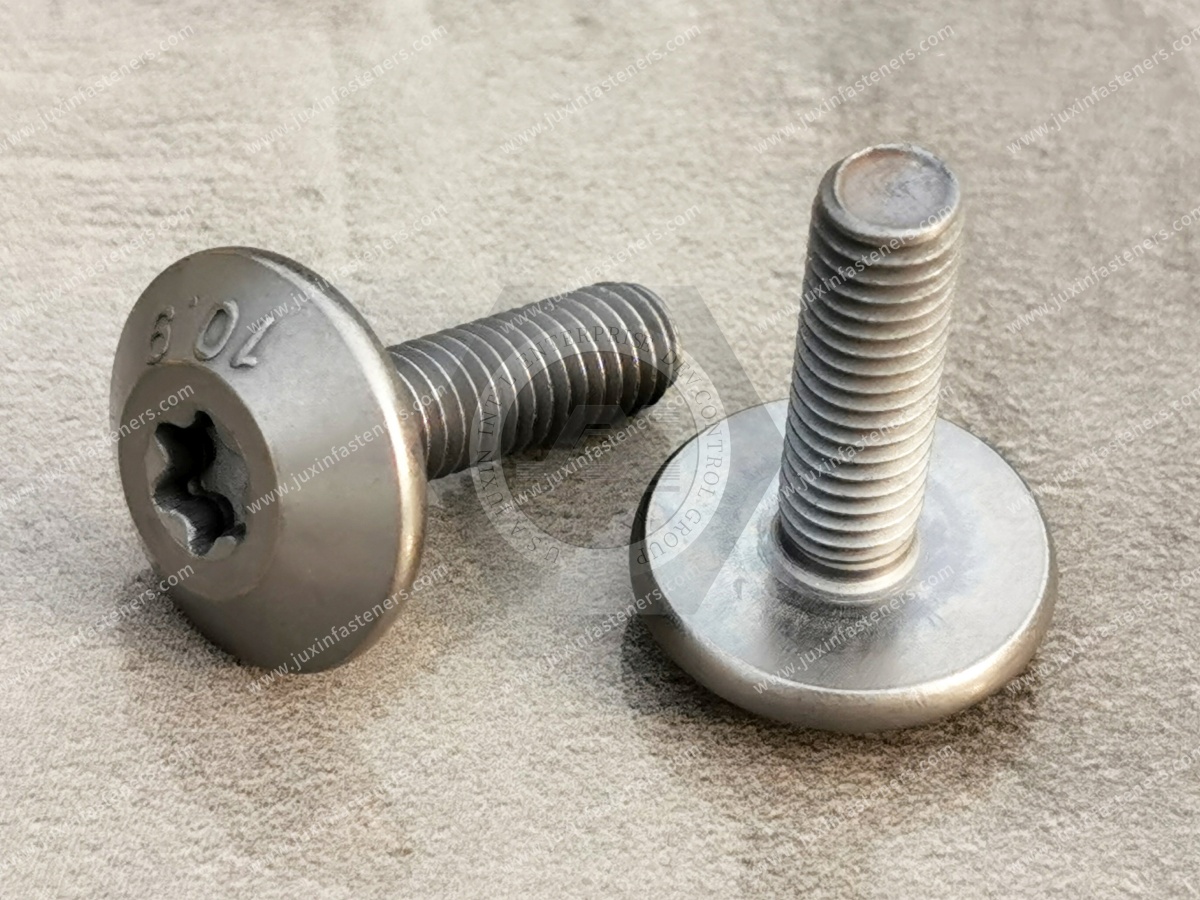
Product Pictures
Hot Products
Contact Us
Tel.:
+86 020 8621 0320
+86 020 3121 6067
E-mail:
Technical Support:
Navigation
SEND INQUIREY