Call Us
+86 136 6007 9809
Call Us
+86 136 6007 9809

Stainless Steel Bolt Selection Guide: 304 vs 316 vs 17-4PH (630) for Industrial Engineering Applications
Engineering Selection Logic for Stainless Steel Fasteners in Corrosive and High-Strength Environments
In industrial fastening systems, stainless steel bolts and stainless steel fasteners are widely considered corrosion-resistant solutions.
However, a common engineering misconception leads to serious failures:
“Stainless steel means rust-proof.”
In reality, stainless steel performance depends heavily on environment, chloride exposure,
Product Specification
Stainless Steel Bolt Selection Guide: 304 vs 316 vs 17-4PH (630) for Industrial Engineering Applications
Engineering Selection Logic for Stainless Steel Fasteners in Corrosive and High-Strength Environments
In industrial fastening systems, stainless steel bolts and stainless steel fasteners are widely considered corrosion-resistant solutions.
However, a common engineering misconception leads to serious failures:
“Stainless steel means rust-proof.”
In reality, stainless steel performance depends heavily on environment, chloride exposure, mechanical load, and material grade selection.
Incorrect selection of 304, 316, or 17-4PH stainless steel bolts can result in:
Surface corrosion and pitting
Stress corrosion cracking
Premature fastener failure
Equipment shutdown or leakage
High maintenance and replacement costs
At JUXIN FASTENERS, we supply industrial stainless steel bolts, corrosion-resistant fasteners, and high-strength stainless steel fastening systems for global engineering industries.
1. Why Stainless Steel Is NOT “Rust-Proof.”
The corrosion resistance of stainless steel depends on a passive chromium oxide layer (Cr₂O₃) formed on the surface.
However, this protective layer can be destroyed by:
Chloride ions (Cl⁻)
Marine environments
Acidic or alkaline media
High temperature exposure
Crevice or stress concentration zones
Common Failure Mechanisms:
Pitting corrosion
Crevice corrosion
Intergranular corrosion
Stress corrosion cracking (SCC)
Engineering Conclusion:
There is no universal stainless steel bolt — only environment-specific material selection.
2. Key Differences: 304 vs 316 vs 17-4PH Stainless Steel Bolts
These three materials belong to fundamentally different metallurgical systems and cannot be treated as interchangeable.
2.1 304 Stainless Steel Bolts (A2-70 / EN 1.4301)
Standard references:
ISO 3506-1 (A2-70 fasteners)
ASTM A193 / A320 (application dependent)
EN 1.4301 (06Cr19Ni10 equivalent)
Chemical Composition:
Chromium: 18–20%
Nickel: 8–10.5%
No molybdenum (Mo-free alloy)
Mechanical Properties (A2-70):
Tensile strength: ≥700 MPa
Yield strength: ≥450 MPa
Elongation: ≥40%
Advantages:
Excellent formability
Cost-effective
Widely available industrial fastener grade
Stable cold heading performance
Limitations:
Poor resistance to chloride corrosion
Prone to pitting in marine environments
Not suitable for seawater or chemical exposure
Engineering Note:
Cold working (thread rolling, head forming) may induce slight magnetism, which is a normal manufacturing phenomenon and not a material defect.
2.2 316 Stainless Steel Bolts (A4-70 / EN 1.4401)
Standard references:
ISO 3506-1 (A4-70 fasteners)
ASTM A193 B8M / B8M CL2
EN 1.4401 (06Cr17Ni12Mo2 equivalent)
Key Upgrade Element:
✔ Molybdenum (2–3% Mo addition)
Mechanical Properties:
Tensile strength: ≥700 MPa
Yield strength: ≥450 MPa
Similar strength level to 304
Corrosion Resistance Advantage:
Molybdenum significantly improves resistance against:
Chloride-induced pitting
Crevice corrosion
Seawater corrosion
Performance Comparison:
304 may fail in months under salt spray conditions
316 can operate reliably for years in the same environment
Cost Factor:
316 stainless steel bolts are typically:
30%–50% more expensive than 304 fasteners
Critical Engineering Warning:
For welded structures:
Use 304L / 316L (low carbon grades)
Otherwise, sensitization may occur in the heat-affected zone, leading to:
Intergranular corrosion
Weld zone failure
2.3 17-4PH Stainless Steel Bolts (Grade 630 / EN 1.4542)
Standard references:
ASTM A564 (17-4PH condition)
AMS 5604 / AMS 5643
EN 1.4542
Material System Difference:
Unlike 304/316 austenitic stainless steel, 17-4PH is:
A precipitation hardening stainless steel (martensitic-based system)
Strength comes from copper precipitation hardening, not chromium-nickel corrosion resistance.
Mechanical Properties (H900 condition):
Tensile strength: 1310–1450 MPa
Yield strength: ≥1170 MPa
Hardness: HRC 38–44
Key Advantage:
✔ Extremely high strength
✔ Comparable to high-strength alloy steel bolts
Corrosion Performance:
Better than 410/420 martensitic steels
Lower than 316 stainless steel
Limitations:
Not suitable for high-chloride or seawater environments
Performance decreases above ~400°C due to phase instability
Typical Applications:
Aerospace structural fasteners
High-pressure valve systems
Hydraulic actuators
High-load mechanical assemblies
3. Engineering Selection Method: 3-Step Decision Logic
Step 1: Evaluate Corrosion Environment
High Chloride / Harsh Environments → 316 Required
Coastal installations
Marine environments
Chemical processing plants
Chlorine-containing systems
Salt spray exposure
✔ Recommended: 316 / 316L stainless steel bolts (A4-70)
General Industrial Environment → 304 Acceptable
Indoor structures
Dry outdoor environments
Freshwater systems
General machinery assemblies
✔ Recommended: 304 stainless steel bolts (A2-70)
Step 2: Evaluate Mechanical Load
Standard Load Conditions
304 / 316 (A2-70 / A4-70) sufficient for most industrial applications
High Load / Space-Limited / Vibration Systems
Require high-strength solution
✔ Recommended: 17-4PH (630) stainless steel bolts
⚠ Important Procurement Note:
Always confirm heat treatment condition:
H900 / H1025 / H1075
Require material certification (MTC)
Step 3: Evaluate Temperature and Welding Conditions
Welding Applications
✔ Only use:
304L / 316L low carbon stainless steel bolts
Avoid standard grades due to:
Intergranular corrosion risk
Reduced weld zone strength
High Temperature (>200°C)
Prefer 316 stainless steel fasteners
304 has higher corrosion risk under thermal exposure
4. Critical Engineering Rule: Material Matching of Bolts and Nuts
A frequently overlooked failure mechanism:
Mixing stainless steel grades in bolted joints
Example Risk:
304 bolt + 316 nut → galvanic corrosion risk
Different electrochemical potentials accelerate failure
Engineering Standard Practice:
✔ Use matched stainless steel systems:
A2-70 bolt → A2-70 nut
A4-70 bolt → A4-70 nut
This ensures:
Equal corrosion resistance
Equal mechanical strength
Stable long-term preload
5. Conclusion: Stainless Steel Fastener Selection Is a System Engineering Decision
Selecting stainless steel bolts (304, 316, or 17-4PH / 630) is not a material choice alone — it is a system-level engineering decision affecting:
Equipment reliability
Maintenance cycle cost
Structural safety
Corrosion lifecycle performance
Key Takeaways:
304 → Cost-effective general-purpose stainless fasteners
316 → Chloride-resistant corrosion protection standard
17-4PH (630) → High-strength engineering fastener solution
There is no “best stainless steel bolt” — only the correct engineering match for the operating environment.

JUXIN FASTENERS – Precision Stainless Steel Fasteners for Global Industrial Engineering Systems
We supply:
304 / 316 stainless steel bolts (A2-70 / A4-70)
17-4PH (630) high-strength stainless fasteners
Custom corrosion-resistant fastening solutions
Industrial-grade engineered bolt systems
For:
Marine engineering
Chemical processing
Aerospace systems
Industrial machinery
Energy infrastructure
Product Packaging
Packaging Standard
At Juxin Fasteners, we apply standardized export packaging to ensure product protection, traceability, and compliance with international logistics requirements.
1. Standard Export Packaging
Unless otherwise specified, all products will be packed according to our factory standard export packaging, which includes:
Moisture-resistant inner protection
Poly bag or small box packing as required
Reinforced export cartons
Clear labeling with part number, specification, batch number, and quantity
Palletizing for sea or air shipment when necessary
Our standard packaging is designed to ensure safe transportation, efficient warehousing, and long-distance international shipping.
2. Customized Packaging Options
We also provide customized packaging solutions according to customer requirements, including but not limited to:
Private labeling
Customized barcodes
Specific carton dimensions
Retail packaging
Special pallet configuration
Customer-specific marking and identification
So that you know, customized packaging may involve additional costs and extended lead time depending on the complexity of the requirements.
3. Compliance & Quality Assurance
All packaging processes are controlled under our ISO 9001 quality management system to ensure consistency, traceability, and product integrity throughout the supply chain.
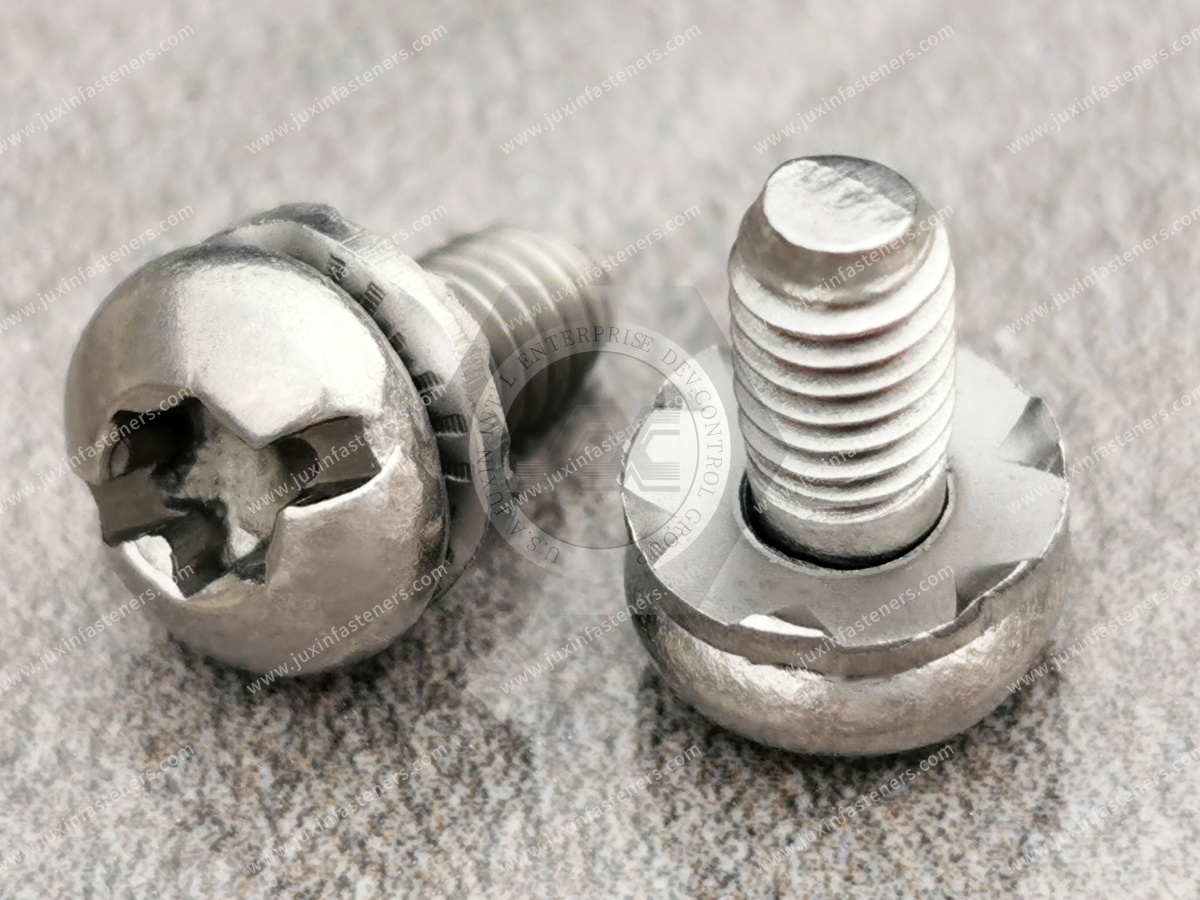
Product Pictures
Contact Us
Tel.:
+86 020 8621 0320
+86 020 3121 6067
E-mail:
Technical Support:
Navigation
SEND INQUIREY