Call Us
+86 136 6007 9809
Call Us
+86 136 6007 9809

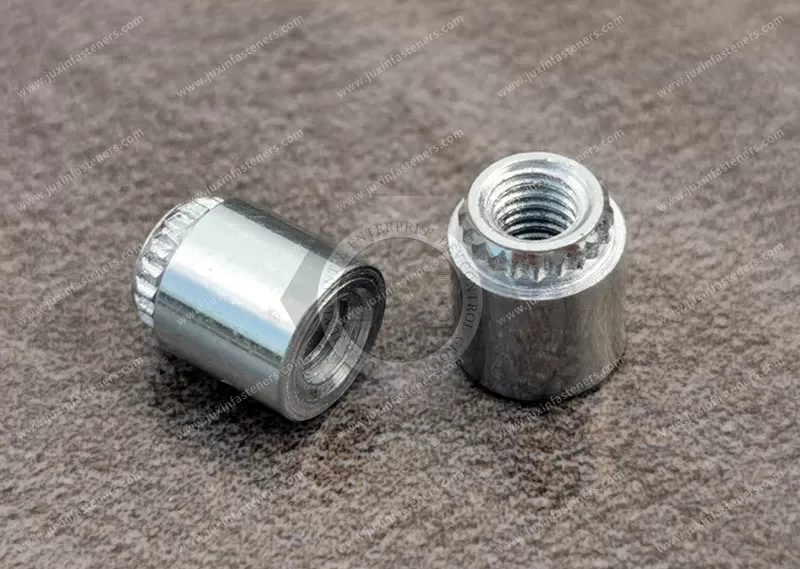
JUXIN FASTENERS supplies JX-KFE and JX-KFSE broaching standoffs for printed circuit board mounting, board-to-board spacing, and electronic assembly stacking.
These press-fit standoffs use external broaching features to engage compatible PCB or component materials, creating a retained mounting point while maintaining a defined separation between assembled parts.
Threaded and unthreaded configurations are available within the product family. Listed thread options include M3 and selected Unified sizes #4 and #6, subject to the approved product drawing.
Steel material options include C20, C45, C46, and selected free-machining grades such as 1213, 1214, and 1215, depending on the manufacturing and application requirements.
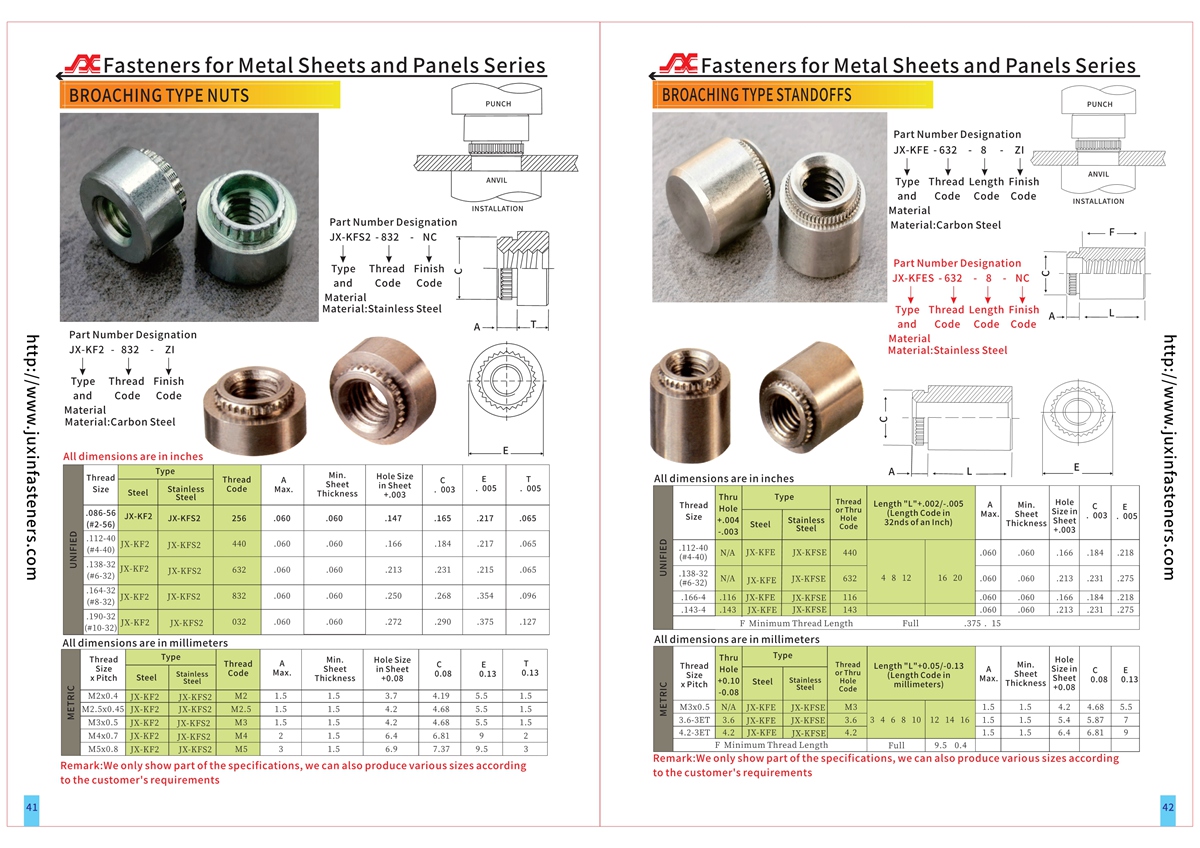
Custom lengths and dimensions can be reviewed for OEM projects. Refer to the applicable PDF specifications and CAD drawings on pages 41–42 for detailed product geometry and installation requirements.
Product Specification
PCB Broaching Standoffs – JX-KFE / JX-KFSE
Press-Fit Spacing and Stacking Solutions for Electronic Assemblies
JUXIN FASTENERS offers JX-KFE and JX-KFSE broaching standoffs for printed circuit board assemblies requiring a fixed mechanical separation between components, circuit boards, or chassis structures.
These fasteners combine a standoff body with external broaching engagement features. During press installation, the broaching section engages a compatible mounting substrate, allowing the standoff to remain attached to the board or component.
Unlike a conventional loose spacer, a broaching standoff becomes a retained part of the assembly. This can simplify handling during production, support consistent component positioning, and reduce the number of loose parts required during final assembly.
JX-KFE and JX-KFSE products are intended for PCB spacing and stacking applications where the substrate, installation geometry, and mechanical loading are compatible with broaching technology.
Product Range and Material Options
Product types: JX-KFE and JX-KFSE
Fastener category: PCB broaching standoffs
Installation method: Press-fit broaching engagement
Primary function: Board spacing, stacking, and component mounting
Available configurations: Threaded and unthreaded options within the product family
Listed thread sizes: M3 and Unified #4 and #6
Material family: Steel
Potential material grades include C20, C45, C46, and selected free-machining steels such as 1213, 1214, and 1215, subject to the approved product specification.
The correct material depends on manufacturing requirements, fastener geometry, surface finish, installation behavior, and the intended service environment.
Surface treatment can be reviewed according to customer requirements and the selected material.
Where electroplated coatings are specified, ISO 4042 may be relevant to coating requirements for threaded fasteners.
Metric threads should be evaluated against applicable ISO 261 and ISO 965 requirements, while Unified inch-series threads may be specified according to ASME B1.1.
M3 and Unified #4 or #6 threads are different systems and must not be treated as interchangeable.
Standard and custom standoff lengths, outside dimensions, mounting-hole requirements, and available thread combinations should be confirmed using the relevant JUXIN FASTENERS specification sheets and CAD drawings on pages 41–42.
How Broaching Standoffs Work
A broaching standoff is designed to provide two mechanical functions within one component.
The broaching section creates a retained connection to a compatible substrate.
The standoff body establishes a defined distance between the mounting substrate and another component or panel.
During installation, the fastener is aligned with a prepared mounting hole and pressed into position using suitable tooling.
The external broaching features engage the surrounding material and develop mechanical retention.
Once installed, the standoff can form part of a PCB-to-PCB or PCB-to-chassis mounting arrangement.
The final assembly may use an internally threaded standoff, an unthreaded passage, or another drawing-defined connection.
The broaching mechanism should not be confused with conventional self-clinching technology.
Traditional self-clinching fasteners generally rely on the controlled displacement of ductile sheet metal. Broaching fasteners use external engagement features that interact mechanically with a compatible PCB laminate or other substrate.
Because these materials behave differently during installation, hole preparation, installation force, and retention requirements must be evaluated for the actual application.
PCB Spacing and Stack-Up Design
The primary engineering purpose of a PCB standoff is to maintain the required separation between assembled components.
For board-to-board stacking, the standoff length influences the distance between adjacent circuit boards.
For PCB-to-chassis mounting, the standoff may establish clearance between the underside of the circuit board and the supporting enclosure.
However, nominal standoff length alone does not determine the final assembled gap.
Engineers should also consider board thickness, fastener seating position, mating hardware, component height, and the applicable dimensional tolerances.
A useful design approach is to establish the minimum required clearance first, then evaluate the complete assembly stack-up.
For example, if a circuit board contains components extending below its mounting surface, the standoff must provide sufficient separation to prevent interference with the chassis.
The design must also account for PCB deflection under assembly loads and expected service conditions.
When multiple standoffs support the same board, differences in installed height may introduce bending or uneven clamping.
For this reason, standoff height tolerance and installation seating consistency can be just as important as the nominal spacing dimension.
Threaded vs. Unthreaded Broaching Standoffs
JX-KFE and JX-KFSE are described as a family of broaching standoffs available in threaded and unthreaded configurations.
The correct configuration depends on the required fastening arrangement.
Threaded broaching standoffs
An internally threaded configuration provides a female thread for a mating screw.
This can be useful when a second circuit board, mounting bracket, or component must be secured directly to the standoff.
The mating screw length, thread engagement, and tightening requirements should be established during design.
Unthreaded broaching standoffs
An unthreaded configuration provides a passage or other drawing-defined interface without internal female threads.
It may be appropriate when a screw or locating component passes through the standoff and engages a separate threaded component.
The bore diameter must be selected according to the mating hardware and required assembly fit.
A smooth through-hole should not automatically be treated as a precision locating bore or load-rated bearing surface.
Such applications require specific tolerances and mechanical verification.
The distinction is important for procurement because threaded and unthreaded standoffs may appear similar externally while serving different assembly functions.
PCB Installation and Substrate Compatibility
Reliable installation requires a compatible substrate and a properly prepared mounting hole.
Broaching standoffs should be installed using controlled axial force and tooling that adequately supports the surrounding material.
Important design considerations include substrate thickness, mounting-hole tolerance, fastener insertion depth, board-edge distance, and clearance from nearby electronic features.
The installation force must be sufficient to engage the broaching features without causing unacceptable damage to the substrate.
An oversized mounting hole may reduce retention.
An undersized mounting hole may create excessive installation stress or cracking.
PCB laminate construction, reinforcement materials, and local board geometry can affect installation behavior.
Not every PCB material or engineering plastic is suitable for the same broaching design.
For production applications, installation trials should use representative substrates and the intended manufacturing process.
Mechanical retention should be evaluated under the expected assembly and service loads.
These may include pushout, rotational loading, axial loading, and bending introduced by attached components.
No specific retention value should be assumed without supporting product data or assembly testing.
Industrial Applications
PCB-to-PCB Stacking
Electronic products often contain multiple circuit boards arranged at different levels.
Broaching standoffs can provide retained spacing points that help maintain separation between boards and support repeatable assembly.
Typical applications include industrial controllers, embedded electronics, communication modules, and electronic interface assemblies.
PCB-to-Chassis Mounting
Circuit boards installed inside metal enclosures require clearance from the chassis to accommodate electrical components and reduce the risk of unintended contact.
Broaching standoffs may form part of the mounting system where their installation and mechanical performance are suitable.
Electrical insulation and grounding requirements must be addressed separately.
A metallic standoff does not automatically provide electrical isolation.
Industrial Automation Equipment
Automation controllers, electronic control boards, and monitoring systems often require compact, serviceable mounting arrangements.
Retained standoffs may help simplify assembly and reduce loose hardware handling.
Telecommunications and Networking Equipment
Communication devices may use stacked PCB architectures to accommodate dense electronic assemblies.
Broaching standoffs can be considered where fixed spacing and compact mounting geometry are required.
Instrumentation and Measurement Systems
Measurement electronics and industrial sensor modules may require stable separation between circuit boards, shields, brackets, and enclosure structures.
The selected standoff must meet the required dimensional and mechanical conditions.
Embedded Electronic Systems
Compact electronic modules frequently combine restricted internal space with multiple mechanical attachment points.
Custom standoff lengths and configurations may help accommodate different board layouts without requiring a completely new enclosure design.
Engineering Selection: Broaching Standoffs vs. Alternative Solutions
A broaching standoff is not always the most appropriate solution.
Its suitability depends on the mounting substrate, installation process, and assembly requirements.
Loose threaded standoffs can be practical for prototypes and low-volume builds where permanent attachment is unnecessary.
Self-clinching standoffs are generally suited to compatible ductile sheet metal panels and can be appropriate when the attachment point is located in a metal chassis rather than the PCB.
Surface-mount standoffs may be considered for PCB assemblies designed around automated placement and solder reflow, subject to the approved attachment design.
Broaching nuts provide internal threads but do not necessarily establish the same board spacing function as a dedicated standoff.
Conventional spacers may be appropriate when the assembly uses a through-bolt and does not require a permanently retained component.
For OEM designs, the preferred option should be selected according to assembly sequence, board material, available tooling, expected service loads, and maintenance requirements.
OEM Procurement and Supplier Qualification
For design engineers, the main priorities are substrate compatibility, spacing accuracy, mounting geometry, and installed mechanical performance.
For purchasing managers and supplier development teams, the requirements also include dimensional consistency, material control, drawing approval, inspection, packaging, and delivery planning.
A complete RFQ for JX-KFE or JX-KFSE broaching standoffs should identify the required product type, threaded or unthreaded configuration, nominal length, material grade, mounting-hole dimensions, and mating component details.
Customers should also provide PCB material and thickness, expected assembly loads, estimated order quantity, annual demand, and any special inspection or packaging requirements.
Where installation performance is critical, representative sample evaluation should be completed before production approval.
A dimensionally acceptable loose fastener does not necessarily guarantee satisfactory retention after installation into the customer's substrate.
JUXIN FASTENERS can review custom standoff dimensions, material requirements, and project-specific drawings for technical and commercial feasibility.
Frequently Asked Questions
What is a PCB broaching standoff?
A PCB broaching standoff is a press-fit fastener that combines external broaching engagement features with a body designed to establish spacing between assembled components.
What are JX-KFE and JX-KFSE used for?
They are intended for PCB mounting, board spacing, and stacking applications. The product family includes threaded and unthreaded configurations.
What thread sizes are listed?
The supplied product information identifies M3 and selected Unified #4 and #6 thread options. Individual size and configuration availability must be confirmed against the applicable drawing.
Can broaching standoffs be installed in every PCB?
No. Suitability depends on the PCB laminate, thickness, mounting-hole geometry, installation force, and required mechanical retention.
How do broaching standoffs differ from broaching nuts?
Broaching standoffs establish a defined mechanical spacing function. Broaching nuts primarily provide a retained threaded attachment point.
Can JUXIN FASTENERS review custom lengths?
Yes. Customer-specific lengths and dimensions can be submitted for engineering and manufacturing feasibility review.
Related JUXIN FASTENERS Products
PCB Broaching Nuts – JX-KF2 / JX-KFS2
Internally threaded broaching fasteners for mounting components on compatible PCB substrates.
Non-Threaded Through-Hole Broaching Fasteners – JX-KFE / JX-KFSE
Unthreaded press-fit mounting components for applications requiring a retained through-hole interface.
Self-Clinching Standoffs
Permanent spacing and mounting solutions for compatible metal panels and chassis assemblies.
Self-Clinching Studs
Externally threaded fastening points for sheet metal structures.
Self-Clinching Nuts
Internally threaded attachment points for compatible ductile metal panels.
These related product categories can be linked to their corresponding JUXIN FASTENERS pages to support technical comparison and product selection.
Request an OEM Quote
JUXIN FASTENERS supplies industrial fastening solutions for electronic equipment manufacturers, OEM engineering teams, purchasing departments, and global supply chain organizations.
For JX-KFE and JX-KFSE broaching standoff inquiries, please send your technical drawing, required configuration, standoff length, substrate specifications, material requirements, and estimated purchasing quantities.
Our team can review your application and provide a quotation based on the confirmed specifications.
Email: info@juxinfasteners.com
Website: www.juxinfasteners.com
JUXIN FASTENERS – PCB Mounting and Industrial Fastening Solutions for OEM Manufacturing.
Product Packaging
JX-KFE and JX-KFSE broaching standoffs are packaged according to product dimensions, material, order quantity, and customer requirements.
Protective inner packaging, cartons, and palletized shipments can be arranged where appropriate.
Carton quantities, labeling, pallet configuration, and special OEM packaging requirements are subject to order confirmation.
For bulk purchasing and customized packaging inquiries, contact info@juxinfasteners.com.
Website: www.juxinfasteners.com
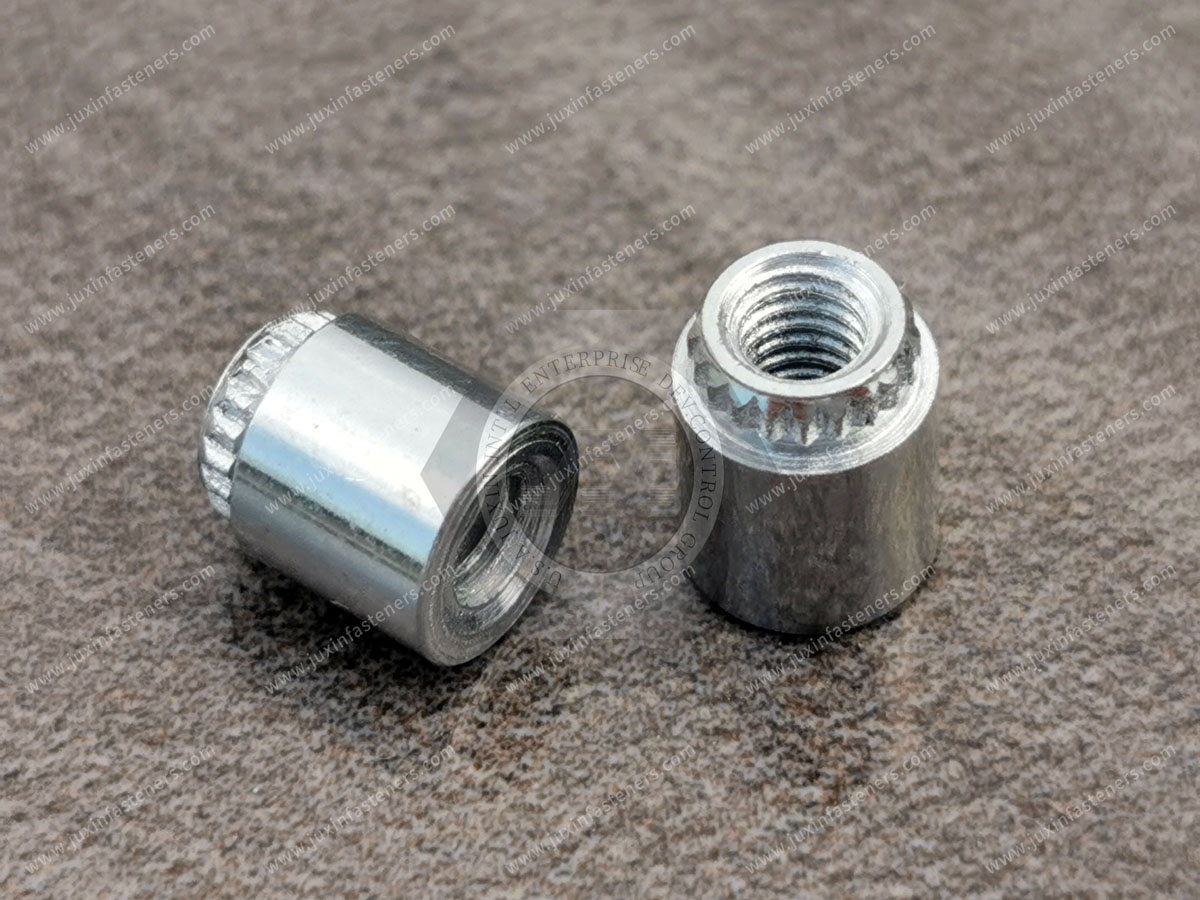
Product Pictures
Contact Us
Tel.:
+86 020 8621 0320
+86 020 3121 6067
E-mail:
Technical Support:
Navigation
SEND INQUIREY