Call Us
+86 136 6007 9809
Call Us
+86 136 6007 9809

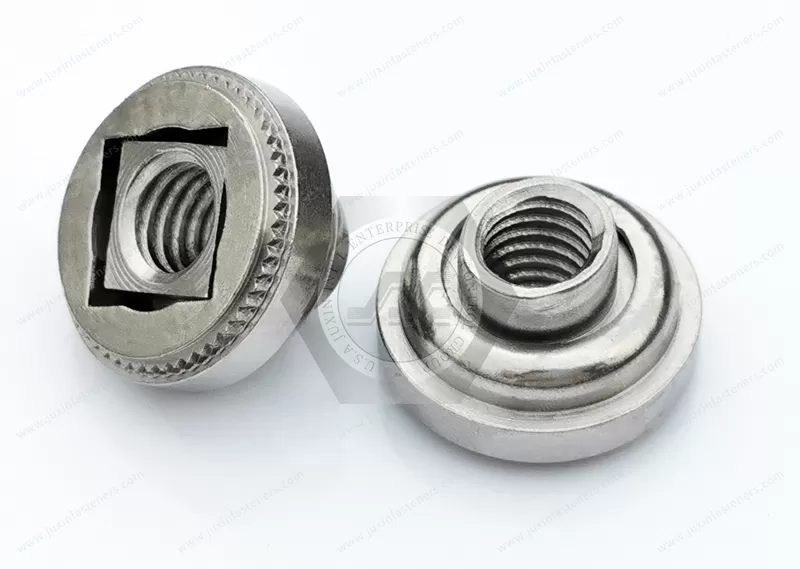
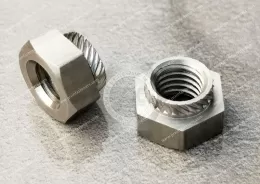
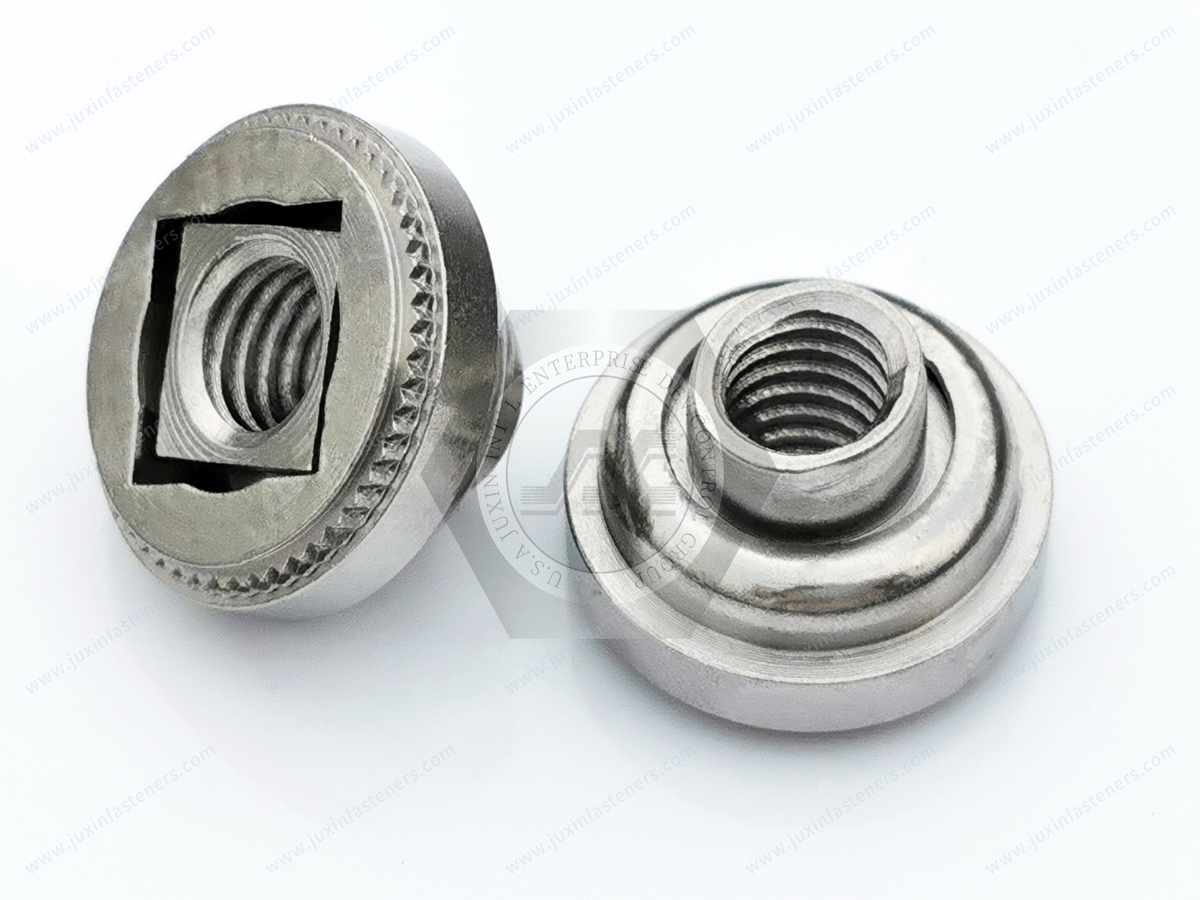
JUXIN FASTENERS supplies JX-LAC stainless steel locking floating self-clinching nuts for thin-sheet metal assemblies requiring both hole-alignment compensation and prevailing-torque thread locking.
The floating nut element allows up to 0.030 in. (0.76 mm) of specified mating-hole adjustment, while the self-clinching retainer provides permanent attachment to a compatible metal panel. The locking thread feature adds resistance to unintended screw rotation during service.
Listed stainless steel material options include SUS302, SUS303, SUS316, SUS410, SUS420, and SUS430, subject to the approved product specification.
JX-LAC fasteners are suited to industrial enclosures, electronic cabinets, equipment housings, and OEM assemblies where accumulated tolerances can complicate screw installation.
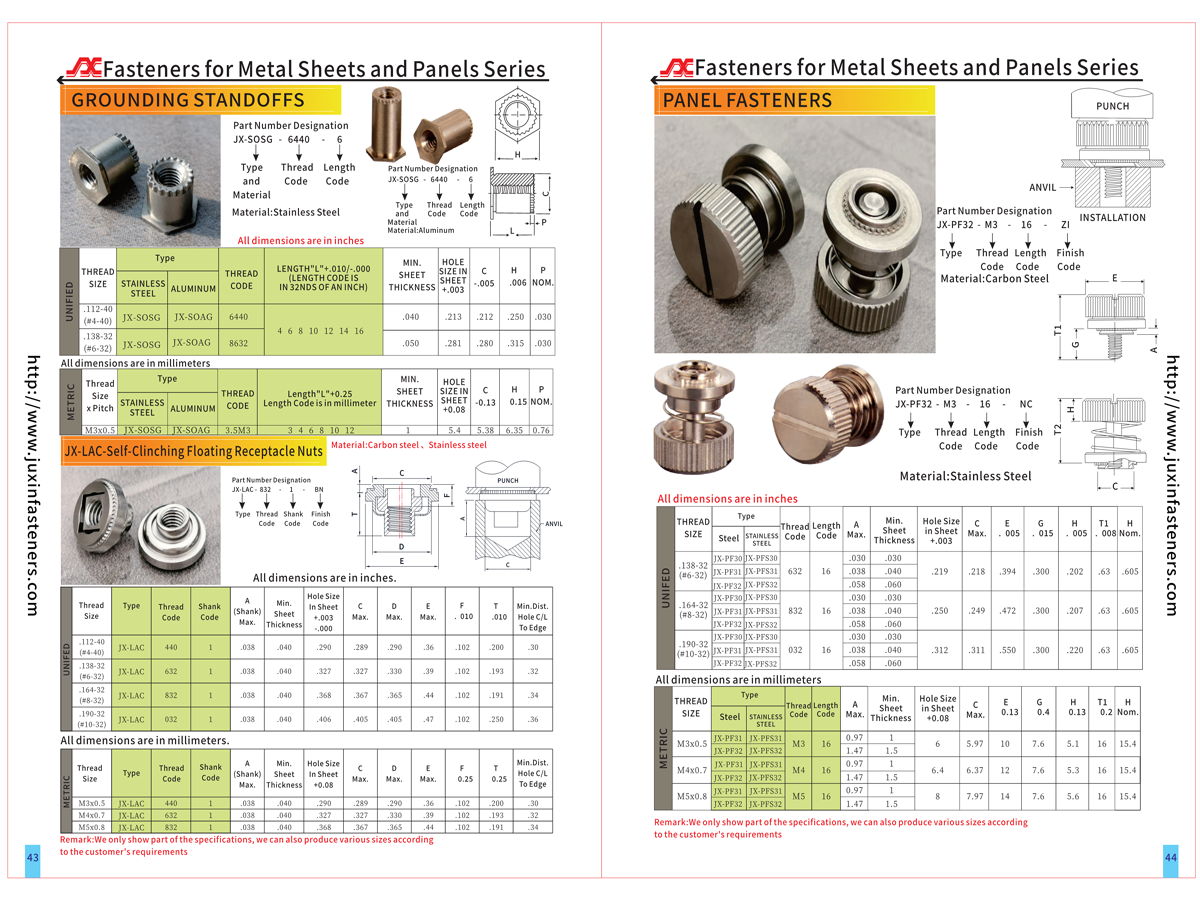
Refer to the product PDF and CAD drawings on pages 43–44 for detailed dimensions, thread options, installation requirements, and configuration availability.
Product Specification
JX-LAC Stainless Steel Locking Floating Self-Clinching Nuts
Floating Alignment Compensation and Prevailing-Torque Thread Locking for OEM Sheet-Metal Assemblies
JUXIN FASTENERS supplies JX-LAC locking floating self-clinching nuts for equipment manufacturers that require permanently retained threaded mounting points with controlled movement and resistance to screw loosening.
In conventional sheet-metal assemblies, the threaded attachment point is fixed in position.
When mating components contain manufacturing or assembly tolerances, the screw may not align precisely with the nut.
A floating self-clinching nut addresses this problem by allowing the internal threaded element to move within its retained outer body.
The JX-LAC configuration also incorporates a locking thread feature intended to provide prevailing torque during screw installation and removal.
These functions are particularly useful in industrial enclosures, removable equipment panels, electronic cabinets, and other assemblies that combine repeated maintenance access with demanding alignment requirements.
Product Overview
Product series: JX-LAC
Product category: Locking floating self-clinching nuts
Fastener configuration: Floating internal threaded element within a self-clinching retainer
Thread function: Prevailing-torque locking
Primary purpose: Compensation for mating-hole misalignment with retained threaded fastening
Specified floating adjustment: Up to 0.030 in. / 0.76 mm, subject to the approved configuration
Installation method: Controlled press installation into prepared sheet-metal holes
Material family: Stainless steel
Listed material options: SUS302, SUS303, SUS316, SUS410, SUS420, and SUS430
Mounting substrate: Compatible sheet metal, subject to thickness, hardness, and installation specifications
Technical reference: Product PDF and CAD drawings, pages 43–44
Custom dimensions: Subject to drawing review and technical confirmation
How a Locking Floating Self-Clinching Nut Works
The fastener consists of a retained outer body and an internally threaded floating element.
The outer body is installed permanently into a properly prepared mounting hole using a suitable press and parallel installation tooling.
The self-clinching geometry allows the panel material to flow into the fastener's retention features.
Once correctly installed, the retainer remains fixed in the sheet.
The threaded element can move within the permitted floating range to accommodate the position of the mating screw.
When the screw enters the threaded element, the locking feature generates resistance to rotation.
The result is a mounting point that can compensate for limited assembly misalignment while providing a controlled locking function.
The floating feature does not mean that the entire fastener should rotate or move within the mounting hole.
The retainer must remain securely installed while the internal threaded component performs the intended adjustment.
Floating Adjustment and Mating-Hole Misalignment
The supplied product information identifies a floating adjustment of up to 0.030 in. / 0.76 mm.
This allowance is intended to help accommodate positional differences between a mating screw and its threaded mounting point.
It is important to distinguish total floating travel from movement available in each direction.
If a drawing specifies 0.76 mm total travel across an axis, that does not automatically mean the nut can move 0.76 mm from its nominal center position in either direction.
The actual movement envelope, initial position, and dimensional limits must be confirmed from the product drawing.
Engineers should also consider the direction of the misalignment.
A floating nut may accommodate a limited positional offset, but it cannot correct excessive angular misalignment, incompatible threads, or severely distorted panels.
The floating range should not be treated as a substitute for appropriate dimensional tolerances.
Instead, it provides an additional assembly allowance within a controlled design.
Why Floating Nuts Matter in Large Sheet-Metal Assemblies
Large equipment enclosures often contain multiple mounting holes distributed across doors, covers, access panels, and structural members.
Small variations in individual components can accumulate across the assembly.
A fixed threaded insert may require the mating hole to align closely with its center.
When multiple fasteners must engage simultaneously, this can make assembly difficult.
A floating self-clinching nut allows limited movement of the internal threaded element, helping the mating screw find the intended thread axis.
For example, a large industrial cabinet door may use several screws along its perimeter.
Manufacturing variation in the door, cabinet frame, and hole positions can make simultaneous engagement difficult.
A JX-LAC floating nut may reduce assembly interference when the misalignment remains within the specified adjustment range.
This can be particularly valuable in products that require repeated opening and closing for inspection or maintenance.
The design must still maintain appropriate edge distances, joint strength, and panel alignment.
Locking Threads and Vibration Resistance
The JX-LAC series incorporates a prevailing-torque locking feature.
Prevailing torque is the resistance generated by the locking element during relative rotation of the screw and nut.
This resistance is different from the clamping force developed when the screw is tightened against the joint.
The locking function is intended to resist unintended screw rotation.
However, prevailing torque does not automatically guarantee that a bolted joint will maintain its preload under every vibration condition.
Joint stiffness, transverse movement, tightening procedure, screw material, and service loads remain important.
For applications exposed to repeated vibration, the OEM should validate the complete assembly using a suitable test method.
The supplied product information references locking torque performance equivalent to applicable NASM25027 requirements.
This statement should be treated as a performance target requiring verification for the specific supplied configuration, rather than an automatic certification claim.
Where NASM25027 performance is required, the purchasing specification should identify the applicable edition, test conditions, acceptance criteria, and documentation requirements.
Floating Alignment Versus Thread Locking
Floating alignment and thread locking solve two separate engineering problems.
The floating mechanism addresses positional differences between mating components.
The locking mechanism addresses resistance to screw rotation.
A non-locking floating nut may compensate for hole misalignment but does not provide an integrated prevailing-torque locking feature.
A locking nut without floating capability may resist rotation but cannot accommodate comparable positional offset.
The JX-LAC design combines both functions in one retained assembly.
This distinction is useful when selecting hardware for equipment covers, machine enclosures, or electronic cabinets.
The engineer should first determine whether alignment compensation is required.
The engineer should then determine whether prevailing-torque locking is needed.
Selecting a locking floating nut without understanding both requirements can introduce unnecessary assembly torque or additional cost.
JX-LAC Versus JX-AC Non-Locking Floating Nuts
JX-LAC and JX-AC belong to related floating self-clinching fastener families.
Both are intended to accommodate limited mating-hole misalignment.
The primary functional difference is the locking thread feature.
JX-AC is a non-locking floating nut configuration.
JX-LAC is a locking floating nut configuration.
For applications with controlled tightening, limited vibration exposure, and no requirement for integrated prevailing torque, a non-locking floating nut may be suitable.
For applications requiring a retained floating mounting point and a defined locking function, JX-LAC may be more appropriate.
The decision should be based on the actual assembly requirements rather than treating the two products as universally interchangeable.
Thread friction, assembly torque, repeated-use behavior, and screw compatibility should be considered when changing between locking and non-locking versions.
JX-LAC, JX-LAS, and JX-LA4 Product Selection
The JUXIN FASTENERS floating self-clinching fastener range includes JX-LAC, JX-LAS, and JX-LA4 locking configurations.
These series should be compared using their respective approved drawings.
The relevant differences may include material specification, substrate compatibility, mounting-hole requirements, sheet thickness range, thread availability, and installation conditions.
The supplied product information identifies JX-LA4 as a locking configuration intended for certain stainless steel sheet applications.
For that specific product family, the reference information describes installations in stainless steel sheets as thin as approximately 0.038 in. / 0.97 mm, with hardness limits up to HRB 88.
These figures must not be automatically applied to JX-LAC.
Each series requires its own installation and material compatibility review.
When sourcing an alternative to an existing floating nut, dimensional similarity alone is insufficient to establish interchangeability.
Material Selection and Stainless Steel Considerations
Listed stainless steel material options include SUS302, SUS303, SUS316, SUS410, SUS420, and SUS430.
These materials have different properties.
Austenitic grades may be selected for their corrosion resistance and other application-specific characteristics.
Ferritic and martensitic grades may offer different hardness, magnetic behavior, or manufacturing characteristics.
The exact material used for the JX-LAC retainer and floating nut element must be confirmed from the approved specification.
Material selection is especially important because the fastener contains interacting components.
The retainer must perform correctly during self-clinching installation.
The floating element must move within its designed allowance.
The locking feature must provide the required prevailing-torque behavior.
A change in material or hardness can affect more than corrosion resistance.
It may also change installation behavior, thread friction, wear, and repeated-use performance.
Therefore, material substitutions should be evaluated before approval.
Self-Clinching Installation in Thin Sheet Metal
JX-LAC fasteners are designed for installation into prepared sheet-metal holes using controlled squeezing force.
The installation method requires suitable tooling and properly aligned press surfaces.
A typical process begins with a mounting hole manufactured to the dimensions specified in the product drawing.
The fastener is positioned with the appropriate support tooling.
The press then applies the required installation force to embed the retention features in the sheet.
Correct installation depends on the relationship between the fastener geometry and the panel material.
The sheet must be capable of flowing into the retention features without cracking or excessive deformation.
The minimum sheet thickness, maximum sheet hardness, hole tolerance, and installation force must be verified for the selected part.
These values cannot be inferred reliably from the floating adjustment dimension.
After installation, the outer retainer should remain securely fixed while the internal nut retains its designed freedom of movement.
Excessive installation force or unsuitable tooling may damage the floating mechanism.
Installation Quality and Functional Inspection
A floating nut requires a different functional inspection approach from a conventional fixed self-clinching nut.
In addition to dimensional checks and mechanical retention, the floating mechanism should be evaluated.
The internal nut must be capable of moving through the intended adjustment range.
The mechanism should not bind because of panel deformation, incorrect press setup, or damaged components.
The locking feature should also be checked using the appropriate mating screw and test conditions.
Where repeated assembly is expected, the OEM may require prevailing-torque verification over a defined number of installation and removal cycles.
The inspection plan should distinguish between installation retention, floating movement, and thread-locking performance.
These are separate characteristics and should not be represented by one general quality statement.
Retainer Pushout and Torque-Out Resistance
Self-clinching retention is commonly evaluated through pushout and torque-out testing.
Pushout resistance describes the fastener's resistance to being displaced axially from the sheet.
Torque-out resistance describes resistance to rotation of the retained outer body.
These characteristics are not the same as the prevailing torque of the internal locking thread.
A locking floating nut can therefore involve three different mechanical considerations:
Retention of the outer body in the panel.
Movement of the internal threaded element.
Prevailing-torque behavior during screw engagement.
A successful design must account for all three.
The actual retention values depend on the fastener configuration, substrate material, hole geometry, installation quality, and test method.
No numerical pushout or torque-out performance should be assumed without validated data.
Screw Selection and Assembly Torque
The mating screw must match the internal thread specification.
The thread diameter, pitch, tolerance class, screw material, and surface condition can affect assembly performance.
For metric threads, ISO 261 and ISO 965 provide relevant thread-system references.
For Unified inch-series threads, ASME B1.1 may be applicable.
Metric and Unified threads are not directly interchangeable.
Because JX-LAC incorporates a prevailing-torque locking feature, the measured installation torque includes the contribution of the locking mechanism.
The tightening process must therefore account for both prevailing torque and the torque needed to establish the required joint preload.
A tightening value suitable for an ordinary free-running nut should not automatically be applied to a locking floating nut.
The correct tightening procedure must be validated using the actual fastener, screw, and assembled joint.
Repeated Assembly and Maintenance Access
Equipment panels and enclosure covers may be removed repeatedly during inspection, servicing, or component replacement.
A locking floating nut can provide both assembly alignment assistance and a locking function.
However, repeated screw installation can change prevailing-torque behavior over time.
Thread wear, surface finish, lubrication, contamination, and the locking mechanism all influence reuse performance.
The number of permitted reuse cycles should be defined by the relevant product specification or validated through testing.
For maintenance-critical equipment, the OEM should establish inspection and replacement criteria rather than assuming unlimited reuse.
Industrial Applications
Industrial Control Cabinets
JX-LAC floating locking nuts may be used in compatible sheet-metal cabinet assemblies where removable panels must align with multiple threaded mounting points.
The floating feature helps accommodate limited positional variation.
The locking feature provides additional resistance to unintended screw rotation.
Electronic Equipment Enclosures
Electronic housings often combine close-fitting covers, brackets, and sheet-metal chassis components.
Floating nuts may simplify installation where mating-hole positions vary within defined tolerances.
The locking version can be considered where the assembly requires prevailing-torque retention.
Telecommunications and Network Equipment
Rack-mounted and enclosure-based equipment may require repeatable installation of covers, modules, and access panels.
A locking floating nut can be evaluated for suitable mounting locations where both alignment compensation and locking behavior are needed.
Industrial Machinery
Machine covers and protective enclosures may experience vibration and repeated maintenance access.
JX-LAC can be considered where a permanently retained threaded mounting point is preferable to loose hardware.
The complete joint must be validated for the expected mechanical environment.
Electrical Distribution Equipment
Metal enclosures for industrial electrical equipment may require accurately positioned, retained fastening points.
Floating nuts can accommodate limited manufacturing tolerances while reducing reliance on loose nuts during assembly.
The electrical and mechanical design must still meet the applicable equipment requirements.
Transportation Equipment
Equipment housings and service panels used in transportation-related applications may require controlled assembly and vibration performance.
Locking floating nuts may be considered where the relevant engineering validation confirms their suitability.
Engineering Example: Removable Industrial Cabinet Cover
Consider a large industrial cabinet with a removable front cover secured by several screws.
The cabinet body and cover are manufactured separately.
Even when both components meet their individual drawing tolerances, their mounting holes may not align perfectly during final assembly.
Using fixed threaded inserts can make it difficult to engage all screws without applying unwanted lateral force.
A floating nut allows the internal thread to shift within its permitted range.
This can reduce assembly interference when the positional variation is within the specified allowance.
If the cabinet is also subject to vibration, the design team may select a locking floating configuration such as JX-LAC.
The engineer must still confirm the actual floating movement, the permitted hole-position variation, the screw engagement conditions, and the required tightening procedure.
The locking feature should not be used to compensate for inadequate clamping or poor joint design.
This example illustrates the combined value of floating adjustment and prevailing-torque locking without treating either function as a universal solution.
Design Trade-Off: Floating Nuts Versus Enlarged Clearance Holes
One method of accommodating assembly misalignment is to enlarge the clearance hole in the mating component.
This can sometimes simplify screw engagement.
However, oversized clearance holes may reduce positional control, affect washer support, or create other design concerns.
A floating nut offers an alternative approach by allowing limited movement at the threaded mounting point.
The choice depends on the joint geometry, alignment requirements, clamping area, service conditions, and available assembly space.
In some designs, a floating nut can reduce the need for excessively large clearance holes.
In others, a conventional nut and appropriately designed clearance hole may be sufficient.
The engineer should compare the complete joint rather than selecting hardware solely by nominal hole size.
Design Trade-Off: Floating Nuts Versus Slotted Mounting Holes
Slotted holes are another method of accommodating positional variation.
They may provide a larger or directionally controlled adjustment range.
However, slotted holes can affect load distribution, joint positioning, and the available bearing area.
A floating self-clinching nut keeps the threaded mounting point captive within the panel while permitting a defined movement range.
This can be useful where loose nuts are undesirable or where assembly access is limited.
The appropriate solution depends on the expected direction and magnitude of misalignment.
A floating nut should not be selected when the required adjustment exceeds its verified movement envelope.
OEM Procurement and Supplier Qualification
For procurement teams, a locking floating self-clinching nut should not be evaluated only by unit price and thread diameter.
The floating mechanism, locking performance, installation requirements, and material compatibility must also be reviewed.
A complete purchasing specification should identify the product series, approved drawing revision, thread requirements, material grade, mounting substrate, and functional performance expectations.
Where a replacement supplier is being evaluated, the engineering team should compare the installed dimensions and operating characteristics.
Two floating nuts may have similar external dimensions but different movement allowances, locking torque characteristics, or sheet-metal installation requirements.
These differences can affect assembly performance and interchangeability.
For production sourcing, the supplier qualification process may include dimensional inspection, material verification, installation trials, and functional testing according to the OEM's requirements.
Quality and Performance Validation
A suitable validation plan may include thread inspection, dimensional measurement, material verification, self-clinching retention tests, floating movement checks, and prevailing-torque testing.
The exact requirements depend on the application.
Where NASM25027 locking performance is specified, the applicable requirements should be identified explicitly and verified through the agreed test process.
Environmental testing may also be appropriate for applications exposed to humidity, corrosion, temperature cycling, or vibration.
For example, ISO 9227 and ASTM B117 describe salt-spray test methods when corrosion exposure testing is required.
These test methods do not independently establish the service life of the locking mechanism or the complete assembly.
The acceptance criteria should be defined by the OEM and the approved technical specification.
Frequently Asked Questions
What is a locking floating self-clinching nut?
It is a permanently retained sheet-metal fastener containing a movable internally threaded element and a prevailing-torque locking feature.
What is the advantage of the floating design?
The internal nut can compensate for limited mating-hole misalignment, helping screws engage when assembled components have small positional differences.
How much adjustment does JX-LAC provide?
The supplied product information identifies up to 0.030 in. / 0.76 mm of floating adjustment. The precise movement envelope must be confirmed from the approved drawing.
Does the floating nut move after installation?
The outer retainer is intended to remain fixed in the panel. The internal threaded element provides the designed floating movement.
What is the difference between JX-LAC and JX-AC?
JX-LAC is a locking floating configuration. JX-AC is a non-locking floating configuration. Both require verification of their individual dimensional and installation specifications.
Can JX-LAC be installed into stainless steel panels?
Compatibility depends on the specific JX-LAC configuration and the panel's thickness, hardness, and material properties.
Stainless steel panel suitability must be confirmed rather than inferred from the fastener's stainless steel construction.
Is the 0.97 mm minimum sheet thickness applicable to JX-LAC?
The supplied information associates this value with certain JX-LA4 configurations. It should not be applied to JX-LAC without confirmation from its own technical drawing.
Does the locking feature guarantee vibration resistance?
No. Prevailing torque provides resistance to screw rotation, but complete joint performance depends on preload, loading conditions, mating hardware, and assembly design.
Can the nut be reused?
Repeated use may be possible, but the acceptable number of cycles and locking torque retention must be established from the applicable product specification or testing.
Are custom sizes available?
Custom requirements can be reviewed based on the drawing, material, thread specification, and manufacturing feasibility.
Related Industrial Fastening Solutions
Non-Locking Floating Self-Clinching Nuts – JX-AC
For assemblies requiring limited hole-alignment compensation without an integrated prevailing-torque locking feature.
Non-Locking Floating Self-Clinching Nuts – JX-AS
For related floating threaded mounting applications requiring comparison of material and installation specifications.
Locking Floating Self-Clinching Nuts – JX-LAS
For related locking floating fastener configurations requiring application-specific engineering review.
Locking Floating Self-Clinching Nuts – JX-LA4
For applications requiring evaluation of the corresponding locking floating nut design and its approved panel installation conditions.
All-Metal Self-Locking Self-Clinching Nuts – JX-LK / JX-LKS
For fixed-position threaded mounting points with integrated all-metal locking features.
Nylon Insert Locking Self-Clinching Nuts – JX-PL / JX-PLC
For retained threaded mounting points incorporating a non-metallic prevailing-torque locking element.
Self-Clinching Standoffs
For permanently retained spacing and threaded support in compatible sheet-metal assemblies.
These related product categories should be linked to their corresponding JUXIN FASTENERS product pages using the descriptive anchor text above.
Request a JX-LAC OEM Quotation
JUXIN FASTENERS supplies industrial fastening solutions for equipment manufacturers, sheet-metal fabricators, engineering teams, and international OEM procurement organizations.
For JX-LAC locking floating self-clinching nut inquiries, please provide the required thread size, fastener drawing or part reference,
panel material, sheet thickness, mating screw specification, expected floating adjustment, and locking performance requirements.
For production projects, include the estimated order quantity, annual demand, drawing revision, and any inspection or documentation requirements.
Our team can review the technical requirements and prepare a quotation based on the confirmed product specification.
Email: info@juxinfasteners.com
Website: www.juxinfasteners.com
JUXIN FASTENERS – Floating Self-Clinching Fasteners and OEM Threaded Assembly Solutions.
Product Packaging
JX-LAC locking floating self-clinching nuts are packed using protective inner packaging and export cartons, with palletized shipping arrangements where required.
Packaging is selected according to the product dimensions, order quantity, and agreed customer requirements to help protect the threads, locking features, and floating mechanisms during handling and transportation.
Custom carton quantities, part-number labels, batch identification, and OEM packaging requirements can be reviewed before order confirmation.
For packaging specifications and bulk-order quotations, contact info@juxinfasteners.com.
Website: www.juxinfasteners.com
Product Pictures
Contact Us
Tel.:
+86 020 8621 0320
+86 020 3121 6067
E-mail:
Technical Support:
Navigation
SEND INQUIREY