Call Us
+86 136 6007 9809
Call Us
+86 136 6007 9809

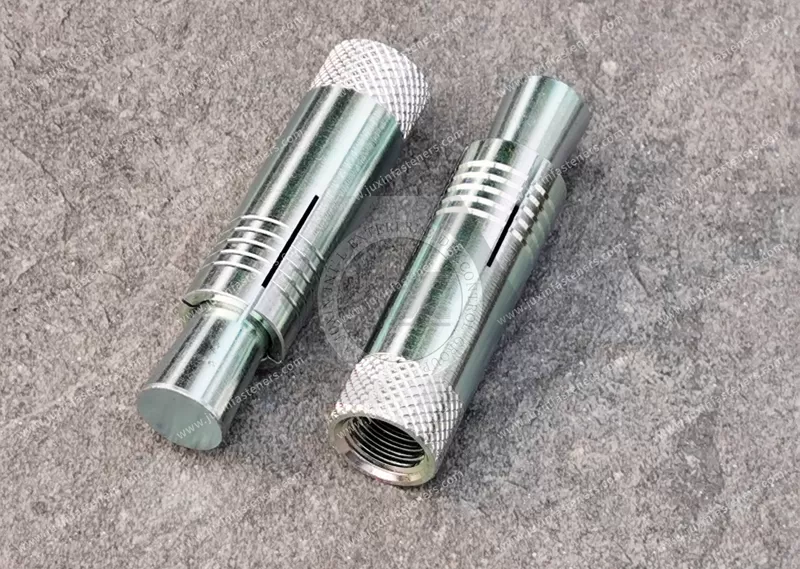
JUXIN FASTENERS supplies custom M20 internally threaded concrete expansion anchors for mechanical fastening in concrete and suitable hard stone substrates.
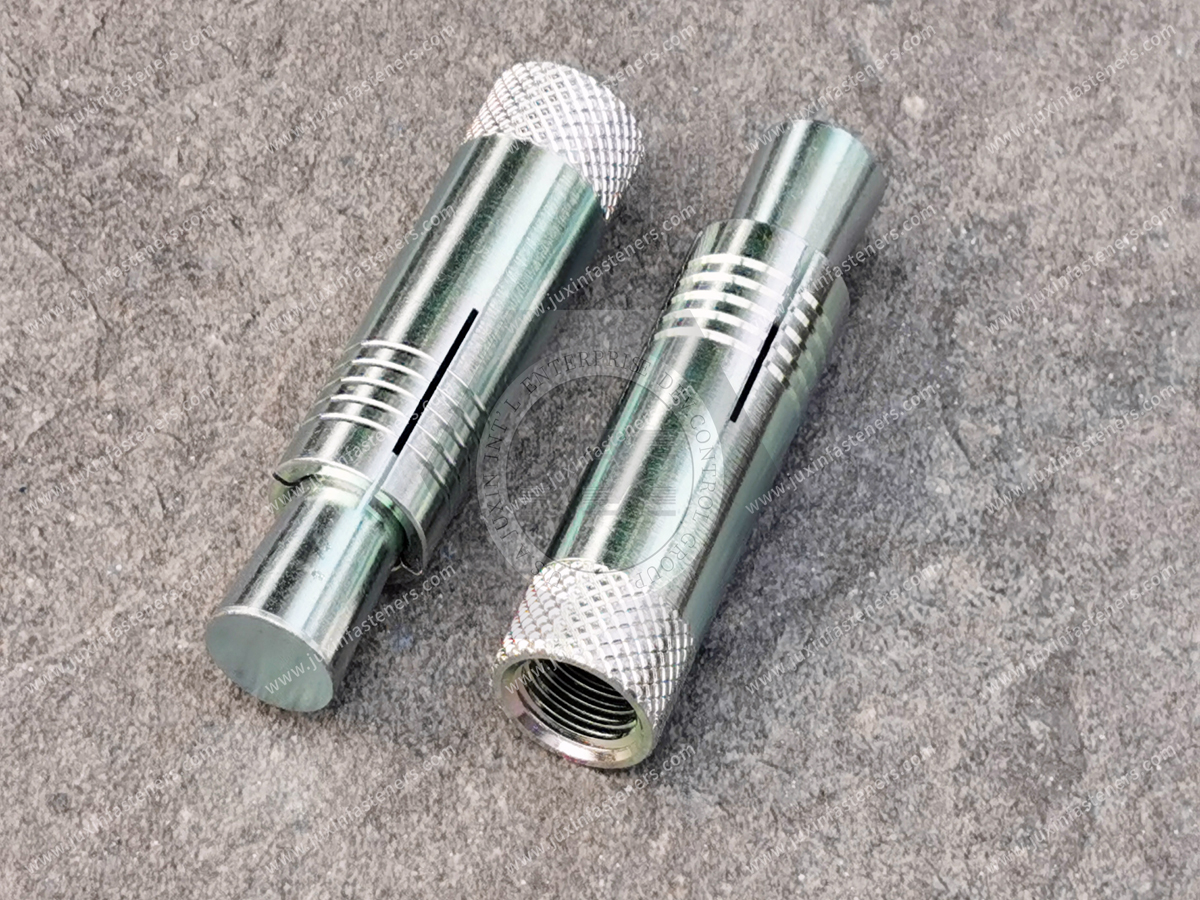
Designed with an expandable metal body and cone-type expansion mechanism, these anchors create mechanical engagement within a properly prepared drilled hole. Carbon steel and stainless steel material options are available, subject to the approved specification.
Our M20 custom anchor experience includes a customer-specific project for Hitachi. Typical applications include industrial equipment mounting, pipe supports, HVAC installations, and mechanical infrastructure. Custom dimensions and OEM requirements can be reviewed against customer drawings.
Product Specification
M20 Custom Concrete Expansion Anchors for Industrial Equipment and OEM Mechanical Installations
Product Overview
Concrete expansion anchors are mechanical fastening components designed to develop resistance within a drilled hole through controlled expansion against the surrounding substrate.
JUXIN FASTENERS supplies custom M20 internally threaded expansion anchors for industrial equipment manufacturers, mechanical installation contractors, infrastructure equipment suppliers, and OEM purchasing organizations.
The supplied product information describes an expandable metal body incorporating a cone-type expansion element.
When correctly activated, the expansion mechanism forces the surrounding anchor body outward against the drilled-hole wall.
The resulting mechanical engagement allows the anchor to participate in transferring loads from a connected threaded rod, bolt, or other compatible fastening component into the substrate.
The actual anchoring performance depends on the expansion geometry, substrate properties, embedment depth, installation method, and complete fastening arrangement.
This product should not be treated as automatically equivalent to every commercially available drop-in anchor, quick-twist anchor, or wedge anchor.
The correct classification and installation method must be established from the approved product drawing.
Custom M20 Anchor Project for Hitachi
JUXIN FASTENERS has supplied a customer-specific M20 expansion anchor configuration for Hitachi.
This project demonstrates experience with a custom industrial fastening requirement involving an M20 internally threaded concrete expansion anchor.
For OEM procurement, a customer-specific anchor project can involve requirements beyond nominal thread size.
These may include external body dimensions, expansion element geometry, material selection, installation clearance, hole preparation, surface finish, and packaging.
The M20 thread designation alone does not establish the anchor's load capacity, embedment requirements, or suitability for a particular concrete application.
The approved customer drawing remains the controlling technical reference.
This project reference does not imply certification, endorsement, or approval by Hitachi for other applications.
Product Configuration and Technical Reference
Product family: Mechanical concrete expansion anchors
Original product designation: External Force Expansion Anchor Bolts
Primary custom configuration: M20 internally threaded expansion anchor
Anchor body: Expandable metal sleeve or body
Expansion mechanism: Cone-type mechanical expansion element
Thread configuration: Internal metric thread
Primary supplied size: M20 custom configuration
Material options: Carbon steel and stainless steel
Additional metal materials: Subject to customer specifications and engineering review
Surface finish: According to the approved material and purchase specification
Compatible fastening components: Suitable threaded rods or bolts, subject to thread and application compatibility
Intended substrates: Concrete and suitable hard natural stone, subject to validation
Custom dimensions: According to approved OEM drawings
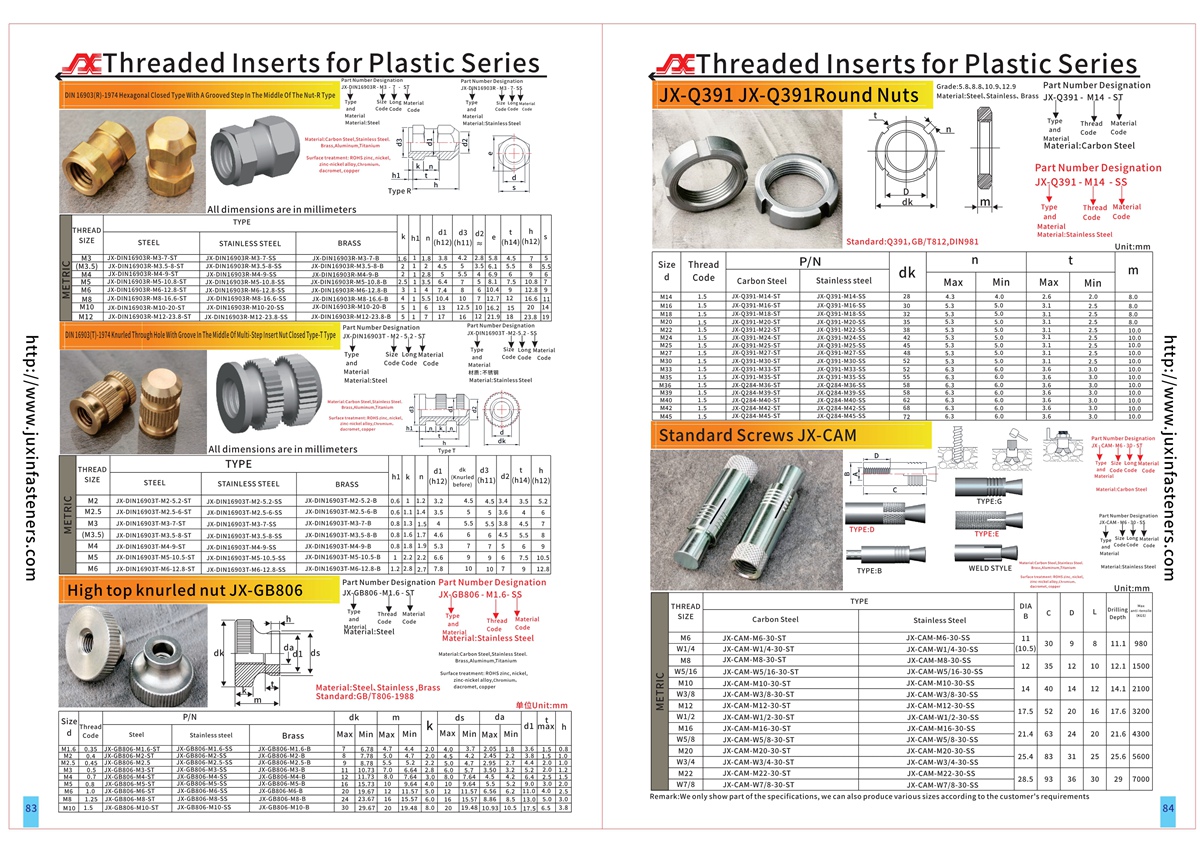
Technical reference: Product specification PDF and CAD documentation, pages 83–84
The supplied information does not establish the anchor's overall length, sleeve diameter, drill-hole diameter, minimum embedment depth, installation torque, expansion displacement, or load ratings.
These requirements must be verified before specifying the product for an actual anchoring application.
How Internally Threaded Concrete Expansion Anchors Work
An internally threaded expansion anchor provides a threaded connection within a drilled hole in a suitable substrate.
The metal body incorporates an expansion mechanism that creates radial pressure against the surrounding hole wall.
In cone-type designs, relative movement between the cone and expandable sleeve produces outward deformation.
The expanded body develops mechanical engagement with the substrate.
A compatible threaded rod or bolt can then be used to connect the supported component to the anchor.
The exact sequence depends on whether the anchor is activated through a setting tool, tightening action, or another specified mechanical method.
The supplied information describes a cone-type expansion plug but does not conclusively identify the setting mechanism.
Therefore, installers must not assume that this custom M20 anchor can be installed by the same procedure as a conventional drop-in anchor or a commercially available quick-twist anchor.
Installation must follow the approved drawing and validated setting procedure.
Internal Thread Protection During Expansion
The supplied product information describes a cone-type expansion arrangement intended to preserve the integrity of the internal thread during setting.
This is an important design consideration for internally threaded anchors.
If the threaded portion is distorted during expansion, the mating rod or bolt may not engage correctly.
The anchor design should separate the required expansion deformation from the functional threaded connection to the extent established by the approved geometry.
For OEM applications, inspection should verify that the internal thread remains functional after installation.
This may include checking thread engagement using a suitable mating fastener or thread gauge.
The acceptable inspection criteria should be established in the approved technical specification.
M20 Metric Thread Specification
The custom anchor is identified as an M20 internally threaded configuration.
M20 indicates a nominal metric thread diameter of 20 mm, approximately 0.787 in.
The complete thread designation must include the required pitch and tolerance class.
An M20 designation without pitch confirmation is insufficient for final manufacturing and procurement approval.
For ISO metric coarse threads, M20 commonly uses a 2.5 mm pitch.
However, this should not be assumed for the custom Hitachi anchor without checking its approved drawing.
The anchor's mating threaded rod or bolt must match the specified thread.
Metric threads are not directly interchangeable with UNC, UNF, or other inch-thread systems.
For international purchasing programs, both the anchor thread and mating fastener specification should be documented.
Concrete and Hard Stone Substrate Compatibility
The supplied product information identifies concrete and natural hard stone as potential installation substrates.
Mechanical expansion anchors develop pressure against the surrounding material.
Concrete is a common substrate for this type of fastening system because it can provide suitable resistance when the anchor and installation conditions are correctly selected.
However, not all concrete substrates have the same characteristics.
Relevant variables include concrete strength, cracking condition, reinforcement location, age, and local installation geometry.
Hard natural stone may also provide a suitable substrate in some applications, but its properties can vary significantly.
Stone type, fissures, bedding planes, and local material condition must be evaluated.
The product should not automatically be specified for hollow masonry, soft brick, lightweight block, or other weak substrates.
Expansion pressure may cause local cracking or failure in unsuitable materials.
No universal substrate approval has been established from the supplied information.
Mechanical Anchor Installation Considerations
Correct hole preparation and setting procedures are essential to the performance of mechanical expansion anchors.
Before installation, the engineer or installer should verify the selected anchor model and approved drawing.
The substrate must be suitable for the intended application.
The drill-hole diameter and depth must match the specified anchor geometry.
Hole cleaning should follow the validated installation procedure.
Dust, debris, or incorrect hole dimensions can affect mechanical engagement.
The anchor should be inserted to the required depth and orientation.
The expansion mechanism must then be activated using the approved setting method.
After installation, the internal thread should remain suitable for engagement with the mating fastener.
The connected component should be assembled according to the specified tightening and support requirements.
The exact installation sequence cannot be finalized from the supplied product description alone.
In particular, a conventional drop-in anchor may require a dedicated setting tool, while other expansion designs may use tightening action.
These methods are not automatically interchangeable.
For the custom M20 product, the correct setting method must be confirmed before publication of installation instructions or use in the field.
Expansion Anchors Compared with Quick-Twist Concrete Anchors
Quick-twist concrete anchors are a recognized category of mechanical anchors in the American industrial market.
Some designs are activated by tightening a nut or threaded connection, causing an expansion element to engage the drilled-hole wall.
The supplied JUXIN product information also describes a cone-type expansion mechanism.
However, similarity in expansion principle does not establish that the custom M20 product uses the same installation sequence or performance characteristics.
The term quick-twist should be used as a comparative search concept unless the approved drawing confirms a matching tightening-activated design.
The exact expansion method, installation depth, and mating fastener arrangement must be verified.
Expansion Anchors Compared with Drop-In Anchors
Drop-in anchors are internally threaded mechanical anchors commonly used in concrete.
Many conventional drop-in anchors are installed using a setting tool that drives an internal expansion element.
Once properly set, the anchor provides a female-threaded connection for a compatible rod or bolt.
The custom JUXIN anchor shares the broad concept of an internally threaded expansion connection.
However, its actual expansion geometry and setting method may differ.
It should not automatically be represented as a standard drop-in anchor.
Expansion Anchors Compared with Wedge Anchors
Wedge anchors generally incorporate an externally threaded stud and an expansion mechanism activated during tightening.
Internally threaded expansion anchors provide a female-threaded connection instead.
The correct choice depends on the required mounting arrangement, installation access, embedment requirements, and approved anchor performance.
Neither design should be selected solely by nominal thread diameter.
Expansion Anchors Compared with Chemical Anchors
Chemical anchors rely on an approved adhesive or bonding system to transfer load between the fastening element and the substrate.
Mechanical expansion anchors rely on physical expansion and engagement.
Mechanical anchors may avoid adhesive curing requirements.
However, they introduce expansion forces into the substrate.
The appropriate fastening system depends on load conditions, substrate properties, installation geometry, environmental exposure, and applicable approvals.
No general claim of superior strength or safety should be made without comparable test data.
Carbon Steel Expansion Anchors
Carbon steel is identified as a material option for the custom anchor body.
The supplied information also describes cold extrusion as a manufacturing method for carbon steel configurations.
Cold extrusion can be suitable for producing selected metal components with controlled geometry.
However, the actual manufacturing route must be confirmed for the specific anchor design.
Material selection should consider mechanical strength, formability, surface finish, and the intended expansion behavior.
The material must support the required deformation without unacceptable cracking or thread damage.
For applications exposed to moisture, a suitable protective finish may be necessary.
Zinc plating is a recognized protective finish for carbon steel fasteners, but its availability and specification must be confirmed for the selected product.
Stainless Steel Expansion Anchors
Stainless steel is also identified as a material option.
Stainless steel may be considered where corrosion resistance is important.
The exact grade should be selected according to the operating environment and mechanical requirements.
Different stainless steel grades have different strength, ductility, and corrosion characteristics.
For expansion anchors, material deformation behavior is particularly important.
A stainless steel substitution should not be approved solely because the nominal dimensions match a carbon steel version.
The expansion mechanism and installation performance must be validated for the selected material.
The supplied information does not establish a specific stainless steel grade for the custom M20 anchor.
Material requirements should therefore be confirmed during engineering review.
Surface Finish and Corrosion Protection
Surface finish selection depends on the anchor material and installation environment.
Zinc-plated carbon steel may be suitable for certain indoor or intermittently moist environments.
Stainless steel may be considered for more demanding corrosion conditions, depending on the actual grade.
Neither material should automatically be assumed suitable for aggressive chemical exposure, marine environments, or permanent immersion.
For outdoor or corrosive applications, the complete anchor assembly should be evaluated.
This includes the anchor body, expansion element, threaded rod, nut, washer, and other connected components.
Dissimilar-metal contact and environmental exposure may influence corrosion performance.
Customers should specify any required ASTM, EN, or other applicable material and coating requirements during quotation.
Industrial Applications and Engineering Solutions
Industrial Equipment Mounting
Mechanical expansion anchors may be used to connect suitable industrial equipment bases, brackets, and supports to concrete structures.
Potential applications include machinery supports, equipment frames, and service installation hardware.
The complete anchoring arrangement must be designed for the actual loads and substrate conditions.
An M20 internal thread does not establish the permissible equipment weight.
Static loads, dynamic loads, vibration, and installation geometry must be considered.
HVAC Equipment and Mechanical Services
HVAC systems may require threaded anchoring points for equipment supports, ducts, and mechanical service brackets.
Internally threaded expansion anchors can be considered where the substrate and approved installation requirements permit.
The fastening system must account for equipment weight, vibration, support spacing, and maintenance requirements.
The appropriate anchor should be selected as part of the complete mechanical support design.
Pipe Support and Mechanical Infrastructure
Pipe support systems may incorporate threaded rods, brackets, hangers, and structural attachment points.
Internally threaded concrete anchors can provide a connection between the supporting structure and compatible threaded hardware.
The required load capacity depends on the complete support arrangement.
Pipe contents, thermal expansion, vibration, and support spacing should be evaluated.
Overhead pipe support applications require particular attention to approved anchor performance and applicable installation requirements.
Electrical Equipment and Cable Support Systems
Electrical infrastructure may require mechanical attachment points for cable trays, conduit supports, and equipment brackets.
Expansion anchors can be evaluated for suitable concrete installations.
The engineer should verify substrate compatibility, support loads, installation clearance, and electrical equipment requirements.
Where the attachment is overhead or safety-critical, an appropriately approved and tested anchor system must be used.
AI Data Center and Power Infrastructure
AI data centers and high-performance computing facilities incorporate electrical distribution equipment, mechanical service systems, cooling infrastructure, and industrial support structures.
Concrete anchors may be required for selected equipment supports, brackets, and infrastructure attachments.
A custom M20 expansion anchor may be evaluated where its geometry and verified performance meet the project requirements.
However, no specific data center qualification or structural load rating has been established from the supplied product information.
Engineering approval must be based on the complete anchoring system.
Liquid Cooling and Thermal Management Equipment
Industrial liquid cooling systems may incorporate piping, mechanical supports, pump assemblies, and equipment brackets.
Concrete expansion anchors may be used for suitable mounting functions.
Selection should account for mechanical loads, vibration, environmental exposure, and maintenance access.
For systems involving water or other cooling fluids, material and corrosion compatibility should be evaluated.
Power Electronics and Electrical Enclosures
Power conversion equipment, UPS installations, and electrical distribution systems may require mechanical anchoring to concrete structures.
The appropriate anchor depends on the equipment base, support frame, substrate condition, and load requirements.
Electrical equipment anchoring may also involve seismic, vibration, or other project-specific design criteria.
The custom anchor must not be assumed suitable for these requirements without documented validation.
Industrial Automation and Manufacturing Facilities
Manufacturing facilities use concrete-mounted brackets, machinery supports, and service equipment.
Mechanical expansion anchors may provide suitable fastening solutions where the substrate and design requirements are compatible.
Production managers and maintenance teams should evaluate installation repeatability, inspection access, and replacement procedures.
Where a custom anchor is specified, installation instructions and dimensional requirements should be controlled across production or maintenance operations.
Semiconductor Manufacturing Facilities
Semiconductor facilities contain equipment support structures, mechanical services, and utility infrastructure.
Concrete anchoring may be required for suitable non-process-critical support applications.
Material cleanliness, vibration, corrosion exposure, and project-specific installation requirements may influence anchor selection.
Specialized cleanroom, seismic, or equipment qualification requirements must be established separately.
Fire Protection and Building Services
Fire protection piping and mechanical service systems may require approved anchoring arrangements.
The supplied product information identifies fire-fighting equipment and overhead piping among potential application categories.
However, these applications can involve specific building codes, fire protection standards, and approval requirements.
The custom M20 anchor must not be represented as approved for fire protection or life-safety systems without supporting certification and application-specific engineering review.
Overhead Anchoring and Safety Considerations
Overhead anchoring requires special attention because failure can cause falling equipment or suspended components.
The supplied product information references overhead piping, ceilings, and mechanical services.
These are potential application categories, not evidence of an approved overhead load rating.
Before an anchor is specified for overhead use, the engineer must verify the applicable approval, substrate condition, installation depth, load direction, and design resistance.
Where required, the anchor system should be assessed under the applicable provisions of EN 1992-4 or other relevant project standards.
Mechanical anchors used in regulated construction applications may also require applicable European Technical Assessments or other recognized product approvals.
The supplied information does not establish an ETA, ICC-ES evaluation, seismic qualification, fire resistance classification, or approved overhead load rating for this custom product.
These claims must not be made without supporting documentation.
Concrete Anchor Design and Load Transfer
Mechanical expansion anchors transfer load through interaction between the anchor body and the surrounding substrate.
Several failure mechanisms may be relevant to the complete anchoring system.
Steel Failure
The anchor or connected fastening component may fail when the applied load exceeds its mechanical capacity.
Concrete Cone Failure
Concrete surrounding the anchor may fail under certain tensile loading conditions.
Pullout Failure
The expansion mechanism may fail to maintain adequate engagement within the drilled hole.
Concrete Splitting
Expansion pressure or applied loads may cause cracking where the substrate geometry or installation conditions are unsuitable.
Edge Failure
Anchors installed too close to an edge may cause local substrate failure.
Combined Loading
Anchors may experience simultaneous tension, shear, bending, or other loading conditions.
The governing failure mechanism depends on the actual anchor geometry, substrate properties, installation conditions, and load combination.
No numerical design resistance should be assigned without appropriate testing and engineering evaluation.
Engineering Selection: More Than an M20 Thread
For OEM engineers and purchasing teams, the nominal M20 thread is only one part of the anchor specification.
Two anchors with the same internal thread may have different outside diameters, body lengths, expansion mechanisms, and installation requirements.
These differences can produce significantly different mechanical behavior.
An effective engineering selection should establish the complete anchor geometry, including the drilled-hole diameter, minimum installation depth, expansion element dimensions, and mating fastener requirements.
The substrate properties must also be defined.
For concrete applications, this may include concrete strength, cracking condition, edge distance, anchor spacing, and available member thickness.
The required load direction and installation environment must be evaluated.
Where regulatory approval is required, the applicable anchor assessment and design method must be identified.
This approach reduces the risk of selecting an anchor solely because its nominal thread size matches the mating rod.
Production and Installation Quality Control
For production managers and project engineers, installation repeatability is an important part of anchor performance.
A controlled process should begin with verification of the anchor model and approved technical drawing.
The correct drill bit and hole preparation method must be used.
Installation personnel should follow the validated hole cleaning and anchor setting procedure.
The required installation depth and setting condition should be checked.
The mating threaded component must engage correctly without damaging the internal thread.
Where a specified installation torque or setting displacement applies, the approved value and method should be followed.
Inspection records may be required for critical applications.
For custom OEM anchors, a clear installation specification helps reduce variation between installation teams and project locations.
Common Installation Problems and Prevention
Incorrect Drill-Hole Diameter
A hole that is too large may reduce expansion engagement.
A hole that is too small may prevent proper insertion or cause damage.
Incorrect Installation Depth
Insufficient embedment may prevent the anchor from developing the intended performance.
Excessive depth may create installation or engagement problems in certain designs.
Improper Hole Cleaning
Residual drilling dust or debris may affect installation and mechanical engagement.
The approved cleaning procedure should be followed.
Incorrect Expansion Setting
An improperly activated expansion mechanism may fail to develop the intended retention.
The setting method must match the specific anchor design.
Unsuitable Substrate
Soft masonry, damaged concrete, or unsuitable stone may not provide the required resistance.
Substrate compatibility must be established before installation.
Insufficient Edge Distance
Installation near concrete edges can increase the risk of local failure.
The required edge distance and spacing must be determined through the approved design.
Incorrect Thread Engagement
A mating rod or bolt with an incorrect thread pitch can damage the internal thread.
The complete thread designation must be verified.
Unverified Overhead Loading
Overhead installations require appropriate design and product approval.
The custom M20 anchor should not be used for critical suspended loads without the necessary engineering validation.
OEM Engineering Selection Checklist
Before approving a custom M20 concrete expansion anchor, engineers should confirm:
Approved product drawing and revision
Complete internal thread designation
Anchor outside diameter and body length
Expansion cone and sleeve geometry
Drill-hole diameter and depth
Minimum effective embedment
Installation method and setting requirements
Concrete or stone substrate properties
Concrete cracking condition where relevant
Anchor spacing and edge distance
Tension, shear, and combined loading requirements
Mating threaded rod or bolt specification
Material grade
Surface finish and corrosion protection
Operating temperature and environmental exposure
Required design approvals and test reports
Inspection and installation documentation
Estimated production quantity
The final anchor selection must be supported by the approved technical specification and applicable engineering validation.
OEM Purchasing and Supplier Qualification
JUXIN FASTENERS supports inquiries from industrial equipment manufacturers, purchasing engineers, supplier development teams, procurement managers, and international OEM supply chains.
Our experience includes a customer-specific M20 concrete expansion anchor project for Hitachi.
For custom anchoring components, buyers should provide the approved drawing, material specification, thread requirements, and installation geometry.
The purchasing specification should identify any required heat treatment, surface finish, dimensional tolerances, inspection requirements, and packaging instructions.
Where an anchor is intended for regulated construction or safety-critical use, the buyer must identify the required product approvals and supporting performance documentation.
For repeat supply programs, purchasing teams may also specify annual demand, delivery schedules, lot identification, drawing revision control, and material documentation.
Manufacturing feasibility, inspection scope, and commercial terms should be confirmed before order acceptance.
Custom M20 Expansion Anchor Manufacturing and RFQ Requirements
JUXIN FASTENERS welcomes technical inquiries for customer-specific internally threaded expansion anchors.
Potential customization requirements include:
Internal metric thread specification
Anchor body diameter and length
Expansion cone geometry
Expandable sleeve configuration
Drilled-hole compatibility
Material grade
Surface finish
Dimensional tolerances
Thread inspection requirements
Installation tooling compatibility
Customer-specific inspection criteria
Packaging and labeling
Annual production demand
Custom manufacturing feasibility depends on the proposed geometry, material requirements, manufacturing process, tooling, inspection requirements, and production volume.
Customers are encouraged to provide 2D engineering drawings, available 3D CAD models, and application specifications for review.
Frequently Asked Questions
What is an internally threaded concrete expansion anchor?
It is a mechanical anchor that provides an internal threaded connection and uses controlled expansion to engage the surrounding substrate.
What is the supplied custom anchor size?
The identified customer-specific configuration uses an M20 internal metric thread.
Is this anchor the same as a standard drop-in anchor?
Not necessarily. Both may provide internally threaded concrete connections, but the expansion mechanism and installation procedure must be confirmed from the actual product design.
Is this product a quick-twist concrete anchor?
The supplied information describes a cone-type expansion mechanism but does not conclusively establish a tightening-activated quick-twist installation method. The approved drawing must confirm the correct classification.
What materials are available?
The supplied product information identifies carbon steel and stainless steel as material options. Exact grades and configurations must be confirmed during quotation.
Can this anchor be installed in natural stone?
The supplied information identifies hard natural stone as a potential substrate. Suitability must be established according to the actual stone properties and application requirements.
Can the anchor be used with threaded rods?
The internally threaded design may accept a compatible threaded rod or bolt, subject to the approved thread specification and installation requirements.
Does an M20 thread determine the anchor load capacity?
No. Load capacity depends on the complete anchor design, substrate properties, installation conditions, and applicable engineering assessment.
Can this anchor be used for overhead pipe supports?
Only where the complete anchoring system has been appropriately designed, tested, and approved for the intended overhead application.
Is the anchor approved under ETA or ICC-ES requirements?
No such approval has been established from the supplied product information. Any required approval must be verified before specification.
Has JUXIN FASTENERS supplied a custom M20 anchor for Hitachi?
Yes. The supplied project information identifies a customer-specific M20 expansion anchor for Hitachi. This does not establish approval for unrelated applications.
Can JUXIN FASTENERS review custom anchor drawings?
Customer-specific drawings and technical requirements may be submitted for engineering review. Manufacturing feasibility and final specifications must be confirmed before quotation.
What information should an OEM purchasing team include in an RFQ?
An effective RFQ should include the approved drawing, thread specification, anchor dimensions, material grade, finish requirements, application details, estimated order quantity, quality requirements, and delivery expectations.
Related Industrial Anchors and Specialty Fasteners
For additional concrete fastening and industrial mounting requirements, consider these related JUXIN FASTENERS product families:
Concrete Expansion Anchors
Internally Threaded Anchors
Drop-In Anchors
Wedge Anchors
Threaded Rods and Studs
Heavy-Duty Industrial Fasteners
Custom Specialty Fastening Solutions
These product families provide different installation and load-transfer mechanisms.
The appropriate fastening solution must be selected according to the actual substrate, installation geometry, loading conditions, and applicable engineering requirements.
Contact JUXIN FASTENERS for Custom M20 Expansion Anchor RFQs
JUXIN FASTENERS supplies industrial fastening components for OEM manufacturers, equipment builders, purchasing engineers, supplier development teams, production managers, and international industrial supply chains.
Our customer-specific M20 expansion anchor experience includes a project for Hitachi.
For custom internally threaded concrete anchors, our team can review technical drawings, material specifications, dimensional requirements, and purchasing quantities.
We welcome inquiries involving industrial equipment mounting, mechanical infrastructure, HVAC support systems, power equipment installations, and custom OEM fastening components.
To request an engineering review or commercial quotation, please provide your technical drawings, required thread specifications, material requirements, application details, estimated purchasing quantities, and delivery expectations.
Email: info@juxinfasteners.com
Website: www.juxinfasteners.com
Contact JUXIN FASTENERS to discuss custom M20 expansion anchors, OEM manufacturing requirements, and long-term industrial supply opportunities.
Product Packaging
JUXIN FASTENERS provides protective packaging for custom M20 concrete expansion anchors and other industrial fastening components.
The supplied packaging arrangement includes inner polyfoam protection, outer corrugated cartons, and palletized packing for transportation.
Reference carton dimensions:
29 × 19 × 19.5 cm
23.5 × 17.5 × 8 cm
Reference pallet dimensions:
215 × 100 × 90 cm
These dimensions are reference packaging configurations and may vary according to anchor dimensions, product weight, order quantity, and shipment requirements.
Packaging should protect the internal threads, expandable sleeve, cone-type expansion components, and surface finish from damage during handling and transportation.
For OEM and industrial supply programs, customer-specific packaging arrangements may include protective separation, part-number identification, carton labeling, lot identification, and customer-defined packing instructions.
Final packing quantities, carton dimensions, pallet configurations, and labeling requirements will be confirmed according to the approved purchase order and shipment specifications.
Product Pictures
Contact Us
Tel.:
+86 020 8621 0320
+86 020 3121 6067
E-mail:
Technical Support:
Navigation
SEND INQUIREY