Call Us
+86 136 6007 9809
Call Us
+86 136 6007 9809

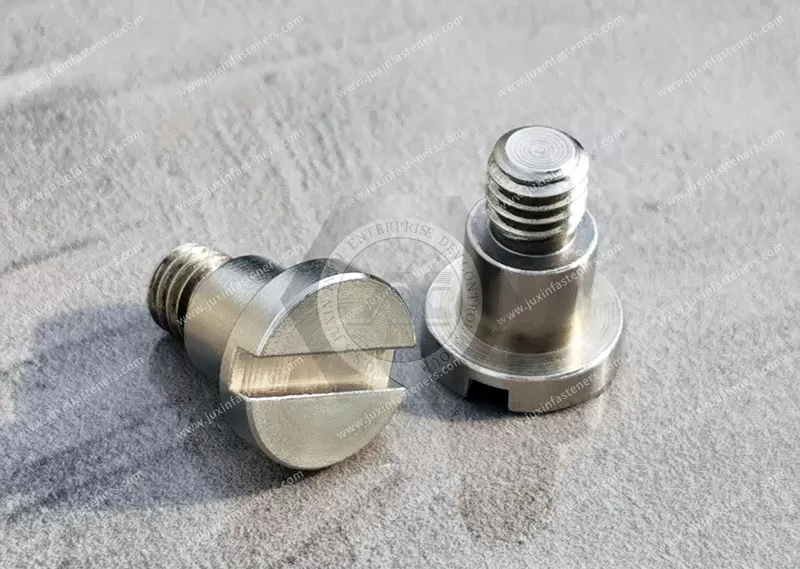
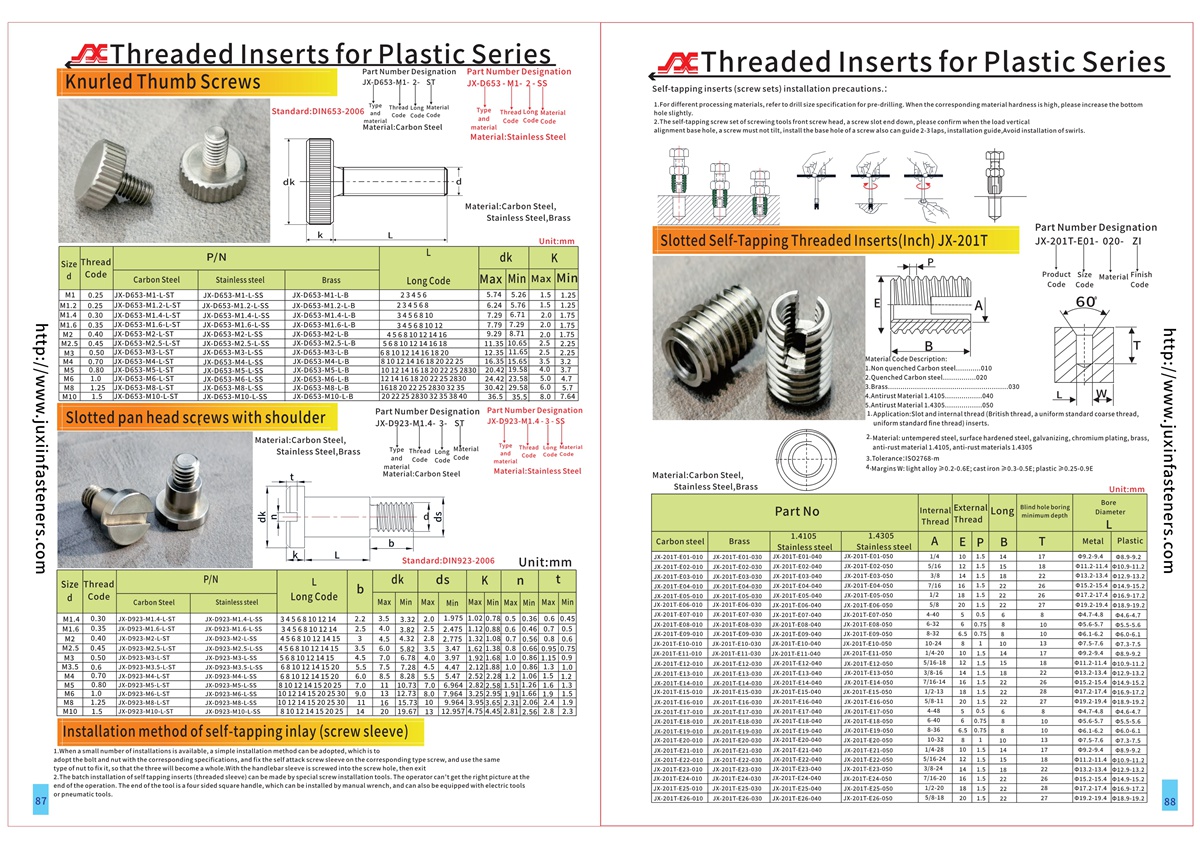
JUXIN FASTENERS supplies slotted pan head shoulder screws for mechanical positioning, panel assemblies, and industrial equipment fastening.
The design combines a slotted head, an unthreaded shoulder, and a threaded end to provide controlled spacing and component location. Metric thread sizes range from M1.4 to M10.
Material options include stainless steel and selected carbon steels. These DIN 923-style shoulder screws can be reviewed for custom shoulder dimensions, thread lengths, tolerances, and OEM production requirements.
Product Specification
Slotted Pan Head Shoulder Screws for Precision Mechanical Positioning and OEM Assemblies
Product Overview
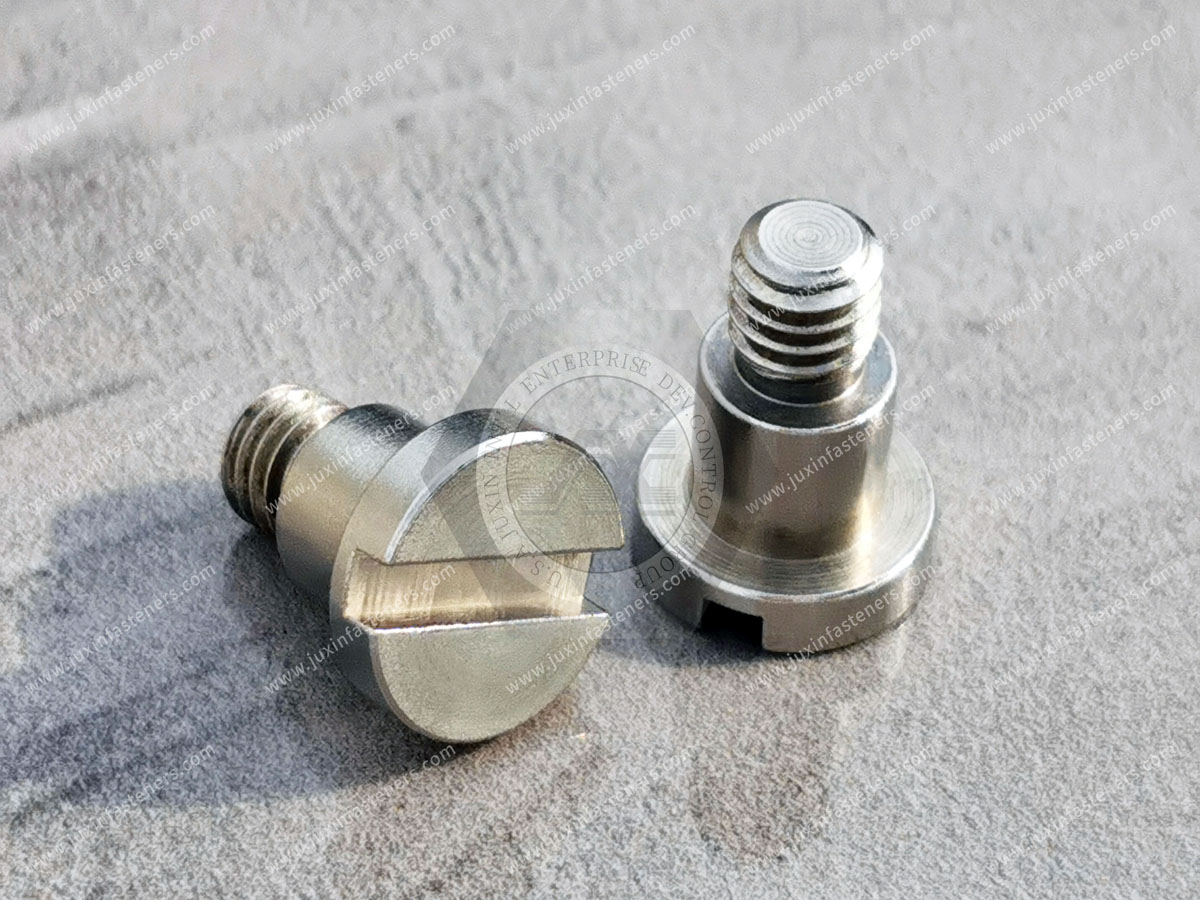
Slotted pan head shoulder screws are threaded fastening components featuring a slotted head, a larger-diameter unthreaded shoulder, and a smaller-diameter threaded section.
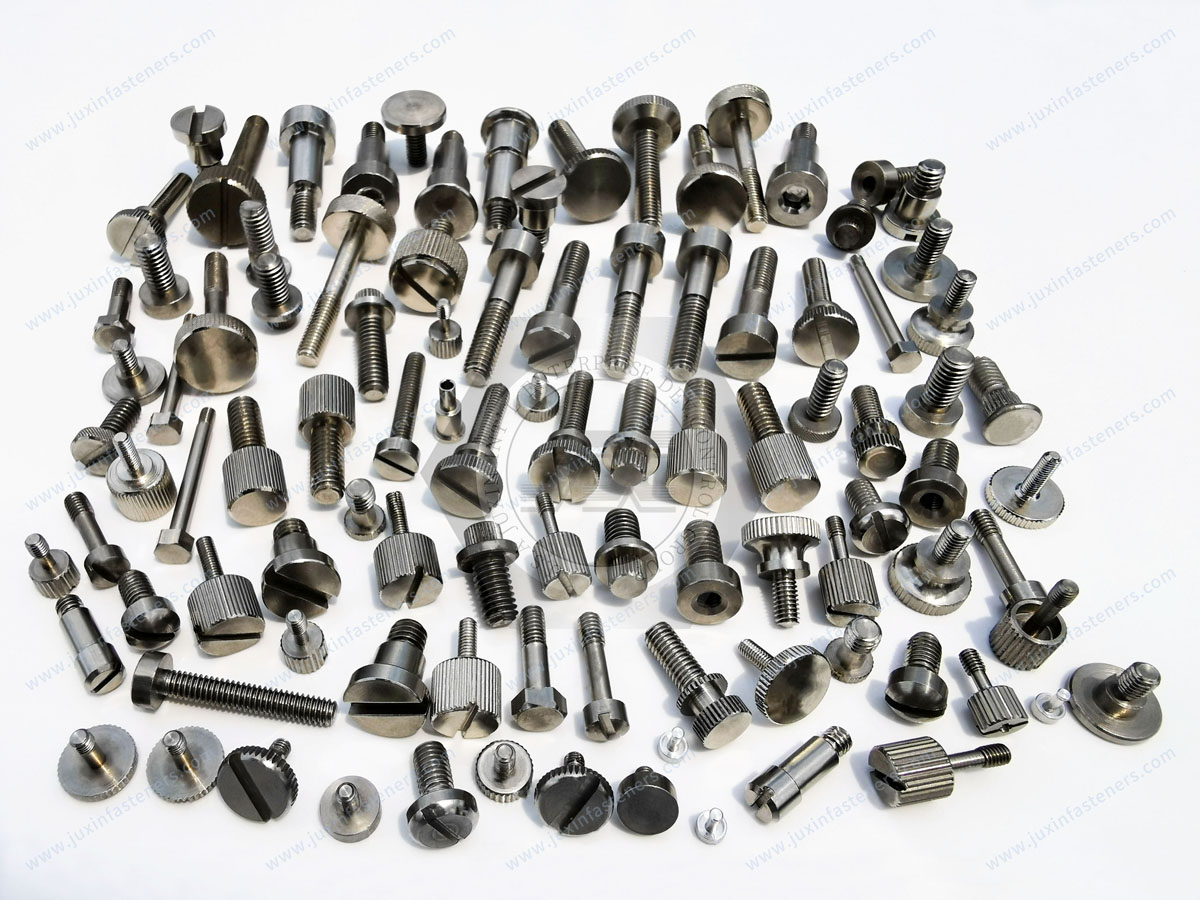
JUXIN FASTENERS supplies these fasteners for industrial machinery, instrumentation, mechanical assemblies, equipment panels, positioning mechanisms, and customer-specific OEM applications.
Unlike fully threaded machine screws, shoulder screws provide a defined unthreaded section between the head and threaded end.
This shoulder can serve as a spacer, locating feature, guide surface, or bearing surface when the dimensions, tolerances, and operating conditions are suitable.
The slotted head allows installation using a compatible flat-blade screwdriver.
The product is identified as a DIN 923-style configuration in the supplied technical reference.
Actual conformity with DIN 923 must be established by comparing the approved product drawing with the applicable standard.
Product Construction and Functional Design
The product consists of three principal sections.
The slotted head provides the driving interface and bears against the assembly surface or designated mating component.
The unthreaded shoulder provides a defined cylindrical section that may control spacing or component positioning.
The threaded end engages a compatible tapped hole, nut, or threaded insert.
The shoulder diameter is generally larger than the nominal thread diameter.
This stepped construction distinguishes shoulder screws from conventional fully threaded fasteners.
Depending on the design, the shoulder may locate a component while the threaded section secures the assembly.
The actual functional performance depends on the shoulder dimensions, dimensional tolerances, material properties, loading direction, and mating component geometry.
Product Specifications
Product type: Slotted pan head shoulder screw
Alternative terminology: Slotted shoulder screw, slotted shoulder bolt, shouldered machine screw, stepped shank screw
Head style: Slotted pan head
Drive type: Straight slot
Shank design: Unthreaded shoulder with smaller-diameter threaded end
Thread system: Metric
Supplied size range: M1.4 to M10
Dimensional reference: DIN 923-style configuration
Stainless steel options identified:
SUS302
SUS303
SUS316
SUS410
SUS420
SUS430
Steel material references identified:
C45
C46
C20
1213
1214
1215
Custom dimensions: Subject to engineering drawing review
Surface finish: According to the approved specification
Technical reference: Product PDF and CAD documentation, pages 87–88
The supplied information does not establish a complete dimensional table, shoulder tolerance, strength rating, or fixed material specification for every size.
These characteristics must be confirmed from the approved product drawing.
Shoulder Geometry and Dimensional Control
The shoulder is the principal functional difference between a shoulder screw and a conventional machine screw.
Important dimensional characteristics include shoulder diameter, shoulder length, threaded length, head dimensions, and the transition between the shoulder and threaded section.
Shoulder Diameter
The shoulder diameter may determine how the screw locates or supports a mating component.
Where the shoulder fits inside a bore, the required clearance or interference must be established by the design engineer.
Shoulder Length
The shoulder length can control the distance between the underside of the head and the beginning of the threaded section.
This dimension may influence component spacing, axial clearance, and assembly movement.
Threaded Length
The threaded section must provide sufficient engagement with the mating component.
Thread engagement requirements depend on the thread size, mating material, loading conditions, and joint design.
Head Dimensions
Head diameter and height influence bearing area, installation clearance, and accessibility.
The screwdriver slot must be compatible with the intended installation tool.
Dimensional Tolerances
Shoulder diameter and length tolerances may be important in locating or movement-related applications.
The supplied information does not establish a special precision class for the shoulder.
A customer requiring close-tolerance shoulder dimensions should specify the values directly on the engineering drawing.
DIN 923 and International Standards
DIN 923 is associated with slotted shoulder screws.
It provides a useful dimensional reference for this product category.
However, the designation DIN 923 should not be interpreted as confirmation that every customer-specific version conforms to all standard dimensions.
The actual product drawing must establish the applicable dimensions and tolerances.
For metric threads, relevant international standards include ISO 68-1, ISO 261, ISO 724, and ISO 965.
ASME B1.13M provides an additional metric thread reference commonly used in American engineering specifications.
Where stainless steel fastener properties are specified, ISO 3506-1 may be relevant, subject to the actual product type, material grade, and applicable requirements.
Material specifications may reference applicable ASTM or EN standards when defined by the customer.
A material designation alone does not establish compliance with every related fastener standard.
Metric and inch-thread systems are not directly interchangeable.
Stainless Steel Material Selection
Stainless steel shoulder screws may be selected where corrosion resistance, appearance, material compatibility, or other application requirements justify their use.
The supplied product information identifies several stainless steel grades.
These grades have different mechanical and corrosion characteristics.
SUS302 Stainless Steel
SUS302 is an austenitic stainless steel grade.
It may be considered for selected industrial applications where the required mechanical and corrosion characteristics are suitable.
SUS303 Stainless Steel
SUS303 is an austenitic stainless steel grade commonly selected for improved machinability.
It may be useful for machined shoulder screw components requiring controlled geometry.
However, its corrosion behavior differs from other austenitic stainless steel grades.
SUS316 Stainless Steel
SUS316 is an austenitic stainless steel grade containing molybdenum.
It generally provides improved resistance to certain corrosive environments compared with common non-molybdenum austenitic grades.
Its suitability must still be evaluated for the actual operating environment.
SUS410 Stainless Steel
SUS410 is a martensitic stainless steel grade.
Its strength and hardness can vary according to heat treatment and material condition.
SUS420 Stainless Steel
SUS420 is a martensitic stainless steel grade that can achieve different hardness levels depending on heat treatment.
The correct material condition must be selected according to the required mechanical performance.
SUS430 Stainless Steel
SUS430 is a ferritic stainless steel grade.
Its corrosion resistance and mechanical characteristics differ from those of austenitic and martensitic stainless steels.
For international OEM procurement, the selected stainless steel grade should be identified by a complete approved material specification.
Steel Material Options
The supplied information also identifies C45, C46, C20, 1213, 1214, and 1215 as steel material references.
These materials can differ in chemical composition, machinability, strength, and heat-treatment response.
They should not be treated as interchangeable without reviewing the applicable material specification.
For steel shoulder screws, the required material condition and surface treatment should be defined according to the intended application.
The correct material selection depends on mechanical loading, wear conditions, corrosion exposure, and manufacturing requirements.
The supplied information does not establish that every listed material is available in every thread size or shoulder configuration.
Metric Thread Sizes and Mating Components
The supplied size range is M1.4 to M10.
This identifies the nominal metric thread range referenced for the product family.
It does not establish that every intermediate size or pitch is available in every material and shoulder configuration.
The approved drawing should define the complete thread designation.
For example, the thread specification should identify the nominal diameter, pitch, and tolerance class.
The mating component must use a compatible internal thread.
Possible mating components include tapped metal blocks, threaded inserts, captive nuts, and suitable threaded mounting components.
The correct thread engagement must be established according to the mechanical requirements of the assembly.
Shoulder Screws as Locating and Spacing Components
One important engineering function of a shoulder screw is to establish a defined position between assembled components.
The shoulder may act as a locating surface when fitted into a corresponding bore.
It may also maintain a defined spacing between components.
For example, a shoulder screw can be used to position a bracket or guide component while the threaded end secures the connection.
The actual spacing depends on shoulder length and the mating component geometry.
Where accurate positioning is required, shoulder diameter and length tolerances should be specified.
The engineer must also evaluate the required clearance and expected mechanical loading.
Shoulder Screws in Moving Assemblies
Shoulder screws are sometimes used as pivots, guide elements, or supporting shafts for moving components.
However, the suitability of a particular shoulder screw for these functions depends on its material, geometry, surface finish, tolerance, and loading conditions.
A standard shoulder screw should not automatically be described as a precision bearing shaft.
For applications involving rotation or sliding motion, engineers should evaluate contact pressure, wear, lubrication, and component alignment.
Where close-tolerance movement is required, the shoulder diameter and surface finish must be specified accordingly.
The supplied information does not establish bearing-grade precision or a rated dynamic load capacity for this product.
Slotted Head Design and Installation
The slotted head provides a simple driving interface.
A compatible flat-blade screwdriver engages the slot to rotate the screw.
This design can be suitable for selected industrial assemblies where the required installation torque and access conditions are compatible with a slotted drive.
However, slotted drives may be less suitable for high-torque automated assembly than certain recessed drive systems.
The installer should use a correctly sized screwdriver to reduce the risk of slot damage.
The required tightening torque depends on thread size, material, joint design, and mating components.
No universal tightening torque is established by the supplied product information.
Slotted Shoulder Screws Compared with Standard Machine Screws
A standard machine screw commonly uses a threaded shank for fastening.
A shoulder screw incorporates a defined unthreaded section.
This shoulder can provide spacing, positioning, or a controlled contact surface.
The correct selection depends on whether the assembly requires only threaded clamping or also requires a specific shoulder function.
Shoulder screws should not be substituted for fully threaded machine screws without reviewing the joint geometry.
Slotted Shoulder Screws Compared with Socket Head Shoulder Screws
Socket head shoulder screws use an internal hexagonal drive.
Slotted shoulder screws use a straight screwdriver slot.
Socket head configurations may be preferable where higher installation torque or improved tool engagement is required.
Slotted configurations may be appropriate where the assembly design specifies a simple screwdriver interface.
The choice depends on available clearance, tightening requirements, assembly equipment, and maintenance access.
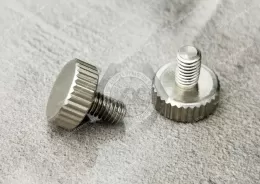
Slotted Shoulder Screws Compared with Knurled Thumb Screws
Knurled thumb screws are primarily designed for convenient manual operation.
Slotted shoulder screws use a screwdriver and incorporate a defined shoulder section.
A knurled thumb screw may be preferable for frequently opened access panels.
A slotted shoulder screw may be preferable where component spacing or positioning is important.
These products serve different mechanical functions and should not be treated as direct substitutes.
Industrial Applications
Precision Instrumentation
Instrumentation manufacturers may use shoulder screws for positioning brackets, guides, and selected mechanical components.
The shoulder can provide a defined locating surface when the dimensions and tolerances are suitable.
For precision applications, the engineer should specify the required shoulder diameter, length, and surface finish.
Laboratory Equipment
Laboratory equipment may contain compact mechanical assemblies, positioning components, and removable modules.
Slotted shoulder screws can be considered where their geometry and installation method suit the design.
Material selection should account for cleaning exposure and corrosion requirements.
Industrial Automation Equipment
Automation systems frequently use mechanical brackets, guides, and positioning components.
Shoulder screws may be considered for selected assemblies requiring defined spacing or component location.
Where repeated movement occurs, the design must be evaluated for wear and loading.
Machinery and Mechanical Equipment
Industrial machinery may incorporate shoulder screws in brackets, covers, guide components, and mechanical linkages.
The shoulder can serve as a controlled mounting feature when properly specified.
The engineer should consider vibration, joint loading, and maintenance requirements.
Electrical Equipment and Enclosures
Electrical equipment manufacturers may use shoulder screws for selected mechanical mounting and spacing functions.
The correct design should consider electrical clearance, mechanical retention, and material compatibility.
A metallic shoulder screw does not automatically provide an approved electrical grounding connection.
Telecommunications Equipment
Telecommunications assemblies may require compact fastening components for brackets, equipment housings, and mechanical positioning features.
Slotted shoulder screws can be considered where the head profile, thread size, and shoulder dimensions match the application.
AI Data Center and Server Equipment
AI data center equipment incorporates numerous mechanical components, enclosures, and mounting systems.
Shoulder screws may be considered for selected brackets, positioning features, and serviceable mechanical assemblies.
Where the application involves structural loads or vibration, the required mechanical performance must be validated.
Power Electronics and Industrial Electrification
Power conversion equipment, UPS systems, and electrical enclosures may require shoulder screws for selected mechanical positioning or mounting functions.
Material and dimensional selection should consider operating temperature, vibration, and equipment maintenance requirements.
Semiconductor Manufacturing Equipment
Semiconductor equipment may contain compact mechanical assemblies, instrument mounts, and positioning components.
Shoulder screws may be useful where a defined shoulder geometry supports the required assembly function.
Cleanliness, material restrictions, and precision requirements must be evaluated separately.
Automotive and EV Equipment
Automotive equipment and electric vehicle electronics may contain mechanical brackets and positioning components.
Shoulder screws can be considered for selected applications where the material and geometry meet the engineering requirements.
No automotive qualification or application-specific approval is implied.
HVAC and Industrial Control Equipment
HVAC equipment may use shoulder screws in selected mechanical linkages, brackets, and control assemblies.
The engineer should evaluate vibration, corrosion exposure, and service conditions.
Engineering Selection Considerations
The selection process should begin with the required function of the shoulder.
The engineer should determine whether the fastener is intended for spacing, positioning, guiding, or general mechanical fastening.
The shoulder diameter and length should then be specified according to the mating component geometry.
Thread size and engagement length must provide adequate retention.
The head profile and screwdriver access should be compatible with the installation process.
Material selection should account for mechanical loading, wear, corrosion exposure, and manufacturing requirements.
Where precision is important, the drawing should identify the required dimensional tolerances and surface finish.
Production managers should verify that the fastener can be installed consistently using the intended assembly tools.
Common Design and Installation Problems
Incorrect Shoulder Diameter
An incorrect shoulder diameter may create excessive clearance or prevent proper assembly.
Incorrect Shoulder Length
A shoulder that is too short or too long may alter component spacing or interfere with the intended clamping function.
Insufficient Thread Engagement
A short threaded section may not provide the required retention.
Incorrect Mating Thread
Metric and inch-thread systems must not be mixed.
Excessive Tightening Torque
Excessive torque may damage the screw, screwdriver slot, or mating thread.
Insufficient Tightening
Inadequate tightening may allow unintended movement or loosening.
Unverified Precision Requirements
A general shoulder screw should not be assumed suitable for a close-tolerance bearing or guide application without dimensional verification.
Incorrect Material Selection
Different stainless steel and steel grades have different mechanical and corrosion characteristics.
Insufficient Installation Clearance
The head and screwdriver must have adequate access for installation and removal.
OEM Engineering Selection Checklist
Before approving a slotted pan head shoulder screw for production, confirm:
Nominal metric thread size
Thread pitch
Thread tolerance
Shoulder diameter
Shoulder length
Threaded length
Head diameter
Head height
Slot dimensions
Material grade
Material condition
Surface finish
Shoulder dimensional tolerance
Required surface finish of the shoulder
Mating component dimensions
Required thread engagement
Mechanical loading conditions
Vibration exposure
Corrosion environment
Installation tool access
Inspection requirements
Annual purchasing quantity
The approved engineering drawing should establish the final dimensional and material requirements.
OEM Purchasing and Supplier Qualification
JUXIN FASTENERS supports inquiries from OEM manufacturers, mechanical engineers, purchasing engineers, procurement managers, supplier development teams, and international industrial supply chains.
For accurate quotation, buyers should provide the required shoulder screw configuration and applicable engineering drawing.
The purchasing specification should identify thread size, shoulder diameter, shoulder length, threaded length, head dimensions, material grade, surface finish, and expected order quantity.
Where applicable, buyers may also specify dimensional inspection, material documentation, surface finish requirements, packaging, and drawing revision control.
For repeat purchasing programs, customers may provide annual demand, delivery schedules, and quality expectations.
Any required RoHS or REACH documentation should be identified during quotation.
Manufacturing feasibility, inspection scope, and commercial conditions must be confirmed before order acceptance.
Custom Slotted Shoulder Screws for OEM Applications
JUXIN FASTENERS welcomes technical inquiries for standard and customer-specific slotted pan head shoulder screws.
Potential customization requirements include:
Metric thread specifications
Custom shoulder diameters
Custom shoulder lengths
Threaded length adjustments
Head diameter and height modifications
Slot geometry
Alternative stainless steel grades
Steel material options
Customer-defined surface finishes
Dimensional tolerances
Shoulder surface finish requirements
Special mechanical assembly requirements
Customer-specific inspection requirements
Custom packaging
Annual production demand
Custom manufacturing feasibility depends on the required geometry, material specification, manufacturing process, tooling, inspection requirements, and production volume.
Customers are encouraged to submit 2D engineering drawings, available 3D CAD models, and purchasing specifications for review.
Frequently Asked Questions
What is a slotted shoulder screw?
A slotted shoulder screw is a threaded fastener with a straight-slot head, an unthreaded shoulder, and a smaller-diameter threaded section.
What is the purpose of the shoulder?
The shoulder can provide spacing, positioning, or a controlled contact surface, depending on the assembly design.
What is DIN 923?
DIN 923 is a dimensional reference associated with slotted shoulder screws. Actual product conformity must be confirmed from the approved drawing.
What metric sizes are available?
The supplied product information identifies a metric size range from M1.4 to M10. Specific configurations must be confirmed.
Are these screws available in stainless steel?
The supplied information identifies several stainless steel grades, including SUS302, SUS303, SUS316, SUS410, SUS420, and SUS430. Availability depends on the required configuration.
Can shoulder screws be used as pivot shafts?
They may be suitable for selected pivot applications when the shoulder geometry, material, surface finish, and loading conditions are appropriate.
Are these precision bearing shoulder screws?
Not automatically. Precision bearing applications require verified shoulder tolerances and suitable mechanical characteristics.
Are slotted shoulder screws the same as thumb screws?
No. Thumb screws are designed primarily for manual operation, while slotted shoulder screws incorporate a defined shoulder and use a screwdriver drive.
Can JUXIN FASTENERS review custom shoulder screw drawings?
Customer-specific drawings and technical requirements may be submitted for engineering review. Manufacturing feasibility and final specifications must be confirmed before quotation.
What information should an OEM purchasing team include in an RFQ?
An RFQ should include thread size, shoulder dimensions, head dimensions, material grade, surface finish, required quantity, inspection requirements, and delivery expectations.
Related Industrial Fastening Solutions
For related mechanical fastening requirements, consider these JUXIN FASTENERS product families:
Knurled Thumb Screws
Precision Shoulder Screws
Socket Head Shoulder Screws
Custom CNC Machined Screws
Stainless Steel Machine Screws
Captive Panel Screws
Self-Clinching Nuts
Self-Clinching Standoffs
Custom Precision Fasteners
These product families provide different drive styles, shoulder configurations, installation methods, and material options.
The appropriate solution should be selected according to the assembly geometry, required mechanical performance, installation access, and production requirements.
Contact JUXIN FASTENERS for Slotted Shoulder Screw RFQs
JUXIN FASTENERS supplies industrial fastening components for OEM manufacturers, mechanical engineers, purchasing managers, supplier development teams, production managers, and international industrial supply chains.
For slotted pan head shoulder screws, DIN 923-style fasteners, and customer-specific precision threaded components, our team can review technical drawings, material specifications, dimensional requirements, and purchasing quantities.
We welcome inquiries involving instrumentation equipment, industrial machinery, electrical enclosures, telecommunications equipment, automation systems, and custom OEM mechanical assemblies.
To request an engineering review or commercial quotation, please provide your technical drawings, required thread specifications, shoulder dimensions, material grade, estimated purchasing quantities, and delivery expectations.
Email: info@juxinfasteners.com
Website: www.juxinfasteners.com
Contact JUXIN FASTENERS to discuss slotted shoulder screw selection, custom dimensional requirements, and long-term OEM supply opportunities.
Product Packaging
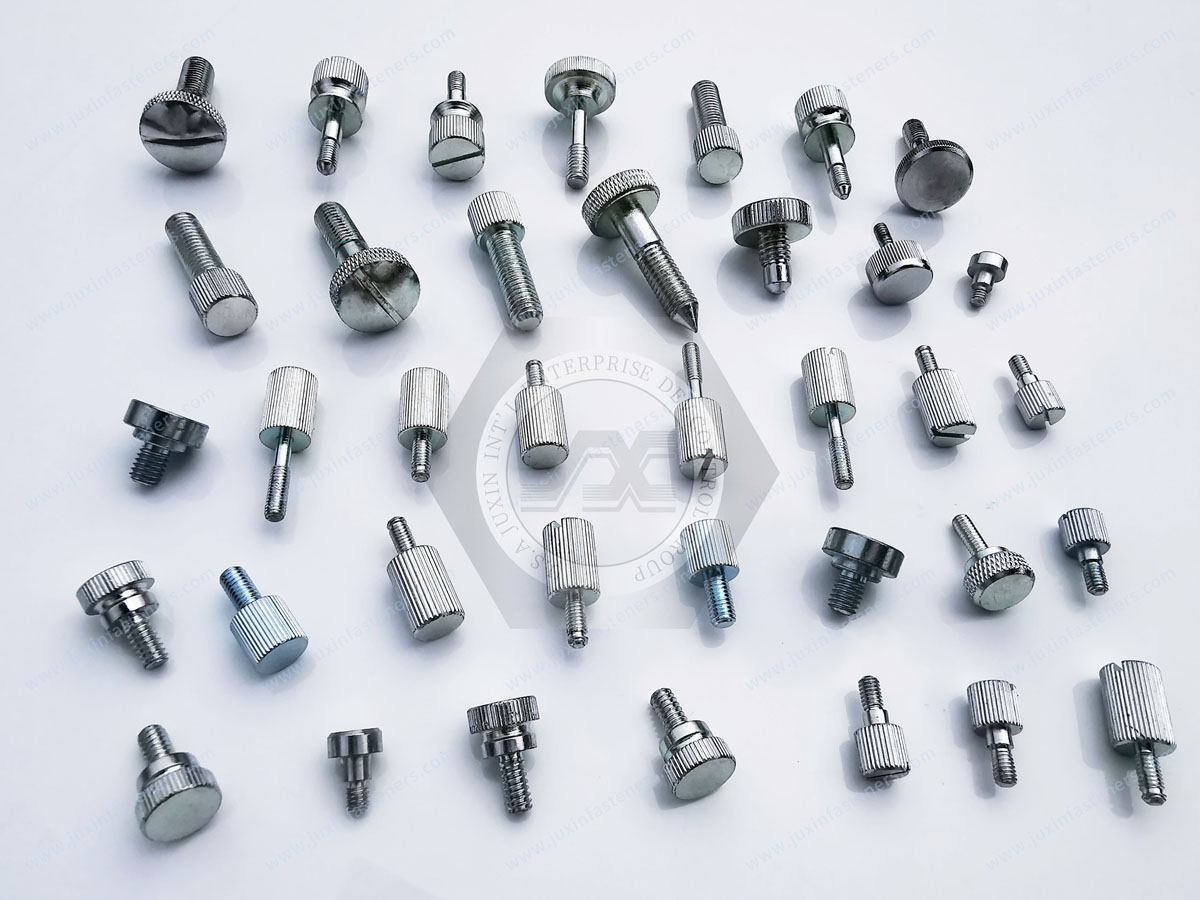
JUXIN FASTENERS provides protective packaging for slotted pan head shoulder screws and other precision industrial fastening components.
Packaging can be arranged with inner protective materials, outer corrugated cartons, and palletized packing according to confirmed order requirements.
The packaging method should protect the screwdriver slot, shoulder surfaces, external threads, and finished surfaces from damage during handling and transportation.
For OEM and industrial supply programs, customer-specific packaging arrangements may include protective separation, part-number identification, carton labeling, lot identification, and customer-defined packing instructions.
For precision shoulder screw applications, additional protective separation may be specified to reduce contact damage to critical shoulder surfaces.
Final packing quantities, carton dimensions, pallet configurations, and labeling requirements will be confirmed according to the approved purchase order and shipment specifications.
Product Pictures
Contact Us
Tel.:
+86 020 8621 0320
+86 020 3121 6067
E-mail:
Technical Support:
Navigation
SEND INQUIREY