Call Us
+86 136 6007 9809
Call Us
+86 136 6007 9809

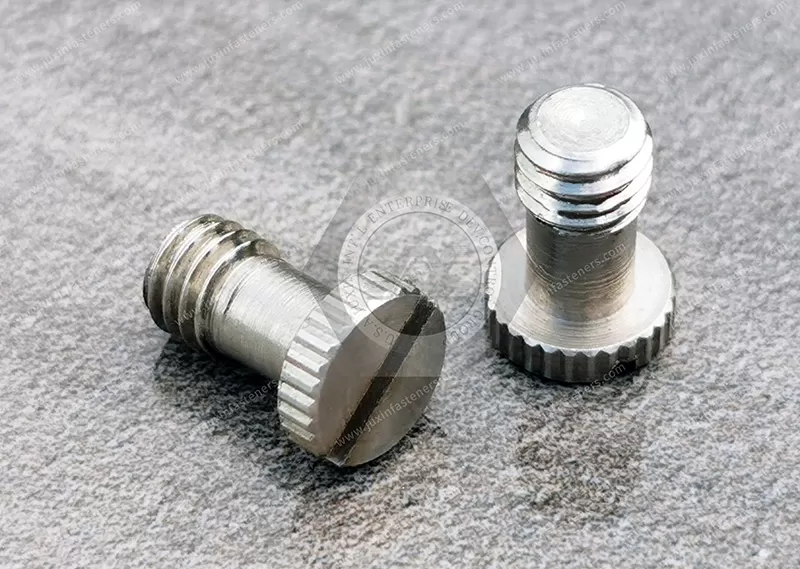
Flush-Mounted Captive Panel Screws – JX-PS10 Unified Series
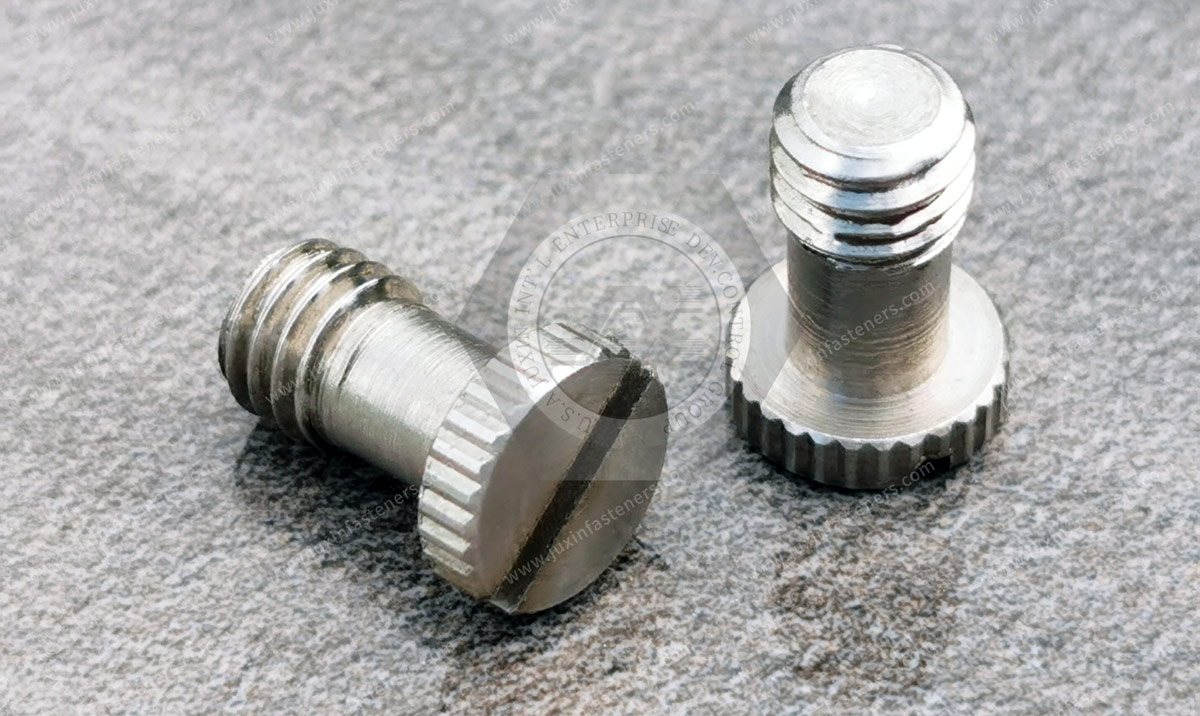
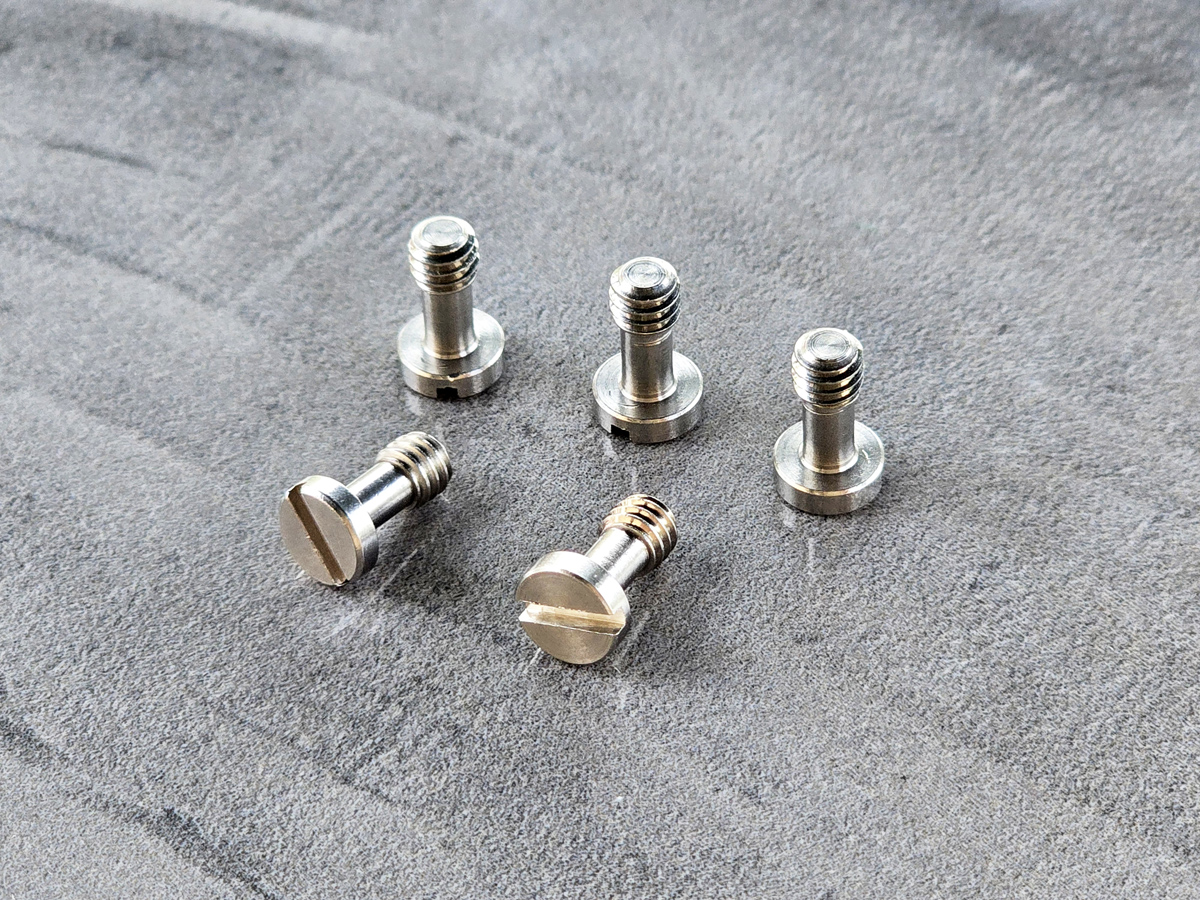
JX-PS10 flush-mounted screws are designed for use in captive panel fastening assemblies where a compact mounting profile and secure screw retention are required.
When assembled with a compatible self-clinching retainer, the screw can remain attached to the removable panel after disengagement from the mating thread, reducing loose hardware during equipment maintenance.
Material: Carbon steel or stainless steel.
Unified screw sizes: #4 to #10, subject to the applicable product drawing.
The compatible flush-mounted retainer system is designed for installation into suitable metal panels with a stated minimum thickness of 0.125 in. (approximately 3.2 mm).
Typical applications include industrial control cabinets, electronic enclosures, telecommunications equipment, instrumentation, removable machine covers, and service access panels.
JX-PS10 screws can be evaluated with compatible JX-PR10 retainers according to approved dimensions and assembly requirements.
Custom dimensions and OEM configurations may be reviewed based on customer drawings.
Product Specification
JX-PS10 Flush-Mounted Captive Screws – Unified Series
Juxin Fasteners supplies JX-PS10 flush-mounted screws for OEM manufacturers requiring compact panel fastening, reliable service access, and reduced loose hardware in industrial equipment.
The JX-PS10 Unified Series is intended for use with compatible captive screw retaining components in removable metal panel assemblies.
Its primary function is to provide a reusable threaded fastening point while allowing the screw to remain associated with the panel when properly retained.
This makes the product suitable for industrial equipment requiring periodic inspection, maintenance, adjustment, or component replacement.
Product Design and Function
The JX-PS10 is a flush-mounted screw intended for captive fastening applications.
In a complete captive screw assembly, the screw is held within the panel by a compatible retaining component.
When the screw is loosened from its mating thread, the retaining mechanism prevents it from separating freely from the panel.
This helps reduce loose fastening components during servicing.
The screw and retainer perform different functions: the screw provides threaded engagement, while the retainer provides panel retention.
Both components must be dimensionally compatible.
Flush-Mounted Screw Configuration
The flush-mounted design is intended to support compact panel assemblies where protruding fastening hardware may interfere with neighboring components.
Depending on the approved assembly geometry, the design may help maintain a low external profile.
However, the term flush-mounted does not mean that every surface of the complete screw-and-retainer assembly is automatically flush.
The installed position depends on screw geometry, retainer dimensions, panel thickness, and the selected mating arrangement.
Engineers should verify the fully engaged and disengaged screw positions using the applicable CAD drawing.
The required clearance for screw movement and tool access must also be considered.
Unified Thread Sizes
The supplied technical information identifies Unified thread sizes from #4 through #10 for the JX-PS10 series.
The exact available thread pitches, lengths, and configurations must be confirmed against the approved specification sheet.
Unified screw threads should be specified using the applicable ASME B1.1 requirements.
For example, the nominal thread designation should identify both screw diameter and thread pitch rather than only stating the screw number.
UNC and UNF threads are different and should not be treated as interchangeable.
The mating nut, threaded insert, or tapped component must match the selected screw thread specification.
Metric sizes M3 to M5 are identified in the broader supplied captive screw system information, but they should not be assumed to be available under the JX-PS10 Unified designation without confirmation.
Metric variants, where supplied, should be specified separately using applicable ISO metric thread requirements.
Material Options
The specified material options are carbon steel and stainless steel.
Carbon steel may be selected for general industrial applications where suitable strength, cost efficiency, and surface protection are important.
Stainless steel may be preferred for applications requiring additional corrosion resistance.
Actual material grade, hardness, and mechanical properties must be established through the approved drawing or purchasing specification.
Applicable ASTM, SAE, EN, or ISO material specifications may be used where relevant.
Material selection should account for the intended environment, assembly loads, corrosion exposure, and compatibility with the mating components.
No particular stainless steel grade or strength class should be assumed without verified product data.
Captive Screw and Retainer Compatibility
The JX-PS10 screw should be selected together with a compatible retaining component.
The JX-PR10 self-clinching flush-mounted retainer is a related product family for this type of fastening system.
Compatibility depends on screw shank geometry, retention features, screw head dimensions, retainer opening, and permitted axial movement.
A screw with the correct nominal thread size may still be incompatible with a particular retainer.
Engineers should therefore verify the complete screw-retainer combination rather than selecting components only by thread diameter.
The assembly must allow sufficient screw travel to disengage from the mating thread without releasing from the panel.
Panel Thickness and Mounting Requirements
The supplied technical information states that the compatible self-clinching retainer system can be installed into suitable sheets as thin as 0.125 in. (approximately 3.2 mm).
This thickness requirement relates to the retainer installation system, not to a standalone screw installation.
The selected panel must have suitable thickness, hardness, and ductility for the specified retainer.
The approved product drawing should define the required mounting-hole diameter, allowable sheet thickness, and installation conditions.
For thin sheet metal assemblies, designers should evaluate the full panel construction and avoid assuming that all metal substrates will accept the same self-clinching installation.
Installation and Assembly Sequence
The compatible retainer is installed into the prepared panel according to its approved installation procedure.
The JX-PS10 screw is then assembled with the retainer using the specified method and component geometry.
The completed assembly should permit the required screw movement while maintaining retention.
During final equipment assembly, the captive screw engages the corresponding threaded component.
The screw should enter the mating thread without excessive side loading or cross-threading.
Tightening torque must be selected according to the screw size, material, mating thread, joint construction, and applicable engineering requirements.
No universal installation torque is assigned to the JX-PS10 series without validated technical data.
Tool Access and Service Clearance
Captive panel screws are often used in assemblies where technicians must remove covers without handling loose screws.
The panel layout should provide adequate access for the intended driving tool.
Designers must consider the distance between the screw and nearby walls, brackets, connectors, or other equipment.
Clearance should be checked both when the screw is tightened and when it is fully disengaged.
The screw must also have sufficient axial travel to release the mating threaded component before the panel is removed.
If the screw remains partially engaged, forcing the panel open may damage the threads or retaining components.
Thread Engagement and Joint Reliability
The JX-PS10 screw provides the threaded fastening function within the captive assembly.
Joint reliability depends on the actual engagement length, mating material, screw strength, preload, and operating loads.
Insufficient thread engagement may increase the risk of thread stripping or loosening.
Excessive tightening may damage the mating thread, deform the panel, or overload the retaining assembly.
For equipment exposed to vibration, engineers should evaluate whether a separate locking feature or an appropriate joint design is necessary.
Captive retention prevents the screw from becoming loose from the panel; it does not automatically prevent the threaded joint from loosening during operation.
Corrosion and Surface Finish Selection
Carbon steel screws may require an appropriate protective finish where corrosion exposure is expected.
Stainless steel screws can provide additional corrosion resistance, depending on the selected grade and environment.
Surface finish requirements should be specified according to the actual application.
Where applicable, coating specifications may reference recognized ASTM, ISO, or EN requirements.
Coating thickness must be considered because excessive coating buildup can affect thread fit and assembly performance.
For stainless steel threaded assemblies, engineers should also consider the possibility of galling under unsuitable material, lubrication, or tightening conditions.
Any finish, lubrication, or special surface treatment must be confirmed as an approved product option.
Industrial Applications
Industrial Control Cabinets
Flush-mounted captive screws can be used on removable cabinet covers and service access panels.
The retained screw arrangement helps maintenance personnel manage fastening hardware during inspection and repair.
Electronic Equipment Enclosures
Electronics manufacturers can use captive panel screws to reduce loose hardware during servicing of sensitive equipment.
The complete design must also address electrical clearance and grounding requirements.
Telecommunications Equipment
Compact enclosure designs may benefit from retained fastening hardware and controlled screw access.
The screw-retainer system should be validated for the expected maintenance frequency and mechanical environment.
Industrial Instrumentation
Removable instrument covers may use captive screws to support repeated inspection, adjustment, and calibration.
Designers should consider access clearance and protection of nearby sensitive components.
Machinery Access Covers
Industrial machinery can use captive fastening systems where covers must be removed periodically.
The required mechanical strength and any applicable machinery safety requirements must be assessed at the complete equipment level.
Engineering Comparison: Captive Screws Versus Loose Screws
Conventional loose screws may offer a lower initial component cost and require fewer specialized retaining components.
However, loose screws can be misplaced during maintenance or incorrectly reinstalled.
A captive screw system adds a retaining component and may require an additional installation operation.
In return, it can reduce loose hardware handling and simplify repeated service procedures.
For equipment requiring frequent access, the total installed and service cost may be more important than the unit cost of the screw alone.
Engineers and procurement teams should compare both approaches using actual assembly time, service frequency, hardware cost, and application requirements.
Common Failure Modes and Prevention
Cross-threading can occur when the captive screw is not aligned with the mating thread.
Insufficient axial travel can prevent full disengagement and make panel removal difficult.
Incorrect screw-retainer dimensions can cause binding or inadequate retention.
Excessive tightening torque can damage the mating threads or distort the assembly.
Corrosion or unsuitable surface treatments can reduce long-term fastening performance.
Poor panel-hole preparation can weaken the self-clinching retainer installation.
These risks should be addressed through dimensional verification, controlled installation, appropriate material selection, and prototype assembly testing.
Technical Specifications
Product name: Flush-Mounted Captive Panel Screw.
Series: JX-PS10 Unified.
Material options: Carbon steel and stainless steel.
Thread system: Unified inch threads.
Stated nominal screw size range: #4 through #10.
Function: Threaded fastening within a compatible captive panel assembly.
Related retaining component: JX-PR10 flush-mounted self-clinching retainer, subject to dimensional compatibility.
Associated retainer minimum stated panel thickness: 0.125 in. / approximately 3.2 mm.
Primary applications: Industrial access panels, electronic enclosures, instrumentation covers, and removable equipment panels.
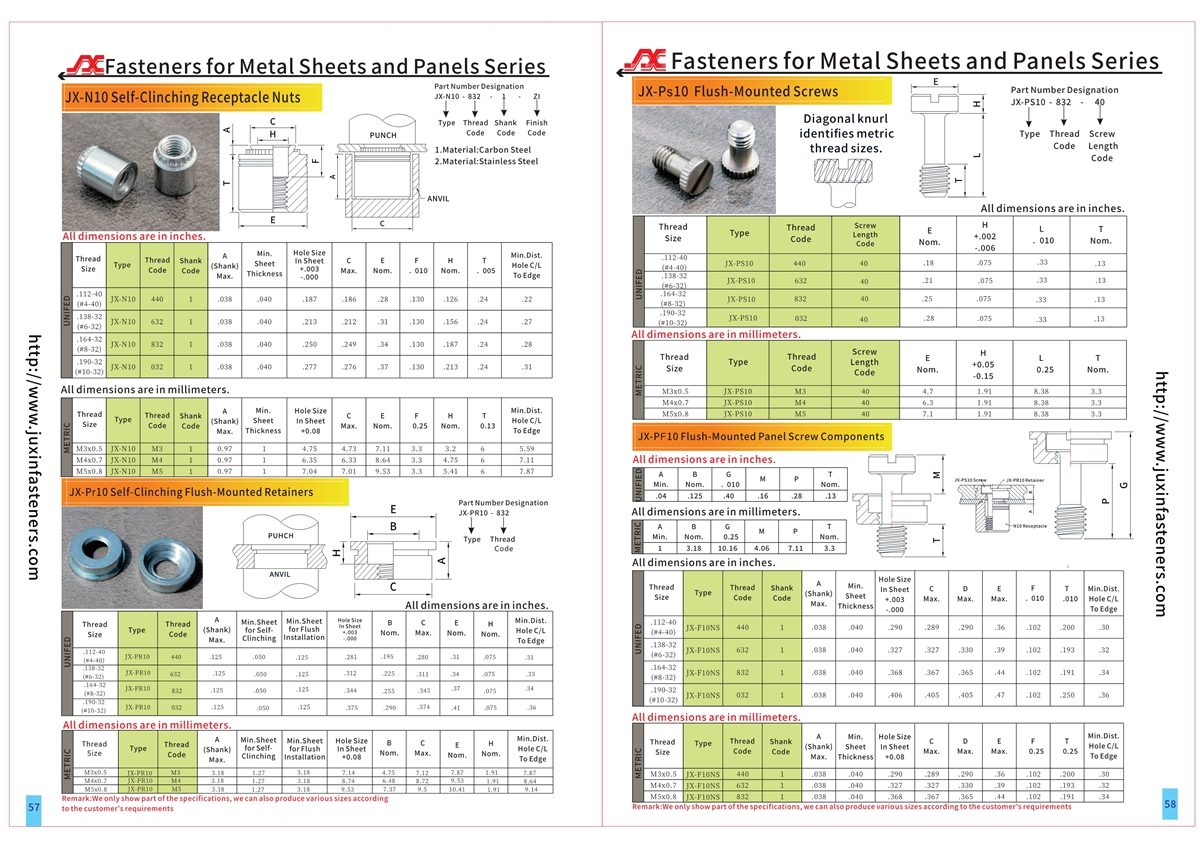
Detailed dimensions: Refer to the applicable product PDF and CAD specification, pages 57–58.
Custom configurations: Subject to drawing review and manufacturing feasibility.
Exact thread pitch, screw length, head dimensions, shank geometry, and retention details must be confirmed using the approved technical drawing.
OEM Design Verification
Before production release, the JX-PS10 screw should be evaluated with its intended retainer, mounting panel, and mating threaded component.
Recommended checks include thread compatibility, screw travel, retention performance, assembly clearance, and repeated engagement.
For applications requiring frequent maintenance, engineers should consider service-cycle testing.
Where relevant, vibration, shock, corrosion, and temperature exposure should also be assessed.
Any required mechanical tests, material certificates, dimensional reports, or traceability documentation should be defined in the OEM purchasing specification.
Applicable ISO, ASTM, SAE, EN, or ASME standards should be referenced only where relevant to the actual component and verified requirements.
Frequently Asked Questions
What is the purpose of a JX-PS10 flush-mounted screw?
It provides threaded fastening in a captive panel assembly while remaining associated with the panel when used with a compatible retainer.
Is the JX-PS10 screw the same as the JX-PR10 retainer?
No. The JX-PS10 is the screw, while the JX-PR10 is a related retaining component.
Are JX-PS10 screws available in metric sizes?
The supplied JX-PS10 designation is identified as Unified. Metric variants must be confirmed separately.
Can the screw be used without a captive retainer?
A screw may provide threaded fastening without a retainer, but the captive retention function requires a compatible retaining arrangement.
Does captive retention prevent vibration loosening?
No. Captive retention and resistance to threaded joint loosening are different functions.
Can custom screw lengths be supplied?
Custom configurations may be evaluated according to approved OEM drawings and manufacturing requirements.
Related Products and Internal Linking
For compatible retaining components, explore JX-PR10 Self-Clinching Flush-Mounted Retainers.
For spring-loaded panel fastening, see JX-PFC2 / JX-PFS2 Captive Panel Screws.
For tool-only access panel designs, explore JX-PFC2P Tool-Only Spring-Loaded Captive Screws.
For compact hand-operated fastening, review JX-PF50 / JX-PF60 Low-Profile Knob Captive Screws.
For additional enclosure fastening solutions, explore the Captive Screws and Panel Fasteners product category.
These references should link to their verified corresponding product pages on www.juxinfasteners.com.
OEM Procurement and RFQ Guidance
Procurement teams should identify the exact JX-PS10 screw configuration rather than requesting only a generic flush-mounted screw.
A complete RFQ should include the approved screw drawing, Unified thread size and pitch, screw length, material, surface finish, compatible retainer model, panel thickness, and mating threaded component.
The inquiry should also specify order quantity, annual demand, required inspection, packaging, and traceability requirements.
For new assemblies, engineering samples and dimensional compatibility checks are recommended before volume production.
Request a Technical Quotation
Juxin Fasteners supports OEM sourcing inquiries for JX-PS10 flush-mounted screws and related captive panel fastening solutions.
Send your drawings, specifications, expected quantities, and application requirements for technical review and quotation.
Email: info@juxinfasteners.com
Website: www.juxinfasteners.com
Juxin Fasteners – Industrial Fastening Solutions for OEM Engineering and Global Supply Chains.
Product Packaging
Packaging and Export Protection
Juxin Fasteners provides protective export packaging for JX-PS10 flush-mounted captive screws.
Packaging is arranged to protect screw threads, head geometry, retaining features, and surface finishes during storage, handling, and international transportation.
Standard packaging may include protective inner materials, poly bags or small boxes, reinforced export cartons, and palletized shipment when required.
Product labels can identify the model number, thread specification, material, quantity, and batch or lot information according to the agreed purchasing requirements.
Customized packaging options include OEM labeling, barcode identification, specified packing quantities, protective separators, customer-designated carton sizes, and pallet configurations.
Screws and compatible retainers may be packed separately or as approved assemblies according to the confirmed order specification.
Final packaging methods, quantities, and shipment configurations are agreed according to product dimensions, order volume, and customer requirements.
Product Pictures
Contact Us
Tel.:
+86 020 8621 0320
+86 020 3121 6067
E-mail:
Technical Support:
Navigation
SEND INQUIREY