Call Us
+86 136 6007 9809
Call Us
+86 136 6007 9809

Automotive OEMs are increasingly using engineered plastics and fiber-reinforced composites to reduce vehicle weight, integrate complex geometries and improve manufacturing efficiency across both internal combustion engine (ICE) and electric vehicle (EV) platforms.
Product Specification
Automotive OEMs are increasingly using engineered plastics and fiber-reinforced composites to reduce vehicle weight,
integrate complex geometries and improve manufacturing efficiency across both internal combustion engine (ICE) and electric vehicle (EV) platforms.
As metal components are replaced by engineered plastics, however, creating a reliable and reusable threaded connection becomes more challenging.
Plastic threads can be vulnerable to stripping, deformation and stress relaxation when exposed to repeated tightening, vibration, thermal cycling or sustained loads.
Automotive threaded inserts provide a durable metal fastening point within molded plastic components, allowing screws and bolts to be installed into a reinforced metal thread rather than relying solely on the plastic material.
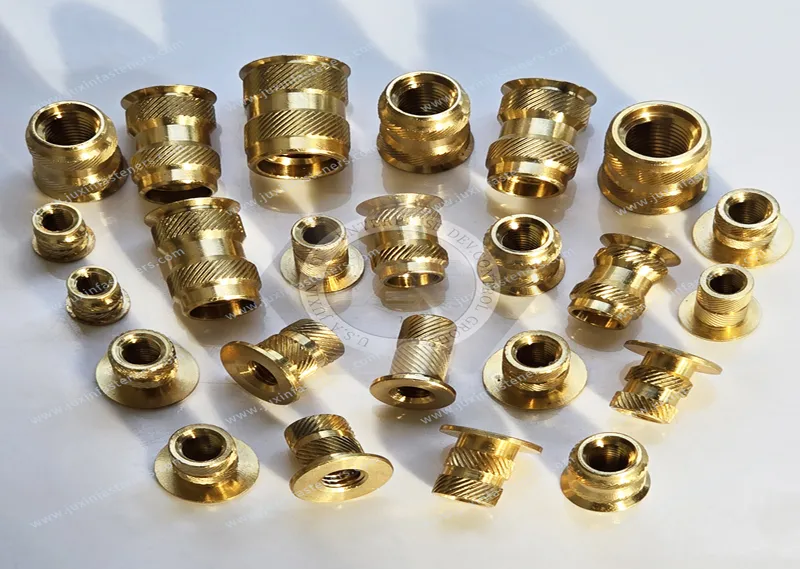
JUXIN Fasteners designs and manufactures custom threaded inserts for plastic components according to component geometry, resin type, installation method and application requirements.
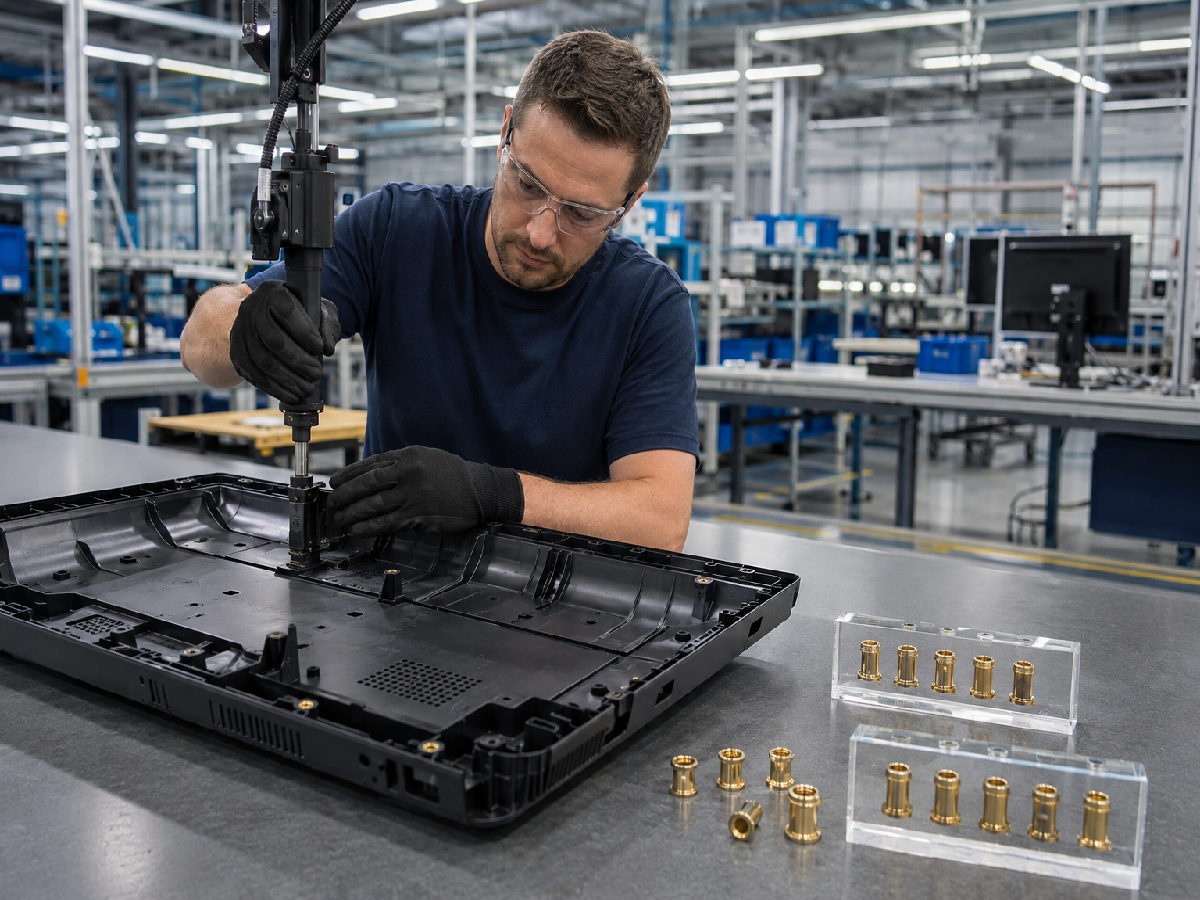
Threaded inserts can be used across a wide range of automotive plastic assemblies, including:
Under-Hood & Engine Components: Air intake components, plastic manifolds, rocker covers, oil pan assemblies and mounting brackets.
Thermal Management: Water pump housings, coolant valve bodies, thermostat housings and thermal circuit components.
EV & Electrical Systems: Battery enclosures, power distribution units (PDU), inverter housings and electrical mounting structures.
Sensors & Control Modules: ECU and TCU housings, ADAS sensor brackets, radar/lidar assemblies and environmental sensor housings.
Interior & Exterior Components: Instrument panel structures, center consoles, airbag module mounts and exterior mirror housings.
The insert design should be selected according to the mechanical load, plastic material, boss geometry, installation process and service environment.
Glass-fiber-reinforced engineering plastics such as 30% to 35% glass-filled PA66 are commonly considered for automotive air intake components because they offer a useful combination of stiffness,
weight reduction, chemical resistance and temperature performance.
When a screw is installed directly into a molded plastic boss, the available thread strength depends heavily on the resin properties and component geometry.
Repeated assembly or high service loads can increase the risk of thread stripping, deformation or joint relaxation.
A metal threaded insert can provide a more durable threaded interface within the molded boss.
For heat staking or ultrasonic installation, insert geometry should be developed together with the plastic component rather than selected only according to the internal thread size.
Important design factors include:
Resin type and glass-fiber content
Boss diameter and wall thickness
Insert length and outside diameter
Knurl or external retention geometry
Installation temperature and process parameters
Required torque-out and pull-out performance
Thermal cycling and vibration
Exposure to chemicals, moisture and other service conditions
For thermoplastic components, heat staking inserts and ultrasonic inserts can be designed with external features that allow molten or softened plastic to flow around the insert and mechanically retain it after installation.
Knurl patterns, undercut features, external diameters and insert length can be adapted to the plastic boss and required retention performance.
The objective is to achieve sufficient mechanical engagement with the surrounding resin while maintaining an appropriate balance between retention performance and boss stress.
Depending on the resin, boss geometry and installation process, excessive interference or unsuitable insert geometry can increase local stress in the plastic.
A properly matched insert and boss design can help reduce the risk of cracking or deformation during installation and service.
Insert retention is application-specific. Torque-out and pull-out performance can be evaluated according to the component design, resin system and required load conditions.
This makes insert geometry, installation process and plastic component design equally important when developing an automotive threaded connection.
The appropriate insert material depends on mechanical requirements, temperature, corrosion exposure, electrical requirements, weight targets and compatibility with the mating fastener.
Brass offers excellent machinability together with good thermal and electrical conductivity.
Typical applications include sensor housings, electrical components and general plastic assemblies.
Aluminum provides low density and a high strength-to-weight ratio, making it suitable for lightweight automotive and EV components where weight reduction is an important design consideration.
Stainless steel provides high corrosion resistance and good mechanical strength.
It can be considered for harsh environments, fluid-related components and under-hood applications.
Material selection can be adapted to temperature, load, corrosion, electrical or other application-specific requirements.
Surface treatment may also be considered where the application requires additional corrosion protection, specific electrical characteristics or compatibility with the surrounding assembly.
Automotive production programs require consistent dimensions, repeatable installation and controlled quality throughout production.
A catalog-standard insert may not always be suitable when a component has a specific boss diameter, limited wall thickness, unusual resin flow characteristics or automated assembly requirements.
JUXIN Fasteners can develop custom insert configurations around the actual component requirements, including:
Custom head and flange geometry
Insert length and outside diameter
External knurl and retention profiles
Thread specifications
Material selection
Surface treatment requirements
Automated feeding considerations
Application-specific inspection requirements
For high-volume applications, dimensional consistency is particularly important for automated bowl feeding, insertion and assembly processes.
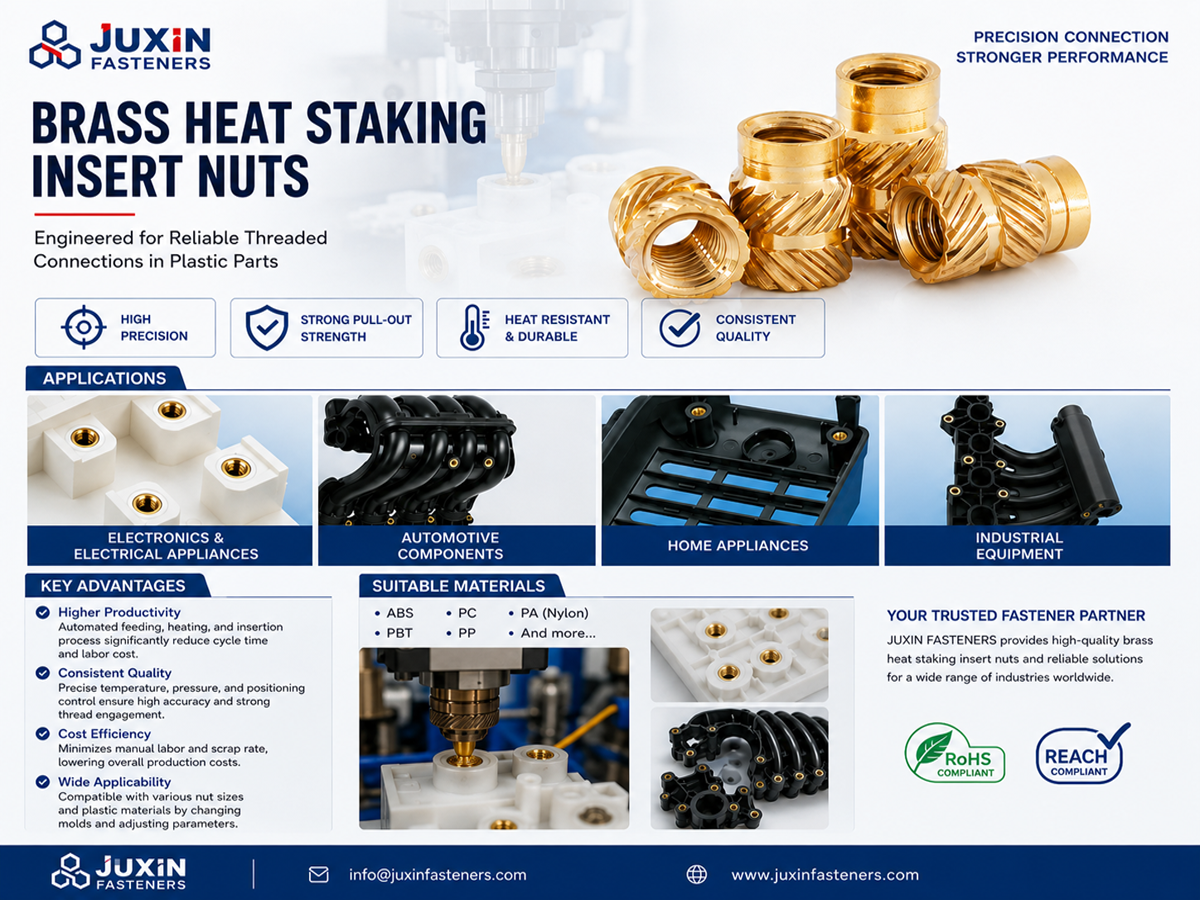
JUXIN Fasteners supports custom threaded insert requirements for automotive plastic components and other engineered plastic assemblies.
Our manufacturing capabilities include CNC machining and cold-forming processes, supported by dimensional inspection and quality-control procedures according to product and application requirements.
For OEM and Tier-1 development projects, we can work from:
Engineering drawings
CAD files
Existing samples
Plastic component specifications
Thread and load requirements
Prototype or production requirements
The objective is not simply to supply a standard threaded insert, but to develop a fastening component that works with the plastic material, molded boss, installation process and final assembly.
Whether you are developing an EV battery enclosure, thermal management component, sensor housing or under-hood plastic assembly,
threaded insert selection should begin with the complete application rather than the thread specification alone.
JUXIN Fasteners can support the development process from custom insert design and prototyping through production manufacturing and quality control.
Send us your drawing, sample or component requirements for an engineering review.
Email: info@juxinfasteners.com
Website: www.juxinfasteners.com
Product Packaging
Packaging Standard
At Juxin Fasteners, we apply standardized export packaging to ensure product protection, traceability, and compliance with international logistics requirements.
1. Standard Export Packaging
Unless otherwise specified, all products will be packed according to our factory standard export packaging, which includes:
Moisture-resistant inner protection
Poly bag or small box packing as required
Reinforced export cartons
Clear labeling with part number, specification, batch number, and quantity
Palletizing for sea or air shipment when necessary
Our standard packaging is designed to ensure safe transportation, efficient warehousing, and long-distance international shipping.
2. Customized Packaging Options
We also provide customized packaging solutions according to customer requirements, including but not limited to:
Private labeling
Customized barcodes
Specific carton dimensions
Retail packaging
Special pallet configuration
Customer-specific marking and identification
So that you know, customized packaging may involve additional costs and extended lead time depending on the complexity of the requirements.
3. Compliance & Quality Assurance
All packaging processes are controlled under our ISO 9001 quality management system to ensure consistency, traceability, and product integrity throughout the supply chain.
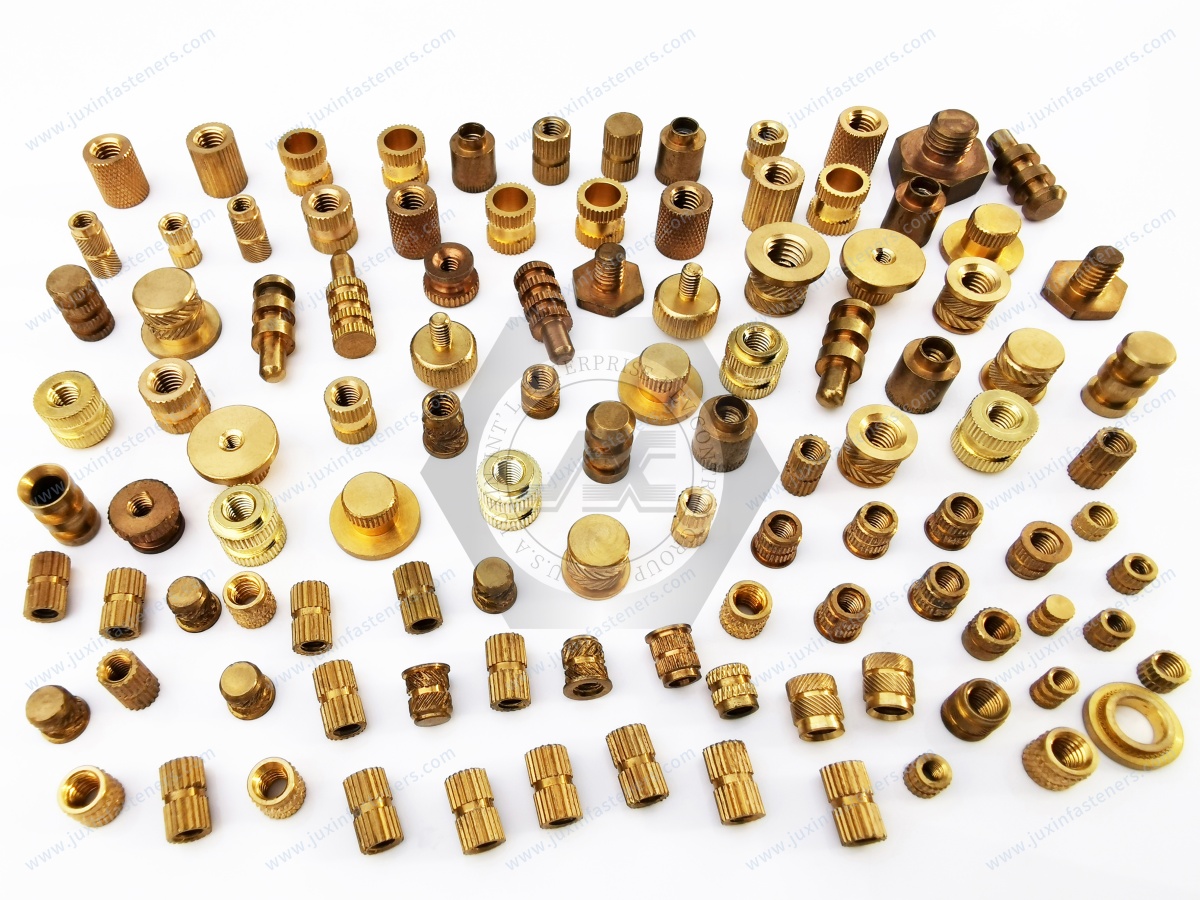
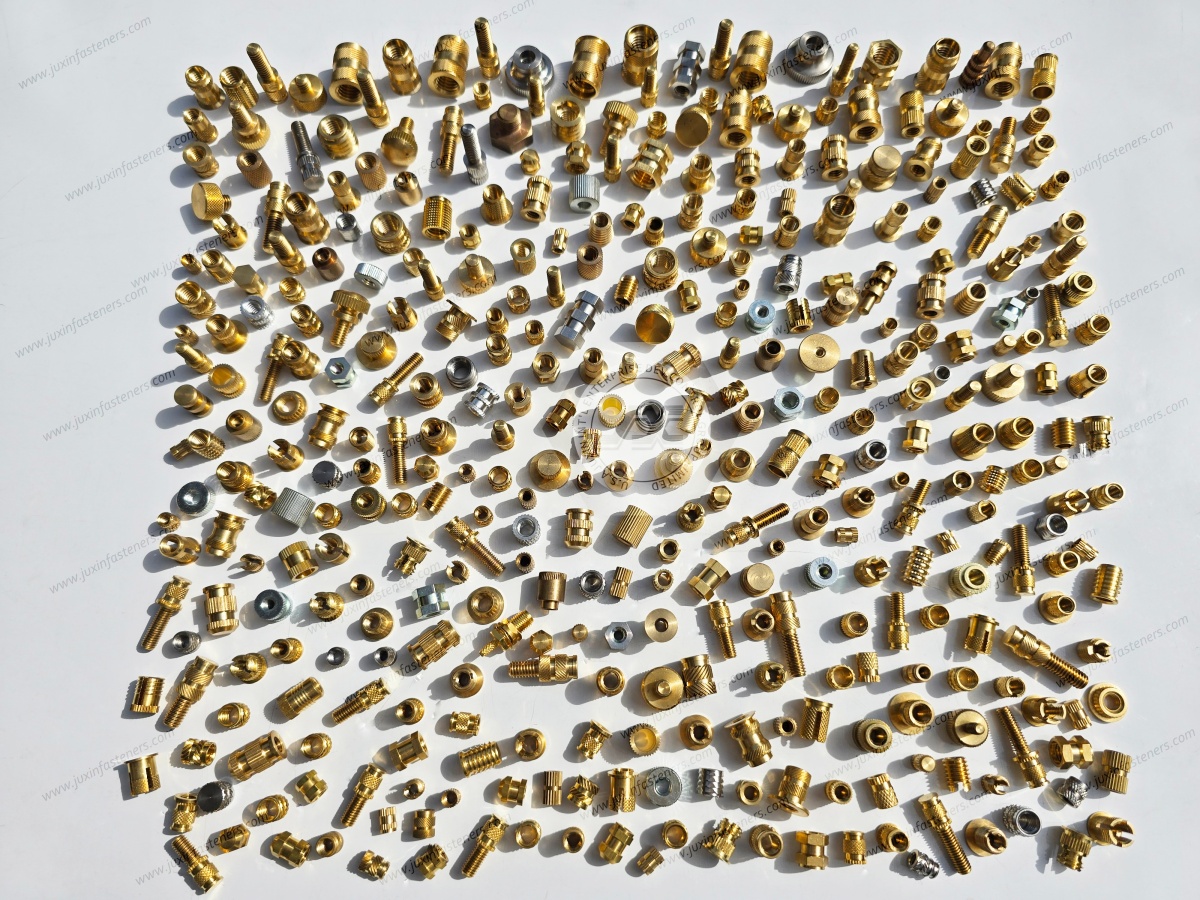
Product Pictures
Contact Us
Tel.:
+86 020 8621 0320
+86 020 3121 6067
E-mail:
Technical Support:
Navigation
SEND INQUIREY