Call Us
+86 136 6007 9809
Call Us
+86 136 6007 9809

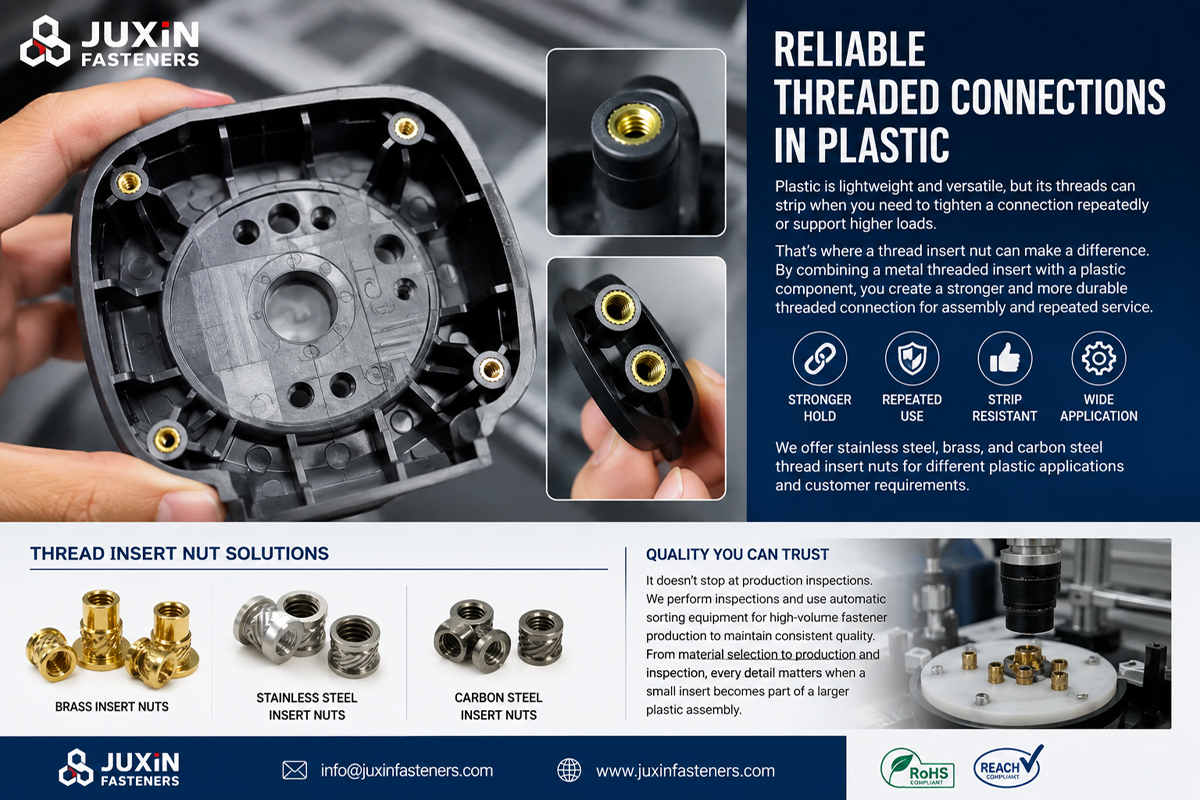
Selecting a threaded insert for an OEM plastic component is not simply a matter of choosing a thread size from a catalog.
Product Specification
Selecting a threaded insert for an OEM plastic component is not simply a matter of choosing a thread size from a catalog.
The insert must work as part of a complete mechanical system involving the metallic insert, plastic resin, boss geometry, installation process, screw, clamping force, temperature range, vibration, and service environment.
For engineered plastic components using materials such as glass-filled Nylon, PEEK, PBT, polycarbonate, ABS, or other engineering polymers,
a standard insert may not provide the required combination of rotational resistance, axial retention, dimensional stability, and assembly reliability.
An incorrectly matched insert can contribute to:
Insert rotation during screw installation
Torque-out failure
Axial pull-out
Plastic boss cracking
Insert loosening during thermal cycling
Plastic flash entering internal threads
Insufficient screw engagement
Excessive installation force
Dimensional interference with surrounding components
Custom threaded inserts allow the metallic fastener to be engineered around the actual requirements of the plastic component.
JUXIN Fasteners supports OEM customers with custom threaded inserts for plastic, including custom brass inserts, stainless steel inserts, aluminum inserts,
threaded bushings, insert nuts, and other engineered threaded fasteners manufactured according to customer drawings and application requirements.
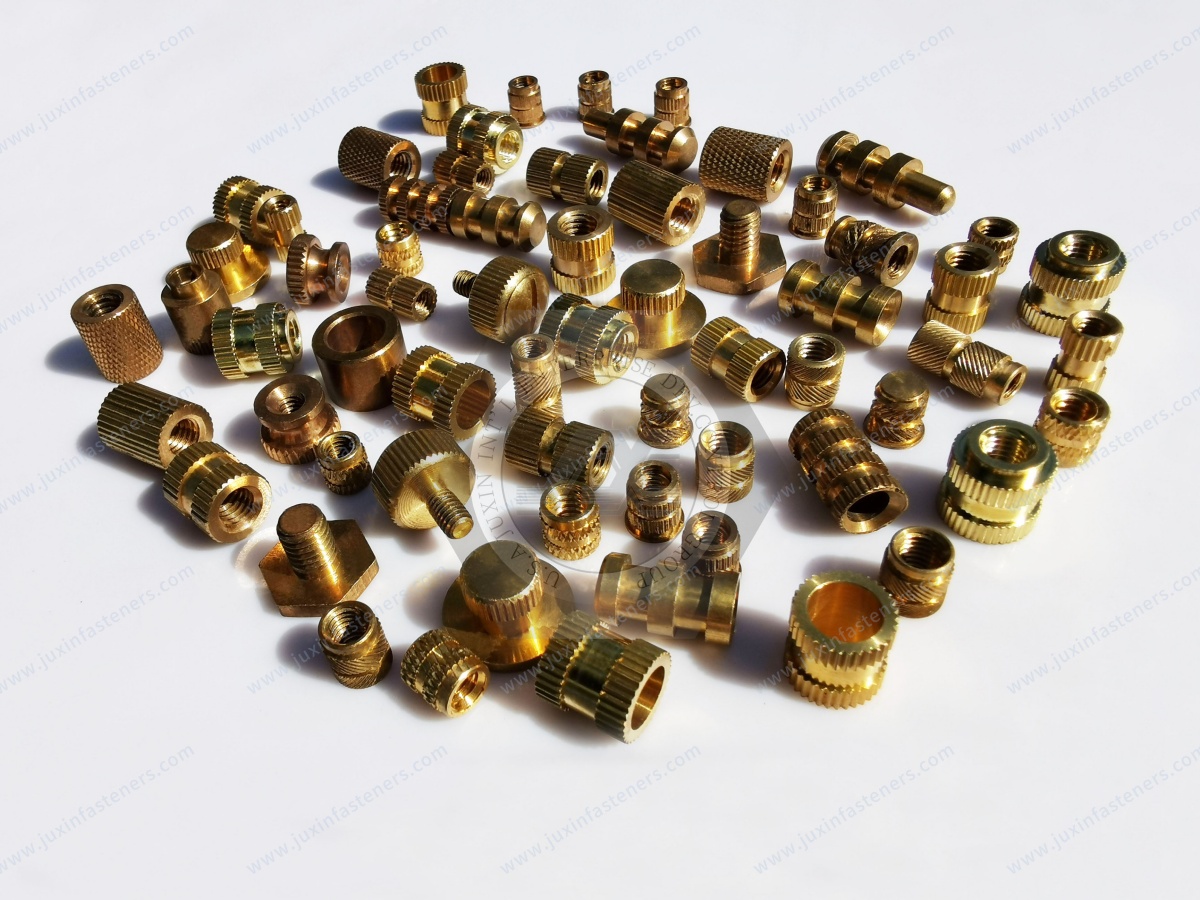
Catalog inserts are designed for broad applications. OEM products often have much tighter requirements.
A plastic housing may have limited boss diameter, restricted wall thickness, complex internal geometry, or a specific installation process.
The insert therefore needs to match the available space and the mechanical properties of the polymer.
For example, increasing the external diameter of an insert can improve the available load-transfer area, but may not be possible when the plastic boss has a small outside diameter.
Similarly, aggressive knurling can improve rotational retention but may increase installation force or create excessive stress in a brittle plastic.
The correct solution is therefore not simply a larger or stronger insert. It is an insert whose geometry, material, installation method, and mechanical performance are balanced with the plastic component design.
JUXIN Fasteners can support customization across the key characteristics that determine threaded insert performance.
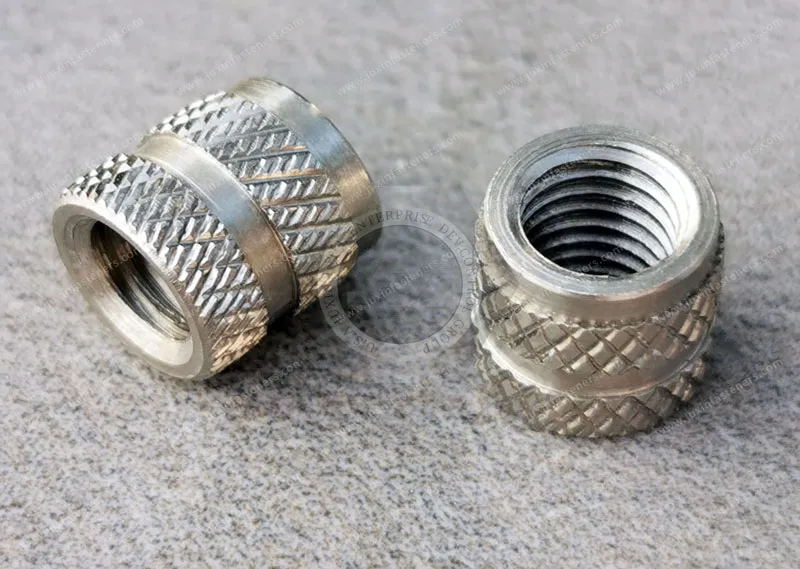
The external profile determines how the insert transfers torque and axial loads into the surrounding plastic.
Depending on the application, available configurations may include:
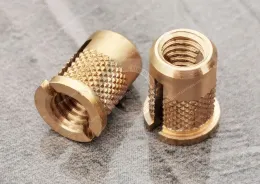
Diamond knurling
Diagonal knurling
Straight longitudinal knurling
Helical knurling
Annular grooves
Retention grooves
Undercut profiles
External barbs
Customized retention patterns
Tapered pilot sections
Special lead-in geometries
The objective is to achieve reliable retention without creating unnecessary stress concentrations in the plastic boss.
OEM threaded inserts can be customized according to the available installation envelope.
Typical variables include:
Outside diameter
Overall length
Internal thread depth
Wall thickness
Head diameter
Flange thickness
Pilot diameter
Pilot length
Blind-end depth
Through-hole configuration
These dimensions can be optimized around the customer's plastic housing and assembly requirements.
The head design can be adapted to the mechanical and packaging requirements of the component.
Possible configurations include:
Flanged inserts
Large-head inserts
Thin-flange inserts
Flush-mount configurations
Flangeless inserts
Reduced-head designs
Customized head diameters
A larger flange can provide increased resistance to pull-through where the plastic component is subjected to higher axial loads.
A flangeless design may be preferable where the insert must remain within a tightly controlled external envelope.
The internal thread can be produced according to the OEM drawing and mating screw requirements.
Common specifications include:
Metric threads
Unified inch threads
UNC
UNF
Special pitch threads
Fine threads
Coarse threads
Left-hand threads
Custom thread tolerances
Examples of commonly specified sizes include M1.6, M2, M2.5, M3, M4, M5, M6, M8, M10 and M12, as well as inch thread sizes such as #2-56, #4-40, #6-32, #8-32, 1/4-20 and 1/2-13.
Final thread specifications should always follow the customer's engineering drawing and mating hardware requirements.
Material selection should be based on the mechanical, thermal, electrical, corrosion, weight, and installation requirements of the final assembly.
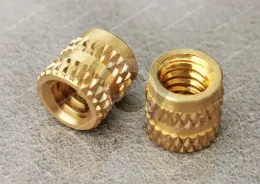
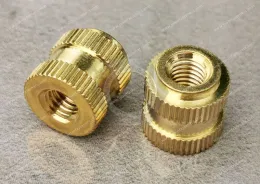
Brass is widely used for plastic threaded insert applications because of its excellent machinability, conductivity, and compatibility with common heat-insertion processes.
Custom brass threaded inserts are suitable for applications requiring:
Good electrical conductivity
Efficient heat transfer
Excellent machinability
Stable internal threads
Reliable heat staking
Cost-effective high-volume production
Common brass grades may include free-machining grades such as C36000 or equivalent materials according to the customer's specification.
Applications include electronic housings, electrical components, sensors, control modules, plastic enclosures, and consumer or industrial equipment.
Stainless steel is suitable for applications where higher corrosion resistance, mechanical strength, or temperature capability is required.
Common stainless steel options may include:
SS303
SS304
SS316
Stainless steel custom threaded bushings and inserts can be considered for industrial equipment, medical devices, laboratory equipment, outdoor products, automotive systems, and applications exposed to moisture or aggressive environments.
Aluminum provides a lightweight option for weight-sensitive assemblies.
Depending on the engineering requirements, aluminum alloys such as 6061-T6 or 7075-T6 may be considered.
Applications can include:
Automotive components
Aerospace-related equipment
Portable equipment
Lightweight industrial assemblies
Electronic housings
Material selection should be confirmed according to the mechanical and environmental requirements of the application.
Surface treatment can influence corrosion resistance, electrical properties, appearance, friction, and compatibility with the surrounding assembly.
Depending on material and application, possible finishes include:
Plain / unplated
Nickel plating
Tin plating
Zinc plating
Passivation
Specialized protective coatings or sealants
For OEM programs, surface treatment should be specified together with the base material, required thickness, corrosion requirements, dimensional tolerances, and applicable environmental standards.
The external geometry of a threaded insert creates the mechanical interface between the metal insert and the surrounding polymer.
| Insert Feature | Primary Engineering Function |
|---|---|
| Diamond or diagonal knurling | Improves resistance to rotational movement |
| Longitudinal knurling | Provides controlled mechanical retention |
| Annular grooves | Improves axial retention |
| Undercuts | Creates additional mechanical anchoring |
| Extended flange | Helps resist pull-through |
| Tapered pilot | Improves insertion alignment |
| Blind-end configuration | Helps prevent resin or plastic flash entering the thread |
| Customized OD | Allows optimization for boss dimensions |
The correct profile depends on the resin, boss geometry, installation method, installation force, required torque-out resistance, pull-out requirement, and service conditions.
For this reason, custom threaded inserts for plastic should be evaluated as part of the complete plastic joint rather than as an isolated fastener.
Insert performance depends heavily on the surrounding plastic boss.
Important design considerations include:
Boss outside diameter
Insert hole diameter
Boss wall thickness
Hole depth
Draft angle
Chamfer
Distance from nearby walls
Distance from ribs
Plastic shrinkage
Resin reinforcement
Installation temperature
Installation force
Glass-filled polymers can behave differently from unfilled plastics because reinforcement changes stiffness, shrinkage, and local stress distribution.
A threaded insert that performs well in ABS may require a different geometry when installed into PA66-GF30, PBT, PEEK, or another engineering resin.
This is why supplying the mating plastic component drawing and resin grade is important when developing an OEM insert.
Different installation processes require different insert designs.
Heat-set installation uses controlled heat to soften the surrounding thermoplastic before the insert is pressed into position.
This method is commonly used for thermoplastic housings and electronic components.
Insert geometry should be optimized for:
Heating temperature
Installation speed
Hole diameter
Plastic flow
Boss dimensions
Required retention
Ultrasonic installation uses localized vibration to soften the thermoplastic around the insert.
It can be suitable for high-volume production where controlled automated installation is required.
Insert geometry and plastic material should be evaluated together to avoid excessive plastic displacement or boss damage.
Cold press-fit installation relies on interference between the insert and the molded hole.
The design must balance:
Retention force
Installation force
Plastic strength
Hole tolerance
Boss wall thickness
Risk of cracking
For molded-in applications, the insert is positioned inside the mold before plastic injection.
The external geometry must provide sufficient retention during molding and final service while also considering resin flow, mold design, thermal expansion, and insert positioning.
JUXIN Fasteners supports OEM threaded inserts for a wide range of industrial and commercial products.
Automotive and EV systems increasingly rely on engineered plastic housings to reduce weight and integrate electrical and mechanical functions.
Custom insert applications may include:
EV battery enclosure components
Power electronics housings
Battery management system housings
Thermal management modules
Electronic control modules
Sensor housings
Interior trim components
Air intake components
For automotive applications, insert selection may need to account for vibration, temperature cycling, chemical exposure, assembly torque, and long-term retention.
Electronic assemblies frequently require compact threaded connections inside injection-molded housings.
Applications include:
Electronic control housings
PCB mounting structures
Sensor assemblies
Electrical enclosures
Network equipment housings
Fiber optic equipment
Control modules
Instrument housings
Cable management equipment
Small-diameter brass inserts and precision threaded bushings can provide durable metal threads inside plastic components that are repeatedly assembled and serviced.
Medical and laboratory equipment may require corrosion-resistant materials, stable dimensions, clean surfaces, and reliable mechanical connections.
Potential applications include:
Diagnostic equipment
Patient monitoring equipment
Laboratory instruments
Instrument housings
Fluid handling equipment
Control panels
Portable medical devices
Stainless steel custom inserts can be considered where corrosion resistance and mechanical durability are important.
Industrial equipment commonly combines plastic covers, control housings, sensors, brackets, guards, and structural modules.
Custom insert nuts and threaded bushings can be designed for:
Robotic equipment
Automation systems
PLC housings
Industrial control panels
Machine guards
Sensor assemblies
End-effectors
Electrical control cabinets
The insert design can be optimized for repeated assembly and disassembly where serviceability is an important consideration.
Plastic components used in HVAC equipment and smart appliances may be exposed to temperature changes, vibration, humidity, and repeated servicing.
Custom threaded inserts can be applied to:
Control boxes
Sensor housings
Air handling equipment
Electrical enclosures
Compressor control components
Smart home devices
Appliance control modules
Material and surface treatment should be selected according to the environmental conditions of the final product.
A successful custom insert program starts with engineering review rather than simply requesting a unit price.
JUXIN Fasteners can support the development process from drawing review through production.
Provide the 2D engineering drawing and, where available, a 3D CAD model.
Important information includes:
Thread specification
Critical dimensions
Dimensional tolerances
Material
Surface treatment
Installation method
Mechanical requirements
The mating plastic component is equally important.
Where possible, provide:
Plastic housing drawing
Boss dimensions
Hole dimensions
Resin manufacturer and grade
Glass-fiber percentage
Expected operating temperature
Assembly conditions
This information allows the insert geometry to be evaluated in the context of the complete joint.
Design-for-manufacturability review can identify potential problems before tooling or mass production.
The review may consider:
Knurl geometry
Insert OD
Wall thickness
Chamfer
Pilot design
Thread depth
Machining feasibility
Material availability
Surface treatment
Production volume
Prototype or sample quantities can be produced for dimensional and functional evaluation.
Depending on the part design and production requirements, CNC machining and other suitable manufacturing processes can be used.
Critical dimensions and threads should be verified against the approved drawing.
Inspection methods may include:
Dimensional inspection
Thread plug gauges
Optical inspection
Visual inspection
Torque testing
Pull-out testing
Functional assembly testing
For critical OEM applications, validation should be based on agreed customer specifications and test methods.
Once samples meet the agreed requirements, the supplier can proceed with customer approval documentation.
Depending on the OEM program, documentation may include:
First Article Inspection
Dimensional inspection reports
Material certificates
Surface treatment documentation
RoHS / REACH documentation
PPAP documentation where required
After approval, production can transition to the agreed volume schedule.
For high-volume OEM programs, consistent dimensional control, thread quality, sorting, packaging, lot traceability, and delivery planning become critical parts of supplier performance.
When contacting a threaded insert manufacturer, procurement and engineering teams should provide as much application information as possible.
1. Engineering Drawing
Provide a fully dimensioned 2D PDF drawing showing:
Thread
OD
Length
Tolerances
Knurl profile
Flange dimensions
Surface finish
Material
2. 3D CAD Model
STEP or IGES files can help suppliers understand the complete geometry and identify manufacturing considerations.
3. Plastic Resin
Specify the exact polymer grade whenever possible.
Examples include:
ABS
PA66
PA66-GF30
PBT
PC
PEEK
Other engineering plastics
4. Installation Method
Specify whether the insert will be:
Heat installed
Ultrasonically installed
Press fitted
Molded in
5. Mechanical Requirements
Where available, provide target values for:
Torque-out resistance
Pull-out force
Installation force
Screw torque
Clamping load
Temperature requirements
6. Annual Usage and Forecast
Provide:
Prototype quantity
Initial order quantity
Annual estimated usage
Forecast
Required delivery schedule
This allows the supplier to recommend an appropriate production process and supply strategy.
Unit price is only one part of the sourcing decision.
For OEM components, procurement teams should evaluate the supplier's ability to maintain consistent quality throughout the production lifecycle.
Important supplier evaluation criteria include:
Can the supplier understand the relationship between insert geometry, plastic resin, boss design, and installation process?
Can the supplier produce the required thread, knurl, dimensions, tolerances, and material consistently?
Does the supplier have appropriate inspection equipment and documented quality procedures?
Can the supplier provide material documentation and applicable compliance information such as RoHS and REACH?
Can the supplier support the transition from prototype quantities to stable volume production?
Can engineering, purchasing, and quality teams communicate efficiently throughout the development process?
A capable custom threaded insert supplier should therefore be evaluated as an engineering and supply-chain partner, not simply as a source of low-cost hardware.
Standard inserts can be appropriate when the application matches an existing design.
Custom inserts become more valuable when the application involves:
Limited installation space
Non-standard boss geometry
High torque requirements
High pull-out requirements
Special thread sizes
Special materials
Corrosive environments
High-temperature applications
Weight reduction requirements
Automated installation
High-volume OEM production
The decision should be based on the total cost and performance of the assembly rather than the purchase price of the insert alone.
A correctly engineered insert can reduce assembly problems, improve joint reliability, and help prevent costly redesigns or field failures.
JUXIN Fasteners supports OEM customers requiring custom threaded inserts, custom brass threaded inserts, custom threaded bushings, and other engineered threaded fasteners for plastic and metal assemblies.
Our OEM support focuses on the complete application rather than only the individual insert.
We can work from:
2D engineering drawings
3D CAD models
Plastic component drawings
Material specifications
Prototype requirements
Production forecasts
Customer quality requirements
The objective is to develop a threaded insert that is manufacturable, dimensionally controlled, mechanically appropriate, and suitable for the customer's production process.
JUXIN Fasteners operates under an ISO 9001 quality management system and can support applicable material and compliance documentation according to project requirements, including RoHS and REACH documentation.
If your OEM project requires a non-standard insert for an injection-molded plastic component, send your engineering drawing and application information to our team.
For the fastest technical evaluation, include:
2D drawing
3D CAD file if available
Plastic resin and grade
Installation method
Required material
Surface treatment
Annual quantity
Target mechanical requirements
Our engineering and sourcing team can review the specification and help determine a suitable manufacturing approach.
Email: info@juxinfasteners.com
Website: www.juxinfasteners.com
From prototype development to volume production, JUXIN Fasteners provides application-specific custom threaded inserts for plastic, custom brass inserts,
stainless steel inserts, aluminum inserts, threaded bushings, and insert nuts for global OEM applications.
When the standard catalog part does not fit the engineering requirement, a custom-designed threaded insert can provide a more reliable connection between the metal fastener and the plastic component.
Product Packaging
Packaging Standard
At Juxin Fasteners, we apply standardized export packaging to ensure product protection, traceability, and compliance with international logistics requirements.
1. Standard Export Packaging
Unless otherwise specified, all products will be packed according to our factory standard export packaging, which includes:
Moisture-resistant inner protection
Poly bag or small box packing as required
Reinforced export cartons
Clear labeling with part number, specification, batch number, and quantity
Palletizing for sea or air shipment when necessary
Our standard packaging is designed to ensure safe transportation, efficient warehousing, and long-distance international shipping.
2. Customized Packaging Options
We also provide customized packaging solutions according to customer requirements, including but not limited to:
Private labeling
Customized barcodes
Specific carton dimensions
Retail packaging
Special pallet configuration
Customer-specific marking and identification
So that you know, customized packaging may involve additional costs and extended lead time depending on the complexity of the requirements.
3. Compliance & Quality Assurance
All packaging processes are controlled under our ISO 9001 quality management system to ensure consistency, traceability, and product integrity throughout the supply chain.
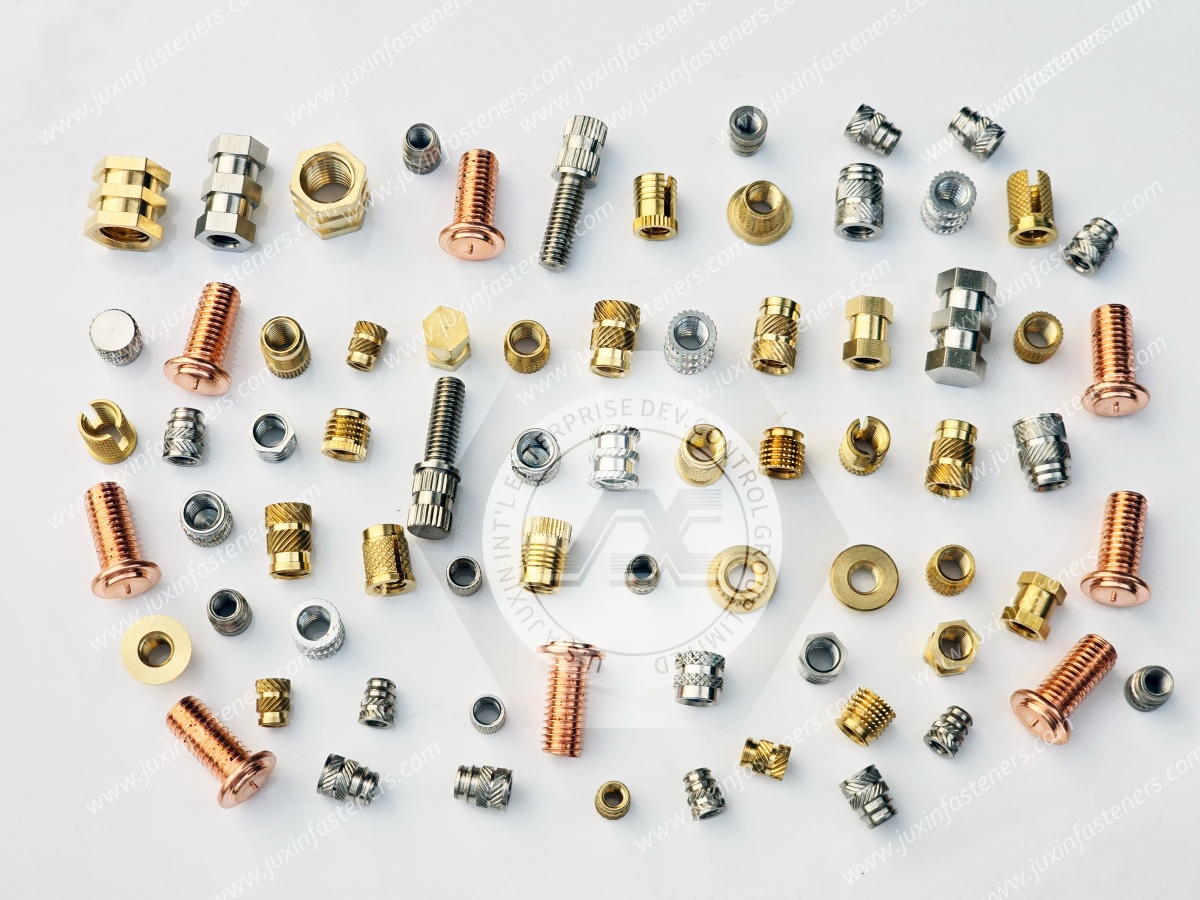
Product Pictures
Contact Us
Tel.:
+86 020 8621 0320
+86 020 3121 6067
E-mail:
Technical Support:
Navigation
SEND INQUIREY