Call Us
+86 136 6007 9809
Call Us
+86 136 6007 9809

When do global industrial OEMs require custom weld fasteners instead of catalog-standard hardware?
Custom weld fasteners are specified when a standard weld nut, weld stud, or other catalog component cannot adequately satisfy the dimensional,
assembly, load-path, welding, clearance, material, or manufacturing requirements of a specific OEM application.
Product Specification
When do global industrial OEMs require custom weld fasteners instead of catalog-standard hardware?
Custom weld fasteners are specified when a standard weld nut, weld stud, or other catalog component cannot adequately satisfy the dimensional, assembly,
load-path, welding, clearance, material, or manufacturing requirements of a specific OEM application.
Typical custom configurations can include:
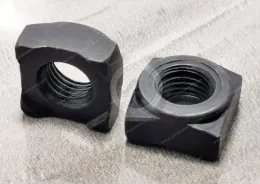
Non-standard square weld nuts
Non-standard hexagonal weld nuts
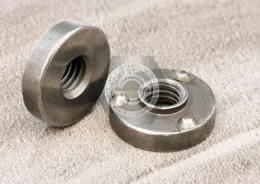
Custom flange weld nuts
Multi-projection weld nuts
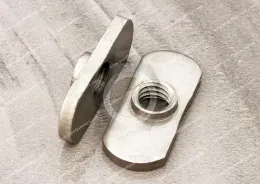
Tab weld nuts
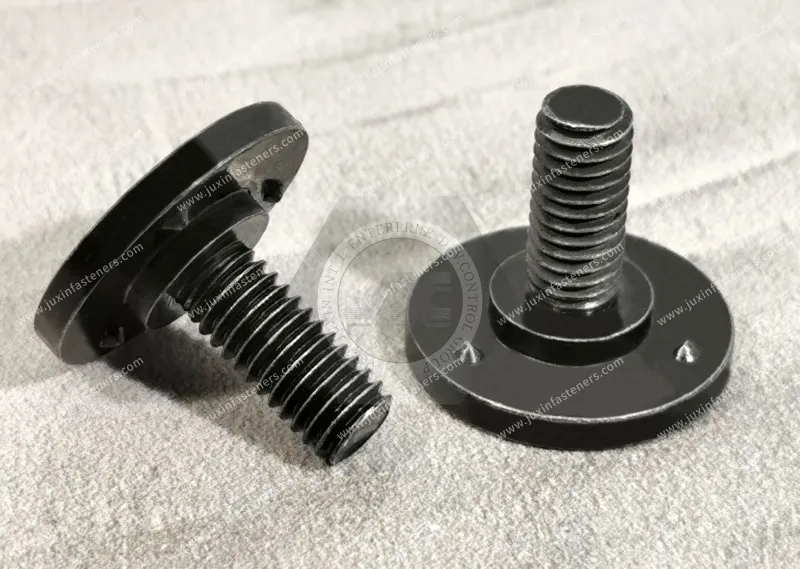
Extended or stepped weld studs
Custom-length weld studs
Asymmetrical weld fasteners
Custom mounting plates
Special locating or positioning features
Fasteners designed around restricted assembly envelopes
Fasteners incorporating application-specific geometry
The reason for customization is not necessarily that a standard fastener is mechanically inadequate.
In many OEM projects, the standard component may simply be incompatible with the available space, welding equipment, sheet geometry, assembly sequence, tooling access, or required load path.
A custom fastener can therefore solve a system-level engineering constraint.
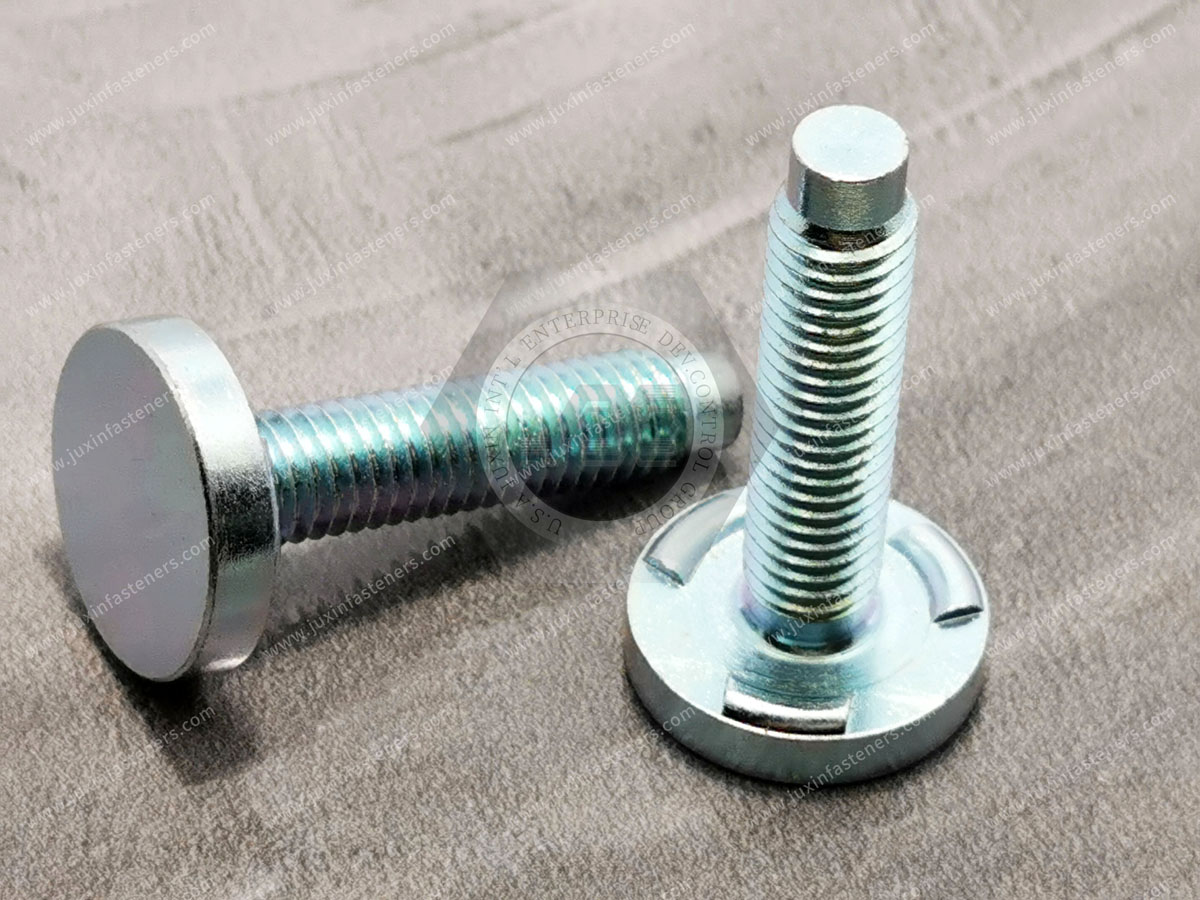
              [ Non-Standard Threaded Body ]
                            ||
     +----------------------+----------------------+
     |      Custom Mounting Flange / Bracket       |
     +-------[P1]-------[P2]-------[P3]-------[P4]-+
=================================================== ---> Base Substrate
The actual number, position, and geometry of weld projections should be engineered for the specific fastener, parent material, welding process, and joint requirements.
There is no universal projection arrangement that is optimal for every application.
For global automotive, EV, electrical, industrial machinery, agricultural equipment, and other OEM programs, custom hardware sourcing requires much more than changing dimensions on an existing catalog part.
The engineering process should connect:
Application → Load Path → Geometry → Material → Welding → DFM → Prototype → Validation → Production → Quality → Supply Chain
This is where a qualified custom weld fastener supplier can add value before production tooling and mass manufacturing begin.
JUXIN FASTENERS supports custom OEM fastener development involving drawing review, application assessment, manufacturing-route evaluation, prototype development, surface-treatment selection, inspection requirements, and production sourcing.
The appropriate manufacturing process depends on the geometry, material, tolerance requirements, annual volume, and application.
Depending on the part, production may involve cold forming, cold heading, machining, CNC processing, secondary operations, or a combination of manufacturing processes.
Standard catalog weld fasteners solve common fastening requirements. Custom weld fasteners are different because the fastener itself becomes part of the customer's manufacturing system.
The engineering question changes from:
“Which catalog fastener should we buy?”
to:
“How should the fastening interface be engineered so that the fastener, sheet metal, welding process, assembly process, and final product work together?”
This distinction is especially important for OEMs with high annual usage or automated production.
Standard weld-nut configurations may be suitable for conventional loading conditions, but some structural assemblies experience combined:
Axial tension
Compression
Shear
Bending
Torsion
Vibration
Shock loading
A custom fastener can allow engineers to modify:
Projection placement
Flange geometry
Fastener orientation
Thread location
Body dimensions
Supporting geometry
Load introduction location
This can help align the fastener with the actual load path.
However, custom projection placement should not be described simply as “increasing strength.” The effect depends on the weld process, parent sheet, electrode configuration, fastener geometry, and actual loading.
Resistance welding is governed by the interaction of electrical resistance, current, time, electrode force, contact conditions, and thermal behavior.
The familiar relationship involving I²Rt is useful for understanding heat generation, but actual welding parameters must be developed and validated for the specific application.
Material selection is one of the most important parts of custom weld fastener engineering.
Potential considerations include:
Mechanical strength
Ductility
Hardness
Weldability
Electrical resistance
Thermal behavior
Corrosion environment
Surface treatment
Compatibility with the parent sheet
Manufacturing process
The fastener material does not necessarily need to be identical to the parent sheet.
For example, a weld fastener may be specified for a carbon-steel, stainless-steel, coated-steel, or other substrate depending on the welding and application requirements.
Dissimilar-metal combinations require additional engineering evaluation because electrical, thermal, metallurgical, mechanical, and corrosion behavior can differ.
Therefore, “matching” should mean engineering compatibility, not simply selecting the same metal.
Custom weld fasteners may require:
Zinc plating
Zinc-nickel coatings
Other specified corrosion-protection systems
Temporary protective finishes
Thread-protection or masking systems
Application-specific post-weld coatings
Surface treatment should be evaluated together with the welding sequence.
A coating that provides excellent corrosion protection may not be suitable for the welding stage in the same form.
The engineering sequence may therefore be:
Fastener Manufacturing → Surface Condition → Welding → Cleaning/Coating → Assembly
or another customer-specific sequence.
Modern industrial search behavior is divided between technical users and commercial decision-makers.
A structural engineer may search:
“custom weld nut for thin sheet metal”
while a sourcing manager may search:
“custom weld fastener OEM supplier”
These are different search intents but can lead to the same commercial opportunity.
A strong B2B page must answer both.
Engineering teams typically want to know:
Can the geometry be manufactured?
Can the fastener fit within the available envelope?
Can it be welded to the specified substrate?
What projection configuration is appropriate?
Can the thread specification be maintained?
What material should be used?
What surface treatment is appropriate?
Can the fastener survive the required loading?
Can the design be validated before mass production?
Can CAD data be supplied?
Can the supplier review the drawing?
The 2D drawing remains one of the most important documents for custom fastener development.
The drawing should define, where applicable:
Thread size
Thread pitch
Thread class
Critical dimensions
Datum structure
Geometric tolerances
Projection geometry
Flange dimensions
Stud length
Material
Heat treatment
Surface treatment
Inspection requirements
Special characteristics
A thread class such as ISO metric 6H may be appropriate for a particular internal thread, but it should not be inserted automatically into every custom fastener design.
The applicable thread specification must come from the customer drawing, applicable standard, or engineering requirement.
A 3D CAD model can provide additional information that may not be immediately obvious from a 2D drawing.
It can help engineering teams review:
Assembly clearance
Fastener orientation
Adjacent component interference
Welding-electrode access
Tool accessibility
Thread engagement
Bracket geometry
Load-path alignment
Installation access
Common exchange formats such as STEP can be useful for OEM engineering workflows.
The exact CAD format should be agreed between the customer and supplier.
For complex OEM components, the fastener should ideally be reviewed in its actual assembly environment rather than only as an isolated component.
This allows the engineering team to identify:
Interference
Restricted welding access
Assembly tool clearance
Potential collision with adjacent parts
Fastener orientation problems
Sheet deformation risks
Service-access issues
This early review can prevent costly changes after tooling has already been released.
Engineering feasibility is only one part of custom fastener sourcing.
Procurement teams must also evaluate whether the supplier can support the project from prototype through production.
Important supplier information can include:
Manufacturing location
Manufacturing route
Raw-material source
Material documentation
Process control
Inspection capability
Lot traceability
Surface-treatment control
Packaging
Export logistics
Change-control procedures
Where required by the customer specification, material certificates or other quality documentation should be available.
Custom fasteners may require dedicated tooling.
Tooling cost can depend on:
Part geometry
Material
Forming complexity
Production volume
Dimensional requirements
Secondary machining
Special inspection requirements
For high annual usage, dedicated forming tooling may provide a different cost structure from low-volume CNC machining.
For low-volume or prototype requirements, machining may sometimes be commercially appropriate even when mass production later moves to a forming-based process.
The correct manufacturing route should therefore be selected according to volume + geometry + tolerance + material + cost target + production schedule.
Procurement should provide:
Prototype quantity
Pilot quantity
Annual estimated usage
Monthly demand
Forecast horizon
Expected production ramp
Packaging quantity
Delivery requirements
Annual estimated usage, or EAU, helps the supplier evaluate tooling economics and production planning.
Forecast information should not automatically be treated as a firm purchase commitment unless agreed contractually.
For high-volume OEM programs, packaging is part of manufacturing efficiency.
Potential requirements include:
Bulk packaging
Returnable containers
Part orientation requirements
Automated feeder compatibility
Lot identification
Moisture protection
Surface protection
Container quantity
Line-side replenishment
A custom fastener that is mechanically correct but difficult to feed automatically can create downstream manufacturing costs.
Custom weld fasteners are used when standard hardware cannot adequately satisfy application-specific geometry, access, loading, or manufacturing requirements.
Automotive body structures can use custom weld nuts and studs for:
Seat mounting structures
Door and hinge reinforcements
Brackets
Instrument-panel structures
Interior mounting points
Chassis-related components
Reinforcement structures
Other application-specific sheet-metal assemblies
Safety-related applications require customer drawings, engineering specifications, process validation, and appropriate durability testing.
A custom fastener should not be described as automatically suitable for crash-critical applications simply because it has a custom geometry or high-strength material.
EV platforms can require application-specific fastening points for:
Battery enclosure components
Thermal-management brackets
Electrical components
Cable and harness supports
Shielding components
Grounding or bonding points
Structural brackets
Where sealing is involved, a custom weld fastener may be one part of the overall sealing architecture.
A weld fastener should not automatically be described as hermetic, IP67, or IP68 simply because it uses a continuous or closed projection.
Ingress protection is an assembly-level requirement and must be validated for the complete enclosure.
Custom weld fasteners may be used for:
Instrument mounting
Hydraulic-system brackets
Electrical equipment
Cab structures
Protective guards
Equipment panels
Structural brackets
Service-access components
These applications may experience vibration, shock, dirt, moisture, and repeated service loads.
Fastener selection should therefore consider the complete load path and environmental conditions.
Custom weld nuts and studs can provide integrated mounting points for:
Electrical cabinets
Control panels
Power equipment
HVAC equipment
Industrial machinery
Server and equipment racks
Internal brackets
Grounding or bonding components where appropriately designed
For electrical bonding applications, continuity requirements, coating condition, contact surfaces, corrosion, and applicable customer or industry requirements should be evaluated together.
Projection geometry is one of the most important areas where custom weld fasteners can differ from standard parts.
Projection number and placement can influence:
Current distribution
Contact conditions
Heat generation
Weld nugget formation
Electrode loading
Fastener stability during welding
There is no universal “best” number of projections.
A four-projection configuration may be appropriate for one weld nut while another application may require a different geometry.
Projection geometry should be designed according to:
Fastener material
Parent-sheet material
Sheet thickness
Welding process
Electrode configuration
Required weld performance
Production repeatability
Universal projection dimensions or tolerances should not be specified without reference to the actual product design and welding process.
For applications requiring a different load distribution or welding configuration, multiple projections may be considered.
The design objective should be to achieve an appropriate and repeatable weld interface rather than simply maximizing the number of projections.
Too much or poorly controlled projection geometry can also create manufacturing and welding problems.
Custom weld fasteners can be produced through different manufacturing routes.
Cold heading or cold forming can be advantageous for suitable high-volume geometries.
Potential advantages include:
High production efficiency
Repeatable formed geometry
Reduced material waste for suitable designs
Economic production at appropriate volumes
However, not every custom fastener geometry is suitable for cold forming.
The design must consider:
Material formability
Cross-section changes
Forming sequence
Tooling complexity
Required tolerances
Surface condition
Production volume
CNC machining can be suitable for:
Complex geometries
Prototypes
Low-volume production
Features difficult to form
Secondary operations
Engineering development samples
It may provide greater flexibility during development, although the economics can differ from high-volume forming.
Some custom fasteners may benefit from a combination of:
Forming + Machining + Threading + Secondary Operations + Surface Treatment
The optimal process should be selected after reviewing the actual drawing, material, tolerance requirements, volume, and cost target.
A professional DFM review should identify manufacturing risks before production tooling is committed.
Review:
Overall dimensions
Wall thickness
Flange size
Thread location
Projection geometry
Radii
Step transitions
Asymmetrical features
Tool access
Review:
Material grade
Hardness
Formability
Heat treatment
Welding compatibility
Surface-treatment requirements
Review:
Thread diameter
Pitch
Internal or external thread
Thread class
Thread length
Gauge requirements
Thread protection during welding and coating
Review:
Parent-sheet material
Sheet thickness
Projection design
Electrode access
Welding sequence
Surface condition
Welding process capability
Review:
Bolt access
Tool clearance
Required preload
Assembly direction
Adjacent component interference
Serviceability
Prototype development is a critical stage in custom OEM fastener projects.
A useful development sequence is:
Customer Application
        ↓
2D Drawing + 3D CAD Review
        ↓
DFM Assessment
        ↓
Material / Process Selection
        ↓
Prototype Manufacturing
        ↓
Dimensional Inspection
        ↓
Welding Trial
        ↓
Joint Validation
        ↓
Customer Approval
        ↓
Production Tooling
        ↓
Pilot Production
        ↓
Mass Production
Prototype samples may be inspected for:
Critical dimensions
Thread characteristics
Projection geometry
Flange dimensions
Stud length
Concentricity
Surface condition
The customer and supplier may define appropriate tests for:
Weld integrity
Push-out behavior
Torque-out behavior
Tensile loading
Shear loading
Fatigue
Vibration
Corrosion
The appropriate test method depends on the application and customer specification.
Where possible, validation should use production-intent:
Material
Fastener geometry
Welding process
Surface treatment
Parent sheet
Manufacturing route
This reduces the risk of qualifying a laboratory configuration that does not represent the eventual production assembly.
Tooling is one of the major commercial considerations for custom fasteners.
Before tooling is approved, the customer and supplier should establish:
Final drawing
Revision status
Material
Surface treatment
Critical characteristics
Production volume
Manufacturing route
Inspection requirements
Tool ownership where applicable
Change-control requirements
Tooling lead time is highly dependent on part complexity, manufacturing process, supplier capacity, and customer approval requirements.
Therefore, a fixed universal promise such as “all tooling can be completed within 2–4 weeks” should not be used without reviewing the specific project.
The unit price of a custom fastener is only one part of the commercial decision.
Total cost may include:
Tooling + Material + Forming/Machining + Secondary Operations + Surface Treatment + Inspection + Packaging + Logistics + Assembly Impact
For high-volume OEM programs, a slightly more expensive component may still produce lower total cost if it:
Reduces assembly time
Improves automated feeding
Reduces welding problems
Reduces secondary operations
Improves installation consistency
Reduces line stoppages
Reduces quality risk
This is why custom fastener sourcing should be evaluated using total cost of ownership, not only piece price.
Custom does not automatically mean better.
If an existing standard weld nut or weld stud satisfies:
Geometry
Load requirements
Welding process
Assembly requirements
Material
Corrosion requirements
Quality requirements
then standardization may provide significant commercial advantages.
Standard parts can reduce:
Tooling cost
Development time
Qualification effort
Inventory complexity
Supplier complexity
Customization becomes valuable when the standard solution creates a genuine engineering or manufacturing limitation.
The best OEM solution is therefore:
Standardize where possible. Customize where necessary.
Custom fasteners become part of the customer's product and production process.
A seemingly minor change in:
Material
Projection geometry
Thread
Heat treatment
Surface treatment
Dimensions
Manufacturing route
can affect downstream performance.
For production programs, engineering changes should therefore be controlled through the agreed customer-supplier change process.
Procurement teams should confirm:
Revision control
Change notification
Approval requirements
Traceability
Sample validation
Documentation
Before sending an RFQ, OEM procurement teams should ideally provide:
2D drawing
3D CAD model
Material specification
Thread specification
Surface treatment
Critical dimensions
Tolerances
Applicable standards
Parent-sheet material
Sheet thickness
Welding process
Assembly environment
Load direction
Vibration conditions
Temperature
Corrosion environment
Sealing requirements where applicable
Prototype quantity
Annual usage
Production ramp
Packaging requirements
Automation or feeder requirements
Inspection requirements
Traceability requirements
Target production date
Forecast
Delivery location
Packaging specification
Tooling expectations
Quality documentation requirements
This information significantly improves quotation accuracy.
A qualified supplier should be evaluated on more than whether it can manufacture one sample.
Procurement and supplier-quality teams should evaluate:
Drawing review
DFM review
CAD support
Material selection
Manufacturing-route analysis
Forming
CNC machining
Thread manufacturing
Secondary operations
Surface treatment coordination
Dimensional inspection
Thread inspection
Material documentation
Process control
Lot traceability
Nonconformance management
Change control
Production capacity
Packaging
Export logistics
Forecast management
Replenishment
Production continuity
For multinational OEMs, the supplier relationship may extend beyond manufacturing.
The supplier may need to support:
Engineering development
Prototype sourcing
Production tooling
Quality approval
Packaging
Export shipment
Forecast planning
Production ramp-up
Engineering changes
Long-term supply
A custom weld fastener therefore becomes part of the customer's broader supply-chain architecture.
This is particularly important when the part is installed automatically or when a production line depends on consistent part geometry.
Customization should solve a real engineering requirement rather than add unnecessary complexity.
The fastener and substrate form one welded joint.
A geometrically perfect fastener may be impractical if the production electrode cannot access the welding location.
Projection design is application-specific.
Thread requirements must come from the drawing or applicable engineering specification.
Dissimilar materials may be feasible, but they require appropriate electrical, thermal, metallurgical, corrosion, and mechanical evaluation.
Production-intent validation is important before mass production.
Tooling, quality, assembly, packaging, logistics, and failure risk all contribute to total cost.
A strong OEM project can follow this information flow:
Design Engineer
      ↓
Application + Drawing + CAD
      ↓
Supplier DFM Review
      ↓
Manufacturing Route
      ↓
Prototype
      ↓
Engineering Validation
      ↓
Procurement Approval
      ↓
Tooling
      ↓
Pilot Production
      ↓
Quality Approval
      ↓
Mass Production
      ↓
Supply Chain Management
This structure prevents engineering and procurement from operating independently.
JUXIN FASTENERS can support OEM customers with custom fastening requirements involving:
Custom weld nuts
Custom weld studs
Non-standard square weld nuts
Non-standard hexagonal weld nuts
Flanged weld nuts
Custom projection weld fasteners
Custom sheet-metal fastening components
OEM-specific geometries
Prototype fasteners
Production fasteners
The appropriate manufacturing route can be evaluated according to:
Geometry + Material + Tolerance + Volume + Welding Requirements + Surface Treatment + Cost Target
This approach avoids forcing every custom fastener into a single manufacturing method.
The best time to discuss a custom weld fastener is before production tooling is finalized.
Early supplier involvement allows the engineering and procurement teams to evaluate:
Standard versus custom alternatives
Manufacturing feasibility
Projection design
Parent-sheet compatibility
Welding access
Material selection
Surface treatment
Prototype requirements
Validation requirements
Production economics
Packaging
Supply-chain requirements
For OEM customers, this can reduce the risk of discovering manufacturing limitations after the component has already entered tooling or production development.
The goal is not simply to manufacture a non-standard fastener.
The goal is to create a production-ready fastening interface that fits the customer's engineering design, manufacturing process, quality system, and commercial requirements.
Custom Weld Fasteners
Weld Nuts vs. Self-Clinching Nuts
Weld Nuts vs. Blind Rivet Nuts
Weld Nut Spin Failure Analysis & Prevention
Weld Stud Push-Out & Pull-Out Failure Analysis
Sheet Metal Thickness Guidelines for Weld Fasteners
Edge Distance & Hole Clearance Rules for Weld Fasteners
Substrate Material Compatibility for Weld Fasteners
Automotive BIW Weld Fasteners
EV Battery Enclosure Weld Fasteners
Electrical Enclosure Weld Fasteners & Grounding
Fastener Fatigue Strength & Cyclic Loading
Fastener Corrosion Resistance & Salt Spray Testing
Fastener Procurement & RFQ Best Practices
Fastener Supplier Quality Audits & Certifications
Fastener Packaging & Feeder Compatibility
Fastener Inventory Management & VMI Programs
A: A custom weld fastener is appropriate when standard components cannot adequately satisfy the required geometry, clearance, load path,
welding process, assembly sequence, material combination, or production requirements. If a standard part already satisfies the application, standardization may be more economical.
A: A 2D engineering drawing is the most important starting point. A 3D CAD model, parent-sheet material and thickness, welding information, surface-treatment requirements,
application conditions, annual usage, and validation requirements can further improve the accuracy of DFM and quotation review.
A: Yes. A drawing and application review can identify potential manufacturing, welding, assembly, and sourcing issues before tooling or production is finalized.
A: Custom weld nuts can be developed according to customer drawings and application requirements, subject to engineering and manufacturing feasibility.
Geometry, material, thread, projections, surface treatment, volume, and production route should be evaluated together.
A: Yes, custom geometry can be developed around a specified load path, but the resulting joint must be evaluated as a complete system.
The fastener, weld interface, parent sheet, bracket geometry, and loading conditions all influence performance.
A: No. Projection geometry must be matched to the fastener, parent material, sheet thickness, welding equipment, electrode configuration, and process parameters.
Customization provides engineering flexibility; it does not automatically guarantee higher joint strength.
A: Yes, custom weld fasteners are used in automotive sheet-metal and structural applications where the geometry or manufacturing process requires an application-specific component.
Safety-critical applications require appropriate customer specifications, validation, and production controls.
A: They can be designed for EV battery enclosure applications, including mounting brackets, electrical components, thermal-management hardware, and other fastening points.
Where sealing or electrical bonding is involved, the complete enclosure or electrical system must be validated rather than relying on the fastener alone.
A: The manufacturing route depends on geometry, material, tolerances, annual volume, tooling economics, secondary operations, surface treatment, and production schedule.
Possible routes include cold forming, cold heading, CNC machining, secondary machining, or combinations of these processes.
A: The ideal RFQ package includes the 2D drawing, 3D CAD model, material, thread, surface treatment, parent-sheet information,
welding process, application loads, validation requirements, annual usage, prototype quantity, packaging requirements, and target production timing.
A: The project can be evaluated across prototype development, DFM, production tooling, pilot production, validation, and ongoing OEM supply.
The exact manufacturing and supply model depends on the part and customer requirements.
A: The most effective approach is usually early DFM review. Simplifying unnecessary geometry, selecting an appropriate manufacturing route, optimizing material usage,
considering annual volume, reducing secondary operations, and designing for automated assembly can all influence total cost.
If your standard weld nut, weld stud, or catalog fastener does not fit your application's geometry, welding process, load path, or assembly requirements, send the engineering package to JUXIN FASTENERS for evaluation.
For a more accurate engineering and commercial review, please provide:
2D engineering drawing
3D CAD model
Parent-sheet material
Sheet thickness
Thread specification
Surface-treatment requirements
Welding process
Application and loading conditions
Validation requirements
Prototype quantity
Annual usage forecast
Packaging requirements
Target production timing
EMAIL: info@juxinfasteners.com
WEBSITE: www.juxinfasteners.com
JUXIN FASTENERS supports OEM customers with custom weld nut and weld stud development, DFM drawing review, manufacturing-route evaluation,
prototype development, production sourcing, quality requirements, and supply-chain planning.
For custom industrial fasteners, the most effective sourcing process begins before tooling:
Define the application → Review the drawing → Optimize the design → Validate the joint → Scale to production.
Precision Fastening Solutions Since 2003.
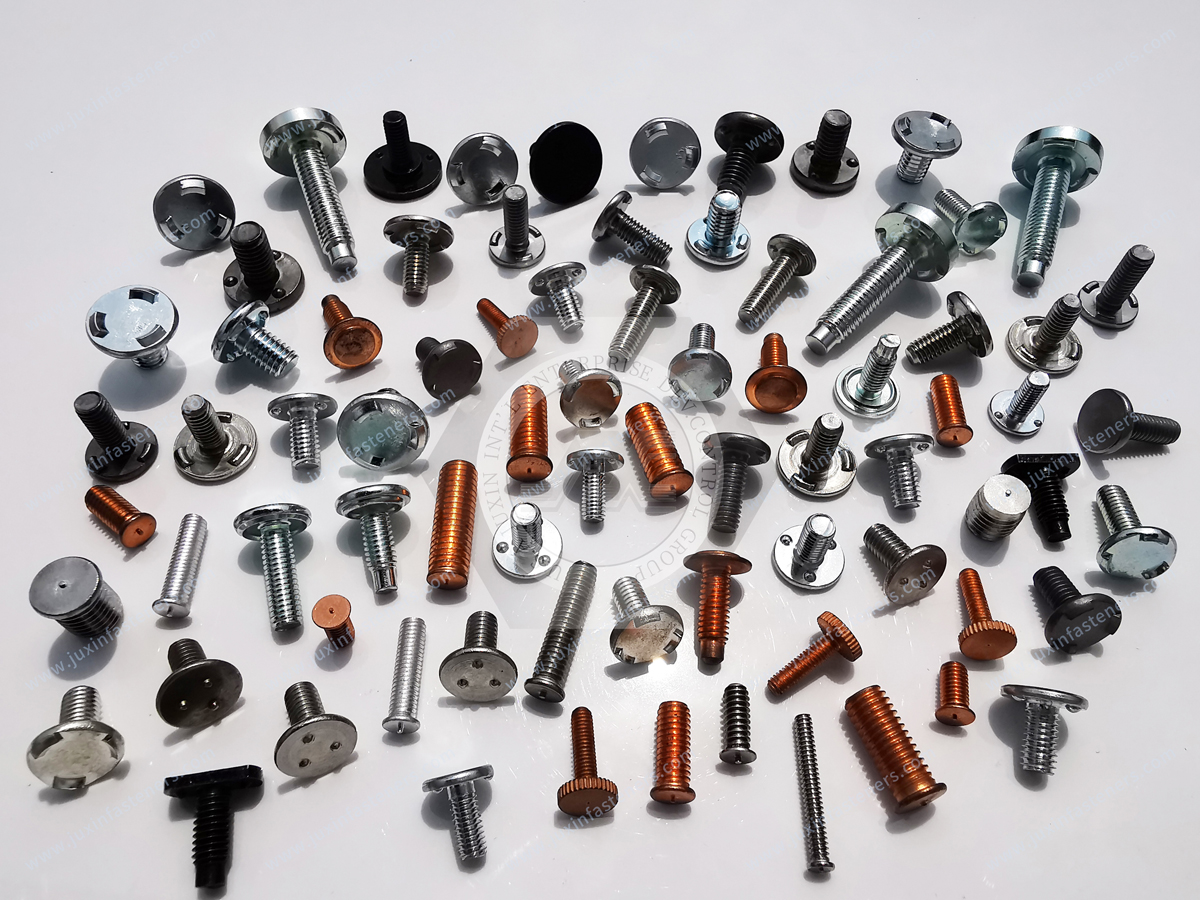
Product Packaging
Packaging Standard
At Juxin Fasteners, we apply standardized export packaging to ensure product protection, traceability, and compliance with international logistics requirements.
1. Standard Export Packaging
Unless otherwise specified, all products will be packed according to our factory standard export packaging, which includes:
Moisture-resistant inner protection
Poly bag or small box packing as required
Reinforced export cartons
Clear labeling with part number, specification, batch number, and quantity
Palletizing for sea or air shipment when necessary
Our standard packaging is designed to ensure safe transportation, efficient warehousing, and long-distance international shipping.
2. Customized Packaging Options
We also provide customized packaging solutions according to customer requirements, including but not limited to:
Private labeling
Customized barcodes
Specific carton dimensions
Retail packaging
Special pallet configuration
Customer-specific marking and identification
So that you know, customized packaging may involve additional costs and extended lead time depending on the complexity of the requirements.
3. Compliance & Quality Assurance
All packaging processes are controlled under our ISO 9001 quality management system to ensure consistency, traceability, and product integrity throughout the supply chain.
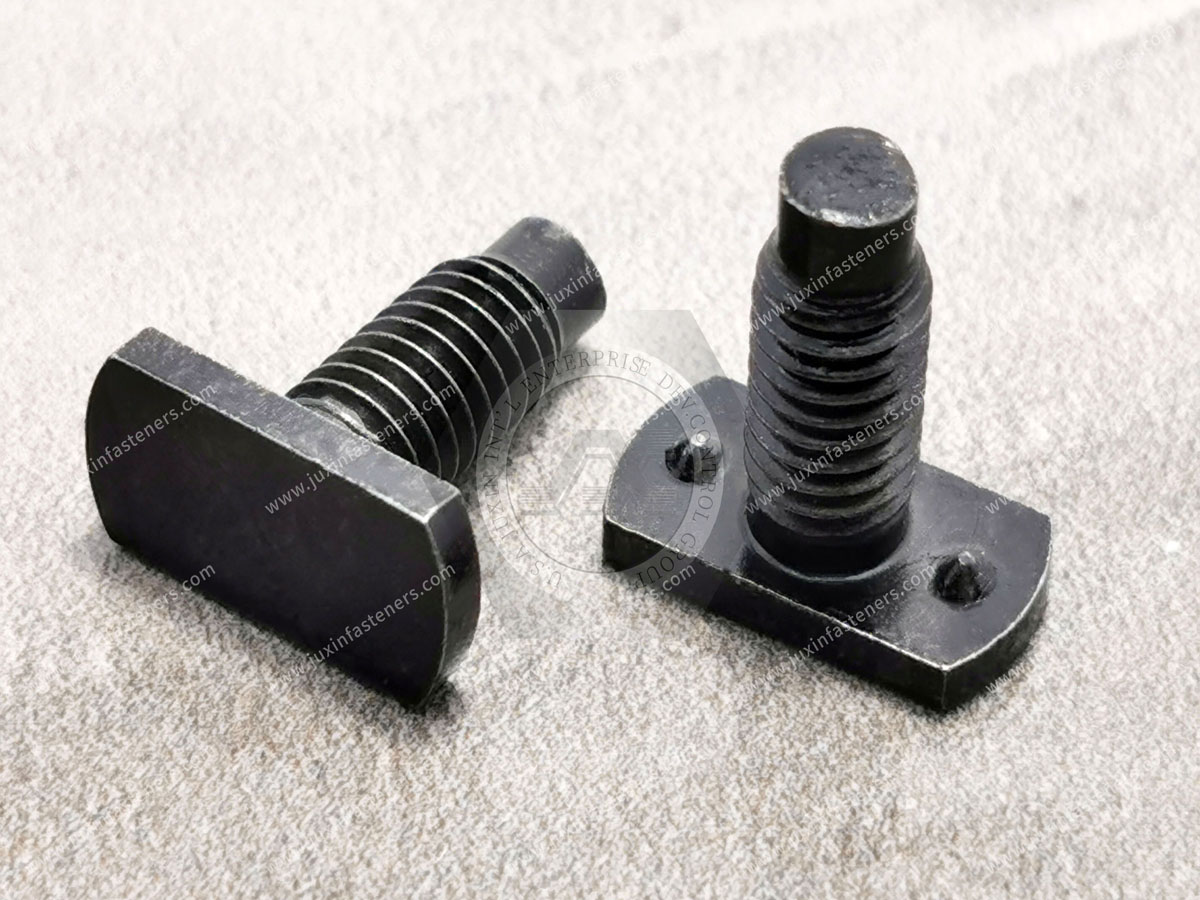
Product Pictures
Contact Us
Tel.:
+86 020 8621 0320
+86 020 3121 6067
E-mail:
Technical Support:
Navigation
SEND INQUIREY