Call Us
+86 136 6007 9809
Call Us
+86 136 6007 9809

What are the key engineering characteristics of DIN 928 square weld nuts?
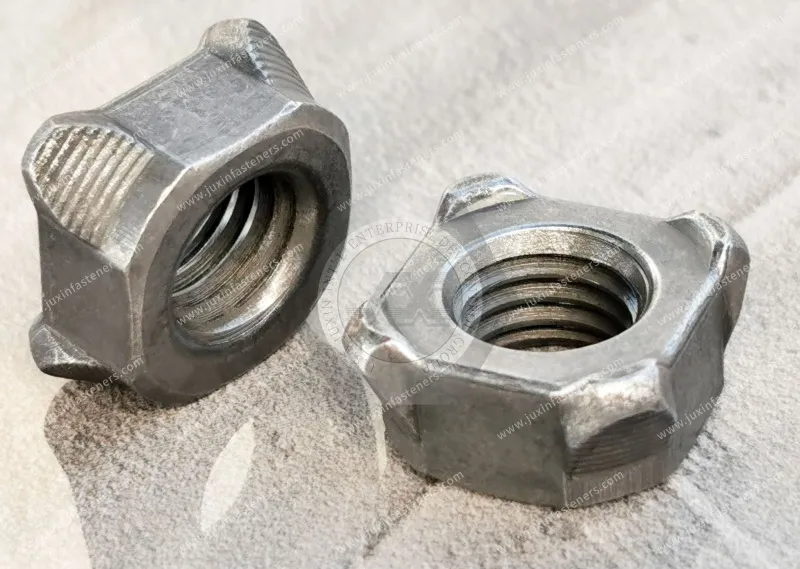
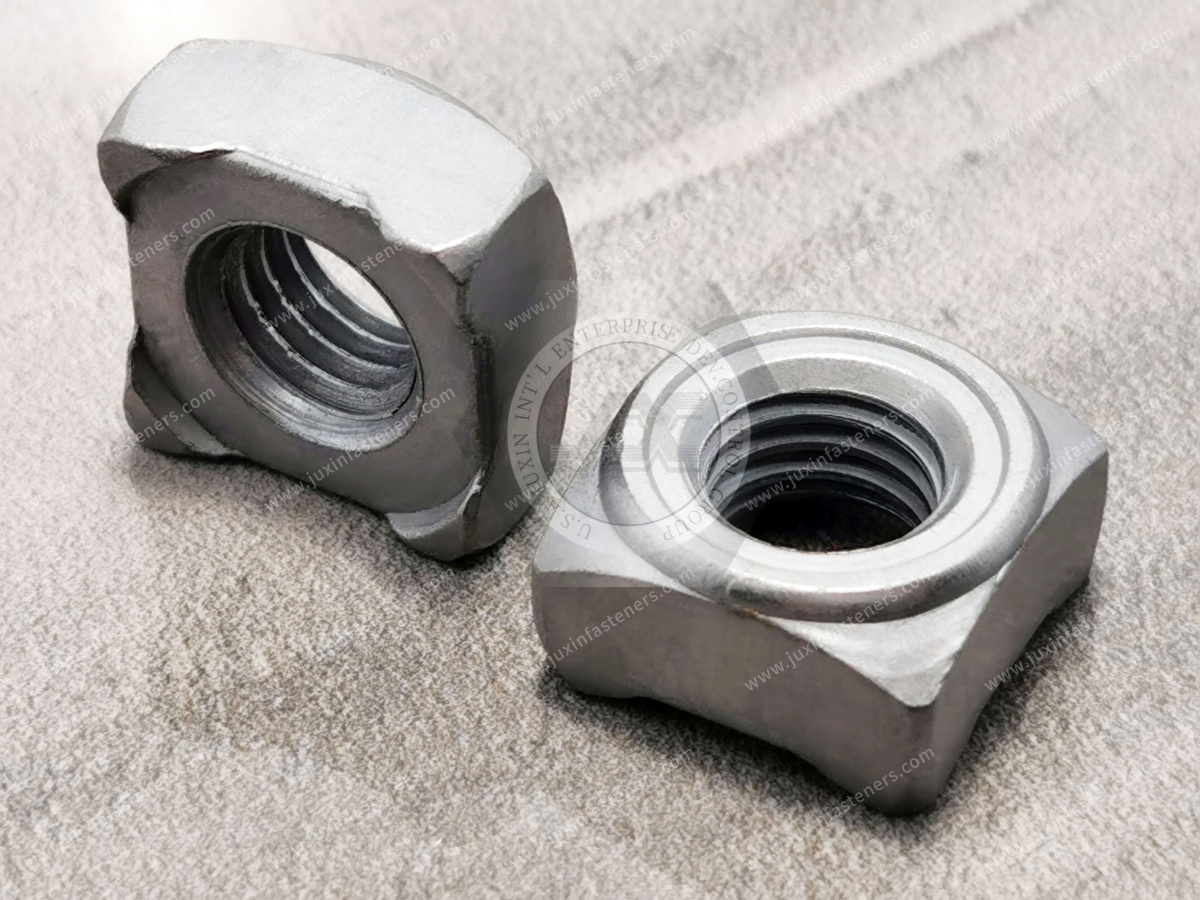
DIN 928 square weld nuts are specialized threaded weld fasteners featuring a square body with four corner projections designed for resistance projection welding onto suitable sheet-metal substrates.
Product Specification
What are the key engineering characteristics of DIN 928 square weld nuts?
DIN 928 square weld nuts are specialized threaded weld fasteners featuring a square body with four corner projections designed for resistance projection welding onto suitable sheet-metal substrates.
They are commonly specified across a range of metric thread sizes, including M4 to M16,
with mechanical property classes and material conditions selected according to the applicable product specification, customer drawing, and mechanical-performance requirement.
For OEM applications, the engineering value of a square weld nut is not simply the presence of four projections. The complete joint depends on:
weld nut geometry
projection configuration
parent sheet material
sheet thickness
welding access
electrode configuration
welding parameters
surface condition
thread requirements
installation torque
applied load path
corrosion environment
downstream coating process
customer-specific validation requirements
The four projections concentrate electrical resistance and heat at controlled locations during resistance projection welding.
As welding progresses, the projections collapse and a localized fusion weld nugget forms between the weld nut and parent sheet.
A simplified cross-section can be represented as:
              [ Square Weld Nut Body ]
              +----------------------+
              |                      |
              |      Threaded Bore   |
              |                      |
              +--●----------------●--+
                 Projection   Projection

================================================
                 Base Metal / Sheet
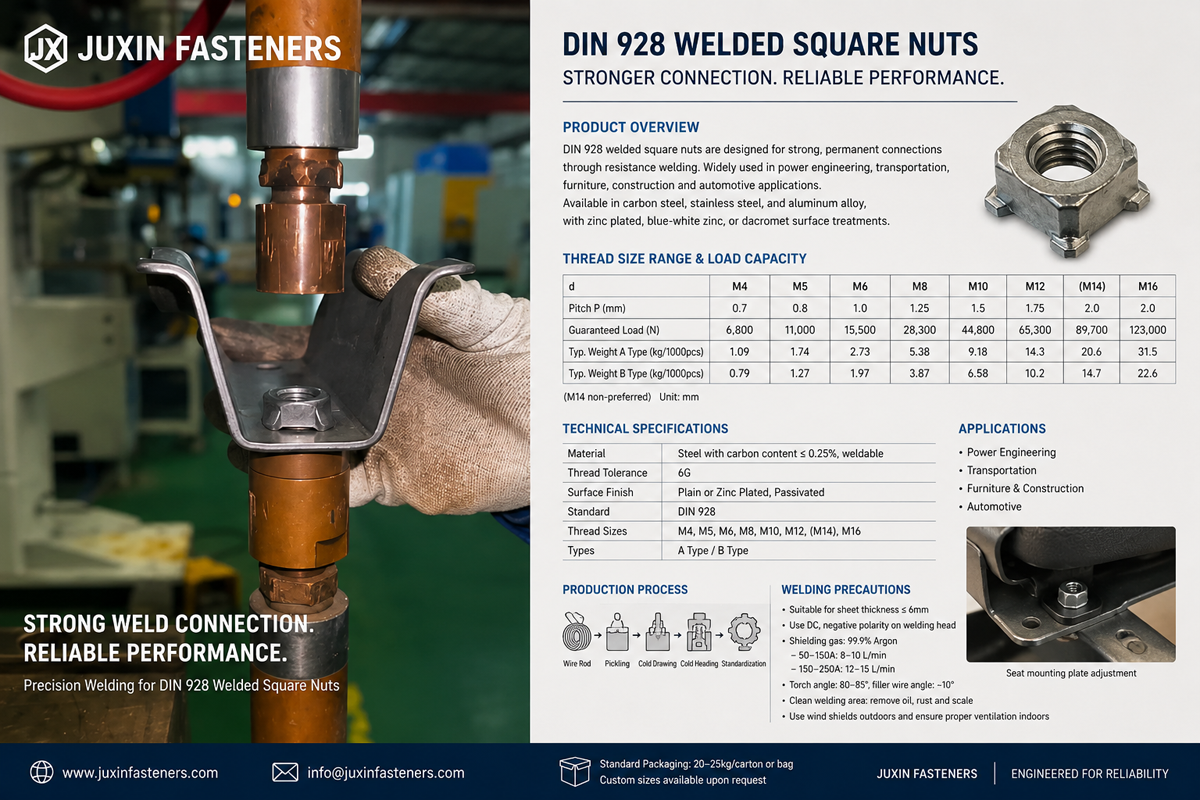
The actual weld interface depends on the fastener projection geometry, sheet material, welding conditions, electrode contact, surface condition, and joint design.
DIN 928 square weld nuts can be used in automotive, industrial equipment, sheet-metal assemblies, electrical equipment,
machinery, and other applications where a permanent threaded attachment point is required after welding.
In automotive and other high-volume OEM applications, square weld nuts may be used for attachment points associated with components such as seat structures, brackets,
door-related assemblies, body reinforcements, underbody components, and other sheet-metal structures.
Whether a specific application is suitable must be determined from the customer drawing, load requirements, material system, manufacturing process, and validation specification.
JUXIN FASTENERS supplies weld fastener solutions for OEM and industrial applications, with product configuration, material, surface treatment,
welding compatibility, and inspection requirements developed according to the applicable technical specification.
DIN 928 provides the dimensional framework for square weld nuts and is therefore particularly useful when engineers and procurement teams need to identify a standardized square weld-nut configuration.
Depending on the specified thread size, the product drawing may define characteristics such as:
thread size
nut body dimensions
flange or seating geometry
projection arrangement
projection location
overall height
thread length
corner geometry
dimensional tolerances
material specification
surface treatment
For OEM sourcing, however, referencing DIN 928 alone may not be sufficient.
A complete RFQ should identify the required thread, material, mechanical property, surface finish, welding process, sheet substrate, inspection requirements, packaging requirements, and any customer-specific specification.
This is especially important when the fastener is used in automotive or safety-related assemblies.
To withstand required clamping forces and service loads, a weld nut may be specified according to a defined mechanical property class and corresponding test requirement.
The following values are retained from the supplied technical data as specified proof-load reference values for the applicable product/property-class configuration,
rather than being presented as universal proof loads for every DIN 928 weld nut:
| Thread Size | Property Class | Minimum Proof Load Reference |
|---|---|---|
| M4 | Class 8 / 10 | 6,800 N |
| M6 | Class 8 / 10 | 15,500 N |
| M8 | Class 8 / 10 | 28,300 N |
| M10 | Class 8 / 10 | 44,800 N |
| M12 | Class 8 / 10 | 65,300 N |
| M16 | Class 8 / 10 | 123,000 N |
These values should always be verified against the applicable product drawing, material specification, mechanical-property standard, test method,
and customer requirement before they are used for structural design or purchasing approval.
A proof-load value is also not the same as the complete load capacity of a welded assembly.
The actual joint limit can instead be controlled by the weakest failure mode, including:
thread stripping
bolt failure
weld-interface failure
parent-sheet deformation
parent-sheet tear-out
local bearing failure
nut rotation
projection-weld failure
combined tensile and shear loading
fatigue under cyclic loading
Therefore, engineers should not use the proof-load value of the nut alone as the allowable load for the complete welded joint.
This distinction is particularly important for automotive and industrial OEM applications.
A weld nut can have adequate thread mechanical properties while the welded attachment to the sheet remains the limiting component of the joint.
For example, increasing the mechanical property class of the nut does not automatically increase:
weld nugget capacity
parent-sheet strength
resistance to nut rotation
resistance to sheet deformation
fatigue life of the complete assembly
The engineering evaluation must therefore consider both the fastener mechanical properties and the welded joint performance.
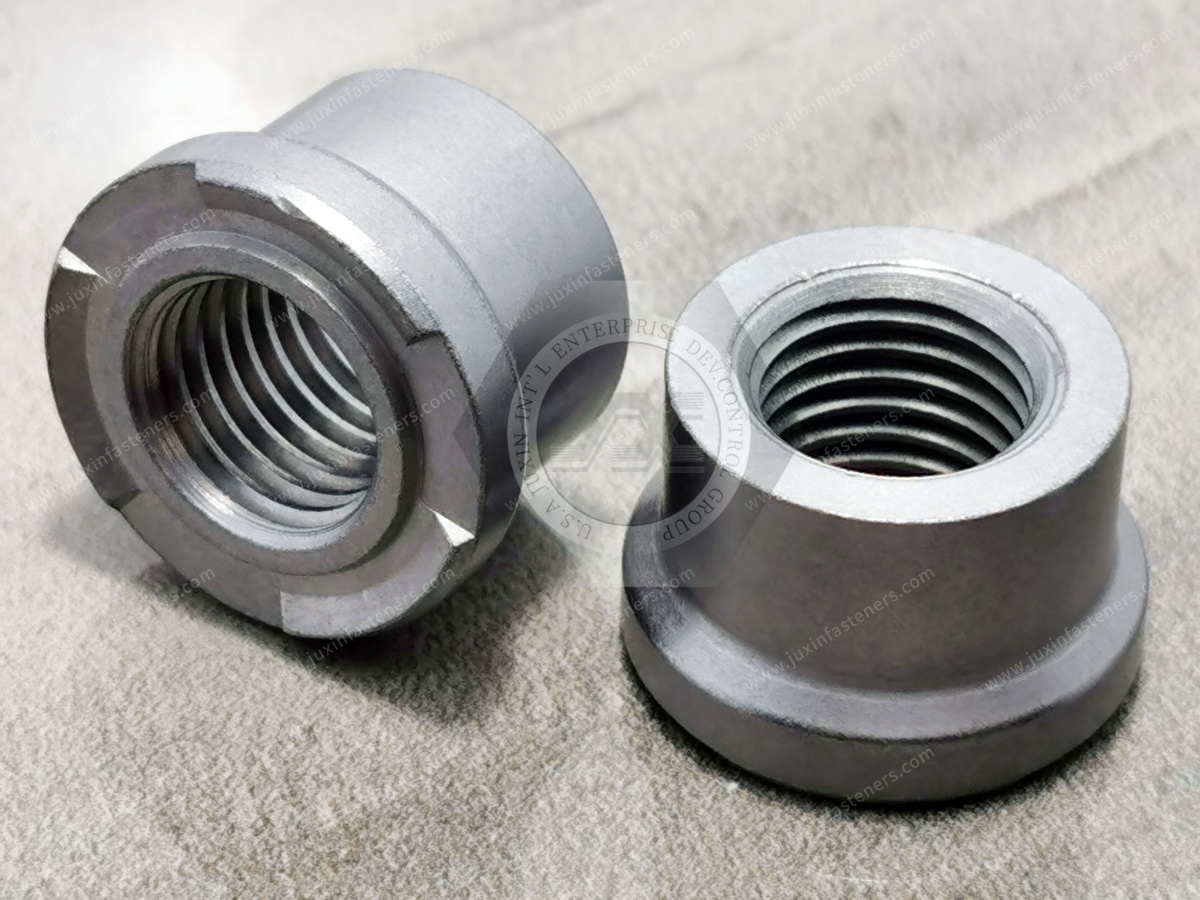
Weld nuts intended for resistance welding are commonly manufactured from steel grades selected for appropriate mechanical properties and weldability.
A low-carbon steel composition can be advantageous because excessive carbon and alloying can increase hardenability and influence the metallurgical response during rapid heating and cooling.
The supplied technical data references a carbon content of approximately ≤0.25% for the intended weldable-steel configuration.
This value should be treated as a specified material target for the applicable product configuration, rather than as a universal chemical-composition requirement for every DIN 928 weld nut.
The final material should be confirmed through the product specification and, where required, material certification or laboratory analysis.
Resistance projection welding generates localized heating at the contact interface between the fastener projections and the parent sheet.
The resulting thermal cycle can influence:
weld nugget formation
heat-affected regions
local hardness
metallurgical transformation
residual stress
weld-interface strength
Material selection therefore needs to balance the required mechanical properties with the weldability requirements of the complete fastener-to-sheet system.
This is particularly important when weld nuts are used with higher-strength automotive steels, coated steels, stainless steels, or other specialized substrates.
Surface condition directly influences electrical contact resistance and therefore affects the heat generated during resistance welding.
Before welding, the joining surfaces should be controlled to avoid excessive:
oil
grease
dirt
heavy mill scale
oxide scale
foreign particles
uncontrolled coating buildup
manufacturing residues
The objective is not simply to make the metal visually clean.
The objective is to achieve a controlled and repeatable electrical and mechanical interface during the welding cycle.
Because resistance welding heat generation is influenced by electrical resistance, the relationship is commonly represented by:
Q = I²Rt
where:
Q = generated heat
I = welding current
R = electrical resistance
t = effective current duration
The actual welding process must be developed for the specific combination of fastener material, sheet material, surface condition, electrode geometry, electrode force, and welding equipment.
A single current, force, or welding-time value should not be assumed to apply to every DIN 928 application.
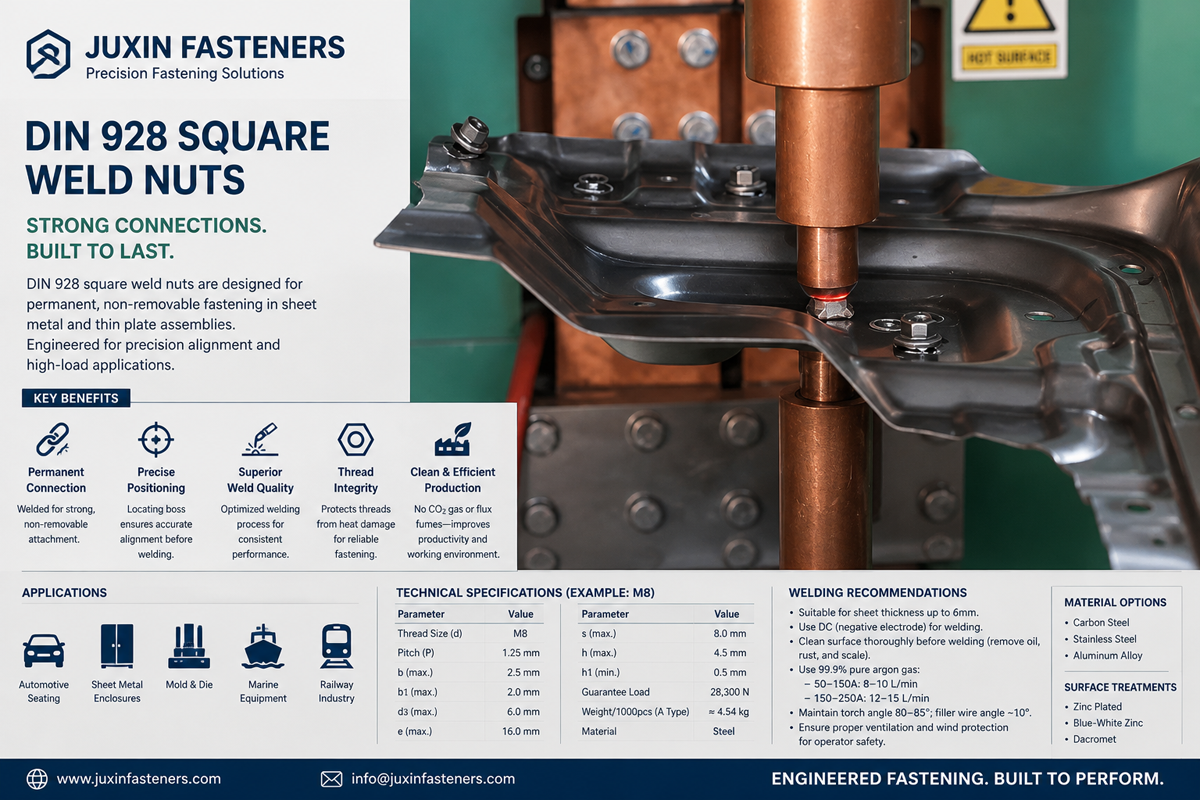
DIN 928 square weld nuts can provide permanent threaded attachment points in automotive sheet-metal assemblies.
However, application suitability depends on the vehicle platform, structural function, substrate material, welding process, and customer engineering specification.
Weld nuts may be incorporated into seat mounting structures and related brackets where a threaded attachment point must be integrated into stamped or formed sheet metal.
Potential engineering considerations include:
tensile loading
shear loading
bolt preload
cyclic loading
local sheet deformation
weld accessibility
assembly-tool access
dimensional location
corrosion protection
customer validation requirements
For safety-related components, the complete attachment system must be validated according to the applicable vehicle and customer requirements.
Door-related assemblies can experience repeated opening and closing cycles, vibration, local impact, and torque generated around the attachment points.
A square weld nut can provide a permanent threaded attachment point within a reinforcement or sheet-metal structure.
Its performance depends on:
weld-interface integrity
parent-sheet thickness and strength
reinforcement geometry
bolt preload
applied torque
load direction
fatigue conditions
corrosion environment
The square geometry can also provide useful anti-rotation characteristics after welding, but the actual resistance to rotation remains a function of the complete weld geometry and joint design.
Weld nuts may also be considered for brackets and sheet-metal structures associated with suspension, underbody, powertrain, and other vehicle systems.
These applications can introduce complex combinations of:
tensile loads
shear loads
bending moments
vibration
thermal exposure
fatigue
corrosion
For these applications, selecting a weld nut solely because it has a higher nominal mechanical property class is insufficient.
The engineer should evaluate the complete load path from the bolt through the weld nut, weld interface, parent sheet, reinforcement structure, and connected component.
Threaded welded fasteners can also appear in safety-related vehicle structures and reinforcement assemblies.
However, safety-belt anchorage and other occupant-restraint attachment points are highly specification-dependent applications.
They should not be treated as generic DIN 928 applications.
Where a weld nut is considered for a safety-critical attachment, the supplier must work from the applicable:
engineering drawing
material requirement
mechanical-property requirement
weld specification
dimensional tolerance
validation test requirement
corrosion requirement
customer-specific automotive specification
The complete joint—not simply the nut—must meet the applicable design and validation criteria.
The square body of a weld nut provides four defined corners around the threaded opening.
Depending on the specific design, this geometry can provide several useful characteristics.
The square perimeter can interact with the welded projections and surrounding joint geometry to resist rotation after installation.
This can be particularly useful where the assembly bolt is installed with substantial torque.
However, it is technically incorrect to claim that square geometry automatically provides superior torque-out performance in every application.
Actual rotation resistance depends on:
projection geometry
weld nugget distribution
nut dimensions
sheet material
sheet thickness
weld quality
bolt torque
load direction
local sheet deformation
The square body also provides a defined seating area against the sheet.
The effective load distribution is influenced by the geometry of the nut and the stiffness of the parent panel.
For applications involving high local loads, engineers should examine whether the surrounding sheet metal has sufficient stiffness to transfer the applied load without excessive local deformation.
Surface treatment should be selected together with the welding sequence and final assembly environment.
Commonly considered surface treatments include:
zinc plating
zinc-nickel alloy coatings
Dacromet-type coatings
other specified corrosion-protection systems
controlled temporary protective oils
application-specific post-weld coating systems
The appropriate finish depends on the complete manufacturing sequence.
Zinc plating can provide sacrificial corrosion protection for steel fasteners.
However, the welding compatibility of a zinc-coated surface must be evaluated according to:
coating type
coating thickness
welding current
electrode condition
welding sequence
required weld quality
fume and spatter control
downstream coating process
A zinc-plated weld nut should therefore not automatically be assumed to have the same welding behavior as an untreated steel fastener.
Zinc-nickel coatings may be selected where higher corrosion performance is required.
However, their suitability for welding depends on the actual coating system and manufacturing sequence.
For weld-fastener applications, the engineering question is not simply:
“Which coating has the highest corrosion resistance?”
It is:
“Which surface-treatment system provides the required corrosion performance while remaining compatible with the welding, assembly, and downstream coating process?”
Dacromet-type coatings and related zinc-aluminum flake systems can be considered for applications requiring specific corrosion and environmental performance.
Their suitability must be evaluated against the welding sequence and customer requirements.
Surface treatment should therefore be specified as part of the complete OEM fastening system rather than selected independently after the fastener has already been designed.
DIN 928 geometry alone does not guarantee successful projection welding.
A stable weld requires coordination between:
fastener projection geometry
parent-sheet material
sheet thickness
surface condition
electrode geometry
electrode force
welding current
current duration
squeeze time
hold time
welding equipment
fastener location
tooling rigidity
The four projections concentrate current and electrical resistance into localized regions.
As heat develops, the projections progressively collapse and the molten interface forms the weld nugget.
A stable process should produce sufficiently consistent fusion across the intended welding area.
If the process is poorly controlled, possible failure modes include:
incomplete projection collapse
insufficient fusion
excessive expulsion
electrode sticking
inconsistent nugget formation
local sheet deformation
fastener misalignment
thread damage from excessive heat
The electrode system must provide appropriate access to the welding location.
This becomes increasingly important when the weld nut is installed:
near a flange
near an edge
inside a boxed structure
near another component
on a formed panel
on a complex BIW reinforcement
The physical dimensions of the electrode and tooling can therefore influence the practical suitability of a DIN 928 configuration.
Automotive body-in-white production introduces additional requirements beyond basic weldability.
High-volume automotive production frequently uses automated welding equipment.
The weld nut must therefore be compatible with the actual production process, including:
part presentation
orientation
feeding
pickup
transfer
positioning
electrode access
weld sequence
inspection
A geometrically correct weld nut can still create production problems if its shape is difficult to feed or orient automatically.
The location of a welded nut may be critical to downstream component assembly.
Dimensional requirements can involve:
center position
angular orientation
thread alignment
panel-hole relationship
flange position
projection position
The appropriate tolerances should come from the customer drawing and functional requirement rather than from a universal tolerance rule.
Automotive body structures can undergo downstream coating processes such as pretreatment and e-coating.
The weld fastener therefore needs to be evaluated as part of the complete coating process.
Important considerations include:
coating coverage
drainage
chemical exposure
corrosion protection
thread functionality
masking requirements
electrical contact requirements
coating thickness accumulation
A weld fastener should not be described as “corrosion resistant” without considering the final assembled and coated system.
A practical selection process can follow these steps.
Identify the required metric thread size and thread specification.
Typical DIN 928 applications may involve sizes from M4 through M16, depending on the selected product configuration.
Determine:
bolt preload
tensile load
shear load
bending moment
cyclic loading
installation torque
fatigue requirement
required mechanical property class
Provide:
sheet material
sheet thickness
coating condition
forming condition
hole geometry
edge proximity
weld accessibility
Identify:
resistance welding equipment
electrode configuration
welding sequence
electrode access
automation level
process-monitoring requirements
Specify the required corrosion-protection system and determine whether it is applied:
before welding
after welding
during a downstream coating process
through a combination of treatments
Validation may include:
dimensional inspection
thread inspection
weld integrity testing
torque-out testing
push-out testing
tensile testing
shear testing
fatigue testing
corrosion testing
environmental testing
The actual tests should be selected according to the application and customer specification.
Procurement teams should avoid issuing an RFQ using only:
“DIN 928 M8 weld nut.”
A stronger RFQ package identifies the complete application requirement.
Recommended information includes:
DIN 928 reference
thread size
thread tolerance/class
overall dimensions
projection configuration
required property class
material
surface treatment
parent-sheet material
sheet thickness
welding process
welding equipment
assembly environment
expected loads
temperature exposure
corrosion environment
dimensional inspection requirements
thread inspection
material documentation where required
weld validation
surface-treatment verification
packaging requirements
traceability requirements
prototype quantity
annual usage
forecast
production volume
delivery location
packaging configuration
target production schedule
This information allows a supplier to evaluate the fastener as an engineering component rather than simply a commodity part.
A standardized DIN 928 square weld nut can be an excellent choice when the standard geometry meets the application.
However, customization may be considered when the OEM requires:
unusual clearance
special projection geometry
modified flange dimensions
special thread configuration
unusual panel geometry
specific coating
automated feeding requirements
customer-specific mechanical properties
Standardization should generally be preferred when it satisfies the engineering requirement because it can simplify sourcing, qualification, tooling, and replacement.
Customization becomes justified when the standard product cannot satisfy the functional or manufacturing requirement.
DIN 928 identifies the standardized product configuration, but the OEM drawing may require additional material, mechanical, coating, inspection, or process requirements.
The proof load of the nut does not automatically represent the load capacity of the welded sheet-metal joint.
The surrounding sheet may fail before the threaded fastener reaches its mechanical limit.
Surface treatment affects electrical contact, welding behavior, corrosion protection, and downstream processing.
Square geometry can improve anti-rotation behavior, but the welded interface and complete load path determine actual performance.
Seat structures, door systems, suspension components, and restraint-related applications can have very different engineering and validation requirements.
Before production release, engineering teams should review:
Thread size confirmed
Thread specification confirmed
Required property class confirmed
Material specified
Parent-sheet material identified
Sheet thickness identified
Surface condition reviewed
Welding process defined
Electrode access confirmed
Fastener orientation confirmed
Edge distance reviewed
Hole geometry reviewed
Projection geometry reviewed
Installation torque defined where required
Required weld validation identified
Corrosion requirement defined
Surface treatment defined
Downstream coating process reviewed
Packaging and feeding requirements defined
Traceability requirements defined
Customer-specific specifications reviewed
For OEM applications, selecting the weld nut should not be separated from the welding and assembly process.
JUXIN FASTENERS can support the engineering discussion around:
DIN 928 square weld nut selection
metric thread requirements
material selection
projection-welding compatibility
sheet-metal application
surface treatment
dimensional requirements
custom configurations
prototype development
production sourcing
quality inspection
packaging
OEM RFQ review
The earlier these requirements are reviewed, the easier it is to identify potential DFM issues before tooling, welding fixtures, and production processes are finalized.
Weld Fasteners Solutions
For weld nuts, weld studs, projection-weld fasteners, application engineering, and OEM sourcing.
Weld Nut Spin Failure Analysis & Prevention
For understanding weld-interface failure, rotation, projection collapse, welding-process variation, and joint design.
Custom Weld Fasteners: Engineering & OEM Manufacturing
For applications where standard DIN 928 geometry does not fully satisfy the required assembly or manufacturing conditions.
Fastener Procurement & RFQ Best Practices
For preparing technical drawings, annual volume forecasts, welding requirements, quality documentation, and supplier RFQs.
Fastener Surface Finishes & Coatings
For evaluating zinc, zinc-nickel, Dacromet-type systems, welding compatibility, and corrosion requirements.
A DIN 928 square weld nut is a square-bodied threaded weld fastener designed with projections that can be resistance projection welded to suitable sheet-metal substrates.
The exact dimensions, thread configuration, material, mechanical properties, and surface treatment should be confirmed from the applicable product specification.
DIN 928 square weld nuts are commonly specified across metric thread sizes including M4 through M16, depending on the selected product configuration.
The actual available size range should be confirmed against the supplier's current product range and the applicable DIN 928 configuration.
The supplied technical reference includes proof-load values ranging from 6,800 N for M4 to 123,000 N for M16 for the applicable Class 8 / 10 configurations.
These values should not be treated as universal values for every DIN 928 product. The applicable product specification, mechanical-property requirement,
test method, and customer drawing should always be checked before engineering use.
They can be suitable for automotive sheet-metal applications where the geometry, material, mechanical properties, welding process, and customer requirements are compatible.
Applications involving safety-critical or structural functions require application-specific validation.
Square geometry can provide useful anti-rotation characteristics and a defined seating configuration.
However, neither square nor hexagonal geometry is automatically superior in every application. Actual performance depends on fastener design, weld geometry, sheet material, installation torque, and load path.
Zinc plating can be specified for corrosion protection, but the coating system must be evaluated together with the welding process and downstream coating sequence.
The required coating type and thickness should be specified rather than assumed.
Potentially, but compatibility must be evaluated for the specific substrate.
Higher-strength automotive steels can introduce additional considerations involving resistance welding, thermal response, local hardness, sheet deformation, and joint performance.
No.
A higher fastener property class may increase the mechanical capability of the nut itself, but the welded assembly can still be limited by weld-interface failure, parent-sheet deformation, sheet tear-out, or another failure mode.
For the most useful engineering quotation, provide:
DIN 928 reference
thread size
drawing
material requirement
property class
surface treatment
parent-sheet material
sheet thickness
welding process
annual volume
quality requirements
packaging requirements
delivery requirements
A 2D drawing and 3D model are especially useful for custom or application-specific requirements.
If you are sourcing DIN 928 square weld nuts for automotive, industrial machinery, sheet-metal assemblies, electrical equipment, or other OEM applications, send your engineering requirements to JUXIN FASTENERS.
Please include your:
2D engineering drawing
3D CAD model when available
thread specification
property-class requirement
material requirement
surface-treatment requirement
parent-sheet material
sheet thickness
welding process
annual volume
inspection requirements
packaging requirements
Email: info@juxinfasteners.com
JUXIN FASTENERS provides OEM weld fastener sourcing and engineering support for standardized and application-specific fastening requirements.
Precision Fastening Solutions Since 2003.
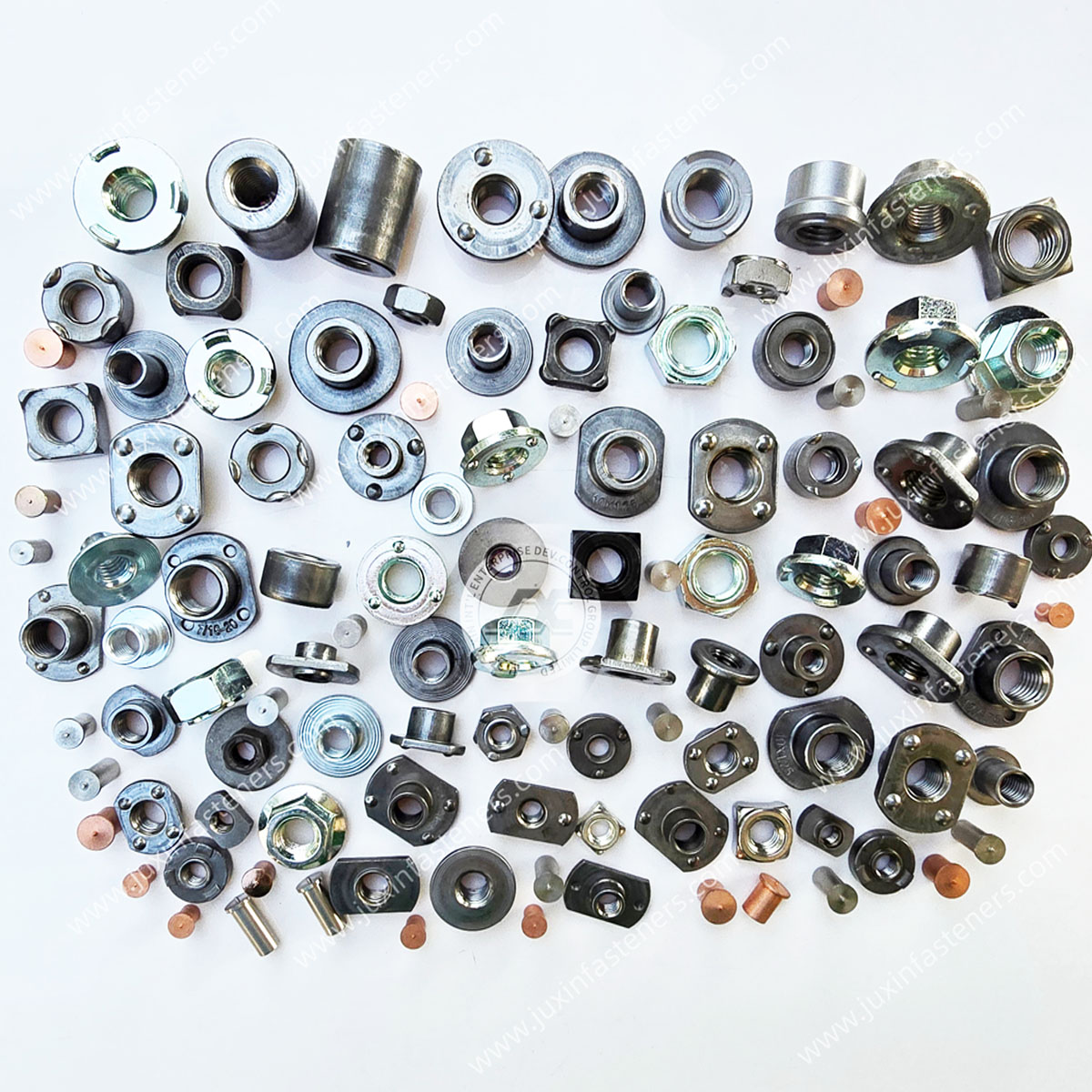
Product Packaging
Packaging Standard
At Juxin Fasteners, we apply standardized export packaging to ensure product protection, traceability, and compliance with international logistics requirements.
1. Standard Export Packaging
Unless otherwise specified, all products will be packed according to our factory standard export packaging, which includes:
Moisture-resistant inner protection
Poly bag or small box packing as required
Reinforced export cartons
Clear labeling with part number, specification, batch number, and quantity
Palletizing for sea or air shipment when necessary
Our standard packaging is designed to ensure safe transportation, efficient warehousing, and long-distance international shipping.
2. Customized Packaging Options
We also provide customized packaging solutions according to customer requirements, including but not limited to:
Private labeling
Customized barcodes
Specific carton dimensions
Retail packaging
Special pallet configuration
Customer-specific marking and identification
So that you know, customized packaging may involve additional costs and extended lead time depending on the complexity of the requirements.
3. Compliance & Quality Assurance
All packaging processes are controlled under our ISO 9001 quality management system to ensure consistency, traceability, and product integrity throughout the supply chain.
Product Pictures
Contact Us
Tel.:
+86 020 8621 0320
+86 020 3121 6067
E-mail:
Technical Support:
Navigation
SEND INQUIREY