Call Us
+86 136 6007 9809
Call Us
+86 136 6007 9809

What weld fasteners are used in EV battery enclosures?
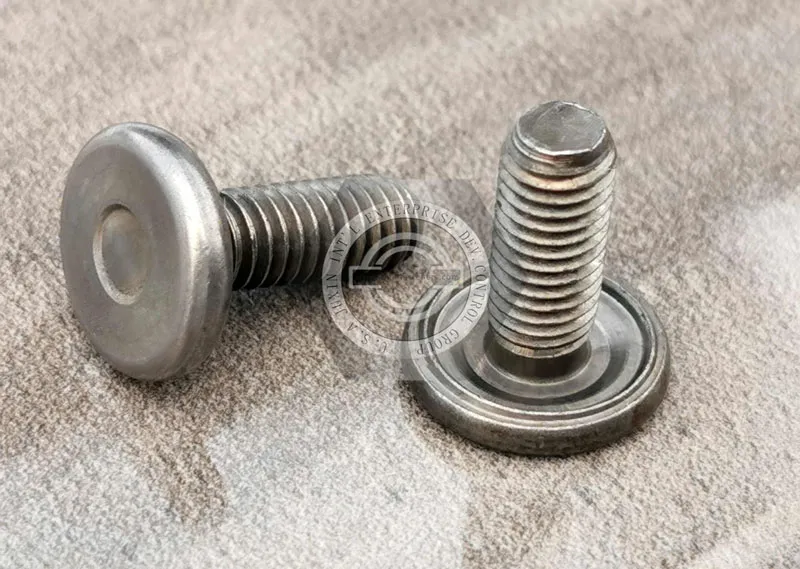
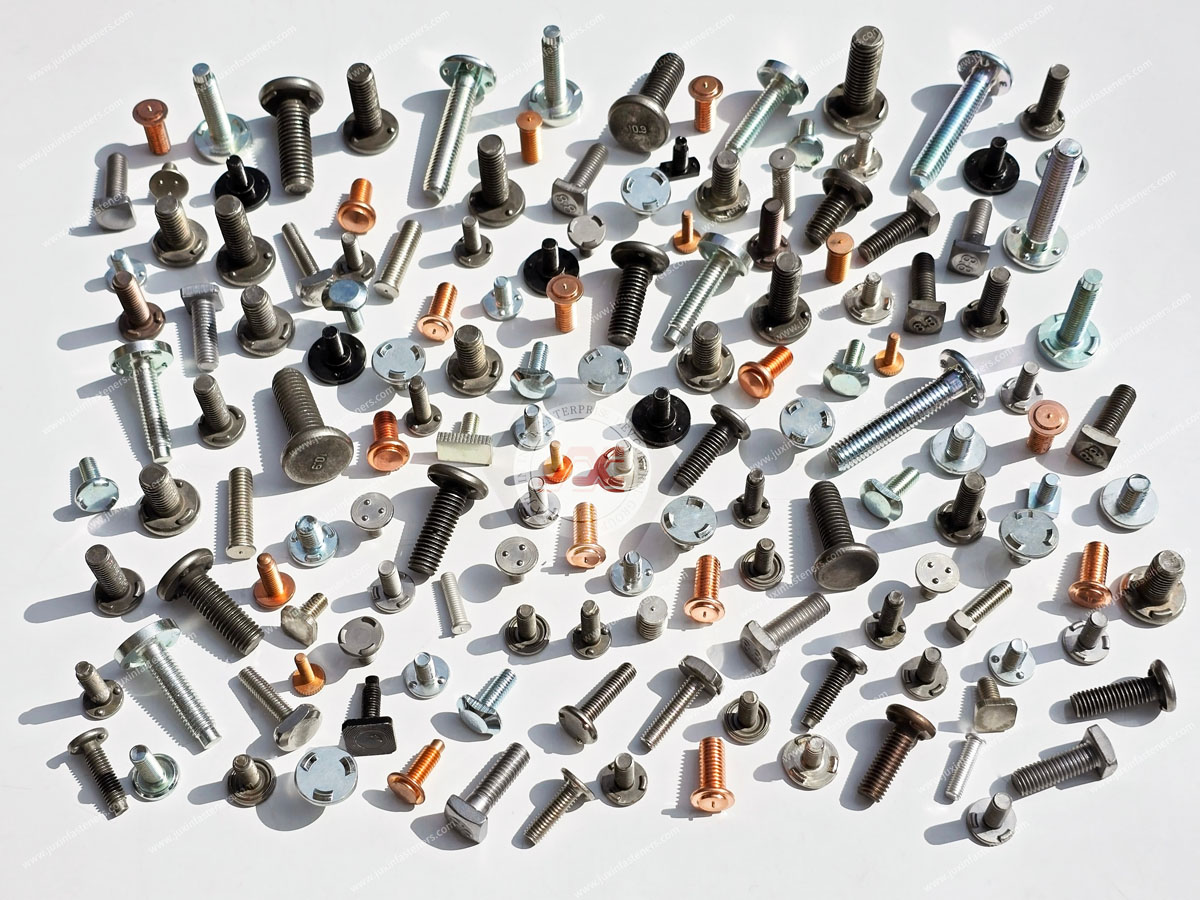
Electric vehicle battery trays and enclosures can use projection weld nuts, weld studs, grounding studs,
and other specialized fastening components to create permanent attachment points for covers, brackets,
thermal-management components, module supports, cable-management components, shields, and other battery-system hardware.
Product Specification
What weld fasteners are used in EV battery enclosures?
Electric vehicle battery trays and enclosures can use projection weld nuts, weld studs, grounding studs,
and other specialized fastening components to create permanent attachment points for covers, brackets, thermal-management components, module supports,
cable-management components, shields, and other battery-system hardware.
However, EV battery enclosure fastening requires more than simply selecting a weldable nut or stud.
The engineer must consider:
Battery tray material
Sheet thickness
Steel, aluminum, or mixed-material construction
Fastener material
Projection geometry
Welding process
Sealing architecture
Coolant exposure
Thermal expansion
Vibration and fatigue
Electrical bonding and grounding requirements
Corrosion environment
Coating system
Final assembly sequence
A critical distinction is that a weld fastener itself should not automatically be described as hermetically sealing an EV battery enclosure.
A continuous or closed projection weld may create a continuous welded interface around a fastener location,
but whether the finished assembly is leak-tight or achieves an IP67/IP68 rating depends on the complete enclosure design,
weld quality, sealing system, interfaces, covers, gaskets, penetrations, and validation testing.
       [ Fastener / Weld Nut ]
                 ||
        [ Welded Interface ]
                 ||
================================
     EV Battery Enclosure Wall
================================
          Sealing System
                 |
                 v
       Complete Enclosure
       Leak / Ingress Validation
This distinction is particularly important for EV battery systems because coolant leakage, moisture ingress, corrosion,
and loss of electrical isolation can have consequences far beyond a conventional sheet-metal assembly.
JUXIN FASTENERS supports OEM fastening applications by evaluating fastener geometry, material, substrate,
welding requirements, sealing considerations, and application conditions together rather than treating the weld fastener as an isolated component.
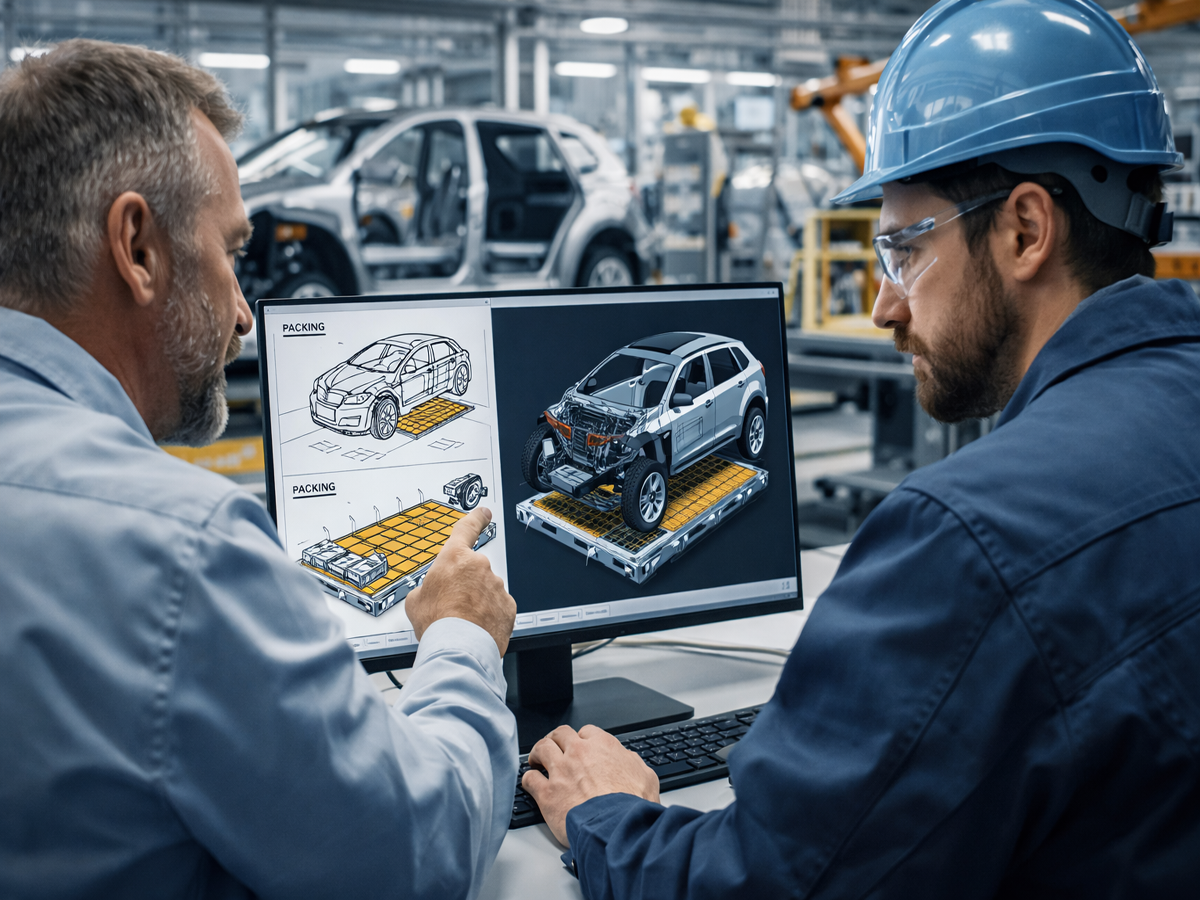
EV battery enclosures combine structural, thermal, electrical, and environmental requirements within a relatively compact assembly.
A fastening point may simultaneously need to support a bracket, survive vibration, tolerate thermal expansion, remain compatible with the coating system, and avoid creating an unwanted leakage path.
Many EV battery systems incorporate liquid thermal-management circuits using a specified coolant, often based on water-glycol chemistry or another engineered fluid.
Fastener locations near coolant channels therefore require careful attention to sealing.
A weld fastener with a closed or continuous projection configuration can be useful where the design objective is to establish a continuous welded interface around the fastener.
However, the presence of a continuous weld does not automatically prove that the finished enclosure is leak-tight.
Leakage can occur through:
Weld defects
Porosity
Cracks
Distortion
Thread passages
Adjacent sheet joints
Cover interfaces
Gasket interfaces
Penetrations
Improperly sealed fastener interfaces
Therefore, engineers should evaluate the fastener interface as part of the complete enclosure sealing architecture.
IP67 and IP68 are enclosure ingress-protection classifications, not properties that should automatically be assigned to an individual weld nut or weld stud.
An EV battery enclosure can only be represented as meeting a particular ingress-protection classification when the complete enclosure and its relevant interfaces
have been evaluated according to the applicable requirements and test procedure.
Consequently, a weld fastener should not be marketed as:
“IP67 weld nut”
unless the specific product and assembly have an appropriate basis for that claim.
A more technically accurate engineering description is:
“Weld fastener designed for use in enclosure applications where sealing performance is required, subject to assembly-level validation.”
This distinction protects both the OEM design team and the fastener supplier from confusing a component characteristic with a complete-system certification or validation result.
Battery packs commonly contain components associated with thermal management, including:
Cooling plates
Cooling channels
Tubing
Manifolds
Thermal interface components
Sensors
Brackets
Retention hardware
Weld nuts and weld studs can provide permanent attachment points for these components.
The fastening system should be evaluated for:
Thermal cycling
Mechanical vibration
Bracket loading
Differential thermal expansion
Corrosion exposure
Assembly torque
Coating compatibility
Local sheet deformation
A fastening solution that is adequate at room temperature may require additional validation if the joint experiences repeated thermal expansion and contraction during vehicle operation.
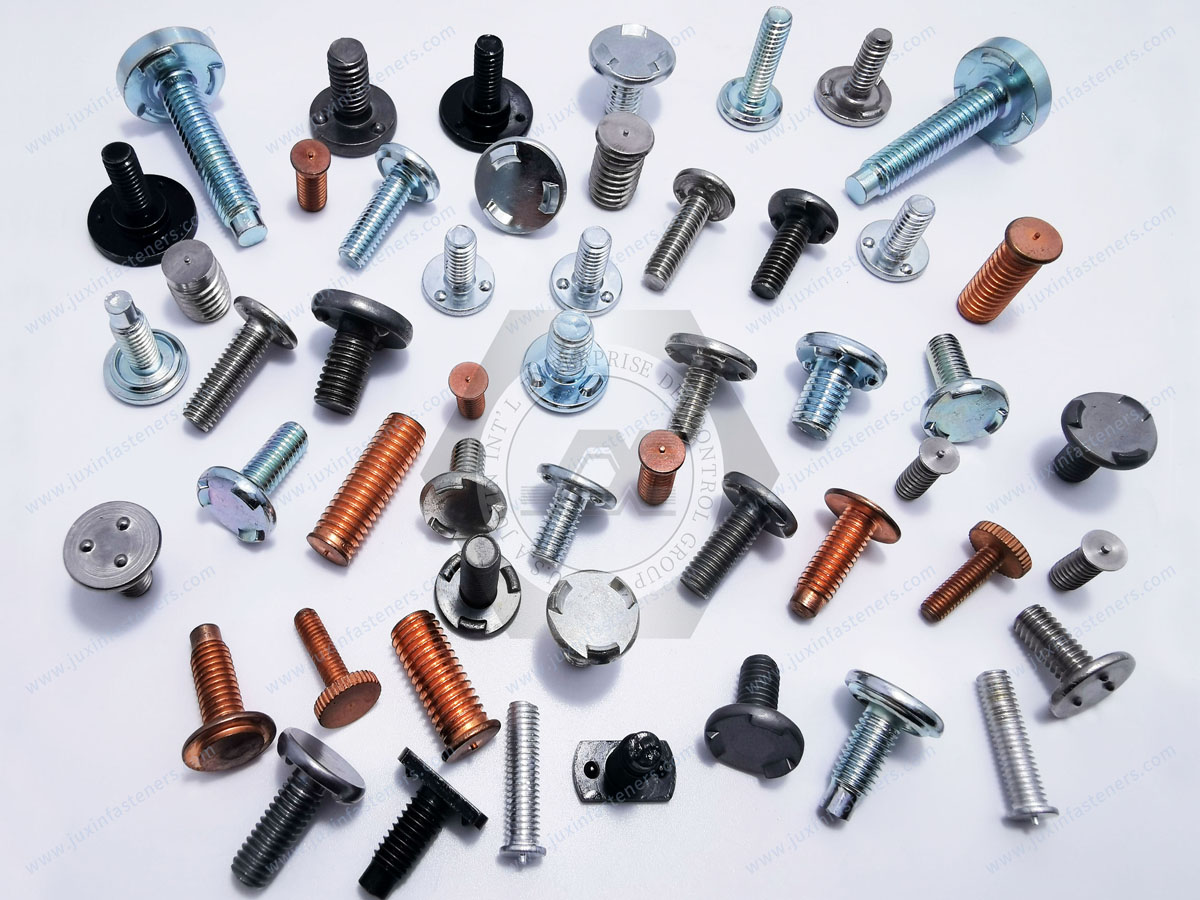
One of the most important design questions is the material combination between the weld fastener and the battery enclosure substrate.
EV battery structures may use:
Low-carbon steel
High-strength steel
Stainless steel
Aluminum alloys
Coated steel
Mixed-material constructions
These materials do not all behave identically during resistance welding.
Steel battery trays and enclosures can be suitable for projection-welded nuts and studs when the substrate and fastener materials are compatible with the welding process.
Important variables include:
Steel grade
Sheet thickness
Surface coating
Fastener material
Projection geometry
Electrode configuration
Welding schedule
Galvanized or otherwise coated steel requires additional process consideration because the coating can influence electrical contact, electrode wear, and welding behavior.
Aluminum introduces a substantially different resistance-welding environment from conventional steel.
Aluminum has different electrical and thermal characteristics and typically requires process-specific equipment and welding strategies.
Therefore, a steel projection weld nut should not be assumed to be directly interchangeable with an aluminum battery enclosure simply because both are metallic substrates.
When an aluminum battery tray is being considered, engineers should evaluate:
Aluminum alloy
Surface oxide condition
Fastener material
Projection design
Welding technology
Electrode configuration
Electrical requirements
Heat distribution
Corrosion compatibility
Mechanical performance
If conventional resistance projection welding is not suitable for the particular aluminum/fastener combination, another attachment technology may be more appropriate.
Modern EV platforms can contain steel and aluminum components within the same battery or vehicle structure.
Mixed-material construction introduces additional considerations.
These include:
Galvanic corrosion
Electrical isolation
Thermal expansion mismatch
Joint stiffness
Welding compatibility
Coating compatibility
Assembly sequence
The fastener material should therefore be selected according to the actual joint rather than simply the overall vehicle material.
Grounding studs can be used in vehicle electrical systems to provide defined attachment points for grounding or bonding components.
However, a grounding stud should not automatically be described as a guaranteed low-resistance electrical connection under all operating conditions.
Electrical performance depends on the complete interface.
Important factors include:
Fastener material
Contact area
Surface treatment
Coating thickness
Contact pressure
Mating component material
Oxide layers
Joint movement
Thermal cycling
Corrosion
Assembly torque
Electrical bonding design
For high-voltage vehicle systems, engineers must distinguish between protective grounding, electrical bonding, functional grounding, and other vehicle-specific electrical requirements.
The applicable vehicle electrical architecture and customer specifications should determine the required performance.
A corrosion-resistant coating can improve environmental durability while simultaneously affecting electrical contact resistance.
For this reason, the surface treatment of a grounding fastener should be evaluated together with the intended electrical interface.
If a grounding connection requires direct metallic contact, the design may need:
Defined contact surfaces
Controlled coating removal
Conductive interfaces
Appropriate surface treatment
Controlled assembly conditions
These requirements should be specified by the electrical-system engineer rather than assumed from the nominal fastener material.
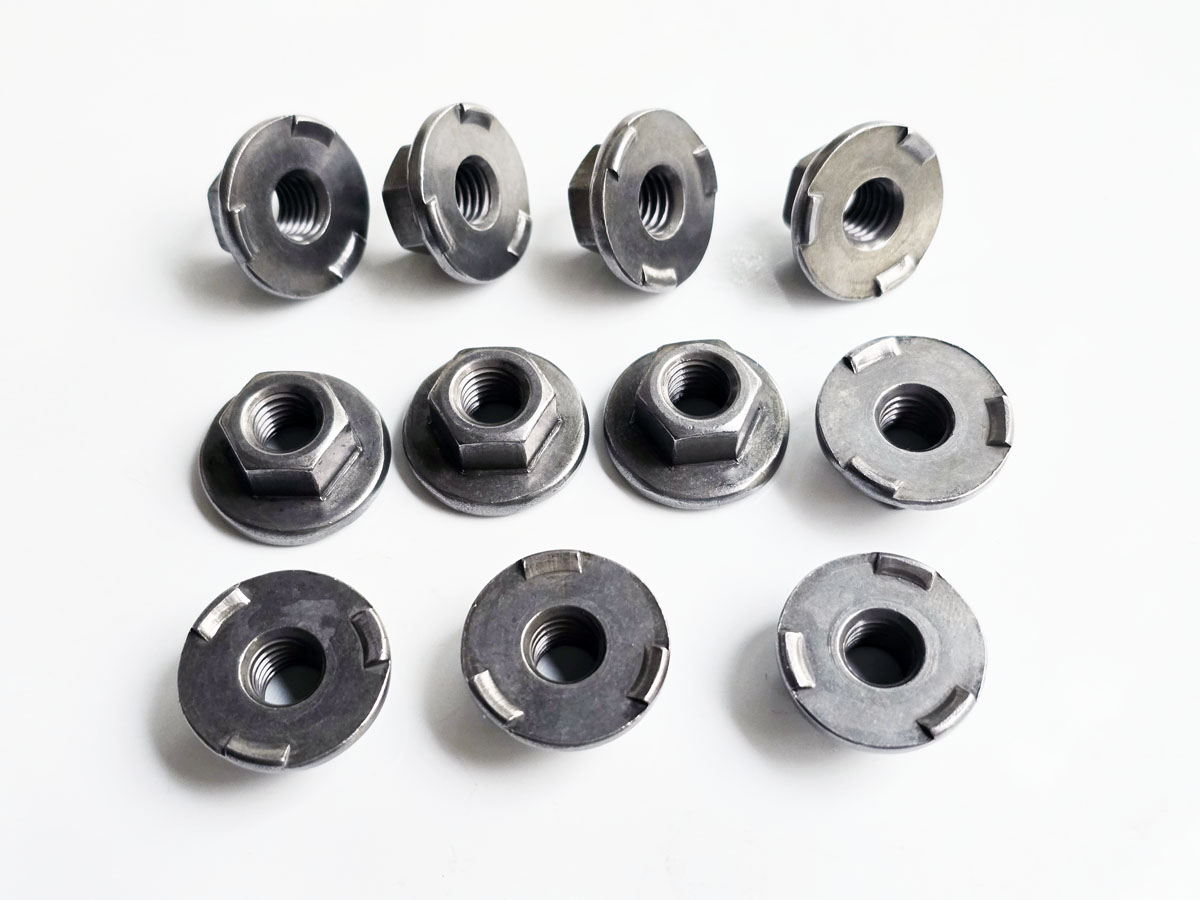
A continuous or closed projection configuration can be useful where the engineering design requires a substantially continuous welded interface around the fastener.
The concept can be represented as:
       Fastener
    +-------------+
    |             |
    |   THREAD    |
    |             |
    +-------------+
      \_________/
       Projection
           |
           v
========================
 Battery Enclosure Sheet
========================
The projection is designed to concentrate current and force in a controlled area during resistance welding.
However, engineers should not assume that the presence of a continuous projection automatically creates a certified fluid barrier.
The actual sealing performance depends on:
Projection geometry
Weld process
Material combination
Sheet thickness
Surface condition
Weld integrity
Fastener design
Adjacent enclosure joints
Post-weld processing
Validation testing
Fastener placement becomes particularly important when mounting points are located close to cooling channels or fluid passages.
The DFM review should consider:
Distance from fluid channels
Local sheet thickness
Local panel stiffness
Welding-tool access
Heat-sensitive components
Potential distortion
Sealing interfaces
Drainage
Inspection access
A fastener location that is structurally convenient may not be the best location from a thermal-management or sealing perspective.
Weld nuts can provide permanent threaded attachment points for battery covers and other removable components.
For cover applications, engineers should evaluate:
Bolt pattern
Clamp-load distribution
Gasket compression
Cover stiffness
Thread access
Coating thickness
Repeated service removal
Fastener positional tolerance
The weld nut supports the mechanical attachment, but the enclosure's sealing performance normally depends on the complete cover-and-seal design.
EV battery assemblies experience repeated mechanical and thermal loading.
Potential sources include:
Road vibration
Vehicle acceleration and braking
Structural deformation
Battery thermal cycling
Fast charging
Environmental temperature changes
Cooling-system operation
A weld fastener must therefore be evaluated not only for static strength but also for the actual joint loading environment.
Potential failure modes include:
Weld-interface separation
Nut rotation
Stud bending
Parent-metal deformation
Thread damage
Fastener fatigue
Local sheet cracking
Corrosion-assisted degradation
The appropriate validation program depends on the function of the fastener and the customer's vehicle-level requirements.
Projection weld fasteners depend on a stable welding process.
Important process variables include:
Welding current
Welding time
Electrode force
Projection geometry
Electrode alignment
Electrode condition
Sheet material
Sheet thickness
Surface condition
The relationship between current, resistance, and time is commonly represented by:
Q = I²Rt
This provides a useful framework for understanding resistance-welding heat generation, but it should not be used to derive one universal welding schedule for every EV battery enclosure.
Changing the substrate from low-carbon steel to stainless steel or aluminum, for example, can substantially change the welding response.
Battery enclosure geometry can make welding access difficult.
Engineers should review:
Electrode approach direction
Gun clearance
Nearby walls
Brackets
Channels
Flanges
Adjacent fasteners
Robot accessibility
The best fastener design on paper is not useful if the production welding equipment cannot reliably access the joint.
For high-volume EV manufacturing, process monitoring can be important for identifying changes in welding behavior.
Potential controls include:
Welding-current monitoring
Electrode-force monitoring
Equipment maintenance
Fastener-position verification
Dimensional inspection
Weld-quality audits
Destructive validation testing
The specific control plan should be established according to the customer's quality requirements and production risk.
When a weld fastener is located within or adjacent to a sealed battery enclosure, leak testing should evaluate the complete assembly rather than relying solely on the fastener design.
Potential validation approaches may include:
Pressure testing
Vacuum testing
Helium or tracer-gas testing where appropriate
Fluid leakage testing
Environmental exposure
Thermal cycling
Vibration testing
The appropriate method depends on the enclosure design, production process, leakage specification, and applicable customer requirements.
Consider the following simplified assembly:
       COVER
========================
        GASKET
~~~~~~~~~~~~~~~~~~~~~~~~
   Battery Enclosure
        |
     Weld Nut
        |
========================
Even if the weld interface around the nut is sound, leakage can still originate from another interface.
Therefore:
Weld integrity ≠ complete enclosure sealing validation
and:
Sealing fastener design ≠ automatic IP67/IP68 compliance
This distinction is important when creating technical specifications and procurement documents.
For procurement managers, an EV battery fastener RFQ should contain enough information for the supplier to evaluate the complete application.
Recommended information includes:
Fastener type
Fastener drawing
3D CAD model where available
Thread specification
Fastener material
Substrate material
Substrate thickness
Surface coating
Welding method
Welding-equipment information where relevant
Sealing requirements
Electrical bonding requirements
Mechanical load requirements
Environmental conditions
Corrosion requirements
Temperature exposure
Annual production volume
Inspection requirements
Packaging requirements
Avoid simply writing:
“IP67 weld nut required.”
Instead, identify what the fastener must contribute to the enclosure design.
For example:
“Fastener interface located within sealed battery enclosure; final assembly requires customer-defined leak and ingress validation.”
This makes the engineering responsibility clearer.
For grounding or bonding applications, identify:
Electrical function
Required contact area
Surface treatment
Mating component
Environmental exposure
Thermal cycling
Electrical test method
Acceptance criteria
This allows the supplier to evaluate the fastener design according to the actual electrical application.
A production EV weld fastener should be evaluated through a structured validation process.
Check:
Fastener dimensions
Thread dimensions
Projection dimensions
Projection location
Flange dimensions
Stud length where applicable
Positional characteristics
Evaluate:
Weld formation
Nugget development
Electrode behavior
Process stability
Fastener positioning
Substrate deformation
Depending on the application, testing may include:
Push-out testing
Pull-out testing
Torque-out testing
Tensile testing
Shear testing
Fatigue testing
The correct test method depends on the function of the fastener.
Depending on the battery-system requirements, validation may include:
Thermal cycling
Vibration
Humidity exposure
Corrosion testing
Coolant compatibility
Leak testing
Acceptance criteria should come from the customer's engineering specification, validation plan, drawing, or applicable standard.
Before releasing a weld fastener design, engineers should review the following.
What is the exact enclosure alloy or steel grade?
Is the fastener material compatible with the substrate?
Is the application single-material or mixed-material?
Are galvanic corrosion risks controlled?
Is the selected fastener suitable for the welding process?
Is electrode access available?
Is the projection geometry appropriate?
Has the welding schedule been validated?
Is the coating compatible with the welding process?
Is the fastener located inside a sealed volume?
Is the fastener part of the pressure or fluid boundary?
Does the design rely on a gasket, sealant, welded interface, or combination?
Has the complete assembly been leak-tested?
Does the fastener provide a grounding or bonding function?
Does the surface treatment affect electrical contact?
Is electrical resistance part of the validation requirement?
Is the connection exposed to thermal cycling or corrosion?
What loads act on the fastener?
Is vibration present?
Is fatigue relevant?
Is repeated bolt installation required?
Could the surrounding sheet deform before the fastener fails?
EV battery programs often require close coordination between engineering, manufacturing, quality, and procurement teams.
A technically suitable supplier should be evaluated on more than the ability to manufacture a nominal weld nut or weld stud.
Procurement should consider:
Manufacturing capability
Dimensional consistency
Material traceability
Welding compatibility
Quality-control capability
Sample-development support
DFM engineering support
Production capacity
Packaging and logistics
Engineering communication
Ability to support design changes
For new battery-platform programs, early supplier involvement can help identify issues with:
Fastener location
Projection geometry
Welding access
Material compatibility
Coating
Thread access
Sealing interfaces
Production feeding
This can reduce the risk of discovering a fastening problem after tooling or production equipment has already been finalized.
Pillar Solution Page: JUXIN FASTENERS Weld Fasteners Solutions
Industry Application: JUXIN FASTENERS EV & Automotive Fastening Solutions
Engineering Guide: Substrate Material Compatibility for Weld Fasteners
Engineering Guide: Sheet Metal Thickness Guidelines for Weld Fasteners
Engineering Guide: Edge Distance & Hole Clearance Rules for Weld Fasteners
Engineering Guide: Weld Stud Push-Out & Pull-Out Failure Analysis
Product Category Page: JUXIN FASTENERS Projection Weld Nuts
Product Category Page: JUXIN FASTENERS Projection Weld Studs
Commercial Sourcing Page: Contact JUXIN FASTENERS for EV Enclosure Sourcing
A: Yes. Weld nuts can provide permanent threaded attachment points for battery-enclosure covers, brackets, thermal-management components, cable-management hardware, and other components.
The fastener must be evaluated according to the enclosure material, welding process, mechanical load, sealing architecture, and environmental requirements.
A: No. A continuous or closed projection weld can create a continuous welded interface around the fastener,
but that does not automatically make the complete assembly hermetically sealed or leak-proof. Final sealing performance depends on the weld, fastener design,
surrounding enclosure structure, gaskets or sealants, other joints, and assembly-level validation.
A: No. IP67 and IP68 are enclosure-level ingress-protection classifications. The complete battery enclosure and its relevant interfaces must satisfy the applicable test requirements.
A weld fastener may contribute to the enclosure design, but it should not independently be treated as an automatic IP67 or IP68 certification.
A: Aluminum battery trays require specific evaluation because aluminum has different electrical, thermal, and surface characteristics from steel.
A conventional steel projection weld nut should not automatically be assumed to be suitable for an aluminum substrate.
The fastener material, welding technology, projection design, surface condition, and required mechanical performance should be evaluated together.
A: A weld stud can potentially serve as a grounding or bonding attachment point, but electrical performance depends on the complete connection.
Fastener material, surface treatment, contact area, mating component, contact pressure, corrosion, and thermal cycling can all affect electrical resistance.
The required grounding performance should be defined by the vehicle electrical-system specification.
A: Some fasteners may be located near cooling circuits or within assemblies where coolant exposure is possible. The actual exposure depends on the battery-pack architecture.
Where coolant exposure is relevant, engineers should evaluate material compatibility, corrosion resistance, sealing design, and the complete assembly's leak-validation requirements.
A: The most useful information includes the fastener drawing, substrate material and thickness, surface coating, welding method, sealing requirements,
electrical requirements, mechanical loads, environmental conditions, annual volume, and inspection requirements.
Providing this information allows the supplier to evaluate the fastener as part of the complete battery-enclosure system.
EV battery fastening requires coordination between mechanical fastening, resistance welding, sealing, electrical bonding, corrosion protection, thermal cycling, and production engineering.
For an OEM or Tier supplier project, send the JUXIN FASTENERS engineering team:
EV battery enclosure drawings
2D fastener drawings
CAD files
Substrate material and thickness
Surface-treatment requirements
Welding process information
Sealing requirements
Electrical grounding or bonding requirements
Mechanical load requirements
Environmental conditions
Annual production volume
EMAIL: info@juxinfasteners.com
JUXIN FASTENERS provides weld nuts, weld studs, and custom industrial fastening components for demanding OEM applications,
with engineering support covering fastener selection, DFM review, material compatibility, sample development, and production sourcing.
For EV battery enclosure applications, the right question is not simply:
“Which weld nut is strongest?”
The better engineering question is:
“Which fastener, material, welding process, sealing architecture, and validation strategy will provide a repeatable attachment point within the complete battery-enclosure system?”
Product Packaging
Packaging Standard
At Juxin Fasteners, we apply standardized export packaging to ensure product protection, traceability, and compliance with international logistics requirements.
1. Standard Export Packaging
Unless otherwise specified, all products will be packed according to our factory standard export packaging, which includes:
Moisture-resistant inner protection
Poly bag or small box packing as required
Reinforced export cartons
Clear labeling with part number, specification, batch number, and quantity
Palletizing for sea or air shipment when necessary
Our standard packaging is designed to ensure safe transportation, efficient warehousing, and long-distance international shipping.
2. Customized Packaging Options
We also provide customized packaging solutions according to customer requirements, including but not limited to:
Private labeling
Customized barcodes
Specific carton dimensions
Retail packaging
Special pallet configuration
Customer-specific marking and identification
So that you know, customized packaging may involve additional costs and extended lead time depending on the complexity of the requirements.
3. Compliance & Quality Assurance
All packaging processes are controlled under our ISO 9001 quality management system to ensure consistency, traceability, and product integrity throughout the supply chain.
Product Pictures
Contact Us
Tel.:
+86 020 8621 0320
+86 020 3121 6067
E-mail:
Technical Support:
Navigation
SEND INQUIREY