Call Us
+86 136 6007 9809
Call Us
+86 136 6007 9809

How can global industrial OEMs optimize fastener procurement, RFQ development, supplier qualification, and long-term supply chain performance?
Effective global fastener procurement requires more than comparing unit prices between suppliers. For automotive, electrical, industrial equipment,
energy, machinery, and other engineered products, the fastener is part of a larger manufacturing system involving product design, material selection,
joining processes, surface treatment, quality control, packaging, logistics, inventory, and final assembly.
Product Specification
How can global industrial OEMs optimize fastener procurement, RFQ development, supplier qualification, and long-term supply chain performance?
Effective global fastener procurement requires more than comparing unit prices between suppliers.
For automotive, electrical, industrial equipment, energy, machinery, and other engineered products,
the fastener is part of a larger manufacturing system involving product design, material selection, joining processes, surface treatment, quality control, packaging, logistics, inventory, and final assembly.
A strong OEM procurement strategy therefore connects five areas:
Engineering definition — what the fastener must physically and mechanically do.
Manufacturing feasibility — whether the required geometry, material, thread, projection, coating, and tolerances can be produced consistently.
Supplier quality — how the supplier controls materials, dimensions, threads, surface treatment, welding-related features, and changes.
Commercial economics — how piece price, tooling, logistics, inspection, packaging, inventory, and production risk affect total cost.
Supply chain continuity — how the supplier supports prototypes, production ramp-up, forecast changes, replenishment, and long-term programs.
For this reason, an effective fastener RFQ should be treated as a technical and commercial data package rather than a simple request for a price.
A well-structured procurement workflow can be represented as:
[Engineering Drawing + CAD + Application Requirements]
                         |
                         v
              [Technical RFQ Package]
                         |
                         v
          [Supplier DFM & Feasibility Review]
                         |
                         v
       [Quotation + Tooling + Quality Proposal]
                         |
                         v
        [Prototype / First Article Validation]
                         |
                         v
       [Production Approval & Quality Control]
                         |
                         v
        [Mass Production + Supply Planning]
                         |
                         v
       [Inventory / Logistics / VMI Strategy]
                         |
                         v
           [Continuous Supplier Review]
For OEM buyers, the objective is not simply to find the lowest quoted price.
The objective is to select a supplier capable of delivering the required component specification, repeatable manufacturing quality, documented traceability,
commercial competitiveness, and supply continuity throughout the product lifecycle.
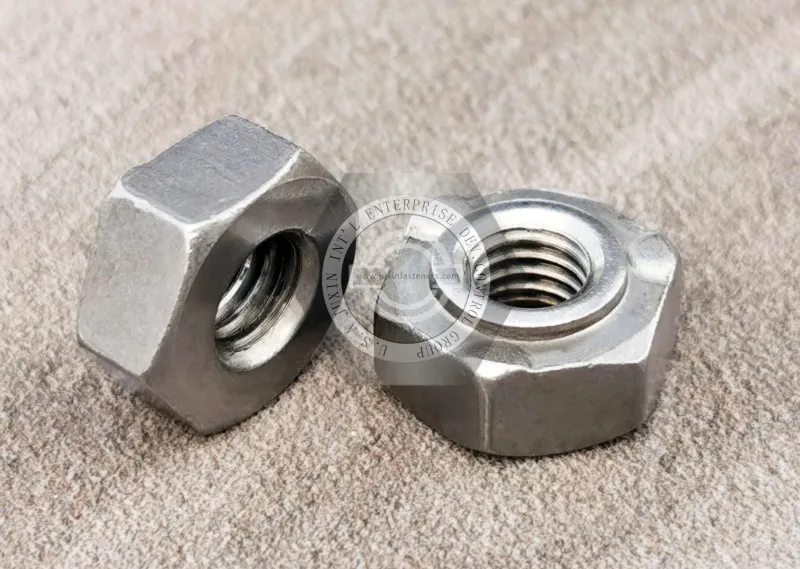
JUXIN FASTENERS supports OEM and industrial sourcing programs for standard and custom fasteners, including weld nuts, weld studs, self-clinching fasteners,
rivet nuts, threaded inserts, CNC-machined fasteners, and other engineered fastening components.
Many fastener sourcing processes begin with a simple question:
“How much does this fastener cost?”
For engineered OEM programs, that question is incomplete.
A more useful procurement question is:
“Can this supplier repeatedly manufacture the required fastener to specification, integrate it into our assembly process,
support our quality requirements, and remain commercially viable throughout the program?”
This distinction is important because a fastener with a lower initial unit price can create higher total cost if it causes:
assembly problems;
inconsistent welding;
thread contamination;
dimensional variation;
coating incompatibility;
packaging or feeder problems;
production stoppages;
additional incoming inspection;
emergency freight;
inventory shortages;
supplier changes;
field failures or warranty exposure.
Therefore, fastener procurement should evaluate total supply-chain performance rather than piece price alone.
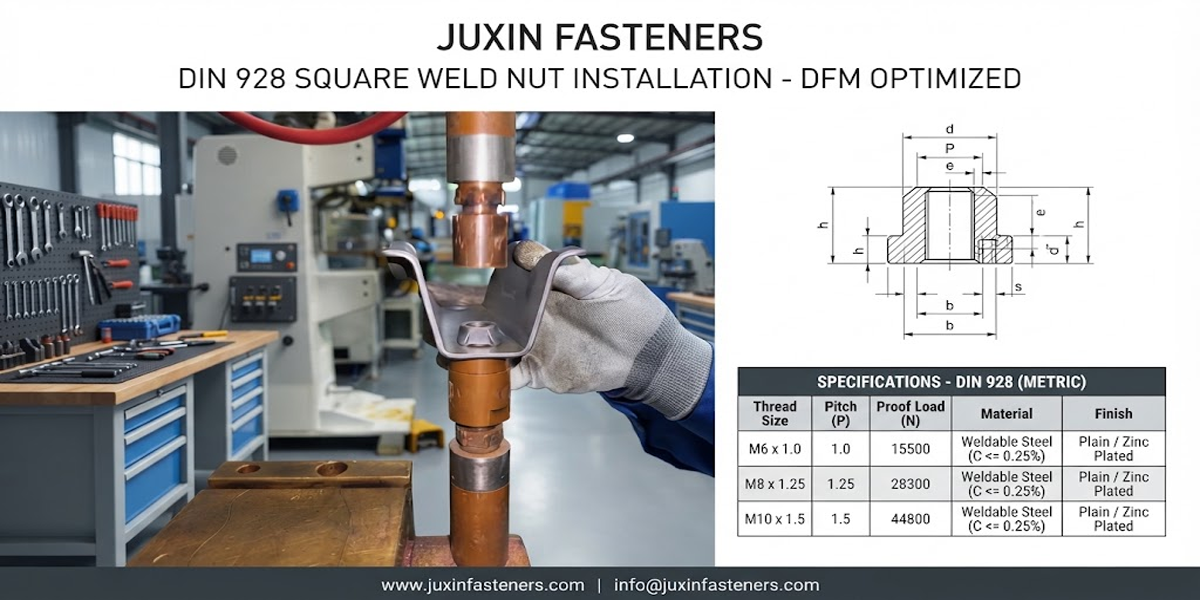
A strong RFQ package gives suppliers enough technical information to understand exactly what is being purchased while also allowing the procurement team to compare suppliers on an equivalent basis.
An industrial fastener RFQ should normally define the requirements applicable to the specific component.
Provide a complete 2D engineering drawing whenever available.
The drawing should define applicable requirements such as:
overall dimensions;
thread size;
thread tolerance or class;
material;
mechanical property requirements;
projection geometry for weld fasteners;
flange dimensions;
tab geometry;
hole engagement features;
critical tolerances;
surface finish;
coating;
special inspection characteristics.
A 3D CAD model can supplement the drawing, particularly for custom fasteners with complex geometry or spatial restrictions.
STEP or other commonly accepted CAD formats may be useful for supplier engineering review, but the controlling specification should be clearly identified by the customer.
A CAD model should not silently replace a dimensioned engineering drawing when the drawing is the contractual product definition.
Thread requirements should be explicitly defined rather than assumed from a product name.
Depending on the application, the RFQ may need to identify:
nominal thread size;
thread form;
internal or external thread;
tolerance class;
right-hand or left-hand thread where applicable;
thread depth;
thread runout;
functional thread inspection requirements;
masking or protection requirements during coating.
For example, ISO metric thread tolerance classes such as 6H or 6g may be specified where applicable, but they should not be treated as a universal default for every fastener.
The supplier should quote against the actual drawing or customer specification.
Material selection must be connected to the application and manufacturing process.
A procurement specification may need to identify:
steel grade;
stainless steel grade;
aluminum alloy where applicable;
mechanical property class;
hardness requirements;
weldability requirements;
corrosion requirements;
heat-treatment condition;
material certification requirements.
A material description such as “steel” is often insufficient for an engineered OEM component.
For weld fasteners, material selection also interacts with:
electrical resistance;
thermal behavior;
weldability;
projection geometry;
welding process;
parent sheet material;
heat-affected zone behavior;
surface condition.
A supplier should therefore evaluate the fastener material together with the intended joining process rather than treating material selection as an isolated purchasing field.
Procurement teams should distinguish between different types of quality documentation.
A material certificate, for example, addresses material information. It does not automatically prove dimensional conformity, coating performance, weld performance, or final assembly performance.
Depending on the OEM program, the quality package may include:
material certificates or MTRs;
dimensional inspection reports;
first article inspection documentation;
mechanical test results;
coating test reports;
corrosion test reports;
weld validation results;
thread inspection records;
process-control records;
PPAP documentation where specifically required;
certificates of conformity;
customer-specific quality documentation.
Production Part Approval Process (PPAP) documentation may be required in automotive and other controlled OEM supply chains.
However, procurement teams should specify the required PPAP scope rather than assuming that every fastener program requires the same PPAP level.
If PPAP Level 3 is required by the customer, it should be explicitly identified in the RFQ and supplier quality agreement.
The important procurement principle is:
Do not ask for a generic “PPAP certificate.” Define the actual customer-required submission package.
Material Test Reports or equivalent material documentation may be required where material traceability is important.
The RFQ should define:
whether material certificates are required;
whether heat or batch traceability is required;
which material standard applies;
what information must appear on the certificate;
how records are linked to production lots.
Material traceability is particularly valuable when the fastener is used in a controlled OEM program where the customer needs to investigate a production issue retrospectively.
The same fastener can generate very different search questions depending on who is evaluating it.
A structural engineer may search:
weld nut load capacity;
weld stud pull-out failure;
sheet thickness compatibility;
projection weld design;
thread class;
material compatibility;
corrosion resistance;
DFM.
A procurement manager may search:
fastener supplier;
OEM fastener sourcing;
fastener RFQ;
MOQ;
tooling cost;
annual usage;
lead time;
quality documentation;
material traceability;
supply continuity;
total cost.
A strong B2B website must answer both groups.
Engineers need to know whether the specified fastener can actually be manufactured and assembled consistently.
Early supplier DFM review can identify issues involving:
projection geometry;
sheet thickness;
hole configuration;
edge distance;
electrode access;
fastener orientation;
thread access;
surrounding components;
welding sequence;
coating sequence;
post-weld processing.
This is one of the highest-value stages for supplier involvement.
A drawing that is technically complete can still create manufacturing difficulties if the fastener geometry does not match the production process.
Engineers may need validation of:
push-out resistance;
pull-out behavior;
torque-out resistance;
tensile performance;
shear behavior;
fatigue performance;
vibration behavior;
corrosion resistance;
dimensional stability;
thread functionality.
These values should be evaluated against the actual application, fastener configuration, parent material, assembly conditions, and applicable customer or industry specification.
There should not be a universal assumption that one weld nut or weld stud has the same performance across every sheet material and joint geometry.
Procurement teams generally need to evaluate a broader commercial system.
Important factors include:
piece price;
tooling cost;
minimum order quantity;
annual usage;
forecast visibility;
lead time;
production capacity;
quality documentation;
packaging;
logistics;
inventory strategy;
supplier responsiveness;
engineering support;
change-control procedures;
contingency planning.
Total Cost of Ownership (TCO) provides a more realistic procurement comparison than unit price alone.
A simplified model is:
TCO =
Part Price
+ Tooling / Development Cost
+ Inspection Cost
+ Packaging Cost
+ Freight / Logistics
+ Inventory Carrying Cost
+ Quality Cost
+ Assembly Cost
+ Failure / Disruption Risk
The exact cost categories depend on the OEM program.
For example, a slightly higher-priced fastener may be commercially preferable if it provides:
better production consistency;
fewer assembly interruptions;
more efficient packaging;
better automated feeding;
lower inspection burden;
more stable supply;
fewer emergency shipments.
The correct commercial comparison is therefore cost per successful production cycle, not simply cost per piece.
Industrial fasteners are often small components, but their absence can stop an entire assembly process.
Supply-chain risk can result from:
long production lead times;
inaccurate forecasts;
raw-material shortages;
tooling problems;
quality holds;
coating delays;
packaging failures;
logistics disruptions;
unexpected demand increases;
engineering changes.
A mature procurement strategy therefore considers supply continuity during the initial sourcing process.
Annual Estimated Annual Usage (EAU) should be provided whenever possible.
Useful forecast information includes:
annual volume;
monthly demand;
launch date;
ramp-up schedule;
peak demand;
production locations;
forecast horizon;
expected program duration.
EAU helps suppliers evaluate production planning, tooling economics, raw-material purchasing, and capacity requirements.
However, a forecast should not automatically be treated as a firm purchase order.
The commercial agreement should clearly distinguish:
forecast → planned demand → firm order → shipment requirement.
Supplier qualification should combine engineering, quality, manufacturing, and commercial assessment.
Procurement teams should evaluate whether the supplier has appropriate manufacturing capabilities for the required product.
Depending on the fastener, these may include:
cold forming;
cold heading;
secondary machining;
CNC machining;
thread forming;
thread tapping;
projection formation;
welding-related manufacturing;
heat treatment;
surface treatment coordination;
inspection;
automated packaging.
The correct question is not:
“Does the supplier have every possible machine?”
The better question is:
“Does the supplier have a controlled manufacturing route appropriate for this specific component and volume?”
A supplier evaluation may include:
incoming material control;
production inspection;
dimensional control;
thread inspection;
coating verification;
nonconforming product control;
lot traceability;
change control;
corrective-action processes;
final inspection.
Statistical Process Control (SPC) can be valuable for critical characteristics, but the required SPC scope should be determined by the customer specification and process risk rather than assumed universally.
A supplier quality audit should investigate actual manufacturing controls rather than simply collecting certificates.
Useful audit questions include:
How is incoming material identified?
How are material lots traced?
What documentation is retained?
How are nonconforming materials controlled?
Which dimensions are considered critical?
How are forming tools maintained?
How are thread dimensions verified?
How are projection features controlled?
How are burrs and sharp edges controlled?
Which coating specification applies?
Is coating performed internally or by an approved external processor?
How is coating thickness or functional performance verified?
How are coated lots traced?
What characteristics are inspected?
What sampling method is used?
How are inspection records retained?
How are nonconforming lots controlled?
How are material, tooling, process, coating, or subcontractor changes communicated?
Which changes require customer approval?
These questions often provide more useful supplier intelligence than a simple list of certificates.
A strong industrial fastener RFQ should contain as much of the following as applicable:
2D drawing;
3D CAD model;
part number;
revision level;
material;
mechanical property class;
thread specification;
dimensions;
tolerances;
coating;
special characteristics.
parent material;
sheet thickness;
joining method;
welding process;
assembly orientation;
load direction;
environmental exposure;
temperature conditions;
corrosion requirements;
electrical requirements where applicable.
estimated annual usage;
initial order quantity;
production launch date;
target production volume;
delivery location;
packaging requirements;
forecast expectations;
tooling ownership requirements.
inspection requirements;
material documentation;
first article requirements;
PPAP requirements where applicable;
test requirements;
traceability requirements;
customer-specific quality clauses.
A 2D engineering drawing and a 3D CAD model serve different purposes.
The drawing communicates the controlled engineering definition.
The CAD model provides spatial information useful for:
interference checking;
assembly clearance;
fastener orientation;
tool access;
electrode access;
feeder approach;
installation space.
For custom weld fasteners, providing both can significantly improve supplier DFM review.
However, the supplier should confirm which document controls in case the drawing and CAD model contain conflicting information.
For weld nuts, weld studs, and other weld fasteners, procurement should provide joining information whenever available.
Relevant information can include:
parent sheet material;
sheet thickness;
coating condition;
welding method;
electrode configuration;
accessibility;
production equipment;
expected production rate;
automated or manual installation;
post-weld coating;
weld validation requirements.
This information allows the supplier to evaluate the fastener as part of the actual joining system.
A weld fastener cannot be evaluated independently from the substrate and welding process.
OEM sourcing should not treat prototype approval and mass production as the same stage.
The supplier reviews:
drawing;
CAD;
material;
application;
joining method;
surface treatment;
critical dimensions.
The objective is to verify:
physical fit;
thread function;
installation;
preliminary performance;
manufacturing feasibility.
The customer and supplier verify the agreed dimensional, material, functional, and quality requirements.
The production process is evaluated under representative manufacturing conditions.
The supplier operates the approved manufacturing route with appropriate production and quality controls.
This staged approach reduces the risk of discovering fundamental manufacturability problems after production release.
Fastener procurement should also consider how the parts reach the production line.
Packaging requirements may depend on:
part geometry;
quantity;
automated feeding;
bulk handling;
orientation;
surface treatment;
corrosion sensitivity;
warehouse conditions;
shipping distance;
returnable-container systems.
For automated assembly, packaging can influence production efficiency.
However, packaging should not be treated as a substitute for feeder engineering.
The actual feeding system depends on the fastener geometry, surface condition, feeder configuration, track, escapement, orientation requirements, and assembly equipment.
For stable production programs, procurement teams may evaluate inventory models such as:
scheduled replenishment;
two-bin Kanban;
supplier-managed inventory;
VMI;
local buffer stock;
customer-managed inventory.
These models should be selected according to actual consumption, lead-time variability, service requirements, warehouse capacity, and commercial agreements.
Vendor Managed Inventory can allow a qualified supplier to participate in replenishment planning based on agreed consumption and inventory information.
A VMI program should define:
inventory ownership;
minimum and maximum inventory levels;
replenishment triggers;
forecast sharing;
order authorization;
stock reporting;
emergency supply procedures;
liability for obsolete inventory.
VMI should not be presented as a universal solution or a guarantee of zero stockouts.
Long-term OEM procurement requires control of changes.
Potential changes include:
raw material;
material grade;
forming process;
tooling;
thread process;
coating;
subcontractor;
production location;
packaging;
inspection method.
A supplier change should be evaluated according to its potential impact on:
dimensional conformity;
mechanical properties;
weldability;
corrosion performance;
assembly;
regulatory compliance;
traceability.
For controlled OEM programs, the customer should define which changes require prior notification or formal approval.
Procurement teams often face a choice between standard and custom fasteners.
Advantages may include:
established geometry;
easier sourcing;
broader supplier availability;
lower development complexity;
easier replacement.
Custom components may be justified when the application requires:
unusual geometry;
restricted installation space;
special projection configuration;
unique mounting features;
non-standard thread requirements;
integrated functional features;
special assembly requirements.
Customization should not automatically be treated as better.
The best OEM sourcing strategy is often:
Use a standard fastener when it fully satisfies the application; customize only when the engineering or manufacturing benefit justifies the additional complexity.
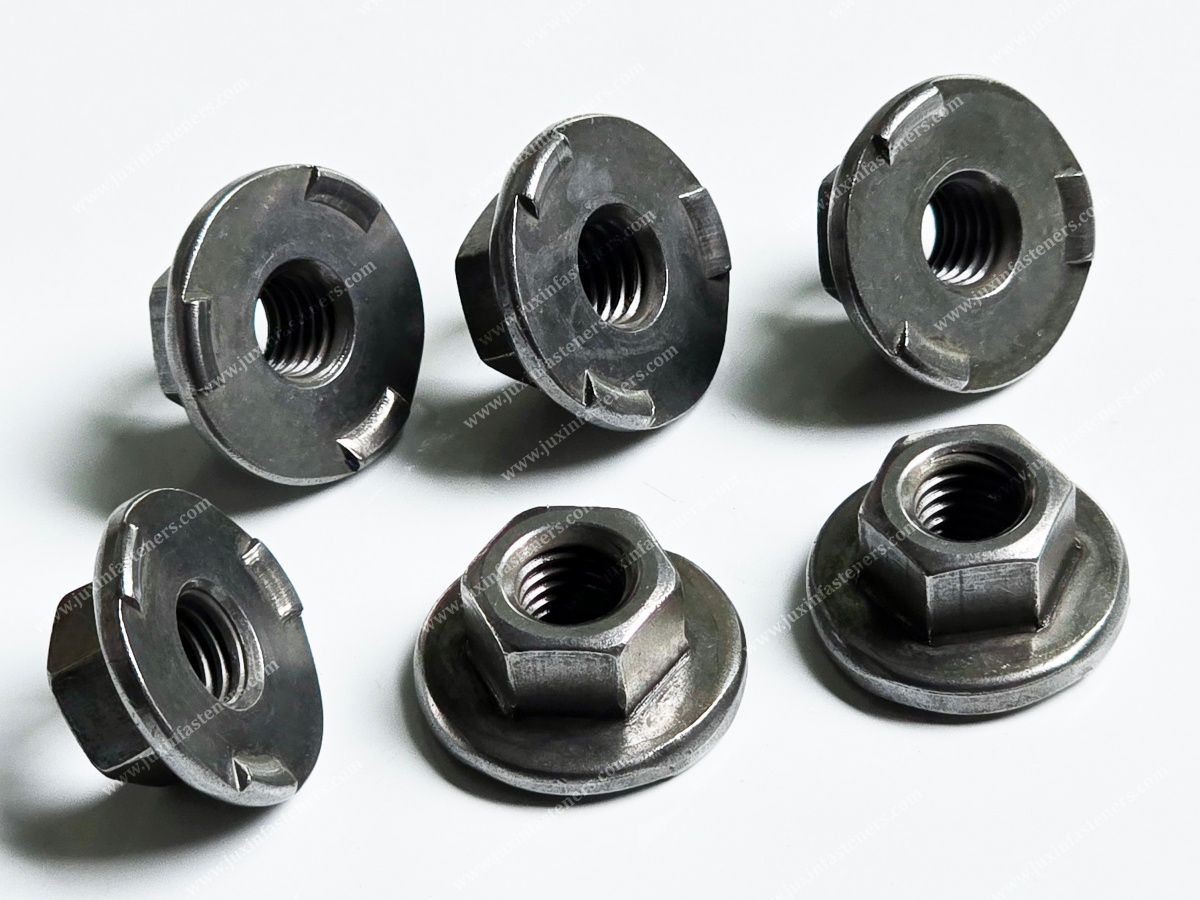
The procurement strategy can be applied across multiple industrial sectors.
Automotive BIW programs may require:
weld nuts;
weld studs;
flanged weld fasteners;
custom locating or mounting components.
Procurement must consider:
automated installation;
sheet material;
welding process;
dimensional repeatability;
corrosion protection;
customer-specific validation;
production volume.
EV battery programs may require fasteners supporting:
enclosure structures;
brackets;
covers;
thermal-management components;
electrical bonding or grounding functions.
The fastener should be evaluated together with the complete sealing, structural, thermal, electrical, and corrosion-control architecture.
A weld fastener does not automatically provide an IP-rated or hermetic enclosure.
Heavy machinery programs may require fasteners for:
structural frames;
equipment panels;
brackets;
hydraulic or mechanical components;
service-access structures.
Procurement should consider vibration, shock, corrosion exposure, joint loading, substrate thickness, and service environment.
Electrical and industrial equipment may use:
weld nuts;
weld studs;
self-clinching fasteners;
grounding hardware;
threaded inserts.
NEMA or IP classification applies to the complete enclosure system and should not be assumed to be conferred automatically by an individual fastener.
HVAC equipment manufacturers may use weld nuts and other sheet-metal fasteners for:
blower assemblies;
filter structures;
control components;
access panels;
mounting brackets.
Procurement should evaluate sheet thickness, surface condition, welding requirements, vibration, corrosion environment, and assembly access.
The lowest quote does not necessarily produce the lowest total cost.
Missing tolerances, materials, coatings, or thread requirements create quotation uncertainty.
A fastener may be dimensionally correct but difficult to weld, feed, install, or inspect.
Certificates provide evidence for specific requirements. They do not replace manufacturing-process evaluation.
Demand forecasts should be commercially distinguished from confirmed purchase orders.
Uncontrolled changes to material, coating, tooling, or manufacturing location can introduce unexpected risk.
Late DFM feedback can create tooling changes, qualification delays, or redesign.
Procurement should build a structured comparison matrix.
| Evaluation Area | Supplier A | Supplier B | Supplier C |
|---|---|---|---|
| Piece Price | |||
| Tooling Cost | |||
| Material Specification | |||
| Surface Treatment | |||
| Lead Time | |||
| Annual Capacity | |||
| Quality Documentation | |||
| Prototype Support | |||
| Production Validation | |||
| Packaging | |||
| Logistics | |||
| Inventory Support | |||
| Change Control | |||
| Engineering DFM Support | |||
| Estimated TCO |
This prevents procurement teams from selecting a supplier based on one commercial number while overlooking technical or supply-chain risk.
A practical decision sequence is:
1. Define the engineering requirement
            ↓
2. Confirm standard vs. custom fastener
            ↓
3. Review manufacturability and DFM
            ↓
4. Define material and surface treatment
            ↓
5. Define quality and validation requirements
            ↓
6. Issue a complete RFQ
            ↓
7. Compare technical + commercial quotations
            ↓
8. Evaluate supplier quality and capacity
            ↓
9. Validate prototypes / first articles
            ↓
10. Approve production
            ↓
11. Establish supply and inventory strategy
            ↓
12. Control changes throughout the program
This framework allows procurement, engineering, quality, and supply-chain teams to work from the same information.
Before issuing an RFQ, confirm:
2D drawing available
3D CAD available where useful
Material specified
Mechanical property requirement defined
Thread requirement defined
Critical dimensions identified
Surface finish specified
Application environment identified
Joining method identified
Parent sheet material identified
Sheet thickness identified
Welding access reviewed
Assembly access reviewed
Feeding requirements identified where applicable
Inspection requirements defined
Material traceability requirements defined
First article requirements defined
Testing requirements defined
PPAP requirements identified where applicable
Change-control expectations defined
EAU provided
Initial quantity provided
Launch timing provided
Delivery location provided
Packaging requirements provided
Forecast expectations defined
Tooling ownership defined
The most efficient time to identify a fastener problem is before tooling and production release.
Early supplier involvement can identify:
unnecessary custom features;
difficult projection geometry;
unsuitable material assumptions;
coating conflicts;
difficult inspection characteristics;
poor feeder orientation;
welding access problems;
unnecessary tolerances;
avoidable tooling complexity.
This can improve both engineering efficiency and procurement economics.
The goal is not for the supplier to redesign the customer's product without authorization.
The goal is to create an engineering feedback loop before the specification becomes expensive to change.
A successful RFQ should not end with a quotation.
The ideal commercial path is:
RFQ → DFM Review → Quotation → Prototype → Validation → Production Approval → Mass Production → Supply Planning → Long-Term OEM Partnership
For procurement teams, this creates a more useful supplier relationship than a transaction based entirely on spot quotations.
For engineers, it creates an opportunity to resolve manufacturability issues before production.
For supply-chain managers, it provides earlier visibility into production capacity, inventory, logistics, and replenishment.
JUXIN FASTENERS provides engineered fastening solutions for OEM and industrial applications where product geometry,
material, joining method, surface treatment, assembly requirements, and supply-chain performance must be considered together.
Our product capabilities include:
self-clinching nuts and studs;
weld nuts;
weld studs;
blind rivet nuts;
threaded inserts;
custom threaded inserts;
CNC-machined fasteners;
custom screws and bolts;
stainless steel fasteners;
high-strength fastener solutions;
custom engineered fastening components.
For OEM procurement programs, early discussion can cover:
drawing review;
3D CAD review;
DFM evaluation;
standard vs. custom selection;
material selection;
surface treatment;
welding requirements;
prototype development;
production sourcing;
quality documentation;
packaging;
supply planning.
The objective is not simply to quote a component.
It is to understand the complete application and establish a manufacturing and supply strategy that matches the customer's engineering and commercial requirements.
For a complete OEM fastening strategy, this procurement guide should connect internally with the following solution areas:
Weld Fasteners Solutions
Connect procurement requirements with weld nuts, weld studs, projection welding, DFM, and industrial applications.
Custom Weld Fasteners Engineering & Manufacturing
For non-standard geometries, custom projection designs, special mounting requirements, and OEM development programs.
Fastener Packaging & Feeder Compatibility
For automated assembly, bulk packaging, vibratory feeding, orientation, and production-line requirements.
Fastener Inventory Management & VMI Programs
For Kanban, replenishment planning, supplier-managed inventory, safety-stock strategy, and supply-chain continuity.
Fastener Supplier Quality Audits & Certifications
For supplier qualification, traceability, inspection, documentation, and manufacturing quality evaluation.
Fastener Surface Finishes & Coatings
For zinc, zinc-nickel, zinc-flake, corrosion protection, welding compatibility, and coating requirements.
Fastener Corrosion Resistance & Salt Spray Testing
For ASTM B117 testing, coating evaluation, corrosion mechanisms, and OEM environmental requirements.
A strong RFQ should normally include the applicable 2D engineering drawing, 3D CAD data where useful, material, thread specification, dimensions, tolerances, surface treatment, application information, annual usage, delivery requirements, packaging requirements, and required quality documentation.
No. PPAP requirements should be based on the customer program and applicable quality agreement. If a specific PPAP level is required, it should be clearly stated in the RFQ.
No. An MTR or material certificate provides material-related information. It does not automatically demonstrate dimensional conformity, coating performance, weld performance, or complete product conformity.
Procurement should specify the actual quality-system or customer requirement applicable to the program rather than assuming that one certificate proves every aspect of product quality.
Because fastener manufacturability and application performance depend on factors that may not be visible from price quotations alone,
including material, geometry, joining process, coating, tolerances, assembly access, and production equipment.
No. Piece price is only one component of total cost. Quality risk, assembly efficiency, logistics, inventory, tooling, engineering support, and supply continuity can materially affect the actual cost of the program.
Yes. Providing the 2D drawing and, where available, 3D CAD data allows the application and manufacturing requirements to be reviewed before quotation and production planning.
JUXIN FASTENERS can discuss production sourcing, quality requirements, packaging, forecasting, and supply planning according to the specific customer program and commercial agreement.
If your company is developing a new industrial product, qualifying a second source, redesigning an existing fastening system,
or preparing a high-volume OEM sourcing program, send the available technical information to JUXIN FASTENERS.
Useful RFQ information includes:
2D engineering drawings;
3D CAD files;
fastener specifications;
material requirements;
surface treatment requirements;
parent sheet material;
sheet thickness;
joining method;
annual usage forecast;
production launch timing;
packaging requirements;
quality and validation requirements.
Email: info@juxinfasteners.com
JUXIN FASTENERS can evaluate the technical and commercial requirements and help establish an appropriate sourcing path for standard or custom fastening components.
Precision Fastening Solutions Since 2003.
The strongest OEM procurement strategy connects:
Fastener Design + Material + Manufacturing Process + Surface Treatment + Assembly + Quality + Logistics + Inventory + Supply Chain + Total Cost of Ownership
That is the difference between simply purchasing fasteners and building a reliable industrial fastening supply chain.
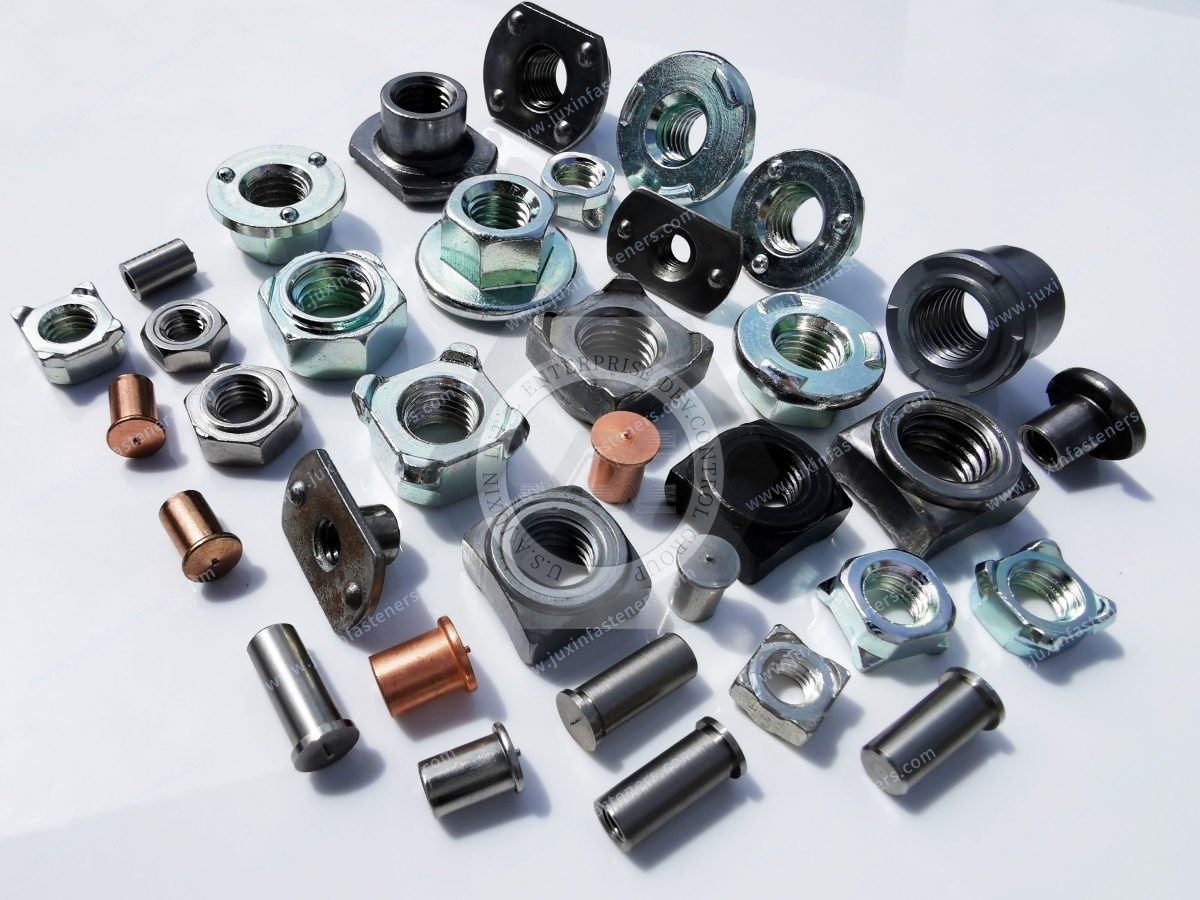
Product Packaging
Packaging Standard
At Juxin Fasteners, we apply standardized export packaging to ensure product protection, traceability, and compliance with international logistics requirements.
1. Standard Export Packaging
Unless otherwise specified, all products will be packed according to our factory standard export packaging, which includes:
Moisture-resistant inner protection
Poly bag or small box packing as required
Reinforced export cartons
Clear labeling with part number, specification, batch number, and quantity
Palletizing for sea or air shipment when necessary
Our standard packaging is designed to ensure safe transportation, efficient warehousing, and long-distance international shipping.
2. Customized Packaging Options
We also provide customized packaging solutions according to customer requirements, including but not limited to:
Private labeling
Customized barcodes
Specific carton dimensions
Retail packaging
Special pallet configuration
Customer-specific marking and identification
So that you know, customized packaging may involve additional costs and extended lead time depending on the complexity of the requirements.
3. Compliance & Quality Assurance
All packaging processes are controlled under our ISO 9001 quality management system to ensure consistency, traceability, and product integrity throughout the supply chain.
Product Pictures
Contact Us
Tel.:
+86 020 8621 0320
+86 020 3121 6067
E-mail:
Technical Support:
Navigation
SEND INQUIREY