Call Us
+86 136 6007 9809
Call Us
+86 136 6007 9809

DIN 929 Hex Weld Nut Solution for Automotive and Rail Engineering: Permanent Threaded Fastening for Thin Sheet Metal Structures
Introduction: Why DIN 929 Hex Weld Nut Is a Critical Engineering Fastener
In modern automotive manufacturing, rail transport systems, and industrial sheet metal fabrication, engineers face a recurring challenge: how to create reliable threaded connections on thin metal sheets where traditional tapping or backside fastening is not possible.
Product Specification
DIN 929 Hex Weld Nut Solution for Automotive and Rail Engineering: Permanent Threaded Fastening for Thin Sheet Metal Structures
Introduction: Why DIN 929 Hex Weld Nut Is a Critical Engineering Fastener
In modern automotive manufacturing, rail transport systems, and industrial sheet metal fabrication, engineers face a recurring challenge: how to create reliable threaded connections on thin metal sheets where traditional tapping or backside fastening is not possible.
The DIN 929 Hex Weld Nut is specifically engineered to solve this problem.
As a standardized projection-weld fastener, the DIN 929 Hex Weld Nut enables the formation of permanent, high-strength threaded points directly on thin sheet metal components via resistance spot welding. This eliminates the need for secondary operations such as tapping, riveting, or access to the reverse side of the structure.
It is widely used in:
Automotive body-in-white (BIW) structures
Rail transit assemblies
Chassis and frame systems
Seat structures and mounting brackets
Electrical enclosures and sheet metal housings
For OEM engineers and procurement teams seeking DIN 929 Hex Weld Nut suppliers or automotive weld nut fastening solutions, this component offers a proven, standardized engineering solution.
Product Definition and Functional Principle of DIN 929 Hex Weld Nut
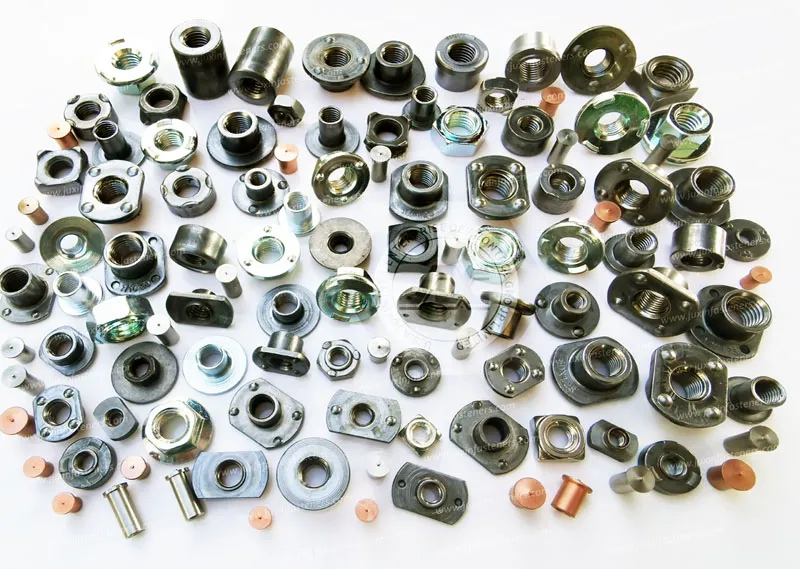
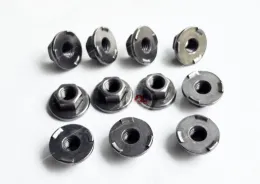
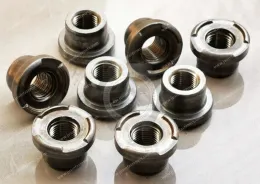
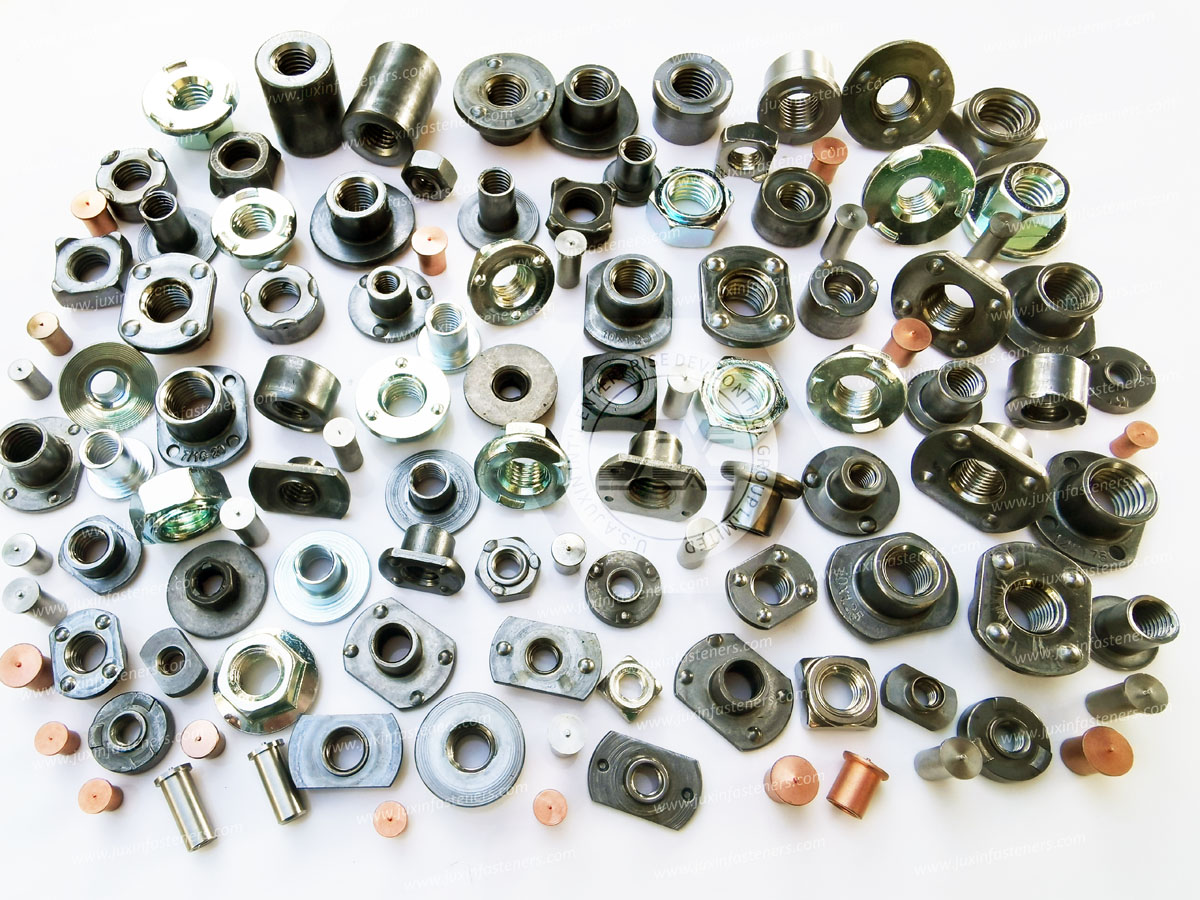
A DIN 929 Hex Weld Nut is a specialized welded fastener composed of a standard hexagonal nut body integrated with a welding base.
Its key functional principle is based on:
Three welding projections on the base
A circular locating boss for precise alignment
Resistance spot welding (projection welding) process
Permanent metallurgical bonding with sheet metal
During installation, the projections concentrate welding current and heat, allowing them to melt and fuse with the parent material. Once cooled, the result is a permanent, non-removable threaded insert embedded into the sheet metal structure.
This makes the DIN 929 Hex Weld Nut ideal for creating strong threaded interfaces on thin sheet materials where conventional threading methods are not feasible.
Material Selection and Manufacturing Requirements
The performance of a DIN 929 Hex Weld Nut depends heavily on material composition and weldability.
Weldable Carbon Steel (Standard Material)
Most DIN 929 Hex Weld Nuts are manufactured using low-carbon steel with a carbon content not exceeding 0.25%.
This ensures:
Excellent weldability during projection welding
Stable metallurgical bonding performance
Adequate mechanical strength after welding
Compatibility with automated production lines
A critical requirement is that free-cutting steels must not be used, as they significantly reduce weld reliability and joint integrity.
Stainless Steel Variants
For applications requiring corrosion resistance, stainless steel versions of the DIN 929 Hex Weld Nut are available.
These are commonly used in:
Rail transit exterior structures
Automotive underbody components
High-humidity industrial environments
Surface Treatment Options
To improve corrosion resistance and service life, typical surface treatments include:
Zinc plating DIN 929 Hex Weld Nut
Passivation coatings
Zinc plating + passivation systems
Advanced anti-corrosion coatings for automotive environments
These treatments ensure long-term durability in harsh operating conditions.
Structural Design and Engineering Precision
The DIN 929 Hex Weld Nut features a highly engineered structure designed for precision welding and reliable performance.
Hexagonal Nut Body
The hexagonal structure provides:
Standard torque transmission
Compatibility with standard tools
Stable mechanical fastening after welding
Thread sizes typically range from:
M4 to M16 DIN 929 Hex Weld Nut, with M5–M12 being most commonly used in automotive applications.
Circular Locating Boss
A key design feature of the DIN 929 Hex Weld Nut is the circular locating boss.
This boss ensures:
Precise alignment with pre-drilled sheet metal holes
Controlled positioning during automated welding
Reduced assembly deviation
Typical clearance fit tolerance:
0.1 mm – 0.3 mm
This precision is essential for robotic welding applications in high-volume manufacturing environments.
Three Welding Projections
The base of the DIN 929 Hex Weld Nut includes three evenly spaced welding projections, each 120° apart.
These projections:
Concentrate welding current
Ensure uniform heat distribution
Improve weld consistency
Prevent cold weld defects
Each projection is dimensionally optimized according to nut size to ensure repeatable welding performance.
Resistance Projection Welding Process
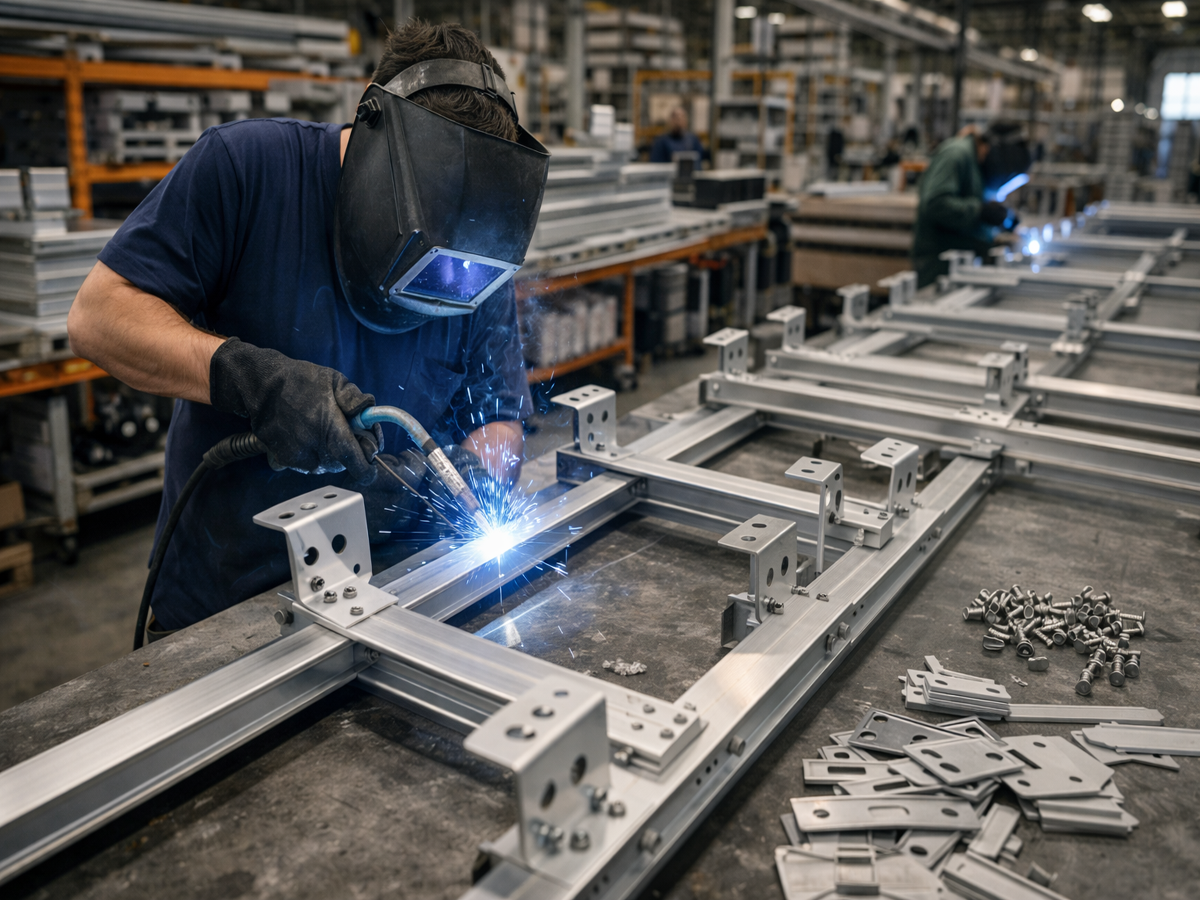
The installation of a DIN 929 Hex Weld Nut is performed using resistance spot welding (projection welding).
Welding Process Steps:
Positioning of the nut using the locating boss
Alignment with pre-punched sheet metal hole
Application of electrode pressure
High current flow through projections
Localized melting and fusion with base material
Formation of permanent metallurgical bond
This process creates a high-strength, vibration-resistant threaded insert directly integrated into the sheet metal.
Process Advantages
The DIN 929 Hex Weld Nut welding process offers:
High repeatability in automated production
No requirement for backside access
Fast cycle times suitable for mass production
Strong metallurgical bonding strength
Excellent thread stability after welding
Application Scenarios of DIN 929 Hex Weld Nut
The DIN 929 Hex Weld Nut is widely used across multiple engineering industries that require permanent threaded connections.
Automotive Manufacturing
Typical applications include:
Body-in-white sheet metal structures
Chassis frame rails
Floor pans and cross members
Seat mounting systems
Seatbelt anchor brackets
In automotive production, the DIN 929 Hex Weld Nut replaces traditional tapped holes and riveted nuts, improving assembly efficiency and structural consistency.
Rail Transit Systems
In railway engineering, the DIN 929 Hex Weld Nut is used for:
Interior panel fastening
Structural bracket assemblies
Electrical system housings
Vibration-resistant mounting points
Industrial Sheet Metal Structures
Other applications include:
Electrical cabinets
Machine enclosures
HVAC housings
Industrial equipment frames
The ability to create threaded connections on thin sheet metal makes it a preferred solution across multiple industries.
Key Engineering and Selection Considerations
Proper selection of a DIN 929 Hex Weld Nut requires careful engineering evaluation.
Sheet Thickness Compatibility
Suitable for thin sheet metal structures where traditional threading is not possible.
Typical applications involve:
Automotive sheet metal
Rail structural panels
Industrial steel housings
Welding Quality Control
Critical factors include:
Clean welding surfaces (no oil, rust, or scale)
Proper alignment of the locating boss
Controlled welding current and pressure
Consistent electrode positioning
Defect Prevention
Engineers must avoid:
Cold welds caused by insufficient current
Burn-through from excessive heat input
Misalignment of projections
Thread deformation after welding
Proper process control ensures long-term reliability of the DIN 929 Hex Weld Nut connection system.
Advantages of DIN 929 Hex Weld Nut in Industrial Applications
The DIN 929 Hex Weld Nut provides multiple engineering advantages:
✔ Permanent threaded integration
✔ High vibration resistance
✔ No backside access required
✔ Excellent suitability for automation and robotics
✔ High production efficiency in mass manufacturing
✔ Stable thread accuracy after welding
✔ Strong compatibility with thin sheet metal structures
These benefits make it a preferred fastening solution in modern OEM production environments.
Conclusion: Why DIN 929 Hex Weld Nut Is a Standard in Modern Manufacturing
The DIN 929 Hex Weld Nut is a highly standardized, engineered solution for creating permanent threaded connections in thin sheet metal structures.
Its combination of:
Precision locating boss design
Three-point projection welding system
High-weldability carbon steel material
Compatibility with automated production
Reliable vibration resistance
makes it an essential fastening component in automotive, rail, and industrial applications.
For engineers, procurement specialists, and OEM manufacturers seeking DIN 929 Hex Weld Nut solutions, this product offers a proven balance of strength, efficiency, and manufacturing reliability.
The DIN 929 Hex Weld Nut remains a cornerstone technology for modern welded fastening systems in high-performance industrial production.
Product Packaging
Packaging Standard
At Juxin Fasteners, we apply standardized export packaging to ensure product protection, traceability, and compliance with international logistics requirements.
1. Standard Export Packaging
Unless otherwise specified, all products will be packed according to our factory standard export packaging, which includes:
Moisture-resistant inner protection
Poly bag or small box packing as required
Reinforced export cartons
Clear labeling with part number, specification, batch number, and quantity
Palletizing for sea or air shipment when necessary
Our standard packaging is designed to ensure safe transportation, efficient warehousing, and long-distance international shipping.
2. Customized Packaging Options
We also provide customized packaging solutions according to customer requirements, including but not limited to:
Private labeling
Customized barcodes
Specific carton dimensions
Retail packaging
Special pallet configuration
Customer-specific marking and identification
So that you know, customized packaging may involve additional costs and extended lead time depending on the complexity of the requirements.
3. Compliance & Quality Assurance
All packaging processes are controlled under our ISO 9001 quality management system to ensure consistency, traceability, and product integrity throughout the supply chain.
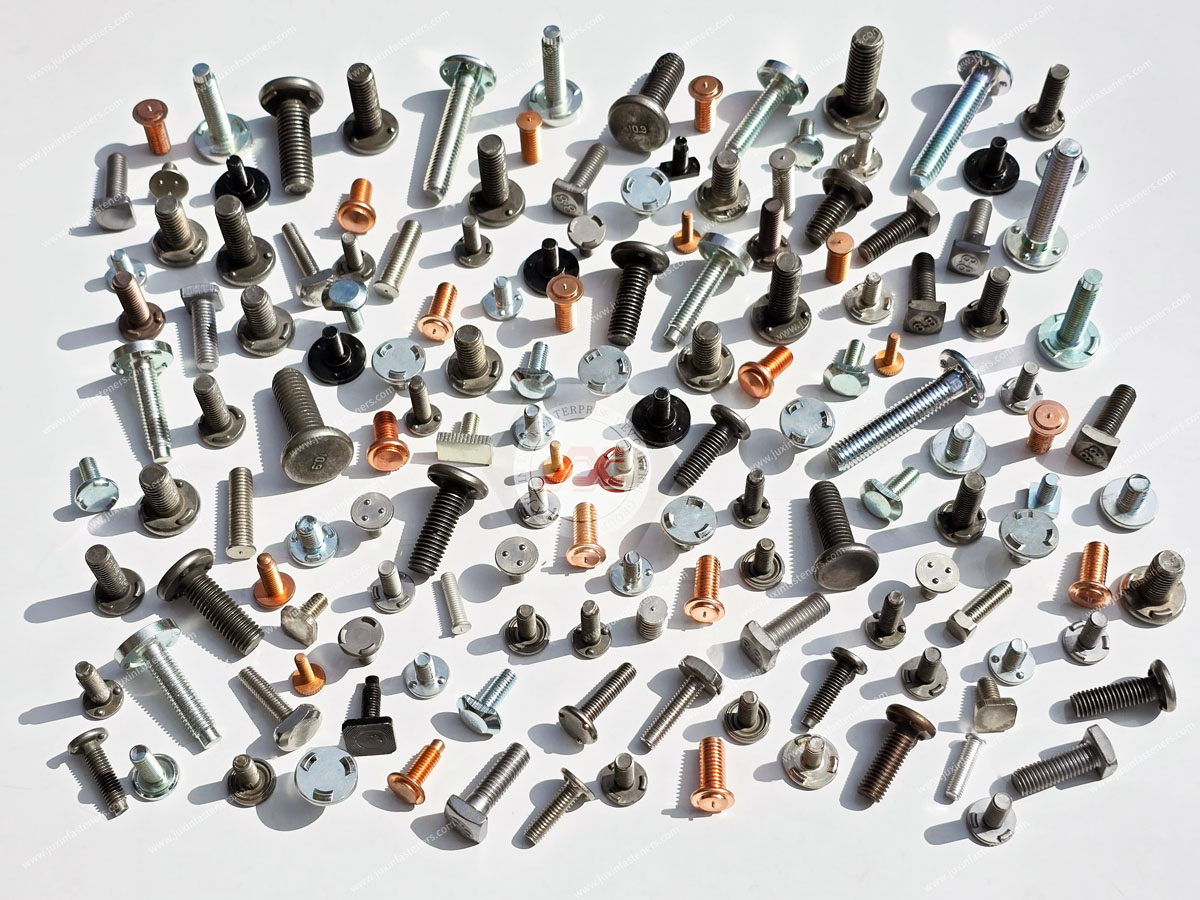
Product Pictures
Contact Us
Tel.:
+86 020 8621 0320
+86 020 3121 6067
E-mail:
Technical Support:
Navigation
SEND INQUIREY