Call Us
+86 136 6007 9809
Call Us
+86 136 6007 9809

Hex Flange Weld Nut Solution for Automotive Bracket Manufacturing: Permanent Threaded Fastening for High-Load Structures
Why Hex Flange Weld Nuts Are Used in Automotive Bracket Systems
In modern vehicle manufacturing, lightweight structures, thin-walled sheet-metal parts, and enclosed assemblies have become standard across chassis systems, EV battery platforms, seating structures, and suspension modules. Traditional fastening methods often have limitations when reverse-side installation is not possible.
Product Specification
Hex Flange Weld Nut Solution for Automotive Bracket Manufacturing: Permanent Threaded Fastening for High-Load Structures
Why Hex Flange Weld Nuts Are Used in Automotive Bracket Systems
In modern vehicle manufacturing, lightweight structures, thin-walled sheet-metal parts, and enclosed assemblies have become standard across chassis systems, EV battery platforms, seating structures, and suspension modules. Traditional fastening methods often have limitations when reverse-side installation is not possible.
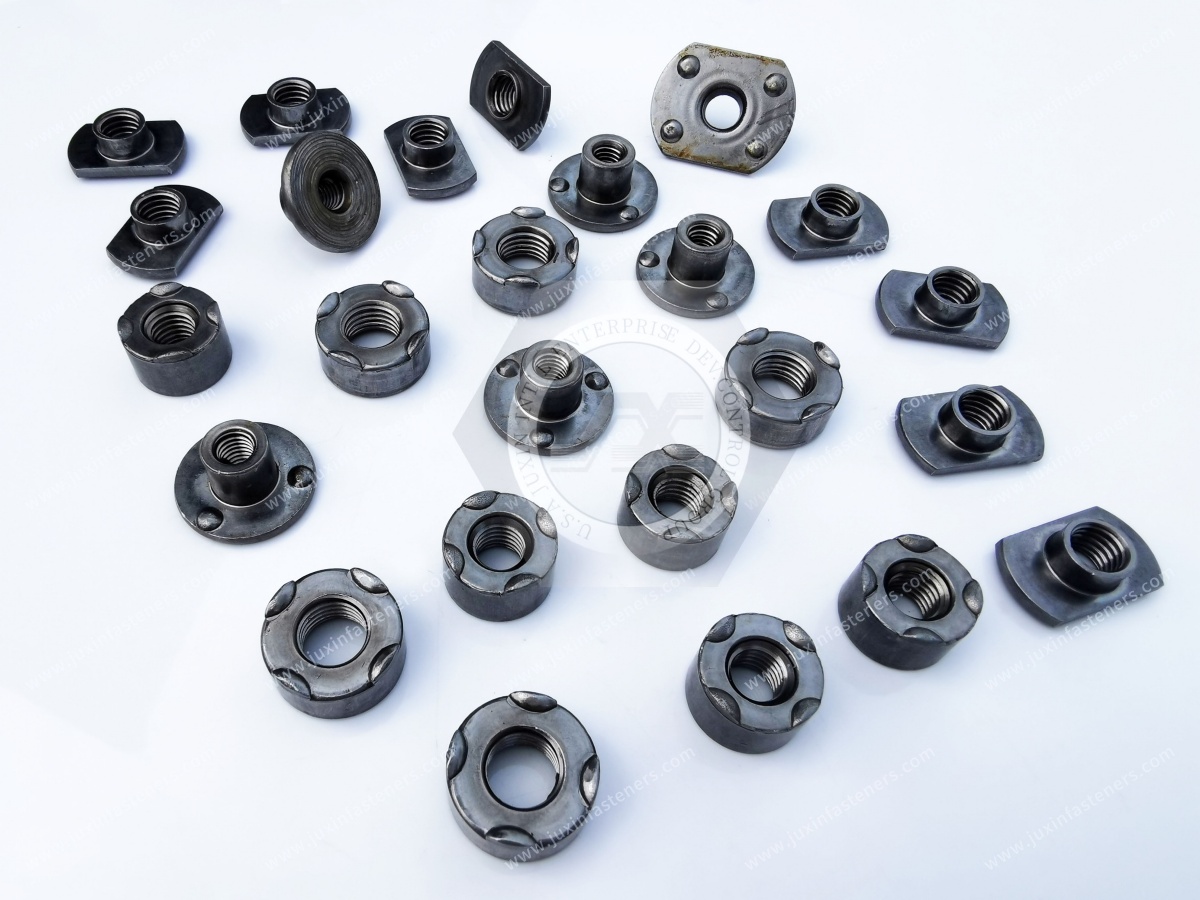
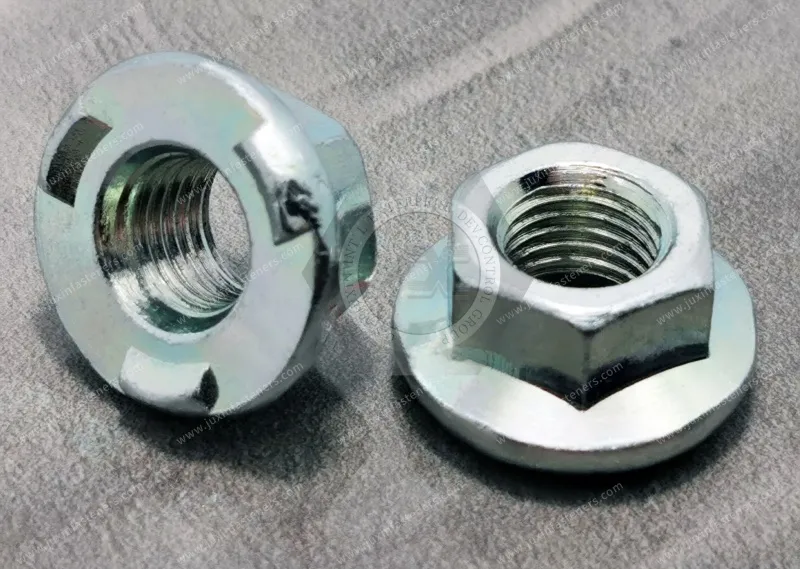
A hex flange weld nut provides a permanent threaded connection by welding directly to automotive brackets, creating an integrated fastening point before final assembly.
Compared with conventional nuts, a DIN 929 hex flange weld nut combines:
Hexagonal external profile for assembly tools
Integrated flange surface for load distribution
Weldable base for resistance welding and robotic production
Permanent positioning inside enclosed structures
Because of these advantages, automotive hex flange weld nuts are widely used in:
Subframe mounting brackets
Suspension control arm supports
Seat rail assemblies
EV battery pack brackets
Chassis reinforcement components
Sheet metal structural brackets
Hex Flange Weld Nut for Automotive Subframe and Suspension Brackets
Subframes and suspension systems are continuously subjected to vibration, impact loads, and dynamic stresses during vehicle operation.
A standard fastening solution may cause localized pressure around mounting holes, especially when thin sheet-metal brackets are used.
Installing a high-strength hex flange weld nut solves this issue by combining welded positioning with flange load distribution.
The integrated flange surface increases the bearing area and reduces edge deformation around the mounting hole.
For automotive engineers searching:
hex flange weld nut for automotive bracket
M8 hex flange weld nut for suspension mounting
DIN 929 weld nut for chassis systems
This fastening method offers both structural efficiency and production consistency.
Typical applications include:
Suspension Control Arm Brackets
Recommended sizes:
M8 Hex Flange Weld Nut
M10 Hex Flange Weld Nut
Class 8 Hex Flange Weld Nut
Class 10 Hex Flange Weld Nut
Advantages:
✔ Improved clamp force distribution
✔ Permanent positioning after welding
✔ Better vibration stability
✔ Suitable for robotic welding cells
Hex Flange Weld Nut Solution for EV Battery Pack Mounting
Electric vehicle battery structures require fastening systems capable of handling:
Lightweight sheet materials
Corrosion resistance
High assembly precision
Large production volumes
A hex-flange weld nut for battery pack mounting provides pre-installed threaded locations before battery assembly.
This eliminates the need for backside access and improves the efficiency of automated production.
Common specifications include:
M6 Hex Flange Weld Nut
M8 Hex Flange Weld Nut
M10 Hex Flange Weld Nut
7/16-20UNC Hex Flange Weld Nut
For coastal vehicle platforms and high-humidity environments, manufacturers usually select:
304 stainless steel hex flange weld nut
or
316 stainless steel hex flange weld nut
Additional protection may include:
Zinc-plated hex flange weld nut
Dacromet hex flange weld nut
Passivated automotive weld nuts
Corrosion-resistant weld nut systems
These coatings help prevent post-weld corrosion around battery support brackets.
Projection Type and Projection-Free Hex Flange Weld Nuts
Different automotive lines require different welding configurations.
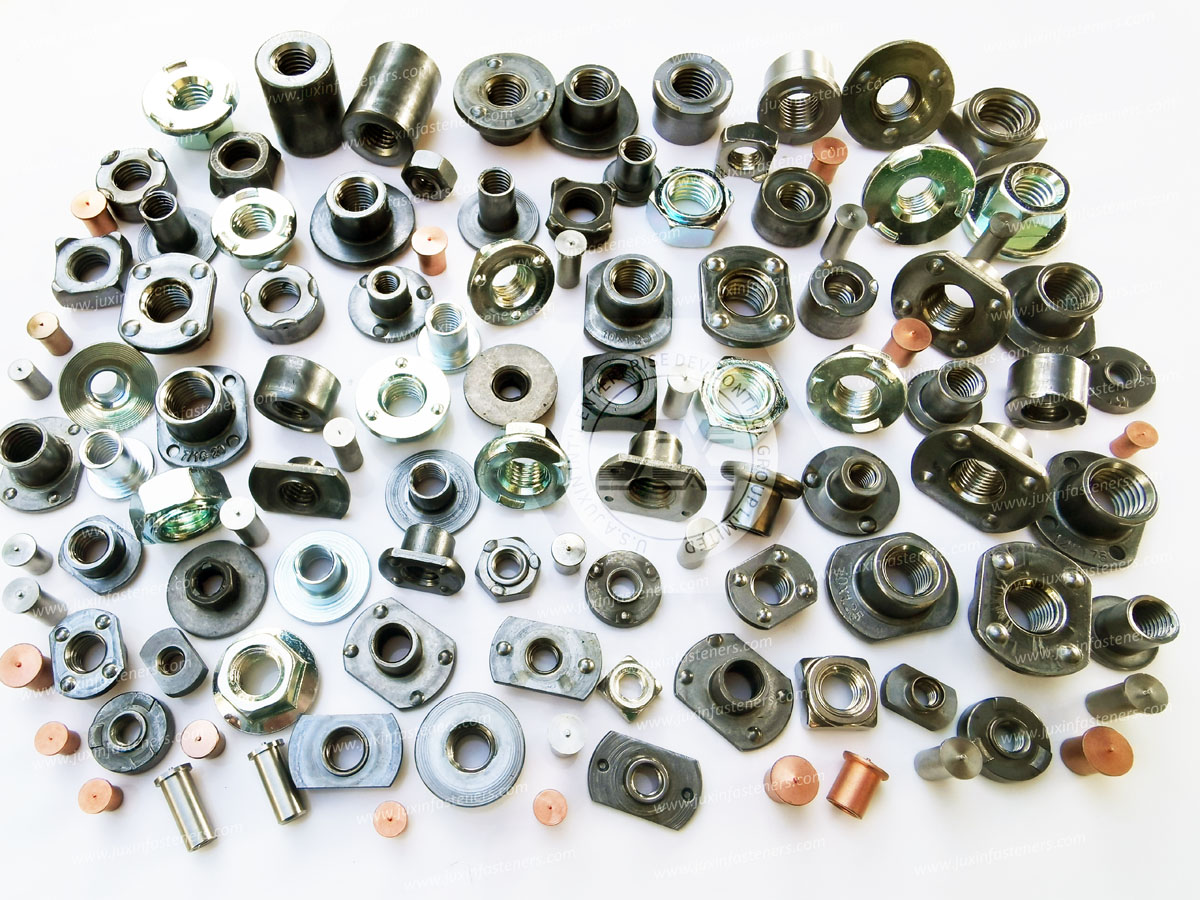
Projection Type Hex Flange Weld Nut
A projection-type hex flange weld nut has welding projections that concentrate heat during resistance welding.
Benefits:
Better positioning accuracy
Reduced movement during welding
Higher process repeatability
Suitable for automated production lines
Applications:
Automotive chassis brackets
Seat rail assemblies
Robot welding stations
High-volume OEM production
Projection-Free Hex Flange Weld Nut
A projectionless hex-flange weld nut features a flat welding base.
Advantages:
Compatible with automatic spot welding
Lower production complexity
Suitable for sheet metal structures
Easy integration into bracket manufacturing
Common uses:
Sheet metal brackets
Light structural supports
Interior automotive assemblies
Load Distribution Performance of Hex Flange Weld Nuts
One major reason engineers choose a hex-flange weld nut for sheet-metal brackets is load management.
The flange section distributes the tightening force over a wider surface area.
Compared with standard weld nuts:
A flanged weld nut for automotive brackets can:
Reduce mounting hole deformation
Improve clamp force transmission
Lower local stress concentration
Increase structural stability
This becomes especially important in:
Seat frame brackets
Battery tray supports
Chassis mounting plates
Suspension reinforcement structures
The typical flange thickness exceeds 2 mm to maximize bearing performance.
Vibration Resistance in Automotive Production
Vehicle assemblies operate under constant vibration:
Road shock
Engine movement
Thermal cycling
Dynamic load transfer
A hex flange weld nut solution provides improved positional stability because welding creates metallurgical bonding between the nut and bracket.
Unlike adhesive locking methods, a welded hex flange nut prevents movement of the fastening position itself.
However, it is important to understand:
A hex flange weld nut is not the primary load-bearing component.
Engineering design should define it as:
Pre-installed threaded insert
The actual load path remains:
Bolt → Clamp force → Structure
The weld only ensures that the nut remains fixed.
This principle is critical when designing:
Automotive bracket weld nut systems
EV structural assemblies
Chassis fastening solutions
Heavy-load mounting brackets
Materials Used for Automotive Hex Flange Weld Nuts
The most common material for automotive hex flange weld nuts is:
Carbon Steel
Material:
SWRCH22A
Strength grades:
Class 8 Hex Flange Weld Nut
Class 10 Hex Flange Weld Nut
Surface options:
Zinc-plated hex flange weld nut
Dacromet-coated hex flange weld nut
Trivalent passivation coating
Recommended for:
Seat brackets
Suspension components
Automotive body structures
Stainless Steel
Materials:
304 Stainless Steel Hex Flange Weld Nut
316 Stainless Steel Hex Flange Weld Nut
Recommended applications:
Coastal vehicle chassis
Battery supports
Outdoor automotive assemblies
Corrosion-resistant mounting systems
Quality Control for Hex Flange Weld Nut Installation
After welding, every automotive hex-flange weld nut should pass inspection.
Recommended tests include:
Thread Verification
Tools:
GO Gauge
NO-GO Gauge
Inspection targets:
Thread deformation
Heat damage
Internal thread accuracy
Pull-Out Strength Test
Typical requirement:
Pull-out force ≥80% of base material tensile strength
Purpose:
Verify:
Weld integrity
Bracket strength
Retention capability
Visual Quality Inspection
Check:
Projection collapse
Flange flatness
Welding penetration
Surface coating condition
Proper inspection ensures the long-term performance of the hex-flange weld-nut fastening system.

Automated Hex Flange Weld Nut Manufacturing for Automotive Production
Modern OEM factories increasingly use:
Robotic weld nut feeding systems
Automatic projection welding machines
Inline inspection stations
High-speed resistance welding cells
An automated hex flange weld nut production line improves:
Throughput capacity
Welding consistency
Position accuracy
Defect reduction
For large automotive programs, robotic installation of hex flange weld nuts has become the standard process.
Conclusion
As automotive structures become lighter and more integrated, the demand for hex flange weld nuts for automotive brackets continues to increase.
From suspension modules to EV battery trays, a DIN 929 hex flange weld nut provides:
Permanent threaded positioning
Improved load distribution
Excellent vibration resistance
Compatibility with automated welding
Support for high-volume OEM production
Whether the application involves:
M6 Hex Flange Weld Nut for seat rails
M8 Hex Flange Weld Nut for suspension brackets
M10 Hex Flange Weld Nut for chassis mounting
Stainless Steel Hex Flange Weld Nut for battery systems
This fastening technology remains one of the most efficient solutions for welded automotive structures.
Product Packaging
Packaging Standard
At Juxin Fasteners, we apply standardized export packaging to ensure product protection, traceability, and compliance with international logistics requirements.
1. Standard Export Packaging
Unless otherwise specified, all products will be packed according to our factory standard export packaging, which includes:
Moisture-resistant inner protection
Poly bag or small box packing as required
Reinforced export cartons
Clear labeling with part number, specification, batch number, and quantity
Palletizing for sea or air shipment when necessary
Our standard packaging is designed to ensure safe transportation, efficient warehousing, and long-distance international shipping.
2. Customized Packaging Options
We also provide customized packaging solutions according to customer requirements, including but not limited to:
Private labeling
Customized barcodes
Specific carton dimensions
Retail packaging
Special pallet configuration
Customer-specific marking and identification
So that you know, customized packaging may involve additional costs and extended lead time depending on the complexity of the requirements.
3. Compliance & Quality Assurance
All packaging processes are controlled under our ISO 9001 quality management system to ensure consistency, traceability, and product integrity throughout the supply chain.
Product Pictures
Contact Us
Tel.:
+86 020 8621 0320
+86 020 3121 6067
E-mail:
Technical Support:
Navigation
SEND INQUIREY