Call Us
+86 136 6007 9809
Call Us
+86 136 6007 9809

What fasteners are used in HVAC equipment and sheet metal ducting?
HVAC air handling units, ventilation equipment, climate-control housings, fabricated sheet-metal assemblies,
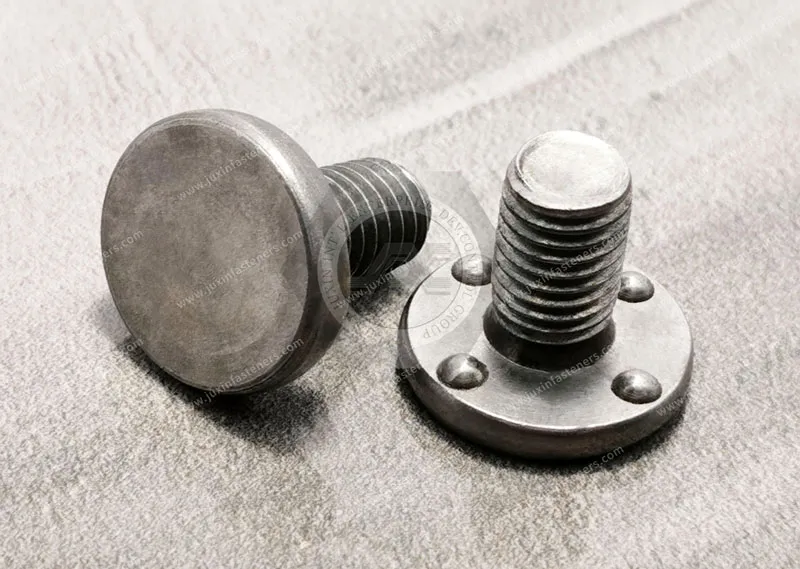
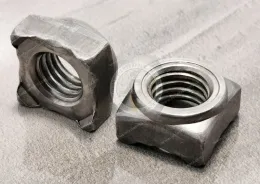
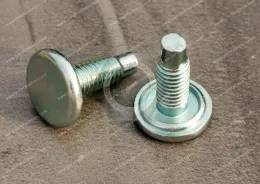
and related equipment can use weld nuts, tab weld nuts, projection-welded fasteners, weld studs, and other threaded weld fasteners to create permanent attachment points in sheet-metal structures.
Product Specification
What fasteners are used in HVAC equipment and sheet metal ducting?
HVAC air handling units, ventilation equipment, climate-control housings, fabricated sheet-metal assemblies,
and related equipment can use weld nuts, tab weld nuts, projection-welded fasteners, weld studs, and other threaded weld fasteners to create permanent attachment points in sheet-metal structures.
These fasteners can be used for applications such as:
Internal access panels
Filter rack assemblies
Blower and fan component mounting
Electrical component brackets
Sensor brackets
Cable-management hardware
Service panels
Covers
Internal support brackets
Duct accessories
Equipment housing components
The appropriate fastener depends on the actual HVAC assembly.
Not every ventilation duct requires a welded threaded fastener, and not every weld fastener is suitable for direct installation into a thin galvanized duct wall.
For HVAC manufacturers, fastener selection must consider:
Sheet material
Sheet thickness
Zinc or other surface coating
Fastener material
Fastener geometry
Welding process
Electrode access
Local panel stiffness
Assembly loading
Vibration
Temperature
Corrosion environment
Service requirements
Cosmetic requirements
Production volume
A simplified configuration can be represented as:
        [ Tab / Weld Nut ]
                |
                | Threaded Mounting Point
                v
=================================
      Galvanized Sheet Panel
=================================
For an HVAC equipment assembly:
       Filter / Bracket / Component
                  |
                  v
          [ Weld Fastener ]
                  |
                  v
      =========================
          Sheet Metal Panel
      =========================
                  |
            HVAC Structure
The key advantage of a weld fastener is that it can create a permanent threaded mounting feature during the sheet-metal fabrication process.
This can reduce the need for:
Loose nuts
Secondary tapping
Additional brackets
External hardware
Difficult-to-access threaded connections
However, the fastener should be positioned and validated according to the actual assembly.
For example, a weld nut used to mount an internal service component has different requirements from a fastener located directly in an airflow path,
on a removable access panel, or near a gasketed enclosure joint.
JUXIN FASTENERS provides OEM weld fastening solutions for HVAC equipment and fabricated sheet-metal assemblies,
with fastener selection based on the actual substrate, welding process, assembly requirement, and production environment.
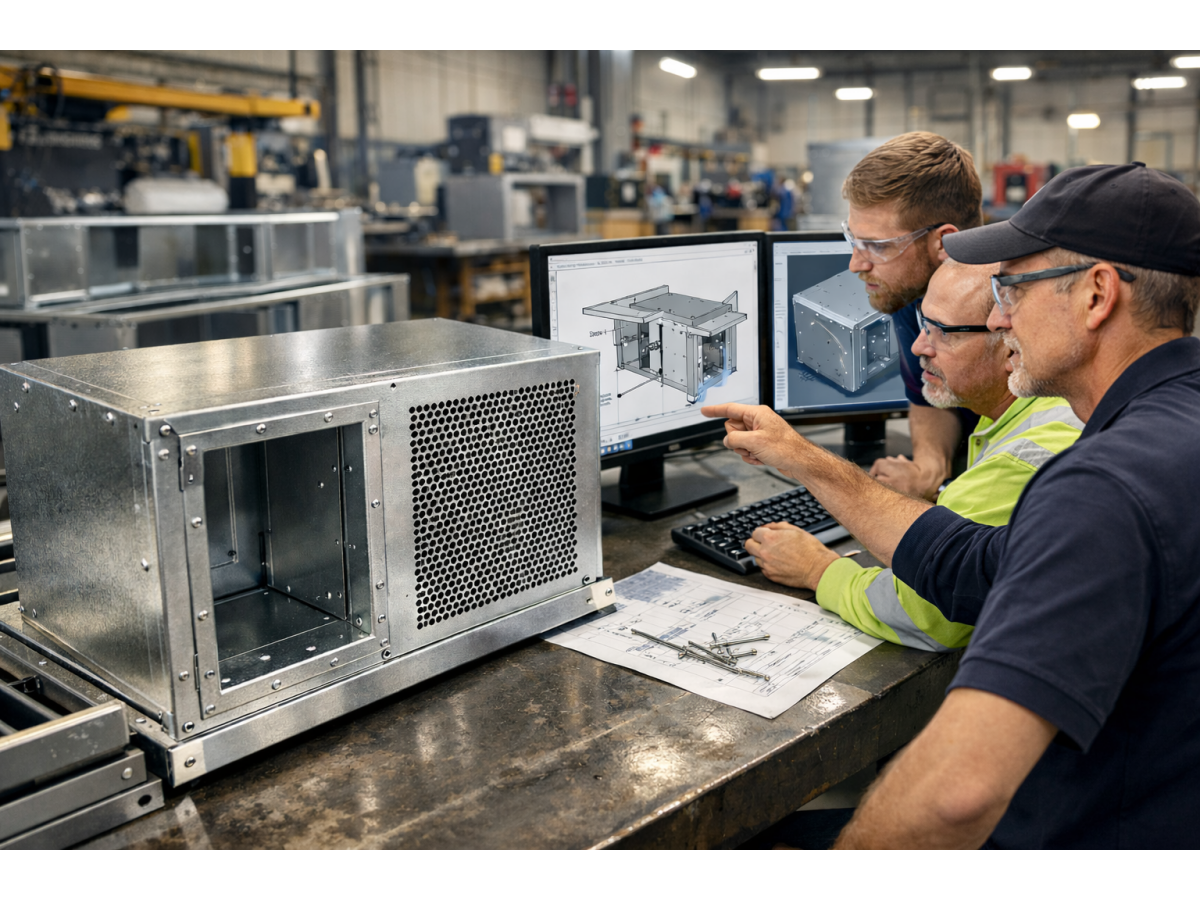
Galvanized steel is commonly used in sheet-metal fabrication because the zinc coating can provide corrosion protection to the steel substrate.
However, welding galvanized material introduces additional process considerations.
During resistance welding, the zinc coating affects the electrical and thermal interface between the electrode, fastener, and sheet.
The welding process may therefore require application-specific development involving:
Welding current
Electrode force
Weld time
Squeeze time
Hold time
Electrode geometry
Fastener projection design
Zinc coating condition
Sheet thickness
Steel grade
Fastener material
Electrode condition
The exact process window must be established for the actual material and equipment.
It is not appropriate to assume that one current or electrode-force setting will work for every galvanized HVAC sheet.
Galvanized welding can also influence:
Electrode wear
Zinc transfer
Weld consistency
Surface appearance
Spatter
Fume generation
Maintenance requirements
Appropriate workplace ventilation and welding-fume controls should be considered when welding zinc-coated materials.
For production HVAC applications, welding trials should be performed using representative galvanized sheet and the actual fastener configuration before mass production.
Many HVAC housings and fabricated components use relatively thin sheet metal.
Thin sheet provides manufacturing and weight advantages, but it can also make the local weld area more sensitive to:
Heat input
Electrode force
Local buckling
Distortion
Hole deformation
Fastener alignment
Edge effects
The objective is not simply to create a strong weld.
The process should produce an attachment that meets the required mechanical performance without creating unacceptable deformation of the surrounding sheet.
Fastener projection geometry can be particularly important because it influences where current and heat are concentrated during projection welding.
The correct geometry depends on the fastener design and substrate.
HVAC equipment can contain rotating fans, blowers, motors, dampers, compressors, and other moving components.
These systems can generate vibration that reaches nearby sheet-metal structures.
Fasteners used for access panels, brackets, filter systems, electrical components, or other equipment should therefore be evaluated according to the actual dynamic environment.
Potential failure mechanisms include:
Bolt loosening
Weld-interface rotation
Thread damage
Sheet deformation
Bracket fatigue
Fastener bending
Local cracking
The phrase "vibration resistant" should therefore be treated as an application requirement rather than an inherent property of every weld nut.
Joint performance depends on the complete connection, including:
Bolt preload
Joint stiffness
Fastener geometry
Weld attachment
Component mass
Vibration amplitude
Frequency
Load direction
Maintenance conditions
HVAC systems can operate with pressure differences across filters, ducts, dampers, doors, and access panels.
A fastening system should be selected according to the actual panel loading and sealing arrangement.
The fastener itself does not automatically provide a sealed connection.
For a gasketed or pressure-containing access panel, the complete system may include:
Panel stiffness
Gasket
Door or cover geometry
Fastener spacing
Bolt preload
Frame stiffness
Sealing surface
Pressure differential
Therefore, a weld nut can provide a permanent threaded attachment point, while the actual air-sealing performance must be achieved by the complete panel and gasket design.
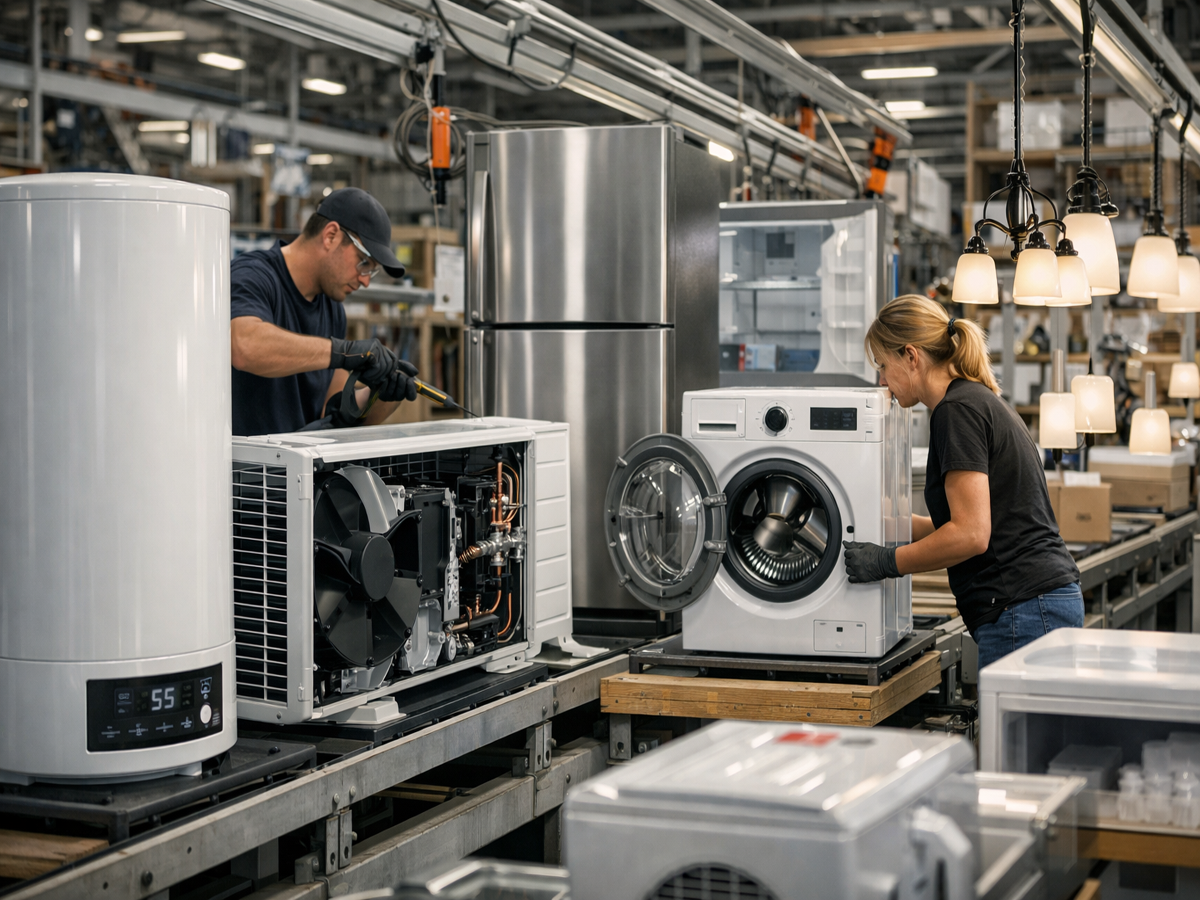
Filter assemblies may require removable mounting hardware for maintenance.
Weld nuts can provide permanent threaded attachment points for:
Filter frames
Retaining brackets
Access panels
Filter supports
The fastener should be positioned to allow easy removal and replacement of the filter assembly.
Maintenance access is especially important because filters are often service components rather than permanent installations.
Blowers and fans introduce dynamic loading and vibration.
Weld fasteners may be used for associated brackets, guards, sensor mounts, cable supports, or other accessory components.
For direct motor or blower mounting, the engineering team should evaluate the complete structural load path and vibration environment.
The appropriate fastener is determined by the actual loading and mounting architecture rather than by nominal thread size alone.
HVAC equipment frequently contains electrical controls, sensors, terminal hardware, wiring, and control modules.
Weld nuts and weld studs can provide mounting points for:
Control brackets
Sensor supports
Cable-management hardware
Electrical panels
Terminal components
Protective covers
Fastener placement should avoid interference with wiring, service access, airflow paths, and other equipment.
Service panels require repeated removal and installation.
A permanent threaded mounting point can simplify assembly and maintenance by reducing the need to hold a loose nut behind the panel.
When selecting a weld nut for repeated service use, engineers should consider:
Thread durability
Bolt size
Installation torque
Joint loading
Panel stiffness
Vibration
Corrosion
Service frequency
The fastener should be validated under the actual assembly and maintenance conditions.
Tab weld nuts can be useful in fabricated sheet-metal applications where the tab assists with positioning or handling during manufacturing.
Depending on the specific design, a tab can help with:
Fastener orientation
Positioning
Handling
Assembly alignment
Welding setup
However, the suitability of a tab weld nut depends on the actual enclosure or panel geometry.
The tab should not interfere with:
Bends
Adjacent components
Cable routing
Gaskets
Service panels
Airflow paths
Welding electrodes
For automated or high-volume production, tab geometry should also be reviewed against the feeding and positioning process.
HVAC sheet-metal designs can vary considerably in thickness.
There is no universal "minimum sheet thickness" or "maximum sheet thickness" that applies to every weld fastener.
The practical welding range depends on:
Sheet thickness
Material
Coating
Fastener geometry
Projection design
Welding equipment
Electrode configuration
Required mechanical performance
A fastener suitable for one galvanized panel thickness should not automatically be transferred to another design without process validation.
Fasteners positioned close to an edge, bend, opening, or flange require additional engineering review.
The local sheet structure can influence:
Current distribution
Heat flow
Panel stiffness
Deformation
Weld accessibility
There is no single universal edge-distance ratio suitable for every HVAC sheet-metal design.
The required clearance should be developed from the fastener geometry, sheet material, thickness, welding equipment, and mechanical requirement.
Where the weld fastener requires a prepared hole, the hole diameter and positional tolerance should be specified according to the actual fastener design.
Important considerations include:
Fastener fit
Projection alignment
Thread alignment
Welding repeatability
Sheet deformation
Assembly tolerance stack-up
Generic hole tolerances should not be copied between different fastener designs without engineering verification.
HVAC assemblies often contain folded panels and narrow internal spaces.
This can make electrode access a major DFM consideration.
Before production release, engineers should confirm:
Electrode approach direction
Electrode diameter
Clearance around bends
Panel depth
Fastener location
Adjacent components
Welding sequence
A fastener that is technically weldable may still be unsuitable for production if the electrode cannot reach it consistently.
HVAC equipment can be exposed to:
Condensation
Humidity
Outdoor air
Cleaning chemicals
Industrial environments
Salt-containing atmospheres
Temperature cycling
Galvanized steel provides one corrosion-protection strategy, but the weld area can behave differently from the surrounding coated surface.
The manufacturing team should consider:
Zinc coating condition
Welding effects on the coating
Fastener material
Fastener surface finish
Post-weld corrosion protection
Local coating damage
Condensation exposure
Crevice conditions
A particular plating or coating should not be assumed to guarantee a specific service life without application-specific environmental testing.
A typical fabricated HVAC assembly may follow a sequence such as:
Sheet Metal Cutting
        ↓
Punching / Hole Preparation
        ↓
Forming / Bending
        ↓
Weld Fastener Installation
        ↓
Weld Inspection
        ↓
Cleaning / Surface Treatment
        ↓
Final Assembly
        ↓
Functional / Quality Inspection
The actual manufacturing sequence depends on the product and factory process.
Fastener installation should be planned together with forming and finishing.
For example, the location of a weld nut may need to account for:
Bend lines
Formed flanges
Access openings
Internal insulation
Gaskets
Electrical wiring
Airflow
Assembly tools
This is why DFM review should happen before the fastener is released for mass production.
One reason HVAC manufacturers consider weld fasteners is the potential reduction of secondary assembly operations.
A permanent threaded mounting point can eliminate or reduce the need to:
Hold loose nuts
Access the back side of a panel
Tap a threaded hole
Install separate clips
Handle multiple loose components
However, the total cost should include the complete production process.
Relevant factors include:
Fastener unit price
Welding operation
Welding equipment
Electrode maintenance
Labor
Hole preparation
Assembly time
Scrap
Rework
Inspection
Packaging
Logistics
A weld fastener that costs more per piece may still reduce the overall installed cost if it simplifies assembly.
The opposite can also occur.
The correct decision should therefore be based on total manufacturing cost rather than fastener unit price alone.
Typical inspection characteristics may include:
Thread size
Thread gauge acceptance
Fastener dimensions
Tab dimensions
Flange dimensions
Stud height
Projection geometry
Fastener location
Fastener orientation
The applicable tolerances should be defined by the engineering drawing or customer specification.
Depending on the application, weld integrity may be evaluated through:
Visual inspection
Destructive weld testing
Torque or rotation testing
Push-out testing
Pull-out testing
Metallographic examination
Process monitoring
The selected validation method should correspond to the actual load path and failure mode.
For example, a component primarily loaded axially may require different validation from a bracket primarily subjected to rotation or shear.
Because HVAC access panels and components may be removed repeatedly, thread quality is important.
Inspection may include:
Go/no-go gauges
Visual inspection
Thread-form inspection
Functional assembly checks
The exact inspection plan should reflect the drawing and customer requirements.
For HVAC OEM procurement, a useful RFQ should contain enough information to evaluate both the fastener and the manufacturing process.
Provide:
Fastener type
Thread size
Thread standard
Dimensions
Tab configuration
Projection configuration
Material
Surface treatment
Provide:
Base material
Steel grade where relevant
Sheet thickness
Galvanized or other coating
Coating condition
Panel geometry
Provide:
Welding process
Available welding equipment
Electrode configuration
Welding orientation
Automation level
Production volume
Prototype requirements
Provide:
Component being mounted
Static loading
Vibration
Temperature
Moisture
Corrosion exposure
Service frequency
Access requirements
Where applicable, provide:
Drawing
Inspection requirements
Weld validation requirements
Sampling plan
Traceability requirements
Packaging specifications
Customer-specific requirements
This information allows the supplier to evaluate the correct fastener geometry and process rather than simply quote a nominal threaded component.
Before releasing an HVAC weld fastener design for production, review:
Is the selected weld fastener appropriate for the application?
Is the substrate compatible with the welding process?
Is galvanized coating present?
Has the effect of the coating on welding been evaluated?
Is the sheet thickness appropriate for the selected fastener and process?
Is the fastener positioned away from problematic bends and edges?
Is electrode access available?
Is the fastener orientation correct?
Can assembly tools reach the thread?
Does the fastener interfere with airflow?
Does the fastener interfere with filters or service panels?
Does the fastener interfere with insulation?
Does the fastener interfere with gaskets or sealing surfaces?
Has vibration been considered?
Has service-cycle loading been considered?
Has corrosion exposure been considered?
Has the final coating process been considered?
Have welding trials been completed using representative material?
Have weld inspection criteria been defined?
Has thread inspection been defined?
Has the complete assembly been evaluated for total installed cost?
HVAC fastening requires coordination between sheet-metal fabrication, welding, coating, assembly, serviceability, and environmental requirements.
JUXIN FASTENERS supplies OEM weld fastening solutions for:
HVAC equipment
Air handling units
Ventilation equipment
Climate-control housings
Sheet-metal ducting assemblies
Filter racks
Access panels
Electrical control assemblies
Fan and blower accessories
Industrial fabricated sheet-metal components
Available fastening solutions may include:
Tab weld nuts
Weld nuts
Square weld nuts
Hex weld nuts
Weld studs
Flanged weld studs
Custom weld fasteners
For each project, the appropriate fastener should be selected according to the actual substrate, coating, welding process, mechanical requirement, assembly sequence, and production volume.
JUXIN FASTENERS can support OEM customers from fastener selection and drawing review through prototype evaluation and production sourcing.
Weld Fasteners Solutions — Engineering guidance covering weld nuts, weld studs, projection welding, material compatibility, DFM, inspection, and OEM sourcing.
HVAC & Sheet Metal Solutions — Application-focused fastening strategies for HVAC equipment, ventilation systems, ducting, and fabricated sheet-metal assemblies.
Tab Weld Nuts — Threaded weld fastening options for sheet-metal assemblies where positioning, mounting, and production efficiency are important.
Weld Fastener Engineering — Technical information covering fastener geometry, welding-process development, substrate compatibility, and manufacturing validation.
Yes, suitable weld fasteners can be used with galvanized steel in appropriate applications.
However, welding zinc-coated steel requires process development because the coating affects the electrical and thermal interface.
Welding current, electrode force, weld time, electrode geometry, coating condition, sheet thickness, and fastener design should be evaluated together.
The correct welding conditions must be established through application-specific trials rather than assuming that one parameter set works for all galvanized HVAC sheet.
They can be suitable for selected thin-sheet applications, but suitability depends on the actual sheet material, thickness,
fastener geometry, projection design, welding equipment, and required mechanical performance.
Thin sheet can be more sensitive to local heat input and deformation, so representative production trials are recommended.
Yes.
Weld nuts can provide permanent threaded mounting points for removable access panels.
The complete joint should be evaluated for:
Assembly torque
Repeated service
Vibration
Panel stiffness
Fastener spacing
Gasket compression where applicable
Corrosion environment
The weld nut itself does not automatically create an airtight or pressure-rated seal.
A weld fastener provides a permanent threaded attachment point, but it does not automatically prevent the entire bolted joint from loosening.
Vibration performance depends on the complete joint, including bolt preload, joint stiffness, loading conditions, fastener geometry, and the selected anti-loosening strategy.
Potentially, depending on the application and location.
The fastener should be evaluated for:
Airflow interference
Internal clearance
Surface condition
Corrosion
Cleaning requirements
Particle or contamination considerations
Mechanical loading
Where the fastener is directly exposed to the airstream, the application requirements should be reviewed carefully rather than assuming that every weld fastener is appropriate for direct airflow exposure.
In suitable sheet-metal applications, a weld nut can provide a permanent female thread without tapping the parent sheet.
This can simplify manufacturing where the sheet design and welding process are appropriate.
However, the total process cost should be evaluated because welding introduces its own equipment, tooling, inspection, and process-control requirements.
Provide the fastener drawing or specification, thread size, sheet material, sheet thickness, coating type, application, welding process,
fastener location, expected loading, vibration conditions, environmental exposure, annual volume, and quality requirements.
For galvanized sheet applications, identifying the coating condition is particularly useful.
For HVAC access panels, also provide information about service frequency, gasket arrangement, pressure differential, and assembly method where relevant.
Send your HVAC sheet-metal drawings, material specifications, coating requirements, welding information, application details, and production volume requirements to our engineering team.
EMAIL: info@juxinfasteners.com
WEBSITE: www.juxinfasteners.com
JUXIN FASTENERS delivers OEM weld fastening solutions for HVAC equipment, ventilation systems, air handling units, sheet-metal ducting, access panels, filter assemblies, and other fabricated components.
For each project, we evaluate the fastener, sheet material, coating, welding process, joint geometry, assembly requirements, environmental conditions, and production volume together.
Precision Fastening Solutions Since 2003.
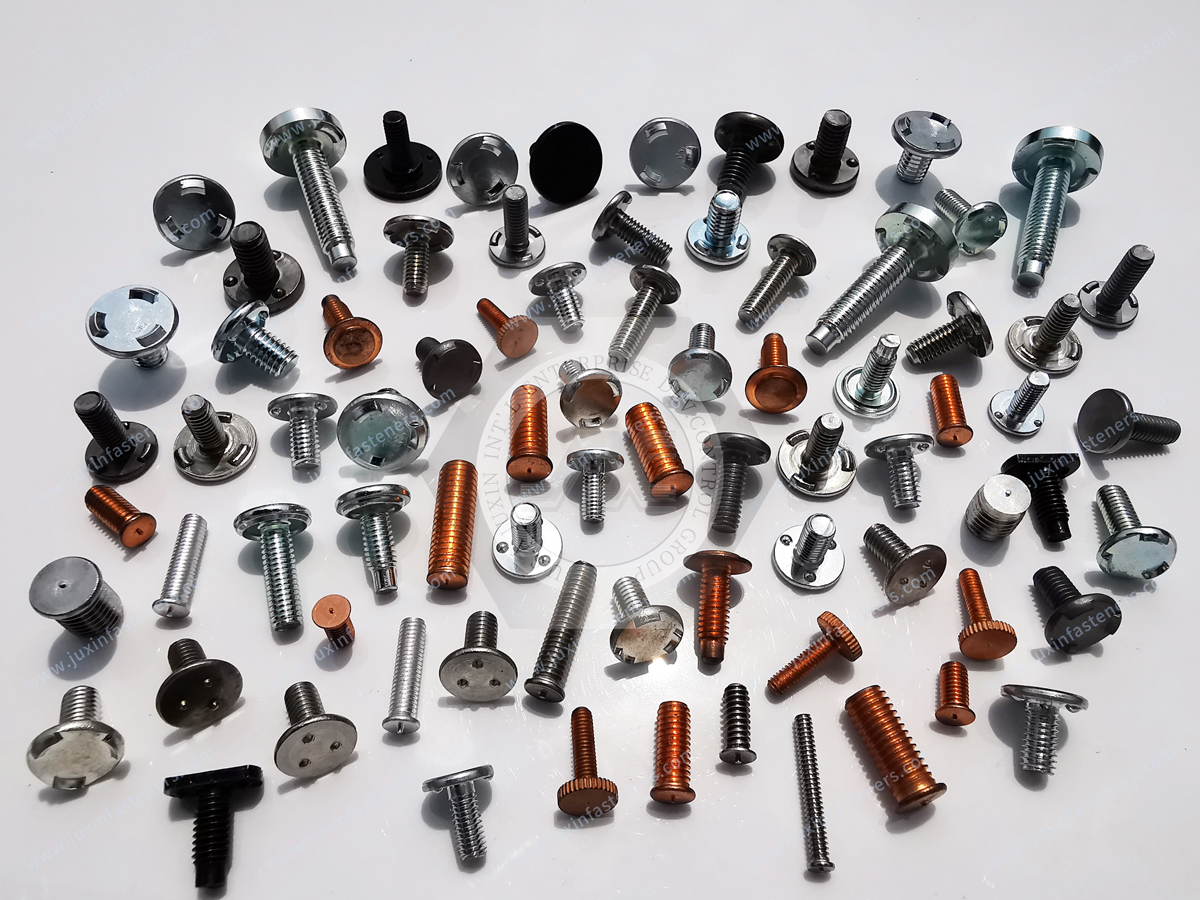
Product Packaging
Packaging Standard
At Juxin Fasteners, we apply standardized export packaging to ensure product protection, traceability, and compliance with international logistics requirements.
1. Standard Export Packaging
Unless otherwise specified, all products will be packed according to our factory standard export packaging, which includes:
Moisture-resistant inner protection
Poly bag or small box packing as required
Reinforced export cartons
Clear labeling with part number, specification, batch number, and quantity
Palletizing for sea or air shipment when necessary
Our standard packaging is designed to ensure safe transportation, efficient warehousing, and long-distance international shipping.
2. Customized Packaging Options
We also provide customized packaging solutions according to customer requirements, including but not limited to:
Private labeling
Customized barcodes
Specific carton dimensions
Retail packaging
Special pallet configuration
Customer-specific marking and identification
So that you know, customized packaging may involve additional costs and extended lead time depending on the complexity of the requirements.
3. Compliance & Quality Assurance
All packaging processes are controlled under our ISO 9001 quality management system to ensure consistency, traceability, and product integrity throughout the supply chain.
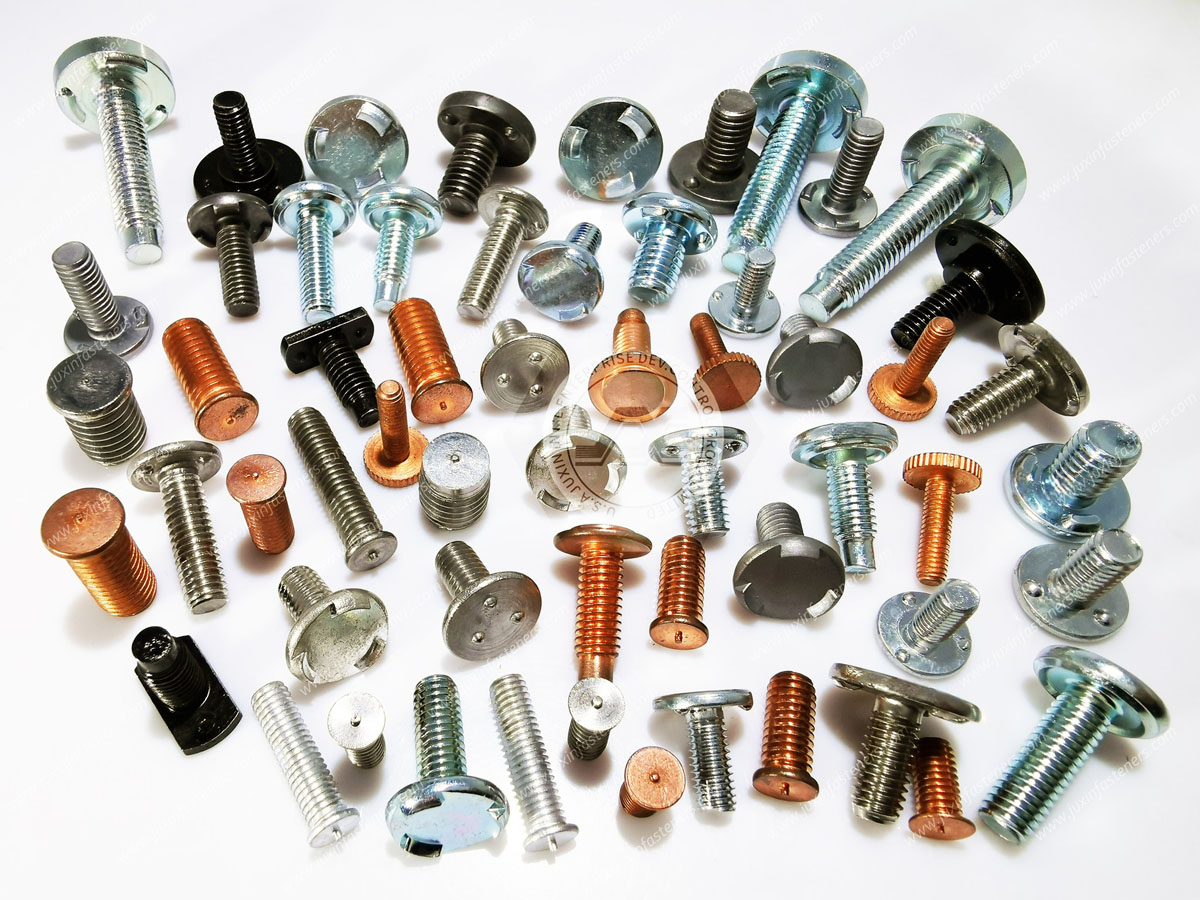
Product Pictures
Contact Us
Tel.:
+86 020 8621 0320
+86 020 3121 6067
E-mail:
Technical Support:
Navigation
SEND INQUIREY