Call Us
+86 136 6007 9809
Call Us
+86 136 6007 9809

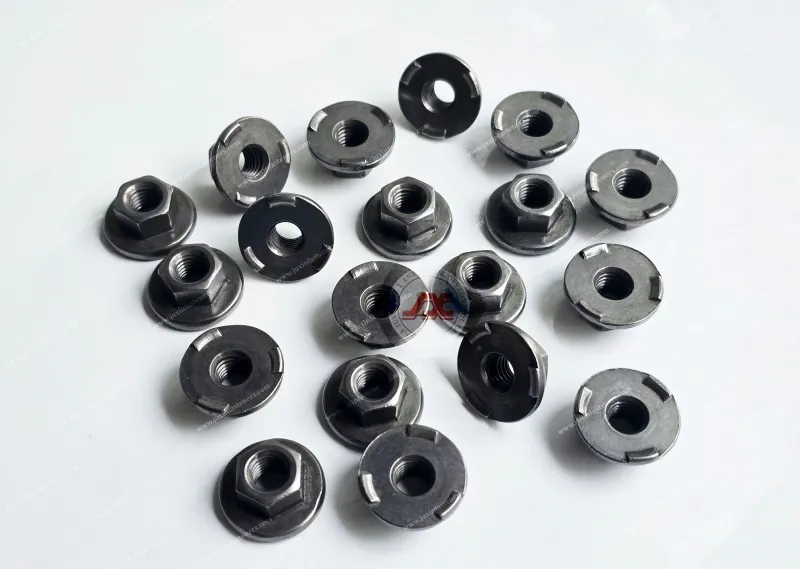
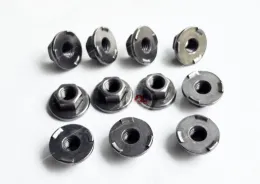
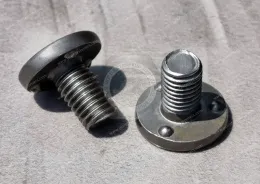
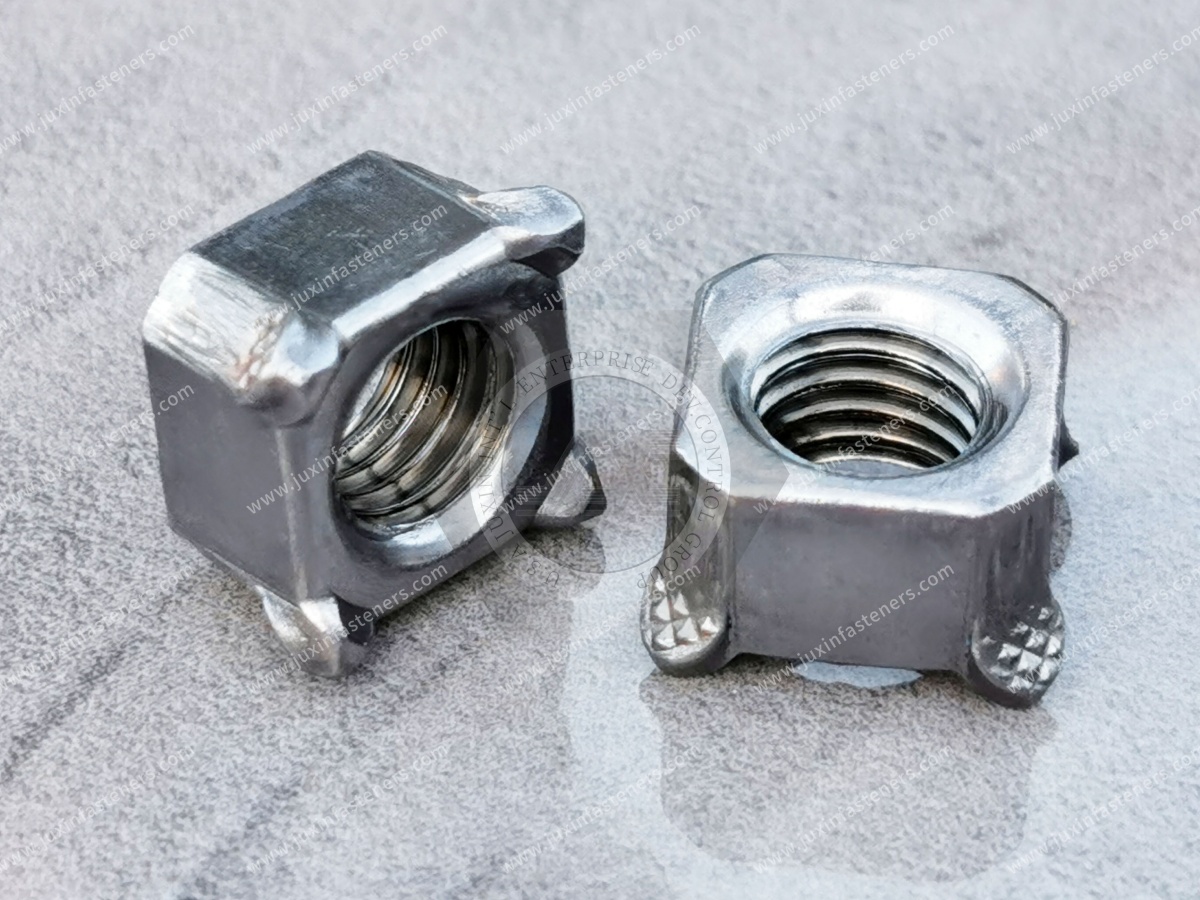
Square weld nuts are internally threaded fasteners with a square external body and dedicated welding features on the underside.
They are commonly used to create a permanent threaded attachment point on sheet metal, brackets, channels, frames, and other fabricated metal components.
Product Specification
Square weld nuts are internally threaded fasteners with a square external body and dedicated welding features on the underside.
They are commonly used to create a permanent threaded attachment point on sheet metal, brackets, channels, frames, and other fabricated metal components.
Unlike a conventional loose nut, a square weld nut is integrated into the assembly through a resistance welding process.
The welding projections provide localized electrical resistance and concentrate heat at predetermined locations.
When the welding current, electrode force, fastener geometry, and parent-material conditions are correctly matched, the projections collapse and form a permanent welded joint.
The square external geometry also provides substantial resistance to rotation during bolt installation.
For OEM applications, the important question is not simply whether a square weld nut is "strong." The correct selection depends on:
substrate material and thickness
weldability of the parent material
available welding equipment
required thread size and load
installation torque
access around the weld location
positional requirements
coating and post-weld finishing
production volume and automation requirements
JUXIN FASTENERS supplies square weld nuts for OEM and industrial applications and can evaluate custom dimensions, projection configurations, materials, finishes,
and application requirements from engineering drawings.
A typical square weld nut contains three functional elements:
                 INTERNAL THREAD
                       ||
                       ||
              +-------------------+
              |   SQUARE NUT BODY |
              +-------------------+
               \   \   |   /   /
                P1  P2  P3  P4
                 WELDING PROJECTIONS
        =================================
                 SHEET METAL
The internal thread provides the reusable connection for the mating bolt or screw.
The thread specification should be selected according to the mating fastener, required mechanical performance, assembly method, and applicable product or engineering standard.
The square body provides a broad external footprint and inherent resistance to rotation.
This can be valuable when the final assembly applies installation torque to the threaded connection. However, torque resistance is not determined by external shape alone.
The welded joint, substrate, projection configuration, weld parameters, and load direction all contribute to the final performance.
The projections create controlled contact points between the nut and the sheet.
During resistance projection welding:
The electrodes clamp the nut and substrate.
Electrical current passes through the projection locations.
Localized resistance heating raises the projection region to a plastic or molten condition depending on the welding process.
Electrode force collapses the projections.
A welded joint forms between the fastener and parent material.
The joint is held under force during the appropriate portion of the welding cycle.
The projection geometry therefore becomes a critical part of the manufacturing system, not merely a feature of the fastener.
Square weld nuts are available in different configurations depending on the application.
A pilot, or locating feature, extends from the welding side of the nut and engages with a prepared hole in the sheet.
          SQUARE WELD NUT WITH PILOT

             +----------------+
             |   THREADED     |
             |      BORE      |
             +----------------+
              \   P1 P2 P3   /
               \____________/
                    ||
                  PILOT
                    ||
        =========================
              SHEET METAL
The pilot can help:
locate the nut relative to the sheet hole
maintain thread-axis position
improve repeatability during placement
assist automated or fixture-based assembly
The hole diameter and pilot geometry must be designed as a matched system. A pilot should not be treated as a universal solution for every sheet-metal hole condition.
A non-pilot configuration can be appropriate where the nut is positioned against a flat surface without requiring a locating projection through the sheet.
This configuration may be useful when:
the substrate geometry does not permit a pilot hole
the nut is positioned over a particular opening
fixture-based positioning is already available
the design requires a different weld-face configuration
The welding face and projection arrangement should be evaluated together with the electrode tooling.
Square and hexagonal weld nuts can both provide permanent threaded attachment points, but their geometry can lead to different design considerations.
| Engineering Criterion | Square Weld Nut | Hexagonal Weld Nut |
|---|---|---|
| External geometry | Four-sided | Six-sided |
| Rotational resistance | Provided by welded joint plus external geometry | Provided by welded joint plus external geometry |
| Footprint | Broad, rectangular/square envelope | Hexagonal envelope |
| Hole location options | Depends on configuration | Depends on configuration |
| Tight-space suitability | Application dependent | Often advantageous where radial clearance is important |
| Welding method | Typically resistance projection welding | Typically resistance projection welding |
| Pilot options | Available in suitable designs | Available in suitable designs |
| Automation | Suitable with appropriate orientation and feeding design | Suitable with appropriate orientation and feeding design |
The correct choice should therefore be made from the complete joint geometry rather than from the assumption that one external shape is universally stronger.
The parent material must be compatible with the selected welding process.
Important factors include:
material grade
electrical resistance
thermal conductivity
surface condition
coating
sheet thickness
local stiffness
accessibility for electrodes
A square weld nut that performs well on one steel substrate may require a different welding setup or projection configuration on another material.
Projection height, shape, position, and consistency affect the electrical and mechanical behavior of the weld.
For production applications, projection consistency matters because variation can produce differences in:
initial contact resistance
heat generation
projection collapse
weld nugget formation
electrode force distribution
This is one reason projection geometry should be treated as a controlled manufacturing feature.
Avoid placing the nut unnecessarily close to a free edge, bend, hole, or other major geometric discontinuity.
The appropriate edge distance depends on:
nut dimensions
substrate thickness
weld projection layout
welding current
electrode configuration
expected mechanical loading
surrounding sheet geometry
Rather than applying one universal edge-distance ratio to every design, engineers should validate the actual configuration through drawing review and process testing.
Welding can generate heat and spatter around the joint.
The nut geometry, welding orientation, electrode setup, and process parameters should therefore protect the functional thread.
For automated production, thread condition should be checked after welding because thread contamination can create downstream assembly problems even when the welded joint itself is acceptable.
Square weld nuts can be used in:
chassis structures
equipment frames
brackets
operator cabins
guards
service panels
hydraulic equipment structures
These applications frequently combine vibration, impact loading, environmental exposure, and repeated maintenance.
The fastener should therefore be selected according to the actual load path rather than simply classified as a "heavy-duty" component.
Square weld nuts can provide permanent internal threads on:
fabricated frames
machinery guards
equipment housings
structural brackets
access panels
steel channels
Where two-sided welding access is available, weld nuts can eliminate the need to hold a loose nut during final assembly.
This can reduce the number of loose components and simplify downstream fastening operations.
Low-carbon steel is commonly used for resistance-welded fasteners because weldability is an important part of the design.
However, material selection should consider both the fastener and the substrate.
Potential variables include:
carbon content
alloy composition
electrical resistivity
hardness
surface condition
corrosion requirements
post-weld coating process
Surface treatment requires particular attention.
A coating that is suitable for corrosion protection may not automatically be suitable for resistance welding.
Coating thickness and electrical behavior can change the welding interface and may influence electrode contamination or process stability.
For this reason, the final surface treatment should be specified together with the welding process rather than independently.
When sourcing square weld nuts, procurement teams should request more than a simple unit price.
thread size and thread specification
nut body dimensions
material grade
surface treatment
pilot requirement
projection configuration
substrate material
substrate thickness
welding process
annual quantity
packaging requirements
applicable inspection requirements
2D drawing and, where useful, 3D CAD data
Can the supplier control projection consistency?
This directly affects welding repeatability.
Can the supplier support custom geometry?
OEM programs often require changes to body dimensions, pilot geometry, thread length, or welding features.
Can the supplier evaluate the fastener and substrate as a system?
This is more useful than selecting a fastener solely from a catalog description.
Can the supplier provide production samples?
Sample welding trials can reveal whether the fastener works with the customer's actual sheet material and welding equipment.
A robust square weld nut supply program should control both dimensional quality and welding-related characteristics.
Typical inspection areas include:
thread dimensions
body dimensions
projection geometry
projection consistency
pilot dimensions where applicable
perpendicularity
surface condition
material identification
coating condition
packaging integrity
For critical applications, destructive weld testing can also be incorporated into the customer's validation program.
The acceptance criterion should be established from the customer's engineering specification, applicable standard, and validated welding process rather than from a generic internet value.
The square body provides a substantial external footprint and good resistance to rotation when integrated into a properly designed welded joint.
It is particularly useful where a permanent internal thread is required on fabricated sheet-metal or structural components.
Not necessarily. The requirement depends on the specific weld nut configuration. Pilot designs normally use a prepared hole for positioning,
while other configurations can be designed for different mounting arrangements.
Yes. Their suitability depends on the geometry, feeding orientation, welding equipment, part presentation, and required production volume.
Automated feeding should be considered during the fastener design stage rather than after the part has already been finalized.
Yes. JUXIN FASTENERS can evaluate custom thread sizes, body dimensions, pilot configurations, welding projections, materials, finishes,
and other application-specific requirements based on OEM drawings and specifications.
For a production application, send JUXIN FASTENERS the information that determines the actual fastening environment:
2D engineering drawing
3D CAD model where available
thread specification
substrate material and thickness
welding process
required surface treatment
annual or project quantity
application and load requirements
Email: info@juxinfasteners.com
JUXIN FASTENERS can review the fastener geometry together with the substrate and manufacturing process to identify DFM considerations before production tooling is finalized.
Product Packaging
Packaging Standard
At Juxin Fasteners, we apply standardized export packaging to ensure product protection, traceability, and compliance with international logistics requirements.
1. Standard Export Packaging
Unless otherwise specified, all products will be packed according to our factory standard export packaging, which includes:
Moisture-resistant inner protection
Poly bag or small box packing as required
Reinforced export cartons
Clear labeling with part number, specification, batch number, and quantity
Palletizing for sea or air shipment when necessary
Our standard packaging is designed to ensure safe transportation, efficient warehousing, and long-distance international shipping.
2. Customized Packaging Options
We also provide customized packaging solutions according to customer requirements, including but not limited to:
Private labeling
Customized barcodes
Specific carton dimensions
Retail packaging
Special pallet configuration
Customer-specific marking and identification
So that you know, customized packaging may involve additional costs and extended lead time depending on the complexity of the requirements.
3. Compliance & Quality Assurance
All packaging processes are controlled under our ISO 9001 quality management system to ensure consistency, traceability, and product integrity throughout the supply chain.
Product Pictures
Hot Products
Contact Us
Tel.:
+86 020 8621 0320
+86 020 3121 6067
E-mail:
Technical Support:
Navigation
SEND INQUIREY