Call Us
+86 136 6007 9809
Call Us
+86 136 6007 9809

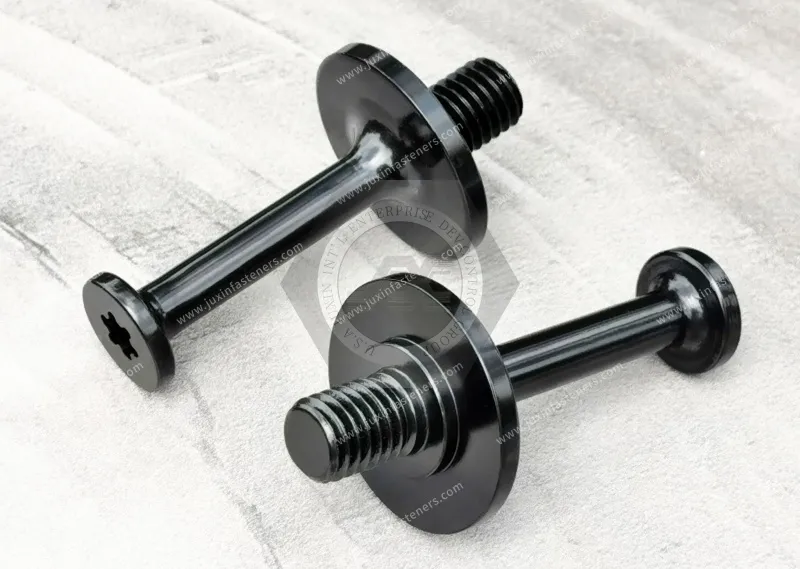
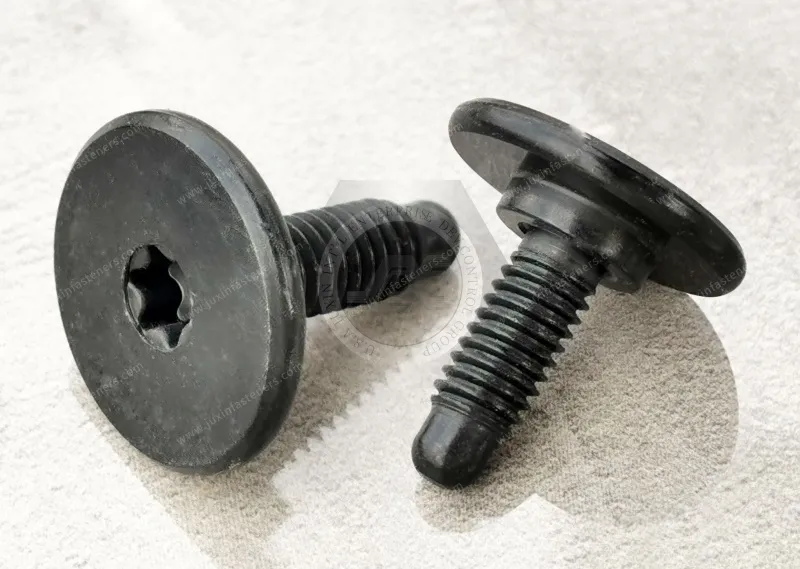
Automotive seat systems combine structural frames, seat tracks, floor mounting interfaces, recliner mechanisms, adjustment systems,
brackets, trim components, and other mechanical elements within a relatively compact assembly.
Product Specification
Automotive seat systems combine structural frames, seat tracks, floor mounting interfaces, recliner mechanisms, adjustment systems,
brackets, trim components, and other mechanical elements within a relatively compact assembly.
Because different parts of the seat system perform different functions, the fastening requirements are not uniform.
A floor-mounted seat track connection may require a specified high-strength bolt and controlled tightening process,
while a recliner or folding mechanism may use a precision pin or shaft. Interior trim around the seat may instead use plastic retainers or clips.
For this reason, automotive seat system fasteners should be selected according to the joint function, mating geometry, load path, fastener configuration, material, assembly method, and applicable validation requirements.
JUXIN FASTENERS supplies customer-specific and non-standard automotive fastening components according to approved customer drawings,
material requirements, surface-finish requirements, dimensional specifications, and application conditions.
Automotive seat assemblies combine structural and mechanical functions with adjustment, comfort, packaging, and manufacturing requirements.
Design and structural engineers may need to evaluate several different fastening zones within one seat system.
Seat mounting interfaces can form part of the vehicle's occupant-support structure.
During vehicle operation and applicable dynamic testing or crash validation, loads can be transferred through the seat frame, seat tracks, brackets, floor interfaces, and associated fastening components.
The actual load experienced by a fastener depends on the complete joint design and load path.
Relevant engineering considerations may include:
Fastener material
Applicable mechanical property class
Thread geometry
Thread engagement
Joint geometry
Fastener location
Mating material
Clamp load
Tightening method
Installation torque
Bracket and mounting-interface geometry
Customer-defined validation requirements
A high-strength fastener should therefore not be selected simply because a particular property class appears stronger on paper.
The fastener, mating components, joint design, installation process, and validation requirements need to be considered together.
Automotive seats contain mechanisms that may allow:
Fore-and-aft adjustment
Seat-height adjustment
Seatback recline
Folding movement
Pivoting
Locking or positioning functions
These mechanisms can use pins, shafts, brackets, retainers, screws, bolts, or other customer-specific components.
Where components rotate or pivot, dimensional relationships between the pin or shaft and its mating components can become important to assembly fit and mechanical movement.
The engineering requirement may therefore extend beyond tensile strength to include:
Diameter
Length
Shoulder geometry
Mating interface
Surface condition
Material pairing
Retention method
Assembly sequence
Seat structures operate within defined vehicle packaging envelopes. Fastener head height, shank length, bracket geometry, and available assembly clearance can therefore influence component selection.
Weight optimization may also be considered at vehicle-system level.
However, reducing fastener mass should not be treated independently from the required mechanical properties and joint design.
The practical engineering sequence is:
Required Function → Load Path → Joint Geometry → Fastener Geometry → Material → Assembly Method → Validation
Automotive seat systems can use several different classes of fastening and mechanical components.
Depending on the application, these may include:
High-strength seat mounting bolts
Seat track fasteners
Customer-specific structural screws
Nuts
Rivet nuts
Weld nuts
Precision pivot pins
Shoulder pins
Shafts
Retainers
Brackets
Spacers
Other customer-specific mechanical components
Not every component is a conventional threaded fastener.
This distinction is important because seat mechanisms can include both structural fastening interfaces and kinematic interfaces.
Seat track and floor mounting interfaces may require specified high-strength bolts according to the vehicle manufacturer's engineering requirements.
Property classes such as 10.9 may be specified for certain applications, but the applicable property class must be determined from the approved engineering specification.
The actual joint should be evaluated according to:
Bolt property class
Thread dimensions
Engagement length
Joint stiffness
Mating materials
Clamp load
Tightening method
Torque requirements
Fastener seating surface
Applicable validation requirements
The important sourcing principle is that a “10.9 seat bolt” is not a complete engineering specification.
Head geometry, length, material, finish, thread configuration, and customer drawing requirements can all be relevant.
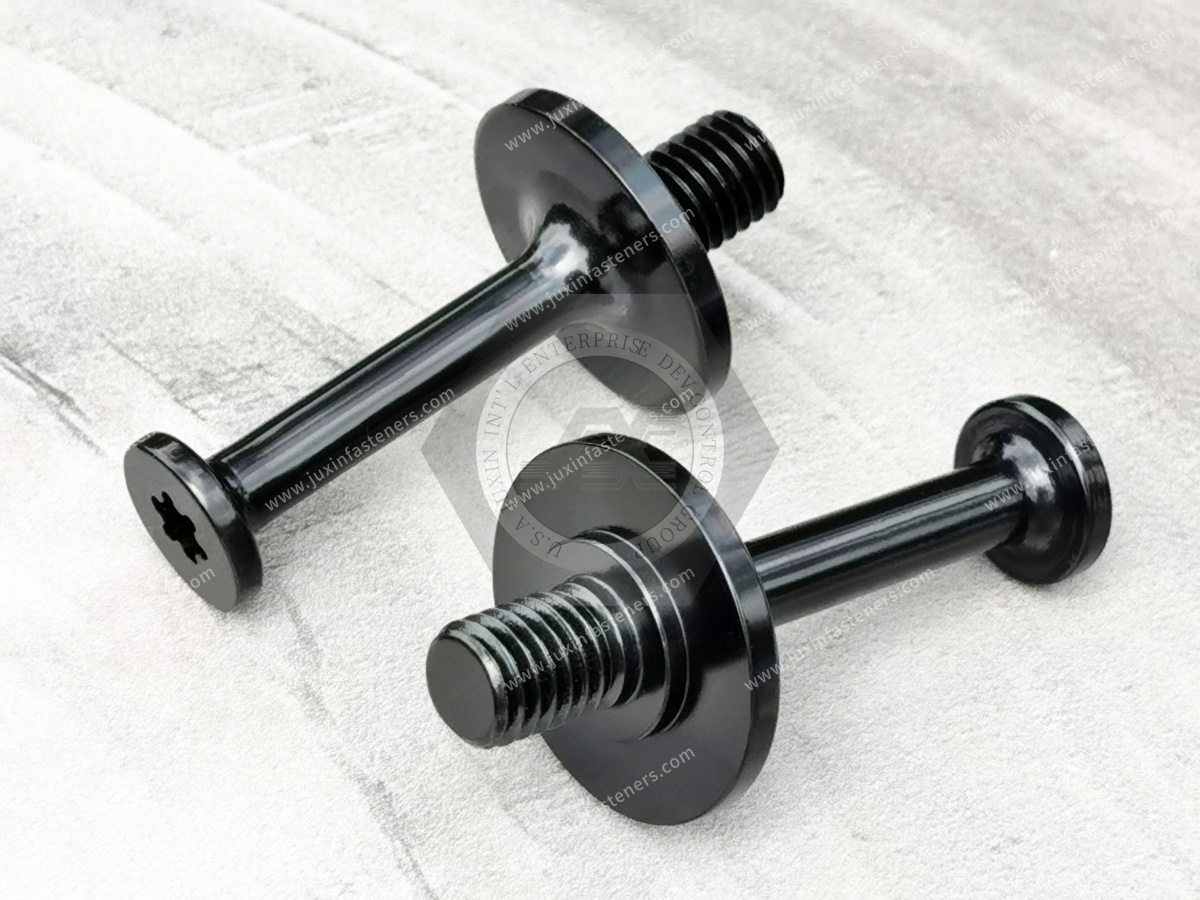
Seat recliner mechanisms, folding structures, and adjustment mechanisms may use pins or shafts as mechanical interfaces.
Depending on the design, these components can include:
Pivot pins
Shoulder pins
Fixed shafts
Rotating shafts
Support shafts
Application-specific cylindrical components
The required dimensions can include:
Outside diameter
Overall length
Shoulder dimensions
Groove or retaining features
Mating interface
Surface condition
Material
Dimensional requirements
For these components, the engineering requirement is often more closely related to the mechanism's mating geometry than to a conventional bolt specification.
Seat frames can also incorporate brackets, retainers, spacers, and other components used to secure motors, wiring, covers, mechanisms, or other equipment.
Depending on the design, these components may be stamped, machined, formed, or otherwise produced according to customer-specific requirements.
The exact manufacturing process should follow the approved component design and supplier process rather than being assumed from the application name.
One of the most useful distinctions for seat-system sourcing is separating structural fastening from mechanical movement components.
Examples can include:
Seat mounting bolts
Seat track fasteners
Structural screws
Nuts
Rivet nuts
Weld nuts
Customer-specific brackets
These components form threaded or mechanical attachment interfaces.
Examples can include:
Pivot pins
Shafts
Shoulder pins
Folding-mechanism components
Adjustment components
Retaining components
These components may define or support rotational, sliding, or positioning relationships.
Other seat-area components may include:
Plastic clips
Screw-type retainers
Trim fasteners
Cable clips
Wire-routing components
Protective covers
These may have completely different engineering requirements from structural seat mounting hardware.
This three-level distinction prevents a common sourcing problem: treating every component around the seat as a “seat bolt.”
Automotive seat systems are part of a larger vehicle fastening ecosystem that combines plastic, polymer, and metal components.
JUXIN FASTENERS supplies customer-specific fastening components across these different application areas.
For a broader overview of polymer-based automotive components, see Automotive Plastic Fasteners: Types, Applications & OEM Sourcing Guide.
Plastic components can be appropriate around seat trim, protective covers, wiring interfaces, and other non-structural applications where the customer-defined requirements support their use.
Metal components may be specified for structural, threaded, pivot, or other mechanical interfaces where required by the vehicle design.
The important point is that plastic and metal components are not interchangeable simply because they perform similar-looking retention functions.
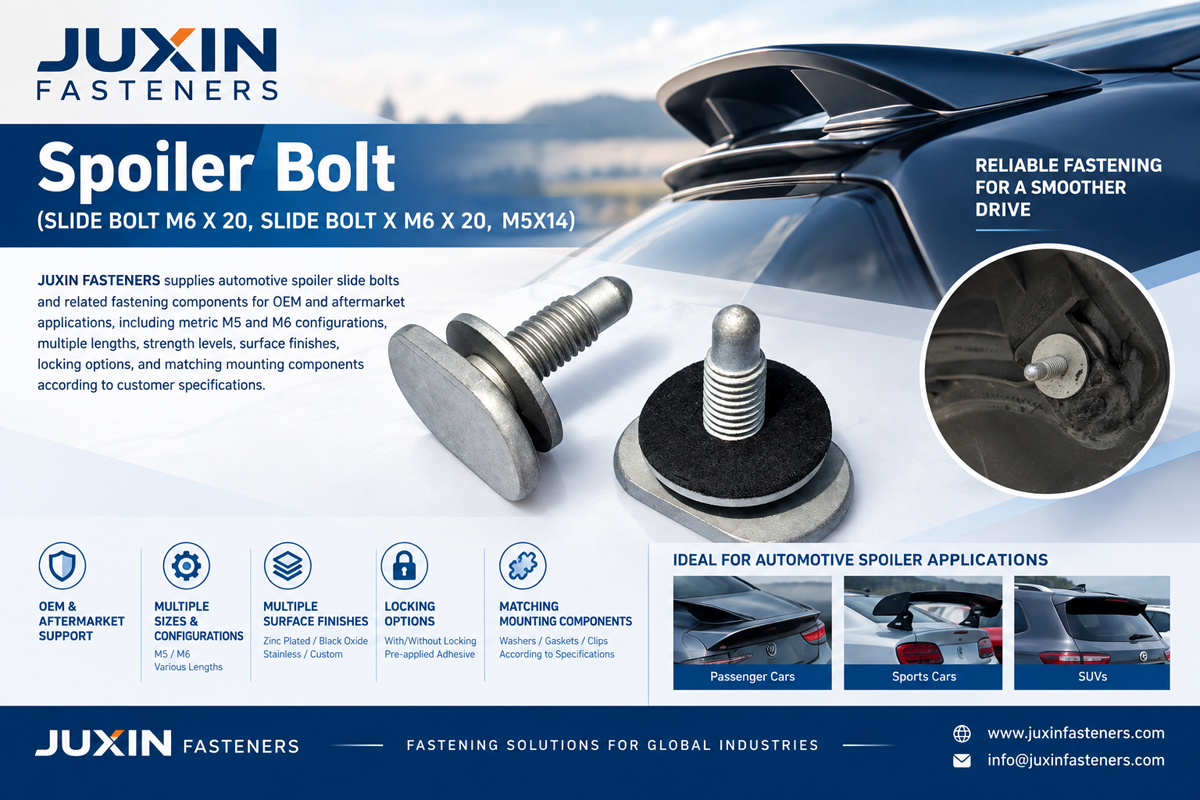
A rear spoiler assembly provides another useful example of how different fastening components can form one application system.
A Nylon Rear Spoiler Clip can perform locating, retaining, positioning, spacing, or fastening-interface functions depending on the specific design.
A metal Automotive Spoiler Slide Bolt can incorporate a special head geometry that engages a mounting slot, track, or channel.
JUXIN FASTENERS has confirmed configurations including M5 and M6 applications, with representative M6 × 14 and M6 × 20 configurations.
Applicable configurations can include property classes 8.8 and 10.9, with finishes such as Color Zinc, Zinc-Nickel Alloy, and Black Zinc where specified.
Certain configurations may also use a pre-applied thread-locking patch.
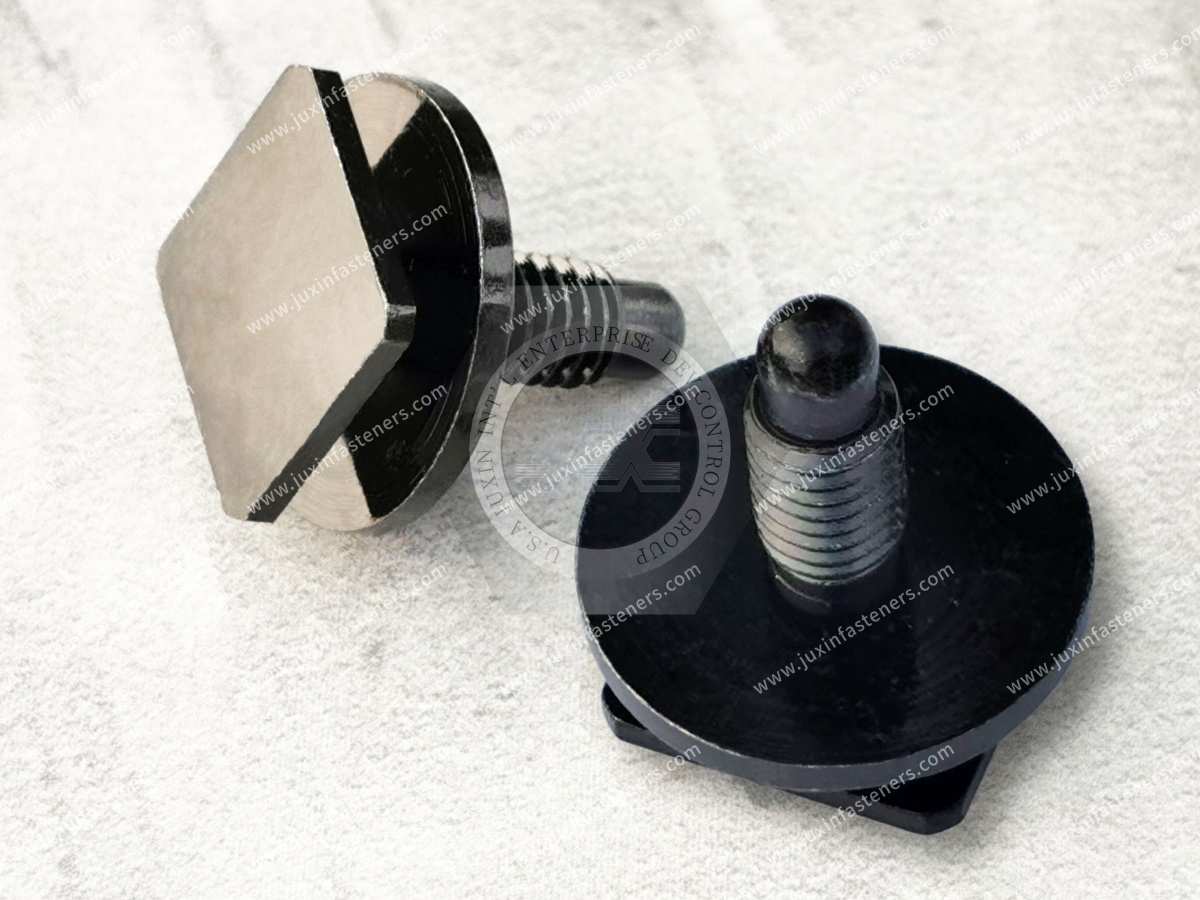
The assembly concept can be represented as:
Slide → Position → Engage → Tighten
Whether the head geometry provides an anti-rotation effect depends on the mating slot and the specific component design.
This example demonstrates why automotive fastening should be considered as an application system rather than as isolated catalog hardware.
Material selection should follow the actual joint requirement, mechanical specification, environment, and customer validation requirements.
High-strength alloy steel may be specified for selected seat mounting or structural fastening applications where the required mechanical property class is defined by the customer.
The material specification and applicable heat-treatment requirements should be controlled through the approved engineering documentation.
Stainless steel may be appropriate for selected applications where corrosion considerations, material compatibility, and mechanical requirements support its use.
However, stainless steel should not automatically be substituted for a specified high-strength steel fastener without engineering evaluation.
Aluminum alloy components may be considered in applications where weight, material compatibility, geometry, and required mechanical properties support their use.
The suitability of an aluminum component depends on the actual application and customer specification.
Plastic materials such as Nylon/PA, POM/Acetal, and PP may be used for selected automotive fastening or retaining components.
For example, seat trim or auxiliary components may use polymer retainers where the design allows.
Polymer selection should consider:
Moisture exposure
Temperature
Chemical environment
Dimensional behavior
Mechanical requirements
Mating materials
Installation method
Service conditions
Plastic fastening should not be treated as an alternative to structural metal fastening unless the application has been specifically designed and validated for the polymer component.
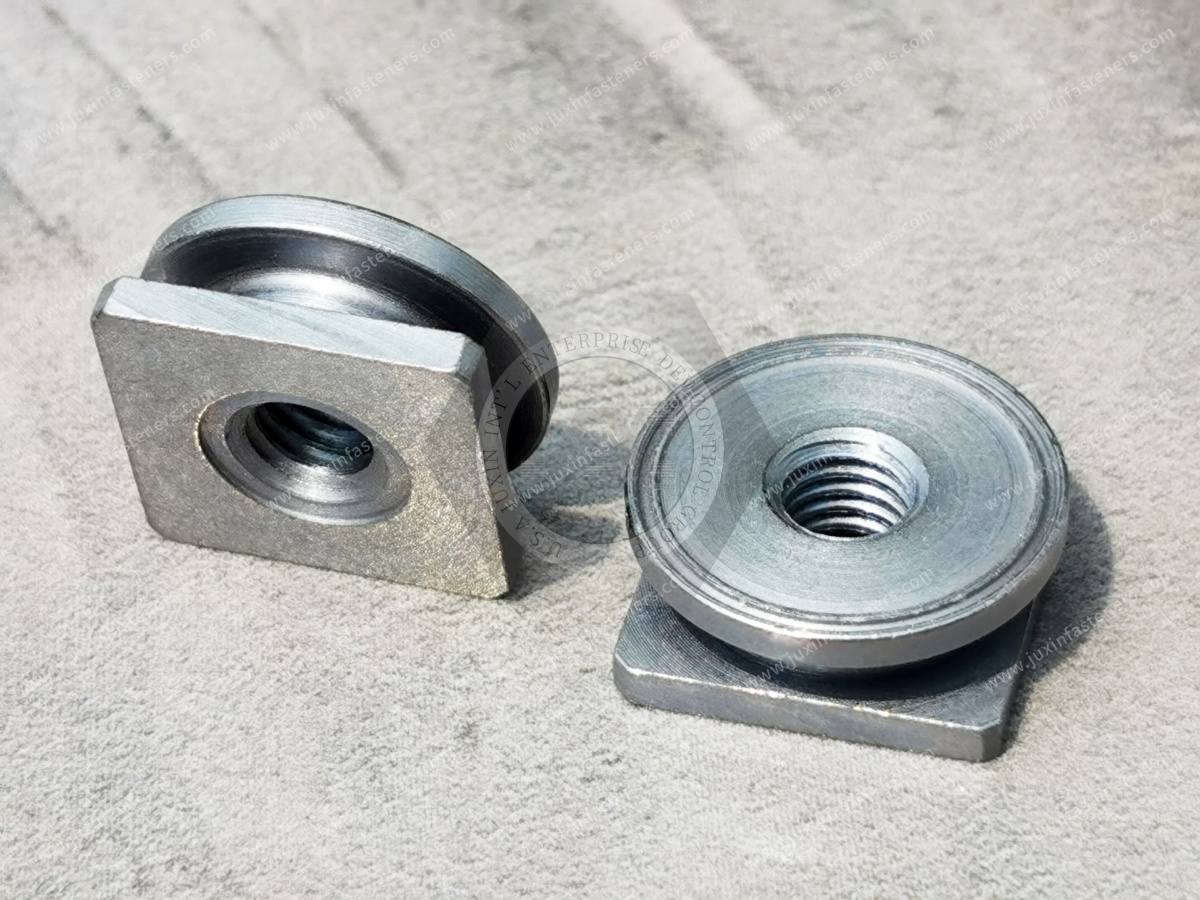
Surface treatment can be part of the engineering specification for metal seat fasteners.
The appropriate treatment depends on the substrate, environment, mating materials, dimensional requirements, and customer-defined corrosion or surface requirements.
Zinc-Nickel Alloy coatings may be specified for selected automotive metal fasteners where enhanced corrosion protection is required.
The actual coating specification should define the applicable coating system, substrate, dimensional considerations, and customer validation requirements.
Performance should be evaluated for the specific coating and application rather than treated as a universal property of every Zinc-Nickel Alloy finish.
Other electroplated finishes may be used for selected automotive fasteners according to the customer specification.
The coating must be compatible with the required:
Corrosion performance
Dimensional requirements
Thread interface
Appearance
Assembly process
Environmental exposure
Surface condition can influence friction at threaded interfaces.
For this reason, the relationship between:
Fastener Material + Surface Finish + Thread Geometry + Lubrication / Surface Condition + Tightening Method
may need to be evaluated when the assembly process relies on controlled torque or torque-angle installation.
A coating should not be selected only for appearance or nominal corrosion requirements if the fastener is part of a controlled assembly process.
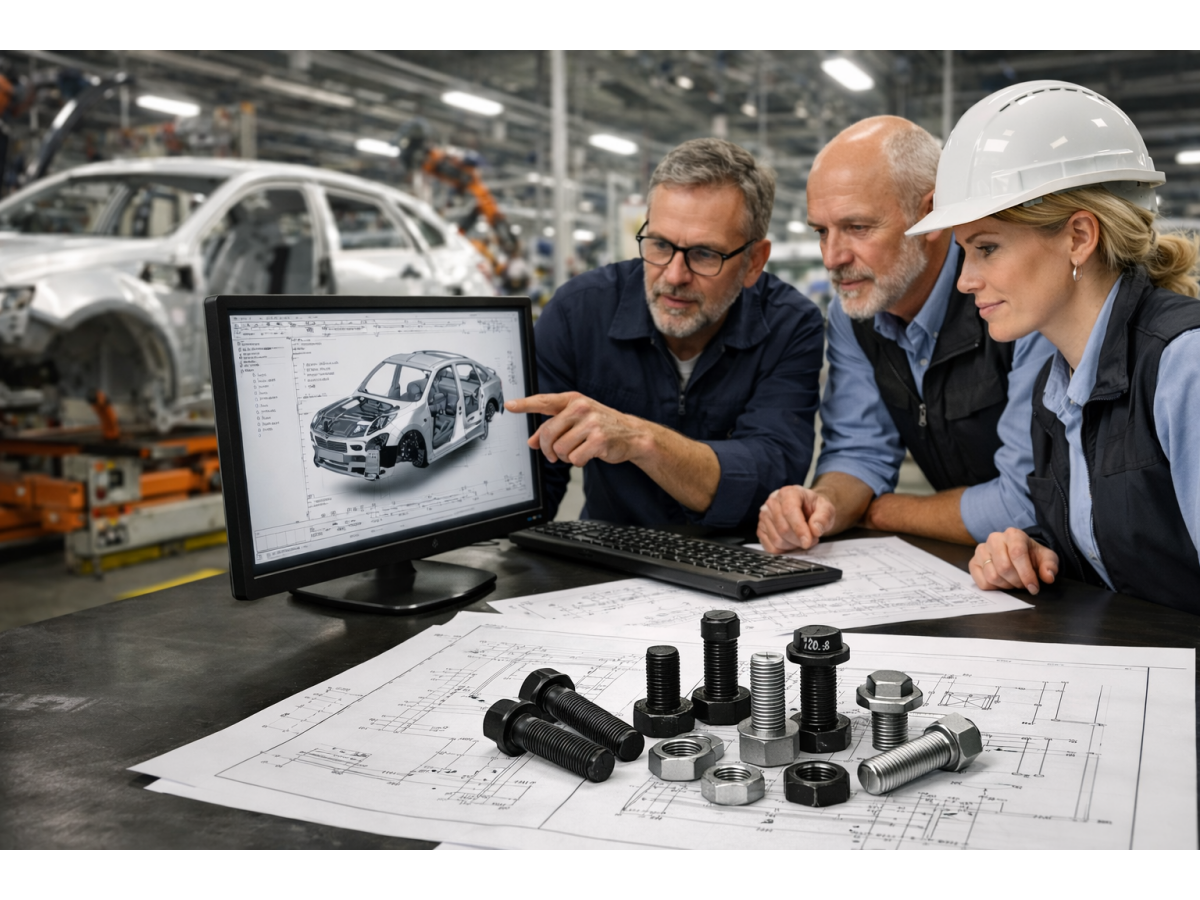
Automotive seat systems can be subject to vehicle-level and component-level validation requirements.
Depending on the vehicle program and applicable regulations or customer requirements, seat structures and related components may be evaluated through various structural and dynamic tests.
The fastener supplier should not independently claim that a particular bolt or pin makes a seat system crash-safe.
Instead, the engineering responsibility should remain connected to the complete seat structure and the applicable validation program.
For sourcing purposes, this means the supplier should work from the customer's approved:
Drawing
Material specification
Property-class requirement
Dimensional specification
Surface-treatment requirement
Assembly specification
Validation requirement
The fastener is one component within the validated joint system.
A useful engineering model for automotive seat fastening is:
Determine whether the component provides:
Structural attachment
Clamping
Positioning
Retention
Pivoting
Rotation
Adjustment
Spacing
Trim attachment
Understand how loads are transferred through:
Seat Component → Bracket / Track → Fastener → Mating Structure
The fastener should be specified within the complete joint.
Identify:
Hole diameter
Thread size
Thread pitch
Mounting thickness
Bracket geometry
Slot configuration
Clearance
Fastener seating surface
Specify:
Head style
Head dimensions
Shank length
Thread length
Shoulder geometry
Retaining features
Special interface geometry
The material and applicable mechanical property class should follow the customer engineering specification.
Specify the required finish according to corrosion, dimensional, appearance, friction, and environmental requirements.
The specification may need to include:
Installation method
Tightening torque
Torque-angle requirements where applicable
Installation tooling
Assembly direction
Thread-locking requirements where specified
Identify the customer or vehicle-program validation requirements that apply to the component and joint.
This sequence creates a stronger connection between engineering design and procurement sourcing.
Seat-system sourcing requires both technical and commercial evaluation.
Design and structural engineers may focus on:
Mechanical property requirements
Thread engagement
Joint geometry
Clamp load
Fastener seating
Material compatibility
Dimensional consistency
Surface condition
Assembly method
Validation requirements
For precision pins and shafts, they may additionally focus on:
Diameter
Shoulder geometry
Mating interfaces
Surface condition
Rotational or sliding relationship
Retention method
Sourcing managers and supply chain teams may focus on:
Approved drawing revision
Material specification
Property class
Surface finish
Dimensional requirements
Production consistency
Packaging
Traceability where required
Documentation
Sample approval
Change-control expectations
Production quantity
Long-term supply requirements
These priorities overlap, but they are not identical.
A supplier evaluation should therefore cover both the technical fit of the component and the supplier's ability to maintain the approved specification through production.
For custom seat bolts, pivot pins, shafts, retainers, or other non-standard components, a structured sourcing process can follow:
Application Definition → Drawing / CAD Review → Joint Requirement → Component Specification → Material / Property Class → Surface Treatment → Sample Evaluation → Approval → Production → Quality Control → Ongoing Supply
The process starts with engineering data rather than a generic product name.
For an automotive seat system fastener RFQ, procurement teams should provide, where available:
Customer engineering drawing
3D CAD model
Existing component sample
Thread size and pitch
Overall length
Thread length
Head geometry
Shank or shoulder dimensions
Material
Required property class
Heat-treatment requirements where specified
Surface finish
Assembly torque requirements
Installation method
Quantity
Packaging requirements
Documentation requirements
Application environment
Customer validation requirements
For pivot pins and shafts, include the relevant mating dimensions and functional interfaces rather than only nominal diameter and length.
Standard commercial hardware can be appropriate where the engineering requirement matches an available standard component.
However, automotive seat assemblies may contain customer-specific interfaces that require non-standard geometry.
Examples can include:
Special bolt heads
Customer-specific lengths
Shoulder configurations
Special thread lengths
Custom pins
Application-specific shafts
Specific surface finishes
Special retaining features
Customer-defined packaging
The decision should therefore be based on engineering fit rather than assuming that standard or custom is inherently better.
A customer-specific component becomes commercially relevant when the application geometry or specification requires something beyond a suitable standard part.
JUXIN FASTENERS is an OEM-oriented supplier of customer-specific and non-standard automotive fastening components.
Depending on the customer application, the product scope can include:
Customer-specific seat mounting bolts
High-strength automotive fasteners
Custom screws
Nuts
Rivet nuts
Weld nuts
Precision pins
Shafts
Retainers
Spacers
Other application-specific metal components
Selected automotive plastic fastening components
JUXIN FASTENERS manufactures components according to customer specifications, approved drawings, material requirements, dimensional requirements, surface-finish requirements, and application conditions.
The actual product configuration is established from the customer's engineering requirements rather than from a generic application label.
This approach is particularly useful when an automotive seat program includes multiple fastening types across seat tracks, brackets, adjustment mechanisms, trim interfaces, and related assemblies.
For broader automotive chassis fastening applications, see Automotive Chassis & Undercarriage Fastening: Rivet Nuts, Alloy Fasteners & OEM Sourcing Guide.
Seat systems and door systems can also share fastening principles around trim retention, brackets, threaded interfaces, and customer-specific components.
For comparison, see Automotive Door Systems: Fastening Engineering, Retainers & OEM Sourcing Guide.
A high property class does not define the complete component.
Head geometry, length, thread engagement, material, finish, joint configuration, and installation requirements can all be relevant.
Seat mechanisms can use pins, shafts, retainers, brackets, and other mechanical components.
A generic bolt search may therefore miss the actual component category.
The fastener should be evaluated together with the seat track, bracket, floor interface, frame, or mechanism in which it operates.
Substituting one material for another can change mechanical properties, dimensional behavior, corrosion characteristics, or mating conditions.
A surface treatment can influence thread dimensions, friction, corrosion behavior, or assembly characteristics.
For safety-related automotive components, supplier selection should also consider drawing control, specification control, production consistency, documentation, communication, and customer approval requirements.
For OEM sourcing, the most effective path from engineering search to commercial inquiry is:
Automotive Seat System
↓
Seat Track / Seat Frame / Bracket / Pivot Interface
↓
Structural or Mechanical Requirement
↓
Fastener Geometry
↓
Material / Property Class
↓
Surface Treatment
↓
Assembly Method
↓
Customer-Specific Component
↓
Engineering Evaluation
↓
OEM Sourcing
↓
JUXIN FASTENERS
This structure also helps separate different search intents.
An engineer may search for high-strength seat bolts, seat track fasteners, pivot pins, or seat frame hardware.
A procurement manager may search for a custom automotive fastener supplier, non-standard seat components, OEM seat mounting hardware, or a supplier capable of producing a customer-specific drawing.
The commercial opportunity is created when both searches converge on the same technically defined component.
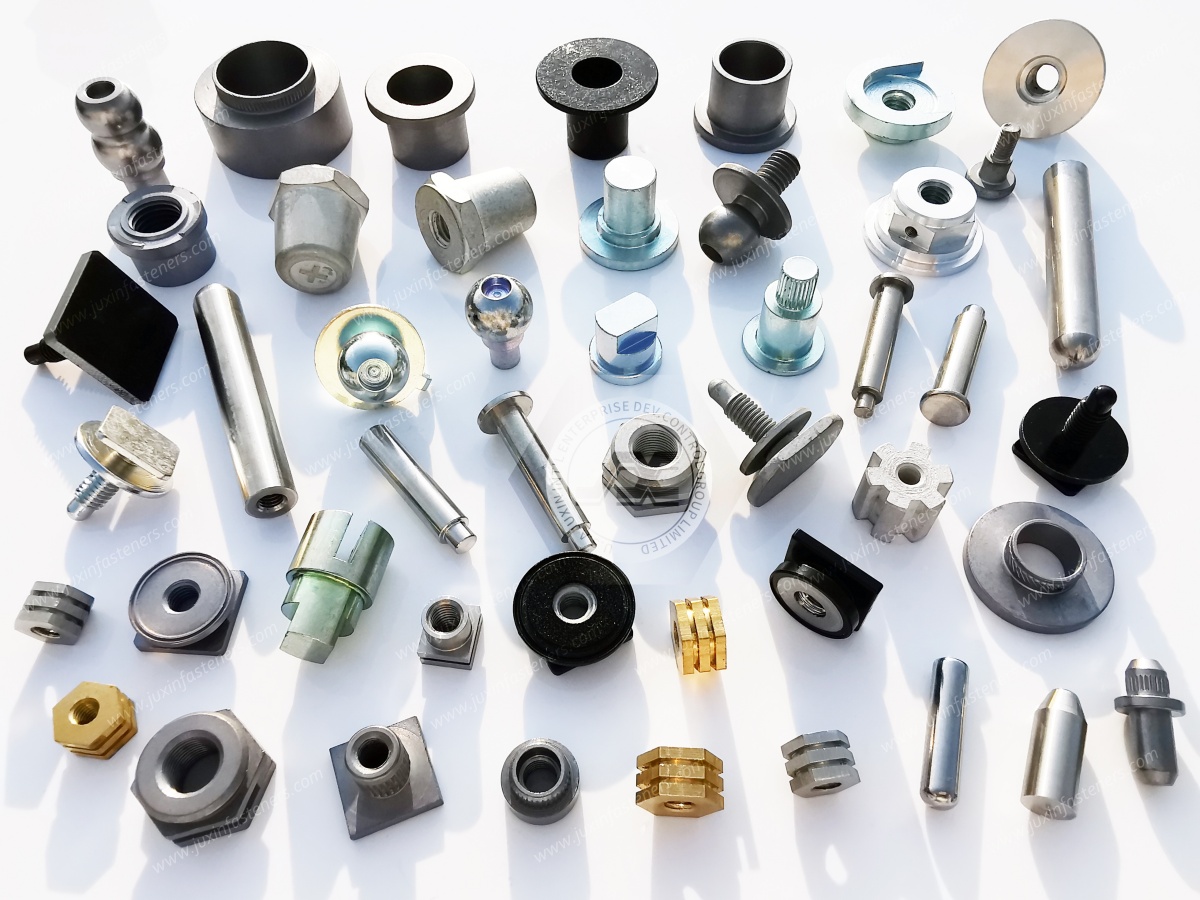
Automotive seat systems can use high-strength seat mounting bolts, seat track fasteners, nuts, rivet nuts, weld nuts, precision pivot pins, shafts, retainers, brackets, spacers, and other customer-specific mechanical components.
The exact component depends on whether the joint is structural, mechanical, adjustable, pivoting, or primarily related to trim and auxiliary equipment.
Seat mounting joints can form part of the vehicle's occupant-support structure and may be subject to significant loads during vehicle operation and applicable dynamic testing.
Where required by the vehicle or component design, high-strength fasteners can be specified according to the applicable mechanical property requirements.
The required property class should be established by the approved engineering specification rather than assumed from the application.
Engineers should consider the complete joint, including thread size, engagement, fastener geometry, material, property class, mating components,
mounting structure, tightening method, surface treatment, and applicable validation requirements.
No. Seat systems can also use customer-specific pins, shafts, retainers, brackets, nuts, rivet nuts, weld nuts, and other application-specific components.
Corrosion requirements depend on the component location, environmental exposure, substrate, mating materials, and customer specification.
Surface treatments such as Zinc-Nickel Alloy may be specified for selected metal fasteners where the application requires a particular corrosion-protection system.
Useful information includes the engineering drawing or CAD model, dimensions, thread specification, material, applicable property class, surface finish, assembly method, tightening requirements, quantity, packaging requirements, and applicable validation or documentation requirements.
Yes. JUXIN FASTENERS manufactures customer-specific and non-standard automotive fastening components according to approved drawings,
material requirements, dimensional specifications, surface-finish requirements, and application conditions.
Depending on the project, this can include high-strength seat mounting bolts, custom screws, nuts, rivet nuts, weld nuts, precision pins, shafts, retainers, and other application-specific components.
If your automotive seat project requires seat mounting hardware, seat track fasteners, high-strength seat bolts, precision pivot pins, shafts,
custom screws, nuts, retainers, or other non-standard automotive components, JUXIN FASTENERS can evaluate the requirement based on the available engineering documentation.
For an OEM RFQ or technical evaluation, please provide the drawing or CAD data together with the required material, property class, dimensions, surface finish, quantity, assembly requirements, and applicable application conditions.
JUXIN FASTENERS
Email: info@juxinfasteners.com
Website: www.juxinfasteners.com
Product Packaging
Packaging Standard
At Juxin Fasteners, we apply standardized export packaging to ensure product protection, traceability, and compliance with international logistics requirements.
1. Standard Export Packaging
Unless otherwise specified, all products will be packed according to our factory standard export packaging, which includes:
Moisture-resistant inner protection
Poly bag or small box packing as required
Reinforced export cartons
Clear labeling with part number, specification, batch number, and quantity
Palletizing for sea or air shipment when necessary
Our standard packaging is designed to ensure safe transportation, efficient warehousing, and long-distance international shipping.
2. Customized Packaging Options
We also provide customized packaging solutions according to customer requirements, including but not limited to:
Private labeling
Customized barcodes
Specific carton dimensions
Retail packaging
Special pallet configuration
Customer-specific marking and identification
So that you know, customized packaging may involve additional costs and extended lead time depending on the complexity of the requirements.
3. Compliance & Quality Assurance
All packaging processes are controlled under our ISO 9001 quality management system to ensure consistency, traceability, and product integrity throughout the supply chain.
Product Pictures
Hot Products
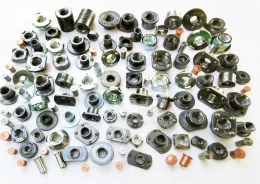
EV Fastening System Solutions: High-Strength Fasteners for Aluminum Lightweight Structures
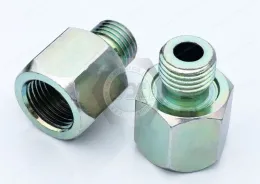
Custom Automotive Screws and Bolts: Design, Specification & OEM Sourcing Guide
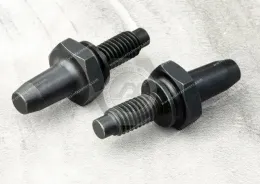
Automotive Door Systems: Fastening Engineering, Retainers & OEM Sourcing Guide
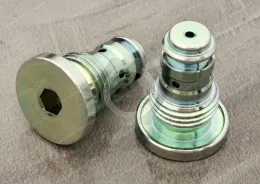
Automotive Fasteners Made to Drawing: Engineering to Production
Contact Us
Tel.:
+86 020 8621 0320
+86 020 3121 6067
E-mail:
Technical Support:
Navigation
SEND INQUIREY