Call Us
+86 136 6007 9809
Call Us
+86 136 6007 9809

Automotive joints rarely depend on the nut or washer alone. Joint performance is determined by the interaction between the bolt, nut,
washer, mating materials, joint geometry, installation method and required clamp load.
Product Specification
Automotive joints rarely depend on the nut or washer alone. Joint performance is determined by the interaction between the bolt, nut, washer,
mating materials, joint geometry, installation method and required clamp load.
For OEM and Tier suppliers, a standard catalog nut or washer may be technically suitable in one application but unsuitable in another because of restricted clearance,
sheet-metal thickness, bearing area, assembly access, corrosion requirements, material compatibility or packaging constraints.
This is where custom automotive nuts and washers become commercially and technically relevant.
A custom component does not always mean creating an entirely new fastening concept. In many projects,
the best solution is a modified standard component with controlled changes to the flange diameter, thickness, external profile, thread, material, locking feature or other application-specific dimensions.
For engineering and procurement teams, the objective is not simply to make a non-standard part.
The objective is to define the smallest number of changes required to achieve the required joint function while keeping manufacturing, inspection, assembly and sourcing practical.
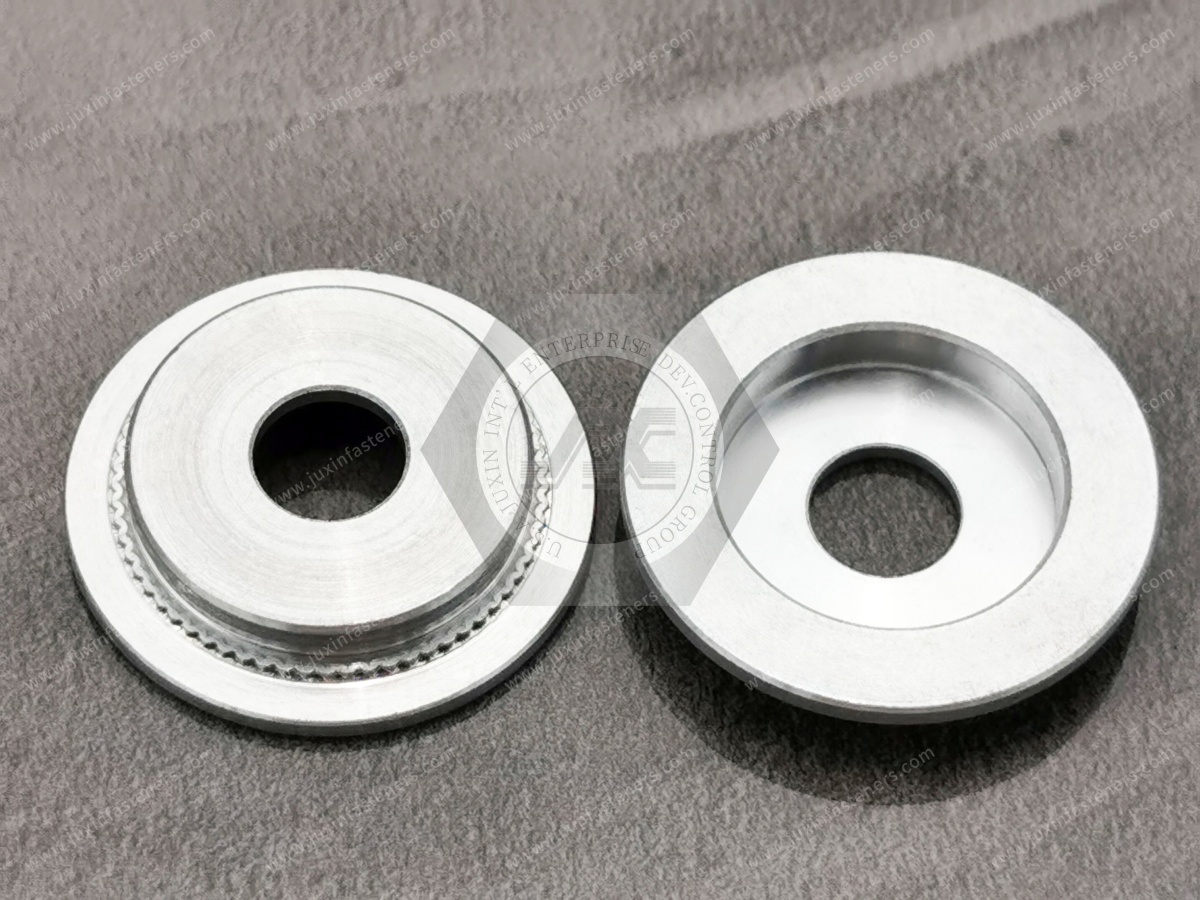
Custom automotive nuts are internally threaded fastening components developed to customer-specific dimensional, material, functional or application requirements.
Custom automotive washers are load-distribution or interface components manufactured with application-specific inner diameter, outer diameter, thickness, geometry, material or functional characteristics.
They may be based on:
A standard nut or washer with modified dimensions
A standard product with a modified flange or bearing surface
A customer-specific locking or retention feature
A completely non-standard geometry
A customer drawing
A physical sample
An existing production component requiring replacement or redesign
Common custom automotive nut and washer applications include body structures, sheet-metal assemblies, brackets, chassis-related components,
interior and exterior assemblies, electrical components, battery-related structures and other vehicle subassemblies.
The key engineering question is therefore not simply “Can a standard nut or washer be used?”
It is:
“Which dimensions and functional characteristics actually need to be controlled for this joint?”
That distinction can significantly affect development cost, tooling requirements, production feasibility and supplier selection.
A custom nut or washer becomes relevant when the standard component does not adequately match the joint geometry or functional requirements.
Automotive sheet-metal assemblies can have relatively limited bearing areas around clearance holes.
A conventional nut and washer combination may not provide the required interface geometry. A larger flange or application-specific washer can distribute the applied load over a larger area.
However, increasing the bearing diameter is not automatically better.
The engineer should consider:
Sheet thickness
Material strength
Hole diameter
Available bearing surface
Joint geometry
Required clamp load
Local deformation risk
Available clearance
The correct washer or flange diameter should therefore be determined from the actual joint rather than selected only by appearance.
Vehicle structures frequently contain narrow channels, brackets, cavities and enclosed assemblies.
A standard hex nut may be technically compatible with the bolt but difficult or impossible to install because of wrench clearance.
A custom nut may therefore use a modified external profile, flange geometry or other application-specific feature to accommodate the available installation envelope.
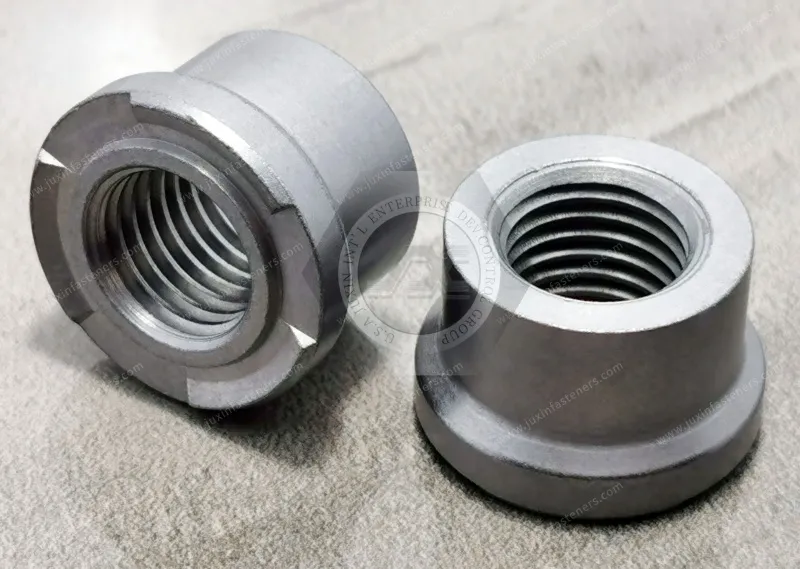
A flange nut combines the threaded nut function with an integrated bearing flange.
This can eliminate the need for a separate loose washer in suitable applications and may simplify component handling and assembly.
The decision should consider:
Required bearing diameter
Available radial clearance
Surface condition
Assembly tooling
Joint design
Required locking characteristics
Cost of the complete fastening system
The relevant comparison is not simply the unit price of a flange nut versus a standard nut.
Procurement teams should compare the complete installed fastening solution, including the separate washer, handling, feeding and assembly considerations.
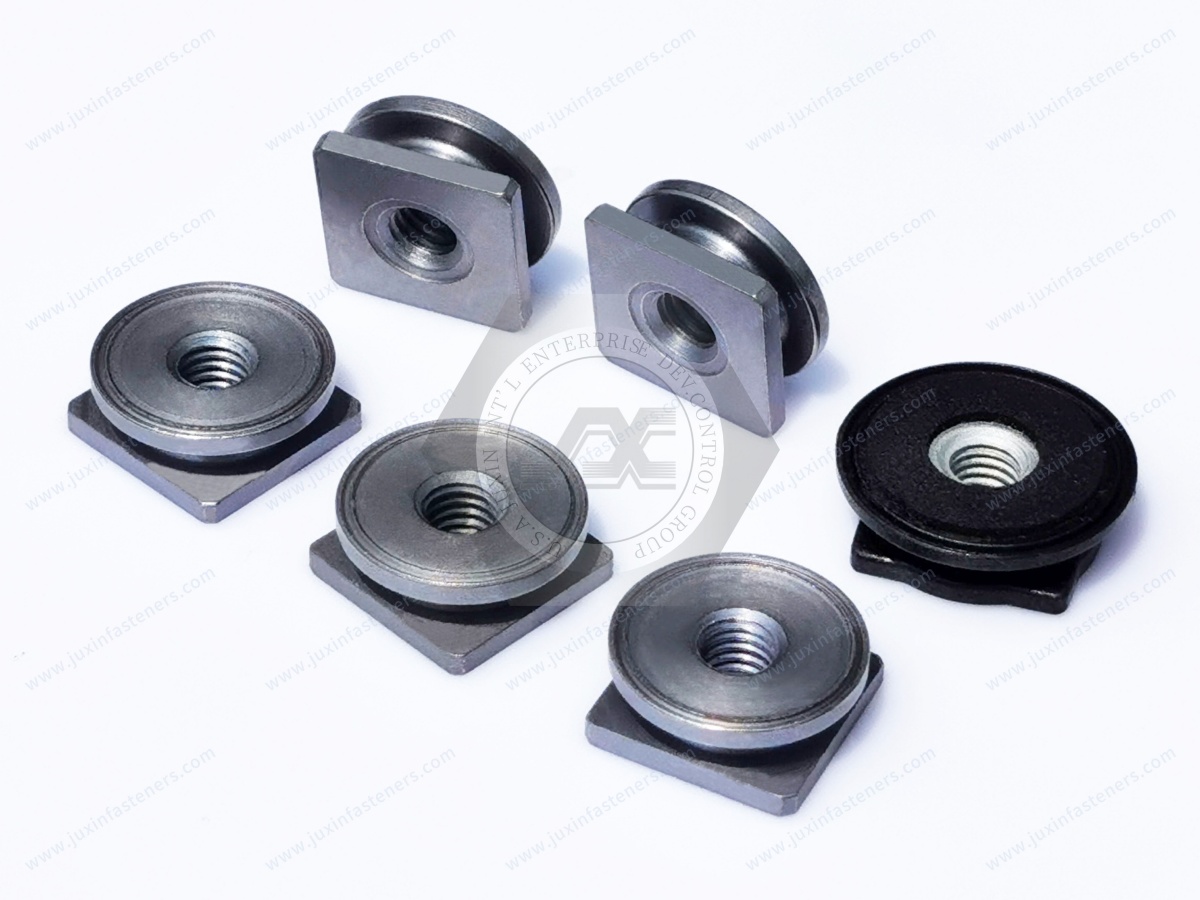
Automotive assemblies exposed to vibration, thermal cycling or repeated loading may require additional resistance to loosening.
Depending on the application, engineers may evaluate:
Prevailing-torque nuts
All-metal prevailing-torque designs
Serrated flange nuts
Other application-specific locking features
Spring elements where appropriate
However, these features are not interchangeable.
For example, a serrated flange can increase resistance to rotation by interacting with the mating surface, but it can also mark or damage certain coated, painted or finished surfaces.
A prevailing-torque nut also has application-specific assembly characteristics that should be evaluated against the required installation and service conditions.
The correct selection therefore depends on the joint and surface requirements rather than simply specifying the strongest available locking feature.
One of the most useful decisions in custom fastener development is determining whether the component actually needs to be fully custom.
A practical engineering hierarchy is:
Standard component → Modified standard component → Custom component
Use a standard component when its:
Thread
Dimensions
Material
Strength
Bearing area
Installation method
Surface finish
already meet the application requirements.
This normally provides the simplest sourcing route.
A modified standard component can be appropriate when only one or two characteristics need to change.
Examples include:
Larger flange diameter
Different thickness
Modified outer profile
Different overall height
Special washer OD
Modified internal thread specification
Customer-specific material or finish
This approach can provide a useful balance between engineering requirements and manufacturing practicality.
A fully custom component becomes relevant when the application requires a geometry or combination of characteristics that cannot reasonably be achieved through an existing standard design.
Before moving directly to a fully custom design, engineering and sourcing teams should identify the critical-to-function dimensions.
This is an important information-gain step:
Not every dimension on a custom fastener needs to be equally critical.
For example, a washer may have ten dimensional characteristics on its drawing, but the inner diameter, outer diameter and thickness may have the greatest effect on assembly and load distribution.
Other dimensions may primarily support manufacturing or inspection.
Identifying the true CTQ characteristics early can reduce unnecessary development complexity.
A custom automotive nut should be defined from both the thread and the external geometry.
The internal thread should be specified according to the applicable thread system and standard.
For metric applications, the drawing may define:
Nominal diameter
Thread pitch
Thread profile
Internal thread tolerance class
Threaded length
Thread runout or end condition where relevant
Required mating fastener
Any special thread requirements
For applications using inch-based threads, the applicable ASME/ANSI or SAE thread specification should be identified rather than assuming metric dimensions.
The nut and mating bolt must be treated as one threaded system.
A nominal diameter alone is not sufficient to define a production-ready thread.
Nut height affects available thread engagement and the overall joint geometry.
The engineer should evaluate:
Bolt diameter
Nut height
Available thread engagement
Material strength
Joint loading
Installation condition
Risk of thread stripping
A nut should be capable of supporting the intended joint without assuming that increasing nut height automatically increases overall joint performance.
The external shape determines how the nut interacts with installation tooling and surrounding components.
Potential considerations include:
Hex dimensions
Flange diameter
Flange thickness
Overall height
Corner clearance
Wrench access
Feeding or automated assembly requirements
Adjacent component interference
For high-volume automotive programs, installation geometry can be just as important as the thread itself.
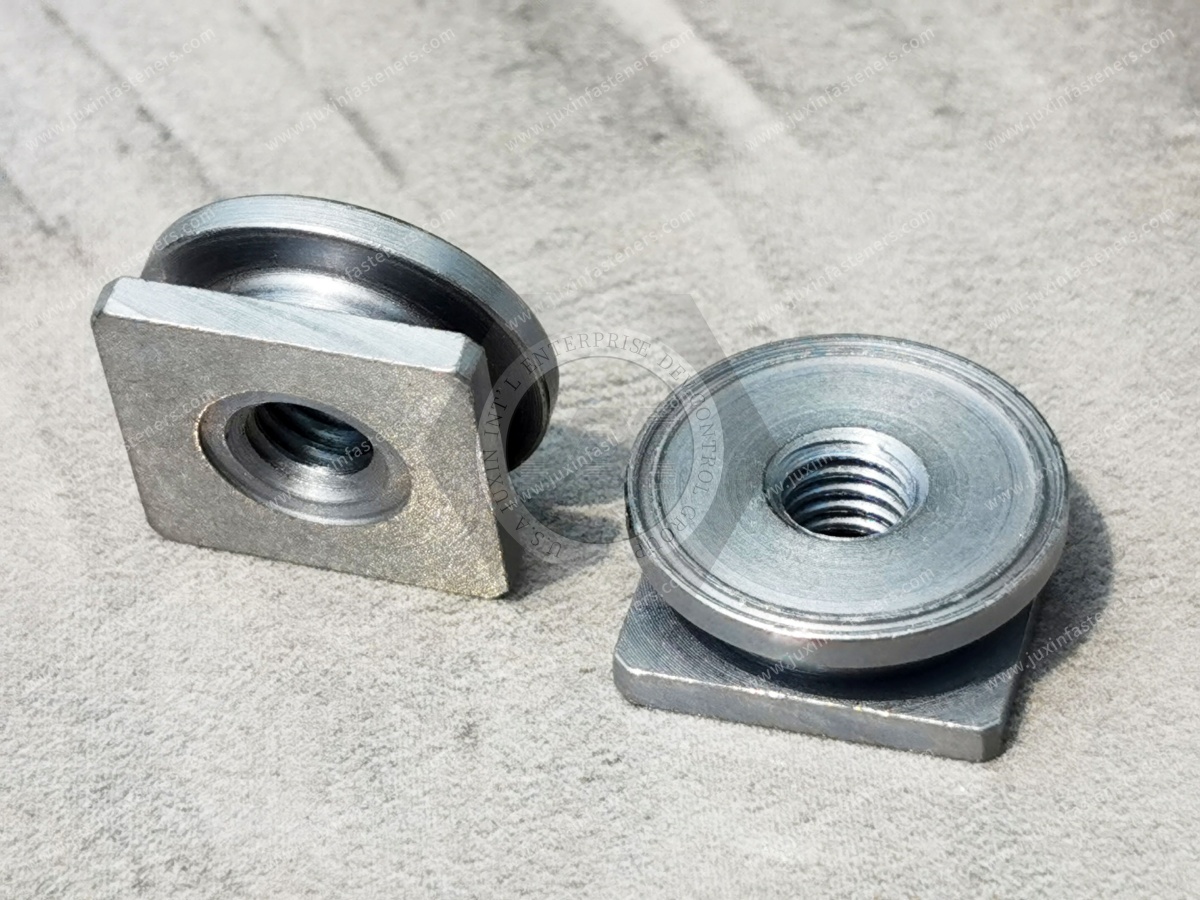
Automotive flange nuts are particularly useful when a larger bearing surface is required without adding a separate loose washer.
The flange provides an integrated load-bearing surface beneath the nut.
Engineers should evaluate:
Flange outside diameter
Flange thickness
Bearing surface geometry
Nut height
Thread specification
Mating material
Surface condition
Installation tooling
For sheet-metal applications, the flange must be evaluated together with the local panel geometry.
A larger flange does not automatically eliminate deformation. Excessive clamp load, thin material or unfavorable hole geometry can still create local distortion.
This is why flange geometry should be selected from the joint design rather than from a generic “larger is better” assumption.
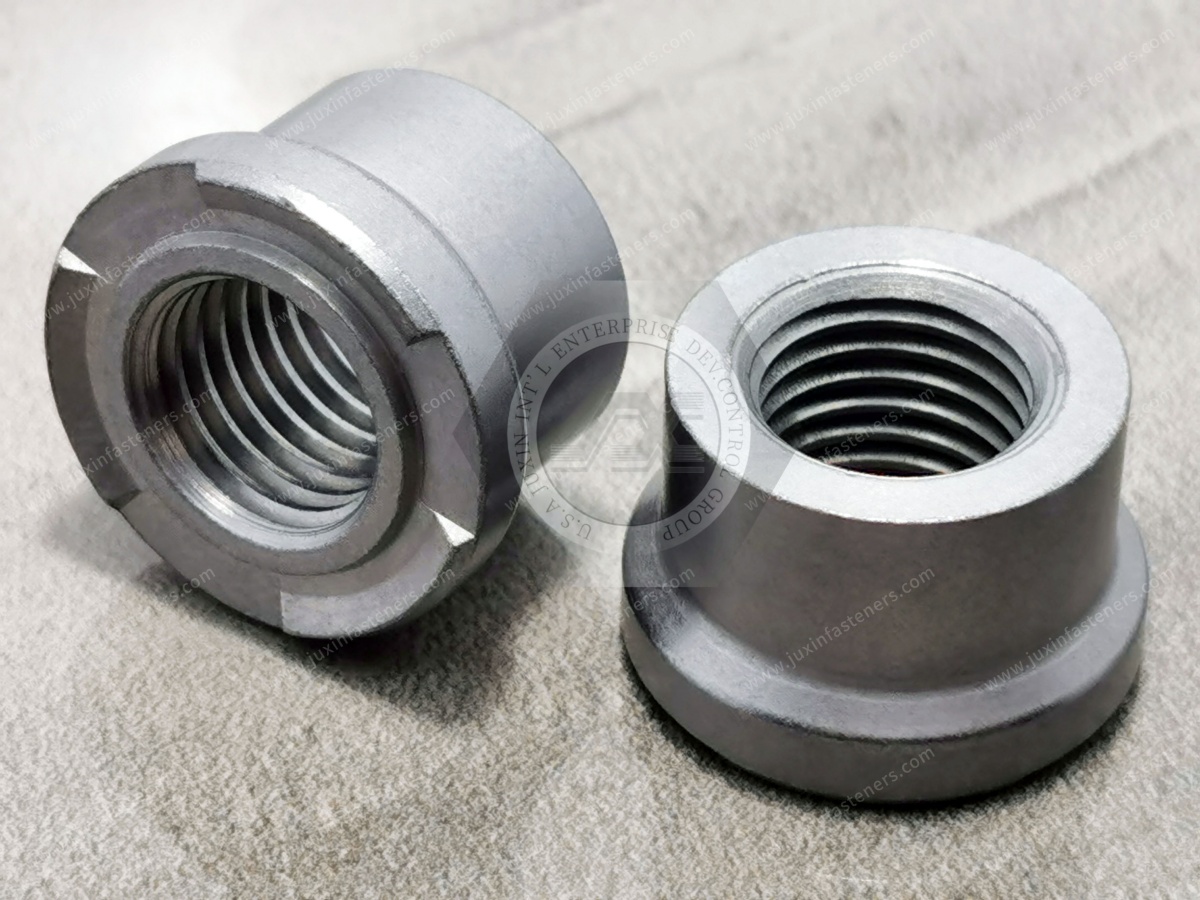
Serrated flange nuts combine a flange bearing surface with serrations intended to increase resistance to rotational loosening.
They can be considered where the application requires both:
Increased bearing area
Additional resistance to rotation
However, serrated designs should be evaluated carefully against the mating surface.
Potential considerations include:
Painted surfaces
Powder-coated surfaces
Plated surfaces
Aluminum
Thin sheet metal
Visible exterior surfaces
Electrical isolation requirements
A serrated feature that is suitable for an uncoated steel bracket may not be suitable for a finished painted panel.
The engineering specification should therefore identify the mating surface and any restrictions on surface marking or coating damage.
Washers are often treated as simple components, but their geometry can directly affect the interface between the fastener and the joint.
A custom washer drawing should clearly define the characteristics that control fit and function.
The inner diameter must provide appropriate clearance around the mating bolt or threaded component.
It should be evaluated against:
Bolt diameter
Hole size
Assembly tolerance
Washer positioning
Potential eccentricity
Required load distribution
The washer outside diameter determines how widely the load is distributed across the mating surface.
A larger OD can be useful where:
The clearance hole is relatively large
The sheet-metal bearing area is limited
A slotted hole must be bridged
Local surface pressure needs to be reduced
A larger bearing interface is required
But the OD must also fit within the surrounding assembly.
Washer thickness influences:
Bearing behavior
Stack height
Local stiffness
Assembly dimensions
Resistance to deformation
A very thin washer may deform under the applied load, while an unnecessarily thick washer can add cost and change the joint stack-up.
The correct thickness is therefore an engineering parameter, not simply a purchasing preference.
Not every automotive washer is intended to provide spring action.
Flat washers are primarily used for functions such as:
Load distribution
Surface protection
Increasing bearing area
Bridging clearance-hole geometry
Managing interface dimensions
They should not automatically be described as devices that maintain preload during joint movement.
Spring-type washers are designed to provide elastic behavior.
Depending on the design, these can include:
Belleville washers
Conical washers
Curved spring washers
Other application-specific spring elements
Their suitability depends on the required load-deflection behavior, available installation space, joint stiffness and service conditions.
For example, a Belleville washer may be considered where a controlled spring characteristic is required within a compact axial space.
The engineer should specify the required spring behavior rather than simply requesting a “spring washer.”
One of the most important functions of a washer or flange is controlling the interface between the fastener and the mating component.
The simplified concept is:
Bearing stress = applied force ÷ effective bearing area
Increasing the effective bearing area can reduce local interface pressure, but joint behavior is more complex than this simplified relationship.
Actual performance depends on:
Material properties
Surface geometry
Washer stiffness
Hole diameter
Joint thickness
Clamp load
Surface condition
Local deformation
Joint stiffness
This is especially important in lightweight structures and sheet-metal assemblies.
The purpose of a custom washer is therefore not merely to “spread the load.” It should be designed to provide the required interface behavior without creating new problems elsewhere in the assembly.
Material selection should be based on the joint environment and required mechanical characteristics.
Steel is widely applicable to automotive nuts and washers where mechanical strength and durability are required.
For metric high-strength fasteners, property classes such as 8.8, 10.9 and 12.9 may be relevant under applicable standards such as ISO 898-1.
The exact material and property-class requirement should be defined on the drawing or technical specification.
The nut and mating bolt should also be evaluated as a compatible fastening system.
Stainless steel may be considered where corrosion resistance, environmental exposure or material compatibility makes it appropriate.
However, stainless steel should not be selected simply because it is marketed as corrosion resistant.
The engineer should consider:
Required mechanical properties
Temperature
Chemical exposure
Mating materials
Galvanic compatibility
Thread behavior
Surface requirements
Copper alloys such as brass and bronze can be relevant to specialized applications, including certain electrical, grounding, low-friction or corrosion-related requirements.
Material selection should follow the actual functional requirement rather than assuming a copper alloy is suitable simply because electrical conductivity is involved.
Surface finish is both an engineering and procurement parameter.
Potential finishes for automotive steel fasteners may include:
Trivalent zinc systems
Zinc-nickel alloy systems
Black zinc finishes
Other customer-specified protective systems
The specification should define the required finish rather than relying only on a color description.
Where controlled friction is important, the coating or surface treatment may also affect the torque-tension relationship.
This means that changing a finish from one system to another should not automatically be treated as a cosmetic substitution.
For automotive sourcing, the drawing or specification should identify the applicable corrosion and coating requirements, including any customer-specific environmental or chemical restrictions.
Material compatibility becomes particularly important when different metals are brought into electrical or environmental contact.
For example, steel fasteners installed into aluminum structures require consideration of:
Environmental exposure
Electrochemical potential
Protective coatings
Contact area
Moisture
Joint geometry
Service environment
A washer may sometimes serve as part of the interface strategy, but the complete joint must be evaluated.
Simply changing the washer material does not automatically solve every galvanic corrosion risk.
Sheet-metal applications are one of the clearest areas where custom nut and washer geometry can provide value.
Typical challenges include:
Thin material
Large clearance holes
Limited edge distance
Local deformation
Restricted tool access
Painted or coated surfaces
Limited installation space
Requirement for repeatable assembly
Possible solutions may include:
Large-flange nuts
Custom flat washers
Application-specific washer thickness
Modified external nut geometry
Serrated flange nuts where surface conditions permit
Other custom fastening components
The correct choice depends on the complete joint design.
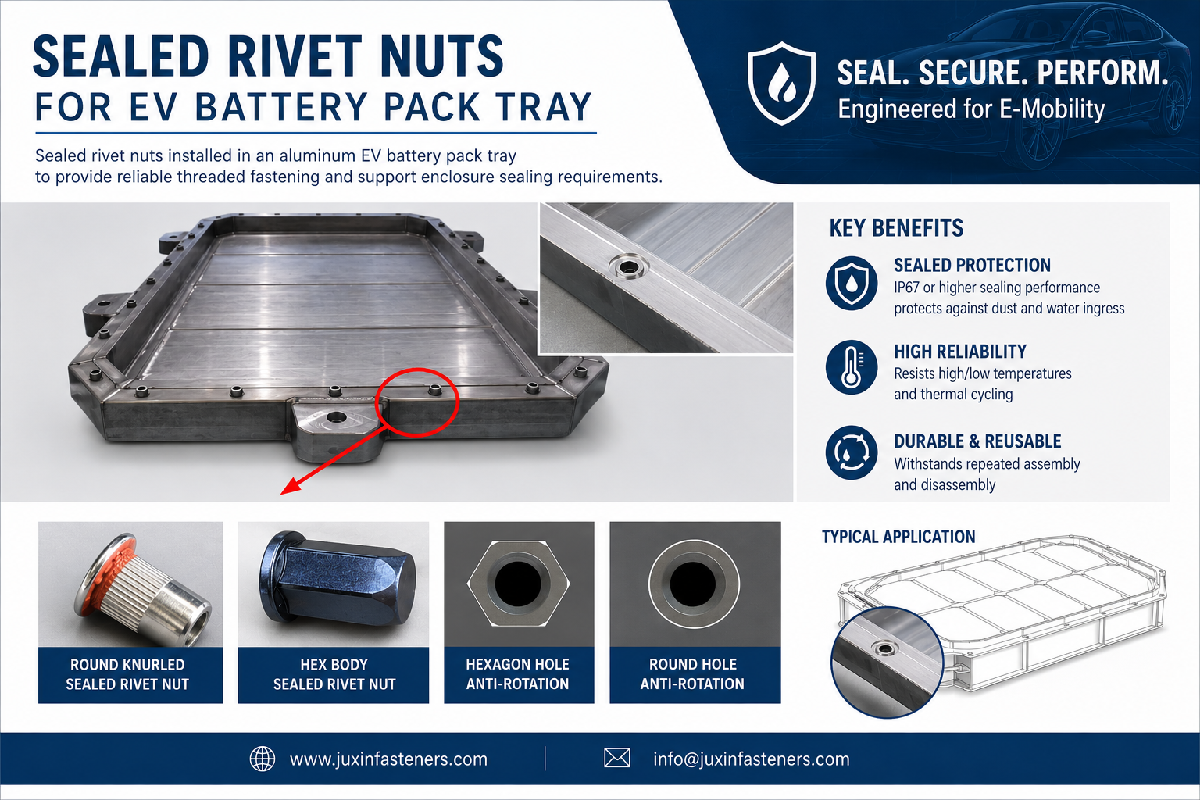
Where the panel itself is not suitable for direct threading, engineers may also evaluate self-clinching fasteners, weld nuts or rivet nuts depending on material thickness, access and assembly requirements.
This creates a useful connection between custom nuts and washers and the broader automotive fastening system.
EV and electrical assemblies introduce additional considerations.
Depending on the application, engineers may need to consider:
Lightweight materials
Aluminum structures
Electrical conductivity
Electrical isolation
Thermal environment
Corrosion exposure
Packaging space
Assembly sequence
Not every EV application requires a special nut or washer, but custom geometry can be valuable when standard components conflict with the available package or interface requirements.
For electrical applications, the required electrical behavior should be explicitly specified rather than assumed from the base material alone.
Automotive interior applications may prioritize:
Compact dimensions
Low assembly space
Controlled appearance
Weight
Installation efficiency
Compatibility with plastic or composite components
Exterior applications may place greater emphasis on:
Environmental exposure
Corrosion protection
Coating compatibility
Surface appearance
Joint durability
The same nominal nut or washer design should therefore not automatically be applied across different vehicle zones without reviewing the actual environment.
For OEM and Tier suppliers, a complete drawing is usually the most efficient starting point for a custom component.
A production drawing should identify the dimensions and requirements that control function.
For a custom nut, this may include:
Thread specification
Thread tolerance
Nut height
Across-flats dimensions
Flange diameter
Flange thickness
Critical radii or profiles
Material
Mechanical requirements
Surface finish
Special functional requirements
For a custom washer, this may include:
Inner diameter
Outer diameter
Thickness
Flatness where relevant
Profile
Material
Surface finish
Special spring characteristics where applicable
The drawing should also identify tolerances and critical characteristics clearly.
A physical sample can also be a useful starting point when the original drawing is unavailable.
A supplier can review the sample and determine which characteristics need to be reproduced or clarified.
However, a sample does not always communicate every production requirement.
For example, it may not reveal:
Original material grade
Heat treatment condition
Coating specification
Internal thread tolerance
Functional load requirement
Critical dimensions hidden by the finished geometry
For this reason, sample-based development should be combined with any available application information, drawings, specifications or technical history.
Quality requirements should be defined according to the actual product specification.
Typical inspection categories can include:
Critical dimensions may include:
Thread dimensions
Nut height
Across-flats dimensions
Flange diameter
Washer ID
Washer OD
Thickness
Profile dimensions
Internal threads can be evaluated using appropriate thread gauges and dimensional inspection methods according to the specified thread standard and tolerance.
Where required by the drawing or purchase specification, material and mechanical characteristics should be verified using appropriate testing methods.
Coating or surface treatment requirements should be checked against the applicable specification.
The important procurement principle is:
Inspection requirements should be linked to the drawing and CTQ characteristics rather than added as generic testing language.
This helps avoid both under-specification and unnecessary inspection cost.
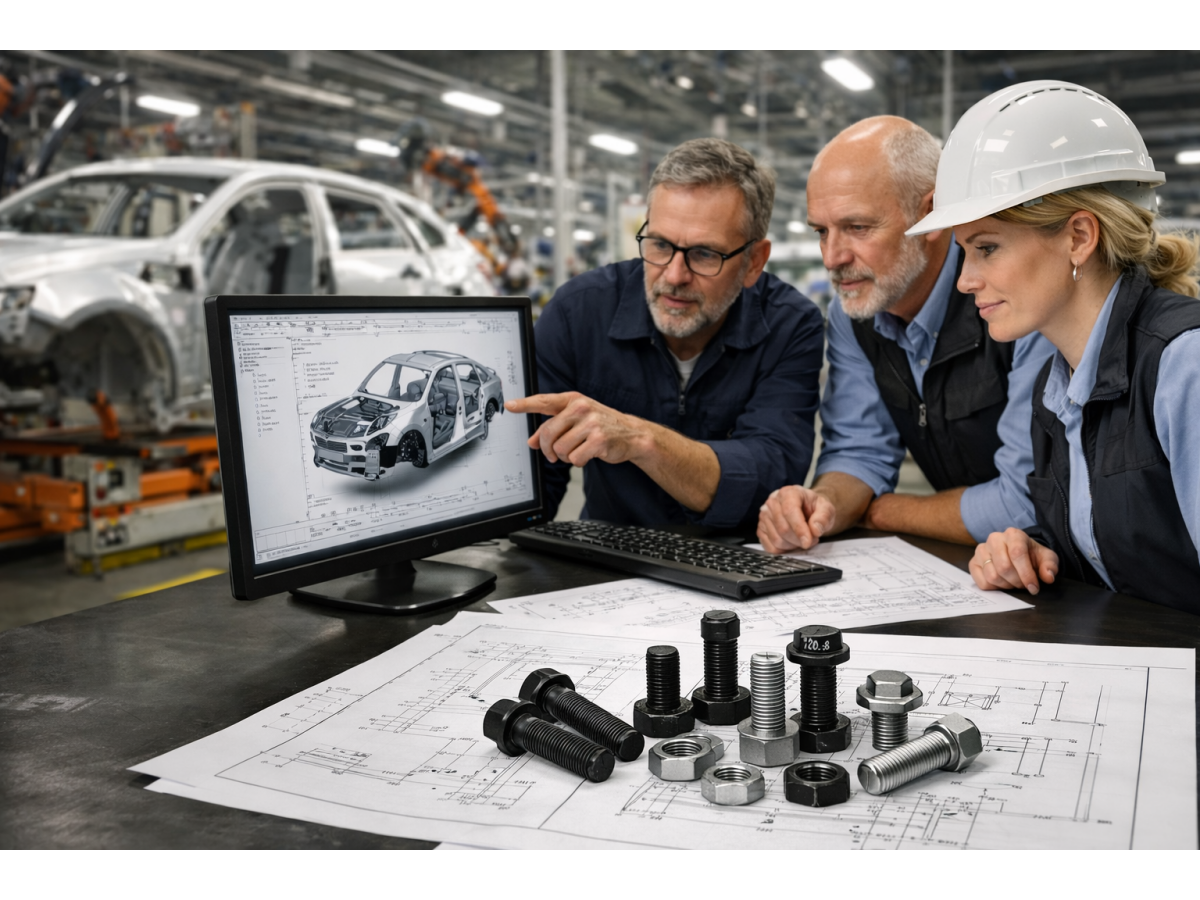
A strong RFQ allows engineering and procurement teams to evaluate technical feasibility and commercial cost at the same time.
Include as much of the following information as available:
Part name
Part number
Application
Assembly location
New development or replacement part
Standard, modified-standard or fully custom requirement
2D production drawing
3D CAD model where available
PDF specification
Existing technical standard
Physical sample if available
Specify the required material grade or applicable material standard.
Where applicable:
Property class
Hardness
Strength requirement
Functional load requirement
Special mechanical characteristics
Specify:
Nominal diameter
Pitch
Thread system
Tolerance class
Thread length
Mating bolt specification
For nuts:
Nut height
Across-flats dimensions
Flange diameter
Flange thickness
Locking feature
Special profile
For washers:
ID
OD
Thickness
Profile
Spring characteristics if applicable
Specify:
Coating system
Color where relevant
Corrosion requirement
Friction requirement where applicable
Customer-specific surface treatment requirements
Include:
Prototype quantity
Annual usage
Expected production volume
Target SOP timing
Delivery requirements
Packaging requirements
Forecast information where available
This allows the supplier to assess tooling, manufacturing route, material purchasing, production quantity and packaging requirements together.
Price is only one part of supplier selection.
For an automotive sourcing project, procurement and supplier development teams should evaluate whether the supplier can consistently understand and control the actual specification.
Useful evaluation points include:
Drawing interpretation
Can the supplier identify the important dimensions and technical requirements?
Custom component experience
Does the supplier regularly handle non-standard nuts, washers and other fastening components?
Engineering communication
Can technical questions be identified before production rather than after delivery?
Material and finish understanding
Can the supplier work from specified material and surface requirements without substituting based only on appearance?
Sample development
Can the supplier support drawing-based or sample-based development?
Quality documentation
Can inspection and test requirements be aligned with the customer's actual specification?
Production scalability
Can the supplier support the transition from prototype quantities to production volumes when the project proceeds?
RFQ clarity
Does the quotation clearly identify assumptions, tooling requirements, MOQ, lead time and other commercial conditions?
This evaluation framework is often more useful than comparing unit prices alone.
The final cost of a custom nut or washer is influenced by more than raw material.
Important cost drivers can include:
Material grade
Part size
Part weight
Geometry complexity
Forming or machining requirements
Thread specification
Heat treatment requirements
Surface finish
Tooling requirements
Inspection requirements
Production quantity
Packaging
Development quantity
For procurement teams, the best RFQ should therefore separate one-time development/tooling costs from the recurring production part price where applicable.
This makes supplier quotations easier to compare across different manufacturing approaches.
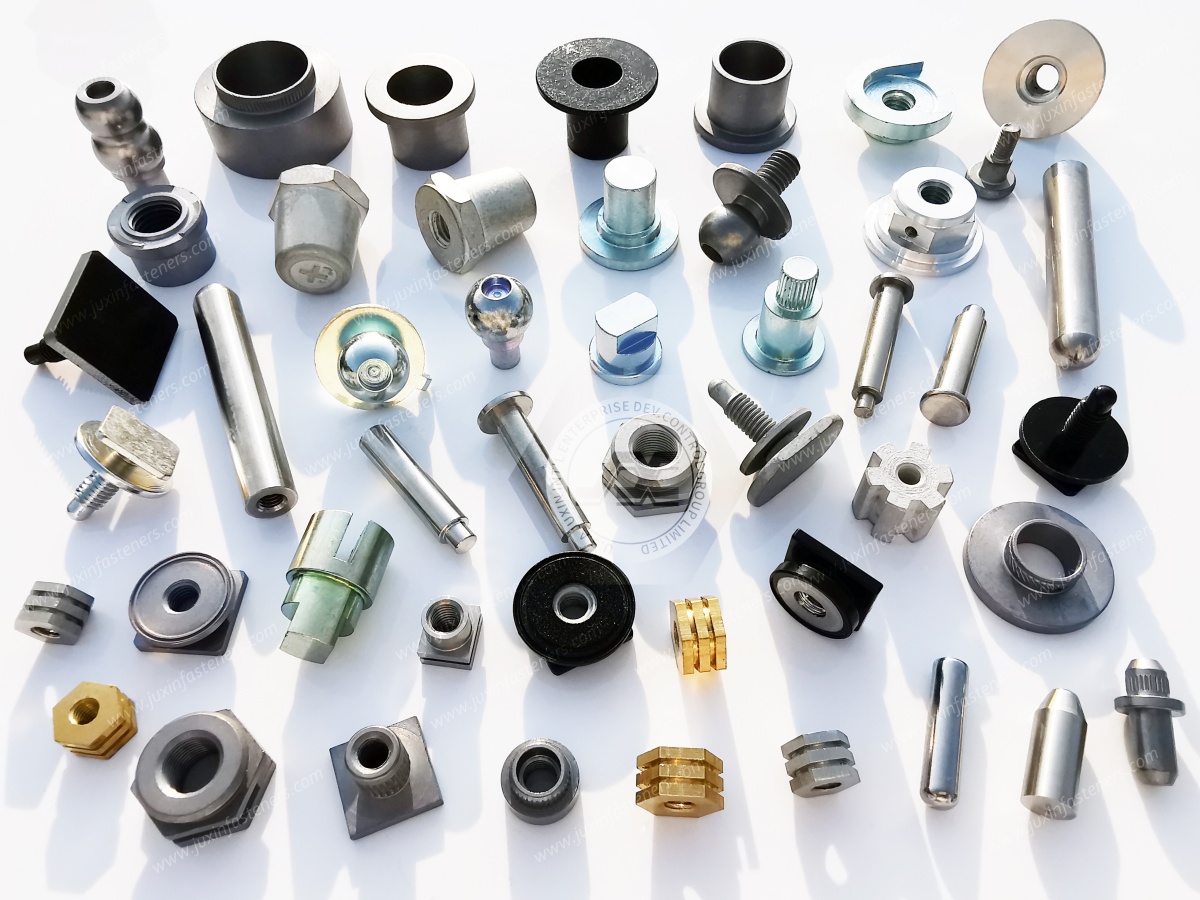
JUXIN FASTENERS supports OEM and industrial customers with custom fastening components developed from drawings, specifications and physical samples.
Our product scope includes:
Custom automotive nuts
Custom automotive washers
Flange nuts
Special nuts
Custom screws and bolts
Custom washers
Self-clinching fasteners
Weld nuts
Weld studs
Rivet nuts
Custom clips and retainers
Plastic and nylon fastening components
Other custom fastening components
For automotive applications, custom components can be developed for sheet-metal assemblies, brackets, interior and exterior components, electrical assemblies,
EV-related applications and other engineered fastening requirements.
The most effective starting point is a clear technical package.
If your team already has a drawing, CAD model or physical sample, provide it together with the application, material, finish, estimated quantity and required timing.
This gives both engineering and procurement teams a practical basis for evaluating the appropriate manufacturing and sourcing route.
Custom automotive nuts and washers should be specified as part of the complete joint rather than as isolated components.
The most important considerations include:
Thread compatibility
Nut geometry
Flange bearing area
Washer ID, OD and thickness
Load distribution
Joint preload
Mating material
Surface condition
Locking requirements
Corrosion environment
Assembly access
Manufacturing feasibility
Inspection requirements
Production volume
In many projects, the best solution is not a completely new fastener. A carefully modified standard nut or washer can provide the required function with less development complexity.
For OEM and Tier suppliers, the most efficient sourcing process begins by identifying the critical-to-function requirements and clearly communicating them through the drawing and RFQ.
Custom automotive nuts and washers are fastening components developed to customer-specific requirements for dimensions, thread, material, geometry,
surface finish or application function. They can be based on modified standard designs, customer drawings or physical samples.
A custom flange nut may be appropriate when the application requires an integrated bearing surface, restricted installation space,
a specific flange diameter or other geometry that is not adequately addressed by a standard nut and separate washer.
A flange nut integrates the bearing flange into the nut itself. A standard nut and washer use two separate components.
The correct choice depends on joint geometry, assembly requirements, bearing area, surface condition and overall system cost.
Not necessarily. Serrated flange nuts can interact with the mating surface and may mark or damage coatings.
Their suitability should be evaluated against the actual surface treatment and functional requirements of the joint.
A washer changes the bearing interface between the fastener and mating component. Increasing the effective bearing area can reduce local interface pressure,
but actual joint behavior depends on material, clamp load, geometry, stiffness and surface condition.
A Belleville washer is a conical spring washer designed to provide a defined elastic load-deflection characteristic within a compact axial space.
Its suitability depends on the required spring behavior and joint design.
A useful RFQ should include the drawing or CAD model, material, thread specification, critical dimensions, mechanical requirements, surface finish,
application, prototype quantity, annual volume and required delivery timing.
Yes. A physical sample can be used as the starting point for dimensional review and development. However, material, mechanical,
coating and functional requirements should be confirmed separately where they cannot be determined reliably from the sample.
JUXIN FASTENERS supports custom fastening components for OEM and industrial applications, including custom nuts,
washers, screws, bolts, self-clinching fasteners, weld nuts, weld studs, rivet nuts, clips, retainers and plastic or nylon fastening components.
Development can be based on customer drawings, specifications or physical samples.
If your engineering or procurement team is sourcing custom automotive nuts and washers, send your drawing,
CAD model or physical sample information together with the required material, surface finish, quantity and application details.
JUXIN FASTENERS can review the technical requirements and support the next stage of custom fastener development and sourcing.
Email: info@juxinfasteners.com
Website: www.juxinfasteners.com
Product Packaging
Packaging Standard
At Juxin Fasteners, we apply standardized export packaging to ensure product protection, traceability, and compliance with international logistics requirements.
1. Standard Export Packaging
Unless otherwise specified, all products will be packed according to our factory standard export packaging, which includes:
Moisture-resistant inner protection
Poly bag or small box packing as required
Reinforced export cartons
Clear labeling with part number, specification, batch number, and quantity
Palletizing for sea or air shipment when necessary
Our standard packaging is designed to ensure safe transportation, efficient warehousing, and long-distance international shipping.
2. Customized Packaging Options
We also provide customized packaging solutions according to customer requirements, including but not limited to:
Private labeling
Customized barcodes
Specific carton dimensions
Retail packaging
Special pallet configuration
Customer-specific marking and identification
So that you know, customized packaging may involve additional costs and extended lead time depending on the complexity of the requirements.
3. Compliance & Quality Assurance
All packaging processes are controlled under our ISO 9001 quality management system to ensure consistency, traceability, and product integrity throughout the supply chain.
Product Pictures
Contact Us
Tel.:
+86 020 8621 0320
+86 020 3121 6067
E-mail:
Technical Support:
Navigation
SEND INQUIREY