
Call Us
+86 136 6007 9809
Call Us
+86 136 6007 9809

Sep. 25, 2026
AI data centers and high-performance computing systems are increasing the packaging density of processors, power electronics,
optical networking, cooling hardware, sensors, and cable assemblies inside server racks.
Within GPU servers, power shelves, rack-level cooling systems, liquid cooling distribution equipment, and supporting electrical infrastructure,
seemingly small components such as plastic fasteners, server cable clips, nylon push rivets, cable tie mounts, line clips,
and plastic retainers can influence assembly efficiency, cable routing, serviceability, airflow management, electrical isolation, and equipment reliability.
Plastic hardware can be particularly useful where designers need:
lightweight cable retention
electrical isolation from conductive chassis structures
rapid push-in installation
low-profile wire routing
reduced metal-to-cable contact
corrosion-resistant fastening
serviceable cable organization
non-threaded panel retention
However, selecting a plastic fastener for an AI server or data center application requires more than choosing a nylon clip from a catalog.
The complete engineering relationship is:
server architecture + fastener function + panel interface + cable or tube geometry + polymer + temperature + airflow + electrical environment + service requirements + validation
Also searched as server rack cable clips, AI server cable management hardware, plastic fasteners for server racks,
non-conductive server hardware, server cable routing clips, nylon push rivets for servers, data center cable clips, liquid cooling tube clips,
HPC server fasteners, and plastic cable tie mounts, these components should be specified as part of the equipment architecture rather than as isolated commodity hardware.
AI computing equipment combines several engineering challenges within limited packaging space:
dense power distribution
high-speed signal cabling
cooling airflow
liquid cooling circuits
serviceable modules
sensors
fans
optical networking
control wiring
Cable and tube routing can therefore become a mechanical-design problem rather than merely a wiring task.
Plastic fasteners provide one method for controlling these interfaces.
Potential applications include:
server cable routing
wire harness retention
airflow-baffle attachment
lightweight panel attachment
sensor-wire routing
liquid-cooling tube guidance
leak-detection cable routing
cable tie anchoring
front-panel component retention
power-shelf control wiring
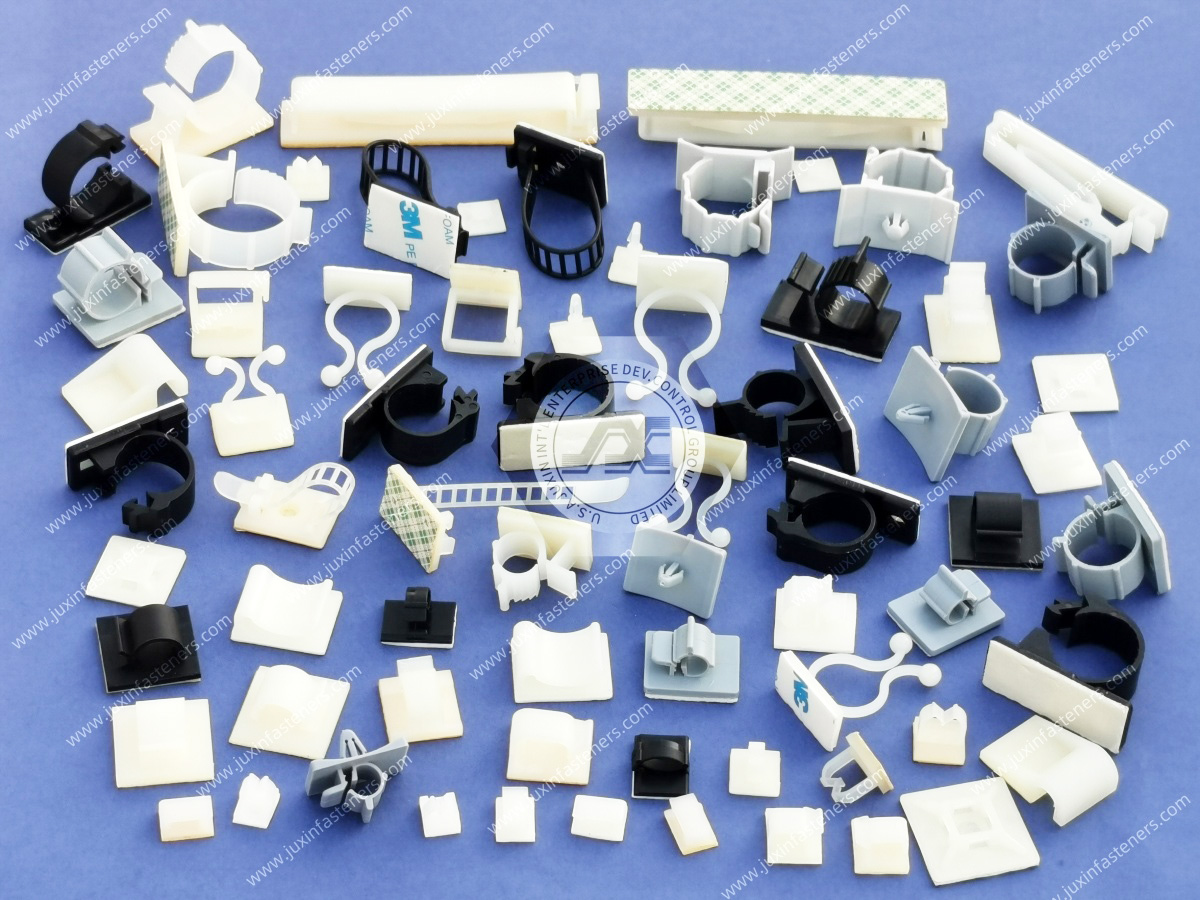
Different functions require different fastener architectures.
Common categories can include:
Used to route cables close to:
chassis walls
brackets
internal panels
equipment frames
Used for lightweight attachment of:
airflow baffles
plastic covers
lightweight internal panels
guides
non-structural components
Provide an anchor point for a separate cable tie.
This architecture can accommodate different cable-bundle diameters.
Used to guide:
sensor cables
coolant tubes
drain lines
monitoring wires
Used where an assembly requires controlled separation or support.
The correct architecture depends on load, access, environment, serviceability, and manufacturing method.
Cable routing is often discussed as an assembly or service issue.
In densely packaged servers, it can also affect thermal design.
Loose or poorly positioned cable bundles can occupy space intended for:
airflow
fan discharge
heatsink inlet flow
service clearance
liquid-cooling hardware
Controlled cable routing can help preserve the packaging geometry intended by the thermal design.
That does not mean a plastic clip automatically reduces static pressure by a fixed percentage.
The actual effect depends on:
cable-bundle size
cable location
chassis geometry
fan configuration
air velocity
obstruction ratio
Thermal performance should be verified using the appropriate system-level analysis.
A useful server cable-management objective is:
retain cables outside critical airflow paths without creating damaging cable compression or service difficulties.
Possible routing strategies include:
chassis-wall routing
low-profile side-channel routing
defined cable corridors
local cable tie points
controlled bend paths
Plastic clips can support these strategies when their geometry matches the chassis architecture.
Opening an airflow path is not a reason to over-constrain the cable.
Routing must still respect requirements such as:
minimum cable bend radius
connector strain relief
optical fiber handling
cable jacket protection
service access
For high-speed optical and signal cabling, cable-management geometry should follow the applicable cable or equipment requirements.
Holding every cable tightly against the nearest wall can create:
excessive bend
connector strain
difficult servicing
cable compression
chafing
The engineering goal is controlled routing, not maximum restraint.
GPU compute servers can contain combinations of:
accelerator modules
processors
memory
fans
power connectors
network interfaces
sensors
cable harnesses
cooling components
Plastic cable clips can be used to organize auxiliary wiring and harnesses where appropriate.
Examples include:
fan-wire clips
sensor-wire retainers
internal harness clips
cable tie anchors
airflow-baffle push rivets
lightweight cover retainers
Selection should consider both factory assembly and field service.
Server equipment may require replacement or servicing of:
fans
power supplies
accelerator modules
storage
network hardware
cooling components
A cable clip that performs well mechanically but prevents rapid service access may not be the correct design.
Engineers should therefore define:
whether the clip is removable
whether cables can be released without damage
whether a tool is required
whether the clip must be reused
A push-in fastener may install very quickly during production.
But if it must be destroyed during removal, it may increase service time.
For serviceable equipment, component selection should consider the complete lifecycle:
factory installation → operation → maintenance → replacement → reassembly
Rack-level infrastructure can contain:
compute nodes
network switches
power shelves
PDUs
monitoring hardware
cooling distribution equipment
Cable-management requirements vary across these systems.
The same clip should not automatically be specified for every rack subsystem.
Polymers are generally electrically insulating compared with metallic fasteners.
This can make plastic components useful where designers want to avoid introducing an unnecessary conductive component near:
wiring
electronics
power distribution
sensors
PCB assemblies
However, a plastic fastener should not be treated as a complete electrical-safety solution.
A plastic clip may remove a conductive fastener from a local interface.
It does not independently establish:
creepage distance
clearance distance
dielectric withstand
insulation coordination
grounding
protective bonding
touch safety
Those requirements belong to the complete electrical architecture.
The fastener material is only one design variable.
Electrical properties depend on:
resin grade
moisture content
thickness
temperature
fillers
additives
test method
A generic dielectric-strength value should therefore not be used as a universal rating for every PA66 fastener.
Where electrical insulation is safety-critical, use the relevant resin data and assembly-level validation.
PA66 absorbs moisture.
Moisture can affect both:
mechanical behavior
electrical properties
This means a nylon component tested in a dry condition may behave differently after environmental conditioning.
For electrically sensitive applications, material state should be considered during validation.
AI data center equipment increasingly integrates dense power-distribution systems.
Plastic clips and mounts can be used for auxiliary wiring and non-structural retention where appropriate.
However, components near high-current or high-voltage conductors should be reviewed as part of the complete electrical design.
Do not assume that replacing a metal clip with a plastic clip automatically satisfies electrical safety requirements.
Potential plastic-fastener applications can include:
control-wire routing
sensor-wire retention
auxiliary harness clips
lightweight barrier attachment
cable tie mounts
Requirements may include:
flame-retardant material
elevated-temperature capability
dimensional stability
electrical isolation
serviceability
The applicable equipment specification should define these requirements.
Plastic fasteners are non-metallic and therefore do not create the same conductive or magnetic interface as many metal components.
However, it is not technically appropriate to claim that changing a fastener from metal to plastic automatically improves high-speed signal integrity.
Signal integrity depends on the complete system, including:
PCB layout
connector design
shielding
grounding
cable construction
impedance control
electromagnetic environment
Plastic hardware may be selected where non-metallic construction is useful, but system-level EMI performance must be evaluated separately.
AI clusters can use high-bandwidth optical networking and dense fiber routing.
Plastic clips may help organize:
optical cables
transceiver-associated wiring
management cables
Fiber routing requires particular attention to:
minimum bend radius
local compression
connector strain
abrasion
The clip should guide the cable without violating the cable manufacturer's requirements.
AI computing infrastructure increasingly uses liquid cooling architectures where thermal loads or system design require them.
Potential systems include:
direct-to-chip cooling
cold-plate loops
rack-level distribution
cooling distribution units
manifold systems
These systems create additional routing requirements for:
coolant tubing
sensor wires
leak-detection cables
control wiring
Tube clips can help:
maintain routing
separate tubes from sharp edges
organize parallel lines
manage local movement
However, coolant-line retention requires different engineering considerations from ordinary electrical wire clips.
Important variables include:
tube outside diameter
tube material
wall thickness
minimum bend radius
operating temperature
pressure-induced movement
vibration
A clip that is too tight may deform the tube.
A clip that is too loose may allow:
rubbing
vibration
unwanted movement
The clip should therefore be evaluated with the actual production tube.
Coolant tubing can change position due to:
thermal expansion
pressure changes
equipment vibration
assembly tolerance
A routing clip should not automatically be designed to immobilize the tube completely.
Depending on the system, some controlled movement may be necessary.
Liquid-cooled equipment may include leak-detection sensors or cables.
Plastic clips can support consistent routing of these components.
The fastener material should be compatible with:
operating temperature
humidity
coolant exposure where relevant
cleaning or service fluids
Potential materials can include:
PA6
PA66
flame-retardant PA66
POM
PBT
PPS
PEEK
other engineering polymers
Selection should begin with the application rather than a predetermined polymer.
PA66 can be useful for:
cable clips
push rivets
cable tie mounts
snap-fit hardware
Potential advantages include:
toughness
fatigue resistance
molding capability
broad industrial availability
However, grade-specific properties matter.
These should not be treated as interchangeable materials.
Flame-retardant formulations may differ in:
mechanical properties
color
molding behavior
electrical characteristics
long-term aging
If the application requires a particular flammability classification, the actual resin grade and relevant thickness should be verified.
UL 94 classifications describe flammability behavior of plastic materials under defined test conditions.
The applicable classification depends on the material and tested thickness.
Therefore:
PA66 does not automatically mean V-2.
Flame-retardant PA66 does not automatically mean V-0 at every thickness.
PEEK should not automatically be assigned a specific UL 94 classification without identifying the relevant material grade and thickness.
Using a polymer with a particular UL 94 classification does not by itself certify the finished server, power shelf, PDU, or cooling unit.
Equipment compliance depends on the applicable product standard and complete construction.
Procurement should therefore distinguish between:
resin documentation
molded-part specification
finished-equipment certification
No universal rule should be assumed.
The required flammability classification depends on:
equipment architecture
component location
applicable safety standard
customer specification
polymer thickness
regulatory requirements
If V-0 is required, it should be explicitly specified in the RFQ.
Information and communication technology equipment may be evaluated under applicable safety standards such as IEC 62368-1 and corresponding regional adoptions.
Fastener requirements should be derived from the actual equipment safety architecture rather than assuming one material classification is mandatory for every internal plastic component.
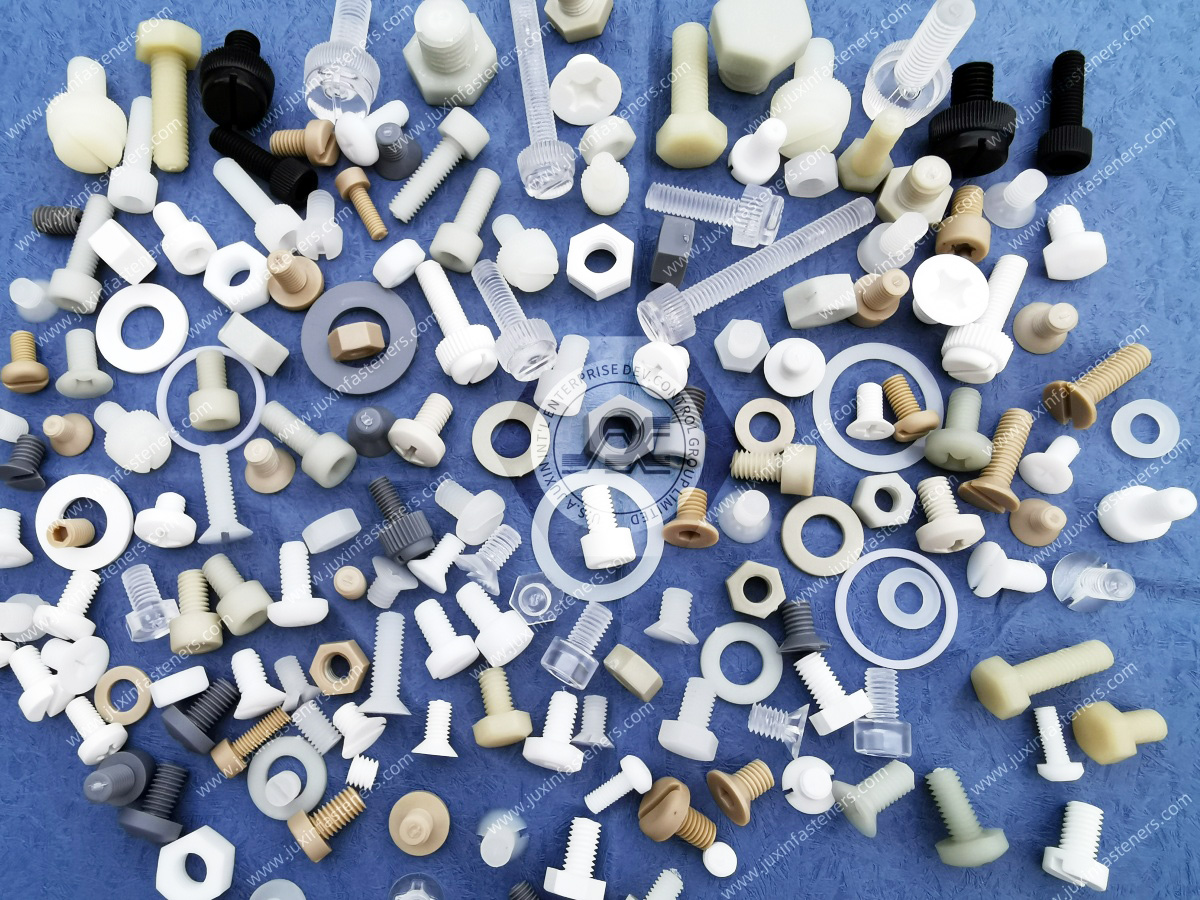
PEEK can be considered for specialized environments requiring combinations of:
elevated-temperature performance
chemical resistance
dimensional stability
high-performance polymer characteristics
Potential applications may include specialized:
cooling equipment
semiconductor equipment
power electronics
high-temperature assemblies
Because PEEK is substantially more expensive than common engineering nylons, it should be specified where the application justifies it.
POM may be useful where designers value:
dimensional stability
low friction
low moisture absorption relative to nylon
PBT, PPS, and other polymers may also be appropriate depending on:
temperature
electrical requirements
chemicals
flame-retardancy requirements
The application should determine the resin.
| Engineering Requirement | Material Consideration |
|---|---|
| General snap-fit cable retention | PA66 or another suitable engineering polymer |
| Moisture-sensitive dimensional requirement | Evaluate PA66 conditioning and alternative polymers |
| Flammability requirement | Select documented grade meeting the specified classification |
| Outdoor UV exposure | Select UV-stabilized grade |
| Elevated temperature | Evaluate heat-stabilized or higher-temperature polymer |
| Chemical exposure | Verify compatibility with actual chemical |
| Specialized high-temperature service | Consider PPS, PEEK, or other suitable material |
| Low-friction snap or guide | Evaluate POM or another appropriate resin |
Material selection should be validated against the actual component geometry.
PA6 and PA66 absorb environmental moisture.
This can affect:
stiffness
toughness
dimensions
snap behavior
insertion force
retention
electrical properties
For critical server hardware, validation should consider the relevant moisture condition.
Long-term heat exposure can change polymer properties.
Depending on the application, qualification may include thermal aging.
But there is no universal rule requiring every AI server clip to undergo one fixed combination such as a particular temperature for a particular number of hours.
The test should reflect:
expected service temperature
required lifetime
polymer
customer specification
applicable test standard
Plastic fasteners can experience creep and stress relaxation under sustained load.
This matters particularly for:
snap arms
cable clips
tube clips
push-rivet legs
A clip that provides high retention immediately after installation may provide different retention after long-term temperature exposure.
For long-life applications, time-dependent behavior should be considered.
A useful qualification program may compare retention:
after installation
after environmental conditioning
after thermal exposure
after vibration
when required by the application.
This provides more meaningful information than one initial pull-out measurement.
A server cable clip should be evaluated for:
mounting-hole geometry
panel thickness
clip height
cable bundle diameter
cable entry
retention
service release
available chassis clearance
Low-profile design can be useful where packaging space is limited.
The mounting hole is part of the clip system.
If it is too small:
insertion force may become excessive
snap features may be damaged
If it is too large:
retention may decrease
movement may occur
Hole size and tolerance should therefore be included in the component specification.
Server chassis may use:
stamped sheet metal
aluminum panels
molded polymer components
brackets
The mounting feature should match the actual panel thickness and edge condition.
Insertion force affects:
manual ergonomics
automated assembly
component damage
panel stress
High retention does not justify an installation force that creates production problems.
Required retention depends on the component being held.
A small sensor cable and a coolant tube should not be assigned the same retention requirement.
Performance criteria should follow the actual load.
If the clip is serviceable, removal behavior should be specified.
Important questions include:
Can the cable be released without removing the clip?
Can the clip be removed without damage?
Is reuse required?
Is a tool allowed?
These requirements should be defined before selecting geometry.
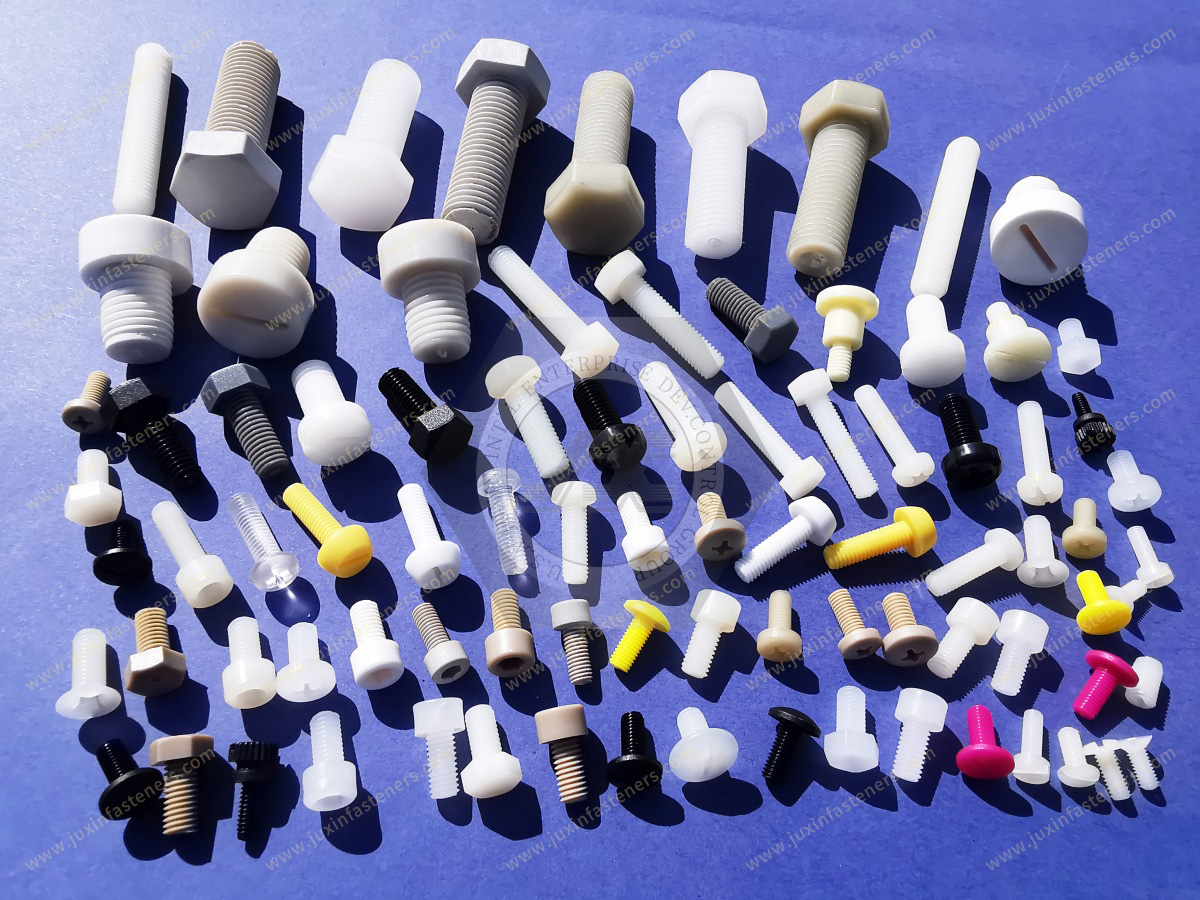
Plastic push rivets may be suitable for attaching lightweight:
airflow guides
baffles
ducts
covers
Advantages can include:
rapid installation
low weight
no conventional thread
one-sided access
However, they should not automatically replace structural screws.
Plastic push rivets are generally better suited to lightweight retention than high structural clamp loads.
Metal fasteners may remain appropriate where the assembly requires:
high clamp force
high shear capacity
controlled torque
repeated structural service
high-temperature strength
The two technologies should not be presented as universal substitutes.
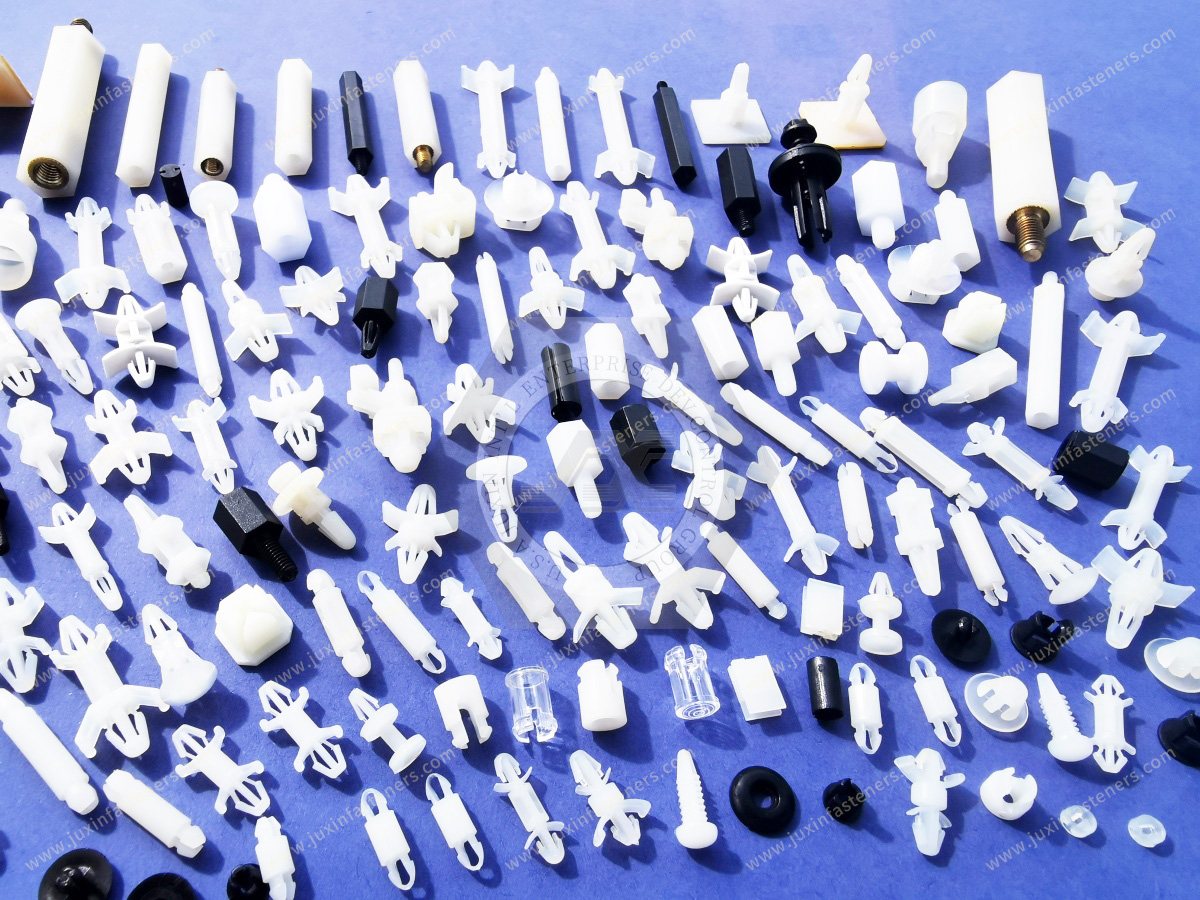
Plastic standoffs can support:
PCB spacing
lightweight module separation
wire routing
insulating separation
Requirements can include:
height
mounting style
PCB-hole diameter
chassis-hole diameter
retention
removal
material
Where the standoff forms part of an electrical-insulation system, the complete assembly must be evaluated.
Snap-in cable tie mounts provide a flexible method for securing different bundle sizes.
They can be useful when:
bundle diameter varies
harness configuration changes
final tie tension is controlled separately
The cable tie itself becomes another component that must be specified.
Cooling distribution units can contain:
pumps
heat exchangers
valves
sensors
controls
coolant lines
electrical harnesses
Plastic line clips and cable-management hardware may support organized routing inside these assemblies.
Material selection should consider:
temperature
coolant compatibility
humidity
vibration
service access
Do not assume a plastic is compatible with every data center cooling fluid.
Compatibility depends on:
polymer
coolant chemistry
concentration
temperature
exposure time
Where direct or accidental fluid exposure is possible, the selected material should be evaluated accordingly.
Plastic fasteners may support non-structural functions such as:
auxiliary cable routing
sensor mounting
control harness retention
lightweight insulating barriers
Electrical design requirements remain system-specific.
The same engineering principles can apply to:
enterprise servers
edge computing equipment
telecommunications racks
network hardware
But environmental requirements may differ.
Edge equipment, for example, may experience:
wider temperature ranges
dust
vibration
outdoor exposure
Material and geometry should follow the actual environment.
Push-in plastic fasteners can reduce assembly operations where they eliminate:
separate nut
washer
threaded hole
driver operation
But actual labor savings depend on:
line layout
operator method
automation
component feeding
rework rate
Do not assign a universal installation time to every plastic clip or rivet.
For OEM sourcing, compare:
component price + secondary hardware + tooling + installation labor + cycle time + rework + service impact
This total installed-cost approach can be more useful than comparing fastener unit price alone.
Potential molded-part defects include:
flash
short shots
warpage
damaged snap arms
incomplete fill
gate damage
contamination
Inspection requirements should follow the functional risk.
Vision inspection can be useful for high-volume components where dimensional or visual defects can be detected optically.
However, 100% automated optical sorting should not be presented as a universal requirement for every AI server fastener.
The inspection plan should follow:
customer requirement
component risk
production process
agreed control plan
Where required, sourcing documentation can include:
resin identification
material specification
lot traceability
material declarations
flammability documentation
RoHS/REACH documentation
The exact documentation package should be agreed for the project.
Some electronics customers may specify halogen-related material requirements.
This should be treated as a project-specific requirement.
Do not assume every plastic fastener used in a data center must be halogen-free.
Where required, the applicable customer definition or standard should be identified.
Certain sensitive applications may control volatile emissions or outgassing.
This can be relevant in specialized optical, semiconductor, vacuum, or other controlled environments.
It should not be assigned automatically to every AI server plastic clip.
If outgassing limits apply, the customer should provide the applicable requirement or test method.
Data center hardware programs may require alternative sources for supply continuity.
Plastic clips and rivets should not be cross-referenced by appearance alone.
Compare:
mounting-hole requirement
panel thickness
body length
head geometry
snap geometry
cable diameter range
tube diameter range
material
color
flammability requirement
UV requirement where relevant
insertion force
retention force
removal method
serviceability
Where the project permits a functional equivalent, the replacement does not necessarily need identical non-functional geometry.
The key question is whether it satisfies the controlled requirements for:
fit
installation
retention
material
environment
serviceability
If the customer drawing controls exact geometry, that drawing should govern.
When the original drawing is unavailable, a physical sample can support evaluation of:
dimensions
mounting geometry
clip architecture
functional interfaces
However, a sample may not reveal:
exact resin formulation
flame-retardant package
original qualification criteria
aging requirements
Unknown specifications should not be guessed.
A second-source evaluation program may include:
dimensional inspection
installation trial
insertion-force evaluation
retention testing
cable or tube fit
removal testing
thermal exposure
vibration
environmental testing
The exact validation plan should follow the application.
For plastic fasteners for AI data centers, server rack cable clips, AI server cable management hardware, nylon push rivets, liquid cooling tube clips,
plastic cable tie mounts, plastic standoffs, or custom server hardware, provide as much of the following information as possible:
2D engineering drawing
3D model where available
existing part number
physical sample where relevant
equipment type
fastener function
host panel material
mounting-hole diameter
hole tolerance
panel thickness
available installation space
cable type
cable bundle diameter
tube outside diameter where applicable
required insertion force
required retention force
removal requirement
reuse requirement
polymer preference
flammability requirement
operating temperature
moisture environment
coolant or chemical exposure
electrical isolation requirement
UV exposure where relevant
color
required documentation
sample quantity
validation requirements
Estimated Annual Usage
production batch size
packaging requirements
target production date
If the component is being second-sourced, include the current drawing or physical sample together with the controlled functional requirements.
Before selecting a plastic fastener, determine:
What component is being retained?
Is it a cable, tube, panel, baffle, PCB, or sensor?
What is the mounting interface?
What is the panel-hole diameter?
What is the panel thickness?
What cable or tube diameter must be retained?
Is the fastener inside an airflow path?
Does routing affect cooling?
Is service access required?
Must the fastener be reusable?
What temperature applies?
What polymer properties are required?
Does moisture affect the selected polymer?
Is a flammability classification required?
Is electrical isolation part of the design intent?
Are creepage and clearance requirements controlled elsewhere in the assembly?
Is chemical or coolant exposure possible?
What insertion force is acceptable?
What retention force is required?
Will the component be manually or automatically installed?
These questions turn a generic plastic clip into a controlled server-hardware specification.
For supplier qualification, useful questions include:
Can the supplier manufacture the required geometry?
Is an existing mold available?
Is new tooling required?
Which polymer grades can be supplied?
Can the required material documentation be provided?
Can flame-retardant grades be supplied where specified?
Can the supplier work from our drawing?
Can a physical sample be evaluated?
Can prototype or evaluation samples be supplied?
Can dimensional inspection be provided?
Can the required production volume be supported?
What lot traceability is available?
What change-control process applies?
Can second-source qualification be supported?
Identify whether the component is for:
cable routing
tube routing
panel attachment
airflow baffle retention
PCB support
cable tie anchoring
Specify:
panel
mounting hole
panel thickness
cable diameter
tube diameter
available space
Identify:
temperature
humidity
coolant exposure
vibration
electrical environment
flammability requirements
Evaluate:
cable clip
line clip
push rivet
cable tie mount
standoff
custom plastic retainer
Choose according to:
mechanical requirements
temperature
moisture
chemical exposure
flammability
cost
Verify that the component does not create avoidable interference with:
airflow
connectors
service paths
cable bend radius
tube movement
Evaluate representative parts in the intended chassis, panel, cable, or tube assembly.
Depending on project requirements, evaluate:
insertion
retention
removal
thermal exposure
vibration
cable or tube interaction
environmental compatibility
Control:
drawing
material
dimensions
functional requirements
inspection
documentation
packaging
Plastic fasteners are small components, but their design can interact with several important AI server engineering requirements.
The complete decision path is:
equipment architecture → component function → interface geometry → polymer → airflow and electrical environment → installation → retention → serviceability → validation → production control
For packaging engineers, this helps control cables and tubes within dense chassis spaces.
For thermal engineers, it helps preserve the intended routing around cooling paths.
For electrical engineers, it avoids introducing unnecessary conductive hardware where non-metallic retention is appropriate.
For manufacturing engineers, it can simplify installation.
For procurement and supplier-development teams, it creates a measurable specification for sourcing and second-source qualification.
JUXIN FASTENERS supplies standard and custom plastic and nylon fastening components for industrial OEM applications,
including hardware suitable for evaluation in AI server, data center, power electronics, telecommunications, cooling, and electrical-equipment programs.
Product categories include:
nylon push rivets
plastic drive rivets
cable routing clips
wire harness clips
line clips
tube clips
snap-in cable tie mounts
plastic panel retainers
plastic standoffs
plastic spacers
nylon screws
nylon nuts
nylon washers
threaded inserts for plastics
custom molded fastening components
For projects involving plastic fasteners for AI data centers, server rack cable clips, AI server cable management hardware,
non-metallic server hardware, liquid cooling line clips, nylon push rivets, plastic standoffs, or custom plastic fastening components,
our team can review the drawing, physical sample, panel interface, cable or tube dimensions, material requirements, and production volume.
Projects can begin from:
customer 2D drawing
3D model
existing part number
physical sample
chassis or panel drawing
functional requirements
Depending on the project, the sourcing and development path can include:
drawing review
dimensional review
material review
panel-interface review
cable or tube fit review
existing product matching
custom geometry evaluation
sample production
customer assembly trials
second-source evaluation
production-volume sourcing
customer-required documentation
Actual insertion force, retention force, operating-temperature capability, electrical properties, flammability performance, thermal-aging behavior,
chemical compatibility, and service life depend on the selected polymer grade, fastener geometry, manufacturing process, equipment environment, installation conditions, and applicable customer requirements.
For AI server plastic fastener selection, drawing review, physical-sample cross-reference, custom component development,
second-source qualification, evaluation samples, or production-volume RFQs, send your technical requirements to JUXIN FASTENERS.
Email: info@juxinfasteners.com
Website: www.juxinfasteners.com
 MORE NEWS
Sep. 25, 2026
Sep. 25, 2026
Sep. 25, 2026
Contact Us
Tel.:
+86 020 8621 0320
+86 020 3121 6067
E-mail:
Technical Support:
Navigation
SEND INQUIREY