
Call Us
+86 136 6007 9809
Call Us
+86 136 6007 9809

Sep. 25, 2026
Modern electrical equipment, automotive assemblies, AI server infrastructure, telecommunications systems, medical equipment,
HVAC systems, and industrial machinery increasingly use plastic fasteners for panel attachment and cable management.
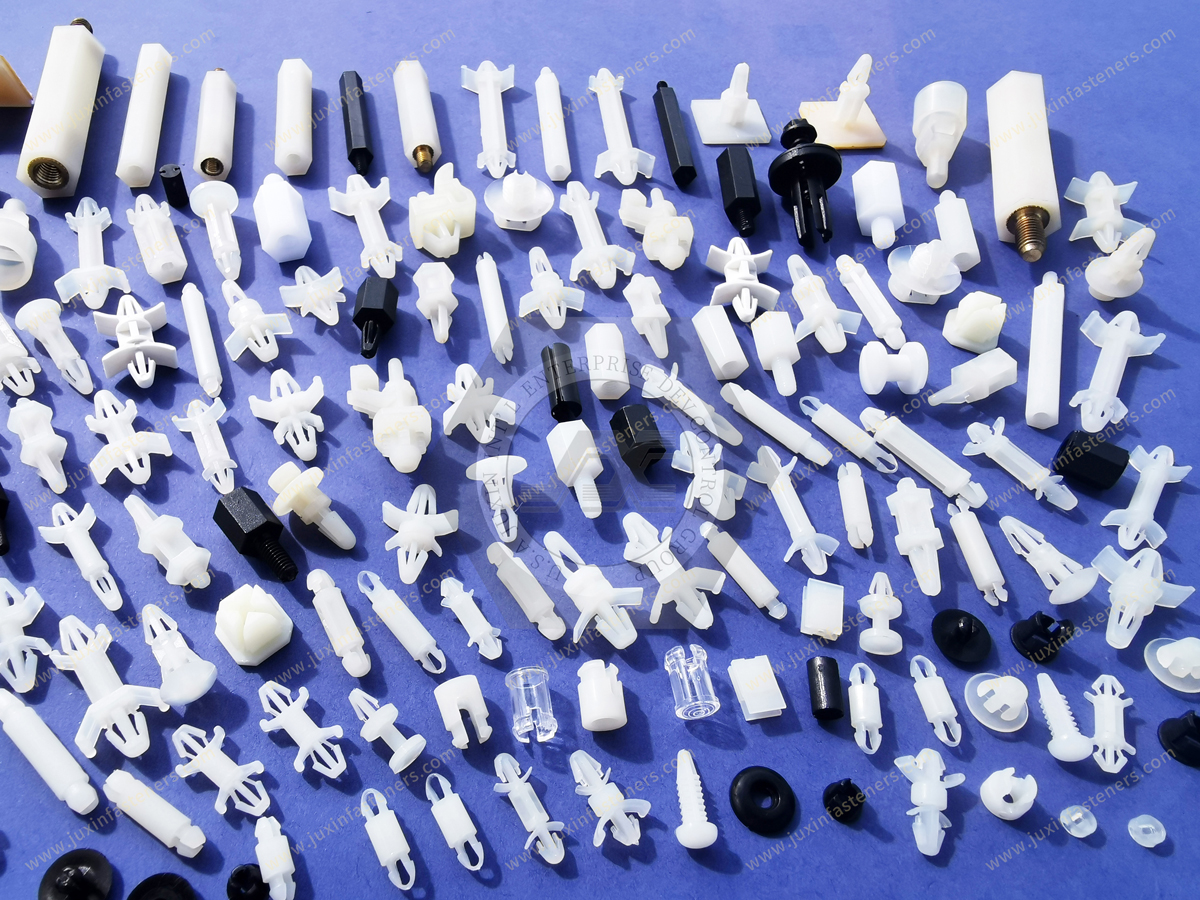
Unlike conventional screws, nuts, and metal rivets, nylon rivets, plastic push rivets, line clips,
cable clips, and snap-in cable tie mounts can provide rapid push-in assembly while eliminating the need for a threaded joint.
They can also offer useful characteristics such as:
low component weight
electrical isolation
resistance to red rust
reduced risk of scratching finished surfaces
resilient cable contact
reduced part count
one-sided installation
potential for tool-free assembly
However, a plastic fastener should not be selected simply because it is described as “nylon.”
Reliable performance depends on the relationship between:
fastener geometry + polymer grade + mounting-hole dimensions + panel thickness + cable or line diameter + installation force
+ retention requirement + temperature + moisture + UV + chemicals + flammability requirement
Also searched as plastic push rivets, nylon cable clips, plastic line clips, toolless panel fasteners, plastic push fasteners,
snap-in cable clips, plastic line routing clips, snap-in cable tie mounts, nylon panel fasteners, and plastic trim clips, these components should be selected according to the actual assembly rather than appearance alone.
A practical engineering path is:
Application → mounting substrate → required function → fastener geometry → polymer → panel hole
→ grip range → cable diameter → environment → sample validation → production control
These product families are often grouped together because they use molded polymer construction and rapid installation.
Their mechanical functions, however, are different.
Plastic push rivets primarily retain:
panels
covers
trim
shields
lightweight assemblies
They may use a center pin, expanding legs, flexible barbs, or other locking geometry.
Line clips retain:
electrical wires
wire harnesses
tubing
hoses
fiber-optic cables
sensor lines
Their design must manage both mounting retention and contact with the routed line.
Cable tie mounts create a panel-mounted anchor for a separate cable tie.
This can be useful when:
bundle diameter varies
cable bundles are assembled after mount installation
adjustable restraint is required
The correct product family depends on the assembly function.
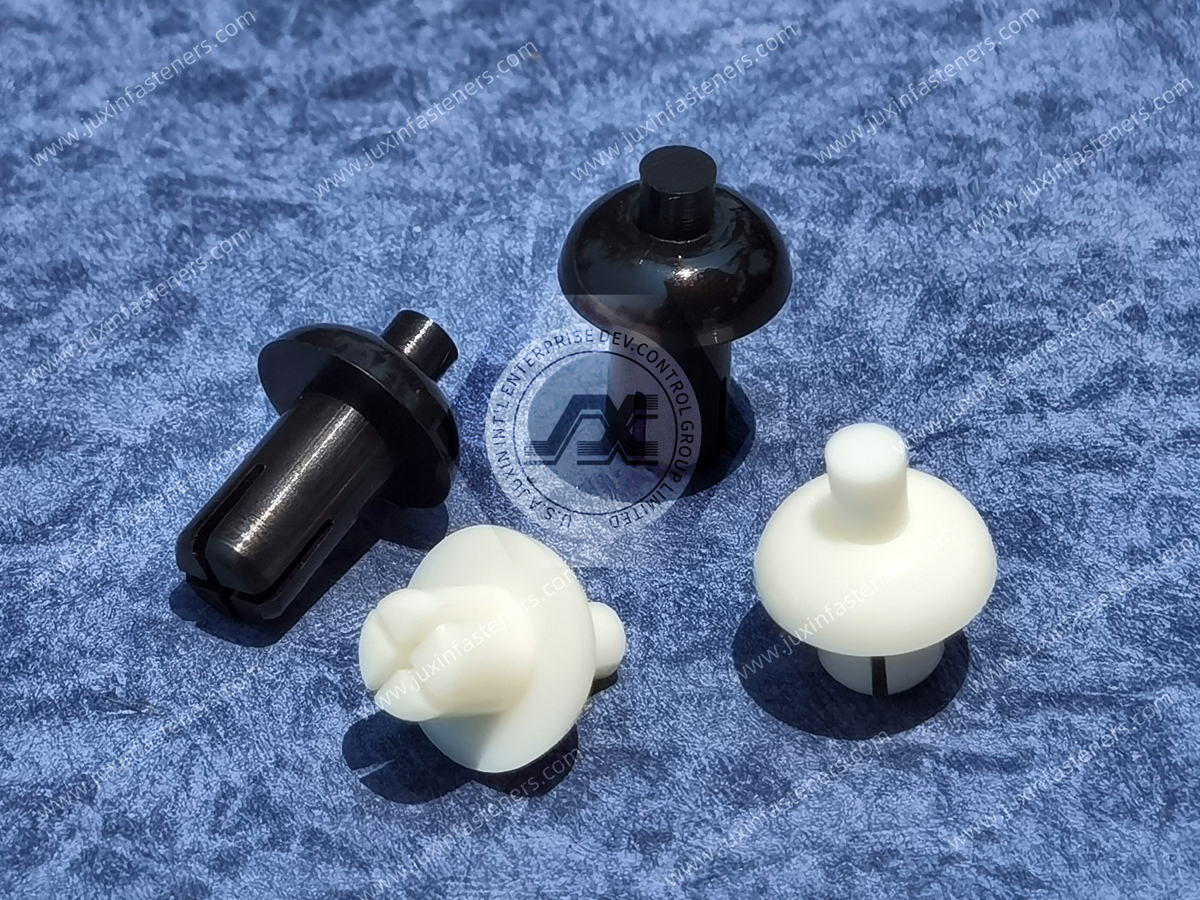
One common plastic rivet architecture uses:
molded rivet body
central drive pin
flexible expanding legs
head or flange
The body is inserted into the panel hole.
When the center pin is pushed into its installed position, the body geometry expands or locks behind the panel.
This creates mechanical retention without requiring a conventional threaded nut on the rear side.
Push rivets can be useful where access is available primarily from one side.
Applications can include:
enclosure panels
interior trim
equipment covers
ducts
lightweight shields
However, “blind installation” does not automatically mean every push rivet is removable from the same side.
Service requirements should be reviewed during selection.
Retention can be generated through:
expanding legs
split shanks
barbed features
flexible wings
interference features
The actual retention mechanism depends on the fastener design.
A plastic push rivet should not be specified by head diameter and length alone.
The mounting hole is part of the fastening system.
If the hole is too small:
insertion force may increase
legs can deform
the fastener can be damaged
the panel can be stressed
If the hole is too large:
retention can decrease
movement or rattling can occur
the rivet may pull through
For second-source qualification, panel-hole compatibility is therefore a critical characteristic.
Many plastic rivets are designed for a particular panel-thickness range.
The total stack can include:
one panel
multiple panels
trim
insulation
brackets
covers
A rivet that fits the mounting hole may still fail if the grip range does not match the panel stack.
The RFQ should therefore identify both:
mounting-hole diameter + total grip thickness
A line clip performs two functions simultaneously:
it attaches to the host structure;
it retains the cable, wire, hose, tube, or other line.
The mounting side may use:
snap-in barbs
arrowhead features
fir-tree geometry
push-in feet
panel-edge attachment
screw mounting
adhesive mounting
The line-retention side may use:
open clips
closed loops
locking latches
flexible arms
saddles
channels
For a line clip, nominal cable diameter is not merely a catalog field.
It affects:
insertion
retention
compression
vibration
chafing
serviceability
A clip that is too small can over-compress or damage the cable jacket.
A clip that is too large can allow:
movement
rattling
abrasion
unstable routing
The acceptable cable or bundle diameter range should therefore be defined.
One reason polymer clips are used for wire routing is their ability to provide a relatively compliant contact surface.
However, plastic hardware does not automatically eliminate cable damage.
Engineers should still evaluate:
molded flash
sharp parting lines
gate vestige
clip edge geometry
cable movement
vibration
temperature
cable jacket material
The complete routing system should be validated.
Flexible polymer clips can help manage vibration and reduce metal-to-cable contact.
Performance depends on:
clip stiffness
cable diameter
mounting rigidity
polymer
temperature
vibration spectrum
The objective is not always maximum clamping force.
In some harness systems, controlled restraint is preferable to excessive compression.
Common engineering polymers for rivets, clips, and cable-management components can include:
PA6
PA66
impact-modified nylon
flame-retardant nylon
POM
polypropylene
PBT
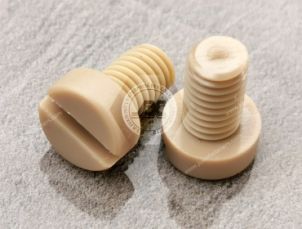
PEEK
other application-specific polymers
The correct material depends on the operating environment.
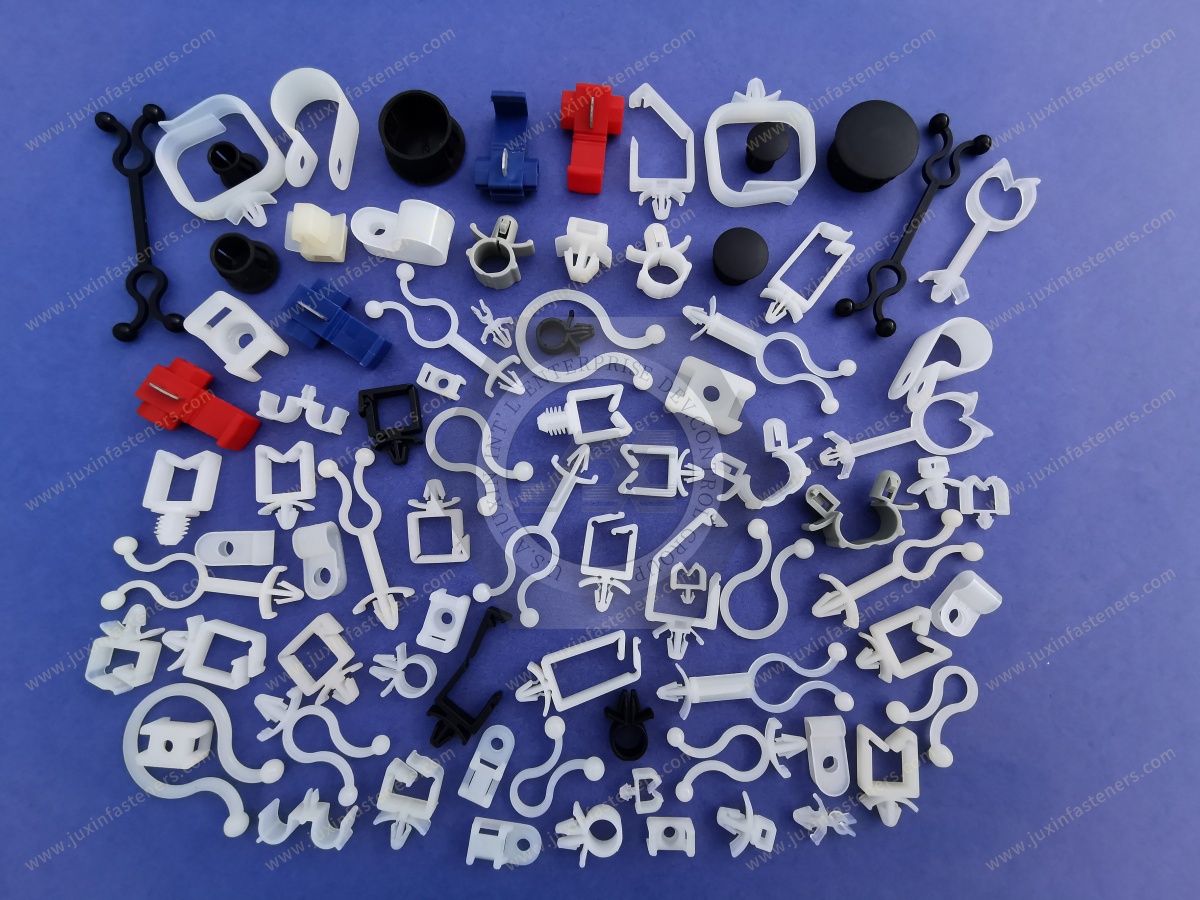
PA66 is widely used for molded plastic fasteners because it can provide a useful combination of:
mechanical strength
toughness
fatigue resistance
molding capability
cost efficiency
Applications include:
push rivets
cable clips
trim retainers
wire harness clips
snap-in mounts
But the word PA66 alone does not define the final performance.
Different PA66 grades may vary in:
impact modification
reinforcement
flame retardancy
UV stabilization
heat stabilization
color
moisture behavior
A natural unfilled PA66 clip should not automatically be considered equivalent to a flame-retardant or UV-stabilized PA66 clip.
Nylon absorbs moisture from its environment.
This can influence:
stiffness
toughness
dimensions
insertion force
snap behavior
retention
long-term mechanical response
A dry-as-molded nylon component may behave differently after moisture conditioning.
For critical applications, engineers should consider the material state expected during:
assembly
testing
transportation
field service
Snap features rely on controlled elastic deformation.
If material stiffness and ductility change, the behavior of:
snap arms
barbs
rivet legs
locking latches
can also change.
This makes moisture conditioning particularly relevant when evaluating nylon snap-fit fasteners.
POM can offer characteristics such as:
dimensional stability
low friction
good molded surface finish
low moisture absorption compared with nylon
It may be useful for certain clips and moving snap features.
However, POM grade selection should also consider:
temperature
chemical environment
flammability requirements
mechanical loading
POM should not automatically replace PA66 based only on moisture behavior.
PEEK can be considered for demanding environments involving combinations of:
elevated temperature
chemical exposure
high-performance equipment
specialized electrical requirements
Potential industries can include:
semiconductor equipment
aerospace equipment
medical equipment
high-temperature industrial systems
Its higher material cost means PEEK is generally selected because the application requires its performance characteristics rather than as a default plastic fastener material.
| Engineering Factor | PA66 | POM | PEEK |
|---|---|---|---|
| General industrial plastic fasteners | Widely used | Application dependent | Specialized |
| Moisture absorption | Significant consideration | Relatively low | Lower than nylon |
| Snap-fit capability | Grade dependent | Grade dependent | Grade dependent |
| Temperature capability | Grade dependent | Grade dependent | Higher-performance options available |
| Chemical resistance | Environment dependent | Environment dependent | Strong in many demanding environments |
| Flammability rating | Grade-specific | Grade-specific | Grade-specific |
| UV performance | Requires grade review | Requires grade review | Grade-specific |
| Cost | Generally economical | Application dependent | Significantly higher |
Exact property values should come from the selected resin manufacturer's data and the finished-part validation program.
A common sourcing error is specifying:
“PA66 V-0”
as though all PA66 automatically has the same flammability performance.
UL 94 classification applies to the tested material system and thickness under defined conditions.
Therefore:
PA66 does not automatically mean V-2
flame-retardant PA66 does not automatically mean V-0 at every thickness
PEEK should not automatically be described as V-0 without the applicable grade and thickness information
If a project requires a particular UL 94 classification, specify the requirement and verify the selected material documentation.
Flame-retardant polymer grades may be required in certain:
electrical equipment
electronics
server systems
power equipment
telecommunications hardware
The required classification should come from:
equipment design
applicable safety standard
customer specification
regulatory requirement
Do not assume V-0 is mandatory for every AI server, EV battery, telecom, or electrical application.
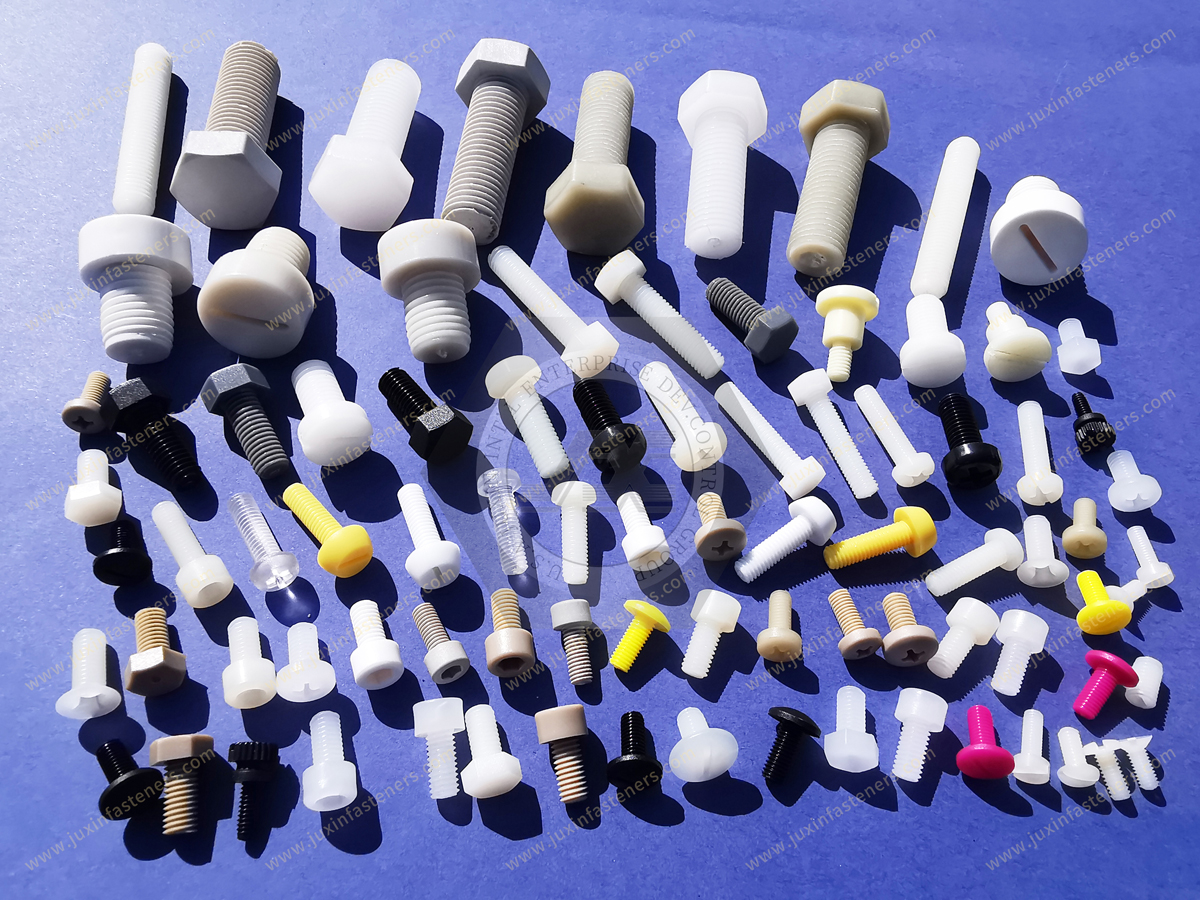
Polymer fasteners are often selected because the material is electrically insulating compared with metallic hardware.
This can be useful around:
electrical assemblies
PCB hardware
battery electronics
wire harnesses
sensors
However, the phrase “100% dielectric isolation” should not be treated as a universal component rating.
Electrical performance depends on:
polymer grade
geometry
thickness
voltage
temperature
moisture
contamination
creepage and clearance
complete assembly design
Replacing a metal rivet with a nylon rivet may remove one conductive path.
It does not independently establish:
insulation coordination
creepage
clearance
dielectric withstand
touch safety
Those requirements belong to the complete electrical system.
Polymer fasteners do not develop red rust in the way unprotected carbon steel can.
This can be advantageous in humid environments.
However, plastic should not be described as universally “corrosion-proof.”
Polymers can still be affected by:
chemicals
UV
temperature
oxidation
hydrolysis
environmental stress cracking
Material compatibility should be reviewed for the actual environment.
Outdoor clips and rivets may require UV-stabilized material.
Potential applications include:
outdoor telecom cabinets
rooftop equipment
solar equipment
outdoor electrical enclosures
vehicle exterior components
Standard indoor-grade nylon should not automatically be assumed suitable for long-term outdoor exposure.
Temperature can change:
stiffness
impact behavior
creep
snap retention
insertion behavior
Instead of using one generic continuous-service temperature for all PA66, POM, or PEEK fasteners, use the selected resin grade and application conditions.
Low temperature can reduce ductility in some polymers.
This matters for:
snap-in installation
automotive exterior components
outdoor telecommunications equipment
cold-storage equipment
Installation and removal testing may therefore need to include the relevant low-temperature condition.
At elevated temperature, polymer components can experience increased creep and stress relaxation.
This can affect:
snap retention
clip clamping force
rivet retention
cable restraint
Long-term performance should therefore not be inferred solely from room-temperature pull-out testing.
Plastic fasteners can be exposed to:
cleaning chemicals
coolants
oils
fuels
detergents
disinfectants
industrial fluids
Compatibility depends on the specific resin and chemical environment.
This is particularly important for:
automotive
medical equipment
HVAC
industrial machinery
One major commercial reason for using push fasteners is assembly simplification.
Depending on the design, installation may eliminate:
separate nut
washer
screwdriver
wrench
rivet gun
This can reduce assembly operations.
However, actual cycle-time savings should be measured on the customer's production line rather than assumed from generic seconds-per-part claims.
A plastic push fastener may cost more or less than an individual metal screw.
The meaningful comparison is often:
fastener cost + secondary hardware + installation tool + labor + cycle time + rework + service requirements
For high-volume OEM production, reducing one assembly operation can sometimes matter more than small differences in piece price.
Insertion force influences:
operator ergonomics
automation
panel stress
fastener damage
A clip requiring excessive force may create problems even if final retention is strong.
For manual assembly, ergonomic limits can become an important specification.
Retention requirements depend on the application.
A trim clip and an underbody shield retainer do not require the same pull-out performance.
Likewise, a small signal-wire clip and a large cable-bundle mount require different restraint.
Retention should therefore be specified according to the actual load.
Excessive retention can create problems when a component must be:
serviced
removed
replaced
reworked
The correct design balances:
installation force + service retention + removal requirement
rather than maximizing pull-out force alone.
Some plastic rivets are intended primarily for permanent or limited-service installation.
Others can be designed for removal and reuse.
If serviceability matters, define:
removal method
required tool
number of reuse cycles
acceptable damage after removal
Do not assume every nylon push rivet is reusable.
Plastic fasteners can mount into:
steel sheet
aluminum sheet
plastic panels
composite panels
molded housings
The host material affects:
hole tolerance
edge condition
panel stiffness
pull-through behavior
A clip qualified in a rigid steel panel may behave differently in a flexible plastic panel.
Hole condition can influence both installation and retention.
Important factors include:
burrs
sharp edges
stamping distortion
coating buildup
molded flash
hole ovality
These factors should be considered during validation.
| Engineering Factor | Plastic Push Rivet | Metal Screw Assembly |
|---|---|---|
| Thread required | Usually no | Usually yes or requires mating nut |
| Rear access | Design dependent; often not required | Depends on joint |
| Installation tooling | May be tool-free | Usually driver required |
| Electrical conductivity | Polymer is generally insulating | Metal is conductive |
| Weight | Low | Higher for comparable volume |
| Removal | Design dependent | Often serviceable |
| Clamp load | Generally limited | Can support higher controlled clamp loads |
| High temperature | Polymer limited | Metal often advantageous |
| Corrosion behavior | No red rust from polymer | Finish/material dependent |
| High structural load | Usually not primary choice | Often preferable |
Neither architecture is universally better.
Metal hardware may be more appropriate when the joint requires:
high clamp load
structural load
high temperature
controlled torque
repeated disassembly
high shear strength
specific grounding function
Plastic push fasteners should not be promoted as replacements for structural screws simply because installation is faster.
Plastic rivets and clips become attractive when priorities include:
lightweight retention
rapid assembly
electrical isolation
cable protection
reduced part count
low structural loading
one-sided access
Automotive applications use plastic clips and rivets extensively in:
wire harnesses
trim
lighting
bumpers
interior panels
underbody components
electronic modules
EV platforms add further applications around:
battery electronics
BMS wiring
sensors
charge-port assemblies
high-voltage harness routing
Potential applications include:
BMS sense-wire clips
low-voltage harness retainers
cable routing mounts
sensor-line clips
plastic panel retainers
Selection should consider:
voltage architecture
host material
vibration
temperature
chemical exposure
service requirements
Do not assume that using a nylon clip alone establishes the required high-voltage insulation system.
Plastic push rivets can be used for:
door trim
wheel-arch liners
bumper components
splash shields
interior panels
These applications can involve:
temperature cycling
vibration
moisture
road contaminants
repeated service
Material and geometry should be selected accordingly.
High-density AI computing equipment contains extensive:
power wiring
signal wiring
fan assemblies
sensor cables
cable-management components
airflow hardware
Plastic clips and push fasteners can support rapid assembly and controlled routing.
Possible applications include:
internal harness clips
fan-wire retainers
sensor-wire mounts
airflow-baffle fasteners
cable tie anchors
The clip should be selected so cable routing does not interfere with:
cooling airflow
service access
connector engagement
In high-density electronics, poor cable routing can obstruct airflow.
A line clip therefore can have a secondary system function:
maintaining cable position so the intended cooling path remains open.
This means clip placement should be coordinated with:
airflow design
fan service access
cable bend radius
connector routing
rather than treated only as housekeeping.
Power electronics systems can use plastic clips around:
control wiring
sensor cables
low-voltage harnesses
internal covers
Where components are near high-voltage conductors, the complete insulation design must still be validated.
Battery energy storage equipment can include plastic cable-management hardware in:
battery racks
control cabinets
monitoring systems
auxiliary wiring
Outdoor systems may require consideration of:
UV
humidity
temperature
chemical environment
Telecommunications infrastructure can use line clips and plastic retainers in:
5G equipment
outdoor cabinets
fiber distribution equipment
network enclosures
power modules
Fiber-optic cable routing requires particular attention to:
bend radius
compression
abrasion
The clip should retain the fiber without creating damaging localized pressure.
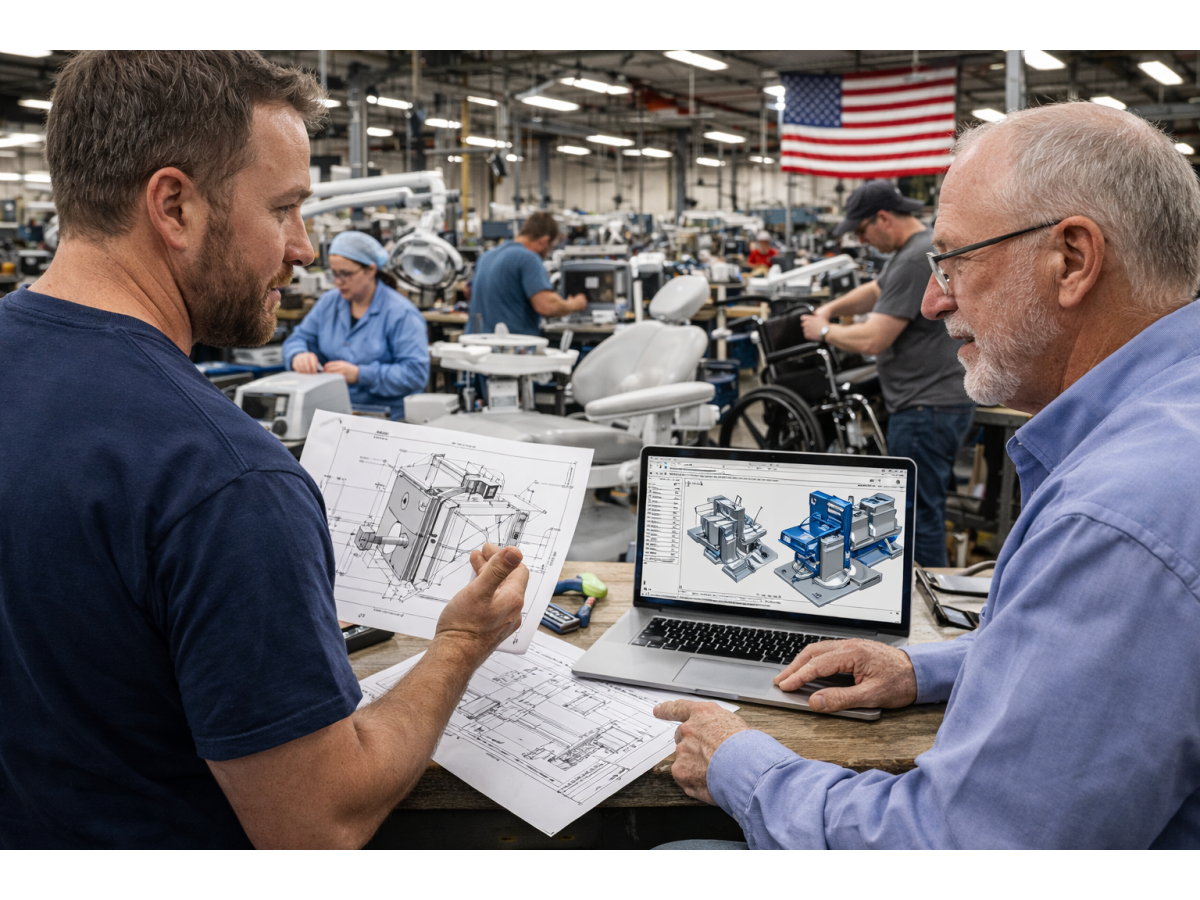
Medical and diagnostic equipment may use plastic fasteners in:
equipment carts
analyzer housings
cable routing
monitor assemblies
covers
Potential requirements include:
cleaning-agent compatibility
appearance
serviceability
material restrictions
Do not infer medical suitability from polymer type alone.
HVAC equipment can use plastic clips for:
control wiring
sensor lines
fan wiring
lightweight covers
Environmental factors can include:
humidity
condensation
heat
cleaning chemicals
Industrial equipment can use snap-in plastic hardware for:
sensor cables
pneumatic lines
low-voltage harnesses
enclosure wiring
panel attachments
Where cables move continuously, a static line clip should not automatically be substituted for a cable-management system designed for dynamic motion.
Plastic clips often appear simple, but small geometry changes can materially affect performance.
A second-source comparison should review more than overall appearance.
Compare:
head geometry
body length
mounting-hole requirement
grip range
expansion geometry
barb geometry
line diameter
cable bundle range
polymer
color
UV requirement
flammability requirement
insertion force
retention force
removal method
When no drawing is available, an existing plastic fastener sample can support evaluation of:
dimensions
geometry
mounting method
approximate material family
functional interface
However, a sample may not reveal:
exact polymer grade
flame-retardant package
UV stabilization
original mechanical requirements
Unknown specifications should be identified rather than invented.
A replacement clip may not require identical non-functional geometry if the project allows a functional equivalent.
Qualification can focus on whether the alternative satisfies:
mounting-hole compatibility
panel grip
cable fit
insertion
retention
environmental requirements
assembly process
If the controlled drawing requires exact dimensions, those requirements should govern.
A practical qualification program can include:
dimensional inspection
installation trial
insertion-force evaluation
pull-out testing
cable-fit evaluation
removal testing
vibration evaluation where required
environmental testing where required
Samples should be evaluated in representative production panels and cable assemblies.
High-volume plastic fasteners may be installed manually or through automated equipment.
Automation feasibility can depend on:
part orientation
head geometry
feeding
dimensional consistency
insertion force
cycle time
A component optimized only for manual installation may not automatically feed well in automated equipment.
Important molded-part defects can include:
flash
short shots
warpage
damaged snap features
incomplete fill
gate damage
Inspection requirements should be based on the functional risk and customer specification.
Do not assume every application requires automated optical sorting.
Depending on the application, plastic fastener specifications may include:
RoHS
REACH
customer restricted-substance requirements
UL 94 material classification
UV requirements
material declarations
The required documentation should be defined during sourcing.
For nylon rivets and line clips, plastic push rivets, nylon cable clips, plastic line clips, plastic push fasteners, snap-in cable clips, cable tie mounts,
or custom plastic fasteners, provide as much of the following information as possible:
2D drawing
3D model where available
existing part number
physical sample where relevant
application
mounting method
host panel material
panel-hole diameter
hole tolerance
total grip thickness
panel stack
head diameter
body length
line or cable diameter
cable bundle diameter range
hose or tube diameter where applicable
required insertion force
required retention force
removal requirement
reuse requirement
polymer preference
color
flame-retardancy requirement
UV exposure
operating temperature
moisture exposure
chemical exposure
electrical isolation requirement
vibration environment
required compliance documentation
sample quantity
validation requirements
Estimated Annual Usage
production batch size
packaging requirements
target production date
If no drawing is available, provide the existing physical sample together with panel and application information.
Before approving a plastic rivet or clip, ask:
What is the fastener actually retaining?
What panel material is used?
What is the mounting-hole diameter?
What is the panel thickness?
Is the hole tolerance controlled?
What insertion force is acceptable?
What retention force is required?
Must the fastener be removable?
Is reuse required?
What polymer is appropriate?
Will nylon moisture absorption matter?
Is the application indoors or outdoors?
Is UV stabilization required?
What temperature range applies?
What chemical exposure applies?
Is a UL 94 classification required?
Is the clip retaining a cable, tube, or fiber?
What line diameter range must it accommodate?
Can cable movement create chafing?
Is electrical isolation required?
Is the fastener close to a high-voltage system?
Will the component be manually or automatically installed?
These questions convert a generic plastic clip into an engineering specification.
For supplier qualification, consider:
Can the supplier provide the required geometry?
Is an existing mold available?
Is new tooling required?
Which polymer grades are available?
Can the required resin documentation be supplied?
Can custom colors be produced?
Can UV-stabilized material be supplied where required?
Can flame-retardant grades be supplied where required?
Can the supplier work from a drawing?
Can the supplier evaluate an existing sample?
Can samples be provided for installation trials?
Can dimensional inspection be provided?
Can production volumes be supported?
What lot traceability is available?
What change-control process applies?
Can second-source qualification be supported?
Determine whether the component is:
joining panels
retaining trim
routing cable
retaining tubing
anchoring a cable tie
Specify:
panel material
mounting hole
panel thickness
available rear-side space
For line clips, specify:
cable
bundle
tube
hose
fiber
and its diameter range.
Evaluate:
push rivet
drive rivet
snap clip
line clip
cable tie mount
other plastic retainer
Evaluate:
mechanical requirements
moisture
temperature
UV
chemicals
flammability
regulatory requirements
Determine:
insertion force
tool requirement
removal method
reuse requirement
Use representative:
panels
holes
cables
environmental conditions
Where applicable, evaluate:
insertion
retention
pull-out
removal
vibration
cable chafing
environmental exposure
Control:
drawing
material
dimensions
appearance
performance requirements
inspection
packaging
A successful plastic push-fastener or cable-management program connects component design with assembly engineering and procurement.
The complete path is:
Application → interface geometry → fastener architecture → polymer → environment → insertion requirement → retention requirement → sample validation → production control
For design engineers, this reduces the risk of loose panels, damaged cables, or poorly matched mounting holes.
For manufacturing engineers, it creates a predictable installation process.
For Supplier Quality, it creates measurable acceptance requirements.
For procurement and supplier-development teams, it creates a component specification that can be compared and second-sourced without relying only on appearance or a legacy supplier part number.
JUXIN FASTENERS supplies standard and custom plastic and nylon fasteners for industrial OEM applications, including:
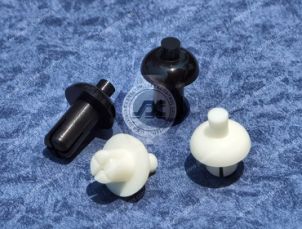
nylon push rivets
plastic drive rivets
line routing clips
cable clips
wire harness clips
snap-in cable tie mounts
plastic panel retainers
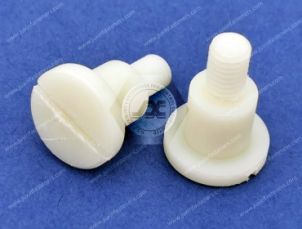
nylon screws
nylon nuts
nylon washers
plastic spacers
threaded inserts for plastics
custom molded fastening components
For projects involving nylon rivets and line clips, plastic push rivets, nylon cable clips, plastic line routing clips, snap-in cable tie mounts,
non-metallic panel fasteners, or custom plastic fastening components, our team can review the drawing, physical sample, host panel, cable dimensions, polymer requirements, and production volume.
Projects can begin from:
customer 2D drawing
3D model
existing part number
physical sample
panel drawing
application requirements
Depending on the project, the development and sourcing path can include:
dimensional review
material review
panel-hole compatibility review
grip-range review
cable-diameter review
existing product matching
custom geometry evaluation
sample production
customer assembly trials
second-source evaluation
production-volume sourcing
customer-required documentation
Actual insertion force, retention force, operating temperature, electrical properties, UV resistance, flammability performance,
and service life depend on the selected polymer grade, fastener geometry, mounting interface, manufacturing process, environmental conditions, and applicable customer requirements.
For plastic fastener selection, physical-sample cross-reference, custom nylon fastener development, second-source qualification,
evaluation samples, or production-volume RFQs, send your technical requirements to JUXIN FASTENERS.
Email: info@juxinfasteners.com
Website: www.juxinfasteners.com
 MORE NEWS
Sep. 25, 2026
Sep. 25, 2026
Sep. 25, 2026
Contact Us
Tel.:
+86 020 8621 0320
+86 020 3121 6067
E-mail:
Technical Support:
Navigation
SEND INQUIREY