
Call Us
+86 136 6007 9809
Call Us
+86 136 6007 9809

Nov. 02, 2023
Fastening aluminum is not the same engineering problem as manufacturing a fastener from aluminum.
An aluminum enclosure may use a steel rivet nut.
An aluminum housing may use a stainless steel screw.
A machined aluminum component may use a steel threaded insert.
A thin aluminum panel may use a self-clinching nut, blind rivet or captive panel fastener.
The correct question is therefore not:
"Which aluminum fastener should we use?"
It is:
"Which fastening technology creates the required joint in this aluminum component?"
For engineers, procurement managers and supplier-development teams, the decision should consider:
Aluminum Alloy + Material Condition + Thickness + Joint Function + Access + Load + Thread Requirement
+ Installation Process + Galvanic Compatibility + Environment + Serviceability
JUXIN FASTENERS supplies fastening components for selected aluminum assemblies, including:
Rivet nuts
Blind rivets
Threaded inserts
Self-clinching nuts
Self-clinching studs
Self-clinching standoffs
Screws and bolts
Lock nuts
Captive panel fasteners
Spacers and standoffs
Custom drawing-based fasteners
This guide explains how to select the fastening architecture for aluminum sheet, housings, enclosures, extrusions and machined aluminum components.
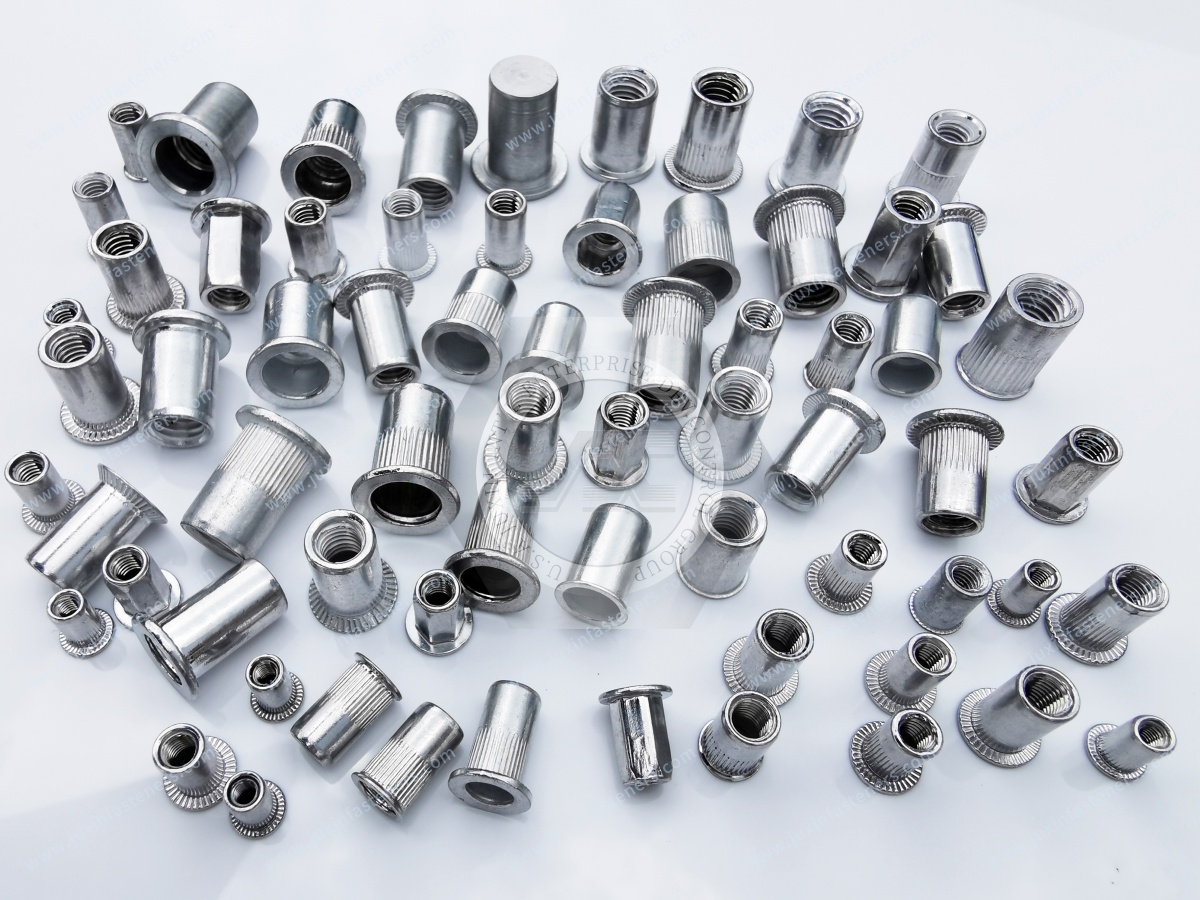
These are two different engineering and sourcing categories.
These are fasteners manufactured from aluminum.
Examples include:
Aluminum screws
Aluminum bolts
Aluminum nuts
Aluminum standoffs
Aluminum spacers
Material selection focuses on:
Aluminum alloy
Temper
Fastener strength
Thread design
Surface treatment
Anodizing
These are fasteners installed into or onto an aluminum component.
The fastener itself may be:
Carbon steel
Alloy steel
Stainless steel
Aluminum
Another engineered material
Selection focuses on:
Aluminum parent material
Thickness
Thread strength
Access
Installation
Retention
Galvanic corrosion
Serviceability
This distinction is important for both search intent and engineering.
Fastener Material ≠ Parent Material.
| Aluminum Component | Fastening Need | Technologies to Evaluate |
|---|---|---|
| Thin aluminum sheet | Reusable internal thread | Rivet nut / compatible self-clinching nut |
| Thin sheet with one-sided access | Reusable thread | Rivet nut |
| Thin sheet, permanent non-threaded joint | Permanent joining | Blind rivet |
| Press-accessible aluminum sheet | Captive thread | Compatible self-clinching fastener |
| Machined aluminum housing | Stronger reusable thread | Threaded insert |
| Cast aluminum component | Reinforced internal thread | Application-specific threaded insert |
| Aluminum extrusion | Modular mechanical connection | Screw / bolt / nut / insert depending on profile |
| Service panel | Retained removable hardware | Captive panel fastener |
| Precision electronics housing | Positioning / spacing | Standoff / spacer / screw |
| High-load aluminum thread | Increased thread durability | Engineered insert system |
This matrix is a starting point.
The actual application must still be validated.
Aluminum provides useful combinations of:
Low density
Corrosion behavior
Thermal conductivity
Machinability
Formability
But compared with many steels, aluminum can also present different:
Hardness
Thread-bearing behavior
Elastic response
Surface behavior
Thermal expansion
These differences affect fastening.
For example, installing a high-strength steel bolt into an aluminum thread does not make the aluminum thread stronger.
Therefore:
Stronger Screw ≠ Stronger Aluminum Thread.
Before selecting the fastener, identify what type of aluminum component is being joined.
Possible parent components include:
Thin sheet
Thick plate
Extrusion
Machined housing
Casting
Structural profile
Electronics enclosure
Battery-related enclosure
The correct fastening technology can differ substantially between these forms.
The word aluminum is not enough information for engineering selection.
Different alloys and material conditions can have different:
Strength
Hardness
Formability
Machinability
Corrosion behavior
Clinching behavior
Thread strength
Therefore:
Same Thickness ≠ Same Aluminum Fastening Behavior.
A self-clinching fastener that works in one aluminum sheet should not automatically be assumed suitable for every aluminum alloy or temper of the same thickness.
Thin aluminum sheet may not provide sufficient material for the required internal thread engagement.
Possible solutions include:
Rivet nuts
Self-clinching nuts
Other captive threaded fasteners
The selection should consider:
Sheet thickness
Aluminum alloy
Hardness
Hole geometry
Required thread
Load
Installation access
Production process
Simply increasing screw strength does not solve insufficient parent-thread engagement.
Rivet nuts are one of the most useful technologies for creating reusable internal threads in thin aluminum components.
They can be installed from one side and mechanically deform to create a captive threaded attachment.
Potential applications include:
Aluminum enclosures
Electrical cabinets
EV-related housings
HVAC equipment
Control panels
Machinery covers
Industrial equipment
Available designs can include:
Round-body rivet nuts
Knurled rivet nuts
Hex-body rivet nuts
Flat-head rivet nuts
Reduced-head rivet nuts
Open-end rivet nuts
Closed-end rivet nuts
Materials can include selected:
Steel
Stainless steel
Aluminum
The correct combination depends on the application.
A rivet nut should be selected for the material stack it must deform around during installation.
This is the grip range.
An M6 rivet nut is not fully specified by saying:
"M6 rivet nut for aluminum."
The supplier also needs to understand:
Sheet thickness
Hole size
Body style
Head style
Material
Setting method
Therefore:
Correct Thread + Wrong Grip Range = Wrong Rivet Nut.
The installation hole is part of the fastening system.
Hole variables can affect:
Installation
Alignment
Anti-rotation
Pull-out
Repeatability
An oversized hole can reduce retention.
An undersized hole can create installation problems.
For OEM projects, the rivet nut and hole should be engineered together.
Round-body rivet nuts can provide a practical solution for many general applications.
Performance depends on:
Hole
Parent material
Body geometry
Setting
Knurling can increase interaction between the rivet nut and suitable parent material.
However:
More Knurling ≠ Automatically More Spin-Out Resistance.
The actual sheet, hole and installation process determine performance.
Hex-body rivet nuts installed into compatible hexagonal holes can provide strong geometric anti-rotation characteristics.
The trade-off is more complex hole preparation.
Procurement should compare:
Fastener Cost + Hole Manufacturing Cost + Installation Cost
rather than fastener price alone.
Installed rivet-nut performance often involves two different failure modes.
Axial load attempts to pull the rivet nut out of the aluminum sheet.
Torque attempts to rotate the rivet nut in the hole.
These are not the same.
Pull-Out ≠ Spin-Out.
A rivet nut can have acceptable axial retention and still rotate during screw tightening.
Spin-out describes movement of the rivet-nut body relative to the aluminum sheet.
Screw self-loosening describes rotational movement within the threaded joint.
The corrective actions are different.
A lock nut or thread-locking feature does not solve an improperly retained rivet nut.
Installed performance depends on the setting process.
Important variables include:
Tool
Mandrel
Stroke
Force
Grip range
Hole
Parent material
Over-setting is not better.
More Setting Force ≠ Better Installation.
Excessive setting can damage:
Aluminum sheet
Rivet nut
Thread
Coating
Installed geometry
The correct installation window should be validated.
Closed-end rivet nuts can close the internal end of the fastener body.
This can be useful in selected enclosure applications.
However:
Closed-End Rivet Nut ≠ Automatically Waterproof Assembly.
Sealing depends on:
Head-to-sheet interface
Hole
Surface
Gasket or sealant
Installation
Enclosure design
If an IP rating or leak requirement applies, sealing should be validated at assembly level.
When a reusable thread is not required, blind rivets may provide an efficient one-sided joining method.
Potential applications include:
Aluminum panels
Covers
Enclosures
Brackets
HVAC assemblies
Equipment housings
Selection variables include:
Rivet diameter
Grip range
Body material
Mandrel
Head style
Hole size
Joint stack
Blind rivet selection should not be based only on diameter.
The grip range must match the total joint stack.
Incorrect grip can affect:
Setting
Clamp formation
Mandrel behavior
Joint performance
Therefore:
Correct Diameter + Wrong Grip Range = Wrong Rivet.
Blind rivet performance may be specified in terms of:
Shear
Tensile
These are different load modes.
Shear ≠ Tensile.
The application should define which load condition matters.
The catalog strength of a rivet does not fully define the strength of an aluminum assembly.
Installed performance also depends on:
Aluminum thickness
Hole quality
Edge distance
Bearing area
Joint geometry
The parent aluminum may fail before the rivet reaches its nominal component capacity.
Threaded inserts can reinforce internal threads in:
Machined aluminum
Cast aluminum
Aluminum housings
Precision components
They are especially useful when the assembly requires:
Repeated service
Higher thread durability
Repairability
Improved wear resistance
A stronger internal thread system
Possible technologies include:
Wire thread inserts
Solid threaded inserts
Self-tapping inserts
Press-fit inserts
Application-specific insert systems
Not every insert technology is suitable for every aluminum component.
A stronger steel insert does not automatically create a stronger assembly.
Installed performance still depends on:
Aluminum alloy
Parent geometry
Wall thickness
Hole
Insert geometry
Installation process
Edge distance
Therefore:
Strong Insert ≠ Strong Parent Material.
The surrounding aluminum must support the load.
Repeated screw installation into a direct aluminum thread can cause wear in some applications.
An engineered insert may provide a more durable service thread.
This can be valuable for:
Access covers
Electronic housings
Serviceable machinery
Precision equipment
Equipment requiring repeated maintenance
But the number of expected service cycles and load requirement should be defined rather than assuming every aluminum thread requires an insert.
Not every aluminum component needs an insert.
Direct tapping may be appropriate when:
Material thickness provides sufficient engagement
Alloy properties are suitable
Load is appropriate
Service cycles are limited
Joint geometry is adequate
The engineering question is:
Does the direct aluminum thread provide sufficient capacity and durability for the actual joint?
If yes, an insert may add unnecessary cost.
Thread engagement is especially important when a stronger steel or stainless screw is installed into an aluminum internal thread.
The limiting element may be the parent thread.
Engineers should consider:
Aluminum alloy
Thread size
Pitch
Engagement length
Screw strength
Required preload
Repeated assembly
There is no universal engagement length that is correct for every aluminum alloy and load condition.
Installation torque is not equal to clamp force.
A simplified conceptual relationship is:
T = K × F × d
where:
T = tightening torque
K = torque coefficient influenced by friction
F = preload
d = nominal diameter
The relationship demonstrates why friction matters.
A stronger screw or higher torque does not automatically create a better aluminum joint.
Excessive tightening can cause:
Aluminum thread stripping
Local bearing deformation
Insert failure
Sheet distortion
Fastener damage
The tightening strategy should be matched to the actual joint.
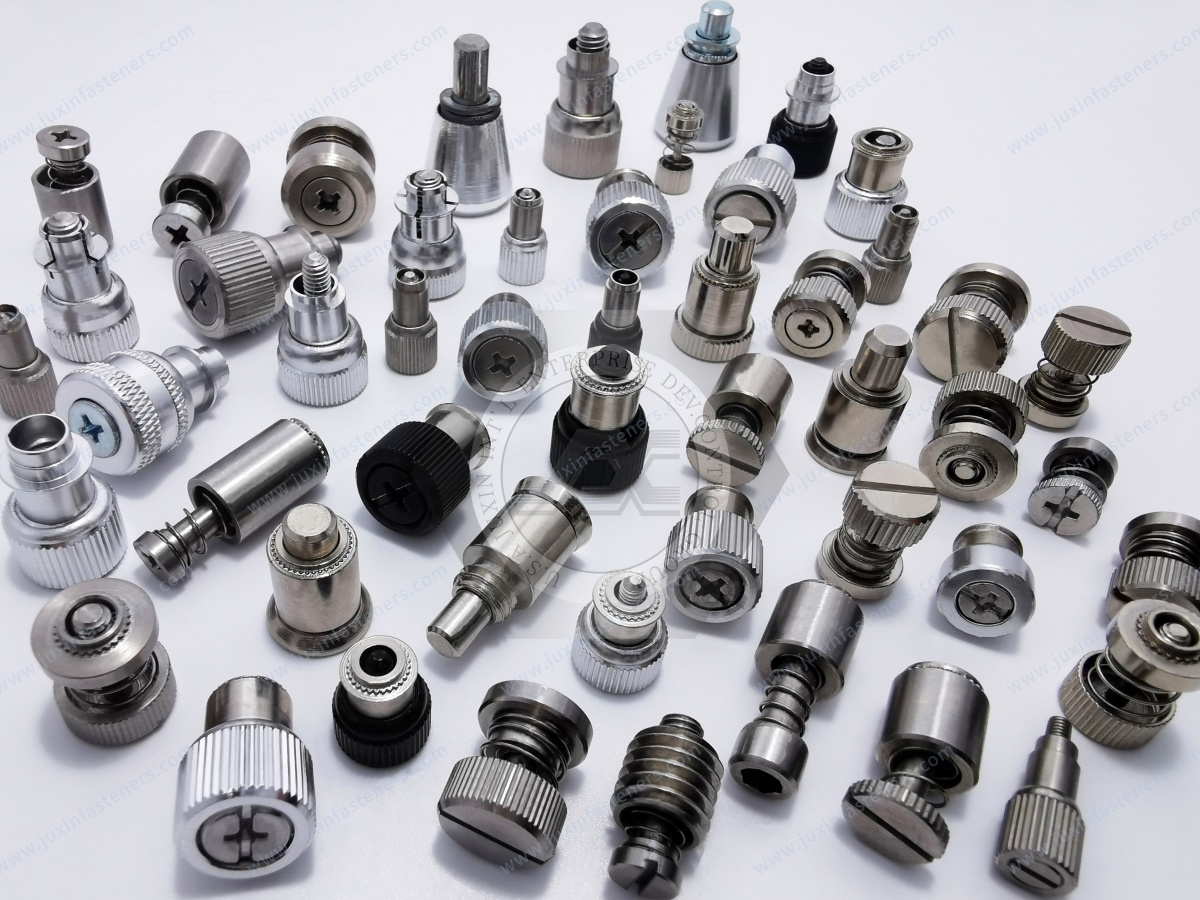
Self-clinching fasteners can create captive threads, studs or standoffs in compatible aluminum sheet without welding.
Potential products include:
Self-clinching nuts
Self-clinching studs
Self-clinching standoffs
Flush-mount fasteners
Captive threaded hardware
During installation, parent material flows into retention features of the fastener.
This makes material compatibility fundamental.
Self-clinching installation depends on controlled deformation of the aluminum sheet.
Important variables include:
Aluminum alloy
Material hardness
Sheet thickness
Hole diameter
Edge distance
Fastener geometry
Tooling
Press force
Therefore:
Same Sheet Thickness ≠ Same Clinching Behavior.
A harder aluminum alloy may behave differently from a softer alloy of identical thickness.
The fastener must be compatible with the parent material.
If the sheet does not flow correctly into the fastener's retention features, installed performance may be inadequate.
This is why self-clinching fasteners should not be selected only from:
Thread Size + Sheet Thickness
Material condition also matters.
Self-clinching fastener retention can be evaluated using different functional modes.
Resistance to axial force attempting to push the fastener from the sheet.
Resistance to rotational force attempting to rotate the fastener.
These are different characteristics.
Push-Out ≠ Torque-Out.
Self-clinching fasteners require sufficient installation force.
But excessive force can:
Deform aluminum sheet
Distort the fastener
Damage surrounding geometry
Reduce assembly quality
Therefore:
More Press Force ≠ Better Installation.
The correct press condition should be established for the fastener and sheet.
Conventional threaded fasteners remain important for aluminum assemblies.
Possible products include:
Socket head screws
Hex head screws
Flange screws
Machine screws
Torx-drive screws
Custom screws
Bolts
Locking fasteners
The screw material may be:
Carbon steel
Alloy steel
Stainless steel
Aluminum
Another specified material
Selection should follow the complete joint.
A high-strength screw can provide useful mechanical capability, but the aluminum thread or bearing surface may become the limiting element.
Therefore:
Higher Screw Strength ≠ Higher Aluminum Joint Strength.
Review:
Thread engagement
Parent material
Bearing stress
Preload
Installation torque
before increasing fastener strength.
Stainless steel may provide useful corrosion resistance and mechanical performance.
However, the combination of stainless steel and aluminum can create galvanic considerations in the presence of an electrolyte.
The solution may involve:
Surface treatment
Isolation
Sealants
Washers
Environmental control
Joint design
Stainless steel should not automatically be described as the corrosion solution for every aluminum assembly.
Galvanic corrosion can occur when dissimilar conductive materials are electrically connected in an environment containing an electrolyte.
Potential material pairs include:
Aluminum + carbon steel
Aluminum + stainless steel
Aluminum + copper
Aluminum + other conductive alloys
Risk depends on:
Material combination
Surface treatment
Area ratio
Moisture
Salt exposure
Contact condition
Joint geometry
Therefore:
Corrosion-Resistant Fastener ≠ Corrosion-Resistant Assembly.
Surface treatments may be selected to support:
Corrosion protection
Friction control
Material compatibility
Appearance
Possible systems can include:
Zinc plating
Zinc-nickel plating
Zinc-flake coatings
Other customer-specified finishes
But:
Coating Name ≠ Complete Coating Specification.
Depending on the project, engineers may need to define:
Thickness
Passivation
Topcoat
Lubricant
Corrosion requirement
Friction requirement
It is a common sourcing mistake to assume:
"Use stainless steel because it does not rust."
This overlooks the aluminum component.
The stainless fastener may remain visually acceptable while the adjacent aluminum corrodes under certain environmental conditions.
The joint must be evaluated as a material system.
Aluminum electrical and industrial enclosures often require frequent service access.
A loose screw can create:
Maintenance inconvenience
Foreign-object risk
Lost hardware
Assembly delays
Captive panel fasteners keep the hardware retained with the panel when opened.
Potential applications include:
Electrical cabinets
Server equipment
Industrial controls
Machine covers
Telecom equipment
Power electronics
These functions should not be confused.
A captive fastener prevents the hardware from being completely separated from the panel.
A locking feature is intended to resist unwanted loosening.
Therefore:
Captive ≠ Anti-Loosening.
If vibration resistance is required, locking strategy should be evaluated separately.
Vibration-related loosening should not be solved by automatically adding a lock washer.
Engineers should first evaluate:
Preload
Joint stiffness
Interface movement
Fastener geometry
Bearing surfaces
Thermal cycling
Friction
Parent-material deformation
The root cause matters.
Possible locking technologies include:
Prevailing-torque nuts
Thread-locking features
Serrated interfaces
Wedge-locking systems
Application-specific locking methods
But:
Locking Feature ≠ Correct Tightening.
If the original joint lacks adequate clamp load, adding a locking feature may not correct the underlying design.
This distinction matters when using prevailing-torque fasteners.
Prevailing torque is resistance created by the locking feature.
Preload is the clamp force generated in the joint.
They are not the same measurement.
Aluminum expands and contracts differently from many steels and other engineering materials.
Mixed-material joints can therefore experience preload changes during temperature cycling.
Potential applications where this matters include:
EV equipment
Battery-related housings
Power electronics
Thermal-management systems
Outdoor equipment
The room-temperature assembly condition may not represent the operating joint.
Aluminum is widely used in:
Electrical cabinets
Power electronics
Telecom enclosures
Control systems
Data-center equipment
Potential fastening technologies include:
Rivet nuts
Self-clinching fasteners
Captive screws
Standoffs
Threaded inserts
Conventional screws
Selection should consider:
Sheet thickness
Access
Service frequency
Electrical requirements
Corrosion
Thermal conditions
EV-related equipment may use aluminum to reduce mass and support enclosure design.
Potential fastening technologies include:
Rivet nuts
Self-clinching fasteners
Threaded inserts
Blind rivets
Bolted joints
Captive hardware
Important engineering considerations can include:
Load
Corrosion
Galvanic compatibility
Thermal cycling
Serviceability
Sealing
Electrical requirements
A fastener that mechanically attaches an aluminum enclosure does not automatically establish:
IP rating
Electrical safety
Crash performance
Battery-system compliance
Those are assembly-level requirements.
Aluminum enclosures, housings and heat-management components are common in modern electrical infrastructure.
Potential applications include:
Server equipment
Power distribution equipment
UPS systems
Power conversion equipment
Cooling systems
Communication hardware
Potential fastening solutions include:
Self-clinching hardware
Rivet nuts
Captive panel fasteners
Threaded inserts
Standoffs
Precision screws
Serviceability can be particularly important in equipment designed for maintenance or module replacement.
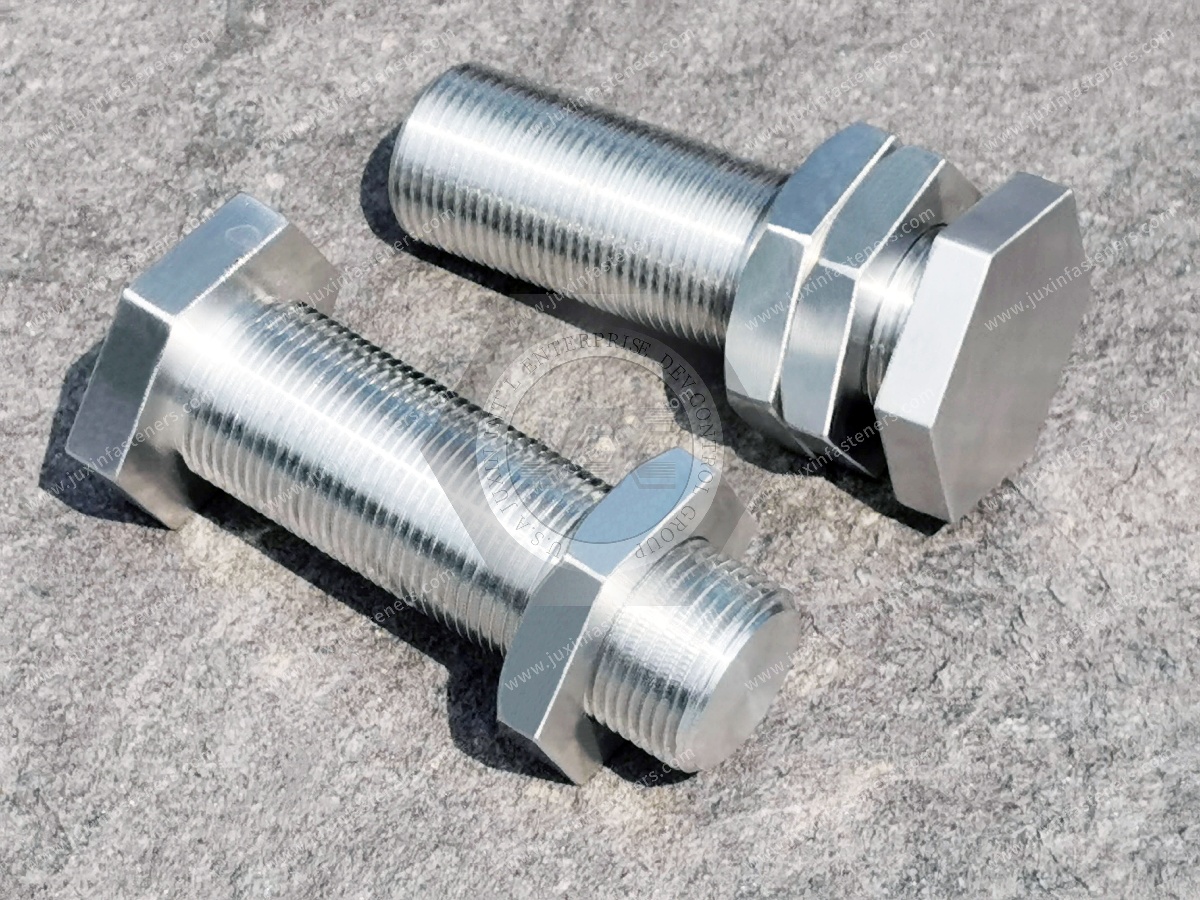
Automation equipment often combines:
Aluminum extrusions
Machined aluminum plates
Sheet-metal covers
Electronic modules
Potential fastening technologies include:
Bolts
Screws
Threaded inserts
Rivet nuts
Captive hardware
Standoffs
The selection depends on whether the connection is:
Structural
Adjustable
Serviceable
Permanent
Frequently accessed
Aluminum extrusion systems can require different fastening strategies from thin sheet.
Possible solutions depend on the profile design and may include:
Bolts
Nuts
Profile-specific hardware
Threaded inserts
Direct tapped threads
Custom components
The supplier should review the actual extrusion geometry rather than applying thin-sheet fastening rules.
Machined aluminum housings may use:
Direct tapped threads
Wire thread inserts
Solid threaded inserts
Precision screws
Captive hardware
Important factors include:
Wall thickness
Thread engagement
Service cycles
Preload
Temperature
Mating material
An insert should be used because the joint requires it—not simply because the housing is aluminum.
Cast aluminum components can have different mechanical and thread characteristics from wrought or machined aluminum products.
Engineers should consider:
Alloy
Casting quality
Wall thickness
Thread location
Porosity risk
Load
Insert method
The exact casting specification should be part of the engineering review.
Selected railway interiors and equipment can use aluminum panels and enclosures.
Potential non-primary applications can include:
Interior panels
Electrical cabinets
Equipment enclosures
Secondary mounting hardware
However, running gear, braking, crash-related, primary structural and other safety-critical railway applications require project-specific engineering and formal validation.
A generic fastener should not automatically be described as railway-qualified.
Renewable-energy equipment may combine aluminum structures with:
Steel fasteners
Stainless hardware
Electrical equipment
Outdoor enclosures
Potential applications include:
Solar equipment
Control cabinets
Monitoring systems
Power electronics
Outdoor exposure makes galvanic corrosion and water retention particularly important design considerations.
Aluminum is widely used in precision machinery and equipment housings.
Potential fastening requirements can include:
Accurate positioning
Repeated maintenance
Compact geometry
Controlled materials
Clean assembly
Threaded inserts, precision screws, standoffs and custom fasteners may be considered depending on the equipment.
Special cleanroom, vacuum or contamination requirements must be defined by the customer rather than assumed from the fastener type.
Welding can be an effective joining process for suitable aluminum structures.
But welding and mechanical fastening solve different production requirements.
Welding may be preferred when:
A permanent joint is required
Material is weld-compatible
Heat input is acceptable
Production equipment supports the process
Mechanical fastening may be preferred when:
Serviceability is required
Heat distortion is undesirable
Dissimilar materials are involved
One-sided installation is needed
Components must be replaceable
The decision should follow the complete assembly architecture.
| Decision Factor | Mechanical Fastening | Welding |
|---|---|---|
| Serviceability | Strong advantage | Generally limited |
| Component replacement | Easier | More difficult |
| Heat input | Low / none | Required |
| Dissimilar materials | Often easier | Process-dependent |
| One-sided installation | Possible with selected technologies | Process-dependent |
| Permanent connection | Possible | Strong candidate |
| Tooling | Fastener-specific | Welding equipment |
| Inspection | Mechanical / functional | Weld-process / joint inspection |
Neither approach is universally better.
Some modern assemblies combine adhesives with mechanical fasteners.
In such hybrid joints, the fastener may perform functions such as:
Positioning
Initial retention
Clamp during adhesive cure
Mechanical backup
The joint should be engineered as a system.
A mechanical fastener should not automatically be assigned the full structural load if the assembly was designed as a hybrid joint.
A practical decision sequence is:
Evaluate:
Rivet nuts
Self-clinching fasteners
Blind rivets
Captive fasteners
Evaluate:
Direct threads
Threaded inserts
Precision screws
Evaluate:
Threaded inserts
Direct threads
Application-specific fastening
Evaluate:
Bolts
Nuts
Inserts
Profile-specific hardware
Evaluate:
Captive panel fasteners
Rivet nuts
Self-clinching nuts
Screws
Understanding failure modes helps engineers avoid selecting by catalog description alone.
Possible causes:
Insufficient engagement
Excessive torque
Weak parent material
Incorrect thread
Repeated service wear
Possible causes:
Incorrect grip
Weak sheet
Incorrect hole
Setting problem
Insufficient bearing geometry
Possible causes:
Oversized hole
Body geometry
Parent material
Incorrect setting
Excessive installation torque
Possible causes:
Incompatible aluminum hardness
Incorrect hole
Insufficient material flow
Edge-distance problem
Possible causes:
Material compatibility
Installation
Hole condition
Fastener geometry
Possible causes:
Dissimilar materials
Electrolyte
Surface damage
Poor drainage
Uncontrolled material pairing
Possible causes:
Embedment
Parent-material deformation
Thermal cycling
Friction variation
Inadequate tightening
The solution should address the actual failure mode.

A practical sequence is:
Component Form → Aluminum Alloy → Material Condition → Thickness → Joint Function → Access → Thread Requirement
→ Load → Fastening Technology → Mating Material → Galvanic Compatibility → Installation → Validation
This is more reliable than beginning with a product catalog.
When procurement compares:
Rivet nut
Self-clinching nut
Threaded insert
Conventional screw
unit price alone is not enough.
Each technology may require different:
Hole preparation
Tooling
Installation time
Inspection
Rework
Maintenance
Therefore:
Lowest Fastener Price ≠ Lowest Assembly Cost.
A useful sourcing model is:
Total Installed Cost = Part Price + Hole Preparation + Installation + Tooling + Inspection + Rework + Scrap + Downtime + Logistics + Supply Risk
This becomes particularly useful when choosing between different aluminum fastening architectures.
Developing a second source requires more than matching nominal dimensions.
Qualification should compare:
Drawing revision
Material
Mechanical properties
Thread
Geometry
Surface treatment
Installation behavior
Functional performance
Traceability
Product-specific validation should also be included.
Compare:
Grip range
Body geometry
Hole requirement
Setting
Pull-out
Spin-out
Compare:
Parent-sheet compatibility
Hole requirement
Installation
Push-out
Torque-out
Compare:
Insert geometry
Parent-hole preparation
Installation method
Pull-out
Torque behavior
Service durability where required
Remember:
Same Dimensions ≠ Functional Equivalence.
For an effective technical and commercial review, provide:
2D drawing
3D model where available
Part number
Drawing revision
Application
Aluminum alloy
Material condition / temper where relevant
Component form
Material thickness
Thread
Hole size
Mating component
Load requirement
Installation access
Installation process
Surface treatment
Operating environment
Annual volume
Sample quantity
Validation requirements
Applicable ISO, DIN, EN, ASME/ANSI, SAE, ASTM or customer specification
Then add product-specific information.
Provide:
Sheet thickness
Grip range
Hole size
Body style
Head style
Fastener material
Setting method
Pull-out requirement
Spin-out requirement
Provide:
Aluminum alloy
Parent-hole geometry
Thread
Wall thickness
Installation method
Expected service cycles
Pull-out / torque requirements where applicable
Provide:
Aluminum alloy
Material hardness where relevant
Sheet thickness
Hole size
Edge distance
Installation method
Push-out requirement
Torque-out requirement
Provide:
Material stack
Grip range
Hole size
Rivet diameter
Body / mandrel material
Head style
Shear / tensile requirement where applicable
A controlled development process can follow:
Application Requirement → Aluminum Material Review → Fastening Technology Selection → Drawing / DFM → Sample
→ Installation Trial → Functional Validation → Assembly Approval → Production
For fastening aluminum, installation validation is especially important.
A loose fastener can meet every dimensional requirement and still fail after installation into the parent material.
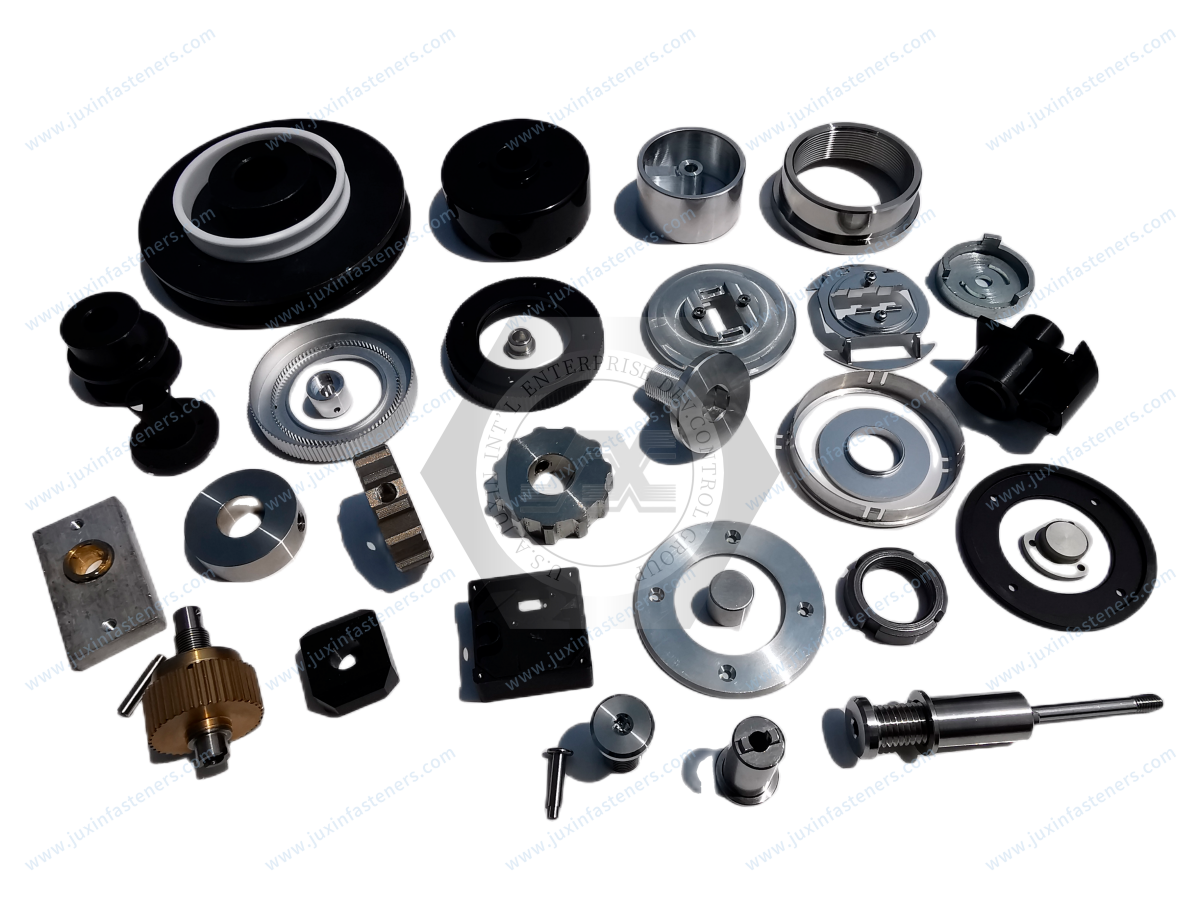
This page should function as the dedicated Fasteners for Aluminum / Aluminum Assembly resource.
Recommended internal links include:
Aluminum Fasteners → aluminum-alloy screws, bolts, nuts and standoffs
Lightweight Automotive Fasteners → steel vs stainless vs aluminum vs titanium vs plastic
Automotive Thin Sheet Fasteners → weld nut vs rivet nut vs self-clinching nut
Automotive Fastener Selection Guide → broader fastening technology selection
Rivet Nuts → grip range, pull-out and spin-out engineering
Blind Rivets → one-sided permanent joining
Threaded Inserts → reinforced reusable threads
Self-Clinching Fasteners → sheet compatibility, push-out and torque-out
Fastener Surface Treatment & Coating Selection → corrosion and friction engineering
Zinc-Nickel Coated Fasteners → Zn-Ni specification
Stainless Steel Fasteners → stainless material selection
Custom Fastener Manufacturing → drawing-based manufacturing and DFM
Fastener Failure Modes → root-cause engineering
Use the existing indexed JUXIN FASTENERS URL when implementing these internal links.
There is no universal best fastener. Rivet nuts, threaded inserts, self-clinching fasteners, blind rivets,
screws and captive fasteners solve different aluminum assembly problems. Selection depends on component form, alloy, thickness, access, load and service requirements.
If a reusable thread is required, rivet nuts or compatible self-clinching fasteners may be considered.
If a permanent non-threaded joint is required, blind rivets may be appropriate. The actual sheet and installation process must be validated.
Yes in many applications, but galvanic corrosion should be evaluated when dissimilar metals are exposed to an electrolyte.
The complete material and environmental system matters.
Potentially, but the aluminum mating thread or bearing surface may become the limiting component. A stronger screw does not automatically create a stronger joint.
No. Direct threads may be sufficient when material, engagement, load and service cycles are appropriate.
Inserts are valuable when stronger or more durable reusable threads are required.
Possible causes include insufficient engagement, excessive tightening, inadequate parent-material strength, repeated wear or unsuitable thread geometry.
A rivet nut is typically mechanically set into relatively thin material and can be installed from one side.
Threaded inserts cover a broader family of technologies used to reinforce or create threads in materials such as machined or cast aluminum.
Yes, when the specific fastener is compatible with the aluminum alloy, hardness, thickness, hole and installation conditions. Material compatibility must be verified.
No. Excessive press force can deform the sheet or fastener. The correct installation window is more important than maximum force.
Not automatically. Closed-end construction does not by itself establish a waterproof or IP-rated assembly.
The entire fastener-to-hole interface must be designed and validated for sealing.
The solution depends on the material pair and environment. Surface treatments, isolation, sealants, drainage and joint design may all be relevant.
There is no universal coating that solves every galvanic condition.
No. A steel, stainless, aluminum or other fastener may be appropriate depending on load, thread strength, corrosion, galvanic compatibility and installation requirements.
Provide the 2D drawing, 3D model where available, aluminum alloy, temper or condition, material thickness, thread, hole size, load, installation access,
surface treatment, environment, annual volume and validation requirements.
The most important principle is:
Do not select the fastener independently from the aluminum component.
A reliable aluminum assembly is created by matching:
Aluminum Alloy + Component Geometry + Thickness + Fastening Technology + Mating Material + Thread + Load + Installation + Corrosion Strategy + Service Conditions
For thin aluminum sheet, a rivet nut or self-clinching fastener may create the required reusable thread.
For a machined housing, a direct thread or threaded insert may be more appropriate.
For a permanent panel joint, a blind rivet may be sufficient.
For a frequently opened enclosure, captive hardware may improve serviceability.
That is why:
Fasteners for Aluminum ≠ Aluminum Fasteners.
JUXIN FASTENERS supports OEM and industrial customers with fastening solutions for aluminum components, including:
Rivet nuts
Blind rivets
Threaded inserts
Self-clinching nuts
Self-clinching studs
Self-clinching standoffs
Screws and bolts
Captive panel fasteners
Standoffs and spacers
Custom drawing-based fasteners
If you are designing an aluminum enclosure, EV component, electrical cabinet, industrial machine, power-electronic housing or other aluminum assembly,
send the technical package for engineering and commercial review.
For an effective RFQ, provide:
2D Drawing + 3D Model + Part / Revision + Application + Aluminum Alloy / Condition + Component Form + Material Thickness
+ Thread + Hole Size + Load Requirement + Installation Access + Surface Treatment + Annual Volume
Where applicable, also provide:
Grip Range + Pull-Out / Spin-Out Requirement + Push-Out / Torque-Out Requirement + Service Cycles + Galvanic Environment
+ Temperature + Sealing Requirement + Validation Requirements
JUXIN FASTENERS
Fasteners for Aluminum | Aluminum Rivet Nuts | Threaded Inserts | Self-Clinching Fasteners | Blind Rivets | Custom OEM Fasteners
Email: info@juxinfasteners.com
Website: www.juxinfasteners.com
Contact Us
Tel.:
+86 020 8621 0320
+86 020 3121 6067
E-mail:
Technical Support:
Navigation
SEND INQUIREY



