
Call Us
+86 136 6007 9809
Call Us
+86 136 6007 9809

Nov. 02, 2023
Aluminum fasteners can reduce component mass, simplify material compatibility in selected aluminum assemblies and
provide useful corrosion characteristics—but they are not direct lightweight substitutes for steel fasteners.
The correct engineering question is not:
"Can we replace this steel screw with an aluminum screw of the same size?"
It is:
"Can an aluminum fastener provide the required joint function, thread strength, preload, corrosion behavior and service life in this specific assembly?"
For engineers and procurement teams, aluminum fastener selection should consider:
Alloy + Temper + Fastener Geometry + Thread Engagement + Mating Material + Preload + Friction + Surface Treatment
+ Galvanic Compatibility + Temperature + Installation + Service Conditions
JUXIN FASTENERS supplies standard and drawing-based aluminum fastening components for selected automotive,
EV, electronics, electrical equipment, automation, machinery and lightweight industrial assemblies.
Available product types can include:
Aluminum screws
Aluminum bolts
Aluminum nuts
Aluminum threaded rods
Aluminum threaded standoffs
Aluminum spacers
Aluminum precision components
Custom CNC-machined aluminum fasteners
Drawing-based aluminum fastening components
The objective is not simply to manufacture a lighter fastener.
The objective is to create a lightweight fastening system that works.
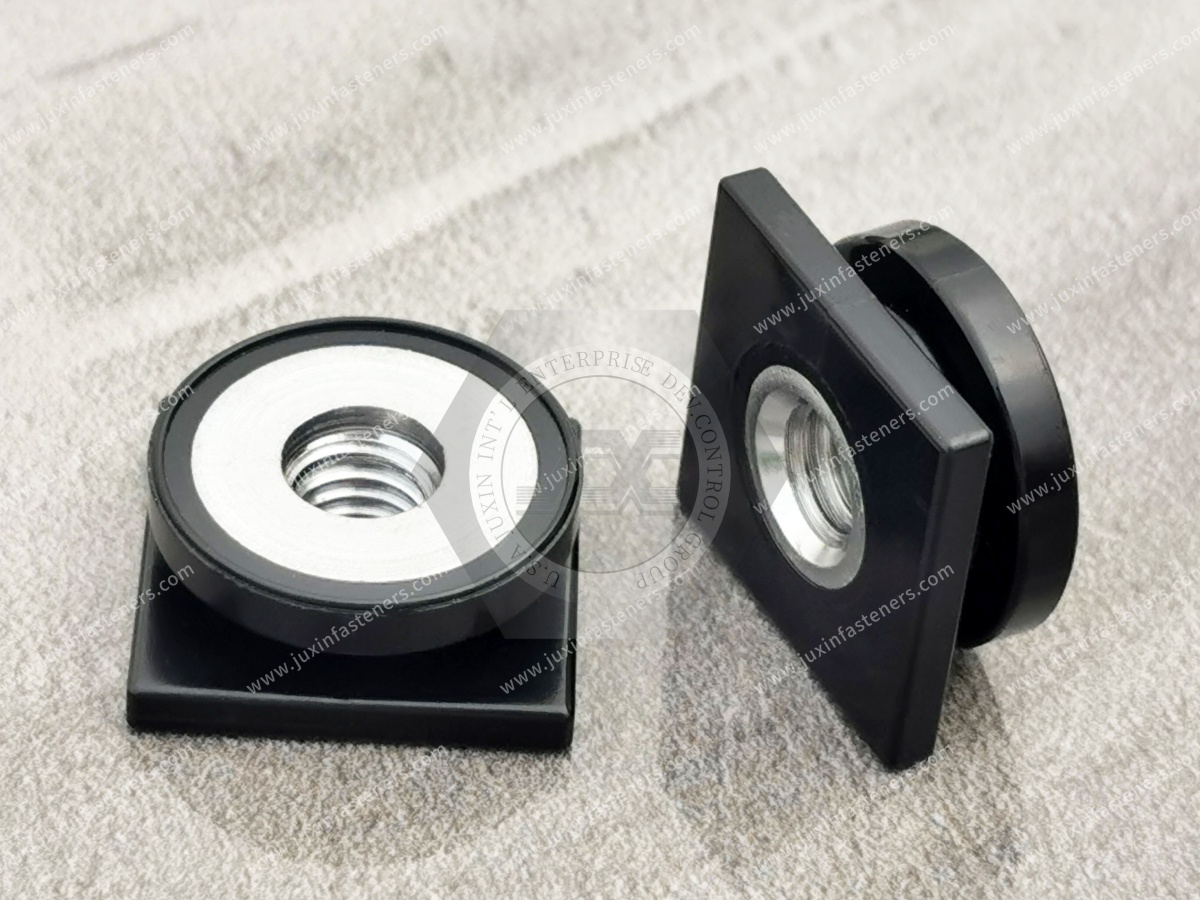
Aluminum fasteners are worth evaluating when an application benefits from one or more of the following:
Low component mass
Compatibility with aluminum assemblies
Corrosion behavior suitable for the environment
Non-ferrous material requirements
Custom lightweight geometry
Appearance or anodized finishes
Reduced magnetic response for selected applications
However, aluminum may be a poor choice when the joint requires:
Very high preload
Mechanical performance beyond the selected aluminum alloy
High thread-bearing capacity in a compact geometry
Severe wear resistance
Extreme service conditions not compatible with the alloy
Direct substitution for a high-strength steel fastener without redesign
Therefore:
Low Density ≠ Automatic Material Suitability.
This is the most important engineering principle for aluminum fasteners.
Aluminum and steel differ in:
Density
Elastic modulus
Strength
Hardness
Thread behavior
Bearing behavior
Thermal expansion
Surface characteristics
A steel-to-aluminum substitution may therefore require changes to:
Fastener diameter
Thread engagement
Head geometry
Bearing area
Tightening strategy
Number of fasteners
Joint geometry
Two fasteners with identical dimensions but different materials are not automatically functionally equivalent.
Same Dimensions ≠ Functional Equivalence.
Aluminum has substantially lower density than steel, which creates an obvious mass advantage for geometrically similar components.
But system-level lightweighting should not be calculated from density alone.
If an aluminum fastener requires:
Larger diameter
Longer engagement
Larger bearing area
Additional reinforcement
the final mass saving can be smaller than a simple material-density comparison suggests.
Therefore:
Lower Density ≠ Proportional Joint Weight Reduction.
Engineers should compare the complete fastening architecture.
The word aluminum is not a complete fastener material specification.
Different aluminum alloys can have significantly different:
Strength
Hardness
Formability
Machinability
Corrosion behavior
Heat-treatment response
Anodizing behavior
An OEM drawing should therefore identify the required alloy and condition where these characteristics are important.
Depending on product geometry, manufacturing route and customer specification, aluminum fastener projects may involve alloys from families such as:
5xxx series
6xxx series
7xxx series
Specific alloy availability and manufacturability should be confirmed during RFQ review.
Common engineering discussions may include alloys such as:
5052
6061
7075
But these alloys are not interchangeable.
5052 is known for useful corrosion resistance and formability in many industrial applications.
However, selecting 5052 for a fastener should depend on:
Required mechanical properties
Forming process
Geometry
Thread requirement
Environment
A material commonly used for sheet products is not automatically the best material for every threaded fastener geometry.
6061 is widely used for machined and structural aluminum components because it provides a useful balance of:
Mechanical properties
Machinability
Corrosion behavior
Availability
It can be considered for selected:
Screws
Bolts
Nuts
Standoffs
Spacers
Precision machined fasteners
The required temper should be defined where mechanical properties matter.
7075 can provide higher strength than many common aluminum alloys.
This makes it attractive for certain weight-sensitive mechanical components.
But:
Higher Alloy Strength ≠ Automatically Better Fastener.
Selection should also consider:
Corrosion environment
Manufacturing route
Thread behavior
Surface treatment
Cost
Availability
Application-specific validation
A higher-strength alloy is only useful when the joint benefits from that additional capability.
Specifying only:
6061 Aluminum
may not fully define the required mechanical condition.
Heat-treated aluminum alloys can be supplied in different tempers.
Therefore, engineering drawings should identify the required material condition when it affects:
Strength
Hardness
Machining
Forming
Functional performance
This leads to another important sourcing principle:
Alloy Name ≠ Finished Fastener Performance.
Manufacturing process and condition matter.
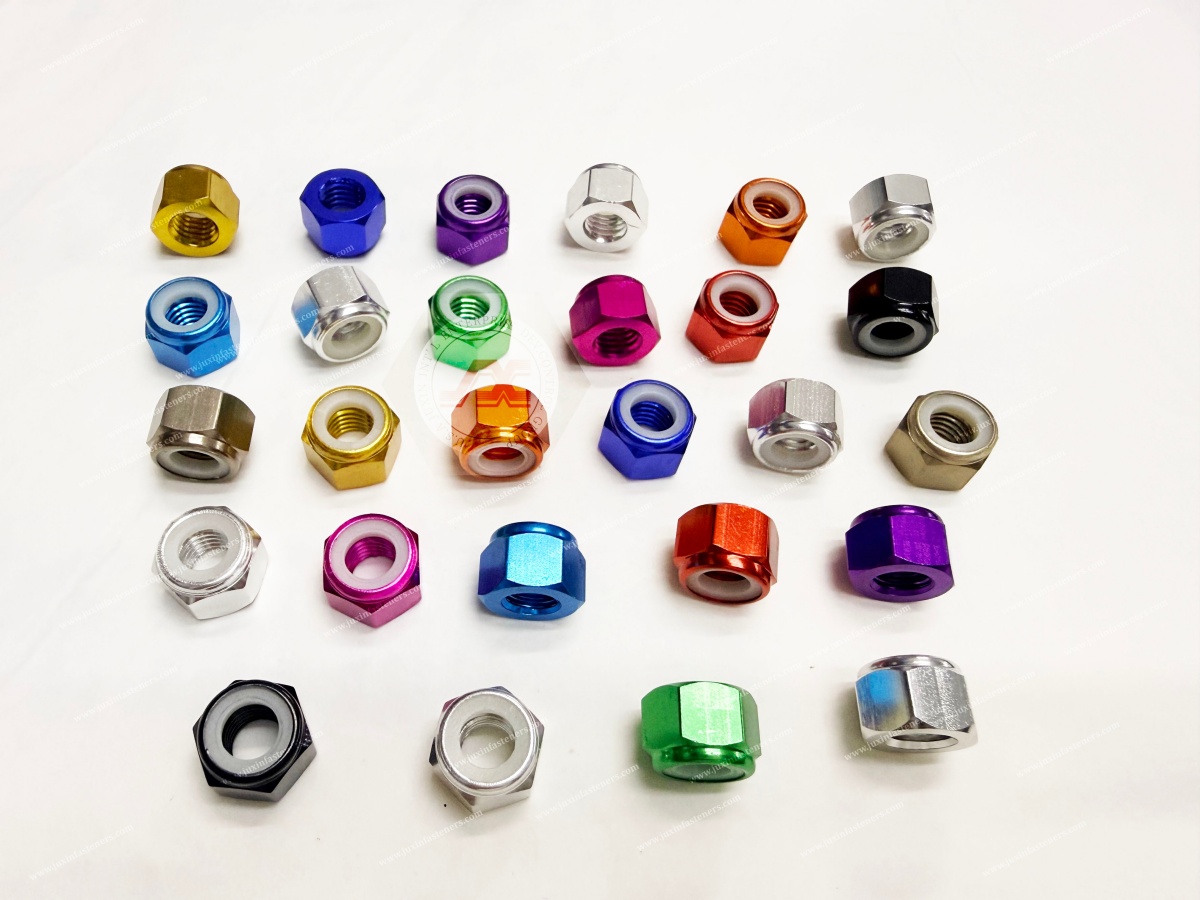
JUXIN FASTENERS can support selected aluminum screw and bolt geometries such as:
Socket head screws
Hex head screws
Button head screws
Flanged screws
Low-profile screws
Custom head geometries
Drawing-based special screws
The correct geometry should be selected according to:
Load
Drive system
Installation space
Bearing area
Required preload
Assembly tooling
Appearance
Serviceability
Fastener head design affects how load is transferred into the joint.
Important variables include:
Head diameter
Bearing area
Under-head geometry
Washer use
Parent material
In softer materials, insufficient bearing area can create local deformation before the fastener reaches the intended joint condition.
Therefore:
Fastener Tensile Strength ≠ Complete Joint Strength.
The bearing interface matters.
Aluminum nuts may be useful where:
Weight reduction is important
Material compatibility supports their use
Required thread strength is appropriate
Corrosion conditions are suitable
But engineers should not pair an aluminum nut with a stronger screw and assume the joint strength follows the screw.
Internal thread strength may become the limiting element.
Important variables include:
Aluminum alloy
Nut geometry
Thread size
Thread engagement
Mating screw material
Installation torque
Required preload
Therefore:
Stronger Mating Screw ≠ Stronger Mating Thread.
The thread pair must be engineered as a system.
Aluminum threaded rods can be considered for selected lightweight assemblies where:
Mechanical requirements are compatible
Long threaded adjustment is needed
Corrosion behavior is suitable
Weight reduction creates value
They should not automatically replace steel threaded rod in high-load applications.
Material strength, thread capacity and deflection should be reviewed.
Aluminum standoffs and spacers can provide:
Lightweight component spacing
Mechanical positioning
Structural separation
Threaded mounting points
Compact assembly architecture
Potential applications include:
Electronics
Communication equipment
Control systems
Instrumentation
Industrial automation
Power electronics
Available geometries can include:
Female-female standoffs
Male-female standoffs
Threaded spacers
Unthreaded spacers
Custom CNC-machined standoffs
This distinction is critical.
Aluminum is electrically conductive.
Therefore:
Aluminum Spacer ≠ Electrical Isolation Component.
If electrical isolation is required, engineers should evaluate an appropriate insulating material or an engineered isolation system.
Possible JUXIN product alternatives for selected applications can include:
Nylon spacers
Plastic standoffs
Insulating washers
Engineering-polymer components
Electrical requirements should be specified separately from mechanical spacing requirements.
Aluminum is conductive, which can be useful in some electrical assemblies.
But:
Conductive Material ≠ Qualified Electrical Connection.
A reliable electrical interface may depend on:
Contact pressure
Oxide layer
Surface treatment
Contact area
Mating material
Current
Temperature
Vibration
Environmental exposure
An aluminum screw should not automatically be treated as a validated current-carrying or grounding component.
Mechanical and electrical requirements must be evaluated separately.
Aluminum naturally forms a thin oxide layer when exposed to the environment.
This contributes to its corrosion behavior.
However, that oxide also affects electrical contact characteristics.
Therefore, engineers should not simultaneously assume:
Natural Oxide = Excellent Corrosion Protection
and:
Bare Aluminum = Predictable Electrical Contact
without considering the actual interface.
Electrical applications require their own contact design.
Anodizing modifies the aluminum surface through an electrochemical conversion process.
Depending on the specified anodizing system, it can provide benefits such as:
Improved surface durability
Improved corrosion behavior
Increased surface hardness
Decorative appearance
Color identification
Possible finishes can include:
Black anodized
Natural / clear anodized
Other specified colors
But the anodizing specification must match the functional requirement.
An anodized surface can improve performance in suitable environments.
But:
Anodized Aluminum ≠ Corrosion-Proof Assembly.
Performance still depends on:
Alloy
Anodizing process
Thickness
Sealing
Damage
Thread contact
Mating material
Environment
The complete assembly matters.
This is particularly important for precision threaded components.
Anodizing modifies the surface and can affect dimensional relationships.
Engineers should consider its effect on:
External threads
Internal threads
Close fits
Recesses
Bearing surfaces
Precision diameters
Therefore, drawing dimensions and tolerances should be coordinated with the intended surface treatment.
Increasing surface-treatment thickness is not automatically beneficial.
Excessive buildup in functional areas can affect:
Thread fit
Assembly
Dimensional tolerance
Mating features
Surface treatment should be engineered with the geometry.
Threads are often one of the most important design considerations for aluminum fastening systems.
Relevant variables include:
Alloy
Thread diameter
Pitch
Engagement length
Mating material
Required preload
Installation torque
Repeated service
A stronger mating screw does not compensate for insufficient thread engagement.
Thread engagement determines how load is distributed through the mating threads.
If engagement is insufficient, the internal or external aluminum thread may strip before the stronger mating component reaches its intended capacity.
Therefore, engineers should evaluate:
Fastener Strength + Mating Thread Strength + Engagement Length
rather than fastener strength alone.
Installation torque is not the same as clamp force.
A conceptual relationship can be represented as:
T = K × F × d
where:
T = tightening torque
K = torque coefficient influenced strongly by friction
F = preload
d = nominal fastener diameter
This is a simplified engineering relationship, not a universal tightening specification.
The important principle is:
Torque ≠ Preload.
Friction has a major influence on the relationship.
A torque value established for a steel bolt should not automatically be transferred to an aluminum fastener of the same thread size.
Differences may include:
Material strength
Thread strength
Friction
Bearing behavior
Elastic response
Surface treatment
Therefore:
Same Thread Size ≠ Same Tightening Torque.
Installation requirements should be validated for the actual material pair and joint.
Thread damage and adhesive wear can become concerns in certain material combinations and assembly conditions.
Potential influencing factors include:
Alloy
Surface condition
Mating material
Thread fit
Installation speed
Lubrication
Repeated assembly
Where repeated service is expected, the thread system should be evaluated rather than assuming unlimited reuse.
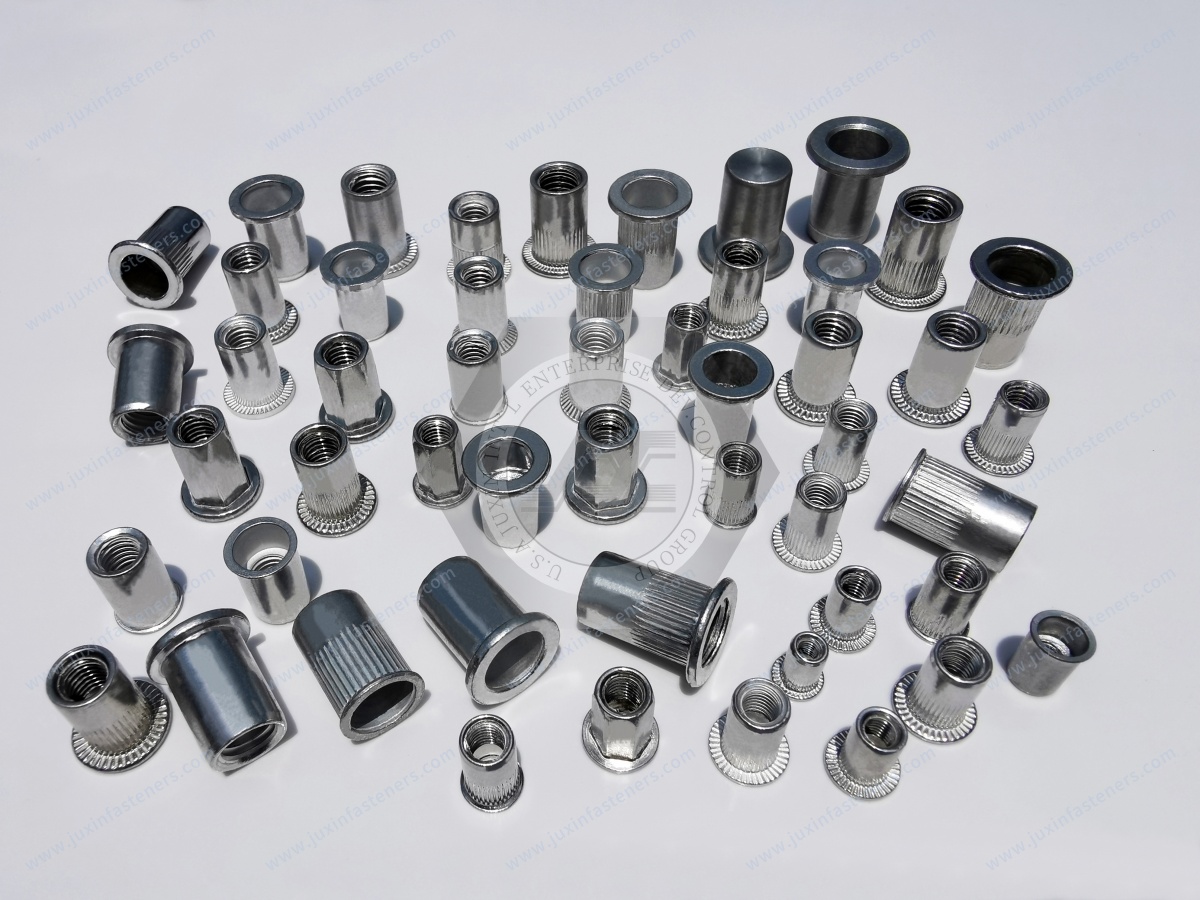
Galvanic corrosion is one of the most important design considerations for aluminum fasteners and aluminum assemblies.
When dissimilar metals are electrically connected in the presence of an electrolyte, one material can experience accelerated corrosion.
Potential mixed-material interfaces include:
Aluminum + carbon steel
Aluminum + stainless steel
Aluminum + copper
Aluminum + other conductive alloys
Risk depends on more than the material names.
Important factors include:
Environment
Surface treatment
Area ratio
Electrical contact
Joint geometry
Water retention
Coating damage
Therefore:
Corrosion-Resistant Fastener ≠ Corrosion-Resistant Assembly.
Using an aluminum fastener with an aluminum component may reduce some dissimilar-metal concerns.
But it does not automatically create an optimum joint.
Engineers still need to evaluate:
Alloy compatibility
Thread strength
Preload
Temperature
Surface treatment
Wear
Service cycles
Material similarity does not replace joint engineering.
Stainless steel fasteners are frequently considered for aluminum assemblies because of their mechanical and corrosion properties.
However, the combination can create galvanic concerns in suitable environments.
Engineering solutions may involve:
Surface treatments
Isolation
Sealants
Washers
Joint design
Environmental control
The correct solution depends on the actual assembly.
Aluminum has a different coefficient of thermal expansion from steel and many other engineering materials.
When an aluminum fastener or aluminum parent component is combined with another material, thermal cycling can change joint conditions.
Potential effects include:
Preload variation
Relative movement
Contact pressure changes
Sealing changes
This is particularly relevant in:
EV equipment
Power electronics
Thermal-management systems
Outdoor electrical equipment
Machinery with repeated temperature cycles
A joint that performs correctly during assembly may behave differently at operating temperature.
Where temperature variation is significant, engineers should consider the complete thermal cycle.
Aluminum fasteners can be evaluated for selected automotive and EV components where the mechanical requirements support their use.
Potential applications may include:
Lightweight equipment
Electronic modules
Interior systems
Housings
Brackets
Battery-related auxiliary equipment
Thermal-management hardware
Selection should consider:
Joint load
Parent material
Thread strength
Corrosion
Thermal cycling
Galvanic interaction
Installation
Serviceability
Using aluminum does not automatically make a component suitable for an EV battery system.
Battery-related assemblies can involve requirements for:
Structural performance
Sealing
Electrical safety
Thermal behavior
Corrosion
Crash performance
These are system-level requirements.
The fastener must be evaluated within the actual assembly.
Electronics can benefit from aluminum fasteners because of:
Low mass
Machinability
Compact custom geometry
Thermal conductivity
Appearance
Potential products include:
Aluminum screws
Aluminum standoffs
Aluminum spacers
Custom precision components
Potential applications include:
Control equipment
Communication equipment
Electronic housings
Instrumentation
Power electronics
But electrical function must be defined separately.
Modern data-center and electrical infrastructure contains significant amounts of:
Aluminum housings
Electrical cabinets
Power electronics
Cooling equipment
Communication hardware
Server and control equipment
Selected lightweight fastening components may include:
Aluminum standoffs
Aluminum spacers
Aluminum screws
Custom machined aluminum components
Engineering selection should consider:
Mechanical load
Electrical requirements
Thermal conditions
corrosion environment
serviceability
Where electrical insulation is required, polymer fasteners or insulating components may be more appropriate.
Automation equipment often uses aluminum frames, lightweight tooling and precision assemblies.
Potential applications include:
Robot equipment
Sensors
Control modules
Machine guards
Lightweight brackets
Instrumentation
Aluminum fasteners can support mass reduction where loads and service requirements are compatible.
Semiconductor and precision equipment may use aluminum structural and equipment components.
Potential fastening requirements can include:
Low mass
Precision geometry
Corrosion behavior
Clean assembly
Custom dimensions
However, specialized cleanroom, vacuum, contamination or process requirements must be defined by the customer.
A generic aluminum fastener should not automatically be described as semiconductor-qualified.
Aluminum fasteners may be used in selected aerospace-related equipment and lightweight assemblies.
However, aerospace structural and flight-critical components are governed by specific material, process, traceability, qualification and customer requirements.
Therefore:
Aluminum Material ≠ Aerospace Qualification.
JUXIN FASTENERS should evaluate drawing-based aerospace-related inquiries against the actual specification rather than treating standard
industrial aluminum fasteners as automatically approved for flight-critical applications.
Industrial machinery applications can include:
Lightweight covers
Equipment housings
Instrumentation
Automation modules
Precision assemblies
Potential products include:
Aluminum screws
Nuts
Standoffs
Spacers
Custom machined fasteners
The decision should be based on mechanical requirements rather than weight alone.
Selected renewable-energy equipment can contain:
Aluminum frames
Electrical enclosures
Control equipment
Monitoring systems
Aluminum fastening components may be evaluated where:
Loads are compatible
Weight reduction matters
Corrosion requirements are understood
Galvanic compatibility is controlled
Outdoor service environments require particular attention to material combinations and water exposure.
The appropriate manufacturing route depends on:
Alloy
Geometry
Tolerance
Annual volume
Mechanical requirements
Surface treatment
Potential processes include:
Cold forming
CNC machining
Automatic turning
Thread rolling
Thread cutting
Secondary machining
Not every aluminum alloy and fastener geometry is equally suitable for every process.
Cold forming can provide efficient high-volume production for suitable materials and geometries.
Potential advantages include:
Material utilization
Production rate
Repeatability
Scalable unit economics
But manufacturability depends on:
Alloy
Temper
Head geometry
Forming ratio
Tooling
An alloy selected only for final strength may not be optimum for the intended forming route.
CNC machining can be suitable for:
Complex geometries
Precision components
Custom standoffs
Spacers
Prototype fasteners
Lower-volume OEM components
It provides design flexibility but usually has different production economics from cold forming.
Therefore:
CNC Machining ≠ Automatically Better Manufacturing.
The manufacturing process should match geometry and volume.
Depending on geometry, material condition and manufacturing route, aluminum threads may be produced using different processes.
The selected process can influence:
Geometry
Surface condition
Production economics
Material behavior
The supplier should select a process compatible with the specified alloy, tolerance and application.
An early aluminum prototype may be CNC-machined because tooling has not yet been developed.
If annual volume later increases substantially, engineering should review whether:
Cold forming
Near-net-shape forming
Automatic turning
Hybrid processing
could reduce unit cost.
Therefore:
Prototype Process ≠ Final Production Process.
Early DFM review can improve scalability.
Custom aluminum fasteners may be appropriate when standard hardware cannot satisfy:
Weight target
Packaging space
Head geometry
Thread requirement
Integrated spacer function
Appearance
Installation method
JUXIN FASTENERS can review customer drawings for:
Material
Geometry
Tolerance
Thread
Surface treatment
Manufacturing route
Annual volume
Potential custom products include:
Special screws
Custom bolts
Threaded spacers
Standoffs
Shoulder fasteners
Precision threaded components
Drawing-based CNC parts
Procurement may consider aluminum to reduce mass or improve compatibility with an aluminum assembly.
This should be treated as an engineering change.
Review:
Required load
Fastener strength
Thread engagement
Head bearing
Preload
Installation torque
Fatigue
Corrosion
Galvanic interaction
Temperature
Surface treatment
Service cycles
Therefore:
Steel → Aluminum Is Not a Purchasing Substitution Alone.
It is a joint-design decision.
These materials solve different engineering problems.
| Decision Factor | Aluminum | Stainless Steel |
|---|---|---|
| Density | Lower | Higher |
| Mechanical capability | Alloy-dependent | Grade-dependent |
| Corrosion behavior | Environment / surface dependent | Strong in suitable environments |
| Galvanic considerations | Important | Important |
| Galling | Can be relevant | Can be relevant |
| Thermal expansion | Higher than steel-based materials | Different from aluminum |
| Cost | Alloy/process dependent | Grade/process dependent |
| Lightweighting | Strong advantage | Limited |
| High preload | Requires careful evaluation | Application-dependent |
Neither material is universally superior.
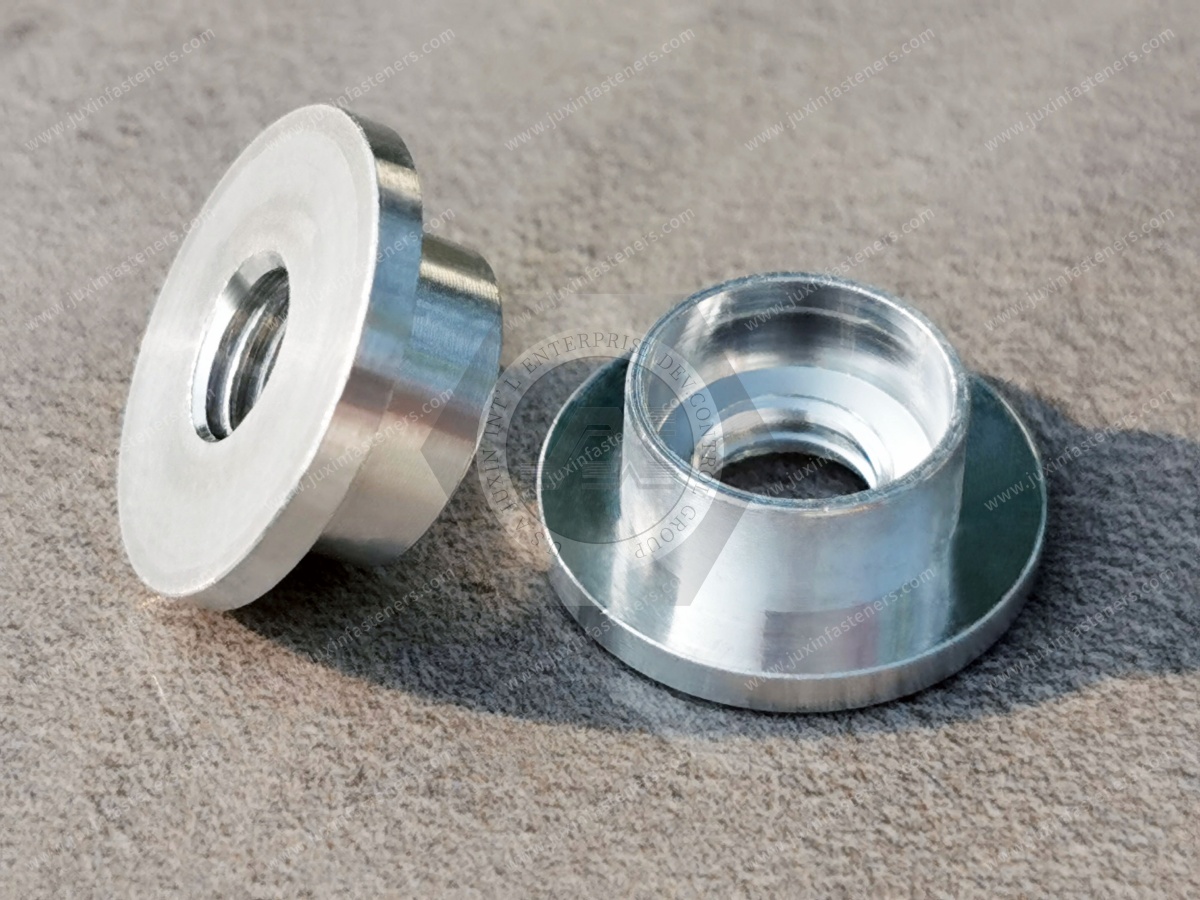
Titanium can provide higher specific mechanical performance in selected applications but at substantially different material and manufacturing economics.
Aluminum can be attractive when:
Loads are moderate
Low mass matters
Cost must remain controlled
Titanium may be evaluated where:
Higher specific strength is required
The environment justifies it
Cost is acceptable
Again:
Higher-Performance Material ≠ Better Commercial Solution.
Both can support lightweighting but serve different engineering roles.
Plastic can provide:
Very low mass
Electrical isolation
Different chemical behavior
Aluminum can provide:
Higher mechanical capability
Thermal conductivity
Metallic threads
Precision machining capability
Selection should follow the joint function.
Depending on the drawing and project, quality control can include:
Material verification
Alloy / temper documentation
Dimensional inspection
Thread inspection
Mechanical testing
Surface-treatment inspection
Anodizing thickness where specified
Appearance
Functional testing
The required inspection plan should follow the component risk and customer requirements.
Two aluminum fasteners should not be considered equivalent simply because both suppliers state:
6061
or:
7075
Qualification may need to compare:
Exact alloy
Temper
Material properties
Manufacturing route
Thread
Geometry
Surface treatment
Anodizing specification
Critical dimensions
Functional performance
Therefore:
Same Alloy Name ≠ Automatic Functional Equivalence.
The cost of a custom aluminum fastener can depend on:
Alloy
Material availability
Geometry
Tolerance
Thread
Manufacturing route
Surface treatment
Anodizing
Inspection
Annual volume
Tooling
A high-volume cold-formed screw and a low-volume CNC-machined precision fastener have very different cost structures.
Procurement should therefore provide realistic annual volumes during RFQ.
Part price should not be evaluated independently from the assembly.
A useful model is:
Total Installed Cost = Part Price + Installation + Tooling + Inspection + Rework + Scrap + Downtime + Logistics + Supply Risk
For example, a cheaper aluminum fastener that strips during installation can create far more cost than the unit-price saving.
For an effective engineering and commercial review, provide:
2D drawing
3D model where available
Part number
Drawing revision
Application
Aluminum alloy
Temper where required
Thread
Mating component
Parent material
Required mechanical properties
Load requirement
Surface treatment
Anodizing requirement
Appearance requirement
Service temperature
Corrosion environment
Installation method
Annual volume
Sample quantity
Validation requirements
Applicable ISO, DIN, EN, ASME/ANSI, SAE, ASTM or customer specification
For material-substitution projects, also provide:
Current fastener material
Current fastener geometry
Weight-reduction objective
Existing tightening requirement
Mating thread material
Galvanic concerns
Service cycles
A practical decision sequence is:
Joint Function → Load → Parent Material → Aluminum Alloy / Temper → Geometry → Thread Engagement → Preload
→ Mating Material → Galvanic Compatibility → Temperature → Surface Treatment → Manufacturing Route → Validation
If any of these variables changes significantly, the joint should be reviewed.
Procurement should avoid sending only:
"Please quote M6 aluminum screw."
That leaves too many engineering variables undefined.
A better RFQ identifies:
Drawing + Alloy + Temper + Thread + Surface Treatment + Mating Material + Application + Annual Volume + Validation
This improves:
Supplier comparison
Technical equivalence
Quotation accuracy
Sample approval
Second-source development
This page should function as the dedicated Aluminum Fastener Engineering & OEM Sourcing resource.
Recommended internal links include:
Lightweight Automotive Fasteners → steel vs stainless vs aluminum vs titanium vs plastic selection
Automotive Fastener Selection Guide → fastening technology selection
Automotive Threaded Fasteners → preload and threaded-joint engineering
Automotive Thin Sheet Fasteners → weld nut vs rivet nut vs self-clinching nut
Fastener Surface Treatment & Coating Selection → corrosion and friction engineering
Stainless Steel Fasteners → stainless material selection
Titanium Fasteners → high-specific-strength fastening
Plastic & Nylon Fasteners → polymer fastening
Threaded Inserts for Plastic → plastic joint engineering
Custom Fastener Manufacturing → cold forming, CNC machining and DFM
Fastener Failure Modes → root-cause engineering
Use the existing indexed JUXIN FASTENERS URL when implementing these internal links.
Not as a general rule. Strength depends on the specific aluminum alloy, temper, steel grade and geometry.
The complete joint should be evaluated rather than comparing material names.
There is no universal best alloy. 6061, 7075 and other alloys provide different combinations of strength, corrosion behavior, formability, machinability and cost.
The application and manufacturing process determine the appropriate choice.
Not automatically. Strength, stiffness, thread engagement, preload, bearing stress, thermal expansion and installation torque may differ.
Steel-to-aluminum substitution should be treated as an engineering change.
Potentially, but galvanic corrosion should be evaluated when dissimilar metals are exposed to an electrolyte. Surface treatment, isolation and environment can affect the result.
No. Anodizing can improve surface performance, but the complete assembly, environment, coating damage, thread contact and mating materials still affect corrosion.
It can affect dimensional relationships at the surface. Precision internal and external threads should be designed and inspected with the specified anodizing process in mind.
No. Aluminum is electrically conductive. If electrical isolation is required, an appropriate insulating material or engineered isolation system should be used.
Aluminum is conductive, but material conductivity alone does not qualify a fastener as an electrical connection.
Contact resistance, oxide, surface treatment, pressure, current and thermal behavior must be evaluated.
Aluminum generally has low magnetic response compared with ferromagnetic steels, but this alone does not make an aluminum fastener an EMI, EMC or electrical-system solution.
They may be suitable for selected EV-related assemblies when mechanical, corrosion, galvanic, thermal and service requirements are satisfied.
Aluminum material alone does not establish battery-system qualification.
Provide the 2D drawing, 3D model where available, alloy, temper, thread, mating component, load requirement, surface treatment,
service environment, installation method, annual volume and validation requirements.
The main advantage of aluminum is obvious:
low density.
But successful aluminum fastening depends on much more:
Alloy + Temper + Geometry + Thread + Engagement + Preload + Mating Material + Galvanic Compatibility + Temperature + Surface Treatment + Manufacturing Process
This is why the right question is not:
"How much lighter is aluminum than steel?"
It is:
"Can this aluminum fastening system maintain the required joint function throughout its service conditions?"
JUXIN FASTENERS supports industrial OEM customers with standard and custom aluminum fastening components, including:
Aluminum screws
Aluminum bolts
Aluminum nuts
Aluminum threaded rods
Aluminum standoffs
Aluminum spacers
Precision aluminum components
Custom CNC-machined fasteners
Drawing-based aluminum fasteners
If you are developing a lightweight assembly, replacing a steel fastener, designing an aluminum structure or qualifying a second source,
send the technical package for engineering and commercial review.
For an effective RFQ, provide:
2D Drawing + 3D Model + Part / Revision + Application + Aluminum Alloy / Temper + Thread + Mating Component
+ Parent Material + Mechanical Requirement + Surface Treatment + Installation Method + Annual Volume
For material-substitution projects, also provide:
Current Material + Current Geometry + Weight Objective + Preload / Tightening Requirement + Galvanic Environment
+ Temperature + Service Cycles + Validation Requirements
JUXIN FASTENERS
Aluminum Fasteners | Aluminum Screws | Aluminum Bolts | Aluminum Nuts | Aluminum Standoffs | Custom Aluminum Fasteners
Email: info@juxinfasteners.com
Website: www.juxinfasteners.com
Contact Us
Tel.:
+86 020 8621 0320
+86 020 3121 6067
E-mail:
Technical Support:
Navigation
SEND INQUIREY



