
Call Us
+86 136 6007 9809
Call Us
+86 136 6007 9809

May. 24, 2026
Anti-Loosening Fastener Technology in Rail Transit Systems
Anti-loosening fastener technology plays a critical role in ensuring the safety, stability, and long-term reliability of modern rail transit systems. In high-speed rail, metro networks, and light rail vehicles, continuous vibration and dynamic loading create one of the most challenging environments for mechanical fastening systems.
Studies in railway engineering show that rail vibration is responsible for more than 80% of fastener failures, primarily due to preload loss. Without effective anti-loosening fasteners, joint instability can lead to structural fatigue, maintenance issues, and potential safety risks.
As a result, anti-loosening fasteners for rail transit have become an essential part of modern rail fastening system design, ensuring secure connections across structural, mechanical, and electrical assemblies.
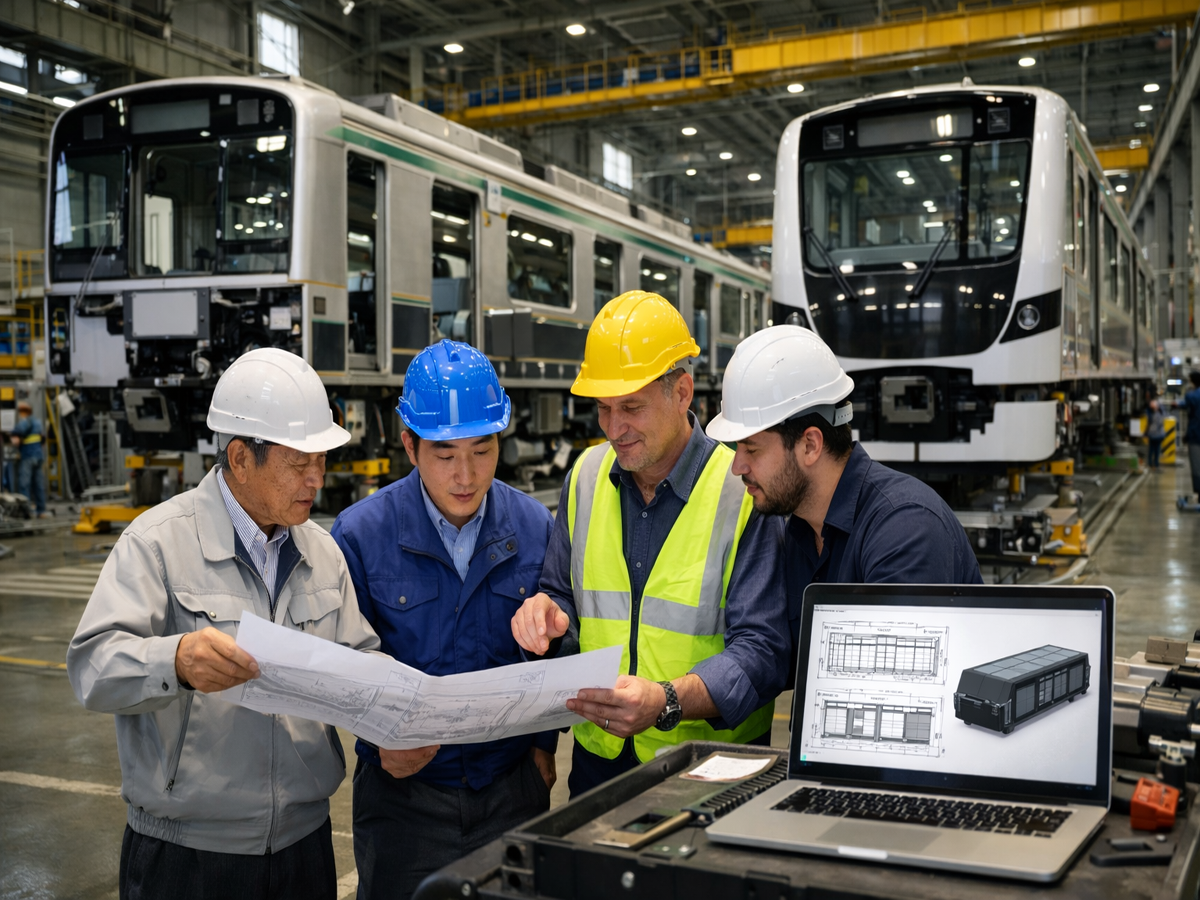
Why Anti-Loosening Fasteners Are Critical in Rail Transit Systems
Rail vehicles are exposed to continuous and multi-directional vibration sources, including:
Wheel-rail interaction forces
High-speed aerodynamic vibration
Braking and acceleration cycles
Track irregularities
Structural resonance effects
These conditions gradually reduce bolt preload, which is the primary cause of joint loosening.
In rail transit fastener systems, even a small preload loss can result in:
Joint separation
Increased noise and vibration
Reduced structural rigidity
Accelerated fatigue failure
Higher maintenance frequency
To address these challenges, engineering-grade anti-loosening fasteners are required.
Core Anti-Loosening Fastener Technologies
Wedge-Lock Washer Systems
Wedge-lock washers are one of the most reliable solutions for high-vibration rail environments.
They work by converting vibration energy into increased clamp force rather than allowing loosening.
Typical applications include:
Rail bogie assemblies
Structural frame connections
Suspension systems
Heavy-duty mechanical joints
Advantages:
High resistance to vibration loosening
Stable preload retention
Reusable fastening performance
Suitable for high-load rail systems
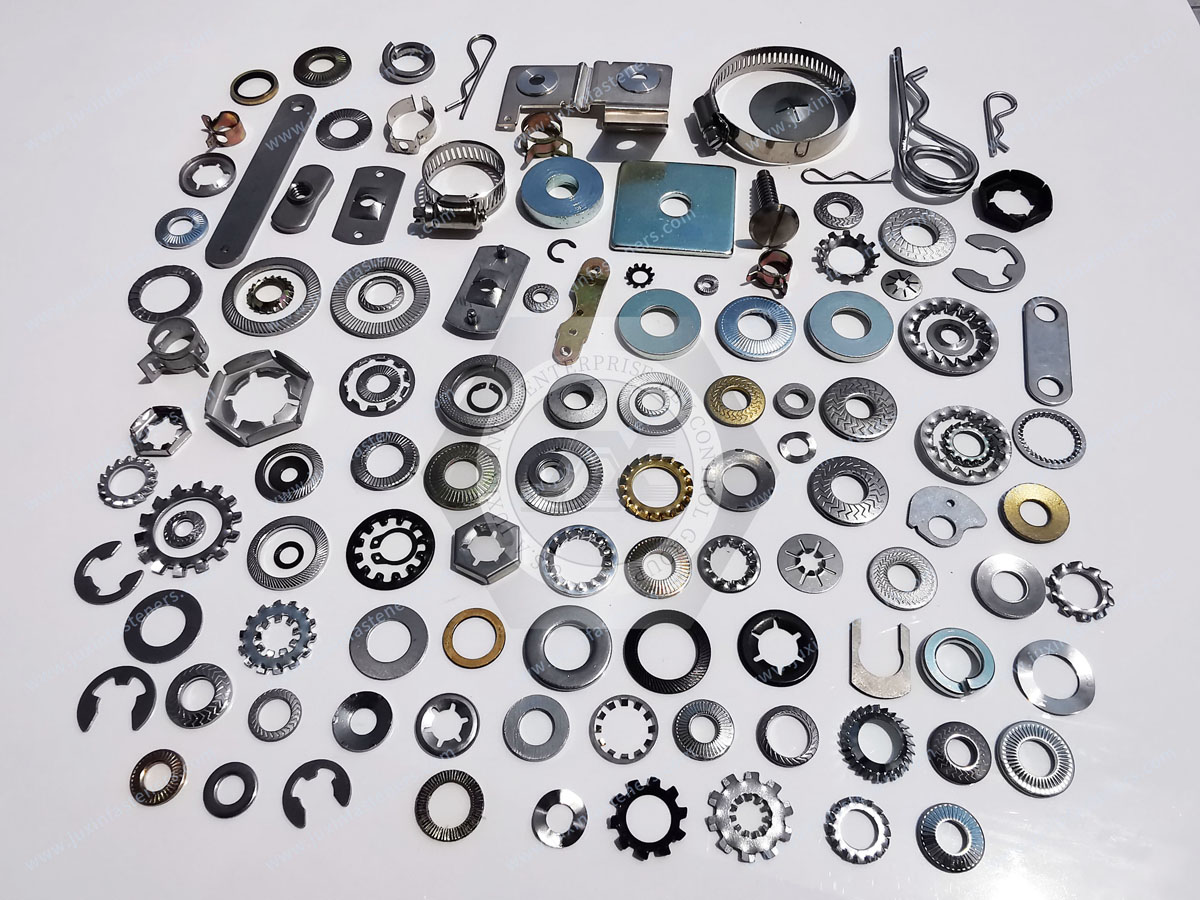
Double-Tooth Locking Washers
Double-tooth washers use mechanical biting action to increase friction between mating surfaces.
They are widely used in rail transit applications where moderate vibration resistance is required.
Typical applications include:
Interior structural assemblies
Electrical equipment brackets
HVAC mounting systems
Auxiliary rail components
Advantages:
Simple installation
Cost-effective anti-loosening performance
Improved surface grip
Enhanced joint stability
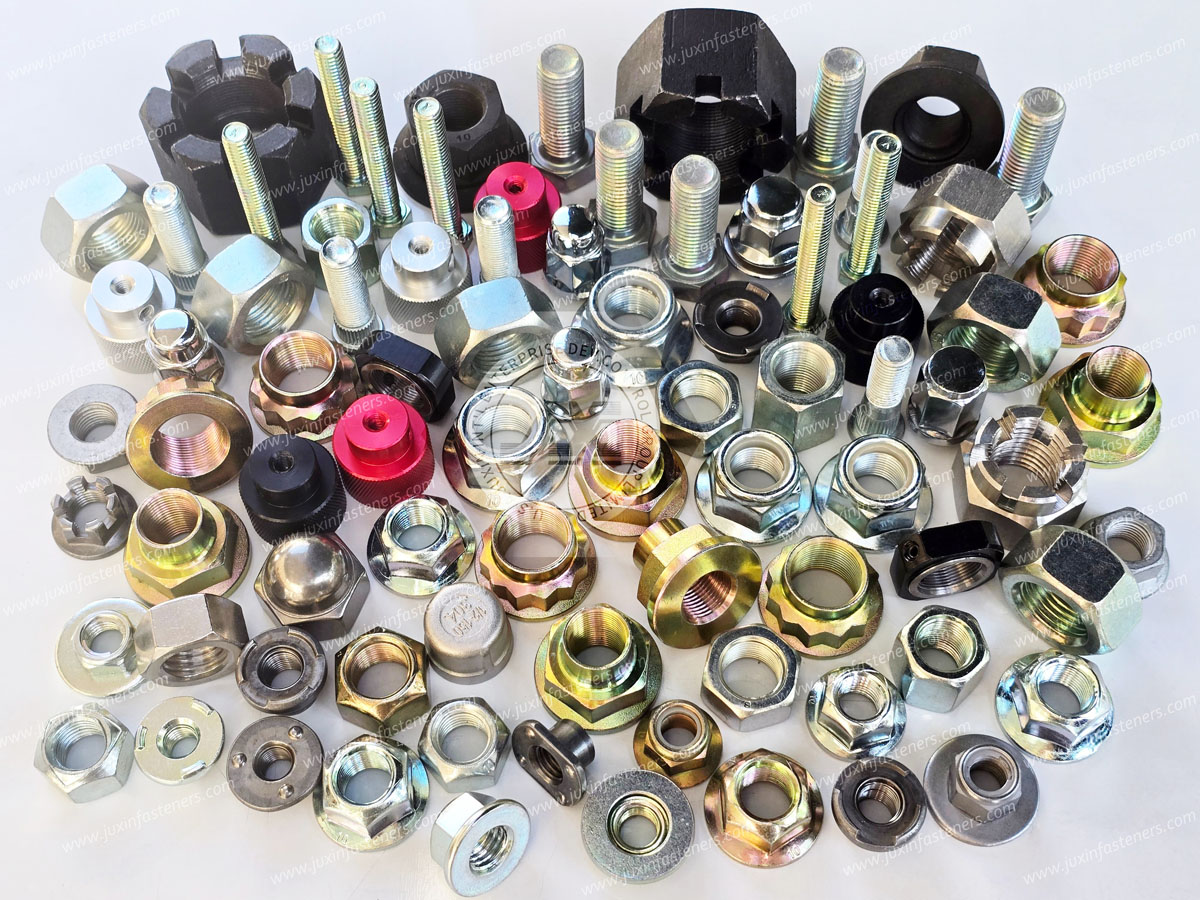
Slotted Self-Locking Nuts
Slotted self-locking nuts use controlled deformation and interference to maintain torque resistance.
They are commonly used in safety-critical rail assemblies.
Applications include:
Brake system components
Wheel assembly structures
Rail vehicle suspension systems
Safety structural joints
Advantages:
High torque retention capability
Reliable performance under cyclic vibration
No additional locking components required
Suitable for long-term service environments
Torque-Controlled Fastening Systems
Torque-controlled fastening systems ensure that the correct preload is applied during installation and maintained during operation.
These systems are essential for modern rail transit fastener solutions that require precision assembly.
Applications include:
Automated rail vehicle production lines
Structural assembly operations
Maintenance and repair systems
Critical safety joints
Advantages:
Consistent assembly quality
Reduced human error
Improved lifecycle reliability
Traceable fastening data
Engineering Principles Behind Anti-Loosening Fasteners
Anti-loosening performance in rail transit systems is achieved through three core engineering mechanisms:
Mechanical Interlocking
Mechanical structures physically prevent rotational movement between fastener components. This ensures that vibration cannot cause gradual loosening over time.
Elastic Deformation
Certain locking elements are designed to deform elastically during installation, maintaining continuous pressure and resisting preload loss under vibration.
Friction Stabilization
Increased friction between contact surfaces reduces the possibility of relative movement between connected parts, improving overall joint stability.
These combined mechanisms form the foundation of modern anti-loosening fastener technology in rail transit systems.
Testing Standards for Rail Anti-Loosening Fasteners
To ensure reliability in real-world railway environments, anti-loosening fasteners must pass rigorous engineering validation tests.
Junker Vibration Test
The Junker test is widely used to simulate transverse vibration conditions and measure preload loss over time.
It evaluates:
Fastener loosening resistance
Preload stability under vibration
Long-term joint behavior
Torque Decay Analysis
Torque decay testing measures how fasteners retain tightening force over time under simulated operating conditions.
It helps engineers evaluate:
Fastener durability
Locking system effectiveness
Maintenance cycle requirements
Role in Modern Rail Transit Fastener Systems
Anti-loosening fasteners are a core component of integrated rail transit fastening engineering. They are not standalone products but part of a system-level approach that includes:
Structural fastener design optimization
Material selection (stainless steel and alloy steel)
Vibration-resistant engineering structures
Lifecycle maintenance strategies
This system ensures that rail vehicles maintain safety and reliability throughout their operational lifespan.
Conclusion
Anti-loosening fastener technology is essential for maintaining the structural integrity of rail transit systems subjected to continuous vibration and dynamic loading. By using advanced solutions such as wedge-lock washers, double-tooth locking washers, slotted self-locking nuts, and torque-controlled fastening systems, railway manufacturers can significantly reduce failure rates and extend service life.
As rail transit systems continue to evolve toward higher speeds and lighter structures, anti-loosening fasteners will remain a fundamental engineering requirement for safety, efficiency, and long-term performance.
 MORE NEWS
Sep. 27, 2026
Sep. 27, 2026
Sep. 27, 2026
Contact Us
Tel.:
+86 020 8621 0320
+86 020 3121 6067
E-mail:
Technical Support:
Navigation
SEND INQUIREY