
Call Us
+86 136 6007 9809
Call Us
+86 136 6007 9809

May. 24, 2026
Technical Application Solution: Anti-Loosening Fastener Technology in Rail Transit Systems
The operational integrity of modern rail transit systems—including high-speed rail, heavy-haul freight, and urban metro networks—demands absolute structural reliability under extreme, continuous dynamic stress. Among the various mechanical challenges faced by track and rolling stock engineers, vibration-induced loosening remains the most critical threat to infrastructure safety.
Engineering data indicates that rail vibration causes over 80% of fastener failures due to preload loss. When standard bolting systems are subjected to the intense transverse shear stresses inherent in rail transport, micro-displacements eliminate the friction between threads, leading to catastrophic self-loosening.
Implementing advanced anti-loosening fastener rail transit technology is no longer optional; it is a foundational safety requirement for modern transportation infrastructure.
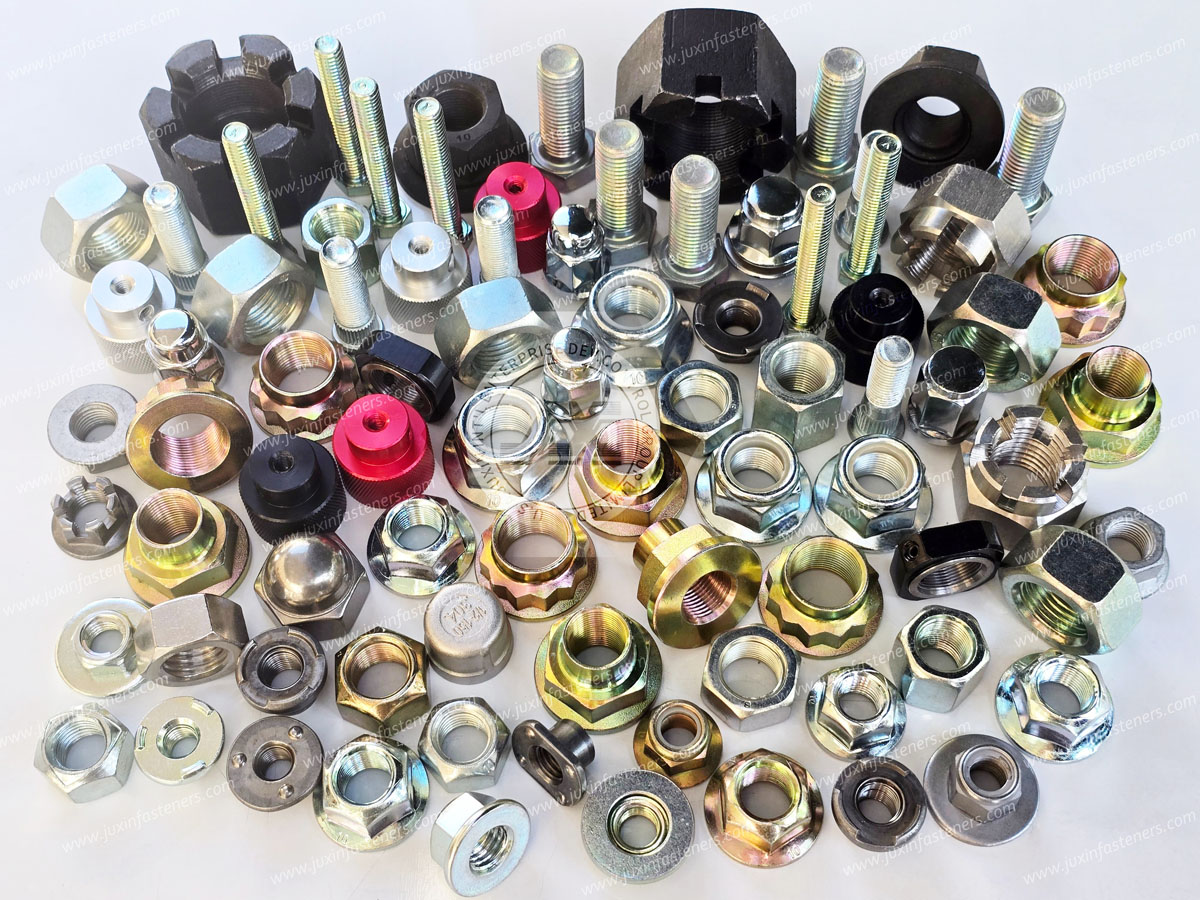
Core Anti-Loosening Technologies for Rail Infrastructure
To mitigate severe dynamic vibration and maintain optimal clamping force, advanced mechanical locking mechanisms must be deployed. Our enterprise specializes in high-performance engineering components designed to withstand the harshest railway environments:
Wedge-Lock Washers: Utilizing tension instead of friction, these washers feature cams on the inside and radial teeth on the outside. They create a "wedge effect" that prevents the bolt from loosening even under extreme lateral vibration.
Double-Tooth Locking Washers: Engineered with dual-surface serrations, these components deeply embed into both the nut face and the mating substrate, providing dual-layered friction and mechanical resistance against rotational backing off.
Slotted Self-Locking Nuts: Designed with a precision-engineered slotted profile and a deformed upper thread segment, these nuts provide a continuous radial locking force, ensuring thread engagement remains secure under violent cyclic loading.
Torque-Controlled Fastening Systems: A comprehensive system pairing specialized fasteners with calibrated installation parameters. By managing the exact tightening torque, engineers achieve the precise preload window required to minimize fatigue and maximize operational lifespan.
Engineering Principles: How We Defeat Preload Loss
Effective resistance against intense rail vibration requires a multi-layered approach to thread dynamics. Our anti-loosening fasteners rail transit solutions utilize three fundamental mechanical principles to guarantee joint integrity:
Mechanical Interlocking: Transitioning from passive friction to active physical constraints. Components like wedge-lock mechanisms ensure that any attempt by the bolt to loosen automatically increases the clamping force.
Elastic Deformation: Utilizing the spring-back properties of high-tensile materials. The fasteners store elastic energy during installation, continuously compensating for any structural settling, thermal expansion, or material relaxation in the joint.
Friction Stabilization: Optimizing thread-locking geometry to maximize the coefficient of friction under variable loads, preventing the initial micro-slips that precipitate complete torque decay.
Rigorous Validation and Testing Standards
In the European and American rail sectors, components must demonstrate compliance through standardized, empirical testing before deployment. Our manufacturing and quality control processes adhere strictly to global transit benchmarking:
The Junker Vibration Test
Widely recognized as the most severe test for bolted joints, the Junker test subjects the fastening assembly to intense transverse loading forces. Our anti-loosening solutions consistently maintain their preload throughout the test, outperforming standard locking mechanisms that fail within seconds under the same lateral displacement.
Torque Decay Analysis
We conduct exhaustive torque decay profiling to simulate a multi-year operational lifespan. By measuring residual clamping force after millions of vibration cycles, we ensure our fasteners maintain sufficient clamping force to eliminate unscheduled maintenance intervals.
Optimize Your Rail Infrastructure Today
Choosing the correct fastening technology directly impacts the safety, lifecycle costs, and reliability of your transit infrastructure. Our dedicated engineering team provides tailored consultations to assist track design engineers and procurement departments in selecting the exact specifications required for specialized trackwork, switches, crossings, and rolling stock bogies.
Discover our comprehensive range of certified transit hardware and review our complete technical portfolio at www.juxinfasteners.com.
 MORE NEWS
Sep. 27, 2026
Sep. 27, 2026
Sep. 27, 2026
Contact Us
Tel.:
+86 020 8621 0320
+86 020 3121 6067
E-mail:
Technical Support:
Navigation
SEND INQUIREY