
Call Us
+86 136 6007 9809
Call Us
+86 136 6007 9809

Jun. 02, 2026
Automotive cooling modules are no longer limited to a single radiator mounted behind the grille.
Modern ICE, hybrid and electric vehicles can integrate multiple thermal-management components into the front-end module or other vehicle zones, including:
Engine radiators
Air-conditioning condensers
Charge-air coolers
Low-temperature radiators
Battery cooling heat exchangers
Power-electronics cooling circuits
Transmission or oil coolers
Fans and fan shrouds
Coolant manifolds
Pumps, valves and related brackets
Each component can have different requirements for structural retention, vibration isolation, thermal movement, airflow positioning, hose routing and service access.
For this reason, the correct engineering question is not:
Which bolt should be used to mount a radiator?
It is:
How should the complete cooling module be retained, isolated, positioned and serviced throughout the vehicle lifecycle?
A practical engineering path is:
Thermal Module Architecture → Mounting Function → Load Path → Parent Material → Fastener Technology → Isolation Strategy
→ Alignment → Thermal Movement → Preload / Retention → Corrosion → Installation → Validation → OEM Supplier Qualification
JUXIN FASTENERS supports selected drawing-based automotive cooling module fasteners, weld nuts, weld studs, high-strength bolts,
lock nuts, clips, clamps, rivet nuts, self-clinching fasteners, threaded inserts, washers, pins and custom fastening components for automotive and EV thermal-management assemblies.
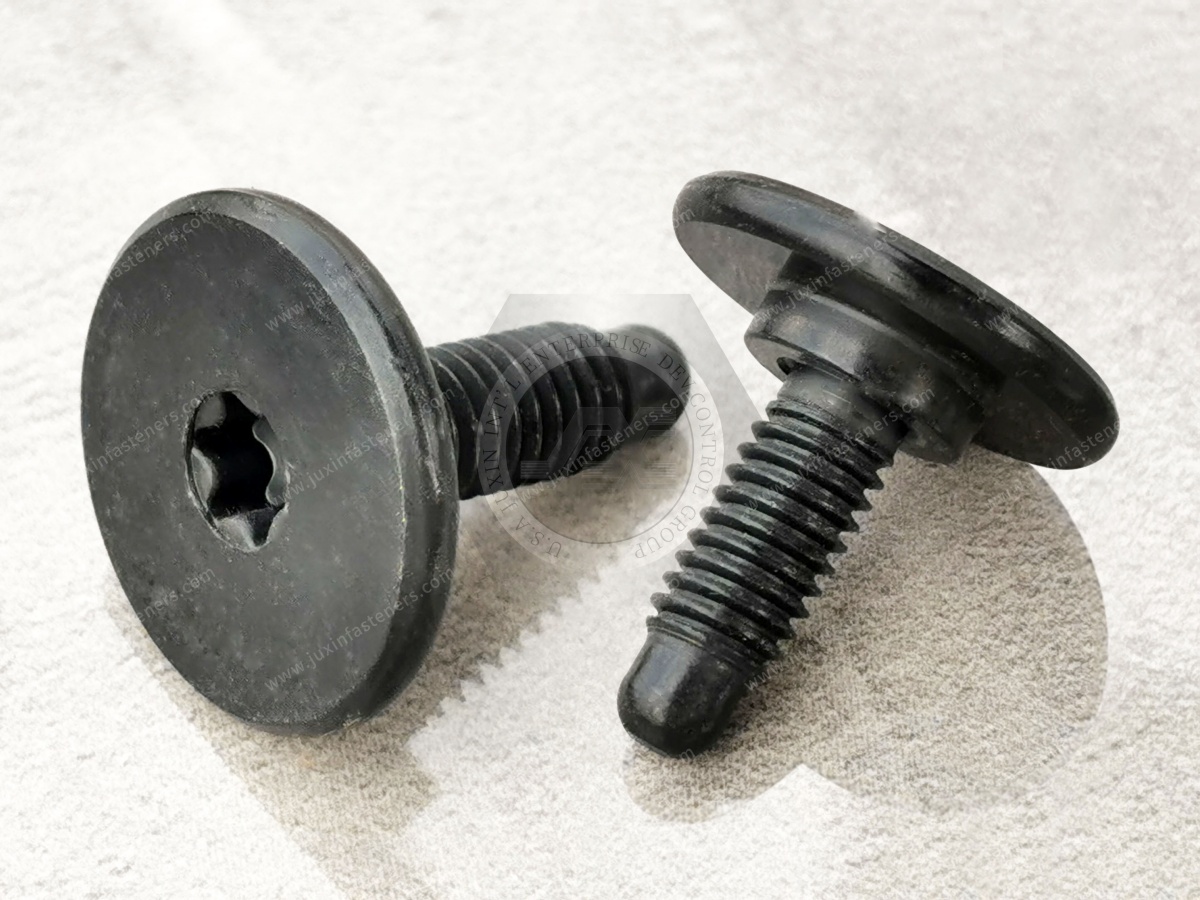
Automotive cooling module fasteners are the mechanical components used to locate, retain and support radiators, condensers, heat exchangers,
fans, shrouds, brackets, hoses, cables and related thermal-management equipment.
They may include:
Bolts
Screws
Nuts
Weld nuts
Weld studs
Rivet nuts
Self-clinching nuts and studs
Threaded inserts
Lock nuts
Washers
Retaining clips
Spring clips
Push-in clips
Hose clamps
Cable clamps
Locating pins
Brackets
Rubber-isolated mounting hardware
Custom cold-formed components
These components do not all perform the same function.
A useful distinction is:
Retention ≠ Isolation ≠ Positioning ≠ Sealing ≠ Hose Management.
Trying to make one fastener solve all five functions can create unnecessary complexity.
| Cooling Module Area | Typical Fastener Technology | Primary Engineering Concern |
|---|---|---|
| Module-to-body bracket | Bolts / nuts / weld nuts | Load path / preload |
| Radiator support | Bolt + isolation mount / pin | Vibration / thermal movement |
| Condenser attachment | Screws / bolts / clips / brackets | Position / fatigue |
| Fan shroud | Screws / clips / inserts | Plastic joint integrity |
| Crossmember attachment | Bolts / weld nuts / rivet nuts | Structural retention |
| Heat-exchanger bracket | Weld studs / weld nuts / bolts | Parent material / fatigue |
| Hose routing | Clamps / clips / brackets | Retention without crushing |
| Wire harness | Plastic clips / cable clamps | Retention / abrasion |
| Service cover | Captive or reusable fastener | Serviceability |
| EV thermal equipment | Bolts / inserts / brackets | Thermal / electrical integration |
The final solution depends on the OEM platform and joint design.
A cooling module can be damaged even when every bolt remains tight.
Possible problems include:
Bracket fatigue
Radiator tank stress
Tube or joint fatigue
Hose loading
Fan-to-shroud interference
BSR noise
Thermal binding
Plastic boss cracking
Clip disengagement
Therefore:
Fastener Retention ≠ Cooling Module Durability.
The fastener must work with the complete mounting architecture.
One of the most important cooling-module design decisions is determining where the assembly should be rigidly located and where movement should be isolated.
Powertrain excitation, road input, fan imbalance and body movement can transmit vibration into the cooling module.
Direct rigid attachment is not automatically desirable.
Increasing bracket stiffness or tightening the joint more aggressively can increase load transfer into delicate heat-exchanger components.
In some applications, controlled compliance can reduce transmitted vibration.
Elastomeric bushings or grommets can be incorporated into cooling-module mounting points to provide controlled isolation.
The fastener may retain the assembly while the elastomer controls:
Relative movement
vibration transmission
contact
noise
Therefore:
Bolt Function ≠ Isolation-Mount Function.
An overly compliant mount can permit excessive module movement.
This may cause:
Hose strain
Component contact
fan interference
bracket loading
alignment problems
Isolation must be tuned to the system.
When a bolt passes through an elastomeric mount, the joint may use:
Sleeves
spacers
shoulder features
controlled compression geometry
The design should prevent installation torque from arbitrarily crushing the isolator.
If an elastomeric mount is compressed beyond its intended geometry, its dynamic behavior can change.
Therefore:
More Clamp Force ≠ Better Vibration Isolation.
Modern front-end modules may combine several thermal components on a common carrier or bracket structure.
Depending on platform architecture, this may include:
Radiator
Condenser
Fan module
Heat exchangers
sensors
cable routing
air-management components
Fasteners must support both manufacturing and service requirements.
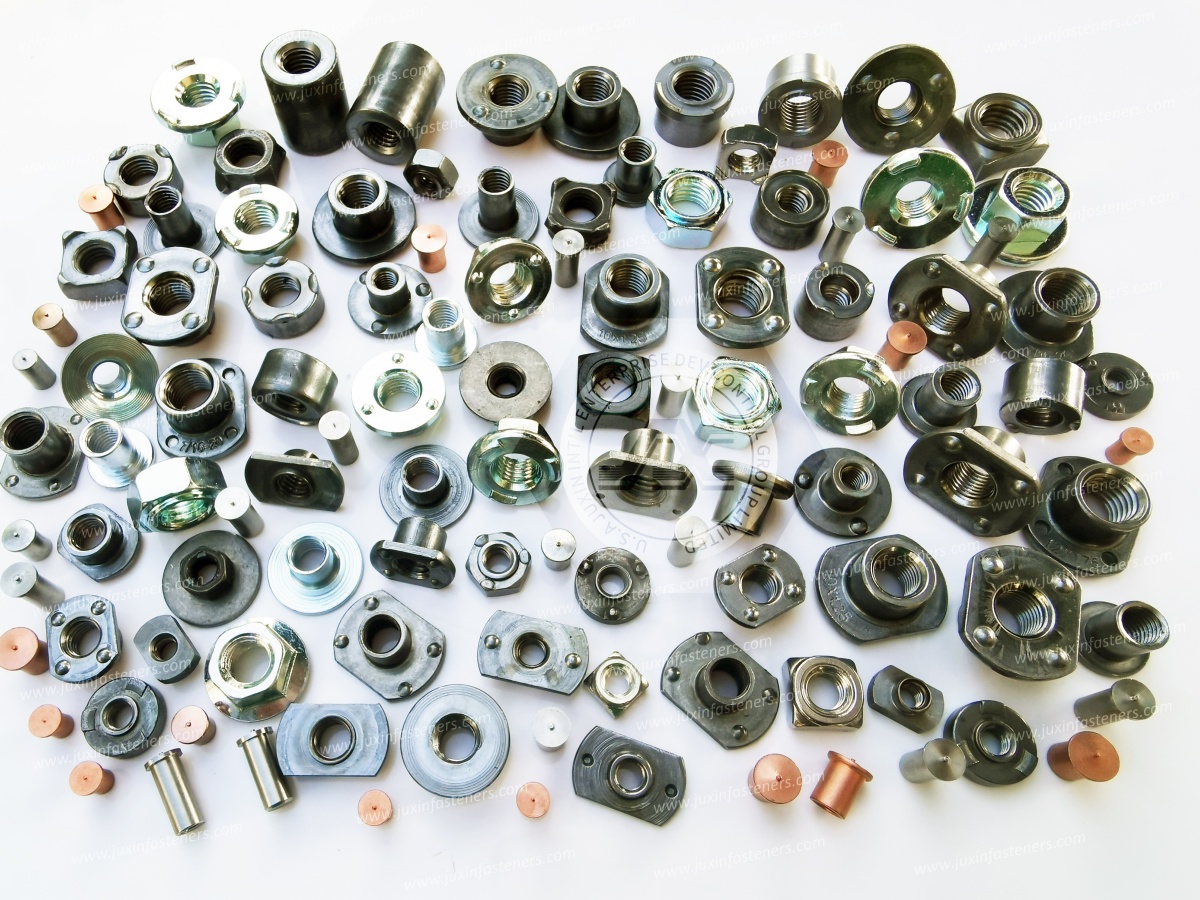
Weld nuts can provide permanent female threads on steel bracket or body structures.
Potential applications include:
Crossmembers
Bracket assemblies
Front-end structures
Equipment supports
Common configurations can include:
Projection weld nuts
Flange weld nuts
Square weld nuts
Hex weld nuts
depending on design.
The installed performance depends on:
Parent material
sheet thickness
weld projections
welding parameters
electrode force
alignment
surface condition
Therefore:
Nut Strength ≠ Weld Strength ≠ Complete Joint Strength.
Excessive welding energy can cause:
Expulsion
distortion
thread damage
sheet damage
Insufficient energy can create inadequate weld formation.
The process window must be validated.
A structurally acceptable weld nut can still create assembly problems if the thread axis is misaligned.
Possible consequences include:
Difficult bolt engagement
cross-threading
assembly-tool access problems
bracket misalignment
Therefore:
Strong Weld ≠ Correct Alignment.
Weld studs can provide threaded attachment points without requiring conventional backside hardware in suitable metallic structures.
Potential applications can include:
Brackets
Cable supports
Hose supports
Equipment mounting
But:
Weld Stud ≠ Universal Replacement for Bolt and Nut.
Parent material, sheet thickness, loading and serviceability must be considered.
High-strength bolts can be used where the joint requires appropriate mechanical capacity and preload.
Applicable metric fastener property classes may include 8.8, 10.9 or other OEM-specified classes depending on the joint.
However:
Higher Strength ≠ Automatically Better Cooling Module Fastener.
The cooling module may contain thin steel, aluminum, polymer or elastomeric components that become the limiting element.
If the bracket deforms before the bolt reaches its capacity, increasing bolt strength does not improve the assembly.
This is especially important when fastening into:
Aluminum
Castings
Threaded inserts
Plastic structures
The mating thread must be considered.
A common automotive assembly mistake is treating installation torque as the joint's mechanical output.
Torque is an installation input.
Preload is the clamp force developed in the fastener.
The relationship depends strongly on friction.
Therefore:
Same Torque + Different Friction ≠ Same Preload.
There is no universal cooling-module tightening torque.
The old approach of stating a generic 8–15 N·m range can be misleading because correct torque depends on:
Thread size
Fastener property
Mating thread
Coating
lubrication
bearing surface
joint stack
target preload
The approved torque must come from the validated joint design.
An M8 Class 8.8 bolt does not have one universal tightening torque suitable for every cooling module.
Excessive tightening can damage:
Thin brackets
Aluminum threads
Plastic components
isolators
heat-exchanger structures
Insufficient clamp force can create joint problems, but a low torque value alone does not prove rotational self-loosening.
Failure mechanism should be identified.
Some multi-point assemblies may require a controlled tightening sequence to manage distortion.
But:
Cross-Pattern Tightening ≠ Universal Automotive Cooling Module Rule.
The sequence should follow the OEM assembly specification.
Cooling modules can experience vibration from:
Engine / motor systems
Fans
road input
body movement
Potential locking technologies can include:
All-metal prevailing-torque nuts
Nylon-insert lock nuts where environment permits
Deformed-thread lock nuts
Threadlocking compounds
Serrated systems
Other OEM-approved locking features
But:
Anti-Loosening Fastener ≠ Vibration-Proof Joint.
A vibrating cooling module does not necessarily mean the nut is rotating.
Possible mechanisms include:
Preload loss
bracket movement
elastomer relaxation
plastic creep
joint settlement
rotational loosening
These mechanisms require different corrective actions.
This distinction is important when troubleshooting warranty or durability problems.
A lock nut's prevailing torque is generated by its locking feature.
It is not the same as the clamp force in the joint.
Polymer locking elements have temperature and environmental limitations.
The actual temperature at the mounting location must be considered.
All-metal locking systems can be useful in higher-temperature applications, but they still require correct:
Preload
mating fastener
thread
installation procedure
Cooling modules often require accurate positioning relative to:
Airflow paths
fan
shroud
body opening
hoses
wiring
adjacent heat exchangers
Threaded fasteners should not automatically be expected to provide all locating functions.
Where precise positioning is required, the design may use:
Locating pins
Pilot features
Slots
Tabs
Guide structures
Dedicated datum surfaces
before final tightening.
A structure can become over-constrained.
If thermal movement or manufacturing tolerance cannot be accommodated, additional locating points can increase stress.
Depending on module architecture, engineers may use a combination of:
Fixed location
Guided location
compliant support
to manage tolerance and thermal expansion.
The exact architecture is platform-specific.
Cooling modules can experience temperature changes during vehicle operation.
Different components may use:
Steel
Aluminum
Engineering polymers
Elastomers
These materials do not expand equally.
Therefore:
Room-Temperature Fit ≠ Full-Temperature Fit.
Adding fastening points can restrict thermal movement and increase local stress.
Relative dimensional change due to temperature should not automatically be diagnosed as a locking-fastener problem.
The joint architecture may need to accommodate movement.
Aluminum is widely used in heat exchangers and lightweight brackets.
When steel fasteners are used with aluminum components, engineers should consider:
Bearing stress
Thread strength
galvanic compatibility
thermal expansion
coating
preload
The aluminum component may become the limiting element.
Depending on access and geometry, potential solutions can include:
Bolts and nuts
Rivet nuts
Threaded inserts
Welded attachment technologies specifically designed for the material
Custom fastening systems
The joining technology should be selected according to the parent material.
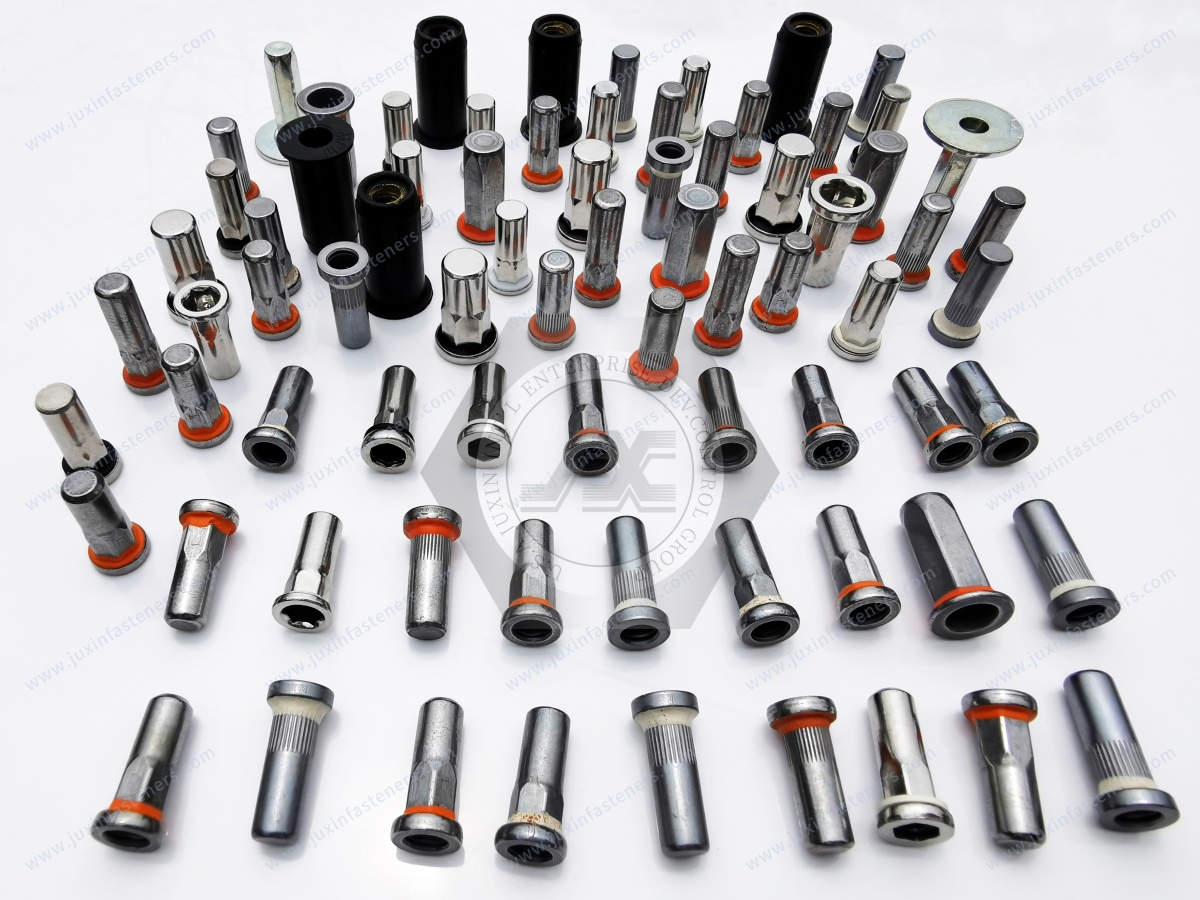
Rivet nuts can provide reusable threads in suitable thin-wall structures, especially where backside access is restricted.
Important parameters include:
Thread
Grip range
Hole size
Body style
Knurl
Flange
Parent material
Setting parameters
Thread size alone is not enough to specify a rivet nut.
Pull-out evaluates axial extraction.
Spin-out evaluates rotational retention.
They are different failure modes.
A rivet nut can remain secure in the sheet while the mating bolt loses preload or rotates.
Excessive setting force can damage the rivet nut or parent sheet.
Self-clinching nuts and studs can provide permanent threaded attachment points in suitable sheet-metal components.
Performance depends on:
Sheet material
hardness
thickness
hole geometry
edge distance
installation tooling
press force
Therefore:
Same Sheet Thickness ≠ Same Clinching Performance.
Excessive press force can deform the sheet or fastener.
These tests evaluate different aspects of self-clinching fastener retention.
Cooling modules can contain polymer components such as:
Fan shrouds
Covers
Air guides
Brackets
Electrical housings
Threaded inserts can provide reusable metal threads where appropriate.
Potential technologies include:
Heat-set inserts
Ultrasonic inserts
Molded-in inserts
Self-tapping inserts
depending on polymer and manufacturing process.
Installed performance depends on:
Polymer
grade
reinforcement
boss geometry
pilot hole
insert geometry
installation process
temperature
creep
For example, different PA66 formulations can behave differently due to:
Reinforcement
moisture
additives
processing
Insert installation geometry must be engineered for the specific insert and polymer.
Aggressive features can increase local stress and crack risk.
Plastic can experience:
Creep
stress relaxation
thermal cycling
moisture effects
Therefore room-temperature initial testing alone may not represent vehicle-life performance.
Direct-thread-forming or self-tapping screws can be appropriate in selected plastic cooling-module components.
But:
Self-Tapping Screw ≠ Universal Plastic Fastener.
Boss design, polymer, screw geometry and installation parameters must be compatible.
Excessive torque can strip or crack the boss.
Cooling modules contain hoses and fluid lines that must remain correctly routed under vibration and thermal movement.
Potential hardware can include:
Hose clamps
Spring clamps
P-clamps
Cable / hose brackets
Clips
Weld studs
Bolted brackets
depending on system design.
Leak performance depends on the complete fluid interface:
Hose
fitting
clamp
temperature
pressure
installation
Excessive clamp force can damage the hose or fitting.
The objective is controlled retention and sealing, not maximum compression.
Cooling modules can include:
Fan wiring
Temperature sensors
pressure sensors
pumps
valves
electrical connectors
Retention systems may include:
Plastic clips
Cable clamps
Fir-tree clips
Brackets
Weld studs
Push-in retainers
The design should control:
Movement
abrasion
connector strain
proximity to heat
service access
Plastic and spring clips often rely on geometric retention rather than bolt preload.
Their performance should be evaluated differently from threaded joints.
Excessive retention force can:
Damage cables
make service difficult
overload plastic features
Electric vehicles increase the number and complexity of thermal-management circuits.
Depending on platform architecture, these can include cooling for:
Battery pack
Inverter
DC-DC converter
Onboard charger
Electric motor
Power electronics
Cabin HVAC
Low-temperature cooling loops
This creates additional fastening opportunities but also additional engineering boundaries.
A fastener can retain a bracket or thermal component.
It does not by itself establish:
Battery crash safety
Electrical insulation
Thermal runaway protection
Coolant-system integrity
These are system-level requirements.
If a cooling component is electrically grounded, the electrical function must be separately engineered.
Polymer hardware does not automatically create a qualified insulating system.
Cooling-system fasteners and high-voltage electrical connections should not be conflated.
Cooling module hardware can be exposed to combinations of:
Humidity
Condensation
Road splash
Deicing salts
temperature cycling
automotive fluids
Material and coating selection should match the actual location.
Zinc systems can provide corrosion protection for suitable automotive applications.
Performance depends on the complete coating specification.
Zinc-nickel can be selected where the OEM requires higher corrosion performance and controlled coating characteristics.
But:
Zinc-Nickel ≠ Universal Automotive Coating.
Zinc-flake coatings can be used in selected automotive applications where their performance characteristics suit the fastener and joint.
Again, the complete specification matters.
The drawing may need to define:
Coating type
thickness
passivation
topcoat
friction
corrosion requirement
Salt-spray testing is a controlled laboratory comparison.
It does not directly predict real-world years of service.
The joint can combine:
Fastener
bracket
aluminum component
steel structure
coating
washer
The entire material system matters.
Surface treatment affects friction.
Therefore:
Same Bolt + Different Coating ≠ Same Torque-Preload Behavior.
A coating substitution may require engineering review.
Stainless fasteners can be useful in selected cooling-system applications.
But:
Stainless Steel ≠ Corrosion-Proof.
A4/316-type stainless can provide improved resistance in some environments but is not automatically the best choice for every automotive cooling module.
Consider:
Mechanical properties
mating material
galvanic behavior
galling
cost
installation
Friction and galling behavior can differ.
Therefore tightening parameters should not automatically be transferred between material systems.
A useful diagnostic framework is:
| Observed Problem | Possible Cause | Engineering Review |
|---|---|---|
| Bolt becomes loose | Rotation / preload loss | Joint movement, friction, locking |
| Bracket cracks | Fatigue / over-constraint | Stiffness, load path, vibration |
| Radiator mount breaks | Excessive transmitted load | Isolation / geometry |
| Plastic boss cracks | Over-torque / stress | Screw, insert, boss design |
| Rivet nut rotates | Spin-out | Hole, grip range, setting |
| Weld nut separates | Weld-process failure | Parent sheet / welding parameters |
| Hose wears through | Routing movement | Clamp / bracket / clearance |
| Harness abrasion | Insufficient retention | Clip location / movement |
| Corrosion at interface | Material / coating mismatch | Environment / galvanic system |
| BSR noise | Relative movement | Preload / isolation / clearance |
This failure-mode approach is more useful than simply specifying a stronger bolt.
Cooling modules and front-end assemblies can generate noise when components experience unwanted relative movement.
Potential causes include:
Loose brackets
clip movement
hose contact
insufficient isolation
incorrect clearance
But:
BSR ≠ Automatically Loose Fastener.
The actual contact path should be identified.
Validation should correspond to the actual engineering risk.
Possible evaluations can include:
Dimensional inspection
Torque-tension testing
Prevailing-torque testing
Weld nut push-out / torque testing
Weld stud testing
Rivet nut pull-out / spin-out
Self-clinching push-out / torque-out
Insert pull-out / torque-out
Vibration testing
Thermal cycling
Corrosion testing
Hose / clamp validation
Complete module durability testing
as applicable.
A test is valuable when it addresses a defined failure mode.
A bolt can pass its mechanical-property test while the complete cooling module fails durability testing.
A fastener can meet every dimensional requirement and still be unsuitable because of:
Installation
friction
parent material
vibration
thermal movement
assembly geometry
Relevant standards can define fastener characteristics, but vehicle-level durability remains an OEM responsibility.
Applicable parts of ISO 898 can define mechanical properties for carbon and alloy steel fasteners within their scope.
But:
ISO 898 Compliance ≠ Cooling Module Joint Qualification.
Applicable parts of ISO 3506 can define mechanical properties for corrosion-resistant stainless steel fasteners within their scope.
But:
ISO 3506 Compliance ≠ Vehicle Corrosion Qualification.
Applicable ISO thread standards can define:
Thread profile
dimensions
tolerances
But:
Correct Thread ≠ Correct Cooling Module Fastener.
OEMs can specify additional requirements for:
Coating
friction
cleanliness
mechanical performance
corrosion
traceability
assembly
These project-specific requirements govern the supplied component where applicable.
IATF 16949 is an automotive quality-management-system standard.
It should not be represented as a product-performance specification.
Therefore:
IATF 16949 ≠ Fastener Product Certification.
A component still requires drawing and functional compliance.
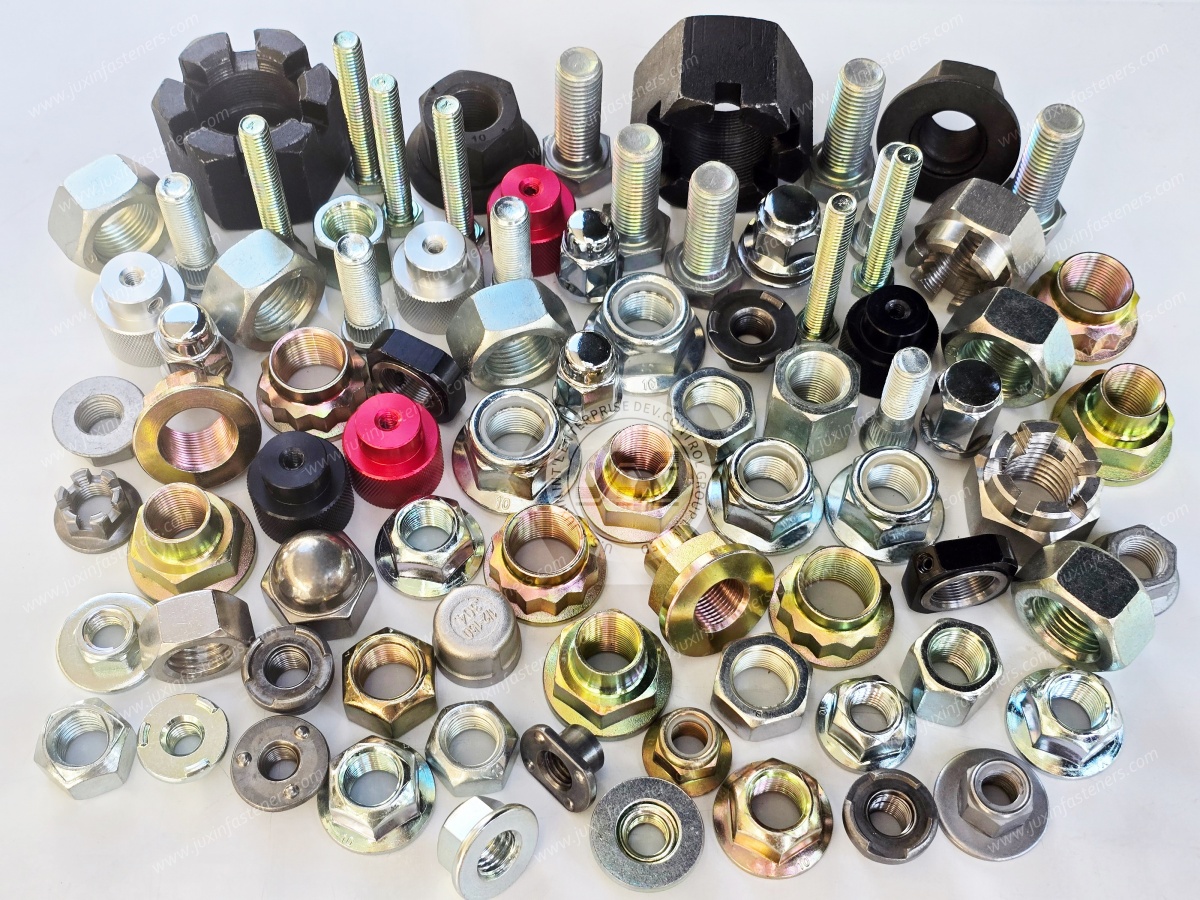
OEMs and Tier suppliers should evaluate more than:
Price
thread size
material name
A stronger supplier-development framework is:
Drawing + Revision + Material + Mechanical Properties + Heat Treatment + Thread + Geometry + Surface Treatment + Friction + Parent Material
+ Mating Component + Installation Behavior + Functional Testing + Documentation + Change Control
Two fasteners can share the same nominal dimensions while behaving differently because of:
Material
hardness
heat treatment
thread geometry
coating
friction
locking feature
manufacturing process
For second-source development, compare:
Controlled drawing
Revision
Material
Mechanical properties
Heat treatment
Dimensions
Threads
Surface treatment
Friction
Installation behavior
Functional performance
Production process
An apparently interchangeable bolt may create different:
Preload
corrosion behavior
assembly-tool response
durability
if the coating or manufacturing condition changes.
Prototype samples can demonstrate feasibility.
Production qualification should consider the actual production process.
Raw material is only one part of finished fastener quality.
Traceability supports quality control but does not prove performance.
Depending on component geometry and volume, JUXIN FASTENERS can evaluate manufacturing routes including:
Cold heading
Thread rolling
Stamping
Wire forming
CNC secondary machining
Surface treatment
for applicable drawing-based components.
Cold heading can be efficient for high-volume:
Bolts
Screws
Nuts
Studs
where geometry and material are suitable.
CNC processes can support:
Prototypes
Complex geometries
Secondary features
Lower-volume custom components
But:
CNC ≠ Automatically Better Automotive Fastener.
Tolerance should be linked to function.
Unnecessary precision can increase cost without improving module performance.
Early DFM review should consider:
Geometry
material
forming feasibility
thread
tooling
coating
automated feeding
installation access
inspection
before production tooling is finalized.
Automotive thermal-system, mechanical, structural and manufacturing engineers searching for automotive cooling module fasteners may be asking:
How should a radiator be mounted to reduce vibration?
Which fasteners are used for cooling module brackets?
When should I use weld nuts or rivet nuts?
How should thermal expansion be accommodated?
Why is a cooling-module bracket cracking?
Which lock nut is suitable for engine-compartment temperature?
How does coating affect tightening torque?
How should plastic fan-shroud threads be designed?
How should hose and harness clips be retained?
How should a second-source fastener be validated?
These are joint-level engineering questions.
Commercial searches can include:
Automotive cooling module fastener manufacturer
Radiator fastener supplier
Automotive weld nut manufacturer
Automotive weld stud supplier
Cooling module bracket fastener supplier
Automotive clip manufacturer
Hose clamp supplier
EV thermal management fastener manufacturer
Custom automotive fastener supplier
OEM automotive fastener manufacturer
Second-source automotive fastener supplier
Procurement should convert these searches into controlled technical RFQs.
Provide:
ICE / hybrid / EV platform
Cooling-system component
Installation location
Joint function
Provide:
2D drawing
3D model where available
Part number
Revision
Specify:
Bolt / nut / weld nut / weld stud / rivet nut / insert / clip / clamp
Thread
dimensions
geometry
Define:
Fastener material
Mechanical properties
Parent material
Mating component
Polymer grade where applicable
Provide:
Load requirement
Mounting architecture
Isolation requirement
Alignment requirement
Allowable movement
Specify:
Target preload where applicable
Installation torque / angle
Friction requirement
Lubrication
Tightening sequence where applicable
Define:
Temperature range
Thermal cycling
Vibration
Humidity
Road salt
Automotive fluids
Specify:
Coating
thickness
topcoat
friction
corrosion requirement
Define as applicable:
Torque-tension
Prevailing torque
Weld testing
Pull-out
Spin-out
Push-out
Torque-out
Vibration
Thermal cycling
Corrosion
Complete module durability
Provide:
Prototype quantity
Annual volume
Packaging
Traceability
PPAP / customer-specific submission requirements where applicable
Change-control requirements
For OEM procurement, a useful equation is:
Total Installed Cost = Part Price + Installation + Tooling + Inspection + Rework + Scrap + Downtime + Logistics + Warranty Risk + Supply Risk
A low-cost fastener can become expensive if it causes:
Cross-threading
feeding problems
installation variation
bracket damage
excessive rework
warranty noise
supply interruption
Commercial optimization should consider the complete assembly process and lifecycle.
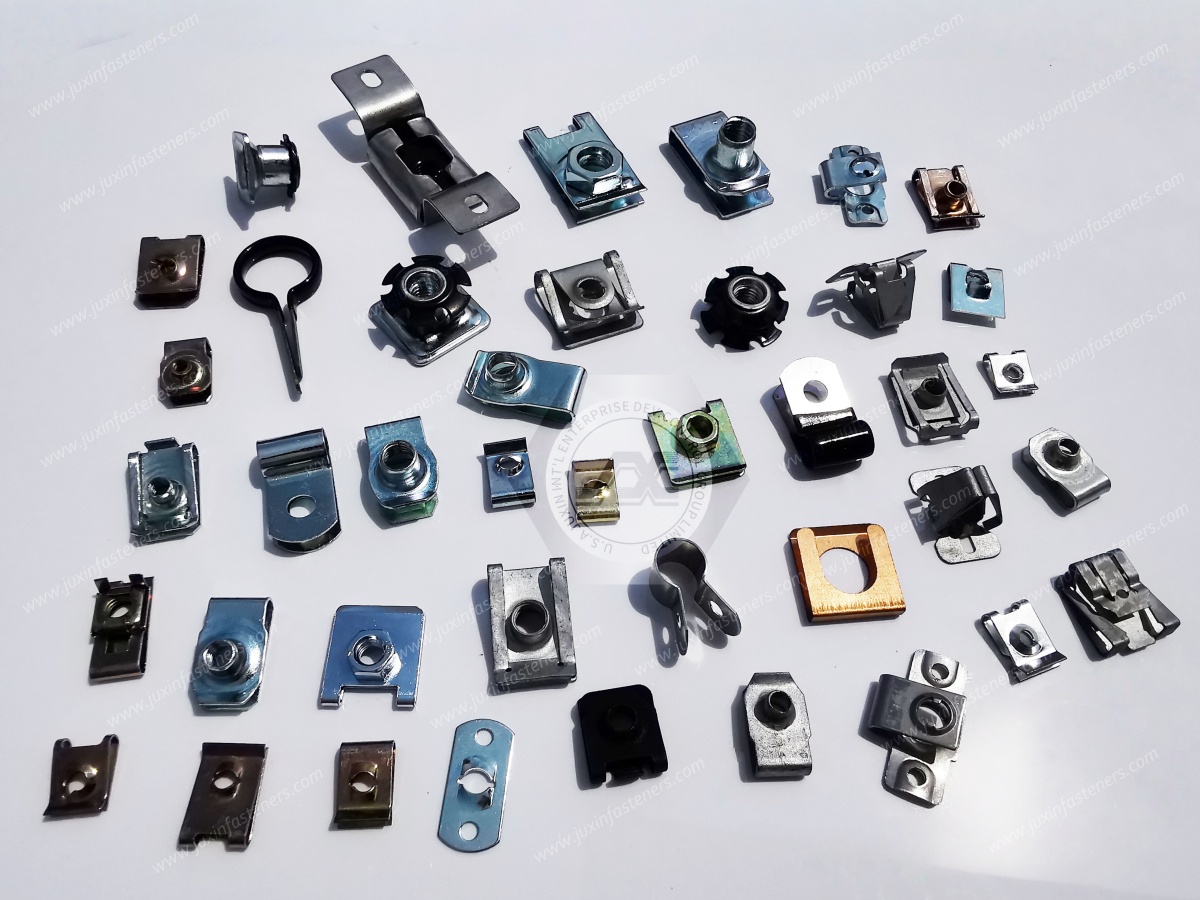
This page should serve as the dedicated Automotive Cooling Module Fasteners / Radiator & Condenser Mounting / Thermal-System Fastening resource.
Recommended internal links include:
Automotive Fastener Selection Guide → automotive fastener technology overview
Automotive Threaded Fasteners → bolted-joint and locking engineering
Automotive Sheet Metal Fastening → rivet nuts, weld nuts and self-clinching fasteners
Automotive Thin Sheet Fasteners → weld nut vs rivet nut vs self-clinching nut
Automotive Self-Tapping Screws → metal and plastic direct-thread fastening
Automotive Clamps & Hose Clamps → fluid-line and hose retention
Automotive Washers, Rivets & Pins → supporting retention technologies
Automotive Retaining Rings & Circlips → groove-based retention
Automotive Blind Rivets vs Rivet Nuts → permanent joining vs reusable threads
Threaded Inserts for Plastic → fan shrouds and polymer components
Lightweight Automotive Fasteners → EV and lightweight material selection
Aluminum Fasteners → aluminum fastener engineering
Fasteners for Aluminum → aluminum bracket and housing attachment
High-Strength Bolts & Washers → preload and joint design
Fastener Surface Treatment & Coating Selection → corrosion and friction
Zinc-Nickel Coated Fasteners → automotive corrosion and friction control
Stainless Steel Fasteners → corrosion-resistant material selection
Automotive Fastener Quality Control → inspection and supplier qualification
Custom Fastener Manufacturing → drawing-based OEM fastener development
Use the existing indexed JUXIN FASTENERS URL when implementing these internal links.
Depending on the module architecture, fasteners can include bolts, weld nuts, weld studs, rivet nuts, self-clinching fasteners,
threaded inserts, clips, clamps, locating pins and custom components.
Not always. Some mounting points can incorporate elastomeric isolation or controlled compliance to manage vibration and relative movement.
Not necessarily. Excessive clamp force can over-compress an isolator or overload a bracket.
There is no universal torque. Correct tightening depends on thread size, fastener properties, friction, coating, mating material, joint geometry and required preload.
No. Torque is an installation input; preload is the clamp force generated in the joint.
No. Locking strategy depends on the joint and actual failure mechanism.
No. Vibration can contribute to preload loss, relative movement or rotational loosening, but these mechanisms are different.
Yes, where the parent material, sheet thickness, weld geometry and manufacturing process are suitable.
In some applications, but not automatically. The two technologies have different installation, load-transfer and parent-material requirements.
Yes, one-sided installation is one of their important advantages, provided the grip range, hole geometry and parent material are appropriate.
Yes, selected threaded inserts can provide reusable threads, but polymer grade, boss geometry, installation process and temperature must be considered.
No. The plastic boss or surrounding polymer may become the limiting element.
No. Material selection depends on corrosion, mechanical requirements, mating materials, temperature, friction and cost.
It can be appropriate where the OEM specifies its corrosion and friction characteristics, but it is not a universal solution.
Not automatically. Coating changes can change friction and therefore preload.
No. IATF 16949 is a quality-management-system standard, not a product-performance certification.
JUXIN FASTENERS can evaluate drawing-based bolts, nuts, weld fasteners, rivet nuts, inserts, clips, clamps and custom components according to material,
geometry, coating, installation requirements and annual volume.
The weak design approach is:
Cooling Module → Severe Vibration → Strong Bolt → Higher Torque → Lock Nut
The stronger engineering approach is:
Thermal Module → Mounting Function → Load Path → Parent Material → Fastener → Isolation → Alignment → Thermal Movement
→ Preload / Retention → Corrosion → Installation → Validation → Supplier Qualification
The key principles are:
Retention ≠ Isolation ≠ Positioning ≠ Sealing ≠ Hose Management
Fastener Retention ≠ Cooling Module Durability
More Stiffness ≠ Better Cooling Module Mounting
Bolt Function ≠ Isolation-Mount Function
More Rubber Compliance ≠ Better Isolation
Fastener Tightness ≠ Isolation-Mount Compression
More Clamp Force ≠ Better Vibration Isolation
Strong Weld Nut ≠ Strong Welded Joint
Nut Strength ≠ Weld Strength ≠ Complete Joint Strength
More Welding Energy ≠ Better Weld Nut Installation
Strong Weld ≠ Correct Alignment
Weld Stud ≠ Universal Replacement for Bolt and Nut
Higher Strength ≠ Automatically Better Cooling Module Fastener
Stronger Bolt ≠ Stronger Bracket
Stronger Bolt ≠ Stronger Internal Thread
Torque ≠ Preload
Same Torque + Different Friction ≠ Same Preload
Property Class ≠ Universal Torque Specification
More Torque ≠ Better Retention
Under-Torque ≠ Automatically Self-Loosening
Cross-Pattern Tightening ≠ Universal Automotive Cooling Module Rule
Anti-Loosening Fastener ≠ Vibration-Proof Joint
Vibration ≠ Automatic Self-Loosening
Preload Loss ≠ Rotational Self-Loosening
Prevailing Torque ≠ Preload
Nylon Insert Lock Nut ≠ Universal Engine-Compartment Solution
All-Metal Lock Nut ≠ Universal Solution
Bolt ≠ Precision Locating Pin
More Location Constraints ≠ Better Alignment
Room-Temperature Fit ≠ Full-Temperature Fit
More Fastening Points ≠ Better Thermal Stability
Thermal Movement ≠ Fastener Loosening
Stronger Steel Bolt ≠ Stronger Aluminum Joint
Correct Thread + Wrong Grip Range = Wrong Rivet Nut
Pull-Out ≠ Spin-Out
Spin-Out ≠ Mating Bolt Self-Loosening
More Setting Force ≠ Better Rivet Nut Installation
Same Sheet Thickness ≠ Same Clinching Performance
More Press Force ≠ Better Self-Clinching Installation
Push-Out ≠ Torque-Out
Strong Insert ≠ Strong Plastic Joint
Same Polymer Name ≠ Same Joint Performance
Pilot Hole ≠ Clearance Hole
More Aggressive Knurl ≠ Stronger Plastic Joint
Initial Pull-Out ≠ Lifetime Performance
Self-Tapping Screw ≠ Universal Plastic Fastener
More Installation Torque ≠ Stronger Plastic Joint
Hose Clamp ≠ Guaranteed Leak-Proof Joint
More Clamp Force ≠ Better Hose Sealing
Hose Retention ≠ Hose Crushing
Clip Retention ≠ Clamp Load
Stronger Clip ≠ Better Harness Routing
Fastener ≠ EV Battery Safety Qualification
Metal Fastener ≠ Qualified Electrical Bond
Plastic Fastener ≠ Electrical Safety Compliance
Mechanical Joint ≠ Busbar Electrical Joint
Zinc-Nickel ≠ Universal Automotive Coating
Coating Name ≠ Complete Coating Specification
Salt Spray Hours ≠ Vehicle Service Life
Corrosion-Resistant Fastener ≠ Corrosion-Resistant Assembly
Same Bolt + Different Coating ≠ Same Torque-Preload Behavior
Stainless Steel ≠ Corrosion-Proof
316 Stainless ≠ Automatically Better
Stainless Steel ≠ Install Like Coated Carbon Steel
BSR ≠ Automatically Loose Fastener
Failure Mode → Requirement → Test → Acceptance Criteria
More Testing ≠ Better Validation
Component Test ≠ Module Validation
Drawing Compliance ≠ Installed Performance
ISO 898 Compliance ≠ Cooling Module Joint Qualification
ISO 3506 Compliance ≠ Vehicle Corrosion Qualification
Correct Thread ≠ Correct Cooling Module Fastener
IATF 16949 ≠ Fastener Product Certification
Same Dimensions ≠ Functional Equivalence
Same M8 Bolt ≠ Same Automotive Fastener
Sample Match ≠ Production Qualification
Material Certificate ≠ Finished Component Compliance
Traceability ≠ Qualification
CNC ≠ Automatically Better Automotive Fastener
Tighter Tolerance ≠ Better Fastener
Lowest Fastener Price ≠ Lowest Cooling Module Cost
For thermal-system and mechanical engineers, the objective is to control the complete mounting architecture, vibration path,
thermal movement, load transfer and serviceability, rather than simply maximize bolt strength.
For manufacturing engineers, the objective is to create repeatable installation processes for weld nuts, weld studs, bolts, rivet nuts,
inserts, clips and clamps without damaging the parent component.
For procurement and supplier-development teams, the objective is to qualify material, geometry, surface treatment, friction,
installation behavior and functional performance, not merely thread size and unit price.
JUXIN FASTENERS supports selected automotive thermal-management applications with:
Automotive bolts and screws
High-strength bolts
Weld nuts
Weld studs
Rivet nuts
Self-clinching fasteners
Threaded inserts
All-metal lock nuts
Prevailing-torque nuts
Washers
Retaining clips
Spring clips
Plastic fasteners
Hose and cable clamps
Stainless steel fasteners
Zinc-nickel coated fasteners
Custom cold-formed components
CNC precision components
Drawing-based OEM / ODM fasteners
Second-source fastener development
For an automotive cooling module fastener RFQ, provide:
2D Drawing + 3D Model + Part / Revision + ICE / Hybrid / EV Platform + Cooling Component + Joint Function + Parent Material
+ Mating Component + Fastener Type + Material / Mechanical Requirement + Thread + Load Requirement + Isolation Requirement
+ Alignment Requirement + Allowable Movement + Surface Treatment + Friction Requirement + Installation Torque / Preload Where Applicable
+ Locking Requirement + Temperature + Thermal Cycling + Vibration + Corrosion Environment + Functional Test Requirement + Prototype Quantity
+ Annual Volume + PPAP / Customer-Specific Requirements Where Applicable
For plastic or elastomer-mounted components, additionally provide:
Polymer / Elastomer Grade + Reinforcement + Boss / Hole Geometry + Installation Method + Compression or Movement Requirement + Service Temperature
JUXIN FASTENERS
Automotive Cooling Module Fasteners | Radiator Fasteners | Weld Nuts | Weld Studs | Clips & Clamps | EV Thermal Management Fasteners | OEM Fastener Solutions
Email: info@juxinfasteners.com
Website: www.juxinfasteners.com
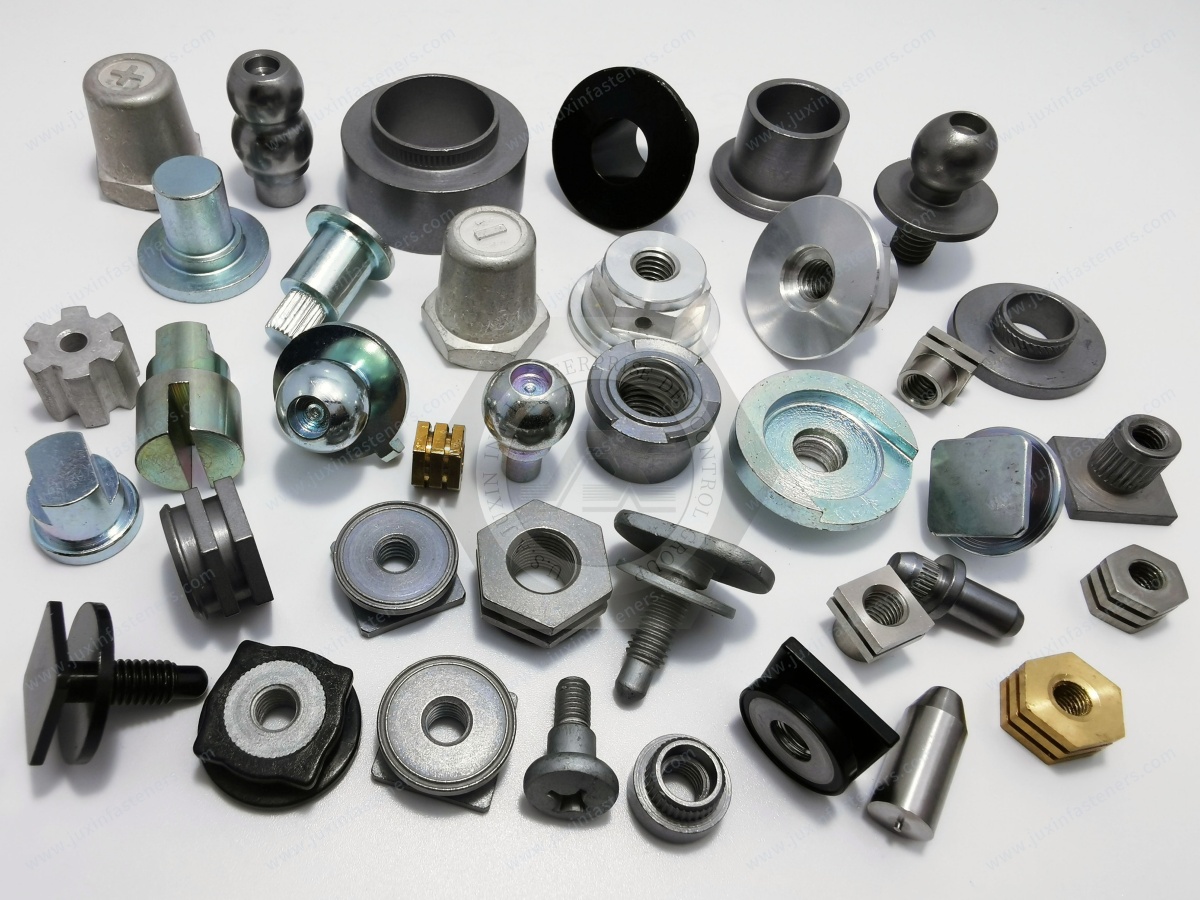
Contact Us
Tel.:
+86 020 8621 0320
+86 020 3121 6067
E-mail:
Technical Support:
Navigation
SEND INQUIREY



