
Call Us
+86 136 6007 9809
Call Us
+86 136 6007 9809

Sep. 13, 2026
For automotive OEMs, Tier-1 suppliers, vehicle developers, and industrial manufacturers, selecting a fastener supplier is not simply a matter of comparing unit prices.
A production program may require standard fasteners, customer-specific screws and bolts, non-standard nuts, weld nuts, rivet nuts,
CNC-machined components, precision shafts and pins, washers, plastic retainers, nylon clips, or other application-specific fastening components.
The technical and commercial requirements can therefore vary significantly from one component to another.
The supplier that is suitable for a standard catalog fastener may not necessarily be the right supplier for a drawing-based CNC component, a customer-specific automotive bolt,
a special weld nut, or an application-specific polymer retainer.
This is why automotive fastener supplier evaluation should be structured around the complete supply requirement rather than around price or catalog breadth alone.
For procurement and supplier-development teams, the more useful question is not:
“Who offers the lowest price?”
It is:
“Which supplier can consistently control the component from drawing review through manufacturing, inspection, delivery, and engineering change?”
JUXIN FASTENERS is an OEM-oriented supplier of customer-specific, non-standard, and application-specific fastening and precision components.
Depending on the product and project requirements, the product scope can include screws, bolts, nuts, washers, rivets, rivet nuts, weld nuts, threaded inserts,
plastic and nylon fastening components, CNC-machined components, precision shafts and pins, and other customer-specific mechanical components.
Customer requirements may be defined through 2D drawings, 3D CAD files, samples, material specifications, surface-treatment requirements, application conditions, inspection requirements, and production requirements.
This supplier-evaluation guide provides a practical framework for procurement managers, supplier quality engineers, supply chain developers, and automotive engineers evaluating a new fastener supplier for OEM production.
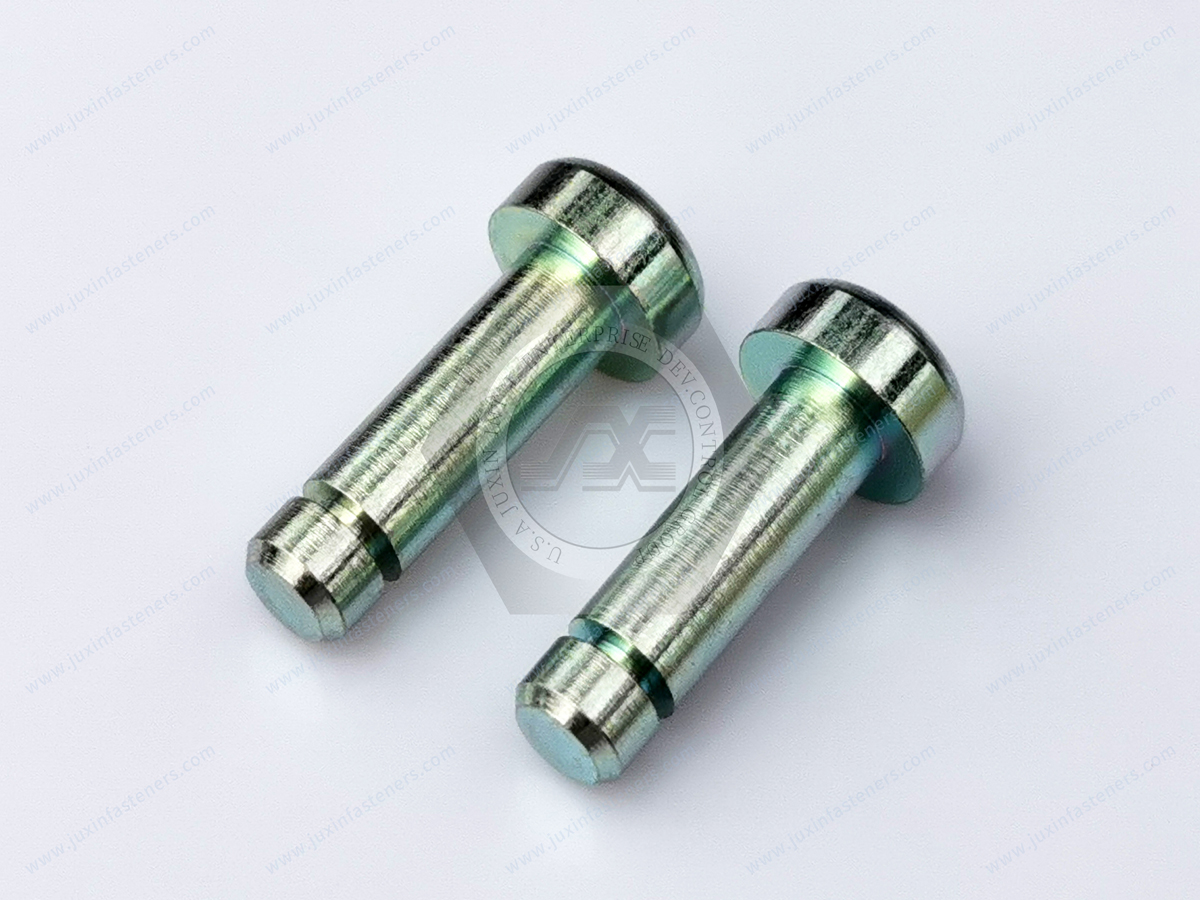
An automotive fastener supplier evaluation framework is a structured method for assessing whether a supplier is technically, operationally, commercially,
and qualitatively suitable for a specific automotive component or production program.
A useful evaluation should examine at least six areas:
Engineering competence
Manufacturing route and process suitability
Material control
Quality verification
Supply continuity
Commercial alignment and communication
For customer-specific components, the evaluation should then connect those six areas to the actual component requirement.
A practical model is:
Customer Requirement → Drawing Review → Manufacturing Route → Material → Critical Characteristics → Inspection → Production Control → Delivery → Change Management
This is more informative than evaluating a supplier only through a general factory profile or product catalog.
A supplier can have extensive manufacturing resources but still be unsuitable for a particular component if the proposed process, material, inspection method,
or communication process does not match the customer's requirements.
Automotive supply chains involve long production cycles, multiple supplier tiers, engineering changes, quality requirements, and strict delivery coordination.
Fasteners may appear to be relatively small components, but their specifications can be closely connected to the mating assembly.
Supplier qualification therefore needs to consider more than whether the supplier can manufacture a similar-looking product.
A supplier may receive a drawing containing:
multiple tolerance classes,
GD&T,
special thread requirements,
material specifications,
surface-treatment requirements,
functional notes,
or customer-specific inspection requirements.
If these requirements are misunderstood during quotation, the problem can continue into sampling and production.
An effective supplier should be able to review the drawing and clarify questions before production begins.
Different component geometries may require different manufacturing routes.
Depending on the component, suitable processes can include:
cold heading or forging,
multi-stage forming,
CNC turning,
CNC machining,
Swiss-type machining,
milling,
drilling,
tapping,
threading,
grooving,
stamping,
or other application-appropriate processes.
The important question is not simply:
“Does the supplier have CNC machines?”
It is:
“Is the proposed manufacturing route appropriate for this specific geometry, material, quantity, tolerance, and production requirement?”
A customer-specific component may require a specific steel, stainless steel, aluminum, brass, titanium, or polymer specification.
Procurement teams should confirm how the supplier controls:
material identification,
material documentation,
production lots,
material changes,
and customer-specific material requirements.
A supplier may state that it has quality inspection, but procurement teams should determine what that actually means for the component being sourced.
For example:
Which dimensions are inspected?
How are threads verified?
How is material verified?
Which characteristics are considered critical?
How are surface treatments controlled?
What documentation is available?
How are non-conforming parts controlled?
For a deeper quality framework, see Custom Metal Component Quality and Inspection Requirements for OEMs.
A supplier may successfully produce a sample but face different challenges during repeat production.
Procurement should therefore consider:
production volume,
lead-time requirements,
process stability,
raw-material availability,
production planning,
packaging,
repeat-order management,
and communication during demand changes.
A practical supplier qualification framework can be organized into six pillars.
Evaluate whether the supplier can understand:
2D engineering drawings,
3D CAD files,
GD&T,
thread specifications,
material requirements,
surface-treatment requirements,
mounting interfaces,
and application-specific requirements.
For customer-specific components, the ability to identify unclear or conflicting requirements before production can be valuable.
The supplier should be evaluated according to the actual manufacturing route required by the component.
Potential routes may include:
cold heading,
forging,
multi-stage forming,
CNC turning,
CNC milling,
Swiss-type machining,
drilling and tapping,
stamping,
and other suitable processes.
The correct route depends on:
Geometry + Material + Tolerance + Quantity + Functional Requirement + Production Stage
A prototype and a high-volume production component may not necessarily use the same optimized manufacturing route.
Material control should be evaluated against the approved customer specification.
Questions can include:
What material grade is required?
What material condition is specified?
How is the material identified?
How are production lots separated?
What documentation is available?
How are material changes controlled?
For metal components, this can include carbon steel, alloy steel, stainless steel, aluminum, brass, titanium, or other specified materials.
For polymer components, the same principle applies to the specified polymer family and grade.
See Automotive Plastic Fasteners: Types, Applications & OEM Sourcing Guide for the broader polymer fastening ecosystem.
Quality evaluation should focus on the characteristics that matter to the component.
Potential verification areas include:
dimensional inspection,
thread inspection,
hole diameter and position,
critical-to-function dimensions,
material verification,
hardness testing where specified,
mechanical testing where applicable,
surface-finish verification,
surface-treatment verification,
functional inspection,
and lot identification.
The exact inspection scope should be based on the approved drawing and customer quality requirements.
Procurement teams should evaluate whether the supplier can support the expected production lifecycle.
This may involve:
prototype quantities,
sample quantities,
pilot production,
repeat orders,
scheduled production,
changes in demand,
packaging requirements,
and long-term supply planning.
A supplier's ability to manufacture one successful sample is not the same as demonstrating a repeatable production process.
Commercial evaluation should include more than the quoted unit price.
Procurement may need to evaluate:
quotation clarity,
tooling or development costs where applicable,
minimum production quantities,
lead time,
payment terms,
packaging,
documentation,
engineering-change handling,
response time,
and communication quality.
For long-term OEM sourcing, clear communication can be as important as the initial quotation.
Supplier qualification becomes more effective when engineering and procurement evaluate the supplier from their respective perspectives.
Engineers typically focus on:
drawing interpretation,
material suitability,
dimensional requirements,
GD&T,
mating interfaces,
thread engagement,
surface condition,
assembly method,
environmental conditions,
and functional requirements.
For example, when sourcing a precision shaft, the engineer may be concerned with the relationship between shaft diameter, shoulder position, mating bore, axial location, and assembly method.
When sourcing a plastic retainer, the focus may instead be on mounting-hole geometry, panel thickness, retention geometry, polymer behavior, and installation direction.
See Automotive Plastic Fastener Design: Hole Size, Retention & Mating Geometry.
Procurement and supply chain teams typically focus on:
supplier qualification,
commercial competitiveness,
lead time,
production capacity,
quality consistency,
documentation,
packaging,
change control,
delivery performance,
and supply continuity.
The best supplier evaluation process connects the two.
Engineering asks: “Can this supplier make the required component correctly?”
Procurement asks: “Can this supplier continue to supply the required component consistently and commercially?”
Both questions need to be answered.
During a supplier audit or technical qualification process, procurement and engineering teams can ask questions such as:
How are incoming 2D drawings reviewed?
How are 3D CAD files used during engineering review?
How are unclear drawing requirements identified?
How are drawing revisions controlled?
How are customer-specific requirements communicated to production?
Which manufacturing route is proposed for the component?
Why is that route appropriate for the geometry and quantity?
How does the process change between prototype and production?
Which secondary operations are required?
How are process changes controlled?
What material grade is specified?
How is incoming material identified?
How are production lots controlled?
What material documentation is available when required?
How are material substitutions or changes handled?
Which characteristics are considered critical?
How are critical dimensions inspected?
How are threads inspected?
How are surface treatments verified?
Which inspection records are available?
How are non-conforming components controlled?
What is the expected production quantity?
How is production scheduled?
How are repeat orders managed?
How are demand changes communicated?
How are packaging and identification requirements controlled?
How are engineering changes communicated?
How is a new drawing revision introduced?
How are obsolete specifications controlled?
When is customer approval required?
These questions provide a much stronger qualification basis than simply asking for a company presentation.
A procurement organization can use a weighted scorecard to compare suppliers against the same technical and commercial baseline.
| Evaluation Pillar | Primary Audit Focus | Example Evaluation Criteria |
|---|---|---|
| 1. Engineering Competence | Drawing and requirement review | Drawing interpretation, CAD review, GD&T understanding, technical communication |
| 2. Manufacturing Route | Process suitability | CNC, forming, forging, stamping, secondary operations, route selection |
| 3. Material Control | Material integrity | Grade identification, documentation, lot control, material-change management |
| 4. Quality Verification | Inspection and control | Dimensional verification, thread inspection, material verification, documentation |
| 5. Supply Continuity | Production and delivery | Lead time, repeat-order capability, production planning, packaging |
| 6. Commercial Alignment | Commercial execution | Quote clarity, development costs, MOQ, communication, change management |
The weighting should depend on the component.
For a simple standard fastener, procurement may place greater emphasis on commercial and delivery factors.
For a customer-specific structural component, engineering, material, quality, and change control may deserve significantly greater weighting.
This is an important distinction:
Supplier evaluation should be component-specific, not only supplier-specific.
One of the most common mistakes in industrial sourcing is evaluating supplier capability in general terms.
For example:
“This supplier makes fasteners.”
That statement does not answer:
Can they make the required geometry?
Can they work with the specified material?
Can they control the required tolerance?
Can they provide the required surface treatment?
Can they inspect the critical features?
Can they support the required production quantity?
Can they manage drawing revisions?
A supplier should therefore be evaluated against the specific component family being sourced.
Standard screws, bolts, nuts, washers, and other established products may have relatively straightforward specifications.
A customer-specific bolt may include:
special head geometry,
non-standard length,
special thread,
shoulder,
slot-engagement feature,
application-specific surface treatment,
or customer-defined assembly requirement.
A CNC-machined component may require:
multiple diameters,
positional relationships,
internal features,
threads,
grooves,
shoulders,
functional surfaces,
and customer-defined inspection requirements.
For these components, the supplier's engineering and inspection process becomes particularly important.
See CNC Automotive Part Sourcing: Engineering Specifications & RFQ.
Automotive fasteners can form part of many different vehicle systems.
The same supplier may therefore need to support very different component requirements.
Applications can involve:
rivet nuts,
customer-specific aluminum alloy components,
threaded components,
washers,
and other application-specific fastening hardware.
Engineering considerations can include environmental exposure, mating materials, thread dimensions, torque requirements, and surface treatment.
See Automotive Chassis & Undercarriage Fastening: Rivet Nuts, Alloy Fasteners & OEM Sourcing Guide.
Wiper mechanisms can use:
stainless steel solid rivets,
stainless steel shoulder rivets,
step rivets,
and customer-specific linkage components.
Supplier evaluation should consider the actual pivot geometry, material, dimensional requirements, and assembly process.
See Automotive Wiper Systems: Fastening Engineering, Stainless Steel Rivets & OEM Sourcing.
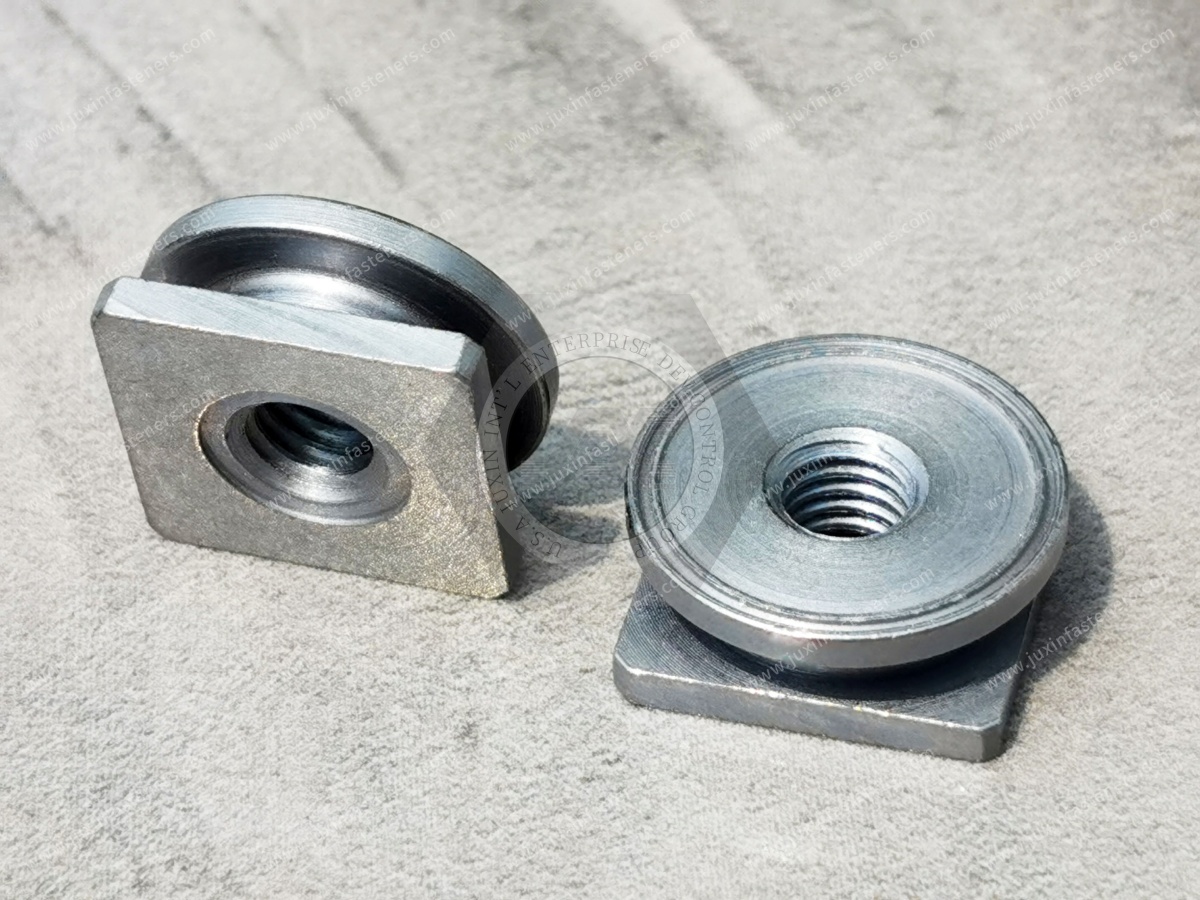
Customer-specific components may include:
shift shafts,
shift pins,
rolling shafts,
fixed pivot shafts,
swing/pivot shafts,
shift sliding columns,
rocker pivot shafts,
and ball pins.
Here, the supplier needs to understand the component as a mechanical interface rather than simply as a generic fastener.
See Automotive Shift Systems: Fastening Engineering, Precision Shafts & OEM Sourcing Guide.
Sunroof and panoramic-roof mechanisms may require:
precision shafts,
pivot pins,
guide components,
sliding components,
brackets,
and other application-specific mechanical hardware.
The qualification process should consider the actual movement, interface, dimensional requirements, material pairing, and environmental conditions.
See Automotive Sunroof Systems: Fastening Engineering, Precision Shafts & OEM Sourcing Guide.
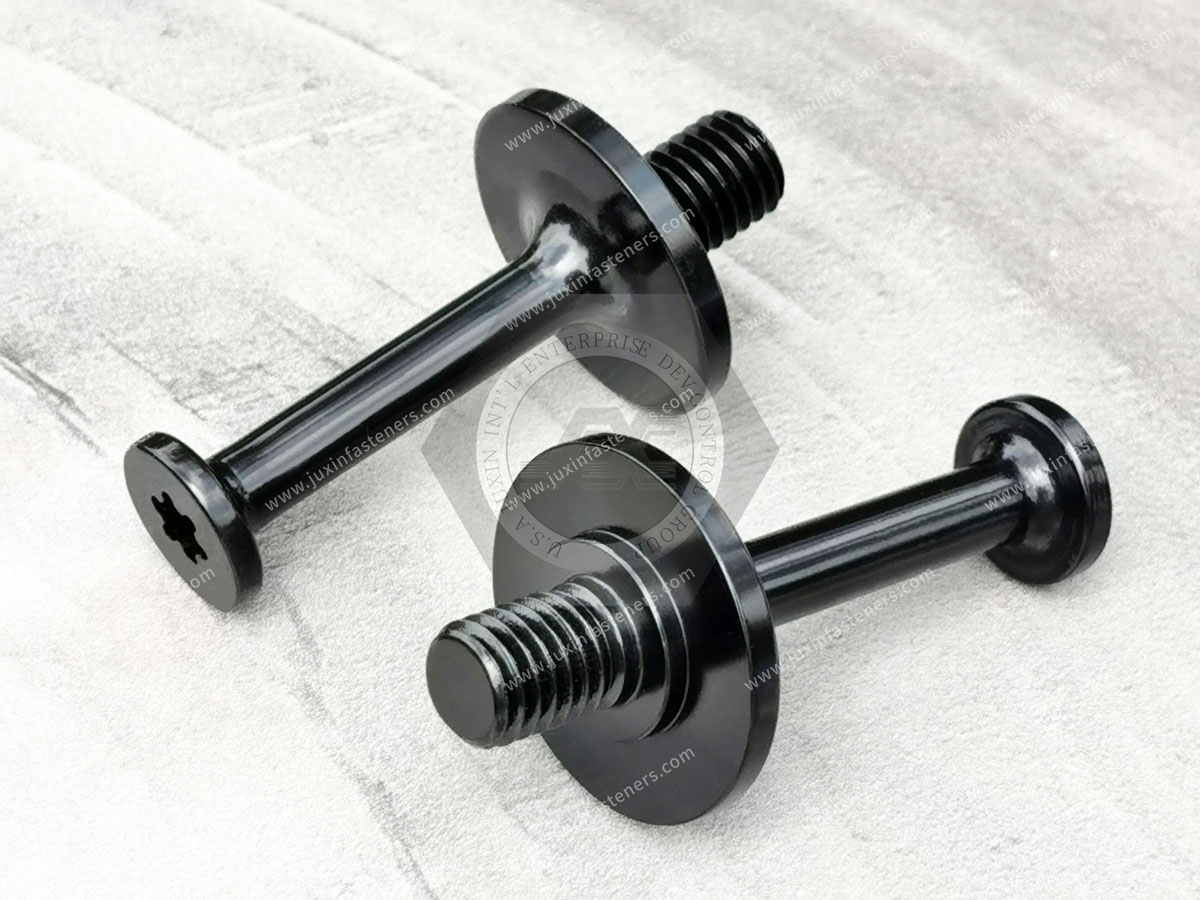
Seat systems can include:
mounting hardware,
high-strength fasteners where specified,
pivot pins,
shafts,
retainers,
and other customer-specific mechanical components.
Supplier qualification should be based on the approved engineering requirements and customer validation requirements.
See Automotive Seat Systems: Fastening Engineering, High-Strength Hardware & OEM Sourcing Guide.
Rollover protection structures may incorporate:
weld nuts,
flange weld nuts,
rivet nuts,
self-locking nuts,
and other structural fastening components.
Supplier qualification should consider thread specification, weld-nut geometry, parent material, material thickness, welding process, post-weld requirements, and customer validation.
See Rollover Protection Systems: Fastening Engineering, Weld Nuts & OEM Sourcing Guide.
Rear spoiler systems demonstrate why supplier qualification should consider the complete fastening system.
A rear spoiler assembly may combine:
Nylon Rear Spoiler Clip + Automotive Spoiler Slide Bolt
The plastic component and metal component perform different roles within the assembly.
The Nylon Rear Spoiler Clip may provide locating, retaining, positioning, spacing, or fastening-interface functions depending on the design.
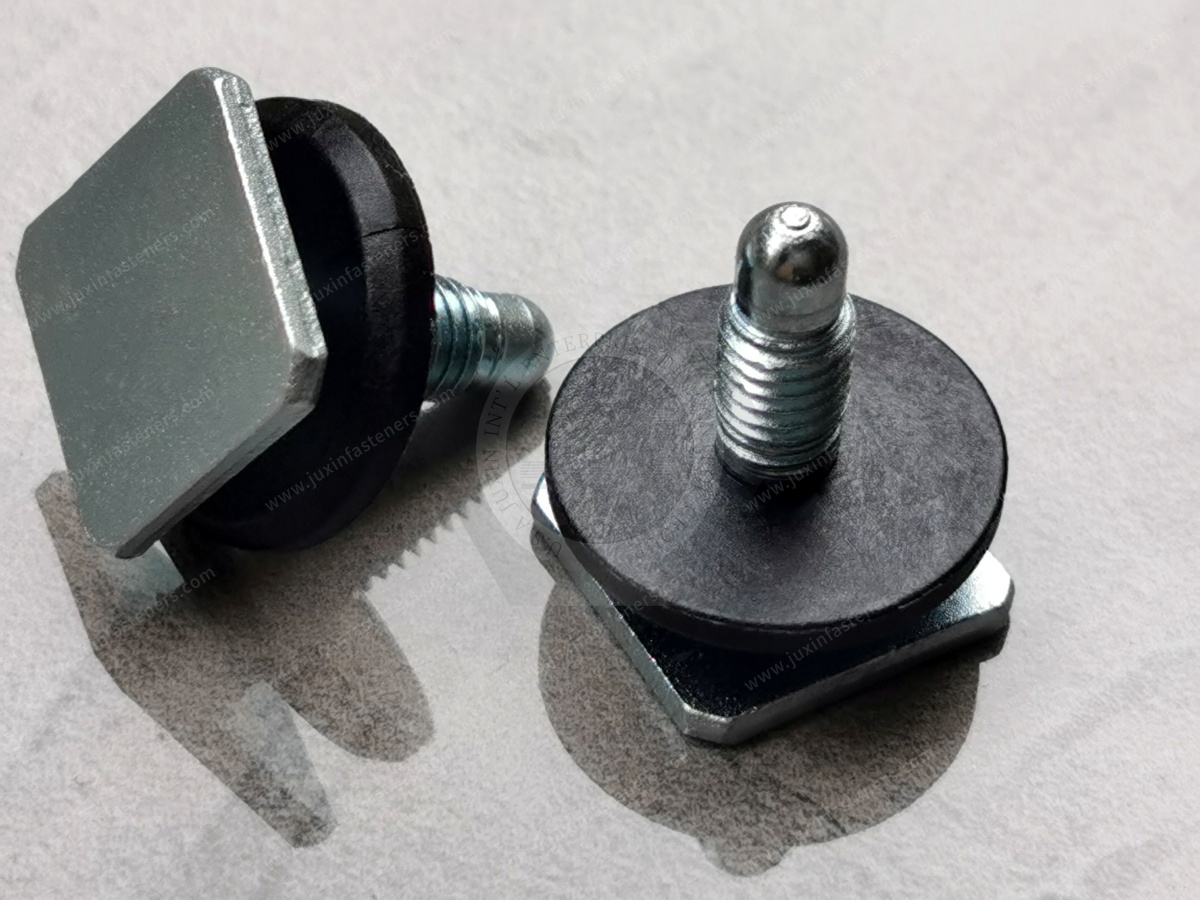
The Automotive Spoiler Slide Bolt is a metal fastening component with special head geometry intended to engage a mounting slot, track, or channel.
Applicable configurations can include:
M5
M6
M6 × 14
M6 × 20
Property classes 8.8 or 10.9 where specified
Color Zinc
Zinc-Nickel Alloy
Black Zinc
Some configurations may include a pre-applied thread-locking patch where specified.
The assembly concept can be understood as:
Slide → Position → Engage → Tighten
Whether the head geometry provides an anti-rotation effect depends on the mating slot or channel and the specific component geometry.
For procurement, the important question is therefore not simply whether a supplier “makes M6 bolts.”
The real question is whether the supplier can control the specific geometry, material, property class, surface treatment, and mating interface required by the customer's rear spoiler assembly.
See Automotive Rear Spoiler Fastening Components: Spoiler Bolts and Rear Spoiler Clips and Automotive Spoiler Slide Bolts: Engineering, Mounting Design & OEM Sourcing Guide.
A common procurement mistake is to compare suppliers by the number of machines or the size of the factory.
Machine count alone does not establish whether a supplier is appropriate for a specific component.
A more useful evaluation asks:
What manufacturing route does the supplier propose, and why?
For example:
May be appropriate for components with rotational geometry such as:
shafts,
pins,
bushings,
spacers,
threaded components,
and turned fasteners.
May be appropriate where the component contains:
flats,
slots,
pockets,
cross features,
or non-rotational geometries.
May be considered for certain small, elongated precision components depending on geometry and production requirements.
May be suitable for certain high-volume fastener geometries where forming economics and material behavior support the process.
May be appropriate for certain sheet-metal components, clips, brackets, washers, and formed parts.
The final manufacturing route should be determined by:
Part Geometry + Material + Tolerance + Volume + Functional Requirement + Production Economics
This is a much more useful qualification criterion than a generic claim of “advanced manufacturing capability.”
Procurement teams should distinguish between:
“The supplier has quality control.”
and:
“The supplier has a defined inspection process for the critical characteristics of this component.”
For customer-specific components, the second question is more useful.
Quality evaluation may include:
drawing-based inspection,
dimensional verification,
thread inspection,
material verification,
hardness testing where specified,
mechanical testing where applicable,
surface-treatment verification,
functional inspection,
batch traceability,
and customer-defined quality documentation.
The exact scope should depend on the project.
For example, a customer may require a dimensional inspection report for specific characteristics but not require 100% inspection of every dimension.
This connects directly to the Information Gain principle of this article:
A supplier should be evaluated on how effectively it controls the characteristics that matter to the component, not simply on how many inspection devices it owns.
International standards can provide the technical framework for fastener dimensions, threads, materials, testing, and engineering requirements.
Depending on the component, customer specifications may reference:
ISO
DIN
EN
ASME/ANSI
SAE
ASTM
BS
The applicable standard should always be determined by the approved drawing or customer specification.
Supplier qualification should therefore ask:
Is the required standard clearly identified?
Does the supplier understand the requirement?
How is the material controlled?
How is the finished component verified?
What documentation is required?
How are revisions controlled?
The objective is not simply to find a supplier that says it “follows international standards.”
The objective is to determine whether the supplier can apply the relevant customer specification consistently to the actual component.
A successful sample is only one stage of supplier qualification.
The real supply journey may be:
RFQ → Engineering Review → Sample → Approval → Pilot Production → Serial Production → Repeat Orders → Engineering Changes → Long-Term Supply
Procurement teams should therefore evaluate whether the supplier can support each stage.
Questions may include:
Can the supplier review the initial drawing?
Can the supplier provide samples?
Can production requirements be scaled appropriately?
Can quality requirements remain consistent between sample and production?
Can drawing revisions be controlled?
Can packaging requirements be maintained?
Can repeat orders be managed?
Can production changes be communicated?
This is particularly important for customer-specific automotive components where the approved sample becomes the reference for future production.
The lowest initial quotation does not necessarily represent the lowest total sourcing risk.
Procurement teams should also consider:
development costs,
tooling costs where applicable,
material costs,
surface treatment,
inspection requirements,
packaging,
freight requirements,
lead time,
minimum order quantity,
quality documentation,
engineering-change costs,
and long-term supply requirements.
A practical commercial comparison can therefore be:
Total Supply Requirement = Product Cost + Development / Tooling + Quality Requirements + Packaging + Logistics + Supply Risk
The exact cost structure depends on the project.
The purpose of this model is not to make every supplier quote more complicated.
It is to ensure that suppliers are compared against the same scope.
A low quotation may not represent the complete technical and commercial scope.
A large product catalog does not automatically demonstrate suitability for a customer-specific component.
Two fasteners may have the same nominal thread size but different head geometry, material, surface treatment, or mating requirements.
Customer-specific components require the supplier to work from engineering requirements rather than from a generic product description.
Quality requirements should be defined during supplier qualification and RFQ review.
A supplier should know which drawing and specification revision is approved for quotation, sample, and production.
A successful sample does not by itself answer questions about repeat production, delivery, change management, and long-term supply.
A plastic trim clip, CNC shaft, chassis rivet nut, weld nut, and high-strength bolt can have very different manufacturing and inspection requirements.
JUXIN FASTENERS operates as an OEM-oriented supplier of customer-specific, non-standard, and application-specific fastening and precision mechanical components.
The product scope can include:
Custom screws
Custom bolts
Nuts
Self-locking nuts
Flange fasteners
Washers
Rivets
Rivet nuts
Weld nuts
Weld studs
Threaded inserts
Plastic fasteners
Nylon retainers and clips
CNC-machined components
Precision shafts
Precision pins
Bushings
Spacers
Other customer-specific mechanical components
Depending on the product, manufacturing routes can include CNC machining, cold heading or forging, multi-stage forming, stamping, injection molding for applicable polymer components, and other suitable processes.
For CNC automotive components, customers can provide:
2D drawings,
3D CAD files,
samples,
specifications,
inspection requirements,
and production requirements.
Quality verification can include dimensional inspection, thread inspection, material verification, hardness or mechanical testing where specified,
surface-treatment verification, functional inspection, and batch traceability according to project requirements.
The exact process and quality scope should be established according to the component and customer specification.
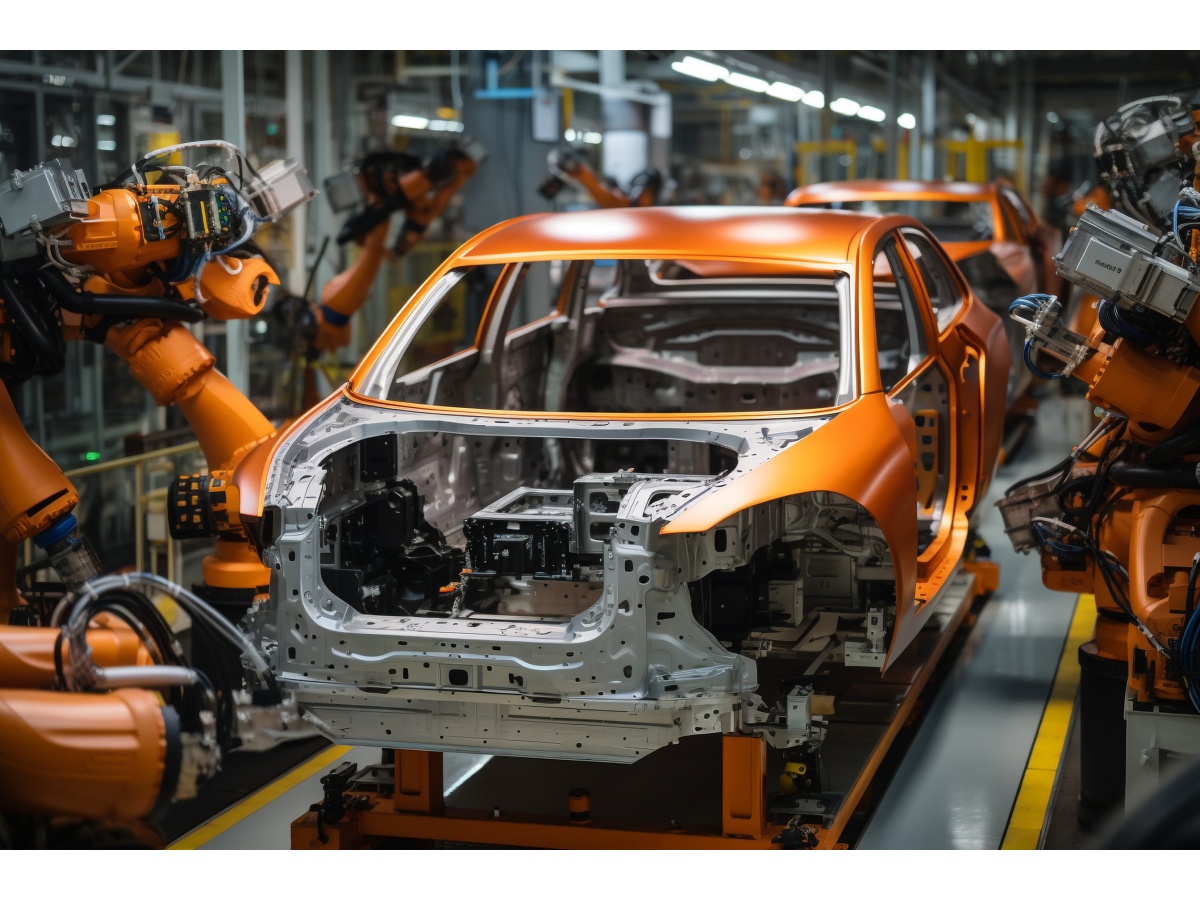
For procurement and supplier-development teams, the qualification process can be organized into eight stages.
Identify:
product type,
application,
mating components,
quantity,
and production stage.
Confirm:
2D drawing,
3D CAD,
revision,
material,
dimensions,
tolerances,
thread,
surface treatment,
and special notes.
Ask the supplier to explain:
proposed process,
secondary operations,
material flow,
production sequence,
and process suitability.
Define:
critical characteristics,
inspection methods,
acceptance criteria,
documentation,
and traceability.
Review:
quantity,
lead time,
production planning,
packaging,
repeat-order requirements,
and supply continuity.
Compare suppliers using the same:
product specification,
quantity,
packaging,
quality scope,
development requirements,
and delivery requirements.
Where applicable, evaluate samples against the approved engineering and quality requirements.
After approval, maintain:
drawing revision control,
quality control,
production consistency,
packaging identification,
change management,
and communication.
Before approving an automotive fastener supplier, procurement teams can ask:
Can the supplier review customer drawings and CAD?
Can the supplier identify unclear or conflicting requirements?
Can the supplier discuss manufacturing-route implications?
Can the proposed process support the required geometry?
Is the process appropriate for the expected volume?
Are secondary operations clearly identified?
Which characteristics will be inspected?
How will threads and critical dimensions be verified?
How will material requirements be controlled?
What quality documentation is available when specified?
Can the supplier support sample and production stages?
How are repeat orders managed?
How are production changes communicated?
How are packaging and identification requirements controlled?
Is the quotation based on the complete technical scope?
Are development or tooling costs clearly identified?
Are quality and packaging requirements included?
Are lead-time assumptions clear?
How are engineering revisions controlled?
How are obsolete specifications handled?
When is customer approval required?
These questions allow procurement teams to build a more objective supplier comparison.
Supplier evaluation should not necessarily end when the supplier is approved.
For long-term automotive programs, procurement and supplier quality teams may continue monitoring:
delivery performance,
quality performance,
corrective actions,
engineering-change response,
documentation accuracy,
packaging performance,
communication,
and supply continuity.
This creates a lifecycle model:
Qualification → Approval → Production → Performance Monitoring → Improvement → Long-Term Supply
A supplier that remains responsive throughout this lifecycle can be more valuable than a supplier that performs well only during the initial quotation stage.
For customer-specific automotive components, JUXIN FASTENERS can structure an inquiry around:
Customer Requirement
↓
Engineering Drawing / CAD
↓
Mating Interface
↓
Material
↓
Geometry & Tolerance
↓
Manufacturing Route
↓
Inspection Requirements
↓
Surface Treatment
↓
Packaging
↓
Production Quantity
↓
RFQ
↓
Sample / Approval
↓
Production
↓
Repeat OEM Supply
This model reflects the actual commercial journey of a customer-specific component.
It also helps separate the roles of engineering, quality, procurement, and supply chain teams without disconnecting them from one another.
Automotive fastener supplier evaluation is a structured process used to determine whether a supplier is technically, qualitatively, commercially, and operationally suitable for a specific automotive fastening requirement.
The main areas are engineering competence, manufacturing-route suitability, material control, quality verification, supply continuity, commercial alignment, and change management.
Not by itself. Certifications and quality-system information can be part of supplier evaluation, but the supplier should also demonstrate that its manufacturing, inspection, material control, and communication processes are appropriate for the actual component being sourced.
Start with the actual drawing or CAD requirement. Then evaluate manufacturing route, material, critical dimensions, inspection, surface treatment, production quantity, packaging, documentation, and long-term supply requirements.
Yes. Standard catalog fasteners may have relatively established specifications, while customer-specific fasteners can require greater attention to drawing interpretation, special geometry, manufacturing route, material, inspection, and change control.
Price comparison evaluates commercial quotations. Supplier qualification evaluates whether the supplier can reliably meet the technical, quality, delivery, communication, and supply requirements of the project.
Engineering should define and evaluate the technical requirements, while procurement evaluates commercial and supply-chain execution. The two teams should use the same approved specification and supplier information.
JUXIN FASTENERS supplies customer-specific, non-standard, and application-specific fastening and precision mechanical components. Depending on the component, customers can provide drawings, CAD files, samples, material requirements, inspection requirements, and production information for technical and commercial review.
A useful starting package includes:
2D drawing
3D CAD file where available
Drawing revision
Material
Surface treatment
Quantity
Application
Inspection requirements
Packaging requirements
Target production schedule
Applicable international standards
The more complete the technical package, the easier it is to evaluate the correct manufacturing route and commercial scope.
For procurement managers, supplier-development teams, quality engineers, automotive engineers, and OEM buyers evaluating a new source, the best starting point is the actual component requirement.
JUXIN FASTENERS can review customer-specific and non-standard automotive fastening and precision component requirements covering areas such as:
Custom screws and bolts
Automotive spoiler slide bolts
Self-locking nuts
Weld nuts and weld studs
Rivet nuts
Threaded inserts
Stainless steel rivets
Precision shafts and pins
CNC-machined components
Plastic and nylon retainers
Application-specific mechanical components
Other drawing-based automotive fasteners
The supplier qualification process can then follow:
Requirement → Engineering Review → Manufacturing Route → Quality → RFQ → Sample → Production → Long-Term Supply
For OEM sourcing inquiries:
Email: info@juxinfasteners.com
Website: www.juxinfasteners.com
JUXIN FASTENERS — Customer-Specific, Non-Standard and Application-Specific Fastening Solutions for OEM Supply Chains
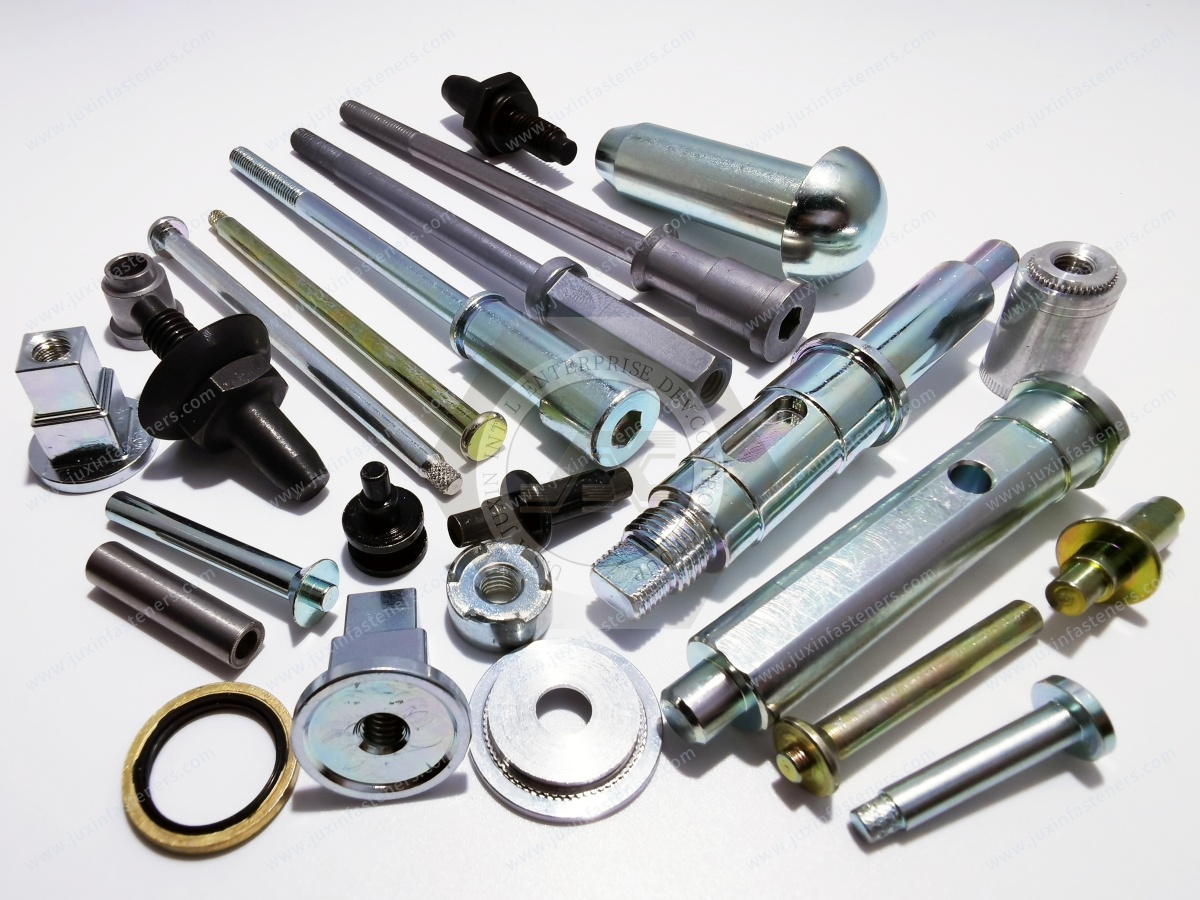
 MORE NEWS
Sep. 14, 2026
Sep. 13, 2026
Contact Us
Tel.:
+86 020 8621 0320
+86 020 3121 6067
E-mail:
Technical Support:
Navigation
SEND INQUIREY