
Call Us
+86 136 6007 9809
Call Us
+86 136 6007 9809

Sep. 13, 2026
Modern automotive programs use far more than standard catalog screws and bolts.
Vehicle systems combine stamped metal structures, machined components, polymer assemblies, brackets, panels, mechanisms, electrical systems,
and application-specific interfaces. As a result, many production components are defined by their actual mating geometry, material, installation method,
environmental conditions, and vehicle architecture rather than by a generic fastener name.
When a standard catalog component does not match the required geometry or assembly interface, the solution may involve a customer-specific screw,
bolt, nut, washer, rivet, rivet nut, weld nut, threaded insert, CNC-machined shaft, precision pin, bushing, spacer, stamped component, plastic retainer, or another application-specific fastening component.
JUXIN FASTENERS is an OEM-oriented supplier of customer-specific, non-standard, and application-specific automotive fastening and precision components.
We support metal and polymer component requirements according to customer drawings, specifications, material requirements, mating interfaces, application conditions, and production requirements.
The engineering logic is straightforward:
Application → Function → Mating Interface → Geometry → Material → Manufacturing Route → Surface Treatment → Assembly → Inspection → Production
This approach allows a component to be evaluated as part of the actual automotive assembly rather than simply as an isolated hardware item.
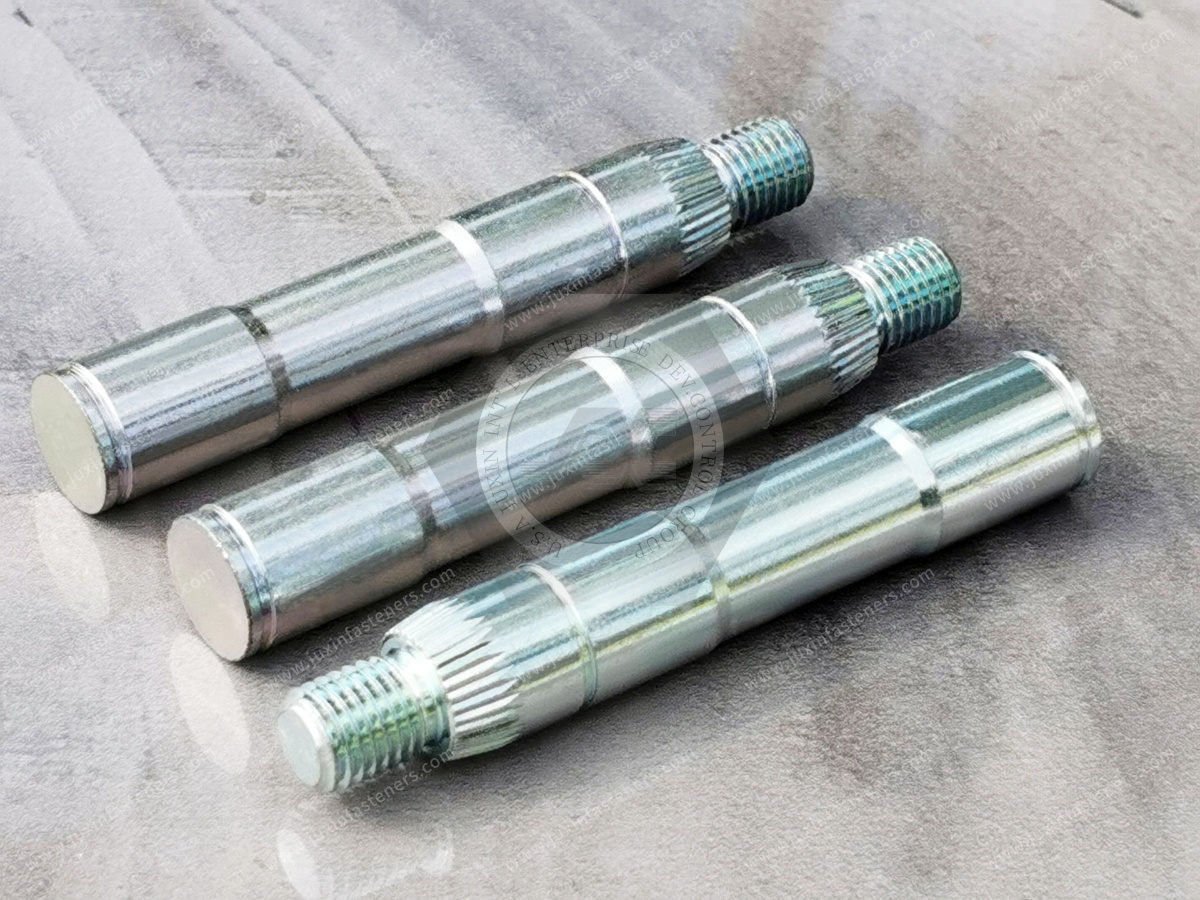
Custom automotive fasteners and precision components are customer-specific mechanical components manufactured to defined engineering requirements rather than selected solely from a standard catalog.
They can include custom screws and bolts, non-standard nuts, washers and shims, rivets, rivet nuts, weld nuts, threaded inserts,
CNC-machined components, shafts, pins, bushings, spacers, stamped components, plastic retainers, clips, and other application-specific hardware.
The defining characteristic is not simply that the component has an unusual shape. A component may become customer-specific because of its:
mounting interface
hole or slot geometry
thread specification
head or shank geometry
panel thickness
grip range
material
surface treatment
installation method
functional dimensions
assembly sequence
application environment
inspection requirements
packaging or production requirements
For OEM and Tier-1 applications, this distinction is important because the correct component is determined by how it functions inside the assembly.
Automotive assemblies frequently combine multiple materials and mechanical interfaces within a limited package space.
A single vehicle module may contain stamped steel panels, aluminum components, engineering polymers, machined shafts, brackets, electronic components, and fastening hardware.
A standard catalog component may therefore be technically available but still unsuitable for the actual application.
Limited installation space may require a specific head profile, shank length, thread length, shaft diameter, flange geometry, or mounting interface.
A fastener may need to engage a mounting hole, slot, channel, threaded component, panel, bracket, plastic housing, or machined interface with application-specific dimensions.
Some components perform more than one mechanical function.
A precision shaft may provide a pivot interface.
A spacer may establish a defined component relationship.
A washer may provide spacing or interface control.
A plastic retainer may position and retain a trim component.
A slide bolt may combine threaded fastening with engagement in a mounting slot or track.
This is why custom automotive component sourcing is fundamentally an engineering problem as well as a purchasing decision.
For broader supplier qualification considerations, see Custom Automotive Component Sourcing & Supplier Evaluation Protocol.
Standard fasteners remain appropriate for many automotive assemblies. The important question is whether the standard component matches the actual joint and manufacturing requirements.
A customer-specific component becomes relevant when the application requires geometry, material, interface, or production characteristics that are not adequately addressed by a standard catalog item.
The evaluation can begin with five basic questions:
What components are being joined?
What function does the fastening component perform?
What mating interface does it engage?
What geometry and material are required?
Which manufacturing route is appropriate for the required component?
From there, additional factors such as surface treatment, assembly method, inspection, production volume, and packaging can be evaluated.
This application-first approach is more useful than searching only for a generic term such as “automotive bolt” or “automotive clip.”
JUXIN FASTENERS supports customer-specific automotive fastening requirements across multiple product categories.
Custom screws may be defined by thread specification, head geometry, shank length, thread length, drive configuration, point geometry, material, surface treatment, or other application-specific features.
Depending on the application, a screw may be used for interior trim, door modules, electrical assemblies, brackets, housings, sheet-metal structures, or other vehicle components.
The engineering requirement is determined by the mating interface and assembly method rather than by the word “screw” alone.
Custom bolts can be developed for applications where standard dimensions or configurations do not match the required assembly.
Relevant characteristics may include:
thread specification
nominal diameter
length
head geometry
unthreaded shank
special locating features
material
applicable property class
surface treatment
assembly requirements
High-strength property classes such as 8.8 and 10.9 should be treated as application-specific requirements rather than universal specifications for automotive bolts.
Customer-specific nuts may include non-standard flange geometry, special external profiles, locking features, or application-specific dimensions.
Depending on the assembly, the nut may interact with a bolt, stud, threaded shaft, panel, bracket, or other component.
Self-locking fasteners may use mechanical locking features or other specified locking methods.
Where a pre-applied thread-locking patch is required, the exact configuration and process should follow the approved component specification.
The appropriate locking solution depends on the joint design, mating hardware, installation method, and customer requirements.
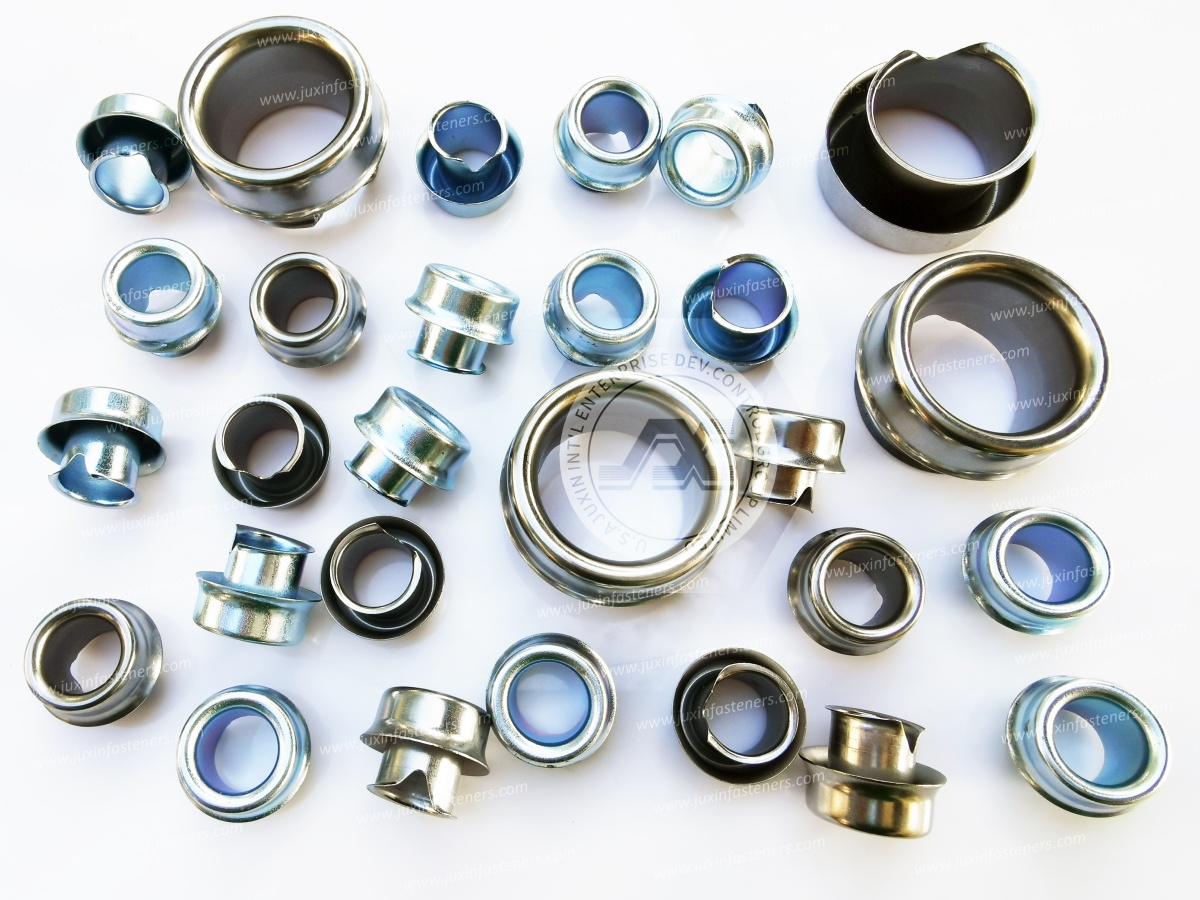
Washers and shims can perform different functions within automotive assemblies, including spacing, interface control, load distribution, alignment, or compensation for a defined assembly relationship.
Custom washers may differ from standard washers in:
inside diameter
outside diameter
thickness
profile
material
surface treatment
dimensional requirements
A custom washer does not necessarily represent a complex component.
Even a relatively simple stamped part can become customer-specific when its geometry or material requirements differ from standard hardware.
For a deeper commercial and engineering discussion, see Custom Washer Sourcing: Engineering Specifications & Procurement.
Automotive assemblies can use different rivet architectures depending on access, material, joint configuration, and assembly method.
Solid rivets, shoulder rivets, step rivets, blind rivets, and other application-specific rivet configurations should not be treated as interchangeable products.
The appropriate rivet geometry depends on the actual joint and installation process.
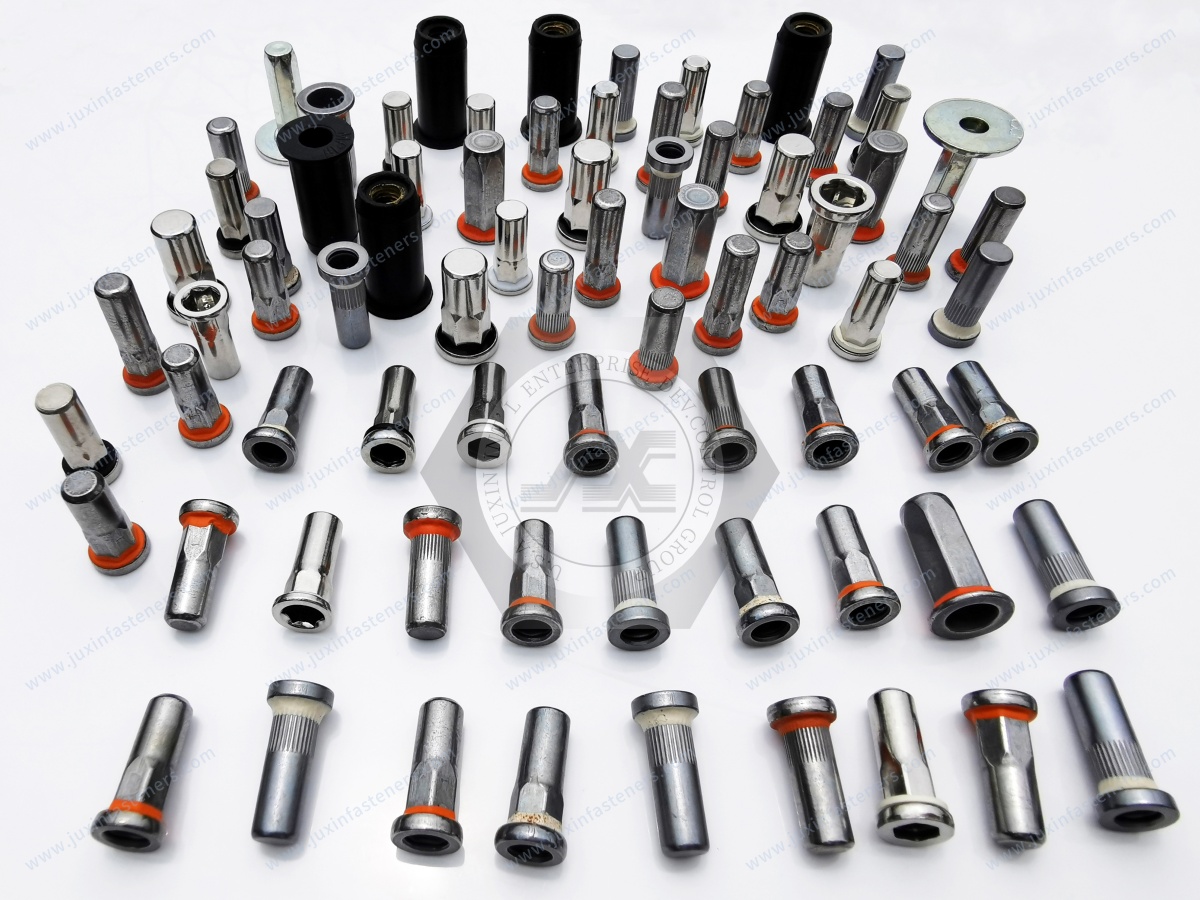
Rivet nuts provide an internal threaded interface in applications where a conventional loose nut may not be practical.
Selection can depend on:
mounting-hole geometry
panel thickness
grip range
thread specification
installation method
parent material
accessibility
application environment
Rivet nuts are therefore application-specific components rather than simply interchangeable threaded inserts.
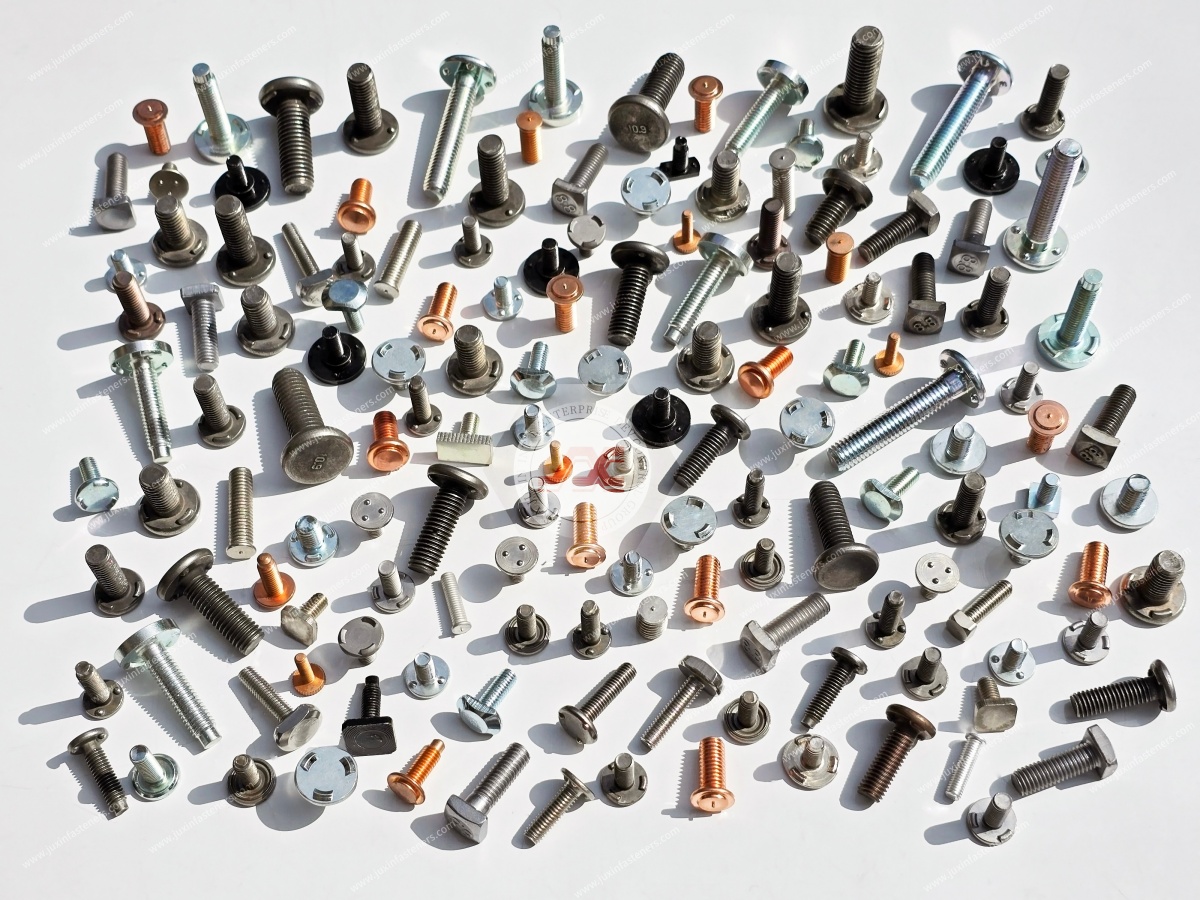
Weld nuts and weld studs can integrate threaded or fastening interfaces into metal assemblies.
Their suitability depends on:
parent material
material thickness
component geometry
projection or locating features
welding process
installation sequence
post-weld requirements
final assembly requirements
For structural or safety-adjacent applications, the fastening component must be evaluated as part of the complete joint rather than treated as an isolated item.
Threaded inserts can provide a threaded interface in plastic, composite, or other materials where the base material or assembly design requires an additional threaded component.
The appropriate insert architecture depends on the host material, installation process, thread specification, mounting geometry, and service requirements.
Automotive programs also require many components that are not conventionally described as fasteners.
These include:
precision shafts
pivot pins
alignment pins
bushings
spacers
sleeves
threaded adapters
mounting interfaces
turned components
milled components
application-specific mechanical components
JUXIN FASTENERS supports drawing-based CNC machining for applicable automotive components.
Depending on component geometry and production requirements, manufacturing routes may include CNC turning, CNC milling,
Swiss-type machining where applicable, drilling, tapping, threading, grooving, and turn-mill machining.
Shafts and pins may form part of:
pivot mechanisms
linkage systems
adjustment mechanisms
sliding mechanisms
alignment interfaces
mechanical assemblies
Their functional requirements may involve diameter, length, concentricity, shoulder geometry, groove geometry, thread features, surface condition, and mating relationships.
Bushings and spacers can control the relationship between mating components.
Depending on the application, they may establish spacing, provide a defined interface between components, or support a rotating or sliding relationship.
The correct geometry depends on the mating components rather than on a generic bushing or spacer specification.
CNC-machined components may incorporate combinations of:
turned diameters
shoulders
grooves
drilled holes
tapped threads
milled flats
slots
cross-holes
special profiles
For more detailed CNC sourcing and engineering considerations, see CNC Automotive Part Sourcing: Engineering Specifications & RFQ.
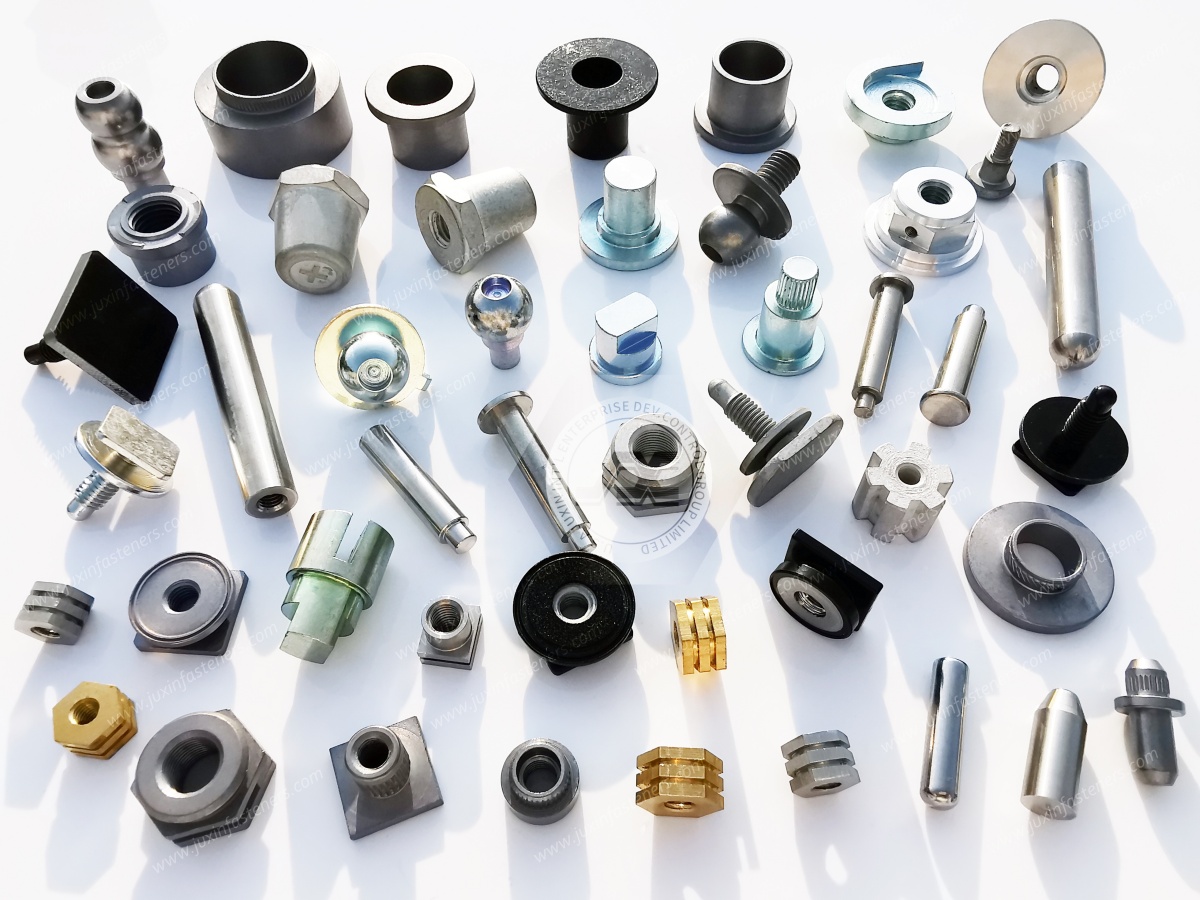
Stamping and forming can be appropriate for automotive metal components with suitable geometry and production requirements.
Potential applications include:
washers
shims
retaining components
clips
formed brackets
sheet-metal fastening components
application-specific metal hardware
The appropriate production route depends on geometry, material, dimensional requirements, tooling considerations, production quantity, and inspection requirements.
For some components, stamping may provide an appropriate production route. For others, CNC machining, cold forming, or another process may be more suitable.
Professional component sourcing therefore requires manufacturing-route evaluation rather than selecting a process solely because it is commonly used for a particular product category.
Modern automotive assemblies may combine polymer components with metal fastening hardware.
Applications can include:
plastic retainers
snap-fit trim clips
push-type retainers
plastic push rivets
screw-type retainers
wire harness clips
other customer-specific polymer fastening components
Material selection may involve Nylon/PA, POM/Acetal, PP, or other specified engineering polymers depending on the application and customer requirements.
The finished component performance depends not only on the polymer but also on:
geometry
wall thickness
retention mechanism
mounting-hole geometry
panel thickness
deflection
tolerance
installation method
environmental exposure
For a broader technical overview, see Automotive Plastic Fasteners: Types, Applications & OEM Sourcing Guide.
The value of an automotive fastener supplier is not only the number of products available. It is the ability to understand how different components function within different vehicle systems.
JUXIN FASTENERS supports application-specific requirements across multiple automotive assemblies.
Chassis and undercarriage assemblies can expose fastening components to moisture, road contamination, salts, temperature changes, vibration, and different mating materials.
Potential components include:
rivet nuts
customer-specific aluminum alloy components
custom bolts
washers
threaded components
other application-specific metal fasteners
Material and surface treatment selection should consider the actual environment, mating materials, assembly requirements, and customer specifications.
See Automotive Chassis & Undercarriage Fastening Solutions.
Automotive wiper mechanisms include moving linkages and pivot interfaces.
Potential fastening components include:
stainless steel solid rivets
stainless steel shoulder rivets
stainless steel step rivets
application-specific pins
linkage fastening components
The engineering relationship can be understood as:
Linkage → Pivot Interface → Fastener Geometry → Material → Assembly Method
A rivet or pin should therefore be selected according to the actual linkage and pivot requirements rather than by nominal diameter alone.
See Automotive Wiper System Fastening Solutions.
Gear-shifting mechanisms can contain several application-specific mechanical components, including:
shift shafts
shift pins
rolling shafts
fixed pivot shafts
swing or pivot shafts
shift sliding columns
rocker pivot shafts
ball pins
These components are associated with movement, alignment, pivoting, or sliding interfaces and may require geometries that are not represented by conventional catalog bolts.
See Automotive Shift System Fastening Solutions.
Sunroof and panoramic roof mechanisms can contain compact sliding and pivoting components.
Potential customer-specific components include:
precision shafts
pivot pins
guide components
sliding components
application-specific mechanical hardware
Relevant engineering factors may include:
movement type
mating interface
package space
functional dimensions
material pairing
surface condition
assembly method
environmental exposure
See Automotive Sunroof System Fastening Solutions.
Automotive door modules combine structural, mechanical, electronic, and interior trim components.
Potential fastening solutions include:
door trim retainers
plastic clips
screw-type retainers
customer-specific screws
metal fastening components
plastic fastening components
The appropriate component depends on the mounting interface, panel thickness, retention function, thread requirement, installation direction, serviceability, and material pairing.
See Automotive Door System Fastening Solutions.
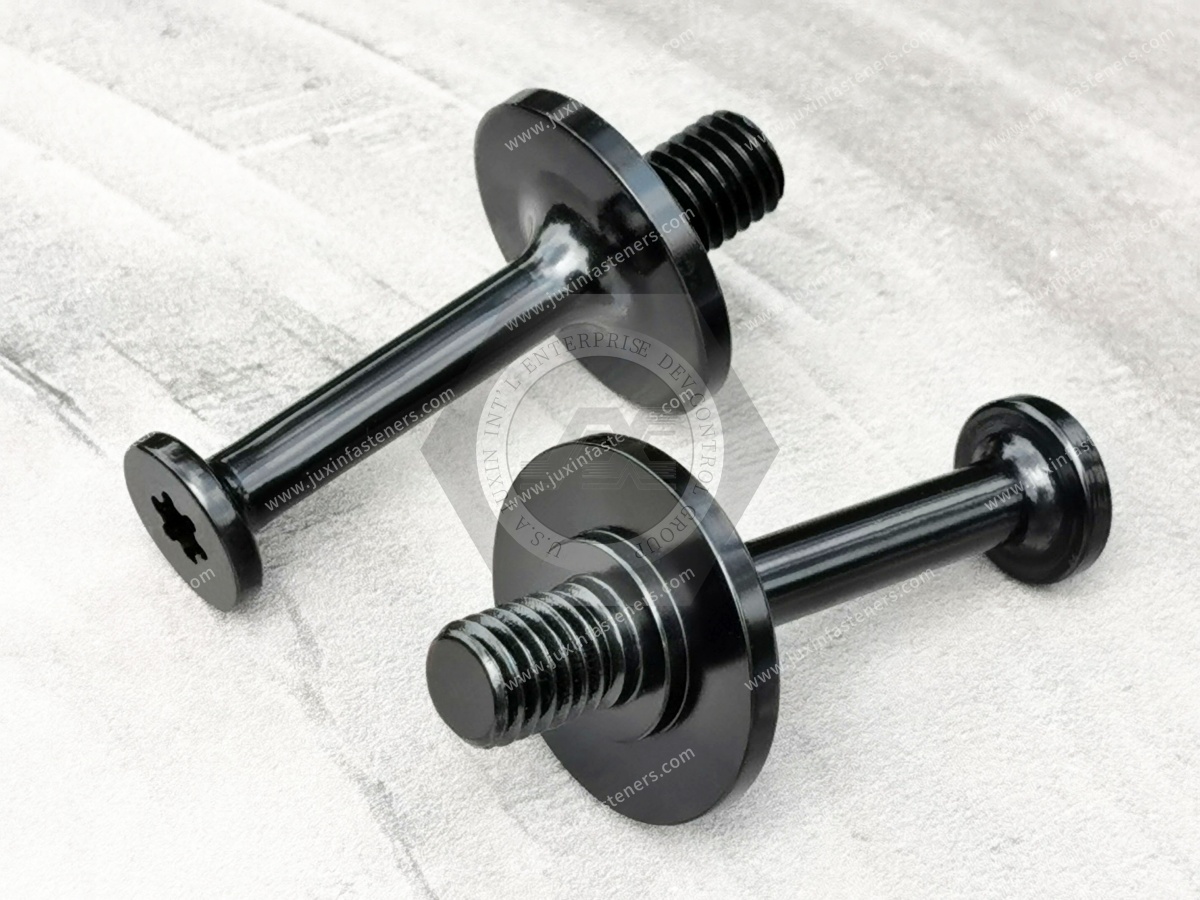
Automotive seat systems can contain seat frames, tracks, brackets, adjustment mechanisms, pivot interfaces, and trim components.
Potential components include:
seat mounting hardware
customer-specific bolts
pins
pivot components
retainers
other application-specific mechanical hardware
Structural seat hardware and mechanism components should be evaluated differently because their functions and joint architectures can differ significantly.
See Automotive Seat System Fastening Solutions.
Rollover protection structures may include roll bars, roll hoops, structural members, reinforcement sections, mounting brackets, and related fastening interfaces.
Potential fastening components include:
weld nuts
flange weld nuts
rivet nuts
self-locking nuts
customer-specific bolts
other structural fastening components
The engineering sequence can include:
Structural Node → Parent Material → Fastening Interface → Installation Method → Fastener Geometry → Assembly Requirements
Application-specific validation requirements must be established by the vehicle or component program.
See Rollover Protection System Fastening Solutions.
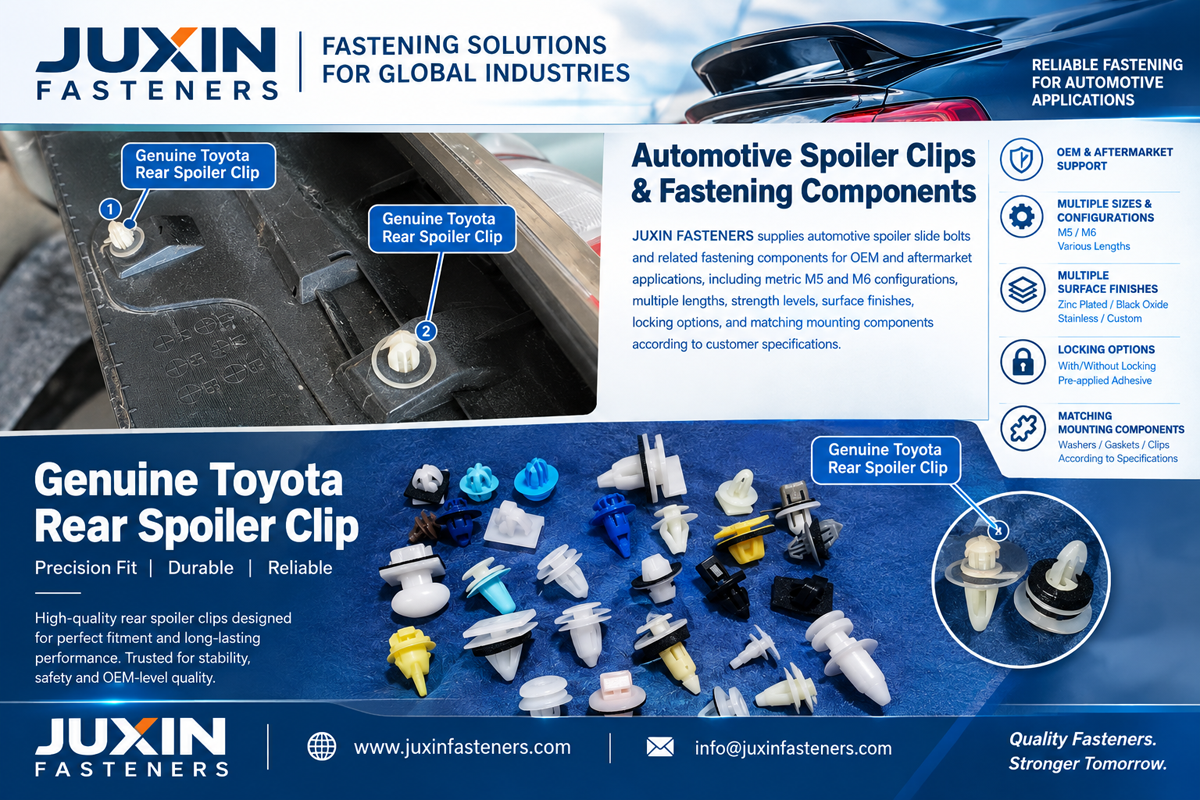
Rear spoiler assemblies provide a useful example of how plastic and metal components can work together within one application.
A typical application may combine a Nylon Rear Spoiler Clip with an Automotive Spoiler Slide Bolt.
The Automotive Spoiler Slide Bolt is available in applicable configurations including:
M5
M6
M6 × 14
M6 × 20
property classes 8.8 and 10.9 where specified
Available surface finishes include:
Color Zinc
Zinc-Nickel Alloy
Black Zinc
Certain configurations may also include a pre-applied thread-locking patch where specified by the application.
The defining feature of the Automotive Spoiler Slide Bolt is its special head geometry, which can engage a mating mounting slot, track, or channel.
The basic assembly concept is:
Slide → Position → Engage → Tighten
The head and mating slot geometry may provide an anti-rotation effect, but this depends on the actual component interface and should be evaluated from the approved assembly design.
The plastic component has a different role. The Nylon Rear Spoiler Clip may provide locating, retaining, positioning, spacing, or fastening-interface support depending on the specific design.
Together:
Nylon Rear Spoiler Clip + Automotive Spoiler Slide Bolt → Rear Spoiler Fastening System
See Automotive Rear Spoiler Fastening Components for the broader application system and Automotive Spoiler Slide Bolts: Engineering, Mounting Design & OEM Sourcing Guide for the metal component.
One important characteristic of modern automotive manufacturing is that a single assembly may contain several different fastening technologies.
For example:
Rear Spoiler
→ Nylon Rear Spoiler Clip
→ Automotive Spoiler Slide Bolt
Door Module
→ Plastic Retainer
→ Custom Screw
→ Metal Bracket
Chassis Assembly
→ Rivet Nut
→ Bolt
→ Washer
→ Structural Bracket
Electronic Housing
→ Plastic Retainer
→ Threaded Insert
→ Custom Screw
This mixed-component approach means that automotive sourcing is not always a matter of selecting one standard fastener.
It can require coordinated evaluation of polymer components, metal fasteners, precision components, mating interfaces, and assembly requirements.
Material selection should be connected to the actual component function and application environment.
Potential material families for automotive components include:
carbon steels
alloy steels
stainless steels
aluminum alloys
brass where applicable
engineering polymers
The appropriate material depends on the component, mechanical requirement, mating material, environment, manufacturing route, and customer specification.
Surface treatment is similarly application-specific.
Potential treatment families may include:
zinc-based finishes
Zinc-Nickel Alloy
passivation for applicable stainless steel components
anodizing for applicable aluminum components
hard anodizing where specified
functional or lubricating coatings where required by the application
Surface treatment should not be selected independently from the base material and assembly environment.
For example, corrosion considerations may involve the combination of:
Base Material + Surface Treatment + Mating Material + Environment + Assembly Conditions
No single coating should be treated as universally appropriate for every automotive application.
A customer-specific component should be matched to a suitable manufacturing route.
JUXIN FASTENERS can evaluate applicable manufacturing routes according to component geometry, material, tolerance requirements, production quantity, tooling considerations, and application requirements.
Potential routes include:
Suitable for applicable:
shafts
pins
bushings
spacers
adapters
precision turned parts
complex machined components
Applicable to suitable screw, bolt, rivet, and formed-fastener geometries.
Applicable where component geometry and production requirements make multiple forming operations appropriate.
Applicable to suitable washers, shims, clips, brackets, and other sheet-metal components.
Applicable polymer fastening components can be produced according to the required geometry, material, tooling, and production requirements.
The important point is that manufacturing route should follow the component rather than the other way around.
A drawing-based component is best understood as a complete engineering definition rather than a collection of isolated dimensions.
The review may consider:
component function
mating components
mounting interface
critical dimensions
thread specification
material
surface treatment
tolerances
installation method
assembly sequence
environmental conditions
inspection requirements
production requirements
For CNC components, this may include review of:
2D engineering drawings
3D CAD data
critical-to-function dimensions
holes and threads
surface requirements
functional interfaces
drawing revision
For fasteners, the review may additionally consider:
thread form
head geometry
shank geometry
thread length
material
applicable property class
surface treatment
locking feature
mating component
The objective is to connect the drawing requirement to the actual manufacturing route and inspection method.
Quality verification should be connected to customer-defined requirements.
Depending on the component and project, verification may include:
dimensional measurement
thread inspection
hole diameter and position inspection
material verification
hardness testing where applicable
surface treatment verification where specified
functional inspection
visual inspection
lot identification
inspection documentation
The appropriate inspection method depends on the characteristic being verified.
For example:
Drawing Requirement → Critical Characteristic → Manufacturing Process → Inspection Method → Acceptance Criterion → Inspection Record
This is more useful than treating “quality inspection” as a generic final-stage activity.
For additional information, see Custom Metal Component Quality & Inspection Requirements.
Customer-specific components often move through several stages before becoming repeat production items.
A typical development path may include:
Engineering Requirement → Drawing Review → Manufacturing Evaluation → Prototype / Sample → Inspection → Customer Evaluation → Production Release → Repeat Supply
The exact sequence depends on the component and customer program.
For low-volume CNC components, the transition may involve relatively limited production changes.
For formed or stamped components, tooling and process development may become more significant.
For plastic components, geometry, material, tooling, sampling, and production requirements may all influence the development route.
The important point is that the manufacturing process should remain connected to the approved component definition as the project moves from development into production.
Catalog sourcing works well when a standard product matches the application.
Customer-specific sourcing becomes different when the component must be manufactured around a particular assembly.
A custom component may involve:
drawing interpretation
mating-interface analysis
material selection
manufacturing-route evaluation
tooling considerations
process planning
inspection planning
sample approval
production consistency
packaging requirements
drawing revision control
This is why a supplier should be evaluated not only by the number of products it lists, but also by its ability to connect engineering requirements with manufacturing execution.
For supplier qualification considerations, see Automotive Fastener Supplier Evaluation Framework.
JUXIN FASTENERS is positioned as an OEM-oriented supplier of customer-specific, non-standard, and application-specific automotive fastening and precision components.
Our product scope covers both metal and polymer components, including applicable:
custom screws
custom bolts
nuts
self-locking fasteners
washers
shims
rivets
rivet nuts
weld nuts
weld studs
threaded inserts
CNC-machined components
shafts
pins
bushings
spacers
stamped components
plastic retainers
clips
other application-specific components
The manufacturing route depends on the actual component.
Potential manufacturing methods include CNC machining, turning, milling, cold heading, cold forging, multi-stage forming, stamping, and applicable plastic component manufacturing.
This allows JUXIN FASTENERS to approach the component from the engineering requirement rather than forcing every requirement into one standard production method.
The most useful engineering model is:
Application → Function → Mating Interface → Geometry → Material → Manufacturing Route → Surface Treatment → Assembly → Inspection → Production
Each stage answers a different question.
Where is the component used?
What does it need to do within the assembly?
What component, hole, slot, thread, panel, bracket, shaft, or housing does it interact with?
What dimensions and features define the interface?
What material family is appropriate for the component and application?
Which process is suitable for the geometry, material, tolerance, and production requirement?
Is a surface treatment required for corrosion, appearance, friction, or another customer-defined function?
How is the component installed, tightened, pressed, riveted, welded, inserted, or positioned?
Which characteristics are critical to verify?
What production, packaging, documentation, and repeat-supply requirements apply?
This framework helps connect engineering requirements with commercial sourcing.
Although automotive is a major application area, the same customer-specific fastening and precision-component principles apply across other industrial sectors.
Potential components include:
custom fasteners
threaded components
rivet nuts
precision CNC components
plastic retainers
electrical mounting hardware
Application requirements may include compact packaging, material compatibility, electrical isolation where required, and defined mounting interfaces.
Potential components include:
self-clinching fasteners
rivet nuts
screws
washers
spacers
plastic retainers
threaded inserts
The fastening solution depends on the enclosure material, panel thickness, mounting interface, and assembly method.
Potential components include:
precision shafts
pins
bushings
spacers
CNC-machined components
application-specific fasteners
Movement, alignment, dimensional relationships, and material pairing may be important engineering considerations.
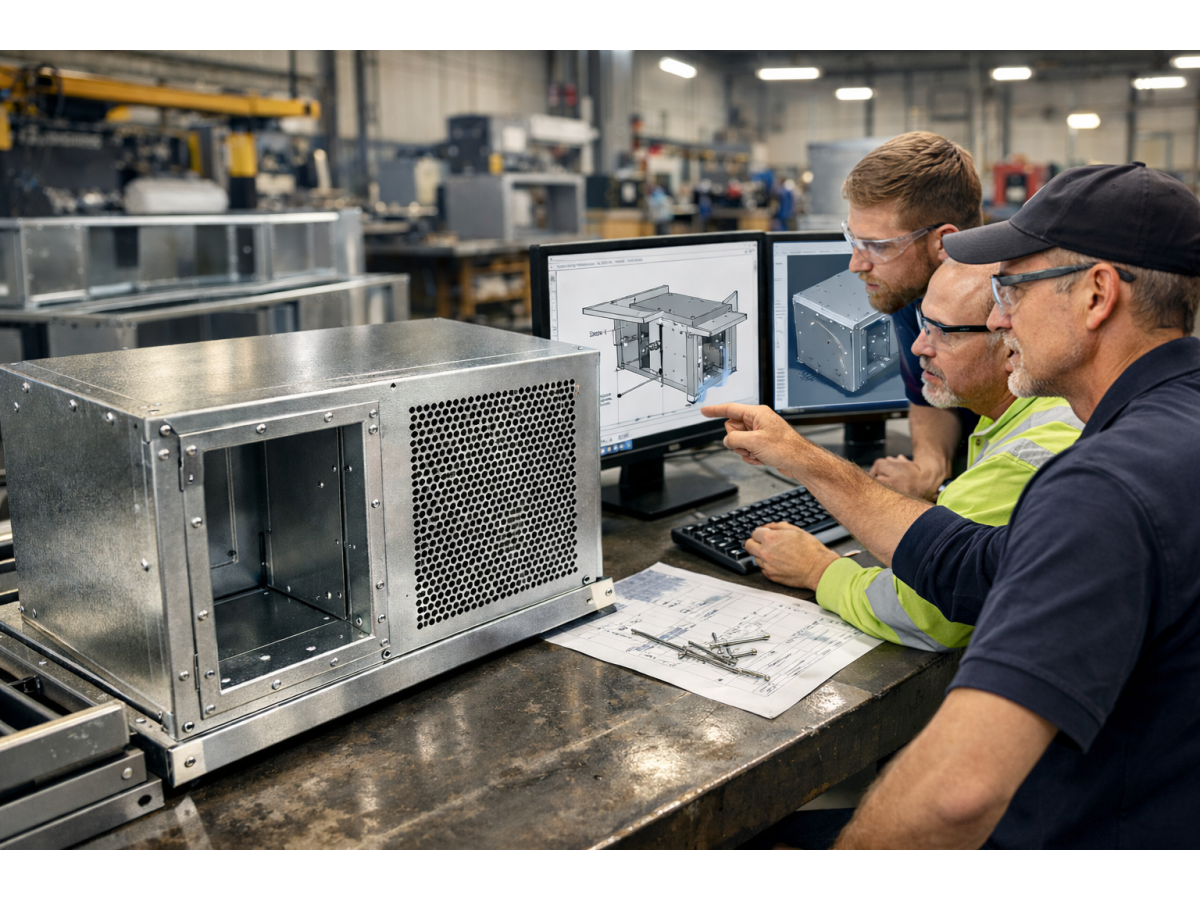
Potential components include:
screws
rivet nuts
washers
clips
sheet-metal fastening components
custom hardware
The actual component should be matched to the sheet-metal interface and assembly requirements.
Potential components include:
threaded inserts
small fasteners
spacers
precision machined components
plastic retainers
mounting hardware
Compact packaging and mating-interface geometry can be particularly important in these assemblies.
Customer-specific fasteners and precision mechanical components can also be used in specialized industrial equipment where component geometry, material,
surface condition, documentation, and application requirements are customer-defined.
The applicable requirements must be established by the specific project rather than assumed from the industry name alone.
Several recurring problems can make customer-specific component sourcing more difficult.
“Automotive bolt” or “automotive clip” may be too broad to identify the required component.
The actual mating interface and geometry are often more useful starting points.
Two clips, bolts, shafts, or washers may look similar while having different mounting interfaces or functional dimensions.
Visual similarity does not automatically establish interchangeability.
CNC machining, stamping, cold forming, and other processes have different suitability depending on geometry, material, tolerance, and production requirements.
The component should be evaluated before the production route is fixed.
Material selection and component geometry influence each other.
A polymer retainer, stainless steel rivet, aluminum component, and high-strength steel bolt may require very different design and production considerations.
Customer-specific components must be linked to the applicable drawing or specification revision so that engineering and production teams are working from the same definition.
Custom automotive fasteners are customer-specific fastening components manufactured according to defined engineering requirements.
They may include custom screws, bolts, nuts, washers, rivets, rivet nuts, weld nuts, threaded inserts, and other application-specific fasteners.
Depending on the application and production requirements, JUXIN FASTENERS supports CNC-machined shafts, pins, bushings, spacers, turned components,
milled components, and other customer-specific mechanical components.
Yes. JUXIN FASTENERS supports applicable metal and polymer fastening components according to customer drawings, specifications, materials, application conditions, and production requirements.
Depending on the component, manufacturing routes may include CNC turning, CNC machining, milling, cold heading, cold forging, multi-stage forming, stamping, and applicable plastic component manufacturing.
JUXIN FASTENERS supports drawing-based manufacturing for applicable customer-specific fasteners and precision components.
Engineering evaluation considers the drawing, mating interface, material, geometry, manufacturing route, inspection requirements, and production conditions.
No. Strength requirements depend on the actual application and approved component specification. Property classes such as 8.8 and 10.9 apply only where specified for the relevant fastener configuration.
Where applicable, JUXIN FASTENERS can support both polymer and metal fastening components within customer-specific automotive programs.
The appropriate component and manufacturing route depend on the actual assembly requirements.
The component is evaluated through the relationship between application, function, mating interface, geometry, material, manufacturing route, surface treatment, assembly, inspection, and production requirements.
JUXIN FASTENERS supports OEM and industrial customers seeking customer-specific automotive fasteners, precision CNC components,
stamped hardware, plastic fastening components, and application-specific mechanical components.
For a technical evaluation, customers can send relevant engineering drawings, CAD data, specifications, material requirements, application information, or other available project documentation.
Contact:
Visit:
JUXIN FASTENERS — Custom Fasteners, Precision Components, and Application-Specific OEM Manufacturing Solutions.
 MORE NEWS
Sep. 14, 2026
Sep. 13, 2026
Contact Us
Tel.:
+86 020 8621 0320
+86 020 3121 6067
E-mail:
Technical Support:
Navigation
SEND INQUIREY