
Call Us
+86 136 6007 9809
Call Us
+86 136 6007 9809

Apr. 08, 2026
Automotive blind rivets and blind rivet nuts solve a common manufacturing problem: how to create a reliable
mechanical connection when assembly access is available from only one side.
However, they perform fundamentally different functions.
A blind rivet creates a permanent mechanical joint between two or more components.
A blind rivet nut, also called a rivet nut, rivnut or threaded insert for sheet metal, installs a reusable internal thread into thin material.
This distinction should drive the selection process.
For automotive engineers, manufacturing teams, procurement managers and supplier-development specialists, the first question should not be:
“Should we use a stronger rivet?”
It should be:
“Does this assembly require a permanent joint or a reusable threaded attachment?”
A practical engineering decision path is:
Joint Function → Parent Material → Sheet / Joint Thickness → One-Sided Access → Hole → Load
→ Serviceability → Installation Process → Environment → Validation
JUXIN FASTENERS supplies standard and drawing-based blind rivets, blind rivet nuts and related fastening solutions for selected automotive,
EV, electrical, sheet-metal and industrial OEM assemblies.
| Requirement | Blind Rivet | Blind Rivet Nut |
|---|---|---|
| Permanent joining | Excellent candidate | Not its primary function |
| Reusable internal thread | No | Yes |
| One-sided installation | Yes | Yes |
| Thin-sheet assembly | Yes | Yes |
| Requires matched hole | Yes | Yes |
| Grip range matters | Yes | Yes |
| Subsequent screw installation | No | Yes |
| Serviceable component | Limited | Good candidate |
| Main performance concerns | Shear, tensile, joint setting | Pull-out, spin-out, thread, installation |
| Typical function | Join components | Create threaded attachment |
The central engineering principle is:
Blind Rivet ≠ Blind Rivet Nut.
Although both use blind-side installation and controlled deformation, their joint functions and failure modes are different.
Modern vehicle assemblies increasingly contain:
Closed sections
Box structures
Thin sheet
Aluminum panels
Electrical enclosures
Interior modules
Power electronics housings
Thermal-management equipment
Multi-material assemblies
In these locations, backside access for a conventional nut may be difficult or impossible after the assembly is formed.
Blind fastening can allow installation entirely from the accessible side.
This can simplify:
Assembly sequence
Component handling
Tool access
Service design
Production automation
But:
One-Sided Access ≠ One Universal Fastener Solution.
The correct technology still depends on what the joint must do.
Evaluate a blind rivet when the assembly requires:
Permanent mechanical joining
One-sided installation
Efficient sheet assembly
No reusable thread
Joining of suitable dissimilar materials
Production-friendly installation
Potential applications can include selected:
Body panels
Interior structures
Brackets
Heat shields
Equipment housings
Electrical enclosures
Lightweight sheet assemblies
HVAC equipment
The exact rivet must be selected according to the joint.
Evaluate a rivet nut when the design requires:
A reusable internal thread
Installation into thin sheet
One-sided access
Removable covers or components
Subsequent bolt or screw assembly
Serviceability
Potential applications can include selected:
Electrical enclosures
Control modules
Brackets
Interior modules
Access panels
Equipment housings
Thermal-management equipment
EV-related enclosures
A rivet nut is especially useful where the parent sheet itself is too thin to provide sufficient conventional thread engagement.
A thin sheet may not provide enough thread engagement for a conventional tapped hole.
Possible alternatives include:
Rivet nut
Weld nut
Self-clinching nut
Thread-forming screw
Extruded / formed thread
Other engineered threaded attachment
Selection depends on:
Material + Thickness + Access + Load + Serviceability + Production Process
The rivet nut is particularly valuable when access is available from only one side.
One important correction to a common misconception is:
Blind Rivet ≠ No-Hole Fastener
and:
Rivet Nut ≠ No-Hole Fastener
Conventional blind rivets and rivet nuts normally require a correctly sized prepared hole.
Depending on the production process, the hole may be created by:
Punching
Drilling
Laser cutting
Machining
Another controlled fabrication process
The fastener does not eliminate the need to engineer the hole.
For both blind rivets and rivet nuts, the hole affects installed performance.
Important variables can include:
Hole diameter
Roundness
Burr condition
Hole location
Edge distance
Surface condition
Parent-material thickness
Therefore:
Correct Fastener + Wrong Hole = Wrong Joint.
This is one of the most important principles in blind fastening.
For a blind rivet, an oversized hole can affect:
Rivet expansion
Joint tightness
Load transfer
Head support
For a rivet nut, an oversized hole can affect:
Anti-rotation
Setting
Spin-out resistance
Installed position
The failure mechanism differs because the products perform different functions.
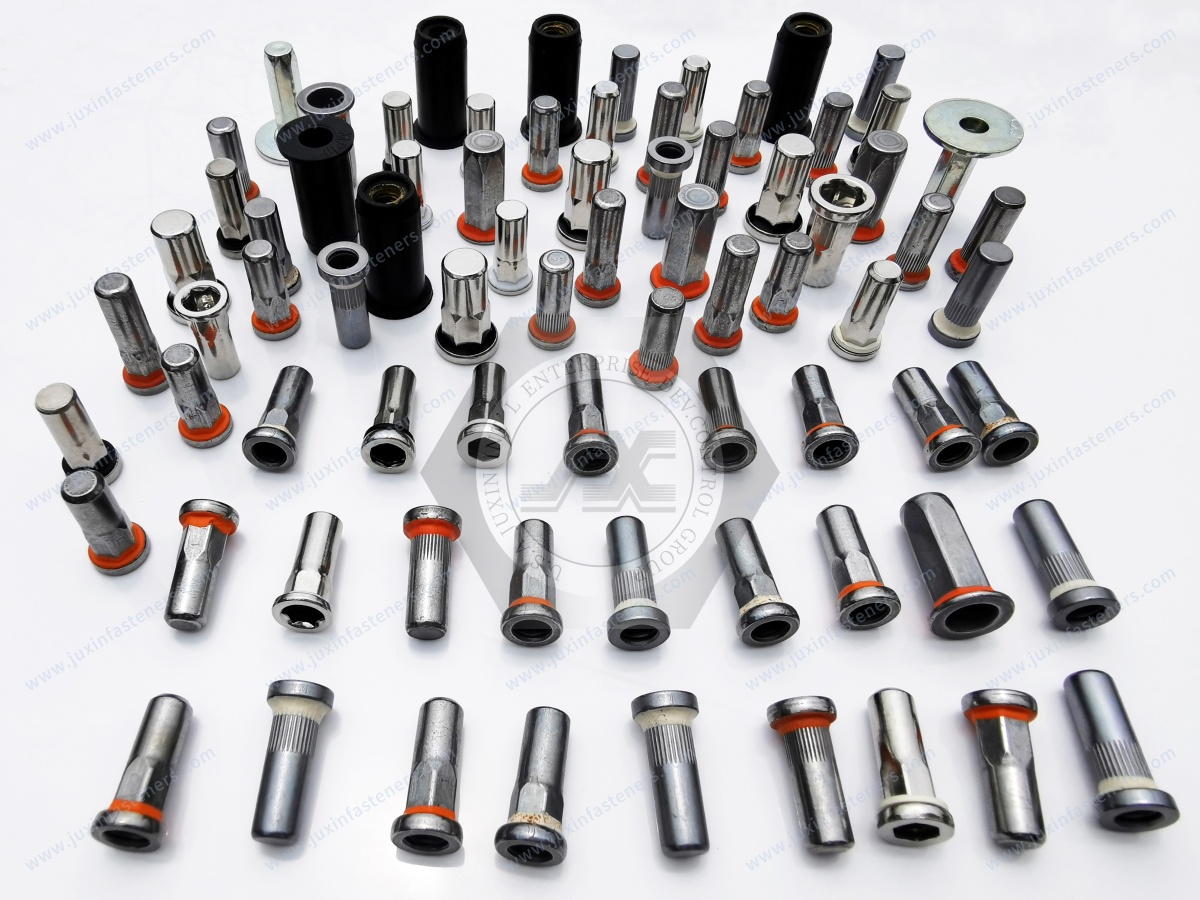
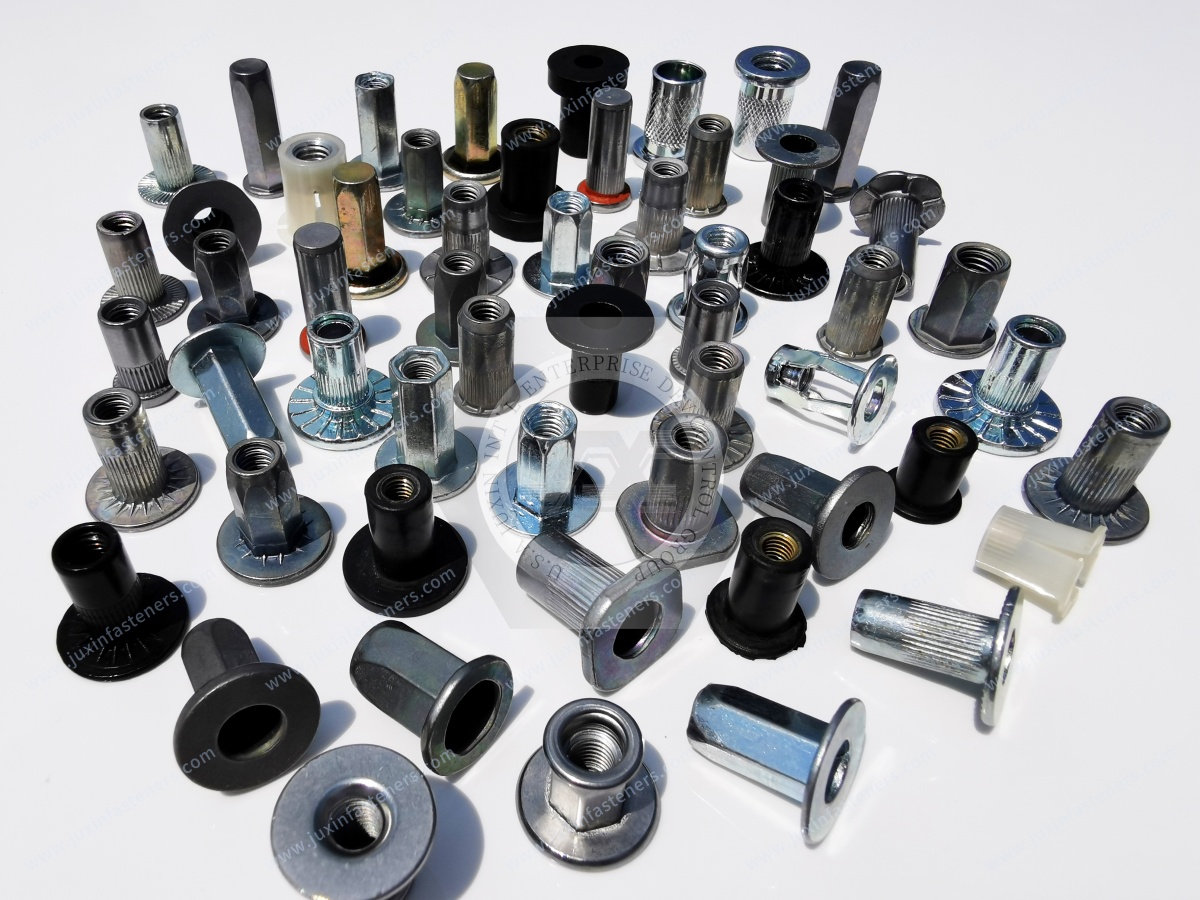
Blind rivet nuts are available in body styles such as:
Round body
Knurled round body
Half-hex body
Full-hex body
Other application-specific geometries
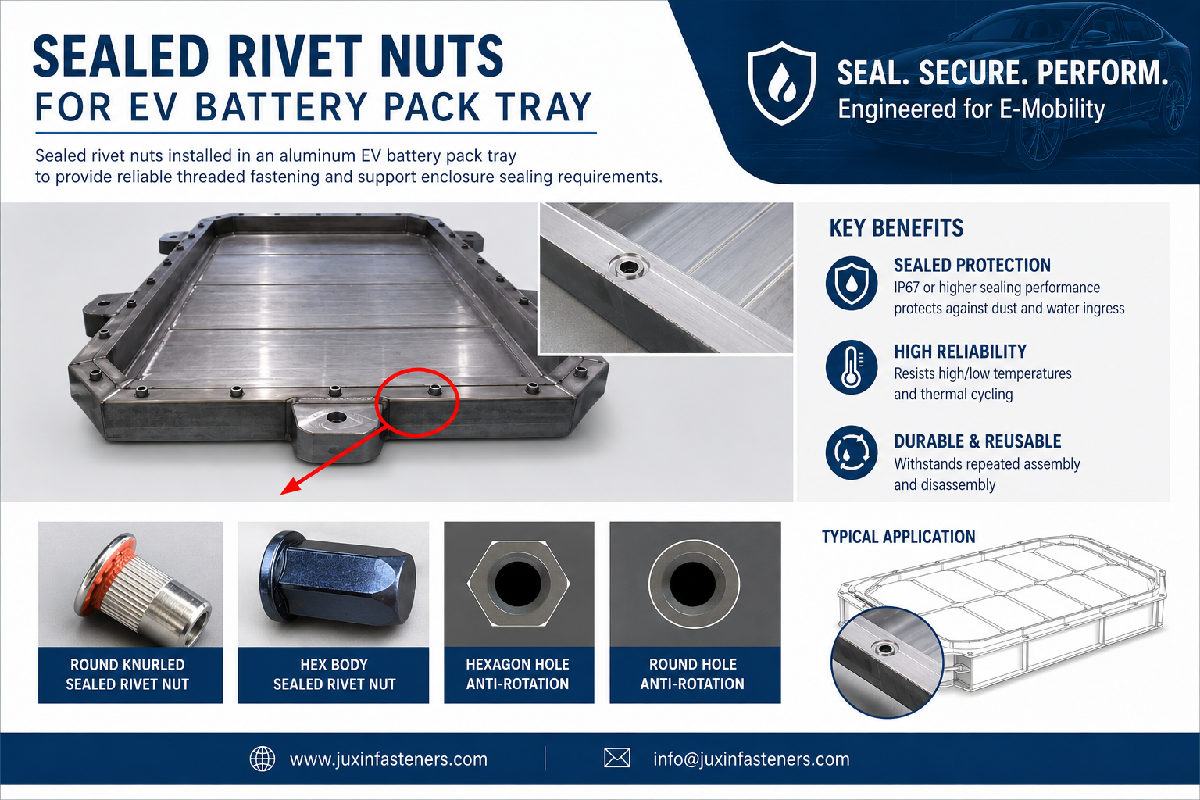
A hex-body rivet nut installed in a corresponding hexagonal hole can provide a different anti-rotation mechanism from a round-body rivet nut.
Therefore:
Body Geometry Is Part of Rivet-Nut Performance.
Both blind rivets and rivet nuts are designed for defined material-thickness or joint-thickness conditions.
But the meaning differs.
For a blind rivet, grip range relates to the total joint stack being joined.
For a rivet nut, grip range relates primarily to the parent material thickness in which the rivet nut is being installed.
Therefore:
Correct Thread or Diameter + Wrong Grip Range = Wrong Fastener.
A blind rivet must form correctly across the total joint stack.
If the rivet is outside its intended grip range, possible problems can include:
Incorrect setting
Loose joint
Inadequate backside formation
Reduced joint performance
The rivet should therefore be selected using the actual assembled thickness rather than nominal panel thickness alone.
A rivet nut must collapse or deform correctly behind the parent material.
If the sheet is outside the intended grip range, the installed geometry may be incorrect.
Possible consequences include:
Insufficient backside formation
Poor retention
Excessive deformation
Incorrect seating
Reduced pull-out or spin-out resistance
Blind fastening technologies depend on controlled deformation.
Applying more installation force does not automatically produce a stronger joint.
For blind rivets:
More Setting Force ≠ Better Rivet Joint.
For rivet nuts:
More Setting Force ≠ Better Rivet-Nut Installation.
Excessive or incorrect setting can damage:
Fastener
Thread
Parent sheet
Coating
Installed geometry
The tool and process should match the fastener.
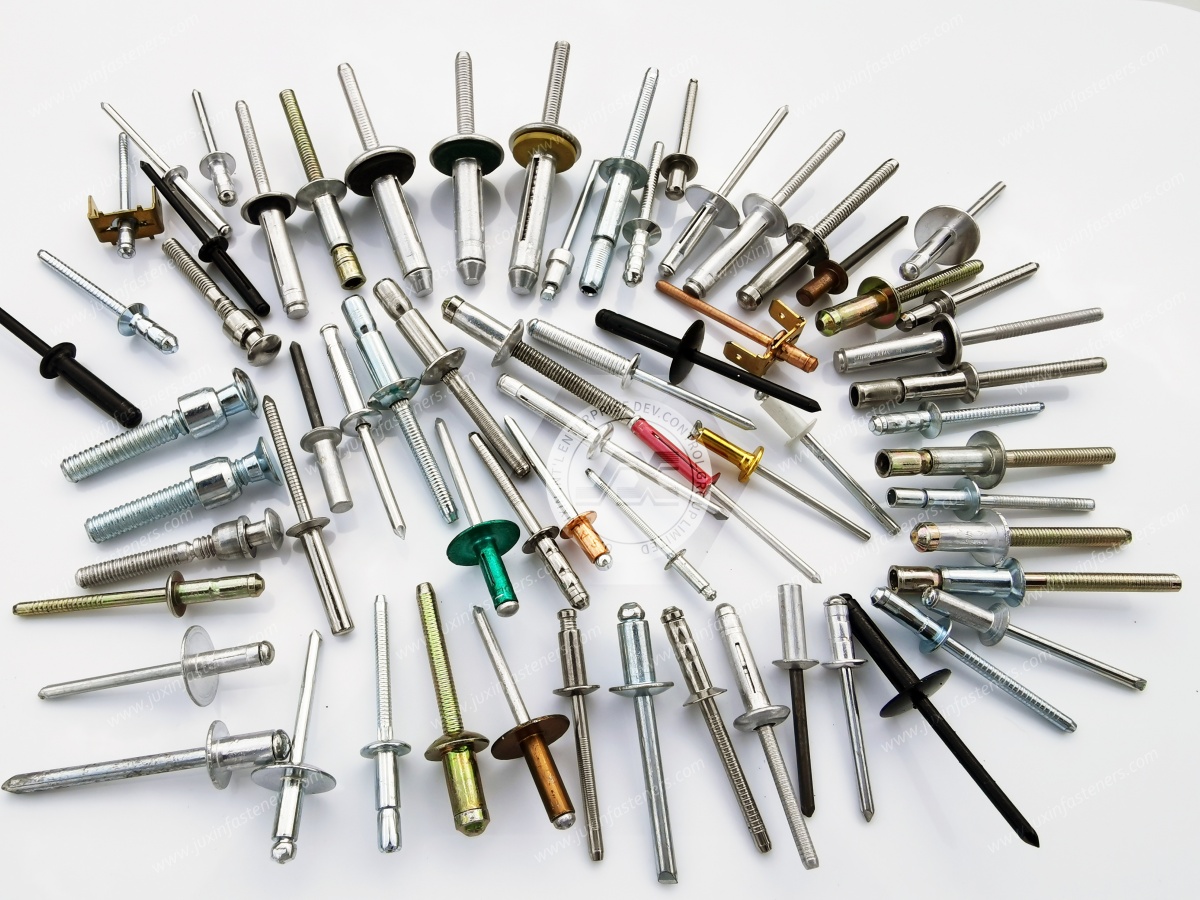
A conventional blind rivet contains:
Rivet body
Mandrel
During installation, the tool pulls the mandrel while supporting the rivet head.
The rivet body deforms on the blind side and clamps the joint stack.
The mandrel then separates according to the rivet design.
Installed performance depends on the complete system:
Rivet Body + Mandrel + Hole + Joint Stack + Tool + Setting Process
Blind rivets can use different body and mandrel material combinations.
The mandrel is not simply an installation accessory.
It can influence:
Setting behavior
Break characteristics
Installed condition
Therefore, second-source qualification should not compare only the visible rivet body.
Shear loading acts primarily across the rivet.
Applications dominated by shear should be evaluated using the relevant installed joint requirements.
But:
Rivet Shear Strength ≠ Complete Joint Shear Capacity.
The parent material and hole may govern failure.
Tensile loading tends to separate the joined components along the rivet axis.
This produces a different failure mechanism from shear.
Therefore:
Shear ≠ Tensile.
Both values should not be treated as interchangeable marketing numbers.
A strong rivet installed into thin or weak material can still produce a weak assembly.
Possible failure can occur through:
Parent-sheet bearing
Head pull-through
Hole deformation
Rivet failure
Joint-stack separation
Therefore:
Stronger Rivet ≠ Automatically Stronger Joint.
Blind rivets can use different head styles depending on the application.
A larger bearing surface can help distribute load over softer or thinner material.
But:
Larger Head ≠ Automatically Better Joint.
Packaging, appearance, sheet deformation and local load path must also be considered.
Closed-end blind rivets can reduce one potential path through the rivet body and may be useful where improved containment is required.
However:
Closed-End Blind Rivet ≠ Automatically Waterproof Joint.
Sealing depends on the complete interface, including:
Hole
Head
Joint surface
Installation
Sealant where specified
Assembly design
If an enclosure requires a defined IP rating, the complete enclosure must be validated.
A blind rivet nut is inserted into a prepared hole.
During installation, the tool engages the internal thread and applies a controlled setting action.
The rivet nut deforms behind the parent material to create mechanical retention.
After installation, a bolt or machine screw can be assembled into the internal thread.
The installed system is therefore:
Rivet Nut + Parent Material + Hole + Setting + Mating Screw + Final Threaded Joint
Pull-out resistance describes the installed rivet nut's resistance to being pulled axially from the parent material under a defined loading condition.
It depends on:
Rivet nut design
Material
Parent material
Sheet thickness
Hole
Grip range
Installation
Therefore:
Rivet Nut Strength ≠ Installed Pull-Out Strength.
Spin-out describes resistance to rotation of the installed rivet nut within the parent material.
It can be influenced by:
Body geometry
Knurling
Hex features
Hole geometry
Parent material
Installation quality
But:
Pull-Out ≠ Spin-Out.
They are different failure modes.
This distinction is especially important.
Spin-out means the rivet nut rotates in the parent material.
Screw self-loosening means the mating threaded fastener rotates or loses clamp under joint movement.
These are not the same problem.
Therefore:
Spin-Out Resistance ≠ Threaded-Joint Anti-Loosening Performance.
Round-body rivet nuts can be useful where:
Round holes are preferred
Hole production is simple
Packaging is constrained
Depending on the application, the body may be:
Smooth
Knurled
Other application-specific geometry
Anti-rotation performance should be validated against the actual sheet and installation.
Knurling can improve interaction with suitable parent material.
However:
More Aggressive Knurling ≠ Automatically Higher Spin-Out Performance.
The result depends on:
Parent material
Sheet hardness
Hole
Setting
Body geometry
Half-hex and full-hex rivet nuts can provide mechanical anti-rotation through geometric engagement with a corresponding hole.
They can be useful where higher resistance to rotation is required.
However, they also require the correct hole geometry and manufacturing process.
Therefore:
Hex Rivet Nut + Round Hole ≠ Designed Hex Anti-Rotation System.
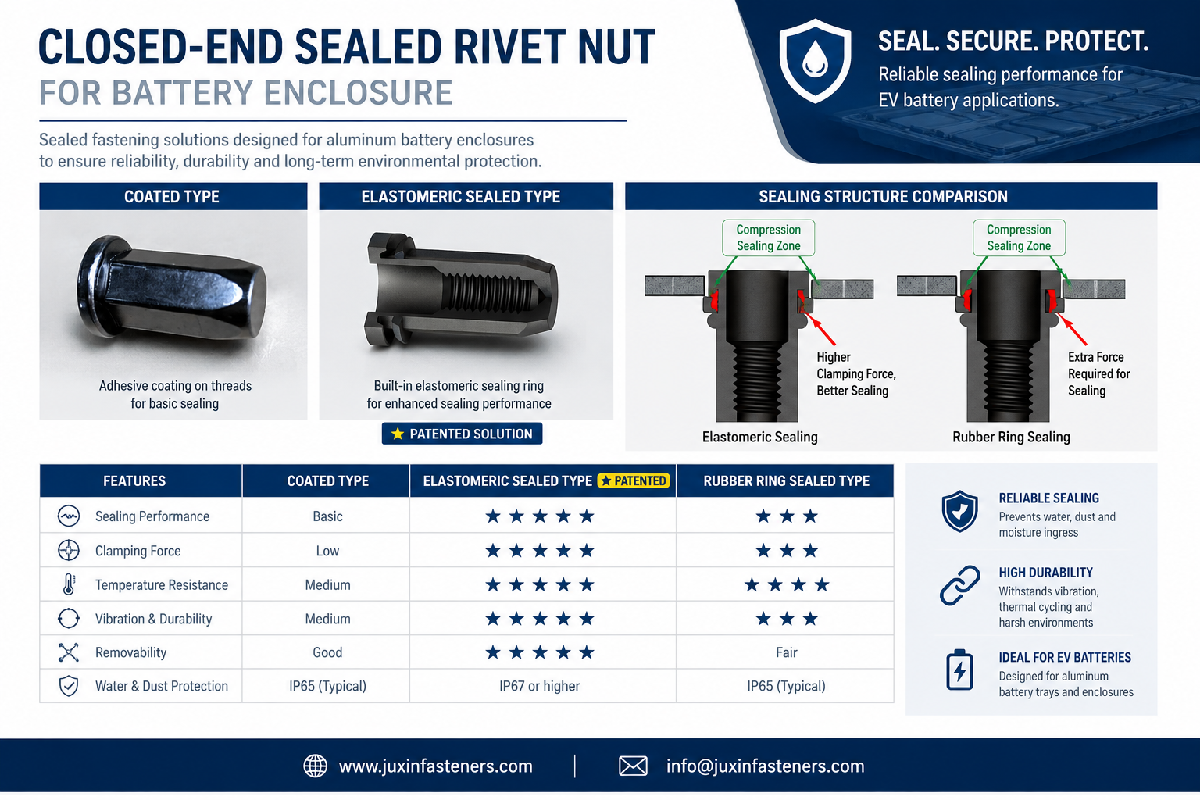
Open-end rivet nuts provide a through-threaded architecture.
Closed-end designs close the blind end of the rivet nut.
A closed-end design can be useful where:
The screw should not protrude through the insert
Improved containment is desired
Contamination management is important
But:
Closed-End Rivet Nut ≠ Automatically Waterproof.
An enclosure's sealing performance depends on the complete assembly.
Rivet nuts can use:
Large flange
Small flange
Reduced / near-flush head
Other application-specific head designs
The flange affects:
Bearing area
Installed height
Surface interaction
Load distribution
The correct choice depends on the application.
A low-profile head may improve packaging or appearance.
A larger flange may provide greater bearing area.
Neither is automatically superior.
Selection should follow:
Function + Parent Material + Load + Packaging
Steel rivet nuts can provide a useful combination of:
Strength
Formability
Cost
Surface-treatment options
Potential coatings may include suitable zinc, zinc-nickel or other customer-specified systems.
Material and coating should be selected according to the assembly environment.
Stainless steel rivet nuts can be considered where corrosion resistance is important.
However:
Stainless Steel ≠ Corrosion-Proof Assembly.
The designer should consider:
Parent material
Environment
Chlorides
Galvanic interaction
Installation force
Stainless material can also require different installation conditions from softer rivet-nut materials.
Aluminum rivet nuts can offer:
Lower density
Lower setting forces in suitable designs
Compatibility advantages in selected aluminum assemblies
But:
Aluminum Rivet Nut ≠ Automatically Best for Aluminum Sheet.
Strength, galvanic behavior, service environment and joint load must still be evaluated.
A stronger insert installed into weak or thin parent material may simply shift failure into the sheet.
Therefore:
Stronger Rivet Nut ≠ Stronger Parent Material.
This principle is particularly important in:
Thin aluminum
Lightweight sheet
Polymer or composite structures
Soft parent materials
Aluminum vehicle components can benefit from mechanical fastening where welding is undesirable or where serviceable threaded attachment is required.
Potential technologies include:
Blind rivets
Rivet nuts
Self-piercing technologies where specifically engineered
Threaded inserts
Other mechanical fastening systems
The correct technology depends on the actual joint architecture.
Use a blind rivet when the objective is primarily:
Permanent Joining
Evaluate a rivet nut when the objective is:
Reusable Threaded Attachment
Do not select between them based only on strength.
They solve different assembly problems.
Blind mechanical fastening can support selected mixed-material assemblies involving:
Steel
Aluminum
Polymers
Composites
But:
Mechanical Fastening ≠ Automatic Mixed-Material Compatibility.
Engineers should evaluate:
Galvanic corrosion
Bearing stress
Creep
Thermal expansion
Surface damage
Joint movement
When different metals are electrically connected in the presence of an electrolyte, galvanic corrosion can become relevant.
Examples may include:
Steel fastener + aluminum sheet
Stainless fastener + aluminum
Mixed-metal rivet assemblies
The risk depends on:
Material combination
Area relationship
Surface treatment
Moisture
Chlorides
Joint geometry
Therefore:
Corrosion-Resistant Fastener ≠ Corrosion-Resistant Assembly.
Depending on fastener material and application, suitable surface systems may include:
Zinc
Zinc-nickel
Zinc-flake
Other customer-specified coatings
Coating selection should consider:
Corrosion
Thickness
Friction
Installation
Thread fit for rivet nuts
A rivet nut contains a functional internal thread.
Surface treatment must therefore be controlled so that the finished thread meets the specified fit.
Therefore:
Coating Name ≠ Complete Coating Specification.
And:
Coating Substitution Can Be an Engineering Change.
Laboratory corrosion testing can support a coating specification.
But actual automotive service includes combinations of:
Wet/dry cycling
Road salt
Temperature
Chemicals
Mechanical damage
Therefore:
Salt Spray Hours ≠ Vehicle Service Life.
Use the applicable OEM or customer corrosion requirement.
Blind rivets may be considered for selected:
Body panels
Brackets
Closures
Reinforcements
Sheet assemblies
where permanent mechanical joining is appropriate.
Rivet nuts may be used where a removable component later requires threaded attachment.
Primary structural and crash-related vehicle joints require OEM-specific engineering and formal validation.
Blind fastening can support selected:
Instrument-panel structures
Console brackets
Interior supports
HVAC equipment
Trim-related assemblies
Design considerations may include:
Low assembly force
Appearance
Noise
Serviceability
Thin parent material
Rivet nuts are particularly useful for removable covers and brackets in suitable:
Electrical enclosures
Control units
Power electronics
Equipment housings
Blind rivets may be used where the joint is intended to remain permanent.
However:
Mechanical Fastening ≠ Electrical Safety.
Electrical bonding, grounding, insulation and system certification must be separately engineered.
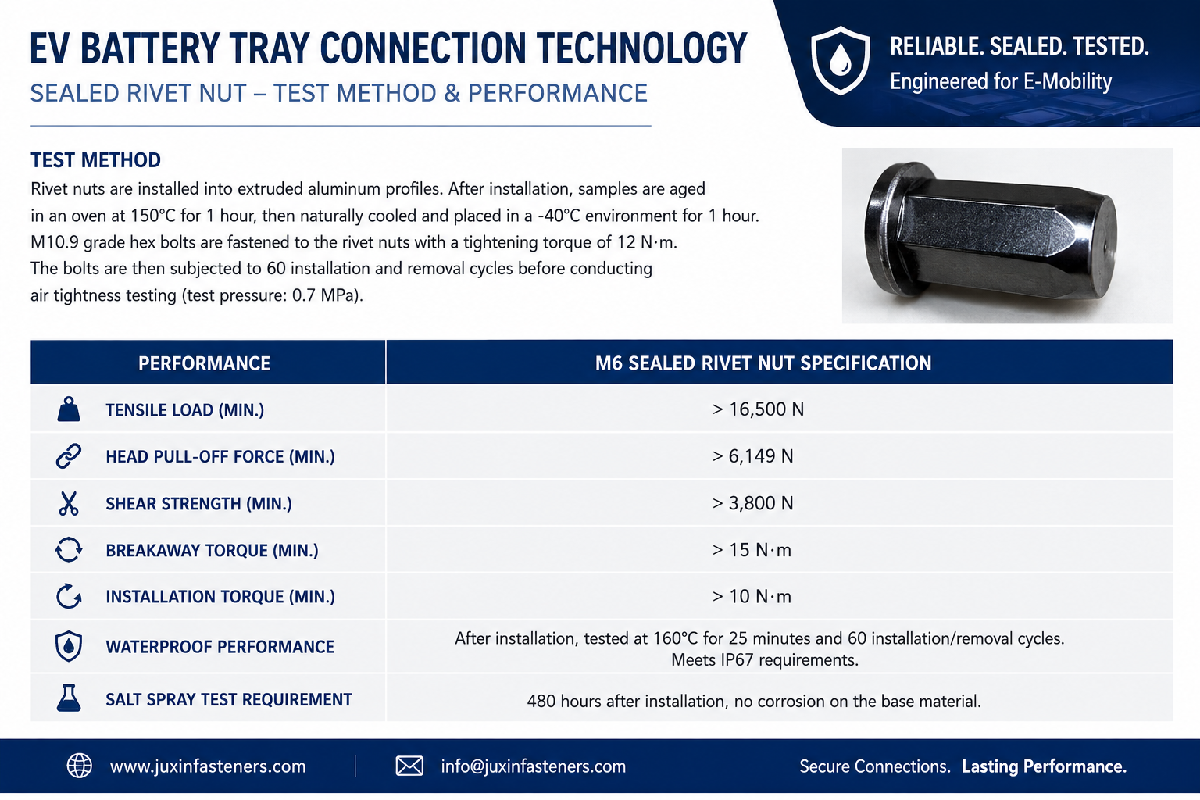
EV battery and energy-storage systems can contain:
Covers
Enclosures
Cooling components
Brackets
Electrical modules
Service panels
Blind rivets and rivet nuts may support selected mechanical functions.
But:
Fastener ≠ Battery-System Safety Qualification.
And:
Closed-End Fastener ≠ IP67 Battery Enclosure.
Sealing, electrical safety, fire performance and structural requirements belong to the complete system.
Rivet nuts can be useful in suitable repairable assemblies because they create a reusable threaded attachment.
However, replacing an original joint architecture in a battery enclosure with a rivet nut should not be treated as an automatic repair method.
The repair must follow the vehicle or battery manufacturer's approved engineering procedure.
Blind rivets and rivet nuts may be used in selected:
Brackets
Covers
HVAC equipment
Thermal-management modules
Auxiliary equipment
Temperature, corrosion and vibration conditions should be included in the specification.
Blind rivets may be suitable for selected heat-shield assemblies where:
Permanent joining is required
Sheet materials are compatible
Installation access favors blind fastening
Material and temperature capability must match the application.
Automotive components experience vibration, but simply describing a rivet or rivet nut as “vibration resistant” is incomplete.
For blind rivets, vibration behavior depends on the installed joint.
For rivet nuts, the final threaded joint also depends on:
Mating screw
Preload
Friction
Locking strategy
Joint stiffness
Therefore:
Rivet Nut Retention ≠ Mating Screw Anti-Loosening.
Once a rivet nut is installed, the mating screw creates a conventional threaded joint.
The relationship between tightening torque and preload depends strongly on friction.
Therefore:
Torque ≠ Preload.
A correct rivet nut does not compensate for an incorrectly engineered final screw joint.
Blind-rivet installation may use:
Manual tools
Pneumatic tools
Hydraulic tools
Electric tools
Automated riveting systems
Tool selection depends on:
Rivet type
Diameter
Material
Production volume
Access
Process-control requirements
Rivet-nut installation can use:
Manual tools
Pneumatic-hydraulic tools
Electric tools
Automated systems
The tool should match:
Thread size
Rivet-nut material
Body design
Setting method
Production requirements
A rivet nut can be correct but installed incorrectly.
Possible process variables can include:
Stroke
Force
Tool condition
Mandrel condition
Alignment
The appropriate control method depends on the installation system.
High-volume assembly systems may monitor suitable process parameters to detect abnormal installation conditions.
Depending on the equipment, these can include:
Force
Stroke / displacement
Tool status
Fastener presence
Process signature
However:
Process Data ≠ Automatic Proof of Joint Quality.
The monitored parameter must correlate with the actual failure modes.
Automated blind fastening can support high production rates.
But there is no meaningful universal cycle-time claim for every rivet or rivet-nut installation.
Actual cycle time depends on:
Feeding
Tool movement
Part geometry
Fastener
Access
Quality checks
Automation architecture
Therefore:
Fast Installation ≠ Controlled Installation.
A fastener intended for automated production should be evaluated not only for installed strength but also for:
Feeding
Orientation
Tool engagement
Installation consistency
Error detection
Changeover
This is important for high-volume OEM manufacturing.
Potential causes can include:
Wrong grip range
Incorrect hole
Joint-stack variation
Incomplete setting
Parent-material deformation
Simply changing to a stronger rivet may not solve the problem.
Potential causes can include:
Thin parent material
Oversized hole
Insufficient bearing area
Excessive tensile load
Incorrect rivet design
The failure should be analyzed at the joint level.
Potential contributors can include:
Incorrect tool
Tool wear
Fastener mismatch
Installation alignment
Rivet quality
The rivet body and mandrel should be treated as one engineered fastening system.
Potential causes can include:
Oversized hole
Incorrect body style
Incorrect setting
Soft parent material
Excessive installation or service torque
The solution may involve changing:
Hole
Body geometry
Grip range
Installation
Parent-material interface
rather than simply increasing fastener strength.
Potential causes can include:
Thin parent material
Wrong grip range
Poor backside formation
Excessive axial load
Incorrect installation
Again:
Pull-Out Failure ≠ Spin-Out Failure.
Potential causes include:
Incorrect mating screw
Thread mismatch
Cross-threading
Excessive torque
Coating buildup
Installation-tool damage
Thread inspection should therefore be part of relevant quality control.
If a rivet nut spins, the immediate response should not automatically be:
“Use a stronger rivet nut.”
If a blind rivet pulls through sheet, the response should not automatically be:
“Use a higher-strength rivet.”
The correct sequence is:
Identify Failure Mode → Identify Load Path → Identify Weak Interface → Correct Design / Process → Validate
This is more useful than simply upgrading material strength.
These technologies solve different assembly problems.
| Requirement | Blind Rivet | Rivet Nut | Weld Nut |
|---|---|---|---|
| Permanent sheet joining | Yes | No | No |
| Reusable internal thread | No | Yes | Yes |
| One-sided installation | Yes | Yes | Typically no |
| Welding required | No | No | Yes |
| Suitable for finished / coated component consideration | Potentially | Potentially | Process dependent |
| Thin-sheet threaded attachment | No | Yes | Yes |
| Serviceable screw connection | No | Yes | Yes |
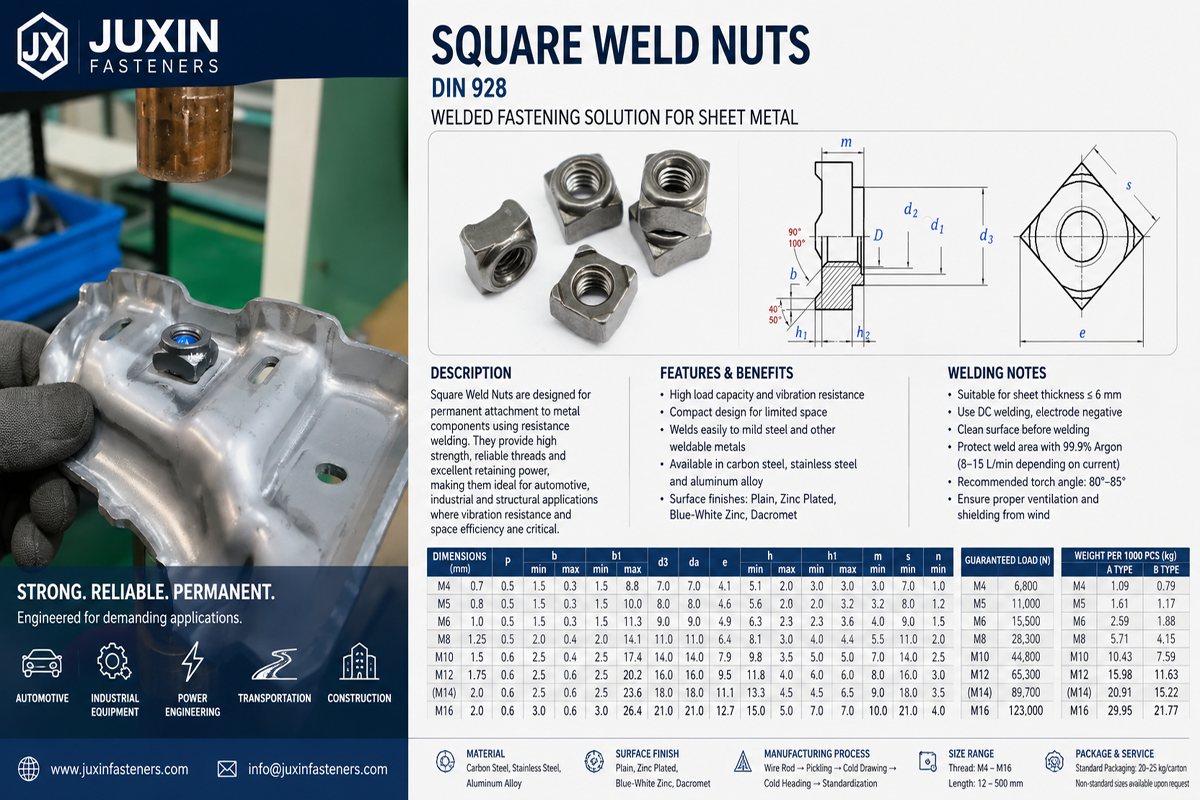
A weld nut may be attractive when welding is integrated into production.
A rivet nut may be attractive where welding is undesirable or backside access is unavailable.
A blind rivet is appropriate when a permanent joint—not a reusable thread—is required.
A self-clinching nut is installed by pressing it into suitable sheet so parent material flows into the fastener's retention features.
A rivet nut deforms during blind-side installation.
Important differences include:
Sheet material
Sheet hardness
Thickness
Access
Installation equipment
Installed retention
Production sequence
Therefore:
Rivet Nut ≠ Self-Clinching Nut.
A thread-forming screw creates or forms a mating thread directly in a suitable parent material.
A rivet nut installs a separate reusable threaded component.
Thread-forming screws can reduce component count.
Rivet nuts can provide a dedicated internal thread in thin sheet.
The correct decision depends on:
Parent material
Service cycles
Load
thread durability
Installation
repair requirements
A rivet nut is primarily associated with suitable sheet-material applications.
Plastic components often require dedicated insert technologies selected according to:
Polymer
Boss geometry
Installation process
Temperature
Creep
Therefore:
Rivet Nut ≠ Universal Threaded Insert.
An RFQ such as:
“Need 4.8 mm automotive rivet”
is incomplete.
Procurement should specify:
Rivet type
Diameter
Grip range
Head style
Body material
Mandrel material
Surface treatment
Joint stack
Parent materials
Hole
Shear / tensile requirement
Installation method
Annual volume
An RFQ such as:
“Need M6 rivet nut”
is also incomplete.
Specify:
Thread
Body style
Grip range
Hole
Parent material
Sheet thickness
Flange style
Rivet-nut material
Surface treatment
Pull-out requirement where applicable
Spin-out requirement where applicable
Installation method
Annual volume
Depending on the application, relevant controls can include:
Material
Diameter
Length
Grip range
Head geometry
Rivet-body geometry
Mandrel
Surface treatment
Shear / tensile properties where specified
Installation behavior
Depending on the application, controls can include:
Material
Thread
Body dimensions
Grip range
Flange
Hole interface
Surface treatment
Thread fit
Installation behavior
Pull-out
Spin-out
Testing should match the customer's actual requirement.
A large generic test list does not automatically improve quality.
The test should address the expected failure mechanism.
For example:
Blind Rivet → Setting + Shear / Tensile + Joint Behavior
Rivet Nut → Setting + Pull-Out + Spin-Out + Thread Function
This produces more useful validation than applying identical tests to every fastener.
Compare:
Approved drawing and revision
Body material
Mandrel material
Diameter
Grip range
Head geometry
Surface treatment
Mechanical properties
Setting behavior
Installed joint performance
A visually identical rivet may behave differently during installation.
Compare:
Drawing and revision
Material
Thread
Body geometry
Knurling or hex geometry
Grip range
Flange
Surface treatment
Installation behavior
Pull-out
Spin-out
Thread performance
Therefore:
Same Dimensions ≠ Functional Equivalence.
Changing:
Steel to stainless
Steel to aluminum
Rivet body material
Mandrel material
Rivet-nut material
can change:
Strength
Formability
Setting force
corrosion
installed performance
Material substitutions should therefore be reviewed before production approval.
Procurement should compare the complete assembly economics.
A useful model is:
Total Installed Cost = Part Price + Hole Preparation + Installation + Tooling + Inspection + Rework + Scrap + Downtime + Logistics + Supply Risk
A more expensive fastener may reduce:
Assembly operations
Welding
backside access
handling
repair complexity
Conversely, a low-cost fastener with unstable installation can increase total cost.
Provide:
2D drawing
3D model where available
Part number / revision
Application
Rivet diameter
Grip range
Joint stack
Hole diameter
Parent materials
Head style
Body material
Mandrel material
Surface treatment
Shear requirement
Tensile requirement
Corrosion requirement
Installation tool / method
Annual volume
Sample quantity
Validation requirement
Applicable ISO, DIN, EN, SAE, ASTM or customer specification
Provide:
2D drawing
3D model where available
Part number / revision
Application
Thread size and pitch
Body style
Grip range
Parent material
Sheet thickness
Hole size and geometry
Flange style
Rivet-nut material
Surface treatment
Pull-out requirement
Spin-out requirement
Mating screw
Installation method
Annual volume
Sample quantity
Validation requirement
Applicable ISO, DIN, EN, SAE, ASTM or customer specification
Standard components do not cover every OEM application.
Custom or drawing-based components may be required for:
Special grip ranges
Special head geometry
Restricted packaging
Unusual sheet thickness
Mixed-material assemblies
Special anti-rotation geometry
Custom flange geometry
Special material
Customer-specific coating
Controlled installation requirements
JUXIN FASTENERS can review suitable drawing-based projects based on:
Geometry + Material + Parent Material + Load + Installation + Surface Treatment + Volume + Validation Requirement
A controlled blind-rivet project can follow:
Application → Permanent Joint Requirement → Joint Stack → Parent Material → Hole → Rivet Architecture → Grip Range → Material
→ Coating → Tooling → Sample → Setting Trial → Joint Validation → Approval → Production
A controlled rivet-nut project can follow:
Application → Reusable Thread Requirement → Parent Material → Sheet Thickness → Hole → Body Style → Grip Range → Thread
→ Material → Coating → Tooling → Sample → Setting Trial → Pull-Out / Spin-Out / Thread Validation → Approval → Production
This distinction should remain clear throughout sourcing.
This page should function as the dedicated Automotive Blind Rivets & Blind Rivet Nuts engineering resource.
Recommended internal links include:
Automotive Thin Sheet Fasteners → weld nut vs rivet nut vs self-clinching nut
Automotive Washers, Rivets & Pins → broader permanent joining and positioning technologies
Automotive Fastener Selection Guide → overall automotive fastening technology selection
Automotive Sheet Metal Fastening → body, enclosure and thin-sheet fastening architecture
Automotive Fastener Quality Control → inspection, traceability and supplier qualification
Automotive Threaded Fasteners → final screw-joint preload and locking
Fasteners for Aluminum → fastening technologies for aluminum components
Zinc-Nickel Coated Fasteners → corrosion protection for suitable steel fasteners
Fastener Surface Treatment & Coating Selection → corrosion, friction and coating engineering
Custom Fastener Manufacturing → drawing-based manufacturing and DFM
Use the existing indexed JUXIN FASTENERS URL when implementing these internal links.
A blind rivet permanently joins components. A rivet nut installs a reusable internal thread into suitable thin material.
Both can be installed from one side, but their functions are different.
Yes. Conventional blind rivets normally require a correctly sized prepared hole.
Yes. The rivet nut must be installed into a hole matched to its body geometry and application.
For a blind rivet, grip range describes the joint-thickness range the rivet is designed to join.
For a rivet nut, grip range describes the parent-material thickness range for which the rivet nut is designed to set correctly.
The fastener may not form correctly, potentially reducing retention or producing an unacceptable installed joint.
Pull-out concerns axial removal from the parent material. Spin-out concerns rotation of the installed rivet nut within the parent material.
No. Rivet-nut spin-out and screw self-loosening are different failure mechanisms.
No. Performance depends on parent material, hole geometry, body design, grip range and installation.
A hex-body rivet nut can be considered where geometric anti-rotation is beneficial and the parent component can accommodate the corresponding hole.
Not automatically. Closed-end construction can reduce one potential leakage path, but sealing performance belongs to the complete assembly.
Not automatically. If sealing is required, the hole, rivet, interfaces, sealant and complete assembly should be designed and validated accordingly.
Not necessarily. The parent material may become the limiting element.
No. Selection depends on strength, corrosion environment, installation requirements, parent material and cost.
No. Material compatibility is only one factor. Strength, setting behavior, corrosion and joint requirements must also be considered.
They may be used for suitable mechanical attachments, but a rivet nut alone does not establish battery sealing, structural integrity, electrical safety or system qualification.
Compare material, thread, body geometry, grip range, flange, coating, installation behavior, pull-out, spin-out and functional thread performance against the approved specification.
Send the drawing, application, parent materials, hole, joint stack or sheet thickness, required function, load, material, coating, installation method, annual volume and validation requirements.
Blind rivets and blind rivet nuts are often grouped together because both can be installed from one side.
But their engineering functions are fundamentally different.
If the requirement is:
Permanent Mechanical Joining → Evaluate Blind Rivet
If the requirement is:
Reusable Thread in Thin Sheet → Evaluate Blind Rivet Nut
Then evaluate the complete installed system.
For blind rivets:
Joint Stack → Hole → Grip Range → Rivet Body + Mandrel → Tooling → Setting → Shear / Tensile → Joint Validation
For rivet nuts:
Parent Material → Sheet Thickness → Hole → Body Geometry → Grip Range → Thread → Tooling → Setting → Pull-Out / Spin-Out → Final Screw Joint
This prevents several common specification mistakes:
Blind Rivet ≠ Blind Rivet Nut
Blind Fastener ≠ No-Hole Fastener
Correct Diameter + Wrong Grip Range = Wrong Rivet
Correct Thread + Wrong Grip Range = Wrong Rivet Nut
Pull-Out ≠ Spin-Out
Spin-Out ≠ Screw Self-Loosening
More Setting Force ≠ Better Installation
Closed-End Rivet Nut ≠ Waterproof Enclosure
Rivet Strength ≠ Installed Joint Strength
Stronger Rivet Nut ≠ Stronger Parent Material
Same Dimensions ≠ Functional Equivalence
JUXIN FASTENERS supports selected automotive and industrial OEM projects with:
Open-end blind rivets
Closed-end blind rivets
Application-specific blind rivets
Round-body rivet nuts
Knurled rivet nuts
Half-hex rivet nuts
Full-hex rivet nuts
Open-end rivet nuts
Closed-end rivet nuts
Steel rivet nuts
Stainless steel rivet nuts
Aluminum rivet nuts
Custom drawing-based blind fasteners
For an effective RFQ, provide:
2D Drawing + 3D Model + Part / Revision + Application + Parent Material + Hole + Sheet / Joint Thickness + Load Requirement
+ Fastener Material + Surface Treatment + Installation Method + Annual Volume
For blind rivets, also provide:
Joint Stack + Grip Range + Body Material + Mandrel Material + Shear / Tensile Requirement
For rivet nuts, also provide:
Thread + Grip Range + Body Style + Flange + Mating Screw + Pull-Out / Spin-Out Requirement
The more accurately the joint is defined, the more accurately the fastener can be selected, quoted and validated.
JUXIN FASTENERS
Automotive Blind Rivets | Blind Rivet Nuts | Rivnuts | Thin-Sheet Fasteners | Custom OEM Fasteners
Email: info@juxinfasteners.com
Website: www.juxinfasteners.com

Contact Us
Tel.:
+86 020 8621 0320
+86 020 3121 6067
E-mail:
Technical Support:
Navigation
SEND INQUIREY



