
Call Us
+86 136 6007 9809
Call Us
+86 136 6007 9809

Apr. 12, 2026
High-strength bolts such as property classes 10.9 and 12.9 are used where a bolted joint requires high tensile capacity and controlled clamp load.
However, selecting a high-strength bolt does not automatically create a high-strength bolted joint.
The complete load path includes:
Bolt → Bolt Head / Nut → Washer → Clamped Component → Joint Interface
If the washer or bearing surface cannot support the compressive load generated during tightening,
local deformation can occur even though the bolt itself remains within its intended operating range.
This can contribute to:
Embedment
Bearing-surface deformation
Loss of preload
Joint relaxation
Surface damage
Increased joint movement
Assembly inconsistency
For engineers, procurement teams and supplier-development specialists,
washer selection should therefore be treated as part of the bolted-joint design rather than as a low-value accessory decision.
A useful selection framework is:
Bolt Property Class + Required Preload + Washer Hardness + Washer Geometry + Bearing Surface + Friction + Coating
+ Joint Material + Tightening Method + Service Conditions
JUXIN FASTENERS supplies high-strength bolts, hardened flat washers, nuts and drawing-based fastening components for selected automotive,
industrial machinery, heavy equipment, electrical equipment and OEM assemblies.
A washer can perform several functions depending on the joint:
Increase the effective bearing area
Reduce local contact stress
Protect suitable mating surfaces
Provide a controlled bearing interface
Bridge suitable hole conditions
Support assembly requirements specified by the joint design
But a washer must itself resist the compressive loading generated by the tightened fastener.
The fundamental principle is:
High-Strength Bolt + Inadequate Washer ≠ High-Strength Joint
Higher bolt property classes can support higher tensile stresses than lower-strength fasteners of comparable size.
When the joint is designed to use that capability, the resulting preload can produce substantial compressive stress beneath:
Bolt heads
Nuts
Washers
If the bearing material is too soft, it can plastically deform.
This is why the complete bearing interface matters.
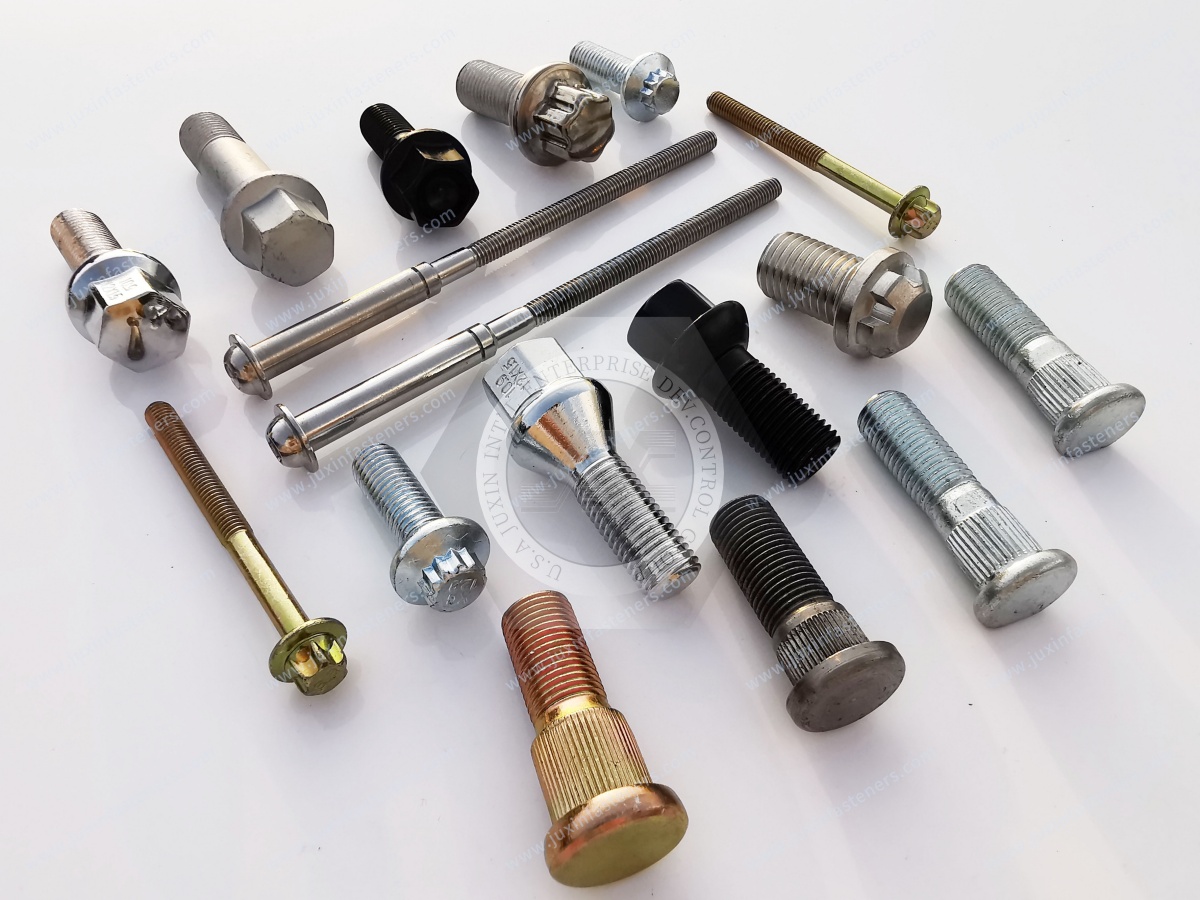
A 10.9 or 12.9 marking describes important mechanical characteristics of the fastener, but it does not define the strength of the assembled joint.
Joint performance also depends on:
Bolt diameter
Thread engagement
Nut or internal thread strength
Washer
Clamped material
Bearing area
Joint stiffness
Preload
Friction
Surface treatment
Tightening method
Service load
Therefore:
Higher Bolt Strength ≠ Automatically Stronger Joint.
Hardened washers are commonly used in high-strength bolted assemblies where the bearing interface requires greater resistance to indentation and permanent deformation.
Washer requirements should be selected from the applicable standard, customer drawing or validated joint design.
International washer specifications may define different hardness classes or washer types for different applications.
The engineering decision should therefore not be reduced to a universal rule such as:
“Every 10.9 or 12.9 bolt must always use exactly the same 300 HV washer.”
Instead:
Applicable Standard + Bolt / Nut System + Joint Design + Bearing Material + Preload Requirement
should determine the washer specification.
Flat washers may be specified using hardness classifications such as 140 HV, 200 HV or 300 HV depending on the applicable standard and product.
These designations indicate different hardness requirements, but they should not be treated simply as universal bolt-grade labels.
A practical engineering interpretation is:
| Washer Consideration | Engineering Significance |
|---|---|
| Lower-hardness washer | May be suitable for applications with lower bearing stress when permitted by the applicable specification |
| Intermediate-hardness washer | Used in appropriate general mechanical bolted-joint applications |
| Hardened washer | Appropriate where higher bearing stress and the applicable high-strength fastening specification require it |
| Special washer | May be required for oversized holes, slots, structural systems or customer-specific joints |
The correct requirement should be confirmed against the applicable ISO, DIN, EN, ASTM, SAE, ASME/ANSI or customer specification.
During tightening, preload in the bolt creates compressive loading across the clamped joint.
Under the bolt head or nut, this load enters the clamped component through a relatively limited bearing area.
If the washer is too soft for the applied bearing stress, permanent deformation can occur.
Possible consequences include:
Initial Tightening → Washer / Surface Deformation → Embedment → Reduced Bolt Elongation → Reduced Preload
This is why washer hardness can affect preload retention.
Hardness is important, but it is not the only characteristic that matters.
Engineers should also consider:
Outside diameter
Inside diameter
Thickness
Flatness
Material
Heat treatment
Surface condition
Coating
Hole geometry
Bearing surface
Applicable standard
Therefore:
Correct Hardness + Wrong Geometry ≠ Correct Washer.
Selecting the hardest available washer is not a universal engineering solution.
An unnecessarily hard washer does not correct:
Incorrect bolt preload
Weak parent material
Incorrect hole geometry
Poor thread engagement
Excessive friction variation
Wrong tightening procedure
Joint separation under external load
Washer hardness should match the joint requirement.
A flat washer increases the bearing area between the fastener and the clamped component.
A simplified contact-pressure concept is:
Bearing Stress ≈ Clamp Load / Effective Bearing Area
Increasing the effective bearing area can reduce average local contact stress.
This can be particularly important when fastening against:
Relatively soft metals
Aluminum
Coated surfaces
Slotted holes
Suitable polymer or composite interfaces
Components sensitive to local indentation
However, actual contact pressure is not perfectly uniform.
The joint should therefore be evaluated as a mechanical system rather than using bearing area alone.
A larger washer outside diameter can increase bearing area.
This can help reduce local contact stress in suitable applications.
But:
Larger Washer ≠ Automatically Better Joint.
A larger washer can also affect:
Packaging
Nearby geometry
Edge distance
Surface flatness requirements
Load distribution through thin material
Washer geometry should match the joint.
Thickness contributes to washer stiffness and resistance to deformation.
A washer that is too thin for the application can dish, bend or locally deform.
But simply increasing thickness is not always necessary or beneficial.
The applicable standard or engineered design should define the required geometry.
The washer hole must provide the intended clearance around the fastener.
Excessive clearance can change:
Bearing area
Washer positioning
Edge support
Behavior around oversized holes
Therefore washers should not be sourced only by outside diameter and thickness.
High-strength bolts are sometimes assembled against relatively soft materials such as aluminum.
In these applications, a hardened washer may protect the bearing interface of the washer itself, but it does not increase the compressive strength of the aluminum underneath it.
Therefore:
Hard Washer ≠ Hard Parent Material.
If the parent component yields under the washer, preload can still be lost.
Engineers may need to consider:
Larger bearing area
Component thickness
Local reinforcement
Flange geometry
Joint preload
Surface condition
This is especially important in lightweight automotive, EV and industrial equipment.
Replacing a lower-strength bolt with a 10.9 or 12.9 bolt can increase available bolt capacity.
But if the aluminum component controls the joint, the stronger bolt may provide little benefit unless the complete joint is redesigned.
Therefore:
Fastener Upgrade Can Shift the Failure Mode.
Standard flat washers may not always be appropriate around:
Large clearance holes
Slots
Adjustment features
Thin unsupported sheet
The washer must provide adequate coverage and bearing support for the actual geometry.
A washer that technically fits over the bolt may still be unsuitable for the joint.
The purpose of tightening a bolt is normally to create preload.
Preload generates clamp force between the joined components.
When properly engineered, this clamp force helps the joint resist service loading.
However:
Torque ≠ Preload.
Torque is an installation input.
Preload is the tensile force generated in the bolt.
A simplified torque-preload relationship is often represented as:
T = K × F × d
where:
T = tightening torque
K = torque coefficient / nut factor
F = target preload
d = nominal bolt diameter
This relationship is useful for illustrating one important fact:
Friction strongly influences how much preload results from a given torque.
A substantial portion of tightening torque is consumed by friction rather than directly stretching the bolt.
Friction can change with:
Coating
Lubricant
Topcoat
Wax
Surface roughness
Washer surface
Nut finish
Reuse
Contamination
Therefore:
Same Torque + Different Friction ≠ Same Preload.
This becomes particularly important with high-strength fasteners because excessive preload can be as problematic as insufficient preload.
A washer is part of the rotating or bearing interface in many assemblies.
Changing the washer coating can alter friction beneath:
Bolt head
Nut
This means washer surface treatment can influence torque-preload behavior.
Therefore:
Coating Change Can Be a Joint Engineering Change.
Procurement should not substitute washer coatings based only on color or corrosion performance.
Two washers described simply as “zinc plated” can have different:
Passivation
Topcoat
Lubrication
Surface condition
Friction behavior
If torque-preload consistency matters, the coating specification may need to include relevant friction requirements.
Lubrication can substantially change the friction condition of a threaded assembly.
A torque developed for one surface condition should not automatically be applied to another.
Therefore:
Dry Torque ≠ Lubricated Torque.
And:
Changing Lubrication Can Change Preload.
One of the most important distinctions in washer engineering is:
A standard flat washer primarily provides a bearing function.
It should not automatically be described as an anti-loosening device.
A flat washer can contribute to the joint interface, but resistance to self-loosening depends on the complete bolted-joint design.
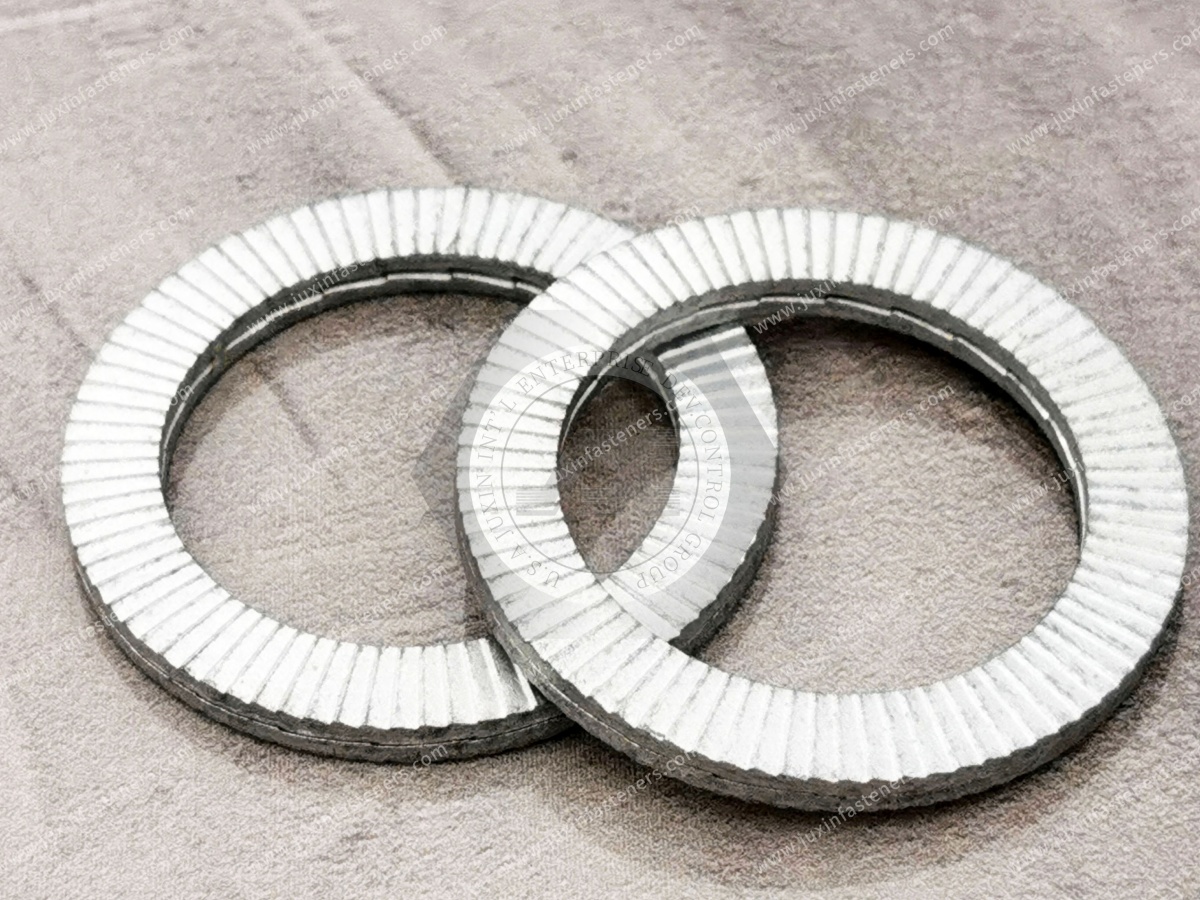
Traditional split lock washers or spring washers are frequently described as vibration-proof fasteners.
That is too broad.
Once a spring washer is substantially flattened under a highly preloaded bolted joint,
its behavior may not provide the anti-loosening performance assumed from its free-state spring shape.
Therefore:
Spring Washer ≠ Automatic Vibration-Proof Joint.
Its suitability should be evaluated against the actual application and applicable engineering specification.
Preload loss can result from:
Embedment
Parent-material creep
Joint relaxation
Thermal effects
External separation loading
Surface deformation
Threaded fastener self-loosening
A washer does not automatically solve all of these mechanisms.
Self-loosening can occur when sufficient relative movement develops in the joint.
The engineering response may involve:
Increasing appropriate clamp load
Improving joint stiffness
Reducing transverse movement
Using suitable locking features
Prevailing-torque nuts
Wedge-locking systems
Thread-locking compounds
Application-specific fastener geometry
The solution should match the failure mechanism.
A locking washer, prevailing-torque nut or adhesive cannot compensate for a fundamentally incorrect joint design.
Therefore:
Locking Feature ≠ Correct Preload.
The joint must first be engineered to provide the required clamping condition.
When a prevailing-torque nut is used, part of the applied installation torque is consumed by the locking feature.
Therefore:
Prevailing Torque ≠ Preload.
Tightening procedures must account for the actual fastener system.
Washer selection is only one part of a high-strength fastener system.
The nut or internally threaded component must also be compatible with the bolt.
Engineers should consider:
Thread specification
Property class
Proof-load capability
Thread engagement
Material
Heat treatment
Surface treatment
A high-strength bolt assembled into an inadequate internal thread can simply shift failure into the mating thread.
This matters when high-strength bolts are assembled into:
Aluminum
Castings
Threaded inserts
Weld nuts
Rivet nuts
Machined housings
The mating thread must support the intended load.
Therefore:
Stronger Mating Screw ≠ Stronger Mating Thread.
A high-property-class bolt should not automatically be paired with any rivet nut of the same thread size.
The rivet nut system may be limited by:
Internal thread
Rivet-nut body
Spin-out resistance
Pull-out resistance
Parent sheet
Therefore:
Same Thread Size ≠ Compatible Joint Capacity.
Similarly, a high-strength bolt used with a weld nut does not mean the welded attachment automatically has equivalent strength.
Performance can depend on:
Weld-nut material
Thread
Projection geometry
Parent sheet
Welding parameters
Weld quality
Therefore:
Strong Nut ≠ Strong Welded Joint.
The washer should bear appropriately against the clamped surface.
Poor contact can result from:
Burrs
Weld spatter
Local distortion
Uneven coating
Poor surface geometry
This can create uneven bearing pressure and contribute to settlement.
Washers can help distribute bearing load, but tightening can still affect coatings.
The risk depends on:
Coating type
Surface hardness
Washer geometry
Friction
Clamp load
A washer should not automatically be described as preventing all coating damage.
The washer creates an additional material interface in the joint.
Engineers should consider:
Bolt material
Washer material
Nut material
Parent material
Coatings
Moisture
Chlorides
Temperature
Mixed materials can introduce galvanic considerations.
Therefore:
Corrosion-Resistant Washer ≠ Corrosion-Resistant Joint.
Mixing stainless and high-strength carbon-steel components may be possible in suitable applications,
but it should not be treated as an automatic corrosion upgrade.
The assembly may experience differences in:
Mechanical properties
Bearing behavior
Friction
Galvanic potential
The complete joint should be reviewed.
High-strength steel fasteners may use engineered coating systems where corrosion resistance is required.
Potential systems can include suitable:
Zinc-based coatings
Zinc-nickel coatings
Zinc-flake systems
Other customer-specified finishes
For high-strength steels, coating-process selection should also consider hydrogen embrittlement risk where relevant.
Certain high-strength steel fasteners can be sensitive to hydrogen introduced during manufacturing or surface-treatment processes.
The actual risk depends on:
Material strength / hardness
Manufacturing route
Cleaning
Plating process
Process controls
Applicable specification
Therefore surface treatment for high-strength fasteners should not be selected only by corrosion requirement.
A coating can improve corrosion resistance while simultaneously affecting:
Friction
Dimensions
Thread fit
installation behavior
Therefore:
Better Corrosion Resistance ≠ Automatically Better Bolted Joint.
Salt-spray testing can support a defined coating requirement.
However:
Salt Spray Hours ≠ Real Service Life.
Actual service can involve:
Wet/dry cycling
Temperature
Chemicals
Abrasion
Road salts
Coating damage
Corrosion requirements should match the real environment.
A 12.9 bolt has higher mechanical strength than a comparable 10.9 bolt.
But this does not mean every 10.9 application should be upgraded to 12.9.
The higher-strength fastener may change:
Target preload
Mating-thread requirements
Bearing stress
Fatigue behavior
Coating considerations
Installation control
Therefore:
Higher Property Class ≠ Automatically Better Joint.
Use the property class specified by the validated joint design.
Possible contributors include:
Insufficient washer thickness
Excessive bearing stress
Oversized hole
Unsupported geometry
Incorrect washer specification
The solution should address the actual load path.
Potential causes include:
Washer hardness too low
Excessive bearing stress
Incorrect heat treatment
Local geometry
If indentation contributes to settlement, preload may decrease after tightening.
A perfectly hardened washer can still press into a soft parent material.
Potential causes include:
High preload
Insufficient bearing area
Soft material
Thin section
Changing only the washer hardness may not solve the problem.
Possible causes can include:
Insufficient preload
Friction variation
Joint movement
Embedment
Creep
Thermal cycling
Incorrect locking strategy
Do not automatically blame the washer.
Possible contributors include:
Excessive torque
Unexpectedly low friction
Incorrect bolt
Material defect
Thread problem
Incorrect tightening specification
Replacing the washer alone is unlikely to solve the root cause.
Potential causes include:
Inadequate thread engagement
Weak mating material
Incorrect nut property
Excessive preload
Damaged thread
Again:
Bolt Strength ≠ Mating Thread Strength.
If preload is lost, the response should not automatically be:
“Use a harder washer.”
If the bolt loosens:
“Add a spring washer.”
If the thread strips:
“Use a stronger bolt.”
Instead:
Identify Failure Mode → Trace Load Path → Identify Weak Interface → Correct Design / Process → Validate
This is the engineering approach that reduces repeated field problems.
Potential applications include selected:
Chassis assemblies
Powertrain equipment
Structural brackets
Machinery used in vehicle production
EV-related mechanical assemblies
Automotive applications should follow the applicable OEM engineering requirements.
Components associated with:
Steering
Braking
Suspension
Crash structures
require application-specific design and formal validation.
A generic 10.9 or 12.9 fastener should never automatically be described as qualified for a safety-critical automotive joint.
High-strength bolted joints are common in:
Frames
Gear housings
Excavation equipment
Agricultural machinery
Mining equipment
Industrial machinery
Washer selection may be especially important where:
Bearing surfaces are cast
Holes are large
Joint loads are high
Service vibration is significant
Applications can include:
Gearboxes
Motors
Pumps
Production machinery
Automation equipment
Machine frames
Maintenance requirements and repeated assembly should also be considered.
High-strength fasteners may be used in selected:
Solar mounting equipment
Energy infrastructure
Wind-related mechanical equipment
Energy storage support structures
The exact fastener system should follow the applicable project specification.
High-strength bolts and washers may be used for mechanical support in:
Electrical cabinets
Power conversion equipment
Transformers
Industrial electrical equipment
Power-distribution structures
But:
Mechanical Joint ≠ Qualified Electrical Connection.
Where a fastener is also part of a current path, grounding or bonding system, separate electrical requirements apply.
High-strength bolted joints can appear in selected railway equipment and mechanical assemblies.
However, primary structural, running-gear, braking and other safety-critical railway locations require:
Applicable railway standards
Vehicle or project specifications
Formal engineering validation
A generic bolt property class alone does not establish railway suitability.
Structural bolting should not be treated as ordinary industrial machine assembly.
Depending on the market and project, structural connections may be governed by dedicated systems under applicable:
EN
ISO
ASTM
ASME/ANSI
Project-specific structural requirements
The bolt, nut and washer system should follow the specified structural bolting standard.
Do not substitute general-purpose washers into a structural bolting system simply because the dimensions fit.
This principle is particularly important for procurement.
Two washers may share:
Inside diameter
Outside diameter
Thickness
but differ in:
Material
Hardness
Heat treatment
Flatness
Surface treatment
Applicable standard
Therefore:
Same Dimensions ≠ Functional Equivalence.
Depending on the application, flat washers and hardened washers may be specified under applicable international standards and customer specifications.
Examples can include relevant:
ISO washer standards
DIN / EN specifications
ASTM structural fastener requirements
SAE specifications
ASME/ANSI dimensional systems
OEM drawings
The exact standard should be selected according to the application rather than adding a standard generically to every washer.
Standard washers are appropriate where:
Standard geometry fits
Standard hardness is suitable
Bearing area is sufficient
Standard coating meets the requirement
Drawing-based washers may be appropriate where the joint requires:
Special OD
Special ID
Increased thickness
Restricted packaging
Special material
Special hardness
Custom surface treatment
JUXIN FASTENERS can review suitable drawing-based washer projects.
Important specification data can include:
Inside diameter
Outside diameter
Thickness
Material
Hardness
Heat treatment
Flatness
Surface treatment
Burr requirement
Application
Annual volume
The washer should be defined as a functional component, not merely by nominal bolt size.
Depending on the product and applicable specification, controls can include:
Material verification
Dimensions
Thread
Mechanical properties
Hardness
Heat treatment
Surface treatment
Visual condition
Functional requirements
Testing should match the applicable product standard and customer drawing.
Relevant controls may include:
Material
ID
OD
Thickness
Hardness
Flatness
Surface condition
Coating
Burr condition
Hardness alone does not replace dimensional or surface inspection.
A correct steel grade does not guarantee:
Correct hardness
Correct dimensions
Correct heat treatment
Correct coating
Correct thread
Correct washer geometry
Therefore:
Raw Material Certificate ≠ Finished Fastener Performance.
Procurement teams frequently seek second sources to improve:
Supply continuity
Lead time
Regional sourcing
Capacity
Commercial flexibility
But second sourcing should not rely on nominal dimensions alone.
Qualification should compare:
Controlled drawing
Revision
Material
Property class
Heat treatment
Hardness
Thread
Washer geometry
Washer hardness
Surface treatment
Friction requirement
Mechanical performance
Assembly behavior
Two 10.9 bolts can differ in:
Geometry
Thread quality
Coating
Friction
Manufacturing route
Lot control
Likewise, two washers can differ in:
Hardness
Flatness
Coating
Bearing behavior
The complete fastening system should be qualified.
Changing from:
Zinc to zinc-nickel
Zinc to zinc-flake
One topcoat to another
Lubricated to non-lubricated finish
can change torque-preload behavior.
Therefore procurement should not approve coating substitutions only because corrosion performance appears equal or better.
High-strength fasteners should not be sourced on unit price alone.
A useful procurement model is:
Total Installed Cost = Part Price + Installation + Tooling + Inspection + Rework + Scrap + Downtime + Maintenance + Logistics + Supply Risk
A slightly lower bolt or washer price can become irrelevant if the component introduces:
Preload variation
Assembly problems
Rework
Surface damage
Field maintenance
For an accurate technical and commercial quotation, provide:
2D drawing
3D model where available
Part number
Drawing revision
Application
Bolt diameter
Thread pitch
Bolt length
Bolt property class
Head style
Nut specification
Washer standard or drawing
Washer ID / OD / thickness
Washer hardness requirement
Parent materials
Hole geometry
Required clamp load or tightening specification where defined
Surface treatment
Friction requirement where applicable
Corrosion requirement
Service temperature
Vibration / fatigue conditions
Annual volume
Sample quantity
Validation requirement
Applicable ISO, DIN, EN, ASTM, SAE, ASME/ANSI or customer specification
Provide:
Parent-material grade
Material thickness
Bearing-surface geometry
Hole diameter
Edge distance
Local reinforcement if any
Surface coating
Maximum allowable deformation where relevant
This helps evaluate whether the bearing surface—not the bolt—is likely to control the joint.
Provide:
Required coating system
Corrosion requirement
Friction range where controlled
Lubricant / topcoat requirement
Mating nut finish
Washer finish
Tightening method
The complete friction system matters.
A controlled high-strength bolted-joint sourcing process can follow:
Application → Joint Load → Bolt Property Class → Mating Thread → Target Preload → Bearing Surface → Washer Geometry / Hardness
→ Surface Treatment → Friction → Tightening Method → Sample → Assembly Validation → Approval → Production
For a second source:
Approved Drawing → Material / Property Class → Heat Treatment → Washer Specification → Coating / Friction → Dimensional Inspection
→ Mechanical Testing → Assembly Comparison → Validation → Production Approval
When selecting a washer for a high-strength bolted joint, work through these questions.
Determine whether the joint uses:
8.8
10.9
12.9
Another specified fastener system
Do not increase property class without engineering review.
The bolt and joint should be designed around the required clamping condition.
Do not begin with torque alone.
Determine whether the bearing surface is:
Hardened steel
Carbon steel
Stainless steel
Aluminum
Cast material
Coated surface
Polymer / composite
This can change the bearing design.
Confirm the applicable standard or drawing.
Do not rely only on nominal washer size.
Review:
Washer OD
Hole
Slot
Parent-material thickness
Local geometry
Define:
Bolt coating
Nut coating
Washer coating
Lubrication
Tightening method
Validation should match the actual risk:
Preload
Bearing deformation
Torque-tension behavior
Vibration
Fatigue
Corrosion
Thermal cycling
Not every joint requires every test.
This page should function as the dedicated High-Strength Bolt and Washer Matching / Washer Hardness / Preload engineering resource.
Recommended internal links include:
High-Strength Nuts → bolt-nut property class and proof-load compatibility
Automotive Threaded Fasteners → preload, friction and locking
Automotive Fastener Quality Control → inspection and supplier qualification
Fastener Surface Treatment & Coating Selection → coating, friction and corrosion
Zinc-Nickel Coated Fasteners → Zn-Ni corrosion and friction considerations
Zinc vs Zinc-Nickel Plating → coating-selection comparison
Stainless Steel Fasteners → stainless material and corrosion selection
Lightweight Automotive Fasteners → steel vs aluminum vs titanium material selection
Automotive Fastener Selection Guide → overall automotive fastening architecture
Custom Fastener Manufacturing → drawing-based fastener manufacturing and DFM
Use the existing indexed JUXIN FASTENERS URL when implementing these internal links.
They can provide a bearing interface with greater resistance to permanent deformation where the joint produces high compressive bearing stress.
Not as a universal rule. The washer should comply with the applicable fastener system, standard, customer specification and joint design.
The bearing interface must be suitable for the joint, but the exact washer specification should come from the applicable standard or validated engineering design rather than a universal rule.
No. Higher hardness is not automatically better. Washer specification should match the bolt system, bearing material and joint requirements.
It can reduce deformation at the washer itself when correctly selected, but preload loss can also come from parent-material deformation, embedment, creep, thermal effects or joint movement.
Not automatically. Preload is created by tightening and depends strongly on friction and joint conditions.
A standard flat washer primarily provides a bearing function. It should not automatically be treated as an anti-loosening device.
Not automatically. Its performance depends on the joint, preload and actual movement. It should not be treated as a universal vibration-proof solution.
No. Torque is an installation input; preload is the tensile force created in the bolt.
Because friction can vary with coating, lubrication, surface finish, washer condition and other interface variables.
Not automatically. A coating change can change friction and therefore the torque-preload relationship.
No. The washer or bearing surface can still deform.
No. The aluminum underneath the washer can still deform if bearing stress is excessive.
Not automatically. The higher property class can change preload, bearing stress and mating-component requirements and should be treated as an engineering change.
No. The mating thread or nut must have the required mechanical compatibility.
Potentially, but the installed rivet nut, internal thread, spin-out, pull-out and parent sheet must support the intended joint loads.
No. Zinc-nickel is a surface-treatment system. Mechanical properties and coating performance are separate engineering characteristics.
At minimum, specify the applicable standard or drawing, dimensions, material, hardness, surface treatment, bolt system, application and required quantity.
Compare material, dimensions, thickness, hardness, flatness, coating and functional bearing behavior against the approved specification.
High-strength bolted joints should never be reduced to:
“Use a 10.9 bolt and add a hard washer.”
The correct engineering logic is:
Joint Load → Required Preload → Bolt → Mating Thread → Washer → Bearing Surface → Friction → Coating → Tightening → Validation
The key principles are:
Bolt Property Class ≠ Joint Strength
Higher Strength ≠ Automatically Better Joint
Harder Washer ≠ Automatically Better Washer
Washer Hardness ≠ Complete Washer Performance
Hard Washer ≠ Hard Parent Material
Flat Washer ≠ Anti-Loosening Device
Spring Washer ≠ Automatic Vibration-Proof Joint
Locking Feature ≠ Correct Tightening
Torque ≠ Preload
Same Torque + Different Friction ≠ Same Preload
Dry Torque ≠ Lubricated Torque
Stronger Bolt ≠ Stronger Mating Thread
Coating Name ≠ Friction Specification
Salt Spray Hours ≠ Field Service Life
Same Dimensions ≠ Functional Equivalence
For procurement teams, the commercial objective is therefore not simply to buy the lowest-cost bolt and washer.
It is to source a fastening system that produces the required installed joint consistently.
JUXIN FASTENERS supports selected OEM and industrial projects with:
High-strength bolts
Property class 10.9 bolts
Property class 12.9 bolts
High-strength nuts
Hardened flat washers
Special washers
Zinc-plated fasteners
Zinc-nickel coated fasteners
Zinc-flake coated fasteners
Stainless steel fasteners
Drawing-based bolts, nuts and washers
Custom OEM fastening components
For an effective RFQ, provide:
2D Drawing + 3D Model + Part / Revision + Application + Bolt Property Class + Thread + Mating Component + Washer Specification
+ Parent Material + Load Requirement + Surface Treatment + Tightening Method + Environment + Annual Volume
Where torque-preload consistency is important, also provide:
Target Preload / Tightening Specification + Friction Requirement + Lubrication / Topcoat + Nut Finish + Washer Finish
Where the fastener bears against aluminum, thin sheet or another relatively soft material, include the mating-component drawing so the bearing interface can be reviewed together with the fastener.
JUXIN FASTENERS
High-Strength Bolts | Hardened Washers | High-Strength Nuts | Custom OEM Fasteners
Email: info@juxinfasteners.com
Website: www.juxinfasteners.com
Contact Us
Tel.:
+86 020 8621 0320
+86 020 3121 6067
E-mail:
Technical Support:
Navigation
SEND INQUIREY



