
Call Us
+86 136 6007 9809
Call Us
+86 136 6007 9809

Nov. 01, 2023
Thin automotive sheet creates a fundamental fastening problem:
How do you create a reliable reusable thread when the parent sheet itself does not provide enough material for adequate thread engagement?
Simply tapping a thin sheet is often not the right answer.
Depending on sheet material, thickness, assembly access, production volume and required joint performance, engineers may instead evaluate:
Weld nuts
Rivet nuts
Self-clinching nuts
Weld studs
Self-clinching studs
Threaded inserts
Other application-specific captive fasteners
The correct technology is not determined by thread size alone.
For OEM engineers, procurement teams and supplier-development managers, the decision should begin with:
Parent Material → Sheet Thickness → Access → Joint Function → Installation Process → Retention Requirement → Production Volume → Validation
JUXIN FASTENERS supplies weld nuts, weld studs, rivet nuts, self-clinching fasteners and drawing-based fastening components for selected automotive,、
EV, electrical equipment and industrial sheet-metal applications.
This guide focuses on one specific engineering decision:
Weld Nut vs Rivet Nut vs Self-Clinching Nut — which threaded attachment technology should be used in thin sheet?
| Engineering Factor | Weld Nut | Rivet Nut | Self-Clinching Nut |
|---|---|---|---|
| Creates reusable internal thread | Yes | Yes | Yes |
| Requires welding | Yes | No | No |
| One-sided installation | Generally no | Yes | Depends on installation access and tooling |
| Heat input into sheet | Yes | No | No |
| Suitable for high-volume automation | Often | Often | Often |
| Thin-sheet capability | Application-dependent | Application-dependent | Application-dependent |
| Parent material sensitivity | High | High | High |
| Sheet hardness sensitivity | Relevant | Relevant | Particularly important |
| Hole geometry important | Yes | Yes | Yes |
| Installation tooling | Welding equipment | Rivet-nut setting tool | Press / installation tooling |
| Key retention concern | Weld integrity | Pull-out / spin-out | Push-out / torque-out |
| Serviceable threaded joint | Yes | Yes | Yes |
| Typical design advantage | Integrated welded thread | Blind installation | Captive press-installed thread |
There is no universal winner.
Each technology solves a different manufacturing problem.
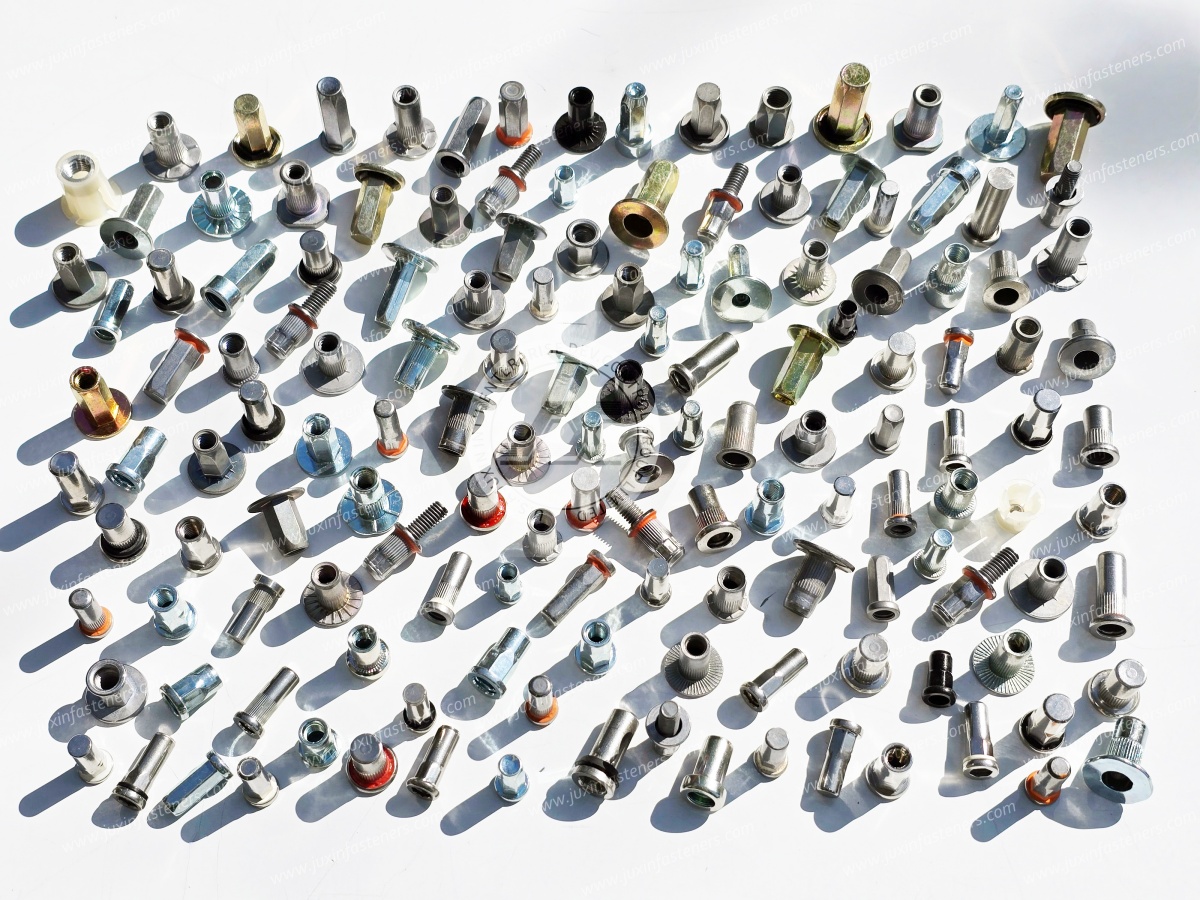
A conventional internal thread requires sufficient material to develop the necessary engagement.
As sheet thickness decreases, available thread engagement decreases.
This can create risks such as:
Thread stripping
Insufficient clamp capability
Local sheet deformation
Pull-through
Poor durability
Inconsistent assembly
The problem becomes more complex when the sheet is:
High-strength steel
Coated steel
Aluminum
Pre-painted material
Difficult to access from both sides
Instead of asking:
"Can we tap this sheet?"
a more useful engineering question is:
"What fastening architecture should create the threaded attachment?"
It is tempting to create a rule such as:
Sheet below X mm → use rivet nut
or:
Sheet above X mm → use weld nut
That is too simplistic.
The correct technology also depends on:
Sheet material
Sheet hardness
Hole geometry
Edge distance
Access
Load direction
Required torque resistance
Production process
Tooling
Corrosion system
Serviceability
Therefore:
Same Sheet Thickness ≠ Same Fastening Solution.
A steel sheet and aluminum sheet of identical thickness may behave differently during welding, clinching or mechanical installation.
This is one of the first questions that separates weld nuts from mechanical threaded attachments.
If welding is already part of the sheet-metal production process, a weld nut may provide an efficient captive threaded point.
If welding is undesirable or unavailable, engineers may evaluate rivet nuts or self-clinching fasteners.
Reasons to avoid adding welding can include:
Heat-sensitive assemblies
Distortion concerns
Pre-finished material
Production sequence
Equipment limitations
Dissimilar materials
Repair or field installation
The decision should follow the manufacturing process rather than simply comparing fastener prices.
Weld nuts are permanently attached to the parent sheet through a controlled welding process.
Common product architectures include:
Hex weld nuts
Square weld nuts
Projection weld nuts
Flange weld nuts
Round-base weld nuts
Application-specific weld nuts
They can create a captive internal thread before final vehicle assembly.
Potential applications can include selected:
Body structures
Brackets
Seat-related structures
Equipment mounts
Enclosures
EV-related sheet-metal assemblies
Suitability depends on the actual project and validation requirements.
A weld nut is not simply a conventional nut attached with heat.
The weld interface is part of the fastener design.
For projection weld nuts, controlled projections concentrate current and heat at defined locations.
The installed joint therefore depends on:
Weld Nut + Projection Geometry + Parent Sheet + Surface Condition + Welding Parameters + Tooling
This leads to an important principle:
Strong Nut ≠ Strong Welded Joint.
A high-strength nut can still produce a poor assembly if the weld is inadequate.
For projection weld nuts, variables can include:
Projection number
Projection height
Projection shape
Projection location
Base geometry
Changing these features can change:
Current concentration
Collapse behavior
Heat generation
Weld formation
Therefore:
Projection Geometry Is Part of the Welding Process.
Two weld nuts with the same thread and external envelope should not automatically be treated as functionally equivalent.
Important variables can include:
Parent sheet material
Sheet thickness
Sheet coating
Nut material
Projection geometry
Welding current
Welding time
Electrode force
Electrode condition
Alignment
Surface contamination
These variables interact.
Increasing only one parameter does not guarantee a stronger weld.
Excessive welding energy can contribute to:
Expulsion
Sheet damage
Distortion
Projection collapse problems
Thread damage
Inconsistent appearance
Insufficient energy can produce inadequate weld formation.
The goal is a validated welding window—not maximum energy.
When appropriate for the manufacturing process, weld nuts can provide:
Permanent captive threads
High-volume production compatibility
Automated welding potential
No separate nut handling during final assembly
Strong attachment when properly developed
But these advantages depend on process capability.
Weld nuts may be less attractive when:
Welding cannot be used
Rear-side process access is unavailable
Heat input is undesirable
Material combinations are difficult to weld
Coatings interfere with welding
Distortion must be minimized
Field installation is required
In these cases, mechanical alternatives may be more appropriate.
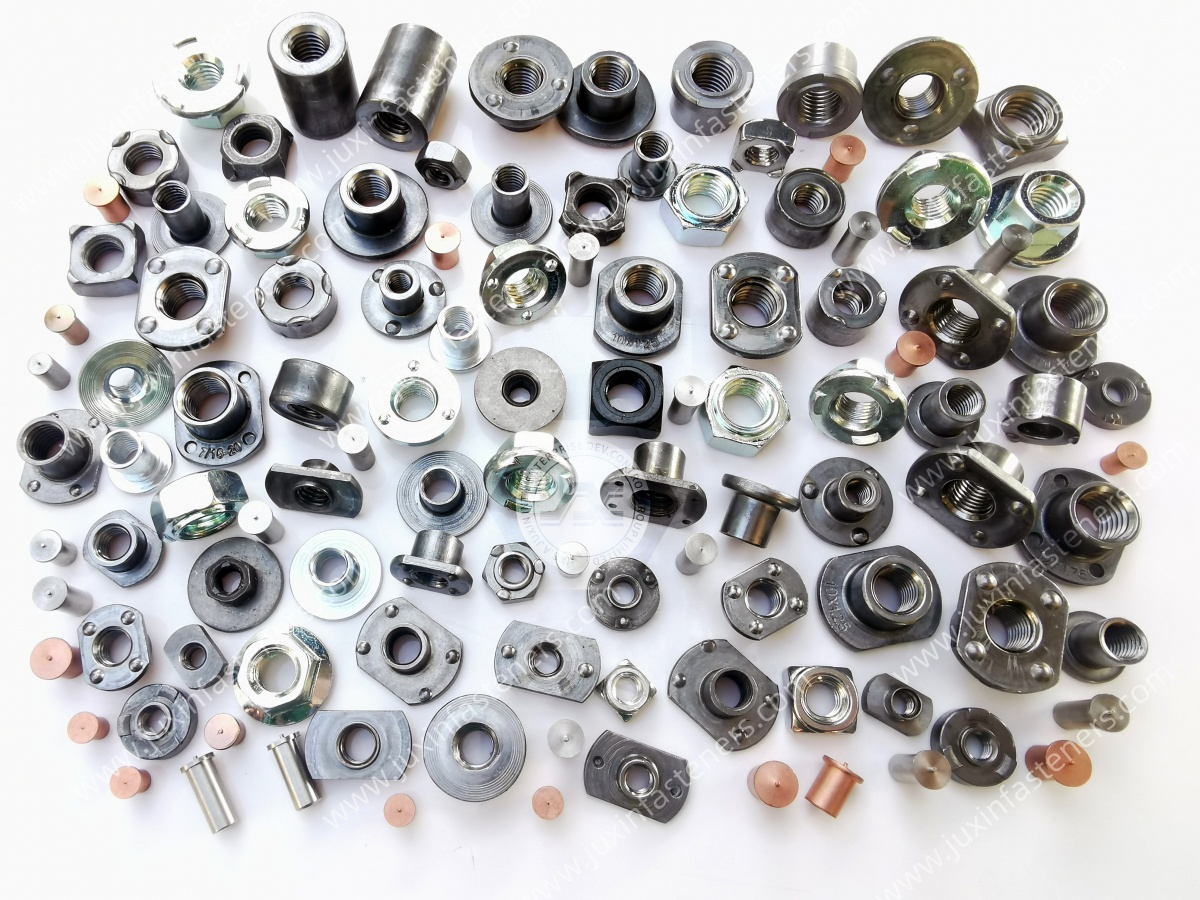
Rivet nuts—also called blind rivet nuts or threaded inserts for sheet metal—create an internal thread through mechanical deformation during installation.
They are especially useful when only one side of the component is accessible.
Typical product configurations include:
Round-body rivet nuts
Knurled rivet nuts
Hex-body rivet nuts
Flat-head rivet nuts
Reduced-head rivet nuts
Open-end rivet nuts
Closed-end rivet nuts
Steel rivet nuts
Stainless steel rivet nuts
Aluminum rivet nuts
Selection should follow the application rather than the product name alone.
Consider a closed automotive section or completed enclosure.
If an operator cannot reach the rear side, a conventional nut cannot easily be installed.
A rivet nut can be inserted and set from the accessible side.
This makes it useful for selected:
Closed sections
Brackets
Enclosures
Interior structures
Electrical housings
EV equipment
Repair or secondary assembly
This is one of the strongest reasons to choose a rivet nut.
Grip range is fundamental.
The rivet nut must be compatible with the total material thickness it is designed to clamp during setting.
If the grip condition is wrong, installation behavior and retention can change.
Therefore:
Correct Thread + Wrong Grip Range = Wrong Rivet Nut.
Procurement should not source rivet nuts only by:
M6 / M8 / M10
Thread size does not define the installed application.
Hole geometry affects:
Installation
Anti-rotation
Alignment
Retention
Assembly consistency
A hole that is too large can reduce retention.
A hole that is too small can prevent correct installation or damage the component.
Hole requirements should therefore be controlled together with the rivet nut.
Body style can influence anti-rotation performance.
Useful for many general applications where the hole and installation conditions provide adequate retention.
Knurling can increase interaction with suitable parent material.
But:
More Knurling ≠ Automatically Higher Installed Performance.
Actual behavior depends on sheet material, hardness, hole and setting.
A hexagonal body installed into a compatible hex hole can provide strong geometric resistance to rotation.
However, it requires corresponding hole preparation.
The manufacturing cost of the hole and the anti-rotation requirement should be considered together.
Two important rivet-nut performance modes are often confused.
Axial force attempts to remove the installed rivet nut from the parent material.
Torque attempts to rotate the rivet nut in the hole.
These are different failure mechanisms.
Therefore:
Pull-Out ≠ Spin-Out.
A rivet nut can perform well in axial retention but still rotate during screw tightening.
This distinction is also important.
Spin-out concerns rotation of the rivet nut body in the sheet.
Self-loosening concerns rotational movement within the threaded joint.
These require different engineering solutions.
Installed performance depends on correct mechanical deformation.
Important variables include:
Setting tool
Mandrel condition
Stroke or force control
Grip range
Parent material
Hole
Rivet nut geometry
Over-setting is not better.
More Setting Force ≠ Better Installation.
Excessive setting can damage:
Threads
Rivet nut body
Sheet
Coating
Installed geometry
Insufficient setting can reduce retention.
Closed-end rivet nuts can limit an open path through the body of the fastener.
But:
Closed-End Rivet Nut ≠ Automatically Waterproof or IP-Rated Assembly.
Sealing performance depends on the complete interface, including:
Head interface
Hole
Gasket or seal
Surface
Installation
Assembly design
If sealing matters, it should be specified and validated separately.
Self-clinching fasteners create a captive thread by pressing a specially designed fastener into a prepared hole in suitable sheet material.
During installation, sheet material flows into retention features of the fastener.
The process does not require welding.
Typical self-clinching products can include:
Self-clinching nuts
Self-clinching studs
Self-clinching standoffs
Captive threaded hardware
Application-specific clinching fasteners
This is the most important concept for understanding self-clinching fasteners.
Installation depends on controlled deformation of the parent sheet.
Therefore, performance depends strongly on:
Sheet material
Sheet hardness
Sheet thickness
Hole size
Edge distance
Fastener geometry
Tooling
Press conditions
A self-clinching fastener should not be selected only because the sheet is "thin."
The parent sheet must be compatible with the fastener design.
If the sheet is too hard relative to the selected clinching fastener, sufficient material flow may not occur.
If the material is too soft or the geometry is unsuitable, retention can also be inadequate.
Therefore:
Same Sheet Thickness ≠ Same Clinching Behavior.
Material condition matters.
Self-clinching performance depends on controlled hole geometry.
Engineers should consider:
Hole diameter
Hole quality
Burr condition
Edge distance
Hole-to-feature relationship
A poorly prepared hole can reduce retention even when the correct fastener is used.
Two important functional characteristics are:
Resistance to axial force that attempts to push the fastener out of the sheet.
Resistance to rotational force that attempts to rotate the fastener in the sheet.
These characteristics answer different engineering questions.
They should not be treated as interchangeable.
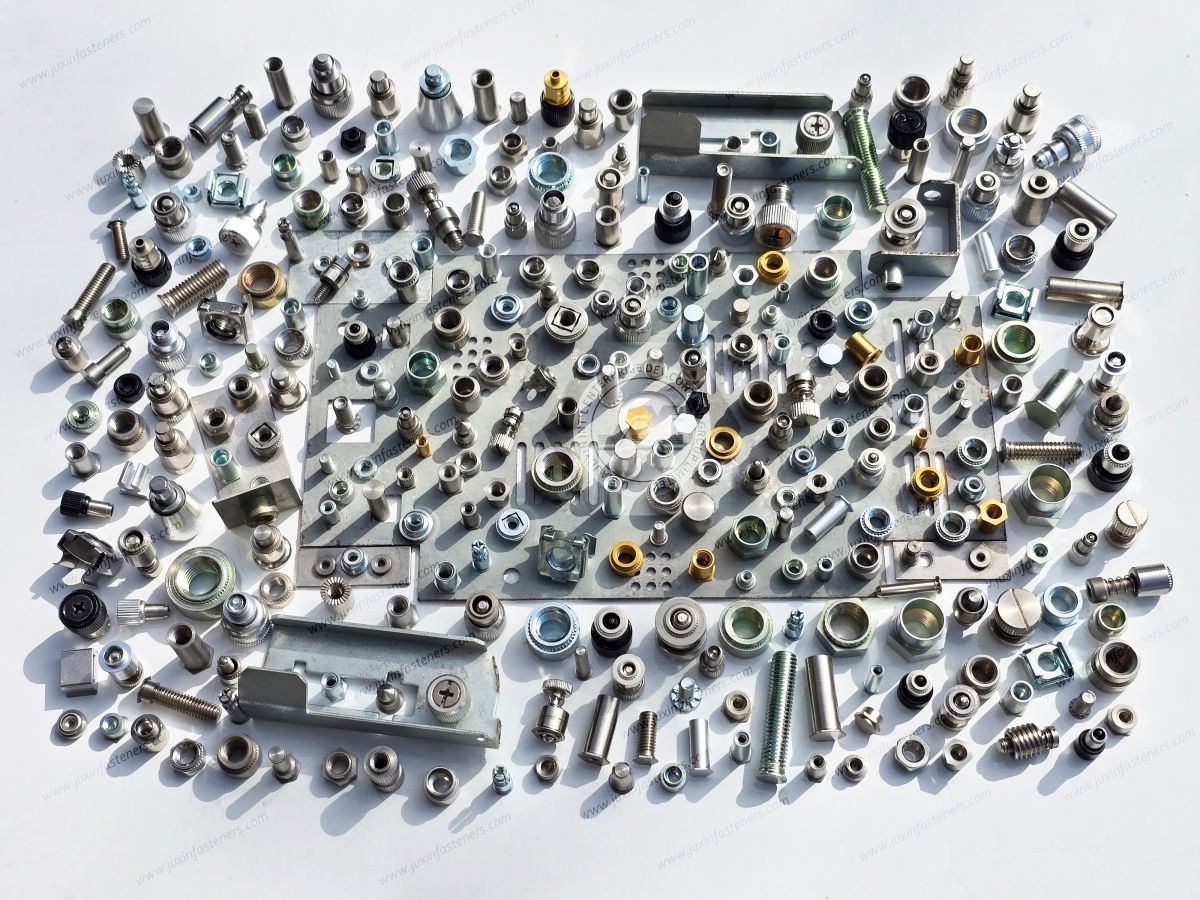
Self-clinching fasteners require sufficient installation force to create the intended material flow.
But excessive force can:
Deform the sheet
Damage the fastener
Distort the assembly
Affect retention
Therefore:
More Press Force ≠ Better Installation.
The correct installation window should be established for the fastener and parent sheet.
The selection can be reduced to several engineering questions.
A weld nut may be a strong candidate when:
Welding is already integrated into production
Parent sheet and coating are weld-compatible
A permanent captive thread is required
High-volume automated installation is important
The welding process can be validated
Do not select it solely because it has high nominal load capacity.
A rivet nut may be a strong candidate when:
Only one side is accessible
Welding is undesirable
A reusable internal thread is required
Thin sheet requires additional thread structure
Mechanical installation fits the production sequence
Grip range, hole geometry and setting process must be validated.
A self-clinching nut may be a strong candidate when:
The sheet material and hardness are compatible
Press installation can be integrated
A captive thread is required
Welding should be avoided
Hole and edge-distance requirements can be controlled
Sheet compatibility must be confirmed before selection.
| Question | Weld Nut | Rivet Nut | Self-Clinching Nut |
|---|---|---|---|
| Is rear-side installation access limited? | Usually less suitable | Strong candidate | Process-dependent |
| Is welding prohibited? | No | Yes | Yes |
| Is heat distortion a concern? | Evaluate carefully | Strong candidate | Strong candidate |
| Is the sheet pre-finished? | Welding compatibility must be evaluated | Often useful | Often useful if material is compatible |
| Is high-volume automation required? | Strong candidate | Possible | Strong candidate |
| Is field installation required? | Generally poor candidate | Strong candidate | Generally less practical |
| Is anti-rotation critical? | Weld controls attachment | Body/hole geometry important | Clinch geometry important |
| Is parent-sheet hardness high? | Welding compatibility governs | Evaluate setting behavior | Critical compatibility factor |
| Is reusable thread required? | Yes | Yes | Yes |
| Is one-sided mechanical installation required? | No | Yes | Usually no |
This matrix narrows the options but does not replace testing.
The term threaded insert covers several different technologies.
For automotive engineering, it is important to distinguish:
Rivet nuts for thin sheet
Inserts for plastics
Inserts for cast or machined metal
Wire-thread inserts
Application-specific threaded inserts
They should not be grouped together as though they solve the same problem.
For example, an insert designed for thermoplastic cannot automatically replace a rivet nut used in steel sheet.
Direct-threading screws can be effective for selected sheet-metal applications.
Potential advantages include:
Reduced component count
Fast assembly
No separate nut
But engineers should consider:
Sheet material
Thickness
Pilot hole
Screw geometry
Strip-out torque
Installation torque
Service cycles
A direct-threaded screw and captive nut solve different serviceability and load requirements.
High-strength sheet can create challenges for mechanical fastening processes.
Engineers should evaluate:
Hole production
Local formability
Fastener hardness compatibility
Clinching behavior
Rivet-nut setting
Welding process
Edge distance
A technology proven in mild steel should not automatically be transferred to a higher-strength sheet without validation.
Aluminum introduces different considerations:
Lower hardness in many alloy/tempers
Different formability
Galvanic interaction
Thermal expansion
Surface treatment
Bearing behavior
Possible technologies include:
Rivet nuts
Selected self-clinching fasteners
Bolted systems
Application-specific inserts
Welded solutions depend on the material and process and should not be assumed interchangeable with steel weld-nut systems.
A steel fastener installed into aluminum creates a dissimilar-metal interface.
In the presence of an electrolyte, galvanic corrosion can become relevant.
Therefore:
Corrosion-Resistant Fastener ≠ Corrosion-Resistant Assembly.
The complete material combination should be evaluated.
Vehicle sheet can be supplied with protective coatings or other surface systems.
These may affect:
Welding
Electrical contact
Clinching
Friction
Hole quality
Corrosion behavior
The fastener process should therefore be validated using the actual production sheet condition where possible.
Potential fastener finishes include:
Zinc plating
Zinc-nickel plating
Zinc-flake coating systems
Customer-specified surface treatments
Selection should consider:
Corrosion
Friction
Thread fit
Installation
Parent material
Welding compatibility where relevant
Remember:
Coating Name ≠ Complete Coating Specification.
Changing coating can alter more than appearance.
For example:
A weld nut coating can influence welding behavior.
A rivet nut coating can influence installation surfaces and dimensions.
A threaded joint coating can influence friction.
Therefore:
Coating Substitution Can Be an Engineering Change.
Second-source qualification should compare the complete approved surface system.
Understanding failure modes helps engineers select the right technology.
Possible causes:
Insufficient engagement
Weak parent material
Excessive tightening
Incorrect thread
Possible causes:
Insufficient bearing area
Thin parent sheet
High axial load
Poor geometry
Possible causes:
Grip mismatch
Weak sheet
Incorrect hole
Inadequate setting
Insufficient retention geometry
Possible causes:
Oversized hole
Incorrect body style
Low anti-rotation capability
Improper setting
Excessive screw installation torque
Possible causes:
Incorrect welding parameters
Projection geometry
Surface condition
Sheet material
Electrode condition
Possible causes:
Incompatible sheet
Incorrect hole
Insufficient material flow
Edge-distance problem
Installation error
Possible causes:
Sheet compatibility
Installation
Fastener geometry
Hole condition
The corrective action should target the actual failure mechanism.
Automotive body assemblies contain many different fastening conditions.
Potential applications for threaded attachment technologies include selected:
Brackets
Equipment mounts
Interior structures
Seat-related structures
Electrical enclosures
Body hardware
Serviceable panels
Primary structural or safety-related vehicle applications require the relevant OEM engineering requirements and formal validation.
A generic fastener specification does not automatically qualify a component for a critical vehicle location.
EV equipment increases the use of:
Aluminum enclosures
Steel brackets
Electrical housings
Thermal-management components
Lightweight sheet structures
Possible fastening technologies include:
Rivet nuts
Weld nuts
Self-clinching fasteners
Bolts
Blind rivets
Threaded inserts
Selection should consider:
Parent material
Access
Corrosion
Galvanic compatibility
Thermal cycling
Sealing
Electrical function
Serviceability
A fastener suitable for a mechanical attachment does not automatically establish:
Electrical safety
Battery sealing
Crash performance
Thermal performance
These are system-level requirements.
The same thin-sheet decision framework applies beyond automotive manufacturing.
Potential applications include:
Electrical cabinets
Power electronics
EV charging equipment
Data-center equipment
Telecom enclosures
Industrial controls
These applications frequently require captive threaded points in thin sheet.
Weld nuts, rivet nuts and self-clinching fasteners can each be appropriate depending on production requirements.
Automation equipment often uses:
Sheet-metal guards
Electrical enclosures
Machine covers
Frames
Control cabinets
Serviceable panels may require reliable reusable threads.
The same engineering questions apply:
Material → Thickness → Access → Installation → Retention → Serviceability
Selected railway interior and equipment applications can also use thin-sheet fastening technologies.
Potential non-primary applications can include:
Interior equipment
Electrical cabinets
Enclosures
Secondary equipment
Service panels
However, primary structural, running gear, braking, crash-related and other safety-critical railway applications require project-specific requirements and formal validation.
A standard industrial fastener should not automatically be described as railway-qualified.
Consider three quotations for an M6 threaded attachment:
Weld nut
Rivet nut
Self-clinching nut
Comparing the individual fastener price does not tell procurement which solution is less expensive.
The real cost may include:
Hole preparation
Welding
Press installation
Rivet-nut tooling
Cycle time
Inspection
Rework
Scrap
Maintenance
Automation
Field service
Therefore:
Lowest Fastener Price ≠ Lowest Assembly Cost.
A useful sourcing model is:
Total Installed Cost = Part Price + Hole Preparation + Installation + Tooling + Inspection + Rework + Scrap + Downtime + Logistics + Supply Risk
This framework is particularly useful when comparing different fastening technologies.
A more expensive fastener can sometimes reduce total assembly cost.
A cheaper fastener can sometimes create higher installation cost.
Production volume matters.
For example:
Welding equipment may be justified in a high-volume production cell.
A rivet nut may provide flexibility for lower-volume or secondary assembly.
Self-clinching installation may integrate efficiently with sheet-metal fabrication.
There is no universal answer.
The fastening technology should fit the manufacturing architecture.
Procurement should not qualify weld nuts, rivet nuts and self-clinching nuts using one generic checklist.
Each technology has different functional characteristics.
Evaluate:
Material
Thread
Projection geometry
Surface treatment
Welding behavior
Dimensional consistency
Evaluate:
Material
Thread
Body geometry
Grip range
Hole requirement
Setting behavior
Pull-out
Spin-out
Evaluate:
Material
Fastener geometry
Sheet compatibility
Hole requirement
Installation
Push-out
Torque-out
The supplier should understand the installed function, not only manufacture the loose component.
This is particularly important when developing a second source.
Two M6 rivet nuts may have the same:
Thread
Length
Head diameter
but different:
Body geometry
Knurling
Material
Grip range
Setting behavior
Pull-out performance
Spin-out performance
Likewise, two weld nuts can have the same thread but different projection geometry.
Therefore:
Same Dimensions ≠ Functional Equivalence.
When qualifying an alternate source, compare:
Controlled drawing
Revision
Material
Mechanical properties
Thread
Critical geometry
Surface treatment
Installation behavior
Functional performance
Packaging
Traceability requirements
For thin-sheet fasteners, installed testing can be more informative than loose-part dimensional comparison alone.
For an efficient engineering review, provide:
2D drawing
3D model where available
Part number
Drawing revision
Application
Fastener type
Thread
Parent sheet material
Sheet thickness
Hole size
Surface condition
Mating component
Load requirement
Installation access
Installation process
Surface treatment
Operating environment
Annual volume
Sample quantity
Validation requirements
Applicable ISO, DIN, EN, SAE, ASTM or OEM specification
Then add technology-specific information.
Provide:
Grip range
Body style
Head style
Hole geometry
Setting method
Pull-out requirement
Spin-out requirement
Provide:
Nut geometry
Projection geometry if controlled
Parent sheet
Sheet coating
Welding process
Weld-performance requirement
Provide:
Sheet material
Sheet hardness where relevant
Sheet thickness
Hole size
Edge distance
Installation method
Push-out requirement
Torque-out requirement
This information allows suppliers to quote the actual engineering requirement instead of guessing from an M6 or M8 designation.
A practical development process is:
Application Requirement → Parent Sheet Review → Access Review → Technology Selection → Drawing / DFM → Sample
→ Installation Trial → Functional Testing → Assembly Validation → Customer Approval → Production
For thin-sheet fasteners, the installation trial is especially important.
A loose component can pass dimensional inspection while performing poorly after installation.
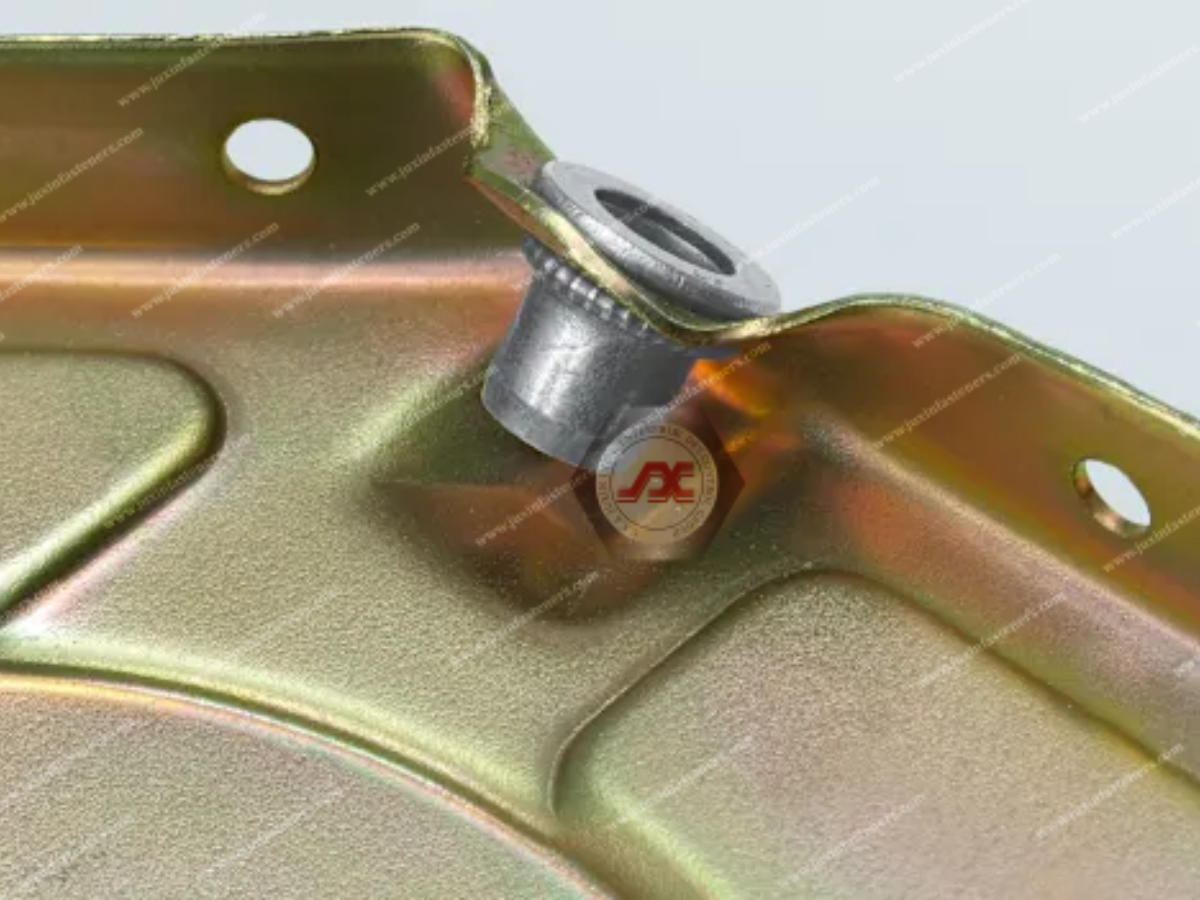
This page should function as the dedicated Automotive Thin Sheet Threaded Attachment resource.
Recommended internal links include:
Automotive Sheet Metal Fastening → overall automotive sheet-metal fastening architecture
Automotive Fastener Selection Guide → broader technology selection by material and access
Automotive Threaded Fasteners → preload, locking and threaded-joint engineering
Automotive Fastener Quality Control → inspection, traceability and supplier qualification
Weld Nuts → projection welding and weld-nut engineering
Rivet Nuts → grip range, pull-out, spin-out and blind installation
Self-Clinching Fasteners → sheet compatibility, push-out and torque-out
Blind Rivets → permanent one-sided sheet joining
Fastener Surface Treatment & Coating Selection → corrosion and coating engineering
Zinc-Nickel Coated Fasteners → Zn-Ni specification and sourcing
Custom Fastener Manufacturing → drawing-based manufacturing and DFM
Use the existing indexed JUXIN FASTENERS URL when implementing these internal links.
There is no universal best fastener. Weld nuts, rivet nuts and self-clinching nuts solve different problems.
Selection depends on sheet material, thickness, access, load, installation process and production volume.
A rivet nut is particularly useful when only one side is accessible or welding is undesirable.
A weld nut may be more suitable when welding is already integrated into high-volume production.
Self-clinching nuts can be considered when sheet material, hardness and thickness are compatible and press installation can be integrated into manufacturing.
Not automatically. Sheet hardness, thickness and material-flow behavior affect clinching performance. The fastener should be matched to the actual sheet.
Possible causes include incorrect hole size, unsuitable body geometry, inadequate setting, parent-material behavior or excessive installation torque.
No. Pull-out is axial retention. Spin-out is resistance to rotation in the parent material. They are different performance modes.
Not automatically. Sealing depends on the complete fastener-to-hole and joint interface. Closed-end construction alone does not establish an IP rating.
Not as a universal rule. Their installed performance depends on different variables.
Weld nuts depend strongly on the welding system; rivet nuts depend on grip, hole geometry, parent material and setting.
Potentially, but this is a fastening-system change. Load, access, sheet, installation, retention, corrosion, serviceability and production requirements should be reviewed before substitution.
Provide the drawing, sheet material, sheet thickness, hole size, thread, application, installation process, load requirement, coating, annual volume and required functional validation.
Thin-sheet fastening is not simply a question of finding a nut that fits an M6 or M8 screw.
The correct decision follows:
Parent Material → Sheet Thickness → Access → Joint Function → Installation Process → Retention Requirement → Environment → Production Volume → Validation
For a weld nut, the welding process is part of the joint.
For a rivet nut, grip range, hole geometry and setting are part of the joint.
For a self-clinching nut, sheet material flow and press installation are part of the joint.
That is why:
Fastener Selection ≠ Part Number Selection Alone.
JUXIN FASTENERS supports OEM and industrial customers with standard and drawing-based thin-sheet fastening components, including:
Weld nuts
Weld studs
Rivet nuts
Self-clinching nuts
Self-clinching studs
Self-clinching standoffs
Blind rivets
Threaded inserts
Custom sheet-metal fasteners
If you are designing a new automotive or EV sheet-metal assembly, replacing an existing attachment method,
qualifying a second source or solving an installed fastener failure, send the technical package for review.
For an effective RFQ, provide:
2D Drawing + 3D Model + Part / Revision + Application + Parent Sheet Material + Sheet Thickness + Hole Size
+ Thread + Installation Access + Surface Treatment + Annual Volume
Where applicable, also provide:
Grip Range + Welding Process + Sheet Hardness + Edge Distance + Pull-Out / Spin-Out Requirement
+ Push-Out / Torque-Out Requirement + Load Requirement + Validation Requirements
JUXIN FASTENERS
Automotive Thin Sheet Fasteners | Weld Nuts | Rivet Nuts | Self-Clinching Fasteners | Custom OEM Fasteners
Email: info@juxinfasteners.com
Website: www.juxinfasteners.com
Contact Us
Tel.:
+86 020 8621 0320
+86 020 3121 6067
E-mail:
Technical Support:
Navigation
SEND INQUIREY



