
Call Us
+86 136 6007 9809
Call Us
+86 136 6007 9809

Nov. 01, 2023
Automotive lightweighting does not mean replacing every steel fastener with aluminum, titanium or plastic.
A lighter fastener only creates engineering value when the complete joint continues to satisfy its mechanical, environmental, assembly and service requirements.
For automotive and EV engineers, the correct material decision should therefore consider:
Joint Function + Required Load + Fastener Material + Parent Material + Thread Strength + Preload + Corrosion
+ Galvanic Compatibility + Temperature + Installation + Serviceability + Cost
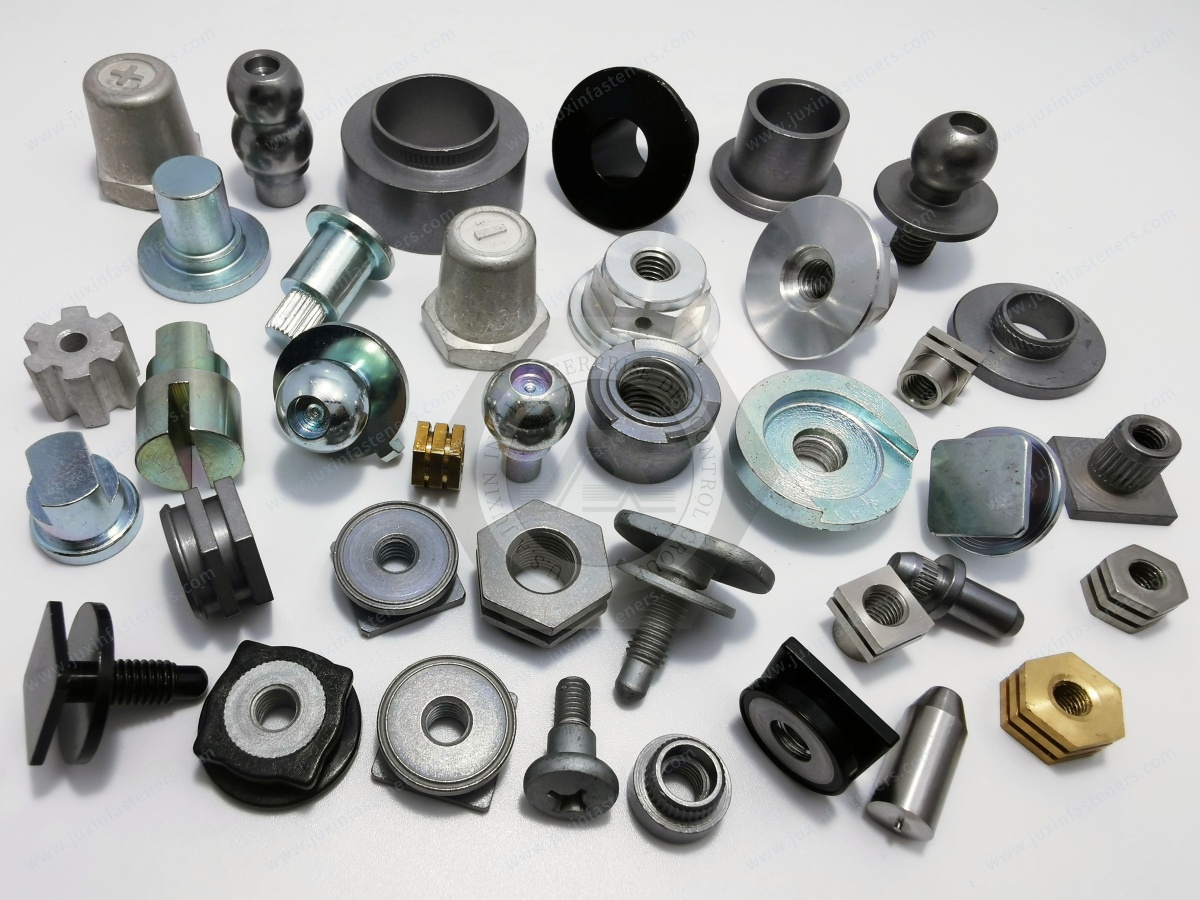
JUXIN FASTENERS supplies standard and drawing-based fastening components in selected materials including:
Carbon and alloy steel
Stainless steel
Aluminum alloys
Titanium alloys
Copper alloys
Nylon and engineering plastics
Our product scope includes:
Automotive bolts
Screws
Nuts and lock nuts
Weld nuts
Rivet nuts
Threaded inserts
Self-clinching fasteners
Nylon and plastic fasteners
Automotive clips
Custom cold-formed components
Custom CNC-machined fasteners
This guide focuses on one specific engineering question:
How should automotive and EV manufacturers select fastener materials when lightweighting, corrosion, strength,
electrical function and production cost must all be considered together?
There is no universally best automotive fastener material.
A practical first-stage comparison is:
| Material Family | Primary Engineering Advantage | Important Limitation to Evaluate | Typical Areas to Evaluate |
|---|---|---|---|
| Carbon / Alloy Steel | High mechanical capability and established production economics | Corrosion protection, mass | Structural and general mechanical joints |
| Stainless Steel | Corrosion resistance in suitable environments | Galling, friction, cost, galvanic interaction | Corrosion-sensitive equipment and assemblies |
| Aluminum Alloy | Low density | Thread strength, preload, galvanic corrosion | Lightweight housings and selected low-mass assemblies |
| Titanium Alloy | High specific strength and useful corrosion behavior | Cost, galling, sourcing and processing | Specialized weight-sensitive components |
| Nylon / Engineering Plastic | Very low mass, electrical isolation potential | Creep, temperature, moisture, chemical compatibility | Electronics, interiors and selected nonmetallic assemblies |
This table is only a screening tool.
The correct material depends on the joint.
Fastener mass is only one part of vehicle lightweighting.
Changing fastener material may require changes to:
Diameter
Head geometry
Thread engagement
Number of fasteners
Parent material
Washer or bearing surface
Insert design
Installation process
For example, replacing a steel fastener with a lower-density material may save mass per component.
But if the new material requires:
A larger diameter
Longer engagement
Additional reinforcement
More fasteners
the system-level weight saving may be smaller than expected.
Therefore:
Lower Material Density ≠ Lower Assembly Mass.
Automotive lightweighting should be evaluated at joint level.
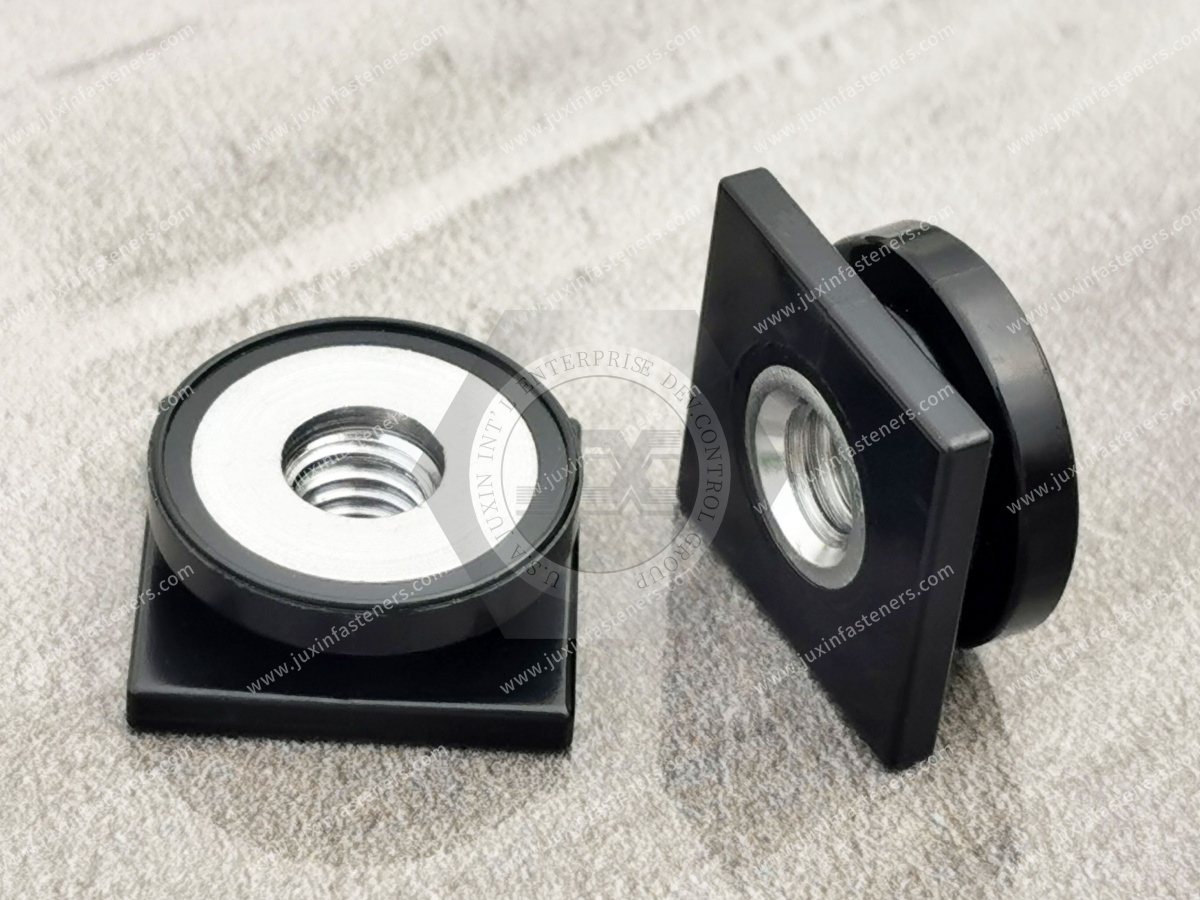
Electric vehicles increase the use of:
Aluminum structures
Battery-related enclosures
Power-electronic housings
Thermal-management equipment
Electrical modules
Plastic components
Mixed-material assemblies
This creates fastening challenges involving:
Lightweighting
Galvanic corrosion
Electrical isolation
Thermal cycling
Corrosion protection
Serviceability
Sealing interfaces
Mixed coefficients of thermal expansion
EV development therefore increases the importance of material compatibility—not simply the demand for lighter fasteners.
Before comparing steel, aluminum or titanium, define what the fastener must do.
Possible functions include:
Generate clamp load
Carry tensile load
Transfer shear load
Create a reusable thread
Attach an enclosure
Retain a lightweight panel
Electrically isolate components
Participate in a grounding path
Provide serviceable access
Retain interior components
Different functions create different material priorities.
A plastic clip and a high-preload steel bolt should not be compared using the same selection logic.
Steel remains an important fastener material because it combines:
Mechanical capability
Established forming processes
Broad thread standards
Heat-treatment options
High-volume production efficiency
Competitive cost
Potential products include:
Bolts
Screws
Nuts
Lock nuts
Weld nuts
Weld studs
Rivet nuts
Custom cold-formed components
Vehicle lightweighting does not automatically eliminate steel fasteners.
Where high clamp load or mechanical strength is required,
a relatively small high-strength steel fastener may sometimes provide a more efficient joint than a larger fastener made from a lower-strength material.
Therefore:
Heavier Material ≠ Heavier Optimized Joint.
The comparison should include geometry and required performance.
Depending on the application and applicable specification, automotive bolted joints may use different fastener property classes.
But:
Higher Property Class ≠ Automatically Better Joint.
Increasing bolt strength does not automatically increase:
Mating thread strength
Sheet strength
Insert retention
Weld strength
Bearing capacity
The complete joint must be reviewed.
This is particularly important when high-strength steel screws are installed into:
Aluminum
Magnesium
Plastic inserts
Thin sheet attachments
Softer metal threads
The mating component may become the limiting element.
Therefore:
Stronger Mating Screw ≠ Stronger Mating Thread.
Thread engagement and parent material must be considered.
Carbon and alloy steel fasteners often require surface treatment appropriate to the environment.
Possible systems include:
Zinc plating
Zinc-nickel plating
Zinc-flake coating systems
Other customer-specified finishes
Selection should consider:
Corrosion exposure
Fastener strength
Friction
Thread fit
Mating material
Installation
OEM requirements
The coating is part of the engineering specification.
Stainless steel can provide useful corrosion resistance for selected automotive and EV applications.
Potential products include:
Screws
Bolts
Nuts
Rivet nuts
Threaded inserts
Custom machined components
But stainless steel should not be selected simply because the application is exposed to moisture.
Corrosion behavior depends on:
Stainless grade
Chlorides
Chemicals
Temperature
Surface condition
Crevices
Mating materials
Therefore:
Stainless Steel ≠ Corrosion-Proof.
The actual environment matters.
304 and 316 stainless steels are common material families for industrial fasteners.
316 can provide improved resistance in some chloride-containing environments due to its alloy chemistry.
But:
316 ≠ Automatically Better Fastener for Every Automotive Joint.
Selection should also consider:
Mechanical requirements
Availability
Cost
Mating material
Galling
Installation
Environment
If the application does not justify the material change, additional alloy cost may not create additional value.
Stainless threaded components can be susceptible to galling under certain combinations of:
Material
Surface condition
Thread fit
Speed
Pressure
Lubrication
This matters when stainless bolts and nuts are repeatedly assembled.
Material selection should therefore consider assembly behavior, not only corrosion.
Changing from carbon steel to stainless steel does not solve vibration loosening.
Self-loosening depends on joint behavior, preload and relative movement.
Therefore:
Stainless Steel ≠ Anti-Loosening Feature.
A separate locking strategy may still be required.
Aluminum is attractive for lightweight applications because of its low density.
Potential components can include:
Screws
Bolts
Nuts
Rivet nuts
Custom machined components
But aluminum fasteners should not be treated as direct low-mass substitutes for steel.
Compared with many steel fasteners, aluminum alloys have different:
Strength
Modulus
Thread behavior
Bearing behavior
Thermal expansion
Surface characteristics
Therefore, a steel-to-aluminum substitution may require joint redesign.
The word aluminum does not define the mechanical performance of a fastener.
Relevant variables include:
Alloy
Temper
Manufacturing process
Heat treatment
Geometry
Surface treatment
Therefore:
Aluminum Material Name ≠ Finished Fastener Performance.
The actual grade and manufacturing condition must be controlled.
When aluminum fasteners or aluminum mating components are used, thread engagement becomes particularly important.
Engineers should evaluate:
Internal thread material
Engagement length
Fastener diameter
Installation torque
Required preload
Repeated assembly
More tightening torque is not automatically better.
Excessive tightening can strip the mating thread before the desired joint behavior is achieved.
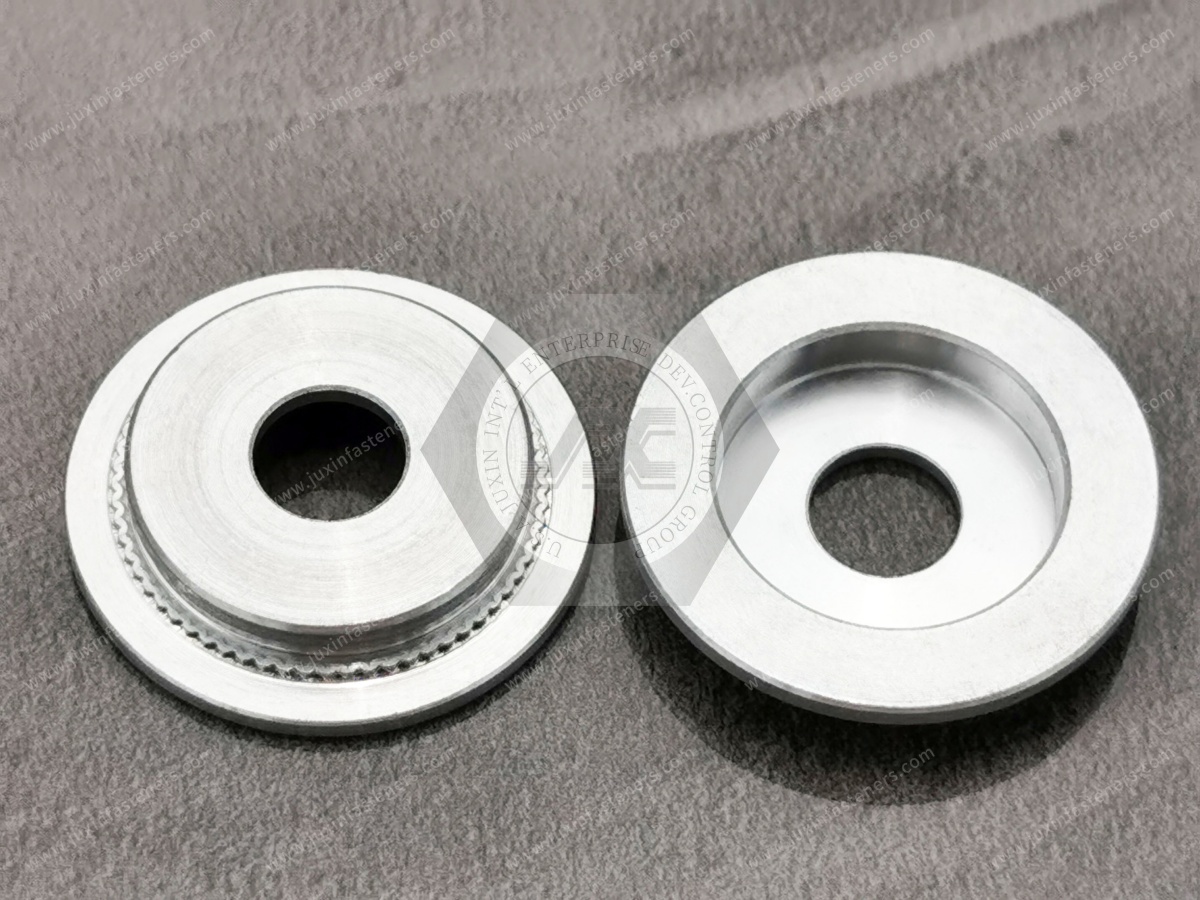
Aluminum has different thermal expansion behavior from steel.
In mixed-material joints, temperature cycling can affect:
Clamp load
Joint movement
Contact pressure
Sealing interfaces
This can matter in EV and power-electronic assemblies where operating temperatures change repeatedly.
Installing steel, stainless steel or copper-alloy components into aluminum can create galvanic considerations in the presence of an electrolyte.
The risk depends on:
Material combination
Surface treatment
Electrical contact
Environment
Joint geometry
Therefore:
Corrosion-Resistant Fastener ≠ Corrosion-Resistant Assembly.
The complete material system should be evaluated.
Anodizing can modify the aluminum surface and provide useful functional properties depending on the process.
But:
Anodized Aluminum ≠ Corrosion-Proof Assembly.
Damage, thread contact, mating material and service environment still matter.
Titanium alloys can provide a high strength-to-weight ratio and useful corrosion behavior for specialized applications.
Potential products include:
Screws
Bolts
Nuts
Precision machined fasteners
Custom components
Titanium can be valuable where mass reduction has enough system-level value to justify higher material and manufacturing cost.
Replacing steel with titanium may introduce different considerations:
Material cost
Machining cost
Thread behavior
Galling
Surface treatment
Supply-chain availability
Inspection requirements
Therefore:
Higher Material Cost ≠ Higher Joint Performance.
The application must justify the material.
Different titanium grades provide different combinations of:
Strength
Ductility
Corrosion behavior
Formability
Machinability
The grade should be specified on the drawing.
Using the word titanium alone is insufficient for an OEM RFQ.
Titanium threaded interfaces can experience galling under certain conditions.
Engineers should evaluate:
Mating material
Surface condition
Lubrication
Coating
Installation speed
Thread fit
The lightweight advantage should therefore be considered together with assembly behavior.
Engineering plastics offer another lightweight fastening route.
Potential JUXIN FASTENERS products include:
Nylon rivets
Plastic clips
Push fasteners
Plastic screws
Plastic nuts
PCB hardware
Insulating washers
Custom molded fasteners
Potential applications can include selected:
Interior panels
Electronics
Cable management
Control equipment
Lightweight covers
Non-structural attachments
Plastic fasteners behave differently from metal fasteners.
Important variables include:
Polymer type
Polymer grade
Reinforcement
Temperature
Moisture
Creep
Stress relaxation
Chemical exposure
UV exposure where relevant
Installation geometry
A metal-joint design should not automatically be converted to plastic by matching dimensions.
Polyamides such as PA6 and PA66 can absorb moisture.
Moisture condition can influence:
Dimensions
Stiffness
Strength
Toughness
Assembly behavior
Therefore, engineering evaluation should consider the actual polymer and environmental condition.
Polymers can deform gradually under sustained load.
This can reduce clamp force over time.
Therefore:
Initial Tightness ≠ Long-Term Clamp Retention in Plastic.
For long-term loaded joints, creep and stress relaxation should be considered.
Polymer mechanical properties can change with temperature.
A plastic fastener suitable for an interior electronic assembly may not be suitable near a high-temperature component.
The service temperature range should therefore be included in the RFQ.
Automotive components may encounter:
Oils
Greases
Cleaning agents
Coolants
Fuels
Other process or service chemicals
Polymer compatibility should be evaluated for the actual environment.
Nylon and other polymers can provide useful electrical isolation characteristics.
But:
Plastic Fastener ≠ Qualified Electrical System.
Electrical safety and insulation requirements belong to the complete assembly.
Material selection should follow the applicable system requirements.
Metal threaded inserts can provide reusable internal threads in selected plastic components.
Potential applications include:
Electronic housings
Control modules
Sensors
Interior equipment
Plastic brackets
However, the metal insert is only one part of the joint.
Installed performance depends on:
Polymer
Reinforcement
Boss geometry
Hole geometry
Insert geometry
Installation method
Temperature
Moisture
Service cycles
A stronger insert cannot compensate for an inadequate plastic boss.
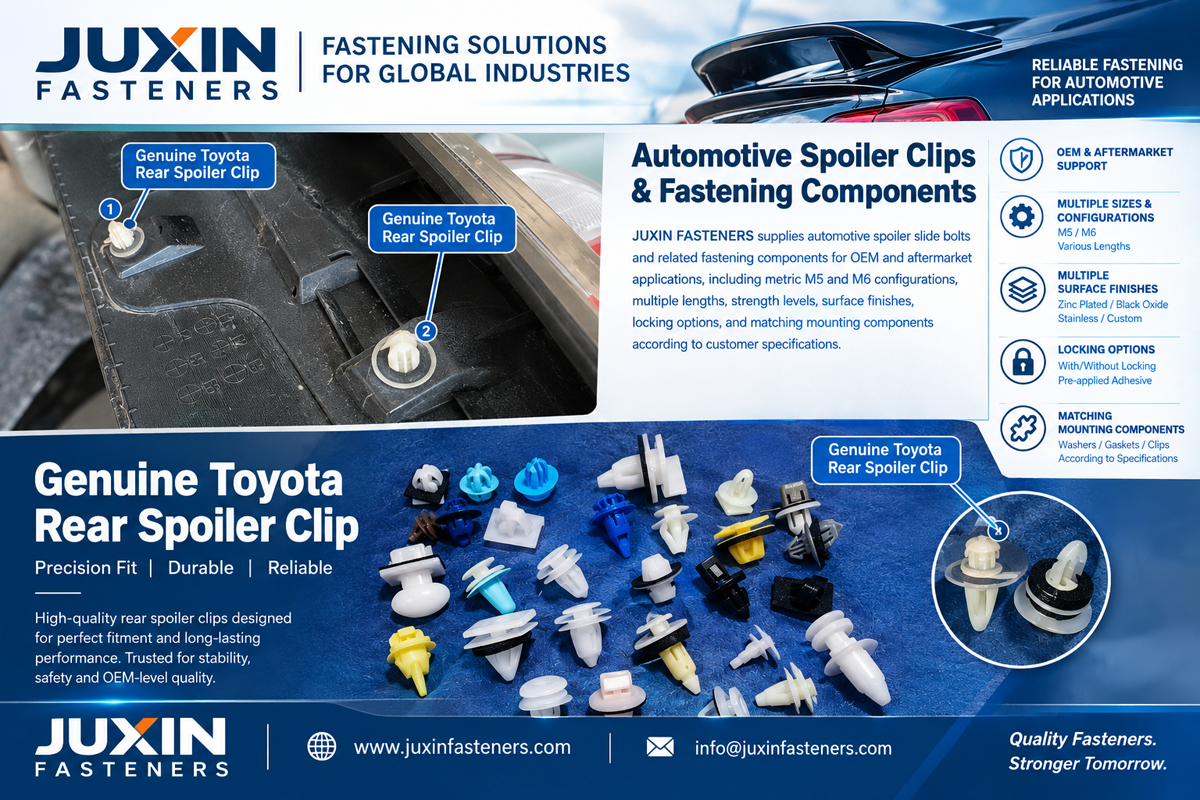
Copper and copper alloys may be used in selected electrical or specialized fastening applications.
Potential advantages can include:
Electrical conductivity
Thermal conductivity
Corrosion characteristics
Machinability depending on alloy
But:
Conductive Material ≠ Qualified Electrical Connection.
Electrical performance depends on the complete contact interface.
Where a fastener participates in electrical current transfer or grounding, engineers should define both:
Clamp load
Strength
Thread
Installation
Contact resistance
Current
Contact surface
Oxidation
Temperature
Mating material
A mechanically acceptable fastener may not automatically provide the required electrical performance.
A useful material-selection matrix is:
| Engineering Requirement | Steel | Stainless Steel | Aluminum | Titanium | Engineering Plastic |
|---|---|---|---|---|---|
| High mechanical load capability | Strong candidate | Application-dependent | Application-dependent | Strong specific strength | Generally limited |
| Lightweighting | Limited by density | Limited by density | Strong candidate | Strong candidate | Very strong candidate |
| Corrosion resistance | Usually coating-dependent | Strong in suitable environments | Environment-dependent | Strong in many environments | Polymer-dependent |
| High clamp load | Strong candidate | Application-dependent | Requires careful design | Application-dependent | Usually limited |
| Electrical isolation | No | No | No | No | Potential advantage |
| High-volume cold forming economics | Strong | Application-dependent | Application-dependent | Limited / specialized | Different manufacturing route |
| Low raw-material cost | Strong | Higher | Application-dependent | Low advantage | Polymer-dependent |
| Mixed-material galvanic concern | Yes | Yes | Yes | Yes | Usually different concern |
| Creep concern | Low | Low | Low | Low | Important |
This table is not a material ranking.
It shows why the correct material depends on the application.
Potential materials and technologies include:
Coated steel weld nuts
Steel rivet nuts
Stainless rivet nuts
Aluminum rivet nuts
Self-clinching fasteners
Selection depends strongly on the parent sheet and joining process.
Potential fastening requirements include:
Lightweighting
Corrosion resistance
Mixed-material compatibility
Serviceability
Thermal cycling
Possible products include:
Steel fasteners with engineered coatings
Stainless fasteners
Aluminum fasteners
Rivet nuts
Self-clinching fasteners
Threaded inserts
No single material is automatically the EV solution.
Power-electronic assemblies may combine:
Aluminum housings
Copper conductors
Steel hardware
Plastics
Fastener material should be selected according to mechanical and electrical functions separately.
Potential fastening technologies include:
Precision screws
Threaded inserts
Nylon fasteners
Plastic clips
Standoffs
Material priorities can include:
Low mass
Electrical isolation
corrosion behavior
serviceability
Potential products include:
Plastic clips
Nylon rivets
Plastic push fasteners
Screws
Threaded inserts
For many interior attachments, installation speed and panel retention can matter more than maximum fastener strength.
Material substitution is not the only route to lower mass.
Engineers can also evaluate:
Head geometry
Shank geometry
Fastener length
Thread engagement
Hollow or reduced-mass features where appropriate
Integrated functions
Component consolidation
A custom fastener that combines multiple functions may sometimes eliminate:
Washer
Spacer
Separate nut
Secondary component
This can reduce both mass and assembly complexity.
Consider an assembly using:
Bolt
Washer
Spacer
Nut
A custom engineered fastener may potentially integrate selected functions.
If technically feasible, this can reduce:
Part count
Handling
Assembly time
Inventory
Error opportunities
Therefore, lightweighting should also ask:
Can the fastening architecture be simplified?
not only:
Can the steel part become aluminum?
Material and manufacturing process cannot be separated.
Possible manufacturing routes include:
Cold heading
Cold forming
Machining
Automatic turning
Thread rolling
Secondary machining
Injection molding for plastic components
The appropriate route depends on:
Material
Geometry
Tolerance
Volume
Mechanical requirements
Cold heading can provide high production efficiency for suitable fastener geometries and materials.
Potential advantages include:
High production rate
Good material utilization
Repeatable geometry
Scalable OEM production
But not every material or geometry is equally suitable.
CNC machining can be appropriate for:
Complex geometry
Lower volumes
Prototypes
Precision components
Titanium or specialty components
Features difficult to form
But:
CNC Machining ≠ Automatically Better Fastener.
The correct process depends on the drawing and production volume.
During development, engineers may machine a prototype from readily available material.
That does not automatically establish the optimum production route.
Before production release, evaluate:
Final material
Forming feasibility
Tooling
Tolerance
Surface treatment
Annual volume
Unit economics
Early DFM review can prevent a prototype process from becoming an unnecessarily expensive production process.
Sometimes a corrosion problem does not require changing the base fastener material.
For example, instead of moving immediately from carbon steel to stainless steel,
engineers may evaluate whether an appropriate coating system can meet the environmental requirement.
Possible alternatives include:
Zinc
Zinc-nickel
Zinc-flake systems
Other specified coatings
The comparison should consider:
Corrosion
Friction
Strength
Cost
Thread fit
Environment
Customer specification
A drawing that only states:
Zinc
or:
Zn-Ni
may not fully define the required system.
Depending on the project, it may also need:
Thickness
Passivation
Sealer
Topcoat
Lubricant
Friction requirement
Corrosion requirement
Material and coating should be specified as a system.
Material or coating changes can alter:
Friction
Elastic response
Thread behavior
Bearing behavior
Therefore:
Torque ≠ Preload.
And:
Same Torque + Different Friction ≠ Same Preload.
A material substitution may require tightening-process review.
Procurement may identify a lower-cost or lighter alternative material.
But substituting:
Steel → Stainless steel
Steel → Aluminum
Steel → Titanium
Metal → Plastic
should not be treated as a simple purchasing change.
Review:
Strength
Thread
Preload
Corrosion
Galvanic interaction
Temperature
Fatigue
Installation
Serviceability
Cost
Therefore:
Material Substitution Can Be an Engineering Change.
This principle becomes especially important during second sourcing.
Two fasteners can share the same:
Thread
Diameter
Length
Head geometry
but use different:
Material grades
Heat treatment
Surface treatment
Manufacturing routes
Their functional performance can therefore differ.
Same Dimensions ≠ Functional Equivalence.
A useful procurement comparison should include more than piece price.
Compare:
Raw material cost
Manufacturing process
Tooling
Surface treatment
Inspection
Installation
Failure risk
Logistics
Supply availability
Annual volume
A titanium fastener may reduce mass but significantly increase material and machining cost.
An aluminum fastener may reduce mass but require joint redesign.
A plastic fastener may reduce both mass and cost but introduce creep or temperature limitations.
The correct answer depends on the business and engineering requirement together.
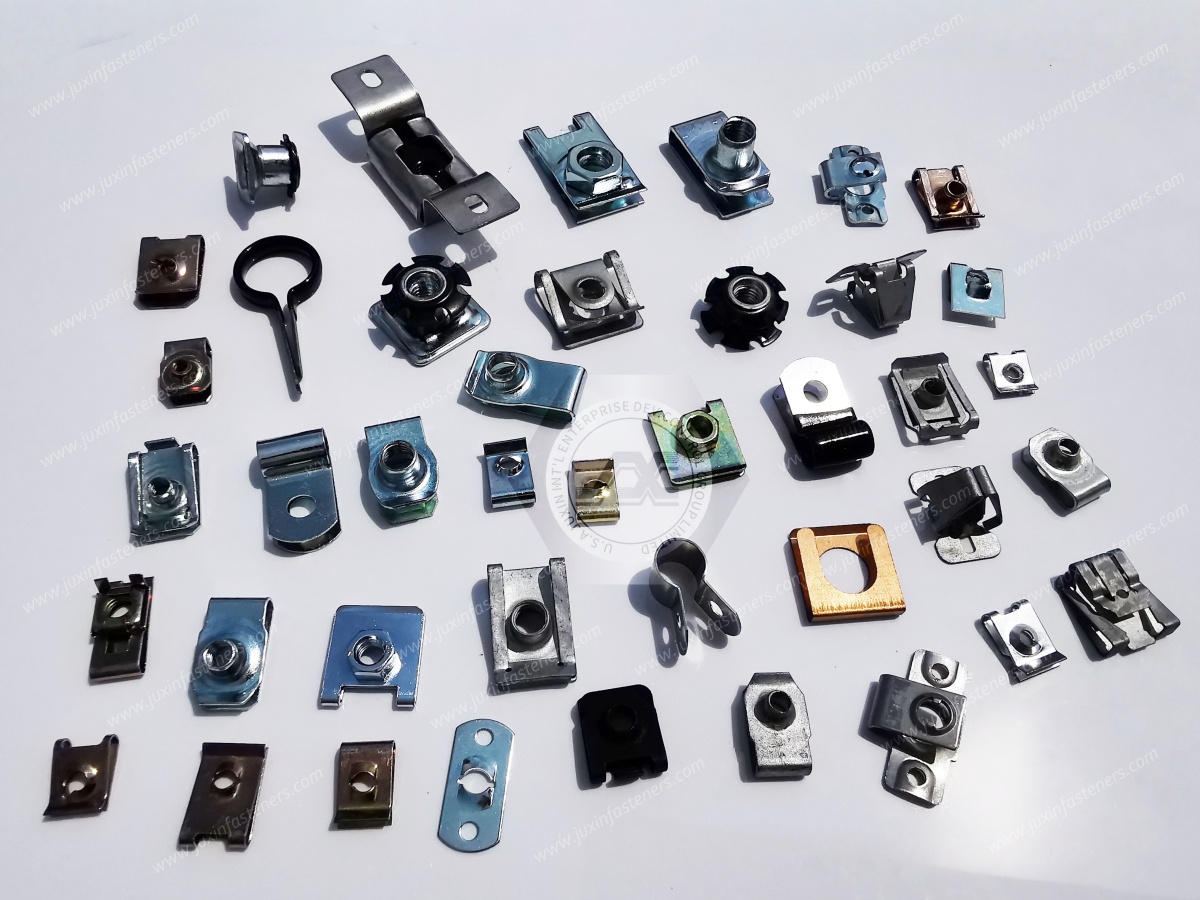
A useful sourcing framework is:
Total Installed Cost = Part Price + Installation + Tooling + Inspection + Rework + Scrap + Downtime + Logistics + Supply Risk
Lightweight material selection should be evaluated against this complete cost.
When developing an alternate supplier, procurement should confirm that material equivalence is real—not assumed from a generic description.
Compare:
Material designation
Grade
Condition / temper where relevant
Mechanical properties
Heat treatment
Thread
Geometry
Surface treatment
Functional performance
Inspection requirements
A supplier offering "stainless steel" without defining the required grade has not established material equivalence.
For an efficient engineering and sourcing review, provide:
2D drawing
3D model where available
Part number
Drawing revision
Application
Current fastener material
Proposed material if considering substitution
Mating component
Parent material
Thread
Required mechanical properties
Load requirement
Surface treatment
Corrosion environment
Service temperature
Installation method
Annual volume
Sample quantity
Validation requirements
Applicable ISO, DIN, EN, SAE, ASTM or OEM specification
For lightweighting projects, also provide:
Current fastener mass where relevant
Weight-reduction objective
Material restrictions
Galvanic concerns
Electrical requirements
Thermal cycling requirements
Repeated service requirements
This information allows the supplier to evaluate the joint rather than simply quote another material.
A practical sequence is:
Joint Function → Load → Parent Material → Required Fastener Strength → Weight Objective → Environment → Galvanic Compatibility
→ Temperature → Thread / Preload → Installation → Manufacturing Route → Cost → Validation
This prevents material selection from becoming a density comparison.
This page should function as the dedicated Automotive Lightweight Fastener / Material Selection resource.
Recommended internal links include:
Automotive Fastener Selection Guide → overall fastener technology selection
Automotive Threaded Fasteners → preload, friction and threaded-joint engineering
Automotive Thin Sheet Fasteners → weld nut vs rivet nut vs self-clinching nut
Automotive Sheet Metal Fastening → sheet-metal joining architecture
Automotive Fastener Quality Control → supplier qualification and traceability
Fastener Surface Treatment & Coating Selection → coating engineering
Zinc vs Zinc-Nickel Plating → corrosion and cost comparison
Zinc-Nickel Coated Fasteners → Zn-Ni specification
Stainless Steel Fasteners → stainless material selection
Aluminum Fasteners → lightweight metal fastener engineering
Titanium Fasteners → high-specific-strength custom components
Plastic & Nylon Fasteners → polymer material and application selection
Threaded Inserts for Plastic → polymer joint design
Custom Fastener Manufacturing → process selection and DFM
Use the existing indexed JUXIN FASTENERS URL when implementing these internal links.
There is no universal best material. Aluminum, titanium and engineering plastics can reduce fastener mass,
but steel or stainless steel may provide better mechanical or economic performance in other joints. Selection should be based on the complete assembly.
No. Aluminum has different strength, stiffness, thread behavior and thermal expansion.
A steel-to-aluminum substitution may require changes to fastener size, engagement and tightening strategy.
No. Titanium can provide excellent specific strength, but cost, galling, processing, supply and application requirements must justify its use.
Not automatically. Stainless steel and coated carbon steel provide different combinations of strength,
corrosion performance, friction, cost and manufacturing capability. The operating environment should determine the selection.
For selected non-structural, interior, electronic or isolation applications, plastic fasteners may be appropriate.
Creep, temperature, moisture, chemicals and mechanical load must be considered.
Not necessarily. If a lower-density material requires a larger fastener, more engagement or additional reinforcement,
system-level mass reduction may be smaller than expected.
Evaluate load, aluminum alloy, thread strength, engagement, galvanic compatibility, coating, thermal cycling, serviceability and installation.
Rivet nuts, inserts, self-clinching fasteners and conventional bolts may each be appropriate depending on the assembly.
They are different engineering approaches. Zn-Ni is a coating system generally applied to a substrate such as steel, while stainless steel is a base material family.
The decision should consider strength, corrosion environment, friction, cost and joint design.
Provide the 2D drawing, 3D model where available, current material, target material, mating component, load requirement, environment,
thread, coating, installation method, annual volume and required validation.
The goal of automotive lightweighting should not be:
"Replace steel with the lightest available material."
A better objective is:
Achieve the required joint function with the lowest practical system mass, manufacturing complexity and lifecycle cost.
That requires engineers and procurement teams to evaluate:
Material + Geometry + Parent Component + Thread + Preload + Corrosion + Galvanic Compatibility + Temperature + Manufacturing + Installation + Cost
Sometimes the correct solution is aluminum.
Sometimes it is titanium.
Sometimes it is nylon or another engineering polymer.
And sometimes an optimized steel fastener remains the most efficient engineering solution.
JUXIN FASTENERS supports OEM and industrial customers with standard and drawing-based components in carbon steel, stainless steel,
aluminum, titanium, copper alloys and engineering plastics.
Our product scope includes:
Automotive bolts and screws
Nuts and lock nuts
Weld nuts
Rivet nuts
Threaded inserts
Self-clinching fasteners
Nylon and plastic fasteners
Automotive clips
Custom cold-formed components
Custom CNC-machined components
If you are evaluating a lightweight automotive or EV fastening system, changing material, qualifying a second source or developing a drawing-based custom fastener,
send the technical package for engineering and commercial review.
For an effective RFQ, provide:
2D Drawing + 3D Model + Part / Revision + Application + Current Material + Target Material + Mating Component + Load Requirement
+ Thread + Surface Treatment + Installation Method + Annual Volume
For material-substitution projects, also provide:
Weight Objective + Parent Material + Corrosion Environment + Temperature + Galvanic Requirements
+ Electrical Requirements + Service Cycles + Validation Requirements
JUXIN FASTENERS
Lightweight Automotive Fasteners | EV Fasteners | Aluminum Fasteners | Titanium Fasteners | Plastic & Nylon Fasteners | Custom OEM Fasteners
Email: info@juxinfasteners.com
Website: www.juxinfasteners.com
Contact Us
Tel.:
+86 020 8621 0320
+86 020 3121 6067
E-mail:
Technical Support:
Navigation
SEND INQUIREY



