
Call Us
+86 136 6007 9809
Call Us
+86 136 6007 9809

Oct. 26, 2023
Automotive sheet metal fastening is no longer a question of choosing between "a bolt or a weld."
Modern vehicle manufacturing combines steel sheet, high-strength steels, coated steels, aluminum, polymers, castings, extrusions and electronic assemblies.
Electric vehicles add battery enclosures, power electronics, thermal-management hardware and increasingly serviceable modules to an already complex fastening environment.
The correct fastening technology therefore depends on the complete assembly.
For an automotive engineer or sourcing team, the useful question is:
Which fastening method provides the required joint function in this material, thickness, production process and service environment?
JUXIN FASTENERS supplies selected fastening components for automotive and EV manufacturing, including:
Blind rivet nuts
Blind rivets
Weld nuts
Weld studs
Self-clinching fasteners
Lock nuts
Custom screws and bolts
Threaded inserts
Plastic and nylon fasteners
Automotive clips and retainers
Drawing-based fastening components
This guide focuses on the engineering decisions behind automotive sheet metal fastening rather than treating every fastener as interchangeable hardware.
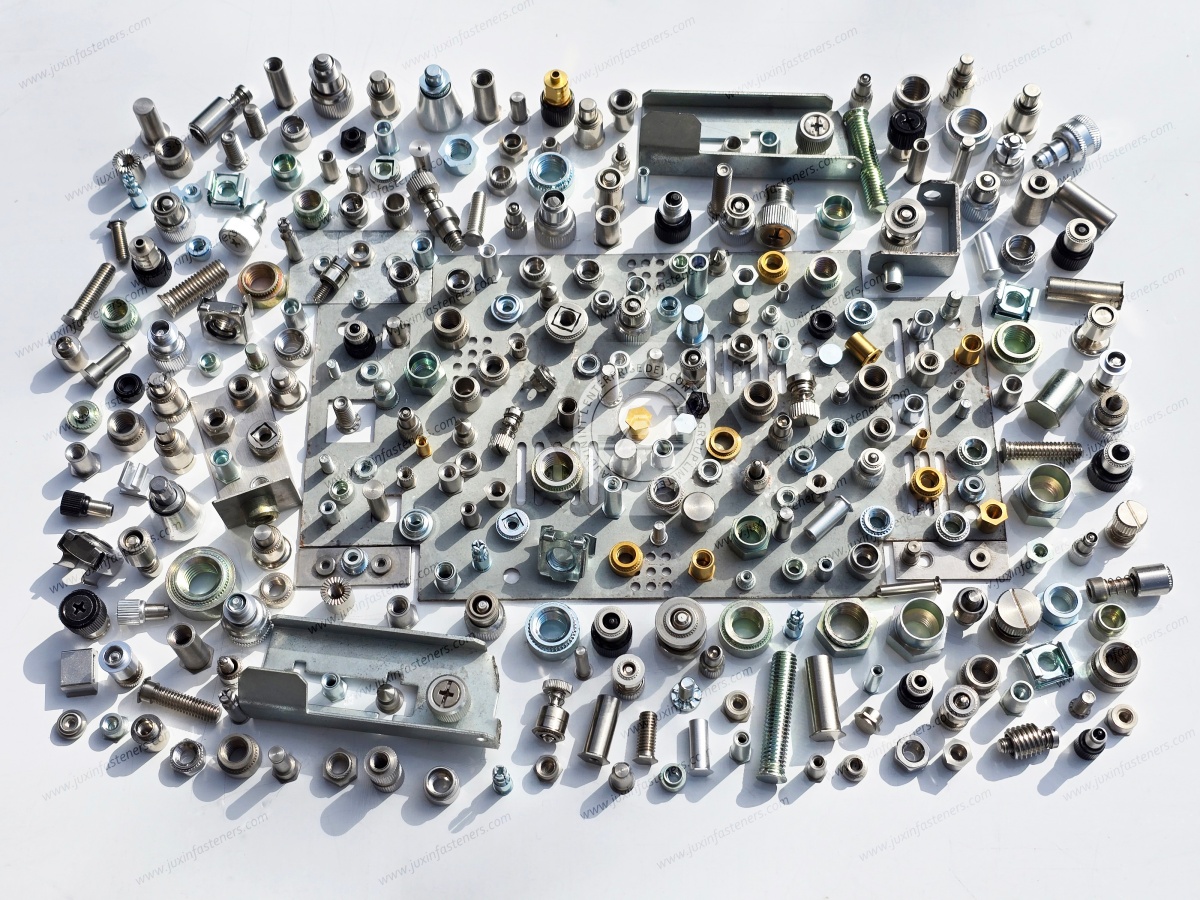
Before selecting a fastener, define the assembly.
Important questions include:
What materials are being joined?
What is the sheet thickness?
Is access available from one side or both sides?
Is welding permitted?
Is a permanent or removable joint required?
Is an internal thread required?
Will the joint need future service or disassembly?
Is the fastener installed before or after painting or coating?
Is the production process manual or automated?
What loads act on the joint?
Is vibration important?
Is corrosion or galvanic interaction a concern?
Will the joint experience thermal cycling?
Does the component require electrical isolation?
What installation and validation processes are available?
These questions should be answered before choosing the part number.
The same thread size can represent completely different joint architectures.
An M6 weld nut, M6 rivet nut and M6 self-clinching nut may all provide an M6 internal thread, but they are not interchangeable fastening technologies.
A useful first-stage selection framework is:
| Automotive Assembly Requirement | Fastening Technology to Evaluate | Key Engineering Variables |
|---|---|---|
| Threaded attachment in weldable sheet | Weld nut | Sheet material, thickness, projection geometry, welding process |
| Threaded stud integrated into weldable structure | Weld stud | Parent material, welding method, stud geometry, alignment |
| Thread required with one-sided installation | Blind rivet nut | Grip range, hole geometry, body style, pull-out, spin-out |
| Permanent blind sheet connection | Blind rivet | Grip range, joint stack, hole quality, shear, tensile |
| Thread required in suitable sheet without welding | Self-clinching nut | Sheet material, hardness, thickness, hole geometry |
| Stud or standoff required in suitable sheet | Self-clinching stud / standoff | Sheet properties, edge distance, installation process |
| Reusable thread required in thermoplastic | Threaded insert | Polymer, boss geometry, insert geometry, installation |
| Lightweight trim or cable retention | Plastic clip / nylon fastener | Panel thickness, hole geometry, retention, temperature |
| Threaded joint requiring resistance to rotational loosening | Lock nut / engineered locking system | Preload, prevailing torque, vibration, temperature |
| Standard hardware cannot meet packaging or assembly requirements | Custom automotive fastener | Drawing, material, geometry, process, validation |
This is a technology-screening framework, not a final design specification.
The selected fastening system must still be validated against the actual automotive assembly and applicable OEM requirements.
Blind rivet nuts are useful where an internal thread is required but rear-side access is unavailable or welding is undesirable.
They can be considered for selected:
Sheet-metal enclosures
Brackets
Interior structures
Electrical equipment
Equipment housings
EV-related enclosures
Serviceable panels
Auxiliary assemblies
Available configurations can include:
Round-body rivet nuts
Knurled-body rivet nuts
Hex-body rivet nuts
Open-end rivet nuts
Closed-end rivet nuts
Different flange configurations
Drawing-based rivet nuts
One of the most important rivet nut parameters is grip range.
The installed deformation of the rivet nut must correspond to the thickness of the parent material.
Selecting the correct thread but the wrong grip range can produce an unreliable installation.
For automotive sourcing, the RFQ should therefore identify actual sheet thickness rather than specifying only:
"M6 rivet nut."
Hole size, roundness and condition influence rivet nut installation.
An oversized or poorly controlled hole can reduce retention.
The relationship between body geometry and hole geometry also matters.
For example, a hex-body rivet nut can provide a positive anti-rotation interface when installed into a correctly designed matching hole,
while knurled and round-body designs rely on different retention mechanisms.
Rivet nut performance is often oversimplified into a single "strength" value.
Two different failure modes should be distinguished:
Pull-Out — axial removal of the installed rivet nut from the parent material.
Spin-Out — rotation of the rivet nut within the parent material.
Therefore:
Pull-Out ≠ Spin-Out.
And:
Spin-Out ≠ screw self-loosening.
The first two relate to retention of the rivet nut in the parent material. Screw loosening is a different joint behavior.
Rivet nuts depend on controlled installation deformation.
Increasing setting force beyond the appropriate process window can damage the fastener or parent material.
More setting force ≠ better installation.
Production validation should consider the actual rivet nut, sheet, hole and installation tool together.
Not automatically.
A closed-end rivet nut prevents an open threaded passage through the end of the body, but this alone does not establish a waterproof assembly.
Closed-end rivet nut ≠ automatically waterproof or IP-rated joint.
If sealing is required in an automotive enclosure, engineers should evaluate the complete sealing interface and validate the assembled system.
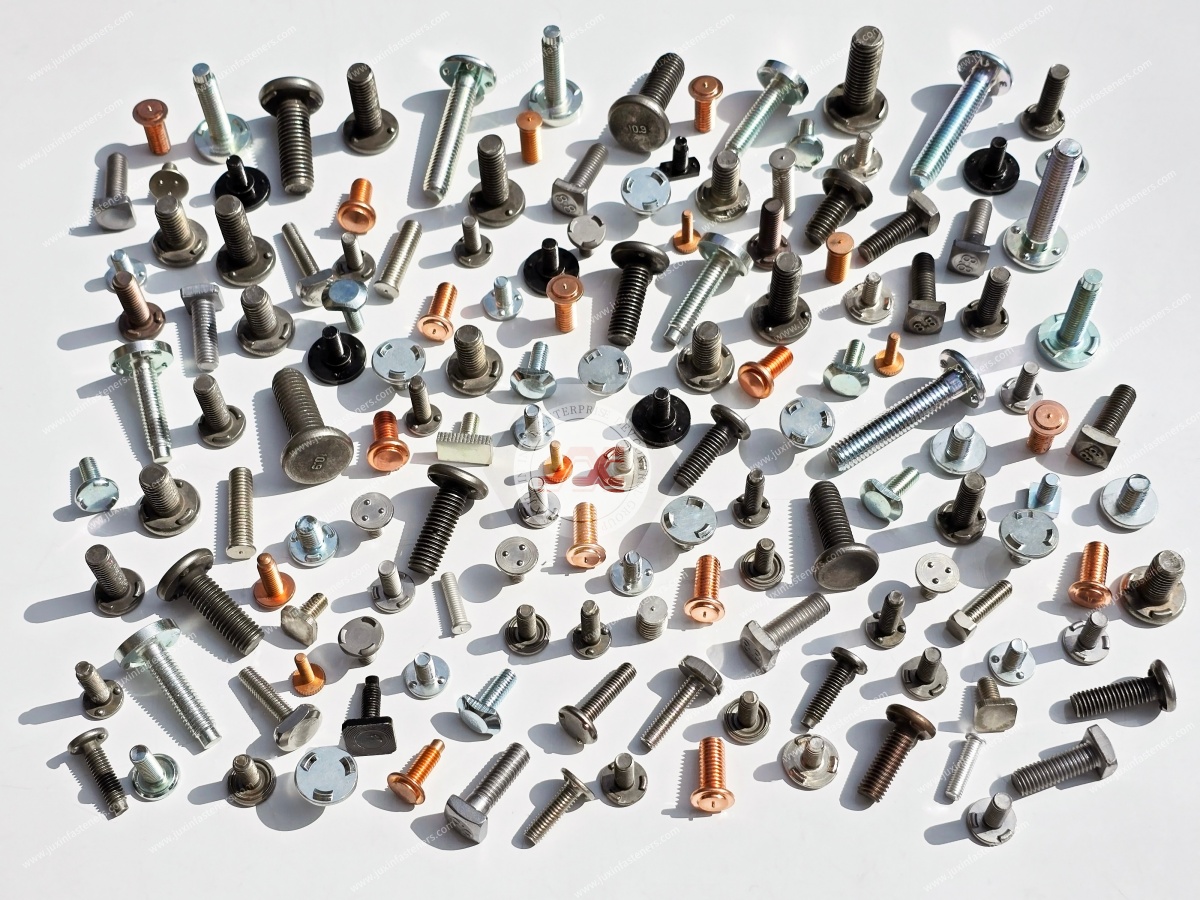
Weld nuts remain an important fastening technology where a permanent threaded attachment must be integrated into weldable sheet-metal structures.
JUXIN FASTENERS supplies selected weld nut families including:
DIN 929 hex weld nuts
DIN 928 square weld nuts
Projection weld nuts
Hex flange weld nuts
Drawing-based automotive weld nuts
Depending on the vehicle design and OEM requirements, weld nuts may be evaluated for selected body structures, brackets, supports and other welded assemblies.
Weld nut performance depends on more than nut material and thread size.
Relevant variables include:
Parent sheet material
Sheet thickness
Projection geometry
Nut material
Surface condition
Welding current
Welding time
Electrode force
Electrode condition
Tooling
Alignment
Thread protection
Production consistency
This leads to an important engineering principle:
Strong nut ≠ strong welded joint.
A weld nut can satisfy its dimensional and material requirements while the finished assembly still performs poorly because the welding process is unsuitable.
Projection weld nuts use controlled projection geometry to concentrate the welding process at defined locations.
These projections should not be treated as cosmetic features.
Projection geometry is part of the welding process.
If a second-source weld nut has similar overall dimensions but different projection height, shape or consistency, the established welding window may be affected.
That means supplier substitution should consider welding behavior, not merely thread size and outer dimensions.
Increasing welding current or time is not a universal solution to weak weld performance.
Excessive energy can create other process problems.
Therefore:
More welding energy ≠ better weld.
The welding process should be developed around the specific nut, sheet material, surface condition and production equipment.
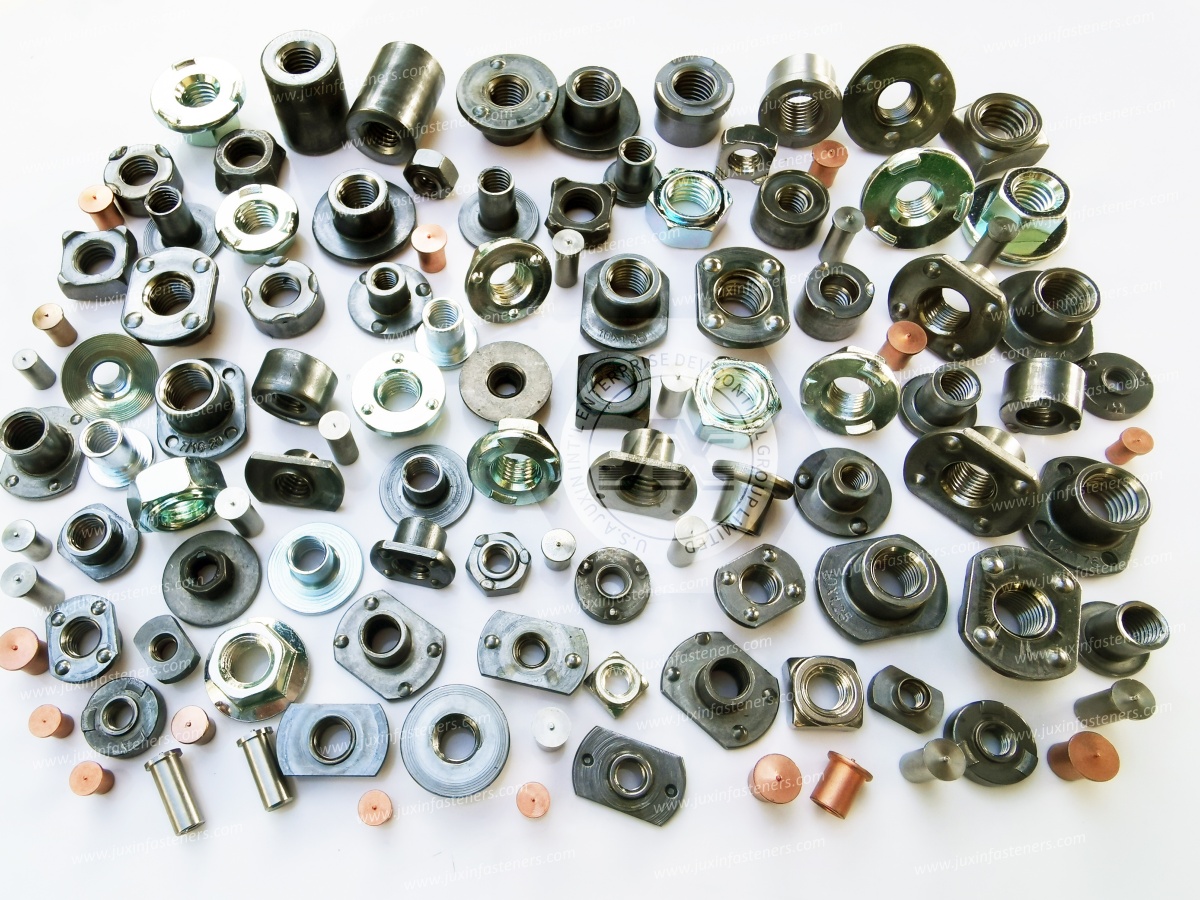
Weld studs provide another method of integrating threaded or functional attachment points into selected automotive structures.
Depending on project requirements, products can include:
Threaded weld studs
CD weld studs
Projection weld studs
Other drawing-based weld studs
Selection should consider:
Parent material
Stud geometry
Welding process
Surface condition
Required alignment
Load direction
Installation sequence
Subsequent assembly requirements
Weld strength ≠ assembly alignment.
A mechanically sound weld does not automatically ensure that the stud position and angular alignment satisfy downstream assembly requirements.
For fixtures, brackets or multi-fastener interfaces, positional accuracy may be as important as weld strength.
Self-clinching fasteners can provide permanent threaded features in suitable sheet materials without welding.
Products can include:
Self-clinching nuts
Self-clinching studs
Self-clinching standoffs
Their installation depends on controlled displacement of the sheet material into the retention features of the fastener.
Therefore:
Self-clinching is a controlled material-flow process.
Important variables include:
Sheet material
Sheet hardness
Sheet thickness
Hole geometry
Edge distance
Fastener geometry
Tooling
Press conditions
Push-out performance
Torque-out performance
Two sheets with the same nominal thickness may behave differently during self-clinching installation if their materials or hardness differ.
Therefore:
Same sheet thickness ≠ same clinching behavior.
The actual parent material should be included in the engineering review.
If the sheet is unsuitable or the hole is incorrect, additional installation force does not correct the basic incompatibility.
More press force ≠ better installation.
Excessive force may deform the sheet or damage the assembly.
Blind rivets can provide permanent sheet assembly where rear-side access is limited.
They may be evaluated for selected:
Brackets
Panels
Enclosures
Equipment structures
Interior assemblies
Non-threaded sheet connections
Important variables include:
Rivet diameter
Grip range
Joint stack
Hole diameter
Hole roundness
Burr condition
Parent material
Head style
Rivet material
Mandrel material
Shear requirement
Tensile requirement
Edge distance
Installation tooling
A common mistake is to select a blind rivet by diameter while ignoring the total thickness being joined.
Correct diameter + wrong grip range = wrong rivet.
The complete joint stack must fall within the appropriate grip range.
Blind rivet performance should also reflect the direction of load.
Shear ≠ tensile.
A rivet suitable for one loading condition should not automatically be assumed to provide equivalent performance in another.
Likewise:
Rivet strength ≠ installed joint strength.
The parent sheets, hole condition and edge distance contribute to the final assembly behavior.
Automotive threaded joints may use higher-strength bolts or nuts where the engineering load requires them.
However, a higher property class does not automatically solve a joint-design problem.
Higher strength ≠ automatically better joint.
A bolted joint depends on:
Fastener properties
Mating thread
Engagement
Preload
Clamp length
Joint stiffness
Friction
Bearing surfaces
Surface treatment
Tightening method
External loading
Temperature
Vibration
A stronger bolt cannot compensate indefinitely for weak mating threads, inadequate engagement or an unsuitable joint architecture.
One of the most important principles in automotive threaded assembly is:
Torque ≠ Preload.
Tightening torque is the installation input.
Preload is the tensile force established in the fastener.
Friction at the threads and bearing surfaces has a major influence on the relationship between them.
Therefore:
Same torque + different friction ≠ same preload.
A change in coating, lubricant, topcoat, washer or mating surface can alter the resulting clamp load even when the assembly tool uses the same torque setting.
This is especially important when qualifying an alternative supplier or surface treatment.
Lock nuts may be considered where resistance to rotational loosening is required.
JUXIN FASTENERS supplies selected:
Nylon insert lock nuts
All-metal lock nuts where applicable
Flange lock nuts
Drawing-based locking nuts
But:
Prevailing torque ≠ preload.
Prevailing torque is associated with the locking feature.
Preload is the tensile force that produces clamp load.
A locking feature therefore does not replace correct tightening.
Likewise:
Stainless steel ≠ anti-loosening feature.
Material selection and loosening resistance are separate engineering decisions.
Not every automotive attachment needs a metallic threaded fastener.
Plastic clips and nylon fastening components can be useful in selected:
Interior trim
Door panels
Cable routing
Wire management
Electronic assemblies
Covers
Lightweight panels
Non-structural retention applications
JUXIN FASTENERS supplies selected:
Push rivets
Nylon rivets
Plastic clips
Panel fasteners
Retainers
Plastic screws
Plastic nuts
Plastic washers
Other drawing-based plastic fastening components
Plastic fasteners can support lightweight and electrically isolating assemblies, but polymer behavior must be considered.
Relevant variables can include:
Polymer type
Material grade
Moisture
Temperature
Creep
Stress relaxation
Chemical exposure
Panel thickness
Hole geometry
Installation strain
Removal requirements
Plastic fastener ≠ metal fastener with lower weight.
The material behaves differently and should be evaluated accordingly.
A plastic clip may be dimensionally correct but still provide inconsistent retention if the panel hole or thickness varies outside the intended range.
For clip and push-rivet applications, engineering should consider:
Panel thickness
Hole diameter
Hole shape
Edge condition
Clip leg geometry
Insertion force
Retention force
Removal requirements
Temperature
Polymer aging
This is especially important when the same clip is expected to work across multiple panels or material combinations.
Threaded inserts can provide reusable internal threads in suitable thermoplastic components.
Potential applications can include selected:
Electronic housings
Interior modules
Control units
Covers
Polymer brackets
Other serviceable plastic components
Important variables include:
Polymer type and grade
Reinforcement
Boss geometry
Hole diameter
Hole depth
Insert geometry
Installation process
Mating screw
Pull-out requirement
Torque-out requirement
Temperature
Moisture
Creep
Strong insert ≠ strong plastic joint.
The polymer boss can become the limiting element.
The insert and surrounding plastic should therefore be treated as a fastening system rather than two independent components.
High-strength and advanced high-strength steels allow vehicle engineers to achieve specific structural objectives with different material distributions and sheet designs.
Their use does not automatically dictate one fastening method.
Selection depends on:
Steel grade
Sheet thickness
Coating
Joint location
Load
Formability
Welding process
Hole-making process
Required serviceability
Production equipment
Potential fastening technologies may include weld fasteners, mechanical fasteners or other joining systems depending on the actual OEM design.
The correct principle is not:
"High-strength steel means mechanical fastening."
It is:
The material and manufacturing process must be evaluated together.
Coated steels introduce another engineering variable: the surface system.
The fastening process should consider whether installation, welding or local deformation affects the coating.
Depending on the assembly, engineers may need to evaluate:
Coating condition
Contact surfaces
Weld process compatibility
Fastener coating
Galvanic interaction
Local coating damage
Moisture exposure
Corrosion-protection strategy
The fastener coating and parent-sheet coating should therefore be considered as part of the complete joint.
Aluminum is used in selected automotive structures and components for weight reduction and other engineering objectives.
But replacing steel with aluminum changes more than density.
Engineers may need to reconsider:
Parent material strength
Sheet thickness
Bearing behavior
Thread strength
Fastener material
Galvanic corrosion
Thermal expansion
Hole deformation
Joining process
Repair and service requirements
Potential fastening technologies can include rivet nuts, blind rivets, threaded fasteners, inserts and other engineered joining methods depending on the design.
An aluminum parent structure does not automatically require an aluminum fastener.
Likewise, an aluminum fastener is not automatically the best choice for lightweighting.
Fastener material should be selected based on the mechanical, corrosion, assembly and service requirements of the joint.
Mixed-material automotive structures can place dissimilar metals in electrical contact.
When moisture or another electrolyte is present, galvanic interaction may become relevant.
Risk depends on factors including:
Material combination
Surface area relationship
Coatings
Electrical contact
Environmental exposure
Joint geometry
Drainage
Barrier layers
Coating damage
Therefore:
Corrosion-resistant fastener ≠ corrosion-resistant assembly.
A stainless steel fastener, for example, should not automatically be assumed to solve corrosion concerns when used with another metal.
The complete material combination must be evaluated.
Automotive fastener coatings may influence:
Corrosion behavior
Friction
Torque-preload relationship
Thread fit
Coating thickness
Installation
Appearance
Mating-material compatibility
For relevant high-strength steel components, process selection may also require consideration of hydrogen embrittlement risk.
This means:
Coating name ≠ complete coating specification.
A specification such as "black" or "zinc" may not define enough information for a functionally controlled automotive fastener.
And:
Salt spray hours ≠ field service life.
Salt-spray testing can provide controlled comparative data, but actual vehicle service depends on environmental exposure, coating damage, contaminants, joint design and other factors.
Body-in-white manufacturing uses highly controlled joining and automation processes.
Where weld nuts or studs are used, engineers and production teams should consider:
Fastener feeding
Orientation
Fixture location
Welding access
Electrode access
Projection consistency
Positional tolerance
Thread protection
Spatter
Downstream assembly
Inspection
A fastener that meets its isolated drawing may still create production problems if it feeds inconsistently or shifts during the joining process.
For high-volume manufacturing:
Component capability and process capability must work together.
EV battery-related structures combine mechanical, electrical and thermal requirements.
Depending on the specific non-cell assembly, fastening technologies may be used in selected:
Battery enclosures
Covers
Brackets
Thermal-management equipment
Electrical modules
Cable-management systems
Serviceable equipment
Auxiliary sheet-metal structures
Potential products can include:
Rivet nuts
Self-clinching fasteners
Threaded inserts
Blind rivets
Custom screws
Lock nuts
Plastic fasteners
Fastener selection should consider the specific location rather than treating the entire battery system as one application.
Relevant variables may include:
Material combination
Service access
Thermal cycling
Corrosion
Electrical isolation
Clamp retention
Vibration
Sealing interfaces
Installation sequence
A mechanical fastener alone does not establish electrical, thermal or sealing compliance for the battery assembly.
Interior systems have different requirements from structural vehicle joints.
Applications may include selected:
Instrument-panel assemblies
Door trim
Interior panels
Cable routing
Covers
Electronic modules
Decorative components
Potential fastening products include:
Plastic clips
Push rivets
Nylon fasteners
Self-tapping screws
Threaded inserts
Precision screws
Drawing-based retainers
Typical engineering concerns may include:
Installation force
Retention
Buzz, squeak and rattle considerations
Service removal
Panel damage
Temperature
Polymer aging
Appearance
The "strongest" fastener is not necessarily the best interior fastener.
The correct product must provide sufficient retention without creating unnecessary assembly difficulty or panel damage.
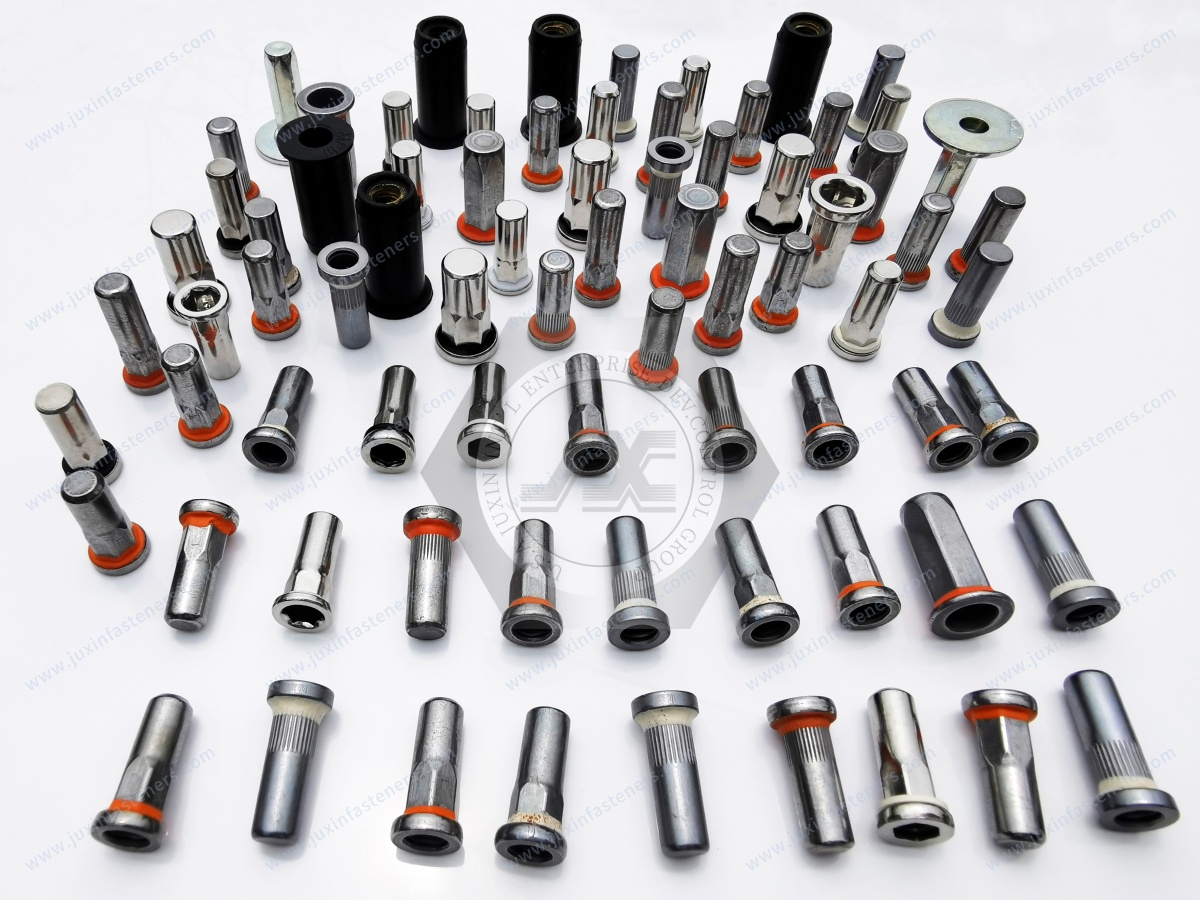
Modern vehicles contain increasing numbers of electronic modules, sensors, controllers, cable systems and power-electronic components.
Fastening solutions can include selected:
Plastic clips
Cable retainers
PCB supports
Plastic spacers
Threaded inserts
Rivet nuts
Self-clinching fasteners
Precision screws
Mechanical fastening and electrical function should be treated separately.
Conductive fastener ≠ qualified electrical connection.
Likewise:
Plastic fastener ≠ system electrical compliance.
Electrical, insulation and grounding requirements must be established and validated at system level.
A fastener can be technically suitable after installation but still be poorly suited to an automated production line.
For automated assembly, consider:
Part orientation
Feeding
Nesting
Tangling
Pick-up stability
Tool access
Drive engagement
Installation cycle time
Presence detection
Process monitoring
Packaging orientation
This creates an important OEM sourcing principle:
Installed performance is only one part of production performance.
A fastener that saves a small amount in piece price but creates frequent feeding interruptions can increase total manufacturing cost.
Procurement teams often compare fasteners by unit price.
For automotive production, a broader model is more useful:
Total Installed Cost = Part Price + Installation + Tooling + Inspection + Rework + Scrap + Downtime + Logistics + Supply Risk
For example, a lower-cost fastener may become more expensive if it:
Requires slower installation
Feeds poorly
Produces variable clamp behavior
Requires extra inspection
Damages coated sheet
Creates assembly rework
Causes line interruptions
Has unstable supply
This is why engineering and procurement should evaluate the fastening system together.
These three technologies may all create an internal thread in sheet metal, but they solve different manufacturing problems.
| Decision Factor | Rivet Nut | Weld Nut | Self-Clinching Nut |
|---|---|---|---|
| One-sided installation | Yes | Process dependent | Press access required |
| Welding required | No | Yes | No |
| Suitable parent material | Depends on design | Weldable material required | Suitable clinching sheet required |
| Key thickness variable | Grip range | Sheet/weld process | Minimum suitable sheet thickness |
| Primary installation process | Pull-setting | Welding | Press installation |
| Important retention modes | Pull-out / spin-out | Weld integrity | Push-out / torque-out |
| Heat input to sheet | No welding heat | Yes | No welding heat |
| Hole geometry importance | High | Depends on design | High |
| Production validation | Setting + installed joint | Welding process + joint | Press process + installed retention |
There is no universally superior option.
The correct choice depends on the vehicle architecture and production process.
A standard fastener should normally be preferred when it satisfies the functional and production requirements.
Customization becomes more useful when the assembly has a genuine constraint, such as:
Restricted packaging space
Special head geometry
Unique anti-rotation requirement
Captive assembly
Special shoulder
Automated feeding requirement
Non-standard material stack
Integration of multiple components
Application-specific sealing interface
Special installation method
Customization should solve a measurable assembly problem.
It should not be introduced merely to make the component unique.
When a vehicle fastener fails, the visible fastener is not always the root cause.
Potential contributors can include:
Incorrect fastener selection
Wrong grip range
Inadequate thread engagement
Insufficient preload
Excessive preload
Friction variation
Incorrect installation
Hole variation
Parent material deformation
Welding variation
Coating damage
Galvanic interaction
Fatigue
Vibration
Creep in polymer components
Assembly misalignment
Failure analysis should therefore examine the complete joint and production history rather than simply replacing the failed part with a stronger one.
Automotive procurement teams often develop alternative suppliers for capacity, continuity, localization or commercial reasons.
But:
Same dimensions ≠ functional equivalence.
For second-source qualification, compare the characteristics that control actual assembly performance.
Depending on the fastener, this can include:
Controlled drawing revision
Material
Mechanical properties
Heat treatment
Thread
Critical geometry
Surface treatment
Coating thickness
Friction
Installation behavior
Functional testing
Packaging
Assembly validation
Compare:
Grip range
Body geometry
Hole interface
Setting behavior
Pull-out
Spin-out
Compare:
Projection geometry
Material
Surface condition
Welding behavior
Weld integrity
Thread condition after welding
Compare:
Retention geometry
Sheet compatibility
Installation behavior
Push-out
Torque-out
Compare:
Insert geometry
Installation process
Polymer interaction
Pull-out
Torque-out
The correct qualification test should reproduce the function the production assembly actually depends on.
For an automotive OEM, Tier supplier or supplier-development project, provide as much of the following information as available:
2D drawing
3D model
Part number
Drawing revision
Application location
Parent material
Mating component
Thread specification
Mechanical requirements
Surface treatment
Critical dimensions
Tolerances
Load requirements
Installation method
Operating environment
Annual volume
Sample quantity
Inspection requirements
Validation requirements
Packaging requirements
Production schedule
Also provide:
Sheet material
Sheet thickness
Hole size
Grip range
Body style
Installation method
Also provide:
Parent material
Sheet thickness
Welding process
Relevant weld geometry
Production conditions where available
Also provide:
Sheet material
Sheet hardness where known
Sheet thickness
Hole geometry
Edge distance constraints
Also provide:
Panel material
Panel thickness
Hole size
Retention requirement
Installation requirement
Temperature/environmental conditions
A detailed RFQ reduces assumptions and allows suppliers to quote against the actual assembly requirement rather than merely matching a nominal part description.
Depending on project risk and complexity, an automotive fastening project may follow:
Application Requirement → Fastener Technology Selection → Drawing Review → Manufacturing Review → Quotation → Sample
→ Installation Trial → Functional Validation → Supplier Approval → Production Supply
Not every component requires the same qualification depth.
An interior plastic clip and a welded structural attachment do not carry the same engineering risk.
Validation should therefore follow the actual application rather than applying one generic test plan to every fastener.
This page should function as the automotive sheet-metal fastening hub rather than duplicate the detailed product pages.
Recommended internal links include:
Automotive Rivet Nuts → detailed grip-range, body-style and installation resources
Weld Nuts → DIN 929, DIN 928, projection weld nut and automotive weld-fastener resources
Weld Studs → stud selection and welding-process resources
Blind Rivets → grip-range and blind-joint engineering resources
Self-Clinching Fasteners → sheet compatibility, push-out and torque-out resources
Threaded Inserts for Plastic → insert selection and plastic boss design resources
Plastic & Nylon Fasteners → polymer selection and automotive application resources
Lock Nuts → prevailing torque and vibration-loosening resources
Fastener Coatings → corrosion and friction engineering resources
Fastener Failure Modes → joint failure analysis resources
Custom Fastener Manufacturing → cold heading, CNC machining and DFM resources
Industrial Fastener Solutions → cross-technology selection guide
Use the existing indexed JUXIN FASTENERS URL when implementing these internal links.
If a removable threaded connection is required, a blind rivet nut may be evaluated. If a permanent non-threaded connection is required,
a blind rivet may be appropriate. The final selection depends on sheet material, thickness, hole geometry, load and installation requirements.
A rivet nut is mechanically installed and does not require welding. A weld nut is integrated into a weldable structure through a controlled welding process.
The correct choice depends on parent material, production process, access, required performance and vehicle architecture.
There is no universal answer. Their installed performance depends on different mechanisms and parent-material conditions.
Rivet nuts should be evaluated for pull-out and spin-out, while self-clinching fasteners may be evaluated for push-out and torque-out. Compare the installed joint under representative conditions.
Not automatically. Closed-end geometry removes the open passage through the body, but sealing depends on the complete interface and must be validated at assembly level.
Possibly, but coating substitution can affect corrosion behavior, thickness, thread fit and friction.
If the joint uses torque-controlled tightening, changed friction can alter preload. Engineering review may therefore be required.
No. Loosening depends on joint design, preload, stiffness, transverse movement, friction, mating surfaces and locking strategy.
A higher property class alone does not solve these issues.
No. Corrosion depends on the complete material combination and environment.
Galvanic interaction can be relevant when dissimilar metals are electrically connected in the presence of an electrolyte.
At minimum, provide thread, sheet material, sheet thickness or required grip range, hole size, body style, surface treatment and expected annual volume.
For engineered applications, include installation and functional requirements as well.
Begin with the controlled drawing and material requirements, then compare manufacturing characteristics that affect function.
Validate installation and assembly performance where the fastener depends on welding, clinching, riveting, friction or interaction with the parent material.
Automotive fastening performance depends on the relationship between:
Fastener + Parent Material + Geometry + Surface + Installation Process + Joint Design + Operating Environment
Changing any one of these can change assembly performance.
For that reason, JUXIN FASTENERS approaches automotive fastening projects from both an engineering and sourcing perspective.
If your team is developing a new vehicle assembly, EV component, sheet-metal enclosure, second source or drawing-based automotive fastener, send the available project information for review.
For an effective technical and commercial evaluation, provide where possible:
2D Drawing + 3D Model + Part / Revision + Application + Parent Material + Mating Component + Load Requirement + Surface Treatment + Environment + Annual Volume
Depending on the fastening technology, also include:
Sheet Thickness + Hole Size + Grip Range + Thread + Property Class + Welding Process + Installation Method + Validation Requirements
This provides a stronger basis for moving from fastener selection to quotation, sample evaluation, supplier qualification and production sourcing.
JUXIN FASTENERS
Automotive Fasteners | EV Fasteners | Rivet Nuts | Weld Nuts | Weld Studs | Custom Fastening Solutions
Email: info@juxinfasteners.com
Website: www.juxinfasteners.com
Contact Us
Tel.:
+86 020 8621 0320
+86 020 3121 6067
E-mail:
Technical Support:
Navigation
SEND INQUIREY



