
Call Us
+86 136 6007 9809
Call Us
+86 136 6007 9809

Jul. 05, 2022
Custom fastener manufacturing begins with a question that is often more important than the machine itself:
What manufacturing process is appropriate for this geometry, material, tolerance, function and production volume?
A custom screw that can be cold headed efficiently at production volume may become unnecessarily expensive if it is fully CNC machined.
Conversely, a complex precision component may not be a practical cold-heading candidate simply because it resembles a conventional fastener.
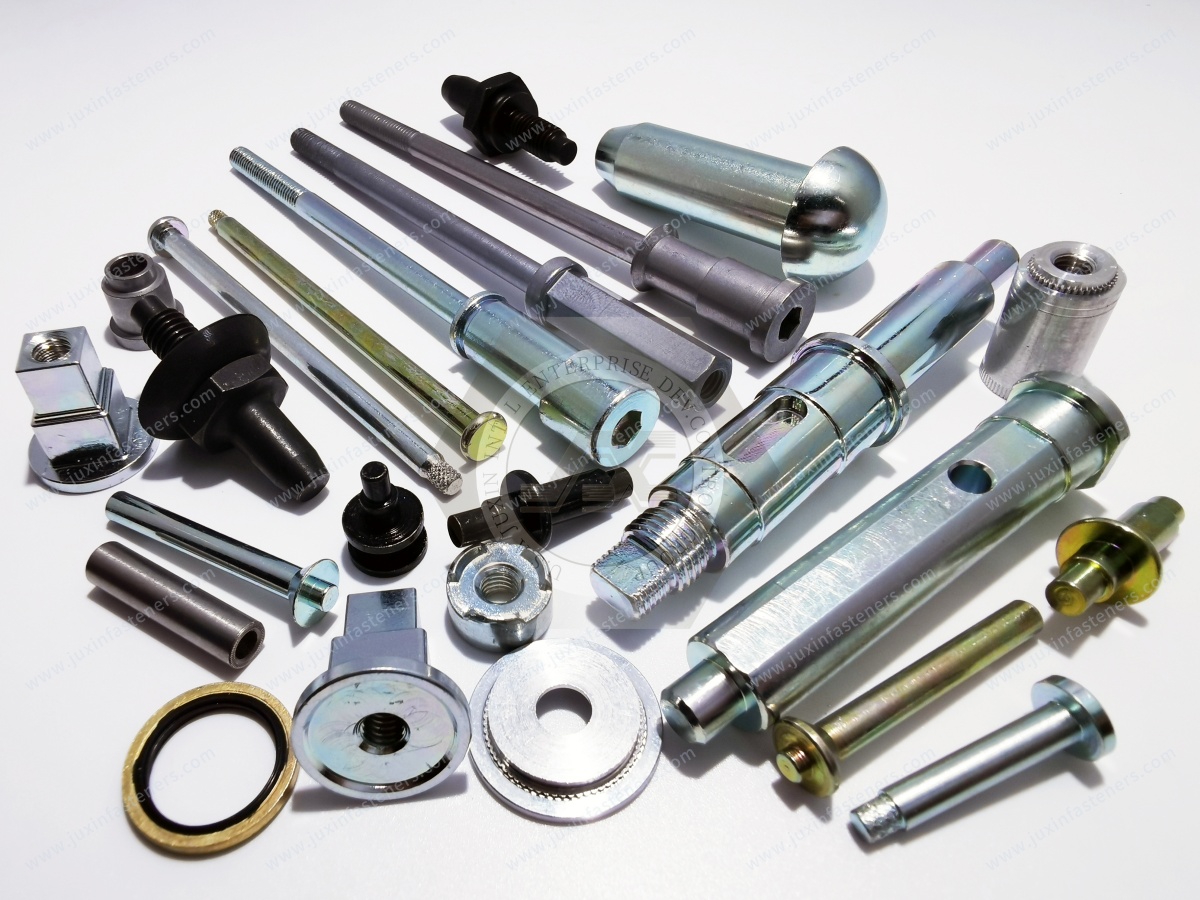
JUXIN FASTENERS supports OEM, Tier-1 and Tier-2 customers with standard and drawing-based industrial fasteners, including custom screws, custom bolts, nuts, rivets,
weld fasteners, blind fastening components, threaded parts and selected CNC machined precision components.
Our manufacturing resources include cold-heading equipment, precision turning and CNC automatic machining systems, together with supporting secondary-operation and inspection capabilities.
The objective is not to force every drawing into one manufacturing process.
The objective is to identify a manufacturing route that can repeatedly produce the required function at an appropriate combination of quality, production rate, tooling investment and total cost.
When an OEM sends a drawing for quotation, the first technical decision should not be the price.
It should be the manufacturing route.
A useful manufacturability review considers:
Part geometry
Material
Thread specification
Head geometry
Diameter-to-length relationship
Shoulders and steps
Tolerances
Surface-finish requirements
Mechanical-property requirements
Heat treatment where applicable
Surface treatment
Annual volume
Sample quantity
Tooling requirements
Functional characteristics
Mating components
Installation method
Inspection requirements
These variables interact.
A geometry that is easy to machine may be difficult to form.
A geometry that requires tooling investment may become highly economical at production volume.
A tolerance that is easy on one feature may become expensive when applied unnecessarily to every dimension.
For this reason:
Drawing review should separate functional requirements from manufacturing assumptions.
Cold heading and CNC machining are not competing answers to every custom-fastener project.
They solve different manufacturing problems.
| Manufacturing Factor | Cold Heading | CNC Machining |
|---|---|---|
| Production volume | Particularly attractive for repeat production and higher volumes | Suitable for prototypes, lower volumes and selected production parts |
| Tooling | Dedicated tooling is commonly required | Usually less dedicated forming tooling |
| Material utilization | Generally efficient | Material is removed as chips |
| Fastener-like geometry | Often highly suitable | Possible, but may be less economical at volume |
| Complex machined features | May require secondary operations | Often more flexible |
| Design changes | Tooling implications may be significant | Often easier during early development |
| Production rate | Potentially high after process development | Generally lower per machine for equivalent simple fastener geometry |
| Prototype flexibility | May be limited by tooling | Often useful for early samples |
| Cost behavior | Tooling cost can be distributed across production volume | Unit machining time remains an important cost driver |
The correct choice depends on the drawing.
In some projects, the most appropriate solution is neither purely cold headed nor purely machined.
A hybrid manufacturing route may use forming for the basic geometry and secondary machining for features that cannot be created efficiently in the primary operation.
Cold heading is widely used to manufacture screws, bolts, rivets, studs and other fastener-like components.
Rather than cutting the entire part from bar stock, the process forms material through controlled deformation.
For suitable geometry and material, this can provide important production advantages:
Efficient material utilization
High production rates
Repeatable formed geometry
Reduced machining of suitable features
Economical production at appropriate volumes
JUXIN FASTENERS uses cold-heading capabilities for selected rivets, screws and custom fastening components.
However, cold heading should not be described simply as "better" than machining.
Its suitability depends on whether the material and geometry can be formed reliably.
Before committing a custom fastener to cold heading, engineers should review questions such as:
Can the required material be formed using the proposed process?
Can the head geometry be formed without unacceptable material-flow problems?
Are diameter transitions realistic?
Are sharp transitions unnecessarily difficult?
Which features can be formed and which require secondary machining?
Does the drawing require tolerances tighter than the forming process reasonably needs to hold?
Is the expected production volume sufficient to justify tooling?
Will later heat treatment or coating affect dimensions or threads?
This review is particularly valuable before tooling is finalized.
A small drawing change during DFM can sometimes eliminate a secondary operation or simplify tooling throughout the life of the program.
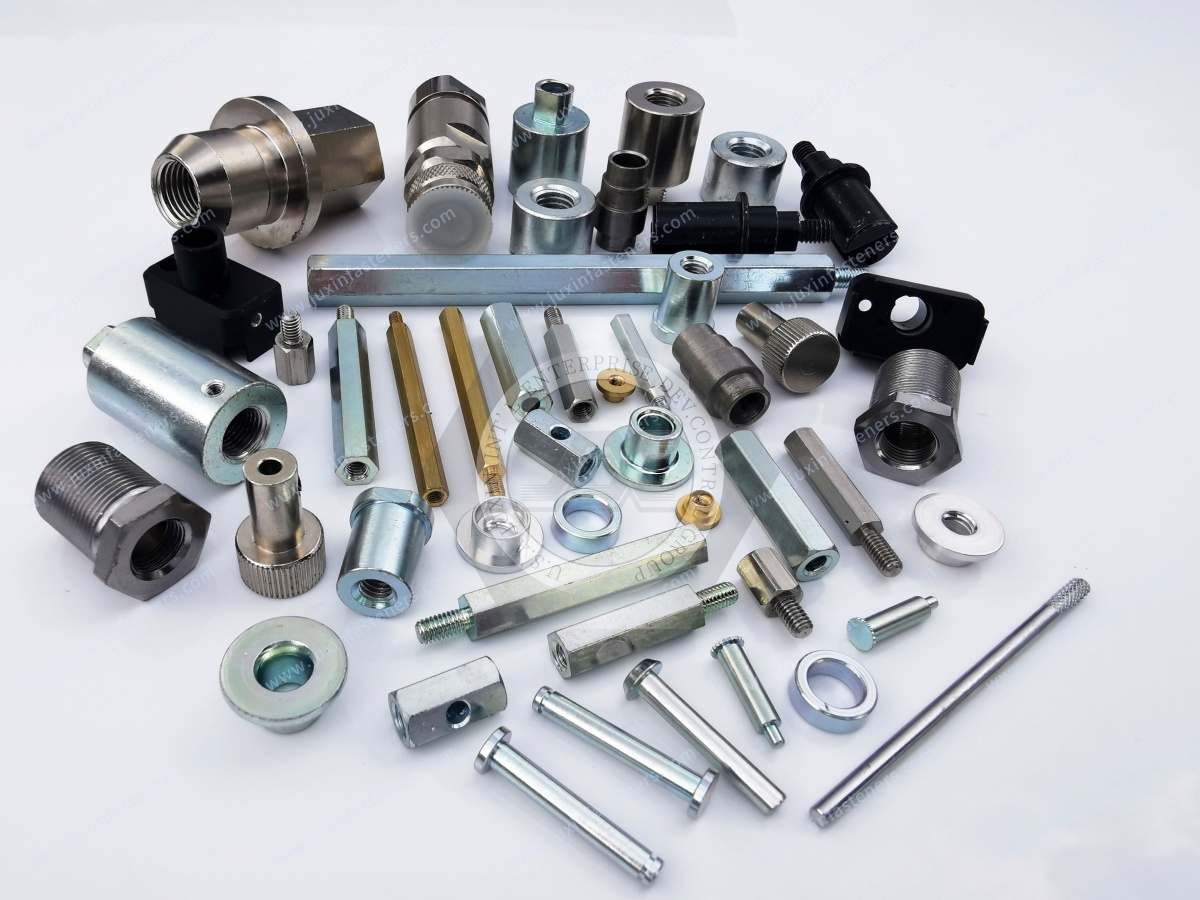
CNC machining is valuable when geometry, tolerances, quantities or development conditions do not favor dedicated forming.
JUXIN FASTENERS uses CNC and precision machining for selected:
Non-standard fasteners
Precision threaded components
Pins
Stepped components
Special nuts
Special studs
Drawing-based mechanical parts
OEM precision components
CNC machining can be particularly useful when:
Production quantity is relatively limited
Geometry is complex
Several diameters or shoulders are required
Precision features must be machined
Design revisions are still possible
Dedicated forming tooling would not yet be economical
The component is fundamentally a precision machined part rather than a conventional formed fastener
Machining flexibility, however, should not be interpreted as unlimited manufacturability.
Tight tolerances, difficult materials, deep features, thread requirements, surface finish, tool access and inspection requirements can still have a major effect on cost.
One of the most useful cost-engineering concepts in custom fastener manufacturing is to avoid assuming that every feature must be produced by the same process.
Consider a component with:
A conventional fastener head
A long cylindrical body
A special shoulder
A precision groove
A threaded end
Depending on geometry and volume, it may be possible to form the basic blank efficiently and machine only the critical special features.
This creates a different cost structure from machining the complete component from bar stock.
The manufacturing question becomes:
Which features should be formed, which should be machined, and which should be created in a secondary operation?
This is where drawing-based DFM becomes commercially important.
A fastener drawing may appear simple while requiring several operations after the primary forming or machining process.
Depending on the part, secondary processes can include:
Thread rolling or thread cutting
Drilling
Slotting
Grooving
Point forming
Trimming
Deburring
Heat treatment
Cleaning
Surface treatment
Sorting
Assembly
Functional inspection
A buyer comparing only raw-part prices can therefore miss the real manufacturing cost.
For custom fasteners:
Simple geometry does not always mean a simple process route.
A small secondary feature can sometimes add more cost than a larger primary dimension because it introduces another setup, tool, inspection point or outside process.
Threads are among the most functionally important features of many industrial fasteners.
The drawing should clearly define the required thread system and applicable specification.
Depending on the product and manufacturing route, threads may be produced by methods such as thread rolling or cutting.
Thread rolling forms the thread profile through material displacement rather than material removal.
For suitable materials and geometries, it is widely used in production fasteners.
Thread cutting can be appropriate for machined components, selected materials, low-volume parts or geometries that do not suit rolling.
The manufacturing route should be selected according to the complete component rather than assuming one thread process is universally preferable.
Engineers should also define where thread tolerances are functionally necessary.
A drawing that specifies unnecessary precision can increase manufacturing and inspection cost without improving the assembly.
Custom fastener drawings often contain dimensions copied from legacy designs, CAD defaults or previous suppliers.
Not every tolerance on such a drawing is necessarily functional.
A manufacturability review should distinguish between:
Functional dimensions — characteristics that directly affect fit, assembly, load transfer, alignment or another required function.
Process-control dimensions — characteristics needed to maintain manufacturing consistency.
Non-critical dimensions — features where a broader tolerance may have no meaningful effect on the assembly.
This distinction matters because tighter tolerances can increase:
Machining time
Tooling complexity
Inspection time
Scrap risk
Process-control requirements
Cost per part
The correct principle is not:
Looser tolerance = better.
It is:
Tolerance should be as tight as function requires, but not tighter without a reason.
A material is not selected only for its final mechanical properties.
It must also be compatible with the proposed manufacturing process.
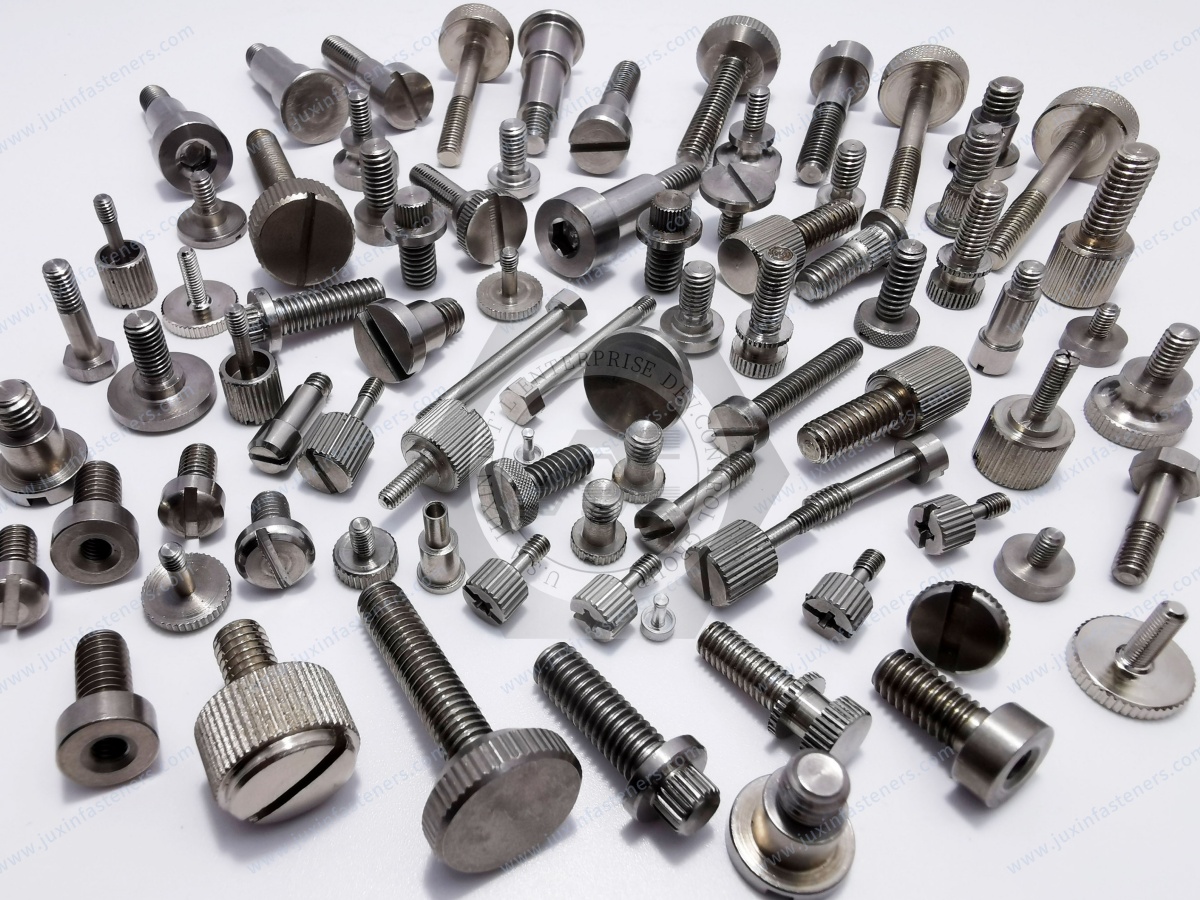
Depending on the project, JUXIN FASTENERS works with selected carbon steels, stainless steels, aluminum alloys, brass, titanium alloys and engineering polymers.
Exact material availability and manufacturing suitability should be confirmed for the specific drawing.
Carbon and alloy steels are widely used in industrial fasteners, but the required chemistry, heat treatment, mechanical properties and surface treatment should be considered together.
Higher strength should not automatically be specified when the joint does not require it.
Higher strength ≠ automatically better joint performance.
Stainless steel can provide useful corrosion resistance, but grade selection should consider environment, forming or machining behavior, galling, friction and mating materials.
304 and 316 should not be treated as universal substitutes for one another.
Aluminum can reduce mass, but alloy selection, thread strength, engagement, mating material and galvanic corrosion can affect the finished assembly.
Aluminum should not be treated as a direct lightweight replacement for steel without engineering review.
Brass may be useful for selected machined and threaded components, but alloy and application requirements should be defined.
The term "brass" alone does not establish electrical, marine, potable-water or other system-level compliance.
Titanium alloys can be appropriate for selected applications where properties such as mass, corrosion behavior or specific mechanical requirements justify their use.
However, material cost, machining behavior, thread design, mating material and galling should be considered.
Titanium should be selected because the application requires its properties, not simply because it is perceived as a premium material.
Where mechanical properties require heat treatment, the process should be considered during manufacturing planning rather than treated as an isolated final step.
Heat treatment can affect:
Mechanical properties
Distortion
Dimensional stability
Surface condition
Subsequent finishing
Inspection requirements
For hardened or high-strength steel fasteners, the relationship between material, heat treatment, thread production and surface treatment can become especially important.
Material grade ≠ finished component compliance.
The finished fastener must satisfy the applicable drawing and mechanical requirements after the relevant manufacturing processes have been completed.
Fastener coatings and surface treatments may be specified for corrosion behavior, appearance, friction control or other project requirements.
Depending on the application, options may include selected zinc-based systems, zinc-nickel, zinc-flake systems, black finishes or other treatments subject to project requirements.
The coating should be considered part of the engineering specification because it can influence:
Corrosion behavior
Friction
Torque-preload relationship
Thread fit
Coating thickness
Appearance
Mating-component compatibility
Installation behavior
For relevant high-strength steel components, hydrogen embrittlement risk may also need to be considered in process selection.
Coating name ≠ complete coating specification.
Color alone is not sufficient to define a technically equivalent finish.
Likewise:
Salt spray hours ≠ field service life.
Laboratory corrosion performance and actual field exposure are related but not interchangeable concepts.
For threaded assemblies:
Torque ≠ preload.
A significant portion of applied tightening torque is influenced by friction at the threads and bearing surfaces.
Therefore, a change in coating, lubricant, topcoat or mating surface can change the resulting preload even when the assembly tool uses exactly the same torque setting.
This becomes important during:
Supplier changes
Coating substitutions
Cost-reduction programs
Second-source qualification
Production troubleshooting
A purchasing substitution that appears cosmetic can therefore become an engineering change.
A custom fastener may function correctly in a manual prototype but create problems in automated production.
For high-volume OEM manufacturing, engineers should consider not only the installed function but also how the component moves through the production system.
Relevant questions include:
Can the part be oriented reliably?
Can it be bowl-fed or otherwise presented consistently?
Are there geometries that cause nesting or tangling?
Can the fastener be picked reliably by automation?
Is the drive feature accessible to the installation tool?
Is the fastener stable before final installation?
Can presence or orientation be detected?
Does the component create excessive variation during feeding?
These characteristics can affect total installed cost even though they may not appear on a conventional mechanical drawing.
A fastener that is easy to manufacture is not automatically easy to automate.
For automated assembly projects, part geometry, feeding and installation should be reviewed together.
Custom fastener cost is not determined by material weight alone.
Important cost drivers can include:
Raw material
Manufacturing process
Tooling
Number of operations
Machine cycle time
Heat treatment
Surface treatment
Tolerance
Inspection
Sorting
Scrap rate
Packaging
Production quantity
Changeover requirements
Logistics
This explains why two parts of similar size can have very different prices.
A machining route may be economical for a development quantity but inappropriate for annual production in the hundreds of thousands.
Conversely, dedicated tooling may not make commercial sense for a small experimental batch.
For sourcing teams, annual volume is therefore not just a purchasing forecast.
It is a manufacturing-process input.
Providing realistic sample, initial production and annual-volume expectations allows the supplier to evaluate the correct process strategy.
This distinction is particularly important in OEM product development.
An early prototype may be machined because it can be produced without dedicated forming tooling.
That does not mean the final production part should necessarily remain machined.
A typical development path could be:
Drawing → Machined Prototype → Functional Evaluation → DFM Review → Production Tooling → Formed / Hybrid Production Process
Where appropriate, this can allow engineering teams to validate basic geometry before committing to production tooling.
However, customers should recognize that a prototype produced by a different manufacturing process may not reproduce every characteristic of the final production component.
Mechanical properties, grain flow, surface condition, tolerances or other characteristics may differ.
Production-process validation may therefore still be required.
A sample can answer important questions:
Does the geometry fit?
Does the thread mate?
Can the part be installed?
Does the basic function work?
But production qualification asks additional questions:
Can the process repeatedly hold the required characteristics?
Are critical dimensions stable?
Are material and mechanical properties controlled?
Does the surface treatment remain consistent?
Does the component perform correctly in the customer's production assembly?
Are inspection requirements appropriate?
Can packaging and logistics protect the product through delivery?
Therefore:
A good prototype ≠ automatically qualified mass production.
The transition from sample to production should be appropriate to the technical risk of the component.
Not every dimension on a drawing deserves the same inspection strategy.
A more effective quality approach identifies characteristics that influence:
Fit
Function
Safety
Assembly
Mating compatibility
Installation
Mechanical performance
Customer-specific requirements
Depending on the fastener and drawing, inspection may involve:
Dimensional measurement
Thread inspection
Material verification
Mechanical testing
Hardness testing where applicable
Surface-treatment inspection
Visual inspection
Functional gauges
Installed-performance testing
Production traceability
The required inspection method should be defined according to the project rather than assumed to be identical for every fastener.
Blind rivet nuts illustrate why manufacturing capability and application engineering cannot be completely separated.
A rivet nut can meet its free-state dimensions yet perform poorly after installation if the geometry, parent material or setting process is mismatched.
Important variables include:
Thread
Grip range
Body geometry
Flange
Knurling or anti-rotation geometry
Parent material
Hole size
Installation tool
Setting parameters
Pull-out
Spin-out
Stronger rivet nut material ≠ stronger installed joint.
The parent sheet may become the limiting element.
Likewise:
More setting force ≠ better installation.
Over-setting can damage the fastener or parent material.
For OEM qualification, installed samples can therefore provide information that free-state dimensional inspection cannot.
Weld nuts provide another example of a component whose final performance depends heavily on the customer's process.
Important manufacturing and application variables include:
Nut material
Thread
Projection geometry
Parent material
Sheet thickness
Surface condition
Welding current
Welding time
Electrode force
Tooling
Alignment
Projection geometry is not merely cosmetic.
It is part of the welding process.
Projection geometry is part of the welding process.
If a second-source weld nut has the same overall dimensions but different projection behavior, welding parameters or installed performance may change.
This is why weld-fastener sourcing should include functional production validation where required.
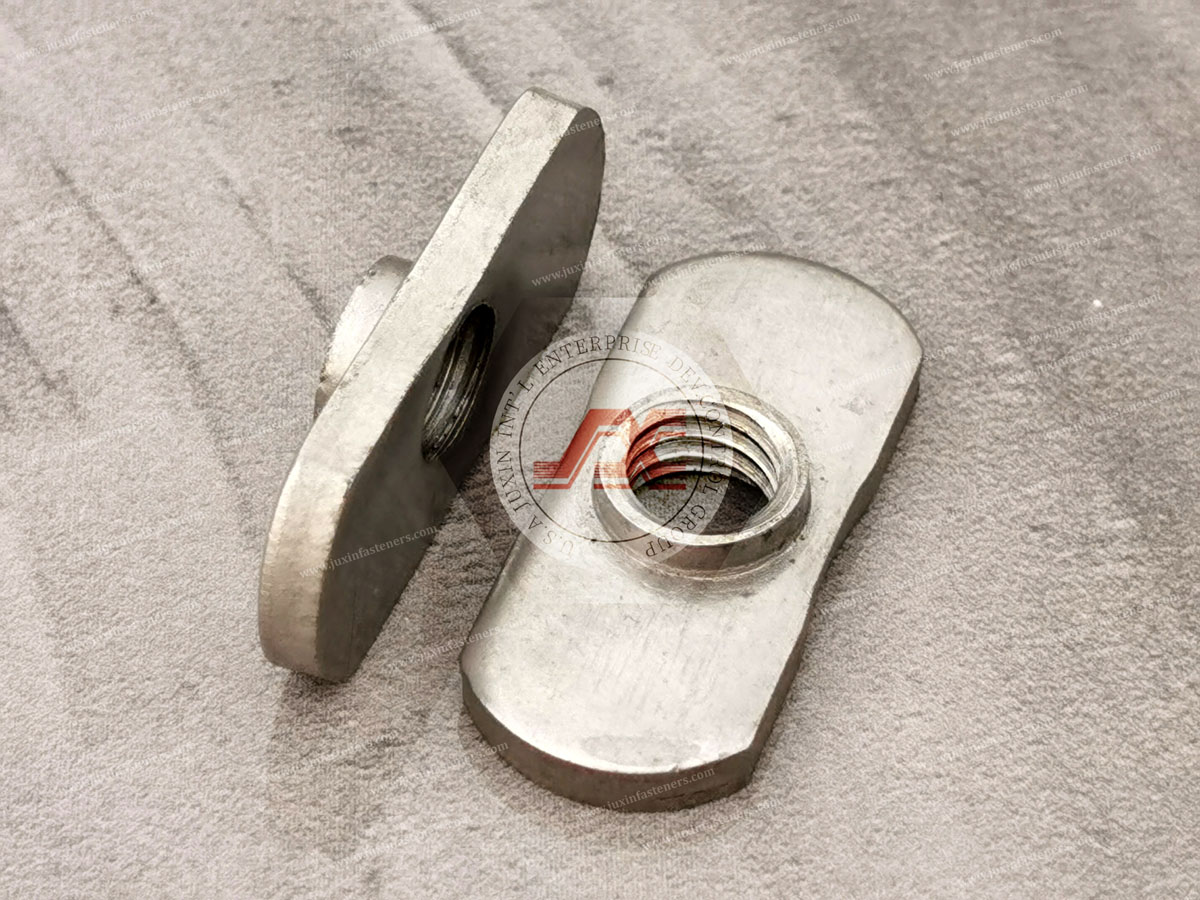
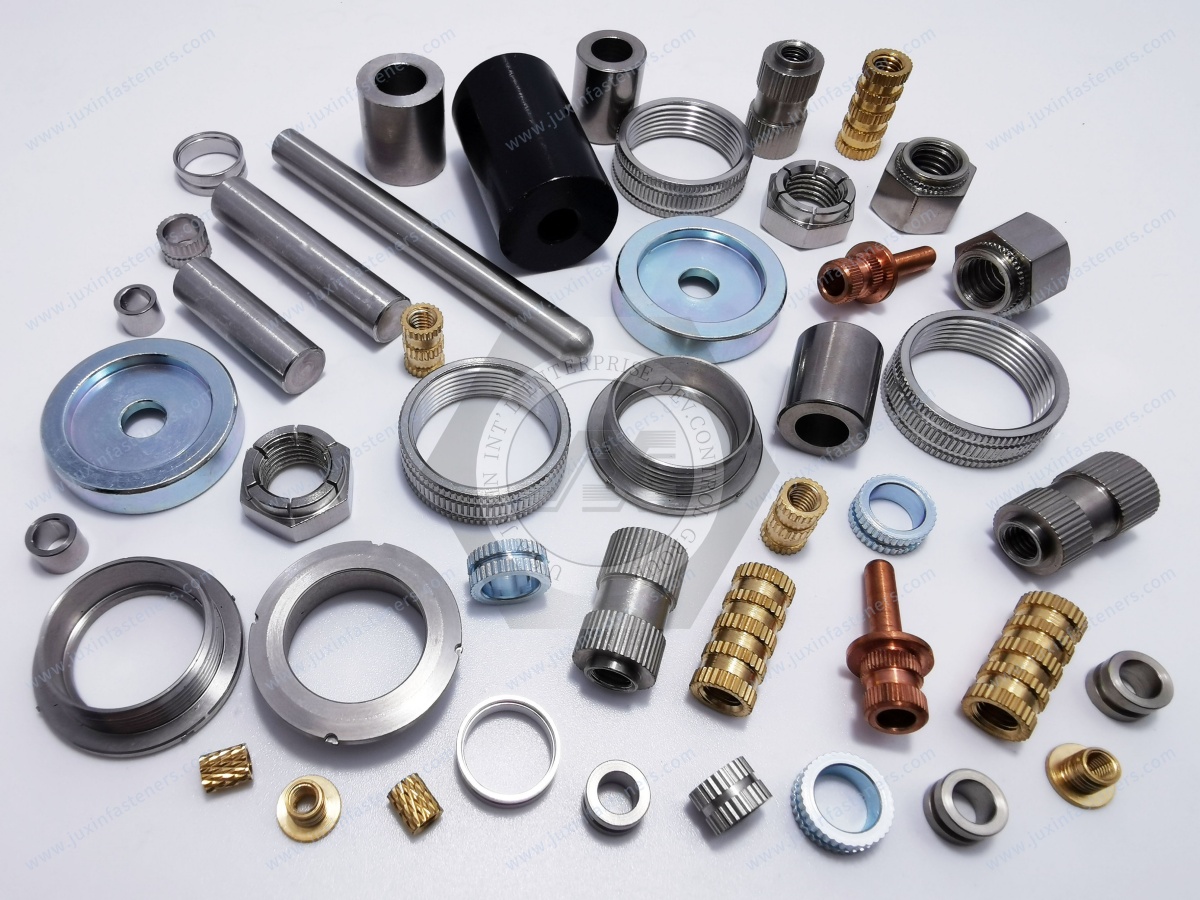
A brass or metal threaded insert can be manufactured correctly and still fail in service if the surrounding plastic is unsuitable.
For threaded inserts used in thermoplastics, the assembly should consider:
Polymer
Polymer grade
Reinforcement
Moisture
Temperature
Boss diameter
Boss wall thickness
Hole geometry
Insert geometry
Installation method
Pull-out
Torque-out
Creep
Repeated assembly
Strong insert ≠ strong plastic joint.
The metal component and polymer structure should be treated as one fastening system during design validation.
Automotive and EV manufacturers use multiple fastener manufacturing technologies because the vehicle contains very different parent materials and assembly processes.
Relevant JUXIN FASTENERS product families can include:
Weld nuts
Weld studs
Rivet nuts
Blind rivets
Lock nuts
Custom screws and bolts
Plastic clips
Nylon fasteners
Threaded inserts
Drawing-based components
Production requirements may involve high-volume repeatability, automated installation, coating control, packaging and project-specific validation.
The correct requirements depend on the actual location and function of the component.
A fastener used for interior equipment should not automatically be treated as equivalent to a fastener used in a structural or safety-critical location.
Industrial automation equipment can combine:
Machined frames
Sheet-metal enclosures
Sensors
Electrical equipment
Motion components
Tooling
Serviceable modules
This creates demand for different manufacturing approaches, from standard threaded fasteners to CNC machined components and drawing-based fastening hardware.
For these applications, engineers may need to balance:
Precision
Repeatability
Installation access
Vibration
Serviceability
Production quantity
Component replacement
Automation compatibility
A custom precision component should be specified according to its functional role rather than simply requesting the tightest possible tolerances.
Electrical cabinets, telecom equipment, AI data-center hardware, power electronics and cooling equipment can require a combination of sheet-metal fasteners,
plastic components, threaded hardware and precision parts.
Relevant products may include:
Self-clinching fasteners
Rivet nuts
Plastic spacers
PCB supports
Threaded inserts
Precision screws
CNC machined components
Drawing-based fasteners
Material selection can involve mechanical, thermal, corrosion and electrical considerations.
Mechanical fastening function and electrical current path should be evaluated separately.
A conductive material does not automatically establish a qualified electrical connection, and a polymer component does not automatically establish system-level insulation compliance.
JUXIN FASTENERS can support selected railway interior, equipment, enclosure and secondary fastening requirements based on customer drawings and project specifications.
Relevant components may include selected:
Rivet nuts
Threaded inserts
Plastic fasteners
Equipment fasteners
Drawing-based components
For primary load-bearing structures, running gear, braking systems, crash structures and other safety-critical locations,
the applicable OEM or project requirements and formal validation must control the sourcing decision.
Manufacturing capability alone does not establish qualification for a safety-critical railway application.
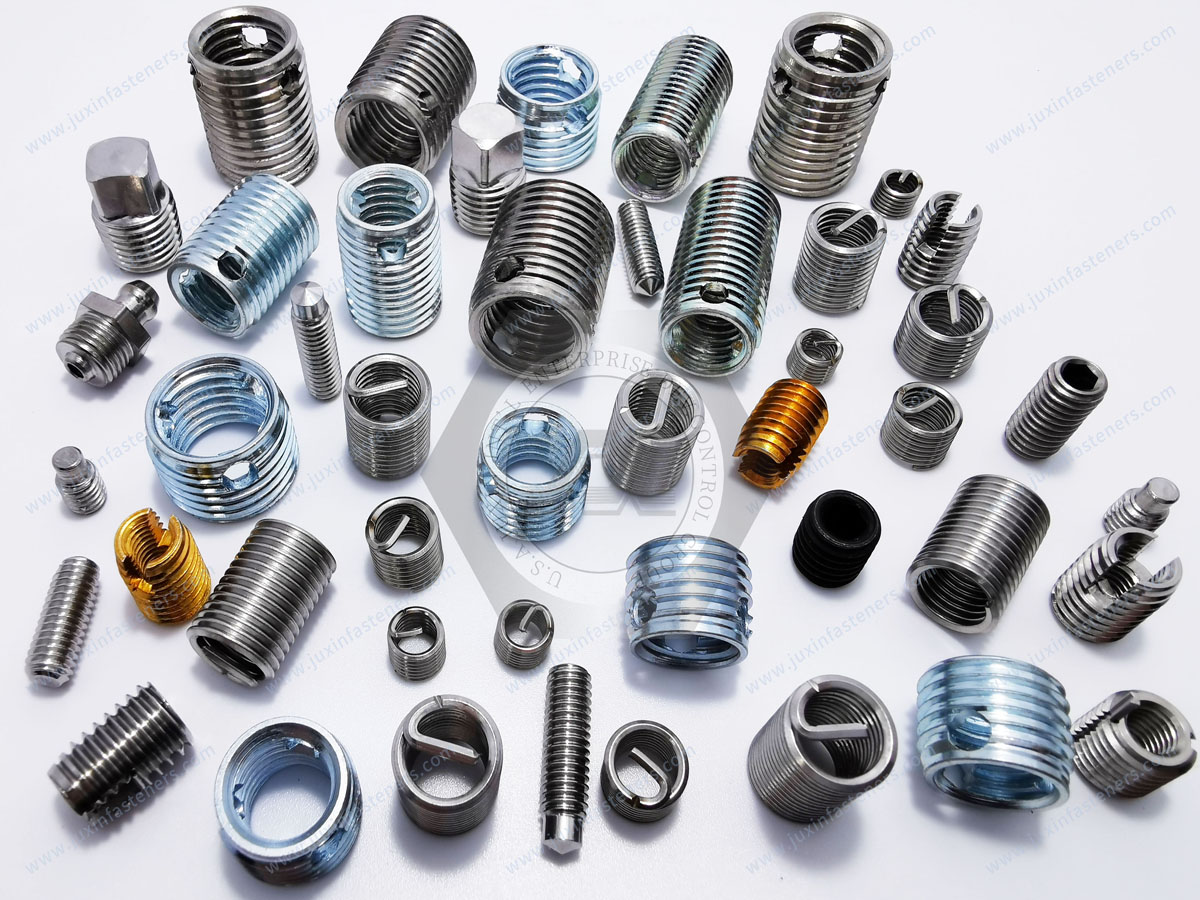
A sourcing team may ask:
"How many machines does the supplier have?"
This is a reasonable capacity question, but it does not by itself establish manufacturing capability.
JUXIN FASTENERS' production resources include more than 30 cold-heading machines for selected rivet and screw production,
more than 20 precision instrument lathes, more than 100 CNC automatic machining systems and more than 50 supporting equipment units.
These resources provide manufacturing flexibility across different component types.
However, OEM supplier qualification should go further.
Procurement and supplier-development teams should also ask:
Which process will manufacture our part?
Which operations are internal and which require qualified external processing?
What are the critical characteristics?
How will those characteristics be inspected?
What tooling is required?
What is the expected production rate?
What happens when annual demand increases?
What process changes require customer review?
How is drawing revision controlled?
How will samples transition into production?
Machine count describes capacity. Process control determines repeatability.
That distinction is much more useful when qualifying a long-term manufacturing source.
When developing a new custom fastener supplier or second source, procurement should evaluate both commercial and manufacturing capability.
A useful supplier review includes:
| Supplier Qualification Area | What to Evaluate |
|---|---|
| Drawing control | Can the supplier quote and manufacture to the correct revision? |
| Process selection | Is the proposed manufacturing route appropriate for geometry and volume? |
| Material control | Is the required material clearly defined and controlled? |
| Tooling | What dedicated tooling is required and how is it managed? |
| Secondary operations | Which additional processes influence cost or performance? |
| Inspection | How will critical characteristics be verified? |
| Functional validation | What assembly-level testing is required? |
| Capacity | Can the process support forecast production volume? |
| Change control | How are material, tooling, process and coating changes managed? |
| Packaging | Will parts remain protected and usable through production logistics? |
| Scalability | Can the manufacturing route support future demand? |
This is particularly important when comparing a new supplier against an incumbent source.
A second-source fastener should not be approved solely because the new sample fits the assembly.
Same dimensions ≠ functional equivalence.
Supplier qualification may need to compare:
Drawing revision
Raw material
Manufacturing process
Heat treatment
Mechanical properties
Thread process
Critical geometry
Surface treatment
Friction where relevant
Installation behavior
Functional performance
Inspection methods
Packaging
Production consistency
The manufacturing route itself can matter.
A machined prototype and a cold-headed production fastener may share dimensions while having different process histories.
Where those differences could affect function, they should be considered during validation.
Design for Manufacturability should not mean "make the part cheaper at any cost."
The objective is to remove manufacturing complexity that does not create functional value.
Useful DFM questions include:
Does this tolerance control a real assembly function?
Can a standard thread replace a special thread?
Can a sharp transition use a manufacturable radius?
Can two machining operations be eliminated through forming?
Can a standard material satisfy the requirement?
Is the coating specification more complex than the environment requires?
Can a secondary component be integrated into the fastener?
Can geometry be modified to improve automated feeding?
Can inspection focus more strongly on critical characteristics?
Is the expected volume high enough to justify dedicated tooling?
A successful DFM change reduces cost without weakening the required function.
For an OEM, the commercially important number is not always the quoted price per fastener.
A more complete model is:
Total Installed Cost = Part Price + Tooling + Installation + Inspection + Rework + Scrap + Downtime + Logistics + Supply Risk
For example, a cheaper custom screw may become more expensive if:
It feeds poorly in an automated line
Its coating produces inconsistent tightening behavior
Its tolerance creates assembly interference
It requires additional incoming inspection
Packaging causes parts to tangle
Production variation creates rework
Supply instability causes line disruption
Engineering, manufacturing and procurement should therefore evaluate custom fasteners as production components rather than isolated pieces of hardware.
A detailed technical package allows JUXIN FASTENERS to evaluate both manufacturability and commercial feasibility.
Where available, provide:
2D drawing
3D model
Part number
Drawing revision
Application
Material
Thread specification
Mechanical-property requirements
Heat-treatment requirements
Surface treatment
Critical dimensions
Tolerances
Mating component
Load requirements
Installation method
Operating environment
Inspection requirements
Validation requirements
Sample quantity
Estimated annual volume
Packaging requirements
Target production schedule
For an existing production component, it is also useful to explain the reason for sourcing:
New product development
Second-source qualification
Cost reduction
Capacity expansion
Supply-risk reduction
Current quality problem
Design improvement
Supplier replacement
This information helps distinguish whether the project requires simple manufacturing replication or engineering review of the existing design.
Depending on project complexity, a custom fastener program may follow a path such as:
Requirement Definition → Drawing Review → DFM → Process Selection → Quotation → Tooling / Prototype Planning
→ Sample Production → Dimensional & Functional Review → Customer Validation → Production Approval → Repeat Supply
Not every project requires every step.
A standard modified component may have a relatively simple path.
A high-volume custom part with tooling, heat treatment, coating and automated installation may require more extensive validation.
The process should match the technical and commercial risk.
This page should serve as the manufacturing and DFM hub within the JUXIN FASTENERS content architecture.
Recommended internal-link relationships include:
Industrial Fastener Solutions → fastener technology selection guide
About JUXIN FASTENERS → company capability and supplier qualification
Custom Screws → drawing-based screw manufacturing resources
Custom Bolts → custom bolt engineering and sourcing resources
Rivet Nuts → grip range, installation and installed-performance resources
Weld Nuts → projection welding and weld-joint engineering resources
Weld Studs → weld-stud process and application resources
Threaded Inserts for Plastic → insert and plastic boss design resources
Self-Clinching Fasteners → sheet compatibility and installation resources
Plastic & Nylon Fasteners → polymer selection and application resources
Surface Treatments → coating, corrosion and friction resources
Fastener Failure Modes → failure analysis and troubleshooting resources
Use the existing indexed JUXIN FASTENERS URL when implementing each internal link.
The purpose of these links is to move engineers from manufacturing questions into product-specific technical resources while moving procurement teams toward supplier qualification and RFQ.
No. Cold heading can be highly economical for suitable geometry and production volume, but it generally requires process development and tooling.
CNC machining may be more appropriate for prototypes, lower volumes, complex geometries or parts that are fundamentally machined components.
Sometimes. This can be an effective development strategy when the final geometry is suitable for forming.
However, the production process should be reviewed separately because process history and resulting component characteristics may differ.
Annual volume influences the economic manufacturing route.
Dedicated tooling can become economical when its cost is distributed across repeat production, while machining may remain more practical for lower quantities or evolving designs.
A small feature can require an additional tool, machining operation, inspection method or secondary process.
Removing or modifying a non-functional feature can sometimes eliminate an entire manufacturing step.
No. Tolerances should reflect functional requirements. Unnecessarily tight tolerances can increase manufacturing, inspection and scrap cost without improving assembly performance.
Not automatically. A different coating can affect corrosion behavior, thickness, friction, thread fit and torque-preload behavior.
Depending on the application, coating substitution may require engineering review and validation.
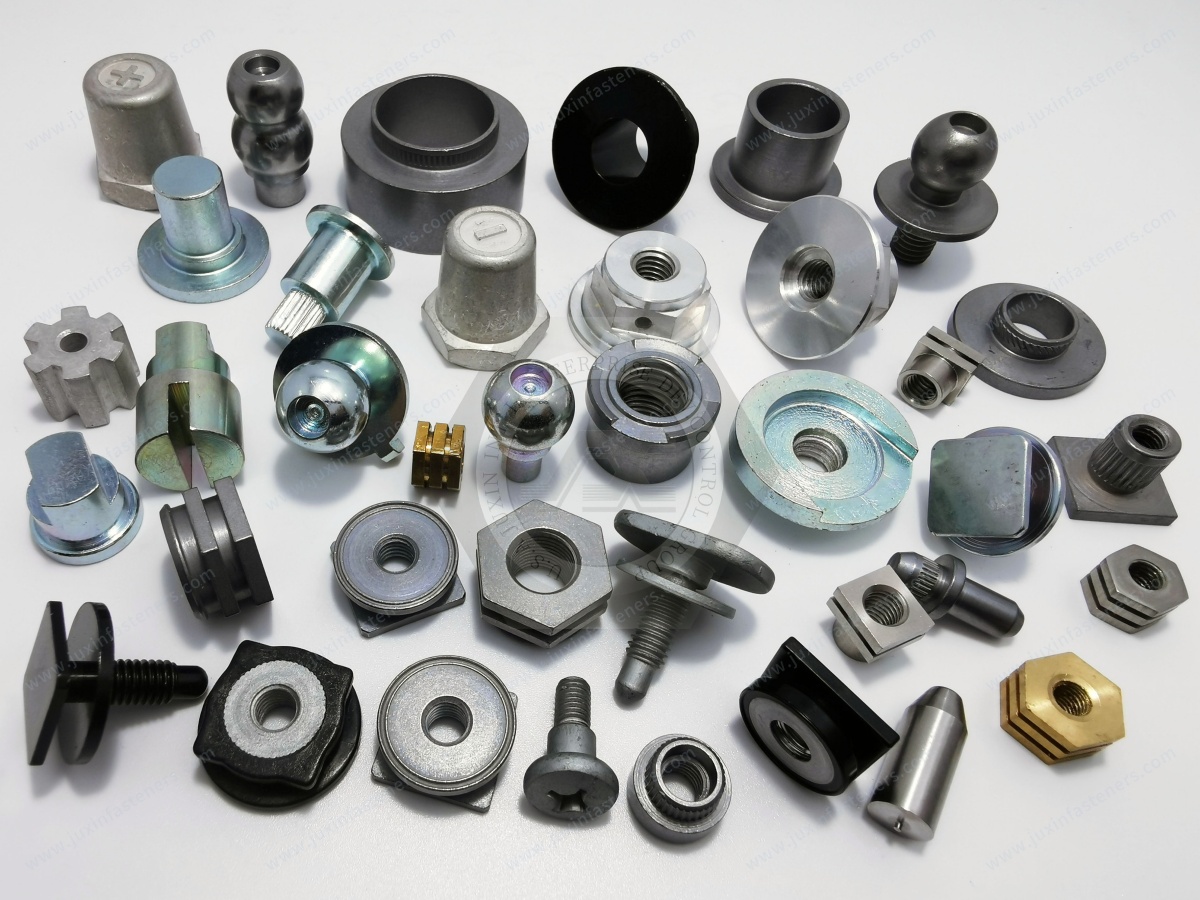
JUXIN FASTENERS supports drawing-based custom fasteners and selected precision components.
Manufacturing feasibility depends on geometry, material, tolerance, process, quantity and project requirements and is subject to engineering review.
A prototype can demonstrate geometry and basic function.
Production qualification evaluates whether the intended manufacturing process can repeatedly produce components that satisfy the required dimensional, material and functional characteristics.
Compare more than unit price and dimensions. Review the controlled drawing, material, manufacturing process, mechanical properties,
heat treatment, threads, surface treatment, critical characteristics, installation behavior, inspection, functional validation, capacity and supply conditions.
If your engineering or sourcing team is developing a new component, qualifying a second source,
replacing an existing supplier or evaluating whether a machined part can be converted to a more scalable production process, send JUXIN FASTENERS the available technical information.
For the most effective review, provide:
2D Drawing + 3D Model + Part / Revision + Application + Material + Mating Component + Load Requirement + Surface Treatment + Environment + Annual Volume
Where relevant, also include:
Thread + Property Class + Heat Treatment + Critical Tolerances + Installation Method + Existing Manufacturing Process + Validation Requirements + Sample Quantity
JUXIN FASTENERS can review the project against applicable cold-heading,
machining and supporting manufacturing capabilities and determine an appropriate next step toward quotation, sample development and production sourcing.
JUXIN FASTENERS
Custom Fasteners | Cold Heading | CNC Machining | Drawing-Based Components | OEM Manufacturing
Email: info@juxinfasteners.com
Website: www.juxinfasteners.com
Contact Us
Tel.:
+86 020 8621 0320
+86 020 3121 6067
E-mail:
Technical Support:
Navigation
SEND INQUIREY



