
Call Us
+86 136 6007 9809
Call Us
+86 136 6007 9809

Oct. 29, 2023
Automotive threaded fasteners are not selected simply by diameter, thread and strength grade.
A reliable automotive threaded joint depends on the interaction between:
Fastener Geometry + Material + Mechanical Properties + Thread Engagement + Preload + Friction + Locking Strategy
+ Surface Treatment + Parent Material + Installation Process + Operating Environment
This system-level approach becomes increasingly important as vehicle manufacturers combine high-strength steel, aluminum,
plastics, composites, electrical equipment and lightweight sheet-metal structures in conventional and electric vehicle platforms.
JUXIN FASTENERS supplies selected automotive and industrial threaded fastening components, including:
Bolts
Machine screws
Special screws
Nuts
Flange nuts
Nylon insert lock nuts
All-metal prevailing torque nuts
Rivet nuts
Weld nuts
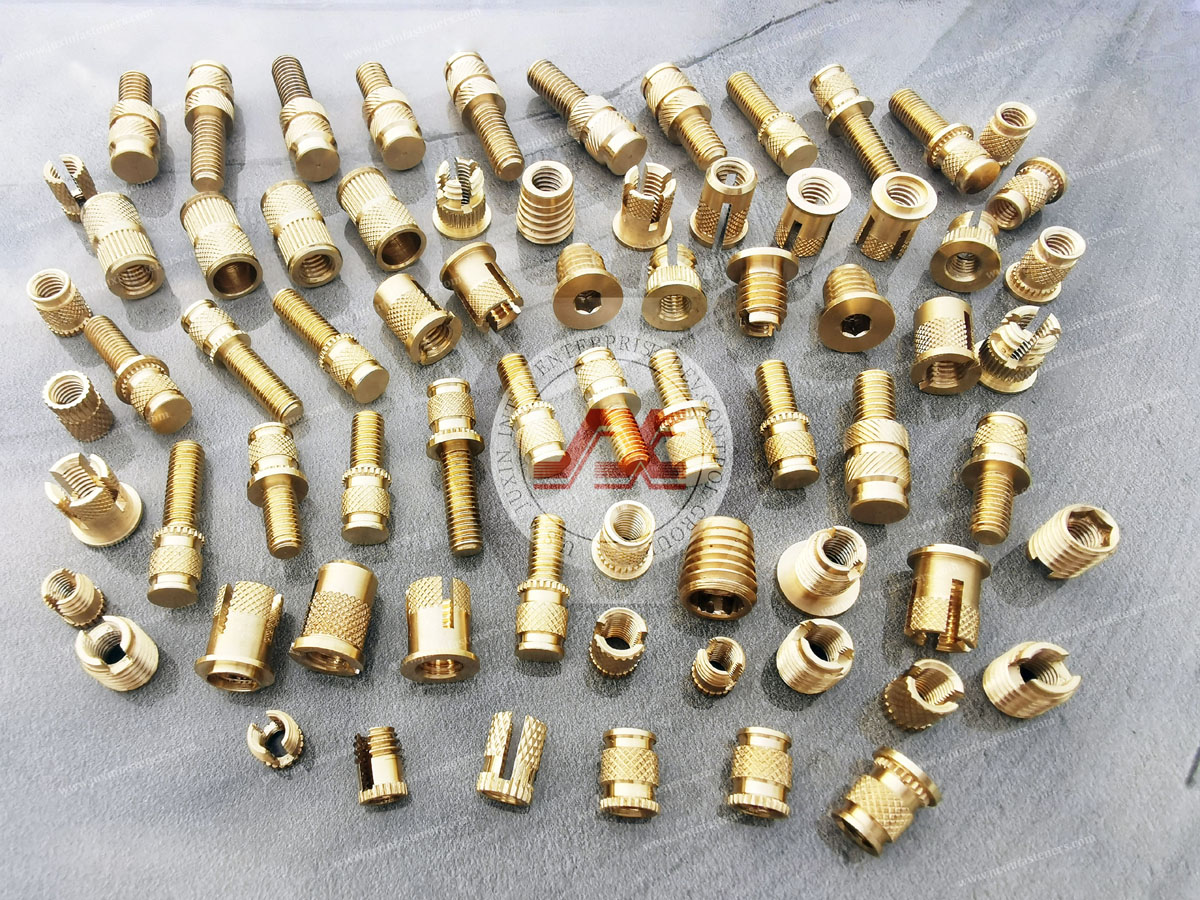
Threaded inserts
Threaded inserts for plastics
Self-clinching threaded fasteners
Custom drawing-based fasteners
For OEM, Tier-1 and Tier-2 sourcing projects, the correct question is not simply:
"Which automotive fastener should we buy?"
It is:
"What threaded-joint architecture will generate and maintain the required clamp load throughout manufacturing and service?"
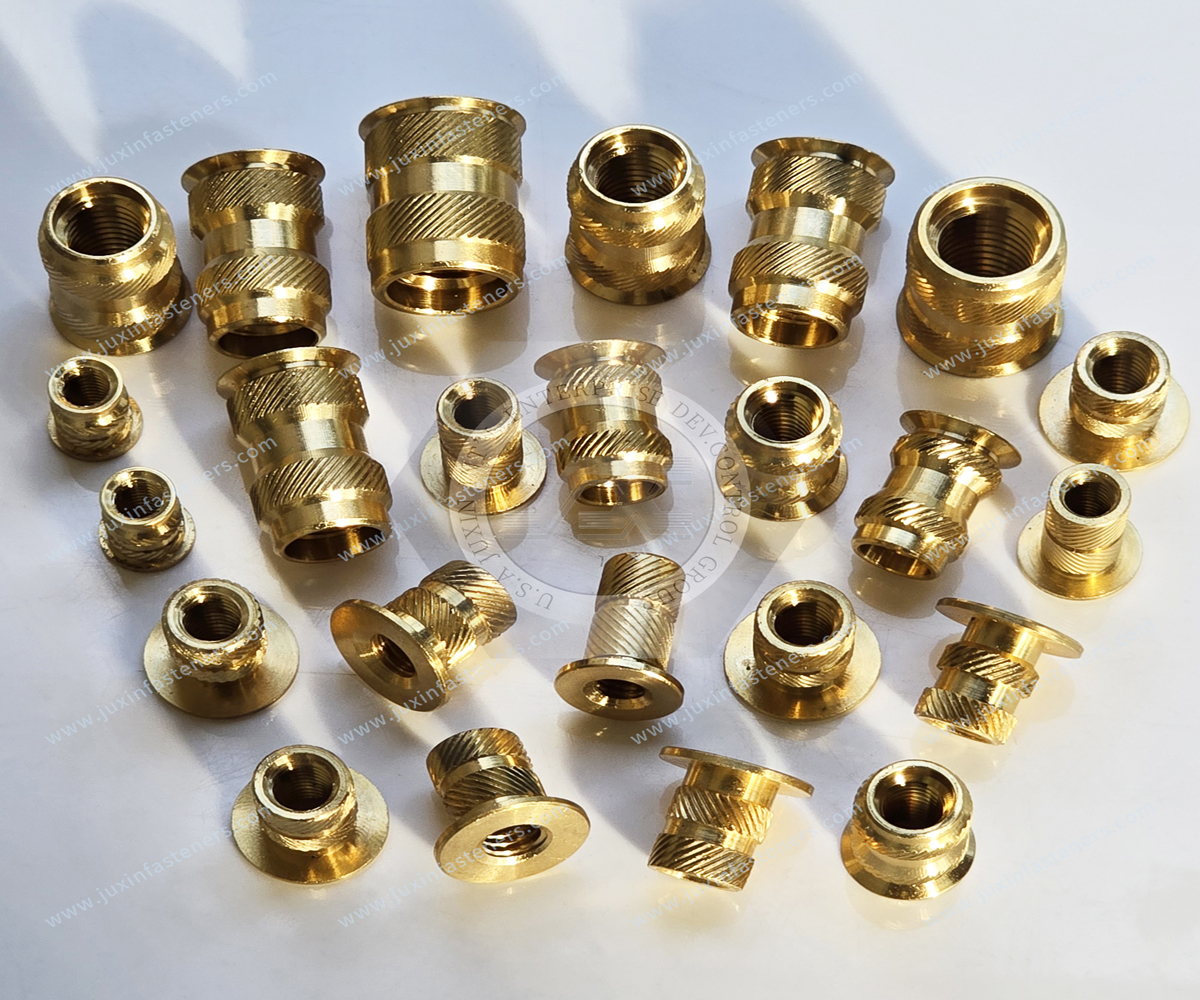
Automotive threaded fasteners are detachable mechanical fastening components that use mating threads to assemble vehicle components and subsystems.
Common product families include:
Bolts and nuts
Machine screws
Thread-forming screws
Self-tapping screws
Flange bolts and flange nuts
Prevailing-torque lock nuts
Rivet nuts
Weld nuts
Threaded inserts
Self-clinching nuts and studs
Custom threaded components
Depending on the product, threads may follow applicable international systems such as:
ISO metric threads
Unified inch threads
Fine-pitch threads
Coarse-pitch threads
Application-specific thread forms
But selecting the thread standard is only the beginning.
A common misunderstanding is that the thread itself carries the entire external service load.
In many properly designed bolted joints, tightening stretches the bolt and compresses the clamped components.
This creates preload.
The resulting clamp force helps keep the joint members together during service.
Therefore, for many automotive bolted joints:
The objective is not simply to tighten the bolt. The objective is to create an appropriate and repeatable joint preload.
This distinction affects fastener selection, coating, lubrication, tightening strategy and supplier qualification.
Tightening torque is commonly used as an installation control method, but torque is not the same as bolt preload.
A simplified relationship can be represented conceptually as:
T = K × F × d
where:
T = tightening torque
K = torque/friction factor
F = target preload
d = nominal fastener diameter
This simplified relationship illustrates an important principle:
Torque ≠ Preload.
Much of the applied torque is influenced by friction in the threads and under the bearing surface.
If friction changes, the resulting preload can change even when the torque wrench setting remains identical.
Surface treatment is not only a corrosion decision.
It can influence:
Thread friction
Bearing-surface friction
Torque-tension behavior
Assembly repeatability
Thread fit
Corrosion performance
Appearance
Automotive fastener finishes may include, depending on the project:
Zinc plating
Zinc-nickel plating
Zinc-flake coating systems
Phosphate-based systems
Application-specific topcoats or lubricants
The correct system depends on the drawing and OEM requirements.
A critical engineering principle is:
Same Torque + Different Friction ≠ Same Preload.
Therefore, changing an approved coating can become an engineering change rather than a cosmetic purchasing substitution.
Another common sourcing mistake is assuming that a higher property class automatically improves the assembly.
It does not.
The joint can be limited by:
Mating internal thread
Parent material
Thread engagement
Sheet thickness
Insert retention
Weld quality
Bearing surface
Joint stiffness
Installation method
For example, installing a stronger screw into a weak aluminum or plastic mating thread does not automatically increase joint capacity.
Stronger Mating Screw ≠ Stronger Mating Thread.
Fastener strength must be selected together with the complete joint.
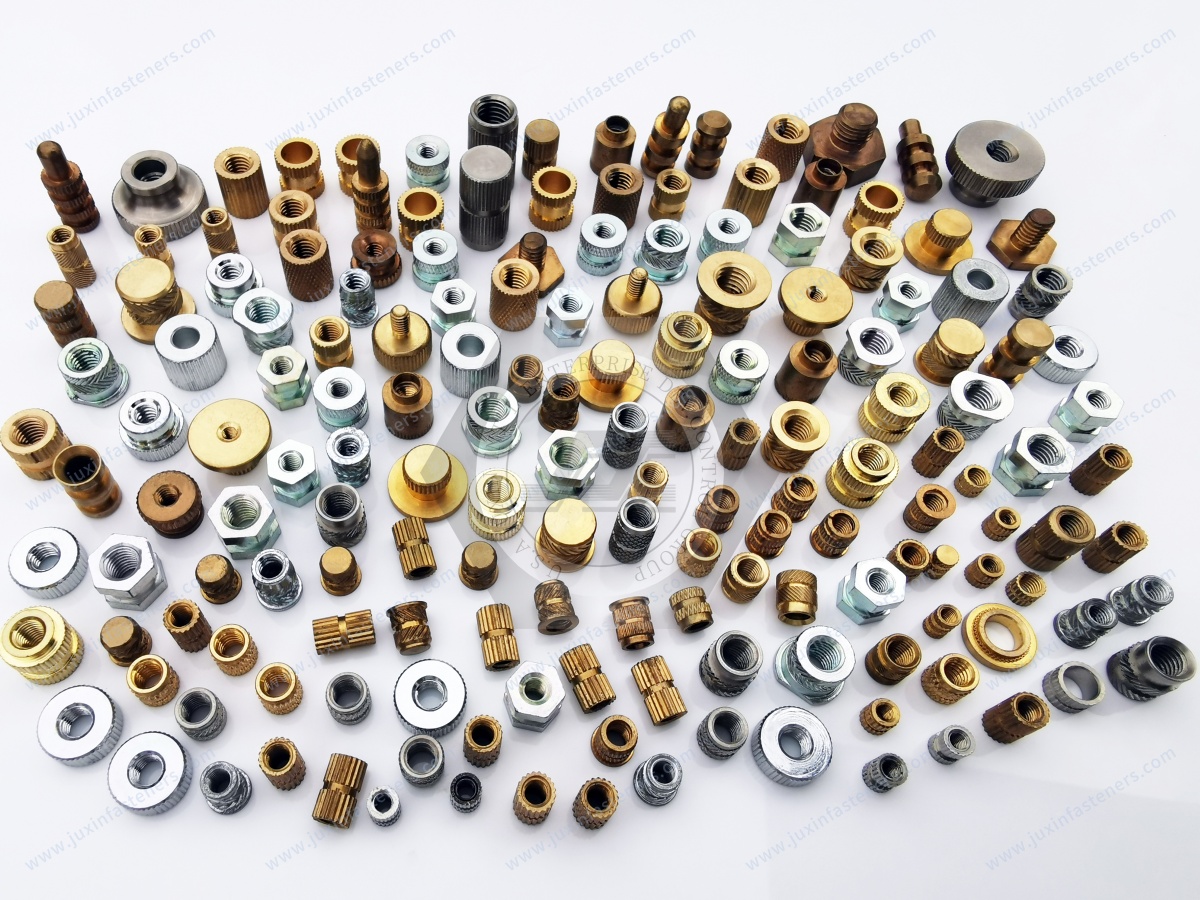
Both coarse and fine threads can be appropriate depending on the application.
Potential advantages can include:
Greater tolerance to contamination or handling damage
Faster assembly for a given engagement length
Practical use in many production environments
Suitability for many general bolted joints
Potential advantages can include:
More threads per unit length
Different tensile stress area for the same nominal diameter
Different adjustment characteristics
Potential benefits where geometry or joint design requires fine pitch
But:
Fine Thread ≠ Automatically Better Anti-Loosening Performance.
Thread pitch is only one part of joint behavior.
Vibration resistance depends strongly on preload, joint stiffness, transverse movement, friction, locking strategy and assembly control.
Fastener loosening is often described too simply as:
"The vehicle vibrates, so the nut comes loose."
Real joint behavior is more complex.
Loss of clamp load can result from:
Insufficient initial preload
Embedment
Surface settling
Joint relaxation
Transverse movement
Thermal cycling
Soft joint materials
Creep
Improper tightening
Friction variation
Repeated service loading
Incorrect locking feature
This means the correct solution is not automatically to add a lock nut or washer.
The root cause should be identified first.
A locking feature can resist rotational movement.
It does not compensate for a poorly designed or incorrectly tightened joint.
Therefore:
Locking Feature ≠ Correct Preload.
An automotive joint should first establish the required clamp force and then determine whether an additional anti-loosening mechanism is necessary.
Nylon insert lock nuts create prevailing torque through interaction between the mating thread and polymer insert.
Potential advantages include:
Prevailing torque
Compact integrated locking feature
Wide industrial availability
Practical assembly
They can be considered for selected automotive and industrial applications where:
Temperature is compatible with the insert material
Chemical exposure is acceptable
Required prevailing-torque behavior is defined
Reuse requirements are understood
However:
Nylon Insert Lock Nut ≠ Universal High-Temperature Locking Solution.
Temperature, chemicals and repeated assembly can affect polymer behavior.
All-metal lock nuts generate prevailing torque through controlled metallic deformation or locking geometry.
They can be considered where:
Higher temperature capability is required
Polymer inserts are unsuitable
A metallic locking system is specified
But:
Prevailing Torque ≠ Preload.
The torque required to overcome the locking feature is separate from the torque used to generate clamp load.
This distinction is important when defining installation torque.
Serrated flange nuts combine a flange bearing surface with serrations designed to resist rotation against the mating surface.
They can be effective in selected applications, but engineers should consider:
Mating surface material
Surface coating
Surface damage
Electrical requirements
Reusability
Required clamp load
Serrations can mark or penetrate the mating surface.
Therefore they are not automatically suitable for every coated, painted or appearance-sensitive assembly.
Spring washers are widely recognized fastening components, but they should not automatically be described as a universal automotive anti-loosening solution.
The effectiveness of any washer-based locking strategy depends on:
Joint design
Preload
Washer type
Mating surfaces
Service loading
Vibration mode
Therefore:
Washer ≠ Automatic Anti-Loosening Device.
For critical joints, the locking strategy should be validated against the actual service condition.
Wedge-locking washer systems use engineered cam geometry to resist self-loosening under selected dynamic conditions.
They can be useful where the application justifies the additional component and cost.
However, their selection still requires consideration of:
Joint geometry
Bearing surface
Bolt size
Installation
Reuse
Space
Cost
No locking technology replaces correct joint design.
Thread-locking compounds can provide another anti-loosening strategy.
Selection may depend on:
Thread size
Material
Surface treatment
Cure condition
Temperature
Chemical environment
Required disassembly
Production process
Compatibility with coating and assembly-line conditions should be evaluated.
Automotive bolts cover a wide range of functions, from general brackets to highly controlled structural joints.
Relevant selection variables include:
Diameter
Thread pitch
Length
Head geometry
Material
Property class
Heat treatment
Surface treatment
Friction
Mating thread
Installation method
Load
Fatigue
Environment
For safety-critical applications, the applicable OEM drawing and validation requirements govern the fastener.
A generic "high-strength automotive bolt" should never be treated as automatic approval for a critical vehicle location.
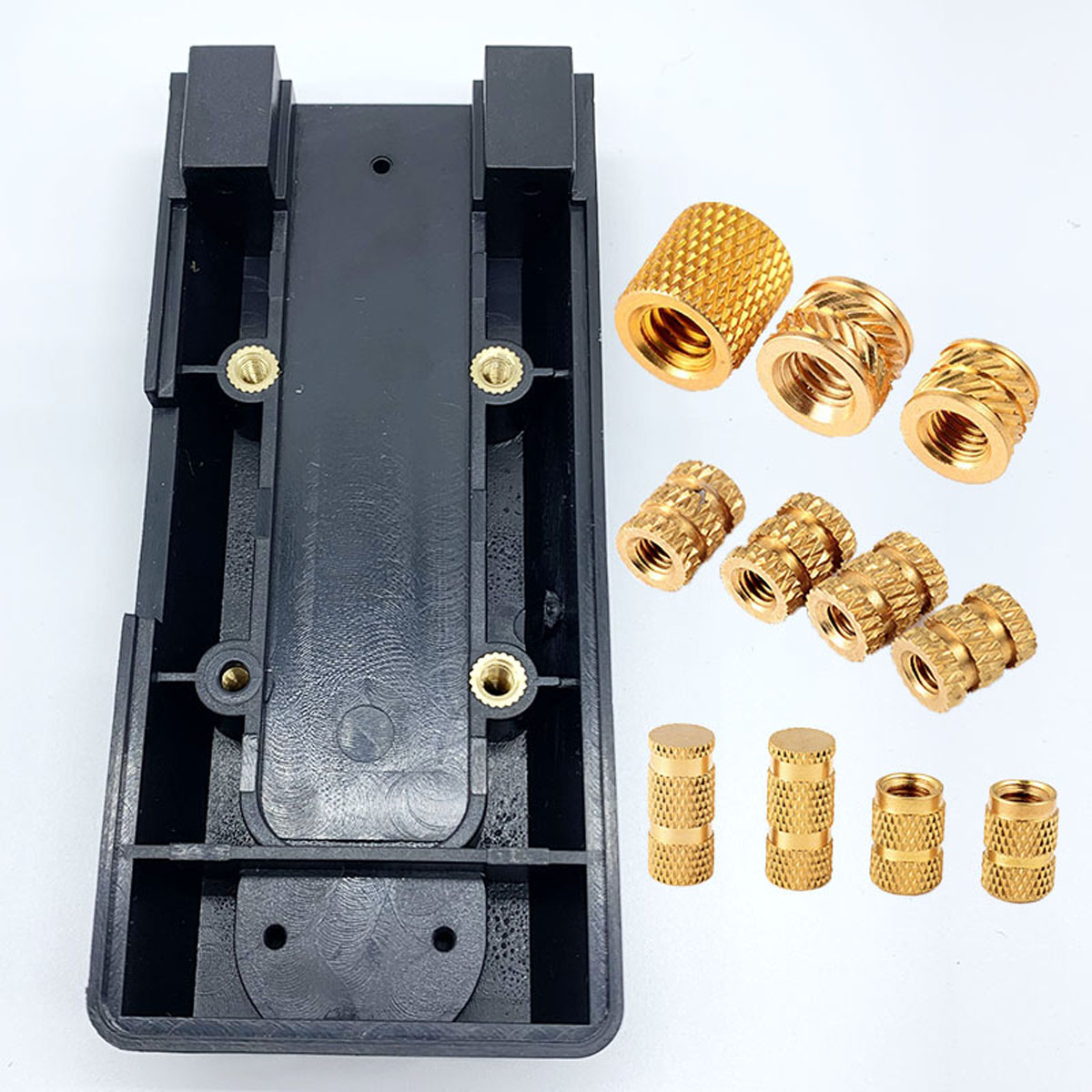
Automotive screws can be used in:
Interior assemblies
Electrical equipment
Electronic housings
Brackets
Plastic components
Sheet-metal assemblies
Potential product families include:
Machine screws
Thread-forming screws
Self-tapping screws
Flange screws
Special drawing-based screws
The correct screw depends heavily on the mating material.
A screw optimized for steel sheet may not be suitable for aluminum or thermoplastic.
Thread-forming screws can reduce the need for a separately manufactured internal thread in selected applications.
However, engineering must consider:
Parent material
Material thickness
Hole geometry
Pilot-hole size
Screw geometry
Installation torque
Strip-out torque
Repeated service requirements
More installation torque does not mean a better joint.
The correct process creates a controlled mating thread without damaging the parent component.
Automotive nut families can include:
Hex nuts
Flange nuts
Nylon insert lock nuts
All-metal lock nuts
Weld nuts
Captive nuts
Custom nuts
Selection should consider:
Mating bolt
Bolt property class
Proof-load requirement
Thread
Surface treatment
Locking requirement
Installation process
Material Grade ≠ Finished Component Compliance.
The finished nut must satisfy the required component and joint performance.
Weld nuts create a threaded attachment point by welding the nut to sheet metal.
Potential applications include selected:
Body structures
Brackets
Frames
Enclosures
Equipment mounts
But weld-nut performance depends on more than nut strength.
Important variables include:
Parent sheet material
Sheet thickness
Nut material
Projection geometry
Welding current
Welding time
Electrode force
Tooling
Alignment
Surface condition
Therefore:
Strong Nut ≠ Strong Welded Joint.
And:
More Welding Energy ≠ Better Weld.
The fastener and welding process must be developed as a system.
Rivet nuts provide reusable internal threads in thin sheet or other suitable parent materials where rear-side access may be limited.
They can be useful for selected:
Body panels
Brackets
Electrical enclosures
Equipment housings
EV-related assemblies
Serviceable components
Selection should consider:
Parent material
Sheet thickness
Hole size
Hole geometry
Grip range
Body style
Flange style
Setting tool
Pull-out resistance
Spin-out resistance
Remember:
Pull-Out ≠ Spin-Out.
And:
Spin-Out ≠ Screw Self-Loosening.
These are different failure modes.
Over-setting a rivet nut can damage:
Fastener
Parent sheet
Threads
Coating
Installed geometry
Under-setting can also reduce retention.
The correct setting process depends on the rivet nut, grip range, parent material and installation tool.
Self-clinching nuts, studs and standoffs create permanent captive threaded features in suitable sheet materials.
They rely on controlled material flow during installation.
Important variables include:
Sheet material
Sheet hardness
Sheet thickness
Hole size
Edge distance
Fastener geometry
Tooling
Press installation
Performance can be evaluated through characteristics such as:
Push-out resistance
Torque-out resistance
But:
More Press Force ≠ Better Installation.
Incorrect installation can damage the sheet or reduce retention.
Aluminum structures can benefit from threaded inserts where the base material alone does not provide the required thread performance or serviceability.
Applications may include selected:
Housings
Electronic equipment
Motor-related equipment
Lightweight brackets
EV components
Engineering should consider:
Aluminum alloy
Wall thickness
Insert material
Insert geometry
Thread engagement
Installation method
Galvanic compatibility
Required service cycles
A stronger insert cannot compensate for inadequate parent material.
Strong Insert ≠ Strong Parent Material.
Plastic components introduce different engineering behavior from metals.
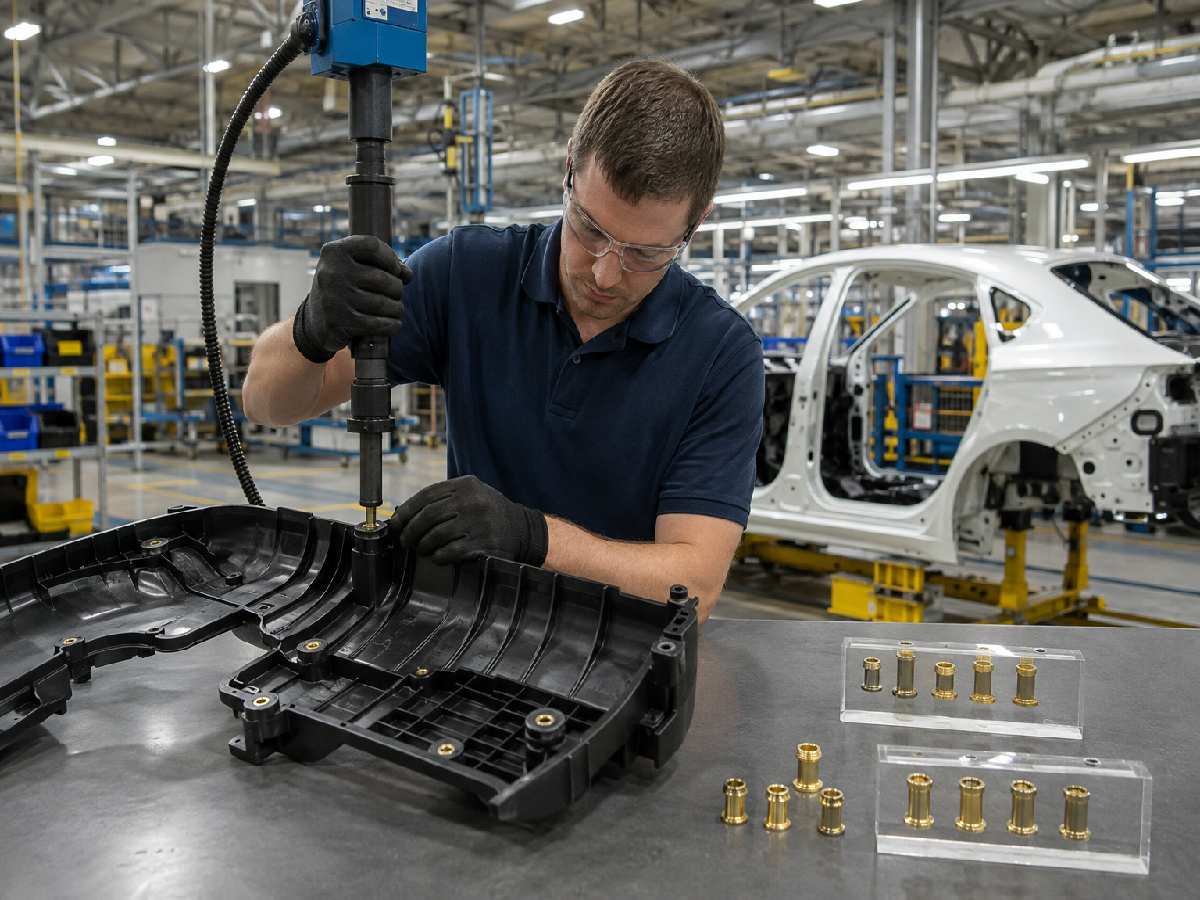
Threaded inserts may be used in selected:
Electronic housings
Interior equipment
Sensors
Control modules
Plastic brackets
Electrical components
Selection should consider:
Polymer type
Polymer grade
Reinforcement
Boss geometry
Hole geometry
Insert geometry
Installation method
Temperature
Moisture
Creep
Stress relaxation
Chemical exposure
The insert is only one part of the joint.
Strong Insert ≠ Strong Plastic Joint.
Polymers can change under sustained load.
This can reduce clamp force over time.
Therefore, a metal fastener that is perfectly adequate in a steel joint may behave differently when clamping a plastic component.
Engineering may need to consider:
Clamp load
Bearing area
Polymer creep
Thermal cycling
Moisture absorption
Service temperature
This is particularly relevant in automotive electronics and EV equipment.
A useful selection framework is:
| Assembly Condition | Technology to Evaluate |
|---|---|
| Conventional bolt access on both sides | Bolt + nut |
| Permanent threaded point before assembly | Weld nut |
| One-sided access in thin sheet | Rivet nut |
| Suitable sheet for press-installed captive thread | Self-clinching nut |
| Plastic component | Threaded insert or application-specific screw |
| Aluminum housing | Machined thread or threaded insert |
| High-volume sheet-metal attachment | Weld nut / clinching / application-specific captive fastener |
| Serviceable removable joint | Threaded fastening system |
This is a screening framework.
Final selection depends on material, load, access, process and validation requirements.
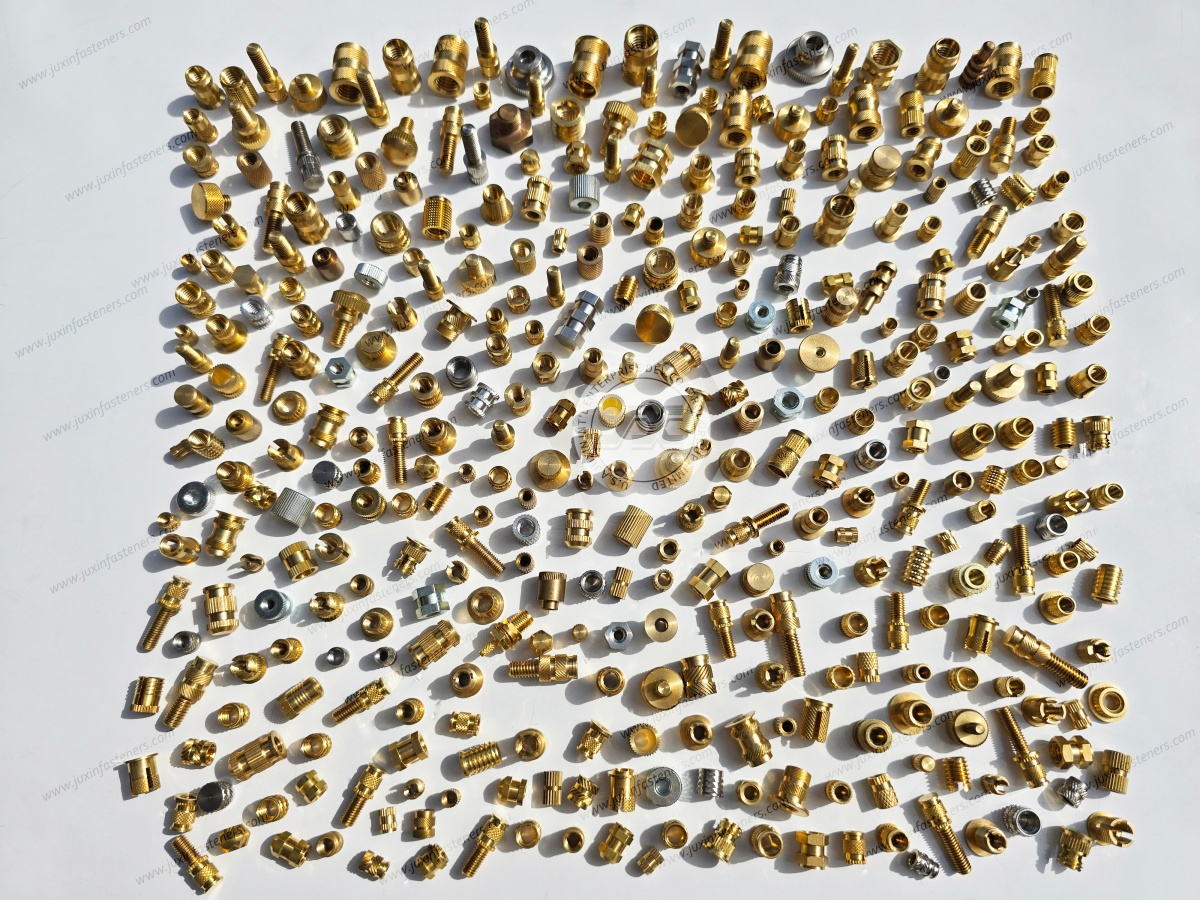
EV platforms introduce new fastening environments but do not eliminate conventional joint-engineering principles.
Potential JUXIN FASTENERS products for selected EV equipment can include:
Bolts
Screws
Lock nuts
Rivet nuts
Weld nuts
Threaded inserts
Self-clinching fasteners
Plastic fasteners
Custom drawing-based components
Potential applications include selected:
Battery-related enclosures
Power-electronic equipment
Cooling equipment
Electrical housings
Brackets
Cable-management equipment
Engineering should consider:
Mixed materials
Corrosion
Galvanic compatibility
Thermal cycling
Electrical isolation
Grounding strategy
Sealing interfaces
Serviceability
A fastener alone does not establish battery-system compliance.
Metal fasteners are sometimes part of an electrical connection or grounding path.
But:
Metal Fastener ≠ Qualified Electrical Connection.
And:
Conductive Coating ≠ Qualified Electrical Connection.
Electrical performance can depend on:
Contact surface
Coating
Contact pressure
Oxidation
Current
Thermal cycling
Mating material
Joint design
Mechanical and electrical functions should be defined separately where necessary.
Corrosion requirements vary by vehicle location.
Possible surface-treatment systems include:
Zinc plating
Zinc-nickel plating
Zinc-flake systems
Other customer-specified coatings
Selection should consider:
Exposure
Base material
Strength
Friction
Thread fit
Mating material
Installation
OEM specification
Remember:
Salt Spray Hours ≠ Field Service Life.
And:
Coating Name ≠ Complete Coating Specification.
Modern vehicles increasingly combine:
Carbon steel
Coated steel
Stainless steel
Aluminum
Copper alloys
Composite materials
When dissimilar metals are electrically connected in the presence of an electrolyte, galvanic corrosion can become relevant.
The joint should therefore be evaluated as a material system.
Corrosion-Resistant Fastener ≠ Corrosion-Resistant Assembly.
Stainless steel can be appropriate for selected corrosion-sensitive automotive components.
But:
Stainless Steel ≠ Corrosion-Proof.
And:
Stainless Steel ≠ Anti-Loosening Feature.
Engineering should consider:
Stainless grade
Environment
Chlorides
Galling
Friction
Preload
Mating material
Galvanic interaction
Stainless steel should be selected because its properties fit the joint, not simply because "stainless sounds better."
Aluminum fasteners can support lightweighting in selected applications.
However:
Aluminum Fastener ≠ Steel Fastener at Lower Weight.
Selection should consider:
Alloy
Mechanical properties
Thread strength
Mating material
Engagement
Preload
Galvanic corrosion
Surface treatment
Thermal expansion
Repeated service
Weight reduction must be evaluated together with joint performance.
When an automotive fastener loosens, the first response should not automatically be:
"Use a stronger lock nut."
A better investigation asks:
Was sufficient preload achieved?
Did the joint settle?
Is transverse movement occurring?
Are clamped materials creeping?
Did friction vary?
Is the tightening method appropriate?
Is the locking system suitable?
Is the joint stiff enough?
Is thermal cycling affecting clamp load?
This cause-and-effect approach produces better engineering decisions.
Possible causes:
Incorrect tightening
Friction variation
Embedment
Creep
Thermal effects
Possible causes:
Insufficient engagement
Weak mating material
Excessive installation torque
Incorrect thread geometry
Possible causes:
Overload
Excessive preload
Fatigue
Material or manufacturing issue
Hydrogen embrittlement in susceptible components
Possible causes:
Transverse joint movement
Insufficient clamp load
Inappropriate locking strategy
Possible causes:
Incorrect coating
Galvanic interaction
Environmental exposure
Coating damage
Possible causes:
Incorrect parent material
Poor hole geometry
Incorrect installation
Insufficient engagement or retention
The failure mode should be identified before changing the fastener.
A practical engineering sequence is:
Joint Function → Parent Material → Load → Access → Thread Strategy → Fastener Type
→ Material / Strength → Preload → Locking Strategy → Coating / Friction → Installation → Validation
This is more reliable than selecting a bolt from a catalog first and attempting to adapt the joint around it.
Depending on the application, a drawing or controlled specification may include:
Part number
Revision
Geometry
Thread
Material
Mechanical property requirements
Heat treatment
Surface treatment
Coating thickness
Friction requirement
Locking feature
Critical dimensions
Functional requirements
Inspection requirements
Applicable ISO, DIN, EN, SAE, ASTM or OEM requirements
For custom components, the drawing should distinguish critical functional characteristics from general dimensions.
Procurement and supplier-development teams should evaluate whether a supplier can control the complete manufacturing route.
Depending on the component, this may include:
Raw material
Forming
Machining
Thread production
Heat treatment
Surface treatment
Locking feature
Inspection
Functional testing
Packaging
Traceability requirements
A sample that fits the mating component does not by itself prove production capability.
Automotive supply chains frequently develop alternate sources to reduce supply risk.
But:
Same Dimensions ≠ Functional Equivalence.
A second-source fastener may need comparison of:
Drawing revision
Material
Mechanical properties
Heat treatment
Thread
Geometry
Surface treatment
Friction
Locking feature
Installation behavior
Functional testing
Assembly validation
For rivet nuts, installed retention matters.
For weld nuts, welding behavior matters.
For lock nuts, prevailing torque behavior matters.
For torque-controlled bolts, friction matters.
The qualification plan should follow the actual function of the part.
Unit price is only one part of automotive fastener cost.
A useful sourcing model is:
Total Installed Cost = Part Price + Installation + Tooling + Inspection + Rework + Scrap + Downtime + Logistics + Supply Risk
A lower-priced fastener may create higher total cost if it requires:
Slower installation
Additional inspection
More rework
Frequent tool adjustment
Higher scrap
Production interruptions
Likewise, an unnecessarily complex fastener can increase cost without creating functional value.
For an efficient engineering and commercial review, provide:
2D drawing
3D model where relevant
Part number
Revision
Application
Fastener type
Thread
Material
Mechanical property requirement
Mating component
Parent material
Sheet thickness where applicable
Hole size where applicable
Grip range for rivet nuts
Locking requirement
Surface treatment
Friction requirement where applicable
Installation method
Load requirement
Operating environment
Annual volume
Sample quantity
Validation requirement
Applicable ISO, DIN, EN, SAE, ASTM or OEM specification
The more accurately the application is defined, the more meaningful the supplier quotation becomes.
A typical development path may be:
Application Review → Drawing Review → Fastener Selection / DFM → Material & Coating Review → Quotation → Sample
→ Dimensional Inspection → Functional Testing → Assembly Trial → Customer Approval → Production
The exact validation level should follow the component risk.
A trim screw does not require the same qualification strategy as a highly loaded structural joint.
This page should operate as the main Automotive Threaded Fastener / Threaded Joint Engineering resource.
Recommended internal links include:
Automotive Sheet Metal Fastening → rivet nuts, weld nuts, blind rivets and self-clinching technology selection
Fastener Surface Treatment & Coating Selection → corrosion, friction and coating engineering
Zinc-Nickel Coated Fasteners → Zn-Ni specification and sourcing
Zinc vs Zinc-Nickel Plating → coating comparison and cost-performance decisions
Lock Nuts → prevailing torque and anti-loosening engineering
Rivet Nuts → one-sided threaded fastening for sheet metal
Weld Nuts → welded threaded attachment engineering
Threaded Inserts for Plastic → polymer joint design
Self-Clinching Fasteners → captive threads in suitable sheet materials
High-Strength Fasteners → property class, preload and material compatibility
Fastener Failure Modes → loosening, fatigue, corrosion and joint failure analysis
Custom Fastener Manufacturing → drawing-based manufacturing and DFM
Use the existing indexed JUXIN FASTENERS URL when implementing these internal links.
Common families include bolts, screws, nuts, flange nuts, prevailing-torque lock nuts, weld nuts, rivet nuts, threaded inserts and self-clinching threaded fasteners.
The correct technology depends on parent material, access, load and assembly process.
Loss of preload, transverse movement, joint settling, creep, thermal cycling, friction variation and incorrect tightening can all contribute.
Vibration alone does not fully explain every loosening problem.
Not necessarily. A locking feature does not replace correct joint design and preload.
The root cause of clamp-load loss or self-loosening should be understood.
Reuse capability depends on the nut design, application, temperature exposure, thread condition, required prevailing torque and governing specification.
Reuse should not be assumed for every application.
No. Joint capacity may be limited by the mating thread, parent material, thread engagement, bearing surface or other components.
Higher bolt strength does not automatically increase assembly strength.
Torque is an input used during tightening. Preload is the tension generated in the fastener and corresponding clamp force in the joint.
Friction strongly influences the relationship between them.
Weld nuts can be appropriate where welding is integrated into production and access/process conditions permit it.
Rivet nuts are useful for selected thin-sheet applications requiring one-sided installation.
Sheet material, thickness, access, load and production process should determine the choice.
Yes, for selected applications where their grip range, parent material, hole geometry, setting process and required retention are appropriate.
Their use does not by itself establish battery-system or safety-critical qualification.
Not automatically. Zn-Ni may be appropriate for demanding corrosion requirements, but coating selection should also consider friction, thread fit, strength, environment and OEM requirements.
Provide the 2D drawing, 3D model where available, part revision, application, material, mechanical requirements,
mating component, surface treatment, installation method, environment, annual volume and applicable validation requirements.
Reliable automotive fastening is not created by selecting the strongest bolt, the most expensive coating or the most aggressive locking feature.
It comes from controlling the complete system:
Joint Function + Parent Material + Fastener Geometry + Mechanical Properties + Thread Engagement
+ Preload + Friction + Locking Strategy + Coating + Installation + Validation
JUXIN FASTENERS supports OEM and industrial customers with standard and drawing-based threaded fastening components,
including bolts, screws, lock nuts, rivet nuts, weld nuts, threaded inserts, self-clinching fasteners and custom components.
If you are developing a new automotive assembly, qualifying a second source or reviewing a threaded-joint failure, send the available technical package for evaluation.
For an effective RFQ, provide:
2D Drawing + 3D Model + Part / Revision + Application + Fastener Material + Mechanical Requirement + Mating Component
+ Parent Material + Thread + Surface Treatment + Installation Method + Annual Volume
Where applicable, also include:
Sheet Thickness + Hole Size + Grip Range + Locking Requirement + Friction Requirement + Load Requirement + Environmental Requirement + Validation Standard
JUXIN FASTENERS
Automotive Threaded Fasteners | Automotive Bolts | Lock Nuts | Rivet Nuts | Weld Nuts | Threaded Inserts | Custom Fasteners
Email: info@juxinfasteners.com
Website: www.juxinfasteners.com
Contact Us
Tel.:
+86 020 8621 0320
+86 020 3121 6067
E-mail:
Technical Support:
Navigation
SEND INQUIREY



