
Call Us
+86 136 6007 9809
Call Us
+86 136 6007 9809

Oct. 31, 2023
Automotive fastener selection should begin with the joint—not with a fastener catalog.
A vehicle may require conventional bolts and nuts in one assembly, weld nuts in another, rivet nuts where only one side is accessible,
threaded inserts in aluminum or plastics, and self-clinching fasteners in suitable sheet-metal components.
These products solve different engineering problems.
For OEM engineers, procurement managers and supplier-development teams, the more useful question is:
Which fastening technology best matches the parent material, access condition, load, production process, service environment and maintenance requirement?
JUXIN FASTENERS supplies standard and drawing-based fastening components for selected automotive, EV and industrial applications, including:
Bolts
Screws
Nuts
Lock nuts
Weld nuts
Weld studs
Rivet nuts
Blind rivets
Threaded inserts
Threaded inserts for plastics
Self-clinching fasteners
Nylon and plastic fasteners
Automotive clips
Custom cold-formed and machined components
This guide provides a practical engineering and sourcing framework for selecting among these fastening technologies.
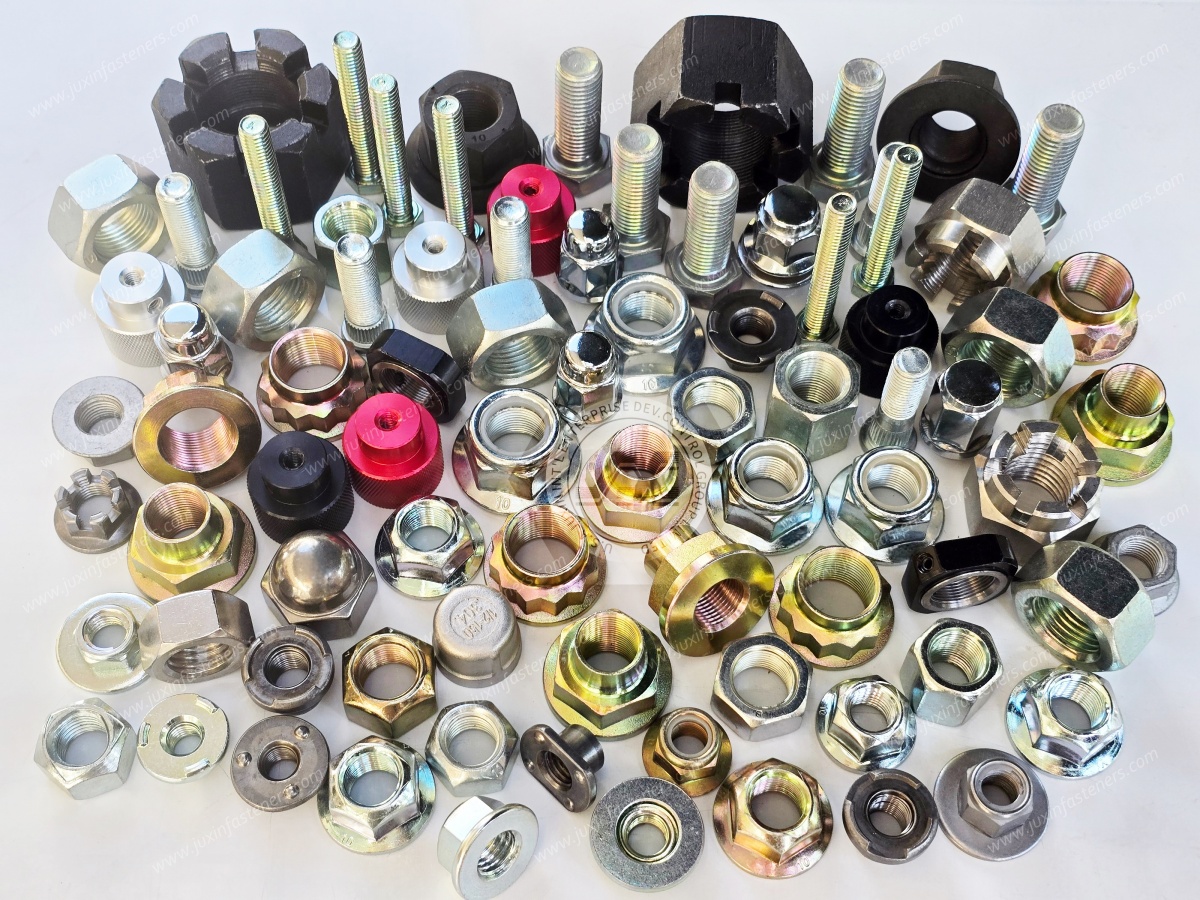
A useful first-stage decision can begin with the assembly condition.
| Assembly Condition | Fastening Technology to Evaluate | Main Engineering Question |
|---|---|---|
| Access to both sides | Bolt + nut | Can the joint maintain required preload? |
| Permanent threaded point in weldable sheet | Weld nut / weld stud | Is the welding process compatible with the sheet and coating? |
| One-sided access in thin sheet | Rivet nut | What grip range, hole geometry and retention are required? |
| Permanent captive thread in suitable sheet | Self-clinching nut / stud | Is sheet hardness and thickness compatible? |
| Permanent assembly without reusable thread | Blind rivet | What grip range and shear/tensile performance are required? |
| Aluminum housing | Machined thread or threaded insert | Is parent-thread strength and service life sufficient? |
| Thermoplastic component | Plastic threaded insert / application-specific screw | How will creep, temperature and boss geometry affect the joint? |
| Vibration-sensitive threaded joint | Locking system | Is loss of preload or rotational self-loosening the real problem? |
| Lightweight / nonmetallic attachment | Nylon or plastic fastener | Are mechanical, temperature and environmental requirements compatible? |
| Custom geometry or packaging constraint | Drawing-based custom fastener | Which manufacturing process provides the required function economically? |
This is a screening framework.
Final selection requires application-specific validation.
Before selecting an automotive fastener, define what the connection must do.
Typical functions include:
Generate clamp load
Transfer structural load
Provide a removable connection
Create a permanent attachment
Create an internal thread in thin material
Provide a captive fastening point
Prevent component rotation
Allow repeated maintenance
Support electrical equipment
Attach trim or interior components
Join dissimilar materials
Two fasteners with similar dimensions can serve completely different functions.
Therefore:
Same Dimensions ≠ Same Joint Function.
The parent material is one of the strongest drivers of fastening technology.
Modern vehicles can combine:
Carbon steel
High-strength steel
Coated steel
Stainless steel
Aluminum alloys
Thermoplastics
Fiber-reinforced polymers
Composite materials
A fastener that performs well in thick steel may be inappropriate in thin aluminum or plastic.
The fastener and parent material must be engineered together.
Steel provides several possible fastening routes, depending on thickness and access.
Options may include:
Bolts and nuts
Weld nuts
Weld studs
Rivet nuts
Self-clinching fasteners
Blind rivets
Thread-forming screws
Selection depends on:
Sheet thickness
Steel grade
Surface coating
Load
Access
Production volume
Installation equipment
Serviceability
For high-strength or coated sheet, manufacturing compatibility becomes especially important.
Aluminum can reduce vehicle mass, but fastening it requires attention to different material behavior.
Engineers should consider:
Lower parent-thread strength compared with many steels
Thread engagement
Bearing stress
Galvanic interaction
Thermal expansion
Surface treatment
Repeated service
Joint preload
Possible solutions include:
Bolts and nuts
Rivet nuts
Threaded inserts
Application-specific self-clinching technology
Blind rivets
Custom fastening systems
A stronger steel screw does not automatically create a stronger aluminum joint.
Stronger Mating Screw ≠ Stronger Mating Thread.
Plastic requires a different engineering approach.
Relevant variables include:
Polymer type
Polymer grade
Reinforcement
Moisture absorption
Service temperature
Chemical exposure
Creep
Stress relaxation
Boss geometry
Hole geometry
Installation method
Possible fastening technologies include:
Threaded inserts
Thread-forming screws for plastics
Machine screws with inserts
Nylon fasteners
Plastic clips
Snap-fit plus fastener combinations
A metal fastener cannot compensate for poor plastic boss design.
Strong Insert ≠ Strong Plastic Joint.
Assembly access often eliminates several fastening technologies immediately.
When operators or automated equipment can reach both sides, conventional bolt-and-nut assemblies may be practical.
Benefits can include:
Standardized components
Easy disassembly
Straightforward maintenance
Broad material and strength options
But installation still requires access to both the bolt head and nut.
If the rear side becomes inaccessible during assembly, engineers may evaluate:
Rivet nuts
Blind rivets
Certain threaded inserts
Pre-installed captive fasteners
This is common in:
Closed sections
Enclosures
Body panels
Equipment housings
EV-related assemblies
Access Condition → Fastening Technology
is one of the most useful early design rules.
Serviceability changes the fastening decision.
A removable cover may benefit from:
Bolt and nut
Machine screw into a threaded insert
Screw into a rivet nut
Captive threaded fastener
A permanent joint may instead use:
Blind rivet
Welding
Other permanent joining technology
Do not add a reusable threaded system if the component will never require service unless another engineering requirement justifies it.
Likewise, do not choose a permanent joint where field replacement is expected.
Threaded bolts and screws are often used because tightening generates preload and clamp force.
This creates a fundamental engineering principle:
Torque ≠ Preload.
Torque is an installation input.
Preload is the tension generated in the fastener and corresponding clamp force in the joint.
The relationship depends strongly on friction.
Therefore, when clamp load matters, engineers should evaluate:
Fastener diameter
Material
Property class
Thread
Bearing surface
Coating
Lubrication
Mating component
Tightening method
Selecting a stronger bolt can be useful when the joint requires it.
But increasing fastener strength alone does not automatically increase joint capacity.
The limiting component may be:
Internal thread
Aluminum housing
Plastic insert
Thin sheet
Weld
Bearing surface
Parent material
Therefore:
Higher Fastener Strength ≠ Higher Joint Strength.
This is especially important during cost-reduction and second-source projects.
Automotive assemblies experience vibration and dynamic loading, but the solution should not automatically be:
"Use a lock nut."
First determine why clamp load is being lost.
Potential causes include:
Insufficient preload
Joint settlement
Embedment
Transverse movement
Creep
Thermal cycling
Friction variation
Incorrect tightening
Poor joint stiffness
Only then should the locking method be selected.
Depending on the application, possible solutions include:
Nylon insert lock nuts
All-metal prevailing torque nuts
Serrated flange nuts
Wedge-locking systems
Thread-locking compounds
Application-specific locking geometry
Each works differently.
Therefore:
Locking Feature ≠ Correct Preload.
And:
Prevailing Torque ≠ Preload.
A locking device should support the joint design rather than compensate for an incorrectly engineered connection.
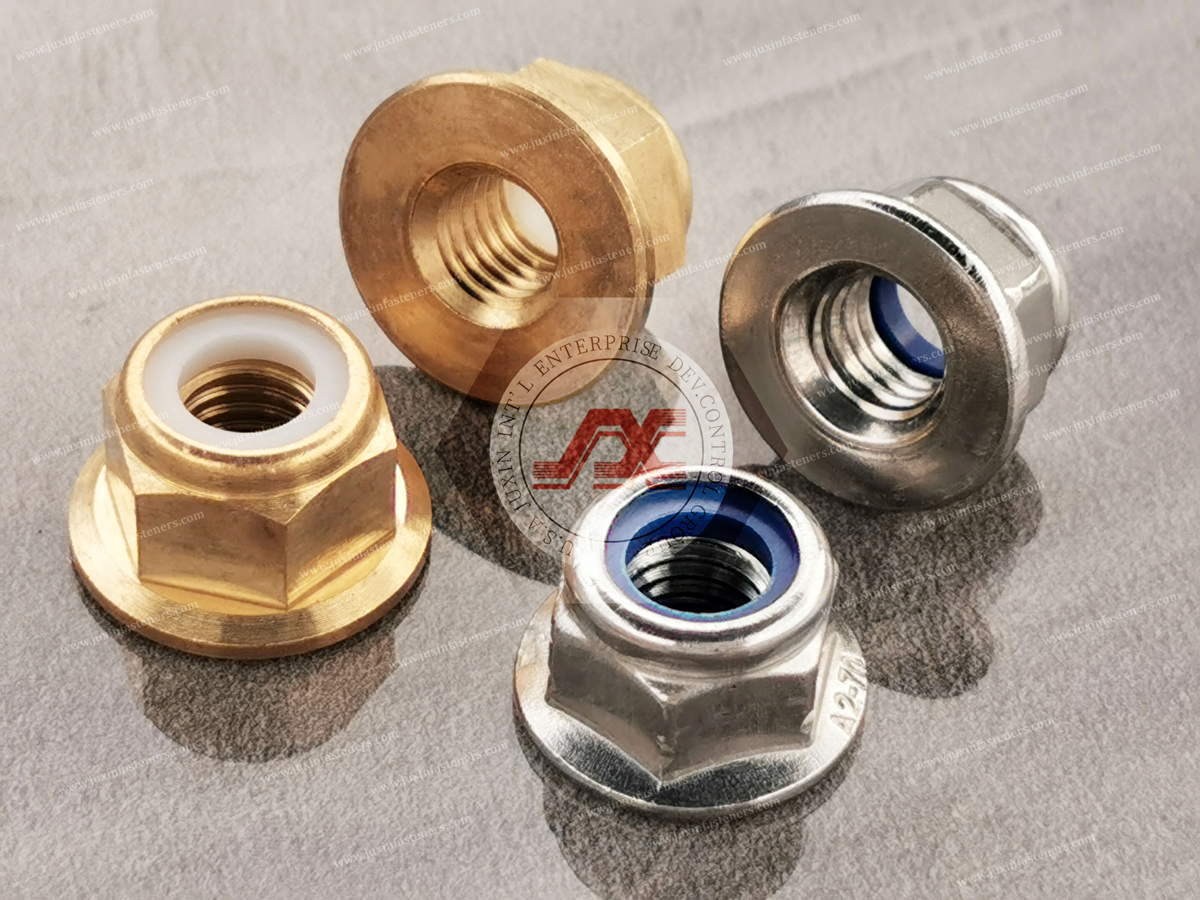
Nylon insert lock nuts generate prevailing torque through interaction between the mating thread and polymer insert.
They may be considered where:
Service temperature is compatible with the polymer
Chemical exposure is acceptable
Prevailing torque requirements are defined
Assembly conditions are suitable
Potential applications include selected:
Interior equipment
Electrical systems
General brackets
Machinery
Motorcycle assemblies
They should not automatically be specified for high-temperature locations.
All-metal lock nuts use controlled metallic deformation or locking geometry.
They can be evaluated where:
Polymer inserts are unsuitable
Higher service temperatures are involved
A metallic prevailing-torque mechanism is specified
However, the locking torque must be considered separately from the torque used to generate clamp load.
Thin sheet creates a common automotive engineering problem:
How do we create a durable internal thread where the sheet itself is too thin for sufficient thread engagement?
Three important technologies are:
Weld nuts
Rivet nuts
Self-clinching nuts
They are not interchangeable.
Weld nuts create a permanent threaded attachment through a welding process.
They can be suitable for high-volume sheet-metal production when welding is integrated into manufacturing.
Engineering variables include:
Parent sheet material
Sheet thickness
Nut material
Projection geometry
Surface condition
Welding current
Welding time
Electrode force
Tooling
Alignment
Remember:
Strong Nut ≠ Strong Welded Joint.
The weld process is part of the fastening system.
Increasing welding energy does not automatically improve joint strength.
Excessive energy can create:
Expulsion
Sheet damage
Distortion
Thread damage
Inconsistent weld quality
Insufficient energy can produce inadequate fusion.
Weld nuts should therefore be developed and validated together with the actual parent sheet and production welding process.
Rivet nuts create reusable internal threads through one-sided mechanical installation.
They can be useful where:
Rear access is unavailable
Welding is undesirable
Thin material requires a stronger threaded attachment
Serviceability is required
Selection should consider:
Parent material
Sheet thickness
Hole size
Hole geometry
Grip range
Body style
Knurling
Hex body options
Flange geometry
Installation tooling
Two important rivet-nut failure modes are different.
Pull-out concerns axial removal from the parent material.
Spin-out concerns rotation of the installed rivet nut when torque is applied.
A rivet nut can perform well in one mode and poorly in the other.
Therefore:
Pull-Out ≠ Spin-Out.
And:
Spin-Out ≠ Screw Self-Loosening.
Procurement specifications should distinguish these requirements where relevant.
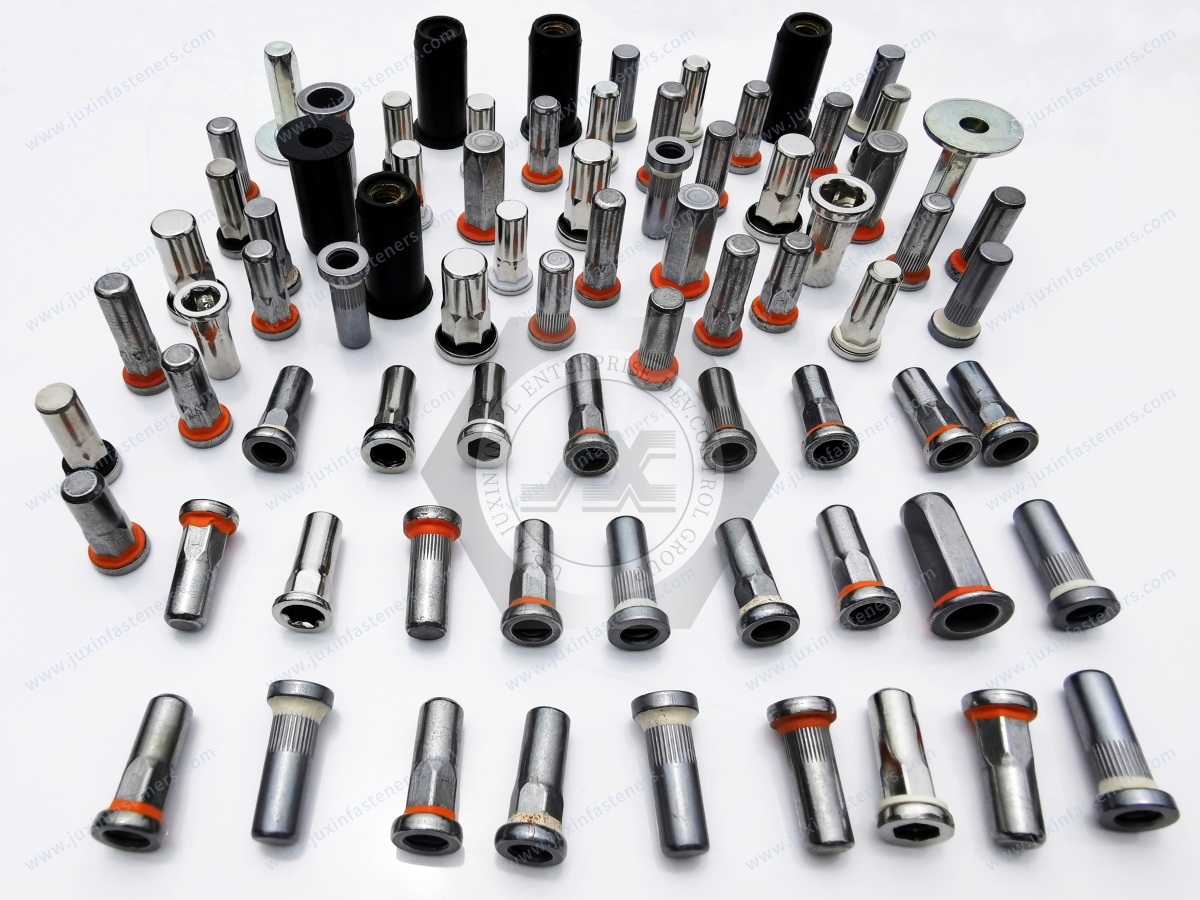
Self-clinching nuts, studs and standoffs create captive attachment points through controlled displacement of suitable sheet material.
Performance depends on:
Sheet material
Sheet hardness
Sheet thickness
Hole geometry
Edge distance
Fastener geometry
Installation tooling
Press conditions
Key functional characteristics can include:
Push-out resistance
Torque-out resistance
But:
More Press Force ≠ Better Installation.
The process must be matched to the fastener and sheet.
| Engineering Question | Weld Nut | Rivet Nut | Self-Clinching Nut |
|---|---|---|---|
| One-sided installation | No | Yes | Installation access/process dependent |
| Welding required | Yes | No | No |
| Suitable for thin sheet | Yes, when welding process is compatible | Yes | Yes, when sheet properties are compatible |
| Heat input | Yes | No | No |
| Captive thread | Yes | Yes | Yes |
| Parent material sensitivity | High | High | High |
| Installation tooling | Welding equipment | Rivet-nut setting tool | Press/tooling |
| Key validation | Weld integrity | Pull-out / spin-out | Push-out / torque-out |
This comparison should be used to narrow the technology choice before detailed validation.
Not every automotive assembly requires a threaded connection.
For permanent thin-sheet assembly, a blind rivet may sometimes be more appropriate.
Blind rivets can be useful where:
Only one side is accessible
The joint does not require routine disassembly
Sheet or panel assembly is required
Welding is undesirable
Selection should consider:
Rivet diameter
Grip range
Total joint stack
Hole size
Hole roundness
Burr condition
Edge distance
Head style
Mandrel
Material combination
Shear requirement
Tensile requirement
A common sourcing mistake is selecting only by diameter.
Correct Diameter + Wrong Grip Range = Wrong Rivet.
The catalog strength of a blind rivet does not define the complete joint.
Installed performance also depends on:
Parent material
Hole quality
Edge distance
Joint stack
Installation
Load direction
Therefore:
Rivet Strength ≠ Installed Joint Strength.
Automotive fastener coating should be selected according to the actual environment and assembly process.
Potential systems include:
Zinc plating
Zinc-nickel plating
Zinc-flake systems
Phosphate-based systems
Other customer-specified coatings
The coating affects more than corrosion.
It can influence:
Friction
Preload
Thread fit
Installation
Appearance
Hydrogen embrittlement considerations
A coating specification should not be reduced to the largest salt-spray number on a supplier datasheet.
Laboratory corrosion testing does not directly predict years of vehicle service.
Actual exposure may involve:
Wet/dry cycles
Chlorides
Temperature changes
Chemicals
Abrasion
Stone impact
Galvanic interaction
Therefore:
Salt Spray Hours ≠ Field Service Life.
Changing from zinc to Zn-Ni or another coating system can alter friction.
If the tightening torque remains unchanged, resulting clamp load may change.
Therefore:
Coating Substitution Can Be an Engineering Change.
This is particularly important for torque-controlled automotive joints.
Susceptible high-strength steel components require appropriate process controls where hydrogen can be introduced during manufacturing or electroplating.
The risk depends on:
Material
Hardness
Strength
Residual stress
Pretreatment
Plating process
Applied stress
A coating should not be marketed as universally "hydrogen-embrittlement-free" without considering the complete component and manufacturing process.
For high-strength components, applicable ISO, ASTM, SAE or OEM requirements should govern process selection and validation.
Modern vehicles increasingly combine:
Steel
Aluminum
Stainless steel
Copper alloys
Coated metals
Plastics
Composites
This creates galvanic and thermal-expansion considerations.
For example, a coated steel fastener installed into aluminum should be evaluated as a complete material system.
Corrosion-Resistant Fastener ≠ Corrosion-Resistant Assembly.
The mating material and environment matter.
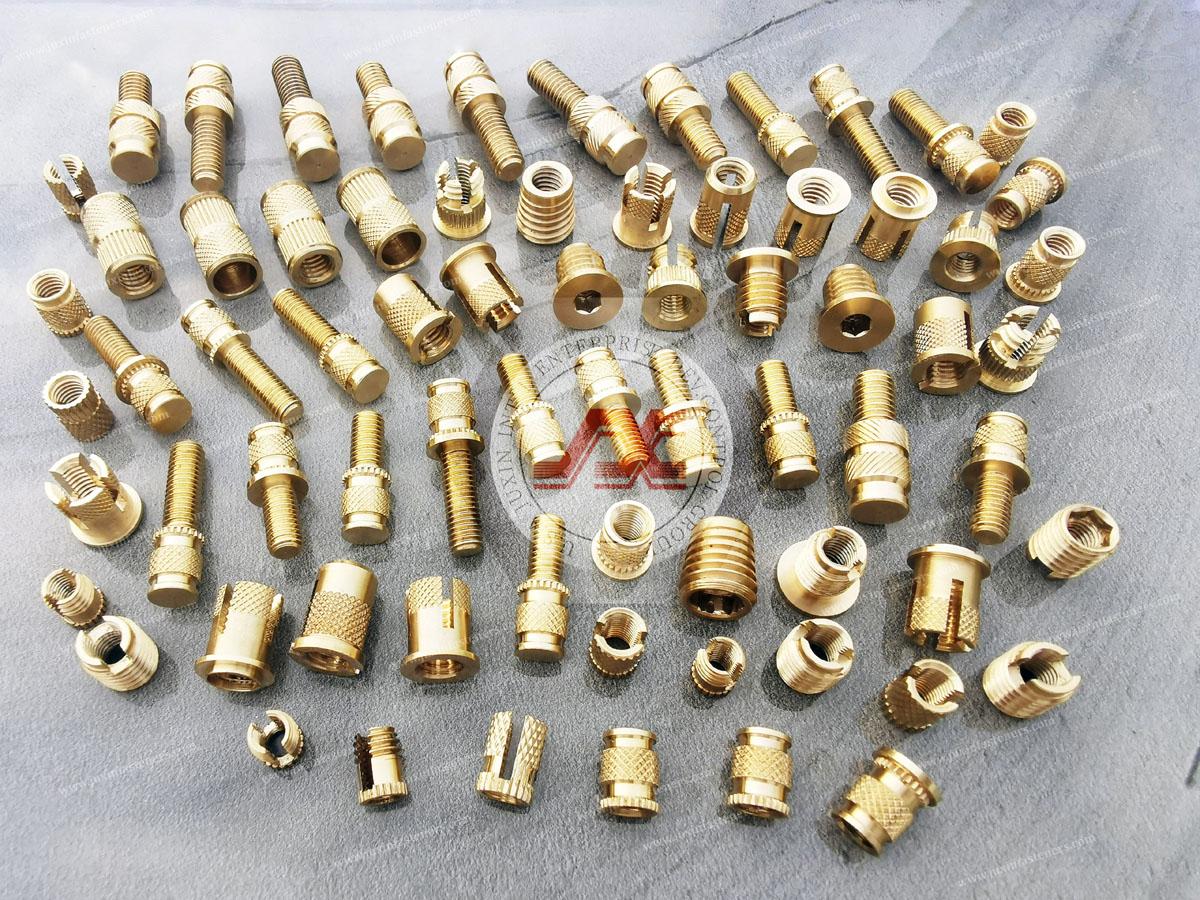
EV platforms create additional fastening decisions because battery-related and electrical assemblies often combine:
Aluminum
Steel
Plastics
Copper
Electronic components
Thermal-management hardware
Potential JUXIN FASTENERS products for selected EV equipment include:
Bolts
Screws
Lock nuts
Rivet nuts
Weld nuts
Threaded inserts
Self-clinching fasteners
Blind rivets
Nylon fasteners
Custom components
Potential applications include selected:
Battery-related enclosures
Electrical housings
Power electronics
Cooling equipment
Brackets
Cable-management systems
Each fastening location should be evaluated according to its actual function.
A metallic fastener may also participate in grounding or electrical continuity.
But:
Metal Fastener ≠ Qualified Electrical Connection.
Electrical performance can depend on:
Contact surfaces
Coating
Contact pressure
Oxidation
Current
Mating material
Thermal cycling
Mechanical and electrical requirements should be defined separately.
Automotive electronics increasingly require reliable fastening in plastic housings and lightweight enclosures.
Possible solutions include:
Threaded inserts for plastics
Thread-forming screws
Machine screws
Nylon fasteners
Plastic clips
Selection should consider:
Polymer
Reinforcement
Boss geometry
Creep
Stress relaxation
Temperature
Moisture
Chemical exposure
Service cycles
A plastic joint should not be designed using metal-joint assumptions.
Interior assemblies can use a wide range of fastening technologies, including:
Screws
Clips
Nylon rivets
Plastic push fasteners
Threaded inserts
Metal nuts
Custom retainers
Engineering priorities can differ from structural joints.
They may include:
Installation speed
Appearance
Low mass
Serviceability
Noise control
Panel retention
Damage-free installation
This is why a single "automotive fastener" category cannot describe all vehicle fastening requirements.
JUXIN FASTENERS can support selected components manufactured from materials such as:
Carbon steel
Stainless steel
Aluminum alloys
Titanium alloys
Copper alloys
Nylon and engineering plastics
Material selection should follow the joint requirement rather than a simple material hierarchy.
Carbon and alloy steels are widely used where strength, manufacturing efficiency and cost are important.
Selection can depend on:
Required mechanical properties
Heat treatment
Fatigue
Coating
Hydrogen embrittlement considerations
Welding requirements
Stainless steel can provide useful corrosion resistance in selected environments.
However:
Stainless Steel ≠ Corrosion-Proof.
Engineers should consider:
Stainless grade
Chlorides
Chemicals
Galling
Friction
Preload
Mating material
Galvanic interaction
Aluminum fasteners may support lightweighting in selected applications.
But:
Aluminum Fastener ≠ Steel Fastener at Lower Weight.
Engineering should consider:
Alloy
Mechanical properties
Thread strength
Engagement
Preload
Galvanic interaction
Thermal expansion
Surface treatment
Titanium can be useful where specific combinations of strength, weight and corrosion behavior justify its cost.
It should not be treated as a universal upgrade.
Selection should consider:
Titanium grade
Mating material
Thread behavior
Galling
Surface treatment
Installation
Cost
When a fastener fails, replacing it with a stronger component is not always the correct response.
Possible failure modes include:
Bolt fracture
Thread stripping
Self-loosening
Loss of preload
Rivet nut spin-out
Rivet nut pull-out
Weld failure
Clinching failure
Corrosion
Galvanic attack
Coating damage
Parent-material failure
The failure mode should determine the corrective action.
Possible causes:
Insufficient preload
Excessive friction variation
Joint settling
Transverse movement
Incorrect tightening
Creep
A higher-strength bolt may not solve any of these.
Possible causes:
Incorrect hole size
Incorrect body style
Parent material too soft
Incorrect grip range
Inadequate setting
Excessive installation torque
The solution is not automatically a larger rivet nut.
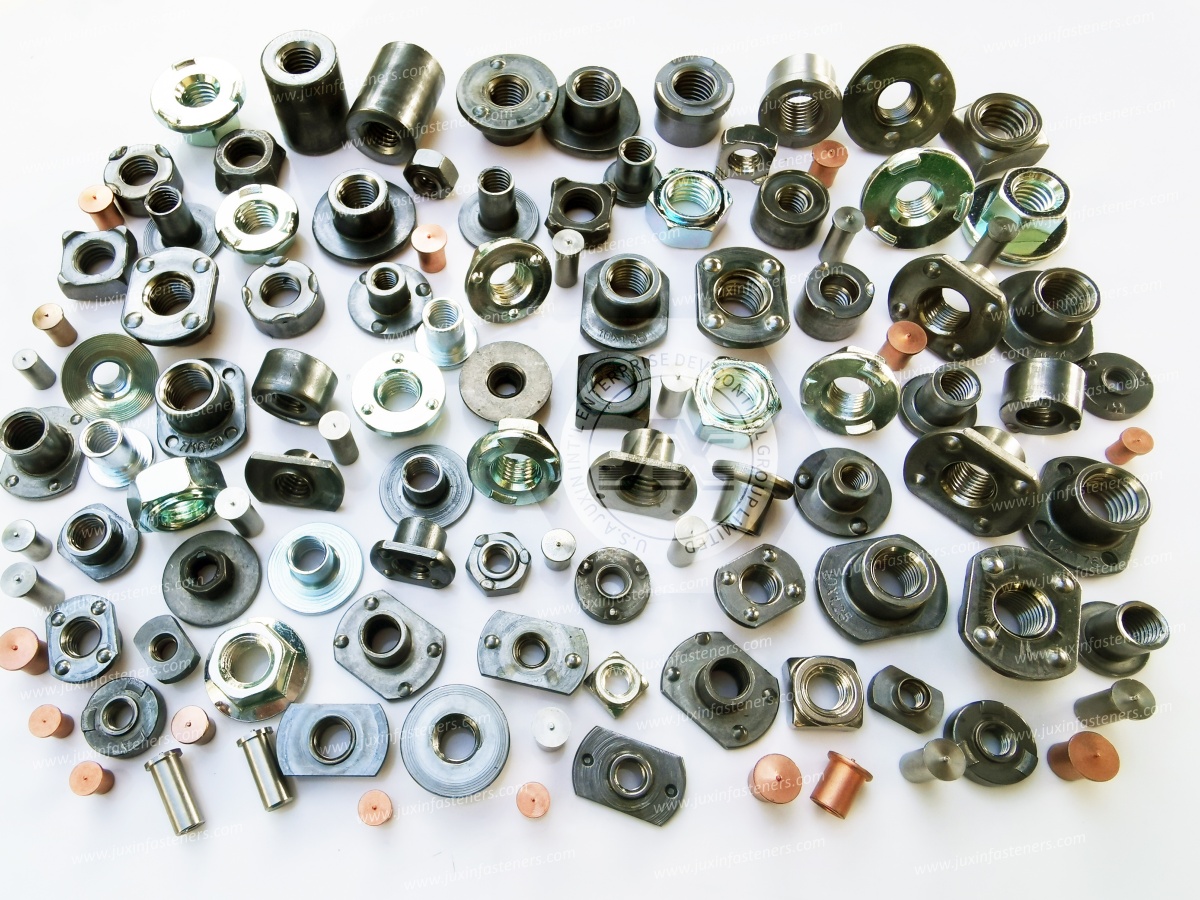
Possible causes:
Welding parameter mismatch
Projection geometry
Sheet condition
Surface coating
Alignment
Electrode condition
Again:
Strong Nut ≠ Strong Welded Joint.
Evaluate:
Weld nuts
Weld studs
Rivet nuts
Self-clinching fasteners
Blind rivets
Bolts and screws
Evaluate:
Bolts
Screws
Rivet nuts
Threaded inserts
Self-clinching fasteners
Nylon fasteners
Custom components
Evaluate:
Threaded inserts
Thread-forming screws
Nylon fasteners
Plastic clips
Evaluate:
Bolts
Nuts
Lock nuts
Captive threaded fasteners
Evaluate:
Rivet nuts for reusable threads
Blind rivets for permanent joining
The correct solution follows the application rather than the product category.
For procurement and supplier-development teams, supplier qualification should go beyond comparing certificates and prices.
Important questions include:
Can the supplier understand the drawing?
Can they identify critical characteristics?
Can they recommend a suitable manufacturing route?
Can they control material?
Can they control heat treatment where applicable?
Can they control thread production?
Can they manage coating requirements?
Can they support samples?
Can they support dimensional inspection?
Can they support functional testing requirements?
Can they control drawing revisions?
Can they scale from prototype to production?
A supplier should be evaluated against the actual part and application requirements.
Custom automotive fasteners may be manufactured through processes such as:
Cold heading
Cold forming
Thread rolling
CNC machining
Automatic turning
Secondary machining
Heat treatment
Surface treatment
The manufacturing route should depend on:
Geometry
Material
Tolerance
Volume
Mechanical requirement
Surface finish
Tooling economics
A CNC-machined prototype and a cold-formed production part can have the same nominal dimensions but different manufacturing economics.
Early DFM review can reduce later redesign.
Automotive supply chains often need alternate suppliers for continuity and risk reduction.
But:
Same Dimensions ≠ Functional Equivalence.
Second-source qualification may need to compare:
Drawing revision
Material
Mechanical properties
Heat treatment
Thread
Critical geometry
Coating
Friction
Locking feature
Installation behavior
Functional performance
The relevant validation depends on the product.
For example:
Rivet nut → pull-out / spin-out / setting behavior
Self-clinching fastener → push-out / torque-out
Weld nut → welding behavior and weld performance
Lock nut → prevailing torque behavior
Bolt → mechanical properties and tightening behavior
Plastic insert → pull-out / torque behavior in actual polymer
Second sourcing is an engineering qualification activity, not just a price comparison.
A fastener that costs less per piece can still increase production cost.
A useful procurement model is:
Total Installed Cost = Part Price + Installation + Tooling + Inspection + Rework + Scrap + Downtime + Logistics + Supply Risk
Examples include:
A cheap rivet nut that spins during assembly
A weld nut requiring frequent welding adjustment
A coating that changes tightening behavior
A plastic insert that damages the boss
A custom screw that slows automated installation
Procurement should compare the cost of the fastening system, not only the unit price.
For a meaningful engineering and commercial review, provide:
2D drawing
3D model where available
Part number
Drawing revision
Application
Parent material
Fastener type
Material
Mechanical property requirement
Thread
Mating component
Load requirement
Surface treatment
Environment
Installation method
Annual volume
Sample quantity
Validation requirement
Applicable ISO, DIN, EN, SAE, ASTM or OEM specification
Depending on the product, also include:
Sheet thickness
Hole size
Grip range
Pull-out requirement
Spin-out requirement
Setting method
Parent sheet
Sheet thickness
Welding process
Coating
Weld validation requirement
Sheet material
Sheet hardness
Sheet thickness
Hole size
Edge distance
Push-out / torque-out requirements
Polymer
Reinforcement
Boss geometry
Installation process
Temperature
Service cycles
Property class
Mating thread
Coating
Friction requirement
Tightening method
Preload or joint requirement where applicable
A practical automotive fastener development path is:
Application Requirement → Fastening Technology Selection → Drawing / DFM Review → Material & Process Selection
→ Quotation → Prototype / Sample → Inspection → Functional Testing → Assembly Trial → Approval → Production
For safety-related or highly loaded vehicle applications, the OEM or project-specific qualification process must govern approval.
JUXIN FASTENERS does not treat a generic fastener specification as automatic qualification for a safety-critical vehicle location.
This page should function as the Automotive Fastener Selection / OEM Sourcing Decision Guide.
Recommended internal links include:
Automotive Threaded Fasteners → preload, friction, locking and threaded-joint engineering
Automotive Sheet Metal Fastening → sheet-metal fastening technology selection
Fastener Surface Treatment & Coating Selection → corrosion and friction engineering
Zinc-Nickel Coated Fasteners → Zn-Ni engineering and sourcing
Zinc vs Zinc-Nickel Plating → coating cost/performance comparison
Black Zinc-Nickel Fasteners → black coating selection
Rivet Nuts → one-sided threaded attachment
Weld Nuts → projection welding and sheet-metal threads
Self-Clinching Fasteners → press-installed captive threads
Threaded Inserts for Plastic → polymer fastening engineering
Blind Rivets → one-sided permanent sheet joining
Lock Nuts → prevailing torque and anti-loosening
Fastener Failure Modes → root-cause analysis
Custom Fastener Manufacturing → cold heading, machining and DFM
Use the existing indexed JUXIN FASTENERS URL when implementing these internal links.
Start with joint function, parent material, load, assembly access and serviceability.
Then select the fastening technology, material, strength, coating, installation method and validation requirements.
For a reusable internal thread, a rivet nut may be appropriate. For a permanent joint that does not require a reusable thread, a blind rivet may be considered.
The final choice depends on sheet thickness, hole geometry, load and assembly requirements.
A weld nut can be efficient when welding is integrated into high-volume sheet-metal production.
A rivet nut is useful when welding is undesirable or one-sided mechanical installation is required.
No. Sheet material, hardness, thickness, hole geometry and edge distance must be compatible with the selected self-clinching fastener.
No. The joint may be limited by the mating thread, parent material, weld, insert or bearing surface.
Fastener strength must match the complete joint.
There is no universal answer. First determine whether the problem is insufficient preload, transverse movement, settlement, creep or another failure mechanism.
Then select the appropriate locking strategy.
Potentially, but coating substitution can change friction, thread fit and tightening behavior. Engineering or customer approval may be required.
Non-electrolytic zinc-flake processes avoid the electrolytic deposition step associated with electroplating,
but the complete manufacturing route still needs to be reviewed for susceptible high-strength components. A universal zero-risk claim should not be assumed.
Depending on the specific assembly, possible technologies include bolts, screws, rivet nuts, weld nuts, threaded inserts, self-clinching fasteners,
blind rivets and plastic fasteners. Suitability depends on the actual structural, electrical, environmental and service requirements.
Send the 2D drawing, 3D model where available, part revision, application, parent material, fastener material, mechanical requirements, mating component,
coating, installation method, environment, validation requirements and annual volume.
The most effective automotive fastening decision usually follows this sequence:
Joint Function → Parent Material → Assembly Access → Serviceability → Fastening Technology → Material / Strength → Coating → Installation → Validation → Supplier Qualification
This approach helps engineers avoid over-design and helps procurement avoid comparing technically different fasteners as though they were interchangeable commodities.
JUXIN FASTENERS supports OEM, Tier-1, Tier-2 and industrial customers with standard and drawing-based fastening components for selected automotive and EV applications.
Our product scope includes:
Automotive bolts and screws
Nuts and lock nuts
Weld nuts and weld studs
Rivet nuts
Blind rivets
Threaded inserts
Self-clinching fasteners
Nylon and plastic fasteners
Automotive clips
Custom cold-formed components
Custom machined components
If you are developing a new automotive assembly, redesigning an existing fastening point, qualifying a second source or reviewing a fastener failure,
send the technical package for engineering and commercial review.
For an effective RFQ, provide:
2D Drawing + 3D Model + Part / Revision + Application + Parent Material + Fastener Material + Mechanical Requirement + Mating Component
+ Surface Treatment + Installation Method + Annual Volume
Where applicable, also provide:
Sheet Thickness + Hole Size + Grip Range + Welding Process + Thread + Property Class + Friction Requirement + Load Requirement
+ Environmental Requirement + Validation Requirements
JUXIN FASTENERS
Automotive Fasteners | Automotive Bolts & Nuts | Rivet Nuts | Weld Nuts | Threaded Inserts | Self-Clinching Fasteners | Custom OEM Fasteners
Email: info@juxinfasteners.com
Website: www.juxinfasteners.com
Contact Us
Tel.:
+86 020 8621 0320
+86 020 3121 6067
E-mail:
Technical Support:
Navigation
SEND INQUIREY



