
Call Us
+86 136 6007 9809
Call Us
+86 136 6007 9809

Apr. 08, 2026
Automotive washers, rivets and pins are often grouped together as small fastening components, but they perform fundamentally different engineering functions.
A washer can distribute bearing load, protect a surface, provide spacing or support a specific locking architecture.
A rivet creates a permanent mechanical joint between components.
A dowel pin can locate two components with controlled positional accuracy.
A spring pin can provide retention, alignment or pivot functionality through elastic interference.
These components should therefore not be selected simply as accessories to bolts and screws.
For automotive engineers, procurement managers and supplier-development teams, the first question should be:
What mechanical function must the component perform?
A practical selection framework is:
Joint Function → Parent Material → Load Direction → Geometry → Installation Access → Assembly Process
→ Environment → Serviceability → Failure Mode → Validation
JUXIN FASTENERS supplies standard and drawing-based washers, rivets, pins and related fastening components for selected automotive,
EV, electrical, industrial and OEM assemblies, including:
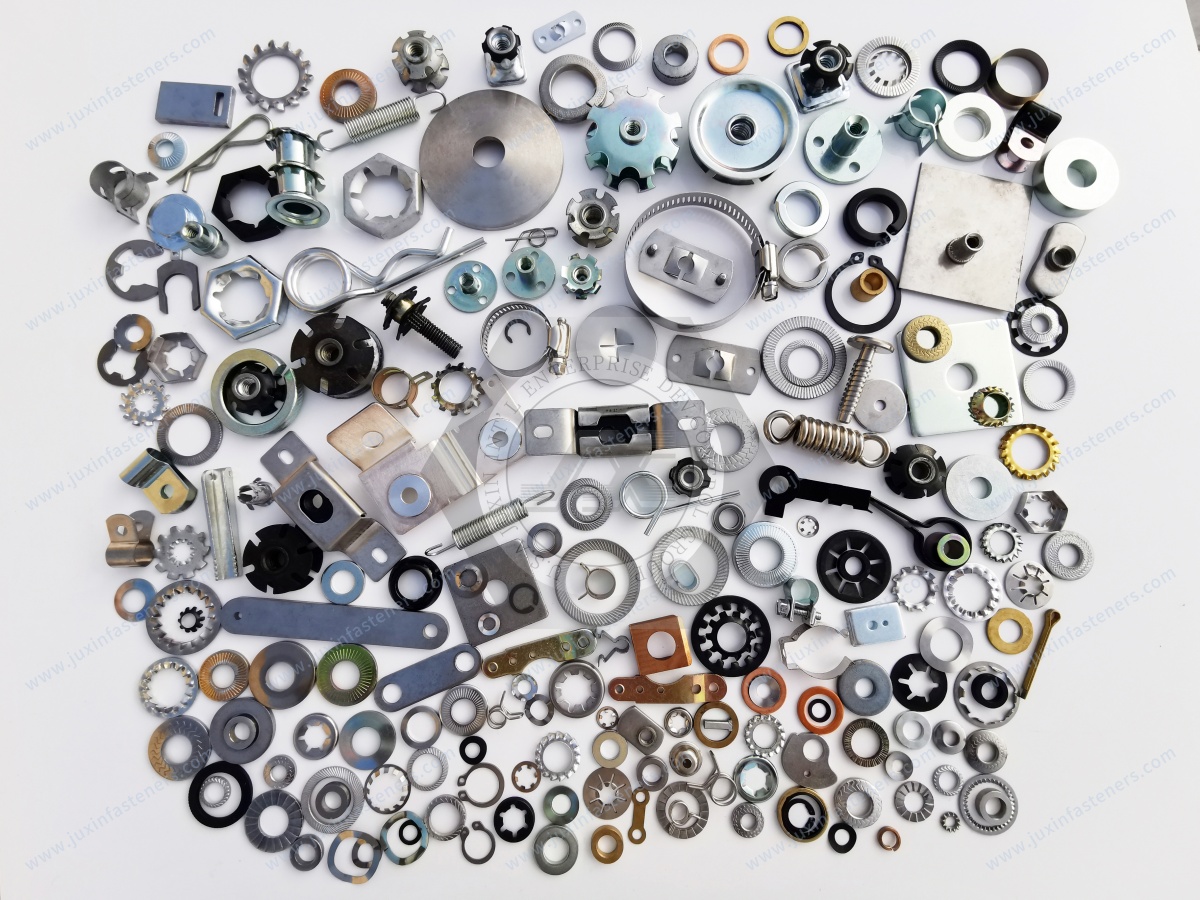
Flat washers
Large-diameter washers
Spring washers
Serrated washers
Locking washers
Conical and disc-type washers
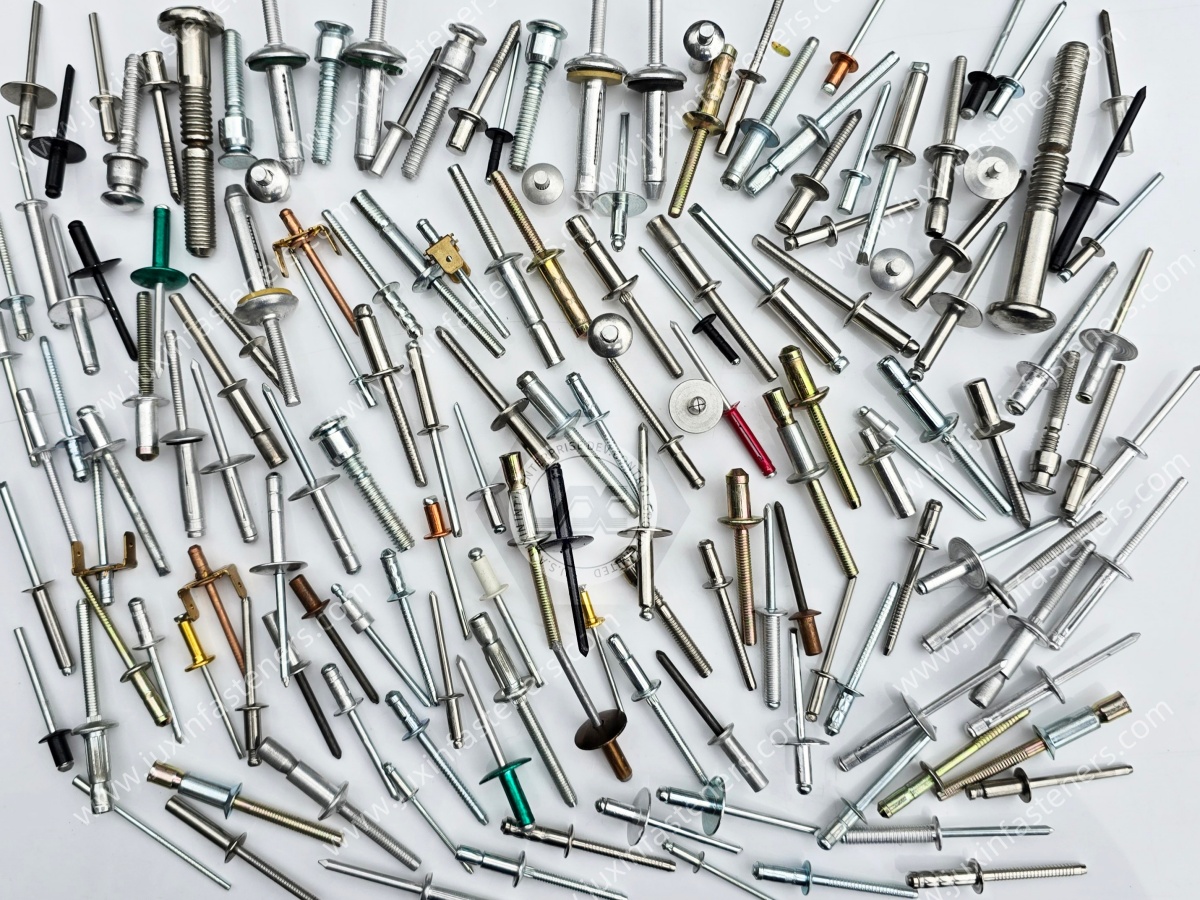
Blind rivets
Closed-end blind rivets
Structural-type blind rivets for suitable validated applications
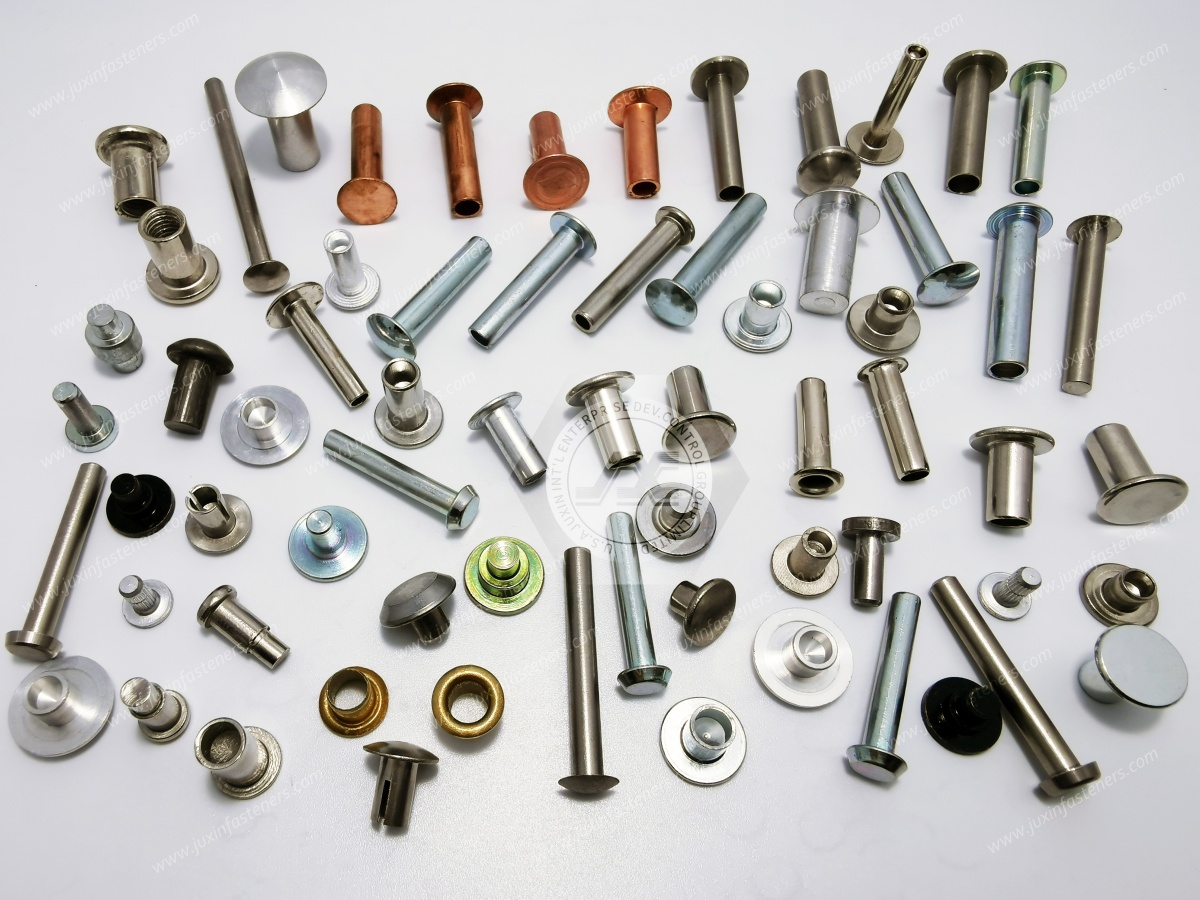
Solid rivets
Semi-tubular rivets
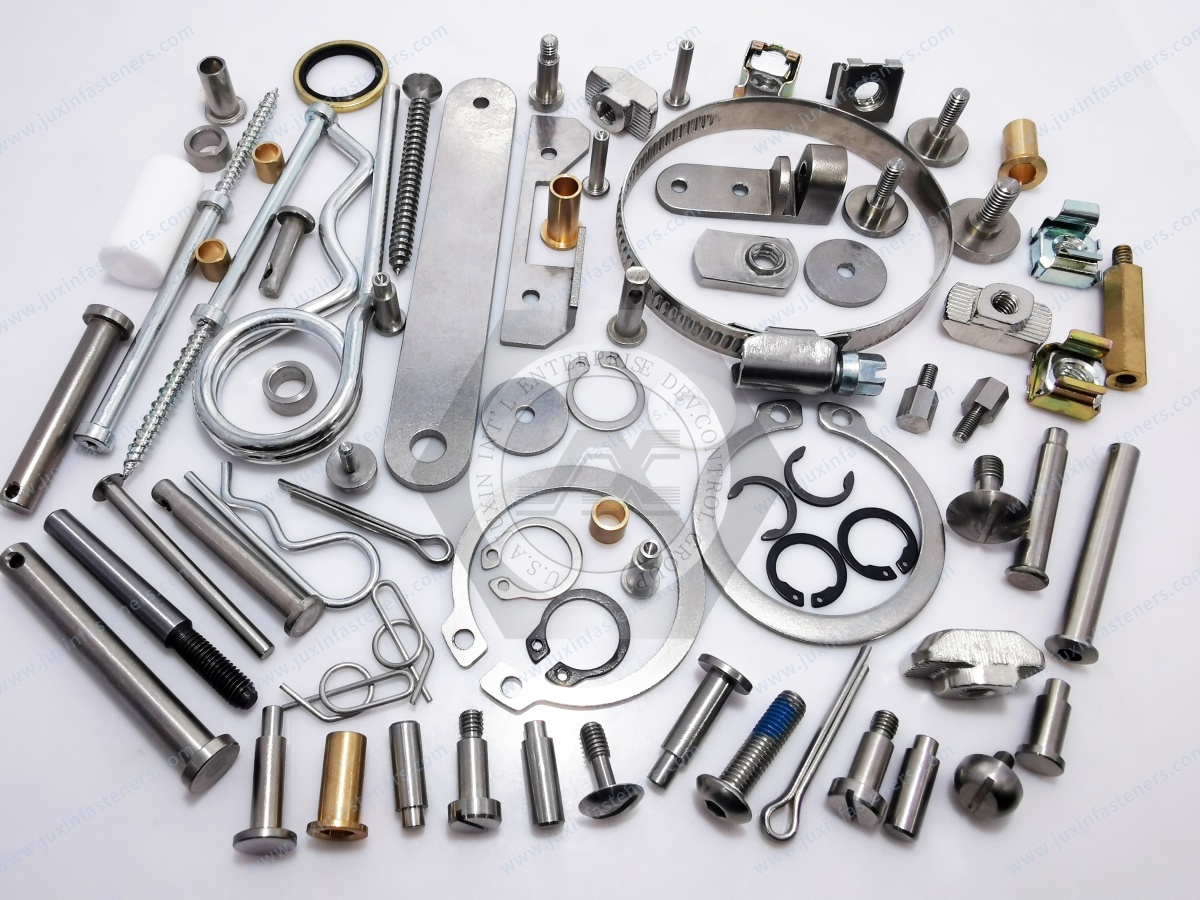
Dowel pins
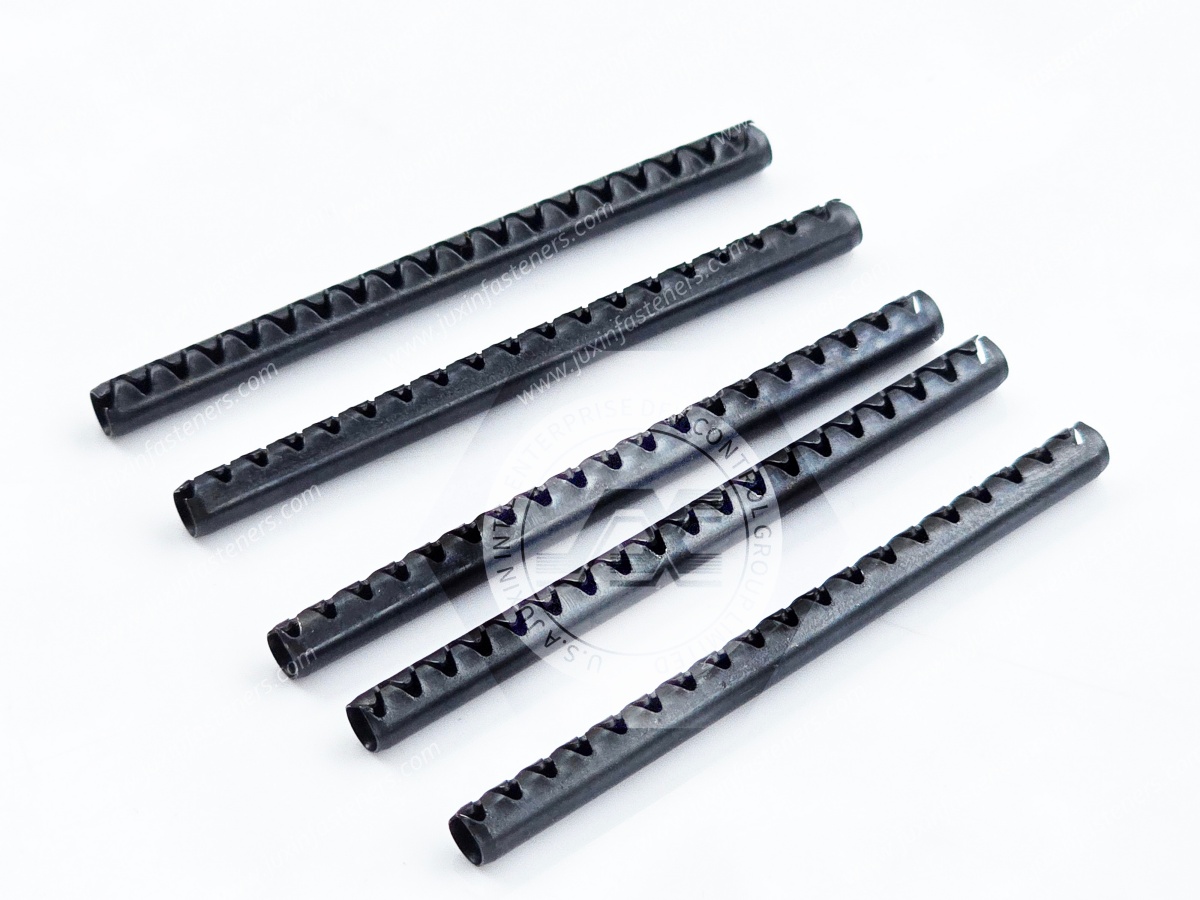
Spring pins
Slotted spring pins
Coiled spring pins
Grooved pins
Retaining pins
Custom stamped washers
Custom rivets
Drawing-based precision pins
The correct component depends on the actual joint—not the component name alone.
| Required Function | Technology to Evaluate | Key Engineering Variable |
|---|---|---|
| Distribute bolt-head or nut bearing load | Flat washer | Bearing area and parent material |
| Protect a soft surface | Flat / large-diameter washer | Surface pressure |
| Support a designed locking strategy | Application-specific locking washer | Joint movement and locking mechanism |
| Permanently join sheet materials | Blind / solid / semi-tubular rivet | Grip, hole and joint stack |
| Install permanent joint from one side | Blind rivet | Grip range and installation |
| Accurately locate two components | Dowel pin | Hole fit and positional tolerance |
| Retain through elastic interference | Spring pin | Hole size and pin compression |
| Provide pivot / hinge function | Application-specific pin | Shear, bearing and wear |
| Retain a removable component | Retaining pin | Retention mechanism and service requirement |
The important principle is:
Washer ≠ Rivet ≠ Pin.
They solve different mechanical problems.
Washers are commonly installed beneath:
Bolt heads
Nuts
Screws
Stud-mounted components
Their function can include:
Load distribution
Surface protection
Spacing
Compensation for geometry
Support for a specific locking system
But the function must be defined.
A washer should not automatically be added simply because “automotive joints need washers.”
When a bolt or nut transfers clamp load into a parent component, contact pressure develops beneath the bearing surface.
A washer can increase the effective bearing area.
This can be useful where the mating material is:
Thin sheet
Aluminum
Polymer
Composite
Coated material
Relatively soft metal
The engineering objective is not simply to use a larger washer.
It is to control the bearing stress at the interface.
Increasing washer diameter can distribute load over a larger area.
But excessively large or poorly matched washers can create:
Packaging conflicts
Local bending
Uneven seating
Interference with adjacent features
Assembly problems
Therefore:
More Bearing Area ≠ Automatically Better Joint.
Washer geometry should match the parent component and load path.
A washer installed beneath a highly loaded bolt must resist unacceptable deformation.
If the washer is too soft for the application, it may:
Embed
Dish
Deform
Contribute to clamp-load loss
Therefore washer selection can involve:
Material
Hardness
Thickness
Outside diameter
Inside diameter
Surface condition
A washer is a functional joint component, not merely a stamped ring.
One of the most important distinctions in threaded-joint engineering is:
Washer ≠ Automatic Anti-Loosening Device.
A plain flat washer primarily performs functions such as:
Bearing-load distribution
Surface protection
Spacing
It should not automatically be described as a locking component.
Traditional spring washers are used in many assemblies, but their presence alone does not prove that a joint will resist self-loosening under severe transverse movement or vibration.
Joint behavior depends on:
Preload
Joint stiffness
Interface movement
Friction
External loading
Temperature
Therefore:
Spring Washer ≠ Guaranteed Vibration Resistance.
The actual loosening mechanism must be understood.
Application-specific locking washer technologies may use mechanisms such as:
Serrated interfaces
Wedge-locking geometry
Other mechanical locking features
These systems should be evaluated according to the actual joint design and required validation.
But even a specialized locking washer does not replace correct tightening.
Locking Feature ≠ Correct Preload.
For a threaded joint, tightening torque is an installation input.
Preload is the tension developed in the fastener.
A simplified conceptual relationship is:
T = K × F × d
where:
T = tightening torque
K = friction-related coefficient
F = preload
d = nominal diameter
This illustrates why:
Torque ≠ Preload.
A washer can influence bearing-surface friction and therefore affect the torque-preload relationship.
Replacing one washer with another may change:
Bearing area
Friction
Surface interaction
Joint stiffness
Locking behavior
Therefore:
Washer Substitution Can Be an Engineering Change.
This matters during cost reduction and second-source qualification.
Washers may be used in selected:
Body assemblies
Interior modules
Electrical enclosures
Brackets
Power electronics
Battery-related equipment
HVAC assemblies
Industrial vehicle equipment
However, the washer specification should follow the joint function rather than the industry label.
Electrical and electronic assemblies may use polymer or other insulating washers where electrical isolation is required.
Potential functions can include:
Electrical separation
Surface protection
Spacing
Controlled contact
But:
Plastic Washer ≠ System Electrical Compliance.
The complete assembly must satisfy the applicable electrical requirements.
Stainless steel washers can provide useful corrosion resistance in appropriate environments.
Common material families may include 304-type and 316-type stainless steels.
But:
Stainless Steel ≠ Corrosion-Proof.
Selection should consider:
Environment
Chlorides
Mating material
Galvanic interaction
Mechanical requirement
Carbon-steel washers may use coatings such as:
Zinc
Zinc-nickel
Zinc-flake systems
Customer-specified surface treatments
The coating may influence:
Corrosion resistance
Friction
Bearing behavior
Assembly
Therefore:
Coating Name ≠ Complete Washer Specification.
Rivets solve a different problem from washers.
They create a permanent mechanical joint between two or more components.
Potential automotive applications include selected:
Body panels
Interior structures
Brackets
Heat shields
Electrical enclosures
Lightweight sheet assemblies
Equipment housings
Rivet selection should begin with:
Joint Stack + Parent Material + Hole + Grip Range + Load + Access + Installation + Environment
Blind rivets are particularly useful when assembly access is available from only one side.
This makes them useful in enclosed or difficult-to-access structures.
But:
Blind Installation ≠ Universal Rivet Solution.
The rivet must still match the joint.
Blind rivets are designed to accommodate a defined joint thickness range.
The relevant dimension is the total material stack being clamped.
If the selected rivet has an unsuitable grip range, installation behavior can be incorrect.
Therefore:
Correct Diameter + Wrong Grip Range = Wrong Rivet.
This is one of the most important practical rules in blind-rivet selection.
An RFQ stating only:
“4.8 mm automotive blind rivet”
does not fully define the component.
Engineering should also consider:
Grip range
Joint stack
Hole diameter
Head style
Rivet body material
Mandrel material
Shear requirement
Tensile requirement
Surface treatment
Installation tooling
Rivets can experience different load directions.
Shear loading acts primarily across the rivet.
Tensile loading tends to separate the joined components along the rivet axis.
Therefore:
Shear Strength ≠ Tensile Strength.
The relevant loading mode should be identified before selecting the rivet.
A rivet may have high component-level mechanical properties.
But installed joint performance also depends on:
Parent sheet
Hole geometry
Edge distance
Joint stack
Rivet setting
Load direction
Therefore:
Rivet Strength ≠ Installed Joint Strength.
The rivet hole affects installation and load transfer.
Important variables can include:
Hole diameter
Roundness
Burrs
Alignment
Edge distance
An oversized or damaged hole can reduce installed performance even when the rivet itself is correct.
Blind-rivet installation requires appropriate setting conditions.
Excessive or incorrect installation does not automatically increase joint strength.
Therefore:
More Installation Force ≠ Better Joint.
Tooling and setting behavior should match the rivet system.
Closed-end blind rivets can reduce one potential path through the rivet body and may be useful where improved containment is required.
However:
Closed-End Blind Rivet ≠ Automatically Waterproof Joint.
Sealing also depends on:
Hole
Head interface
Joint geometry
Surface condition
Installation
If an IP or leak requirement exists, the complete assembly must be validated.
Certain blind-rivet technologies are designed for higher structural performance than conventional general-purpose blind rivets.
However:
Structural Blind Rivet ≠ Automatically Qualified Structural Joint.
The installed assembly still requires appropriate engineering validation.
This distinction is particularly important in automotive structures.
Solid rivets can be used where:
Both sides of the joint are accessible
Suitable forming equipment is available
Permanent mechanical joining is required
Installed performance depends on:
Rivet material
Diameter
Length
Hole
Parent materials
Formed-head geometry
Installation process
Semi-tubular rivets can reduce forming force compared with some solid-rivet designs and may be useful in suitable:
Hinges
Linkages
Brackets
Interior mechanisms
Mechanical subassemblies
The application should define whether the rivet is expected to:
Permanently clamp
Pivot
Retain
Locate
These functions are not interchangeable.
A riveted joint can offer:
Permanent assembly
No threaded nut requirement
Efficient high-volume installation
One-sided installation with blind rivets
A bolted joint can offer:
Disassembly
Serviceability
Controlled threaded preload
Neither is universally better.
The correct decision depends on:
Permanent Joint vs Serviceable Joint.
For selected sheet assemblies, engineers may compare mechanical riveting with welding.
Mechanical riveting can be useful where:
Welding is undesirable
Dissimilar materials are involved
Heat input should be minimized
One-sided installation is required with blind rivets
Welding may be preferred where the structure and production system are designed around welded joints.
The comparison should consider:
Parent materials
Joint load
Production volume
Equipment
Heat effects
Corrosion
Inspection
Repairability
Modern vehicles increasingly combine:
Steel
Aluminum
Polymers
Composites
Mechanical fastening can help join materials that are difficult to weld together.
But mixed-material assemblies can introduce:
Galvanic corrosion
Differential thermal expansion
Local bearing stress
Material creep
Therefore:
Mechanical Joining ≠ Automatic Mixed-Material Compatibility.
A stainless or steel rivet installed in aluminum can create a dissimilar-metal interface.
Risk depends on:
Material pairing
Surface treatment
Moisture
Chlorides
Exposed area
Joint geometry
Therefore:
Corrosion-Resistant Rivet ≠ Corrosion-Resistant Assembly.
Pins form the third major product family on this page.
Unlike rivets, many pins are not primarily intended to create clamp load.
They may provide:
Positioning
Alignment
Retention
Pivoting
Hinge function
Shear transfer
The first engineering question is therefore:
What must the pin do?
Dowel pins are commonly used where components require controlled relative positioning.
Potential applications can include:
Housings
Fixtures
Brackets
Mechanical modules
Gearbox-related equipment
Precision assemblies
Their function can be:
Locate First → Fasten Second.
This distinction matters.
A dowel pin can establish position.
A bolt can generate clamp load.
These functions should not be confused.
Therefore:
Positioning ≠ Clamping.
In many precision assemblies:
Pins control location
Bolts provide clamp force
The joint design assigns each component its own function.
Using bolt clearance holes for assembly does not necessarily provide the same positional control as a designed locating system.
Where precise repeatable alignment matters, dedicated locating features may be appropriate.
Dowel-pin performance depends on the relationship between:
Pin diameter
Hole diameter
Hole tolerance
Surface finish
Material
Engagement length
A pin may use:
Interference fit
Transition fit
Clearance fit
depending on its function.
Therefore:
Same Pin Diameter ≠ Same Fit.
The hole specification is part of the pin system.
Excessive interference can cause:
Installation difficulty
Hole deformation
Parent-material cracking
Excessive assembly force
Therefore:
More Interference ≠ Better Joint.
The correct fit should follow the material and functional requirement.
Spring pins use elastic deformation to create retention in a hole.
Common designs can include:
Slotted spring pins
Coiled spring pins
Potential functions include:
Retention
Alignment
Hinge / pivot
Shear transfer
Component location
depending on the design.
A spring pin and a precision solid dowel pin behave differently.
Spring pins can accommodate some hole variation through elastic compression.
Precision dowel pins are typically selected where controlled locating accuracy is important.
Therefore:
Spring Pin ≠ Dowel Pin.
The two designs use different spring architectures.
Selection can depend on:
Hole condition
Required insertion force
Shear loading
Flexibility
Fatigue
Application geometry
Neither should be selected only because the nominal diameter matches.
Spring pins depend on interaction with the installation hole.
If the hole is too small:
Installation force can become excessive
Pin damage may occur
Parent material may deform
If the hole is too large:
Retention can decrease
Movement can increase
Functional performance may be lost
Therefore:
Spring Pin + Wrong Hole = Wrong Joint.
The force required to install a pin is not the same as its functional retention or shear capability.
Therefore:
Insertion Force ≠ Retention Performance.
This distinction is useful when evaluating production problems.
Some pins transfer shear loads between components.
Performance can depend on:
Pin diameter
Material
Shear plane
Number of shear planes
Hole fit
Bearing stress in the mating component
Again:
Strong Pin ≠ Strong Assembly.
The mating components may govern the joint.
Pins may also act as pivots in mechanical mechanisms.
In these applications, engineering should consider:
Bearing pressure
Wear
Lubrication where applicable
Surface finish
Clearance
Cycle life
A pin optimized for static positioning may not be suitable for repeated rotational movement.
Retaining-pin designs can be used where components require:
Quick assembly
Removability
Mechanical retention
Selection depends on:
Load
Installation direction
Retention mechanism
Service frequency
Environment
The term “retaining pin” alone is not a complete specification.
Body-related applications may use these technologies differently.
Potential functions include:
Washer-based load distribution
Riveted sheet attachment
Alignment pins
Retaining clips and pins
But primary structural and crash-related vehicle joints require OEM-specific engineering and formal validation.
General-purpose components should not automatically be assumed suitable for safety-critical structural locations.
Interior systems can use:
Washers
Blind rivets
Semi-tubular rivets
Spring pins
Retaining pins
in selected:
Instrument panels
Console structures
HVAC assemblies
Seat-related secondary components
Brackets
Trim systems
Important requirements may include:
Low assembly force
Appearance
Noise control
Positioning
Serviceability
Automotive electrical equipment can use:
Insulating washers
Metal washers
Blind rivets
Rivet nuts
Locating pins
Spring pins
for selected:
Enclosures
Brackets
Control modules
Power electronics
Wiring-support systems
However:
Metal Fastener ≠ Qualified Electrical Connection.
If a washer, rivet or pin participates in grounding, bonding or current transfer, the electrical function must be separately engineered.

EV battery-related equipment can contain:
Sheet-metal enclosures
Electrical modules
Cooling components
Busbar-support hardware
Brackets
Covers
Washers, rivets and pins may support selected mechanical functions within these systems.
But:
Fastener Component ≠ Battery-System Qualification.
High-voltage, structural, thermal, fire and sealing requirements belong to the complete battery system and customer specification.
Automotive assemblies experience repeated temperature changes.
Different materials expand at different rates.
This can affect:
Washer interfaces
Riveted joints
Pin fits
Polymer components
Mixed-material assemblies
Therefore:
Room-Temperature Fit ≠ Constant Service Fit.
Thermal behavior should be considered where dimensional changes are significant.
Potential materials can include:
Carbon steel
Alloy steel
Stainless steel
Aluminum
Brass or copper alloys for suitable functions
Engineering polymers for selected washers or retaining components
Material selection should follow function.
A harder washer may damage a soft mating surface.
A stronger rivet may overload thin sheet.
A harder pin may wear the mating hole.
Therefore:
Higher Component Strength ≠ Better Joint.
The fastener and parent material must work together.
Stainless steel can provide useful corrosion resistance for suitable washers, rivets and pins.
But:
Stainless Steel ≠ Anti-Loosening Feature.
And:
Stainless Steel ≠ Corrosion-Proof Assembly.
Mating materials and service environment remain important.
Aluminum rivets can provide lower density and can be useful in suitable lightweight sheet assemblies.
However:
Aluminum Rivet ≠ Automatic Lightweighting Solution.
Joint strength, parent material, corrosion and installed performance still need to be evaluated.
Steel washers, rivets and pins may use surface treatments such as:
Zinc
Zinc-nickel
Zinc-flake systems
Phosphate or other application-specific finishes
Customer-specified coatings
Surface treatment may affect:
Corrosion
Friction
Fit
Installation behavior
Appearance
For precision pin applications, coating thickness can affect the functional diameter.
Therefore:
Base Diameter + Coating ≠ Unchanged Fit.
Where fit is critical, the drawing should clearly define how the finished dimension is controlled.
Surface condition can influence:
Friction
Setting behavior
Hole interaction
A coating substitution should therefore be reviewed when installed performance matters.
Laboratory corrosion testing can support a defined specification.
But:
Salt Spray Hours ≠ Field Service Life.
Real automotive exposure can involve:
Wet/dry cycles
Road salts
Temperature
Chemicals
Mechanical wear
Stone impact
The relevant customer corrosion specification should control the requirement.
Depending on design, washers can be produced through:
Stamping
Forming
Machining for special designs
Heat treatment where required
Surface treatment
Functional characteristics may depend on:
Thickness
Flatness
Hardness
Burr control
Surface condition
Rivet manufacturing can involve:
Cold forming
Wire processing
Secondary operations
Heat treatment where applicable
Surface treatment
Mandrel assembly for blind rivets
Blind rivets require control of the rivet body and mandrel as a functional system.
Pins can be manufactured through combinations of:
Cold forming
Cutting
Grinding
Machining
Rolling / forming
Heat treatment
Surface treatment
Precision dowel pins may require tighter control of:
Diameter
Roundness
Straightness
Surface finish
than general retaining pins.
A washer can meet dimensions but deform under the required load.
A rivet can meet dimensions but set incorrectly in the actual joint.
A pin can meet nominal diameter but produce the wrong fit after coating.
Therefore:
Drawing Dimensions Alone ≠ Functional Validation.
Depending on the application, control may include:
Material verification
ID / OD inspection
Thickness
Flatness
Hardness where specified
Surface treatment
Burr inspection
Potential controls can include:
Material
Dimensions
Grip range
Head geometry
Mandrel
Shear / tensile testing where required
Installation behavior
Surface treatment
Potential controls can include:
Material
Diameter
Length
Straightness
Hardness
Surface finish
Coating
Functional fit
For spring pins, additional functional evaluation may include:
Free diameter
Insertion behavior
Spring response
Shear performance where specified
There is no single universal “automotive fastener test.”
A washer, rivet and pin require different validation.
For example:
Washer → Bearing / deformation / locking function where applicable
Rivet → Setting / shear / tensile / joint behavior
Pin → Fit / retention / shear / positioning
Testing should follow the actual engineering function.
Potential causes can include:
Insufficient hardness
Insufficient thickness
High bearing stress
Soft parent material
Incorrect geometry
The solution is not automatically a larger washer.
The load path should be reviewed.
Possible contributors include:
Thin or weak parent sheet
Oversized hole
Inadequate head or backside bearing area
Incorrect rivet
Excessive load
Possible contributors can include:
Incorrect grip range
Poor setting
Hole variation
Joint-stack variation
Parent-material deformation
Possible causes can include:
Incorrect hole size
Insufficient interference
Vibration
Thermal cycling
Wrong pin design
Possible causes include:
Excessive interference
Misalignment
Incorrect hole preparation
Burrs
Wrong installation tooling
If a rivet pulls through thin aluminum sheet, simply selecting a stronger rivet may not solve the problem.
If a pin migrates, selecting a harder pin may not solve the fit problem.
If a bolted joint loosens, adding a generic washer may not solve the joint-movement problem.
Therefore:
Corrective Action Should Follow the Failure Mechanism.
Engineers can begin with four questions.
Evaluate a bolt or screw system, with a washer where functionally required.
Evaluate an appropriate rivet technology.
Evaluate a locating pin or dowel system.
Evaluate a suitable spring or retaining pin.
This avoids using one fastener technology to perform a function better handled by another.
The lowest-cost component does not necessarily produce the lowest-cost assembly.
A useful model is:
Total Installed Cost = Part Price + Installation + Tooling + Inspection + Rework + Scrap + Downtime + Maintenance + Logistics + Supply Risk
Examples:
A blind rivet may reduce backside assembly operations.
A precision pin may reduce alignment time.
A preassembled washer system may reduce loose-part handling.
A poorly selected low-cost component can create much larger assembly costs.
Compare:
Material
Hardness
ID / OD
Thickness
Flatness
Surface treatment
Functional locking geometry where applicable
For a locking washer, appearance alone is not enough.
Compare:
Rivet-body material
Mandrel material
Diameter
Length
Grip range
Head
Mechanical properties
Surface treatment
Setting behavior
Then validate in the actual or representative joint where required.
Compare:
Material
Heat treatment
Diameter
Length
Surface finish
Coating
Fit
Functional behavior
For spring pins, geometry alone may not establish equivalence.
Therefore:
Same Dimensions ≠ Functional Equivalence.
Provide:
2D drawing
Part number / revision
Washer type
ID
OD
Thickness
Material
Hardness where required
Surface treatment
Mating fastener
Parent material
Joint function
Annual volume
Applicable ISO, DIN, EN, SAE, ASTM, ASME/ANSI or customer specification
Provide:
2D drawing
Part / revision
Rivet type
Diameter
Grip range
Joint-stack thickness
Hole diameter
Parent materials
Head style
Body material
Mandrel material where applicable
Shear requirement
Tensile requirement
Surface treatment
Installation method
Annual volume
Validation requirements
Provide:
2D drawing
Part / revision
Pin type
Diameter
Length
Material
Hardness
Hole diameter and tolerance
Required fit
Surface finish
Surface treatment
Load direction
Retention requirement
Installation method
Annual volume
Validation requirements
Depending on the product and application, washers, rivets and pins may be defined by applicable:
ISO standards
DIN standards
EN standards
SAE specifications
ASTM specifications
ASME/ANSI dimensional references
Customer drawings
OEM engineering specifications
The relevant standard should be identified by the exact product and function.
A generic statement such as “automotive standard washer” is not a complete engineering specification.
Standard components do not fit every automotive design.
Drawing-based products may be required for:
Special washer geometry
Unusual bearing surfaces
Custom rivet lengths
Special rivet heads
Proprietary retention features
Precision pin diameters
Special grooves
Custom spring-pin requirements
Integrated assembly features
JUXIN FASTENERS can review customer drawings for suitable manufacturing routes based on:
Geometry
Material
Tolerance
Mechanical requirement
Surface treatment
Installation
Annual volume
A controlled sourcing path can follow:
Application → Mechanical Function → Parent Material → Load → Component Technology → Geometry → Material
→ Surface Treatment → Drawing Review → Sample → Installation Trial → Functional Validation → Approval → Production
For rivets:
Joint Stack → Hole → Grip Range → Rivet → Tooling → Setting → Joint Validation
For pins:
Position / Retention Function → Hole → Fit → Pin Material & Geometry → Installation → Functional Validation
For washers:
Bolt / Nut Interface → Parent Material → Bearing Requirement → Washer Geometry → Friction / Locking Function → Assembly Validation
This page should function as the dedicated Automotive Washers, Rivets & Pins engineering resource.
Recommended internal links include:
Automotive Fastener Selection Guide → overall automotive fastening technology selection
Automotive Threaded Fasteners → bolt preload, friction and locking
Automotive Thin Sheet Fasteners → threaded attachment in thin automotive sheet
Automotive Fastener Quality Control → inspection, traceability and supplier qualification
Automotive Self-Tapping Screws → direct-threading solutions for metal and plastic
Automotive Clamps & Hose Clamps → tube, hose and harness retention
Stainless Steel Fasteners → stainless material selection and corrosion
Fastener Surface Treatment & Coating Selection → coating and friction engineering
Zinc-Nickel Coated Fasteners → automotive corrosion protection
Fasteners for Aluminum → mixed-material and aluminum assemblies
Custom Fastener Manufacturing → drawing-based manufacturing and DFM
Use the existing indexed JUXIN FASTENERS URL when implementing these internal links.
Depending on the design, a washer may distribute bearing load, protect a surface, provide spacing or support a specific locking architecture. Its function should be defined as part of the joint.
Not automatically. A plain washer is not an anti-loosening device, and even specialized locking washers must be evaluated as part of the complete threaded joint.
No. Self-loosening depends on preload, joint stiffness, interface movement, friction and external loading. A spring washer alone does not guarantee vibration resistance.
A blind rivet creates a permanent mechanical joint. A rivet nut installs a reusable internal thread into thin material. They perform different functions.
Select according to the total joint stack and the rivet's specified grip range rather than length alone.
It may not set correctly, potentially reducing joint integrity or producing an unacceptable installed condition.
Not automatically. The complete riveted interface must be designed and tested if sealing or an IP requirement exists.
Shear describes resistance to load acting across the rivet, while tensile strength relates to axial separation. They are different performance characteristics.
Not necessarily. The parent sheet, hole and bearing area may control failure. Rivet strength alone does not define joint strength.
A dowel pin is commonly used for controlled positioning and alignment between mating components.
A dowel pin is commonly used for precision location, while a spring pin uses elastic compression and can provide retention, alignment, pivot or shear functions depending on the design.
Very important. Pin performance depends on the relationship between the pin and hole.
Incorrect hole size can cause excessive installation force, insufficient retention or poor positioning.
No. A harder pin may increase wear or damage in the mating component. Material and hardness should match the complete assembly.
They can be used in suitable designs, but galvanic corrosion and the service environment should be evaluated.
Compare body and mandrel materials, dimensions, grip range, mechanical properties, coating and setting behavior, then validate installed joint performance where required.
Send the 2D drawing, 3D model where available, part and revision, application, parent materials, mechanical function, load requirement, material,
surface treatment, installation method, annual volume and validation requirements.
The strongest engineering principle for washers, rivets and pins is simple:
Define the Mechanical Function First.
If the requirement is:
Bearing Load Distribution → Evaluate Washer
If the requirement is:
Permanent Mechanical Joining → Evaluate Rivet
If the requirement is:
Precision Positioning → Evaluate Dowel Pin
If the requirement is:
Elastic Retention / Pivot / Alignment → Evaluate Spring or Retaining Pin
This prevents several common specification mistakes:
Washer ≠ Locking Device
Rivet ≠ Threaded Fastener
Pin ≠ Bolt
Positioning ≠ Clamping
Shear ≠ Tensile
Correct Diameter + Wrong Grip Range = Wrong Rivet
Higher Component Strength ≠ Better Joint
Same Dimensions ≠ Functional Equivalence
JUXIN FASTENERS supports selected automotive and industrial OEM projects with:
Flat washers
Large-diameter washers
Locking washers
Special stamped washers
Blind rivets
Closed-end blind rivets
Solid rivets
Semi-tubular rivets
Dowel pins
Slotted spring pins
Coiled spring pins
Grooved pins
Retaining pins
Custom drawing-based fastening components
If you are developing an automotive body, interior, electrical, EV, equipment or industrial assembly, send the complete technical package rather than only a fastener size.
For an effective RFQ, provide:
2D Drawing + 3D Model + Part / Revision + Application + Mechanical Function + Parent Material + Mating Component
+ Load Direction + Material + Surface Treatment + Installation Method + Annual Volume
For rivets, also provide:
Hole Size + Joint Stack + Grip Range + Shear / Tensile Requirement + Installation Tooling
For pins, also provide:
Hole Diameter / Tolerance + Required Fit + Positioning / Retention / Shear Function + Surface Finish
For washers, also provide:
Mating Bolt / Nut + Bearing Surface + Parent Material + Hardness Requirement + Locking Function Where Applicable
JUXIN FASTENERS
Automotive Washers | Automotive Rivets | Blind Rivets | Dowel Pins | Spring Pins | Retaining Pins | Custom OEM Fasteners
Email: info@juxinfasteners.com
Website: www.juxinfasteners.com
Contact Us
Tel.:
+86 020 8621 0320
+86 020 3121 6067
E-mail:
Technical Support:
Navigation
SEND INQUIREY



