Call Us
+86 136 6007 9809
Call Us
+86 136 6007 9809

Sep. 02, 2026
Selecting the correct threaded insert material for plastic is an important engineering decision for OEM components, especially when a plastic housing must support repeated assembly,
controlled tightening, vibration, temperature changes, or demanding environmental conditions.
Two of the most commonly considered materials are brass and stainless steel.
Brass threaded inserts are widely used because they combine good machinability, electrical conductivity, corrosion resistance, and cost efficiency.
Stainless steel threaded inserts may be preferred when the assembly requires higher environmental durability, corrosion resistance, or specific mechanical and temperature performance.
However, material selection should not be based on material name alone.
The correct choice depends on the plastic resin, installation process, operating environment, temperature, assembly frequency, required thread performance, corrosion exposure, electrical requirements, and total component cost.
This guide explains how engineers and procurement teams can evaluate brass vs stainless steel threaded inserts for plastic components.
Brass is often the practical choice for general-purpose plastic housings, electronics, electrical components, sensors,
and many industrial assemblies because it offers good machinability, conductivity, corrosion resistance, and cost efficiency.
Stainless steel becomes more attractive when the assembly faces demanding environmental conditions, higher corrosion exposure, or application-specific mechanical and temperature requirements.
There is no universal winner.
The best threaded insert material is the one that satisfies the actual application requirements while maintaining reliable installation and manufacturability.
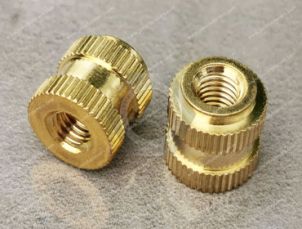
Brass threaded inserts are widely used in thermoplastic components because brass can be precision machined into a variety of insert geometries.
Typical designs include:
Diamond-knurled threaded inserts
Helical-knurled inserts
Opposing diagonal knurl inserts
Longitudinal rib inserts
Flanged threaded inserts
Flangeless threaded inserts
Blind-end threaded inserts
Heat-staking inserts
Ultrasonic inserts
Press-fit inserts
Molded-in brass inserts
Custom brass threaded bushings
Brass is particularly attractive where electrical conductivity and efficient machining are important.
Brass can provide several practical benefits for OEM plastic components:
Good machinability
Brass is well suited to producing precision internal threads, knurl patterns, pilots, flanges, and custom geometries.
High electrical conductivity
For electrical and electronic assemblies where the insert may form part of an electrical connection or grounding path, brass can offer an advantage over stainless steel.
Good corrosion resistance
Brass provides useful corrosion resistance in many general industrial and indoor environments.
Cost efficiency
For high-volume plastic components, material and machining cost can be important parts of the total component cost. Brass is often considered where a balance between performance and cost is required.
Wide design flexibility
Brass can be manufactured into different insert lengths, diameters, thread sizes, knurl patterns, and flange configurations for OEM applications.
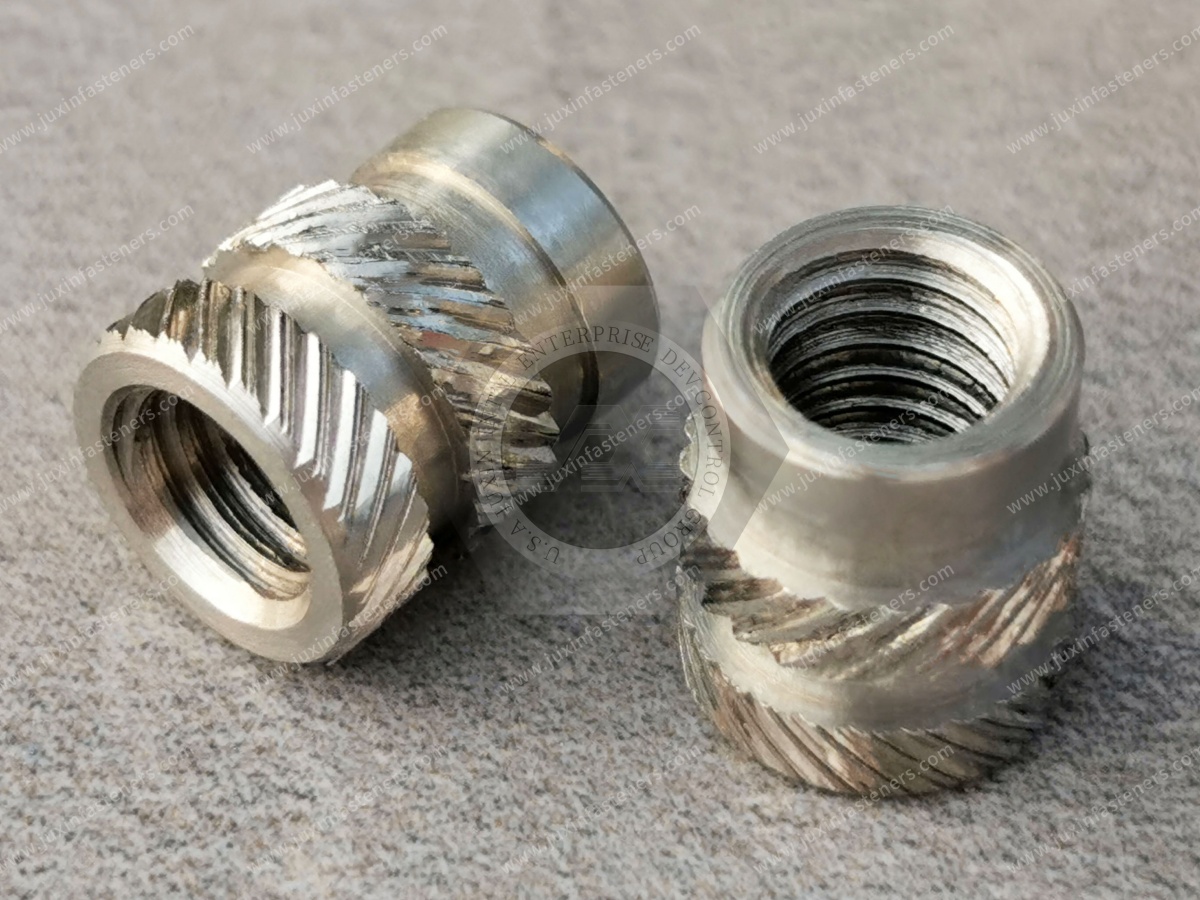
Stainless steel threaded inserts are considered when the application requires greater environmental durability or specific material performance.
Common stainless steel options for engineered threaded inserts include stainless grades selected according to the required corrosion resistance,
mechanical properties, temperature exposure, manufacturing requirements, and compatibility with the application.
Potential applications include:
Marine equipment
Outdoor equipment
Industrial machinery
Medical equipment
Laboratory equipment
Chemical processing equipment
Automotive components
Energy equipment
Demanding electronic enclosures
Equipment exposed to moisture or corrosive environments
Higher corrosion resistance in many environments
Stainless steel can be advantageous where moisture, chemicals, outdoor exposure, or other corrosive conditions are important design considerations.
Environmental durability
For assemblies exposed to demanding service environments, stainless steel may provide a more suitable long-term material option.
Temperature capability
Certain stainless steel grades can be selected for applications involving elevated temperatures. The actual temperature limit must be evaluated according to the selected grade and complete assembly design.
Application-specific mechanical performance
Stainless steel can be appropriate where the insert must meet specific mechanical requirements that are better suited to the selected stainless grade.
| Property | Brass Threaded Inserts | Stainless Steel Threaded Inserts |
|---|---|---|
| Machinability | Generally excellent | More demanding |
| Electrical conductivity | High | Lower than brass |
| Corrosion resistance | Good for many applications | Generally higher, depending on grade and environment |
| Environmental durability | Good for many indoor/general applications | Strong choice for demanding environments |
| Weight | Moderate | Generally higher |
| Material cost | Generally lower | Generally higher |
| Typical applications | Electronics, electrical housings, sensors, industrial components | Marine, outdoor, medical, industrial and demanding equipment |
| Common installation methods | Heat staking, ultrasonic, press-fit, molded-in | Press-fit, molded-in, and application-specific installation methods |
| Design flexibility | High | High |
| Best selection basis | Cost, conductivity, machinability and general performance | Corrosion/environmental requirements and application-specific performance |
The comparison is a starting point rather than a universal material ranking. The correct selection should consider the complete assembly.
The threaded insert does not work independently from the plastic component.
The resin affects:
Insert installation behavior
Boss strength
Thermal response
Stress concentration
Thread retention
Pull-out resistance
Torque resistance
Long-term dimensional stability
Environmental performance
Common engineering plastics used with threaded inserts include:
ABS
Polycarbonate (PC)
PA / Nylon
PA66
PA66-GF30
PBT
PET
POM
PEEK
Other thermoplastic materials
Glass-filled plastics such as PA66-GF30 require particular attention to boss geometry and installation conditions because reinforcement changes the material's mechanical and thermal behavior.
A threaded insert that performs well in unfilled ABS cannot automatically be assumed to perform identically in glass-filled nylon.
Material selection should also be evaluated together with the installation process.
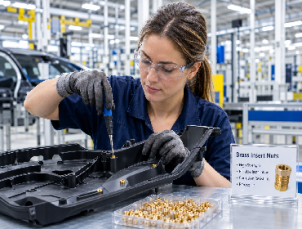
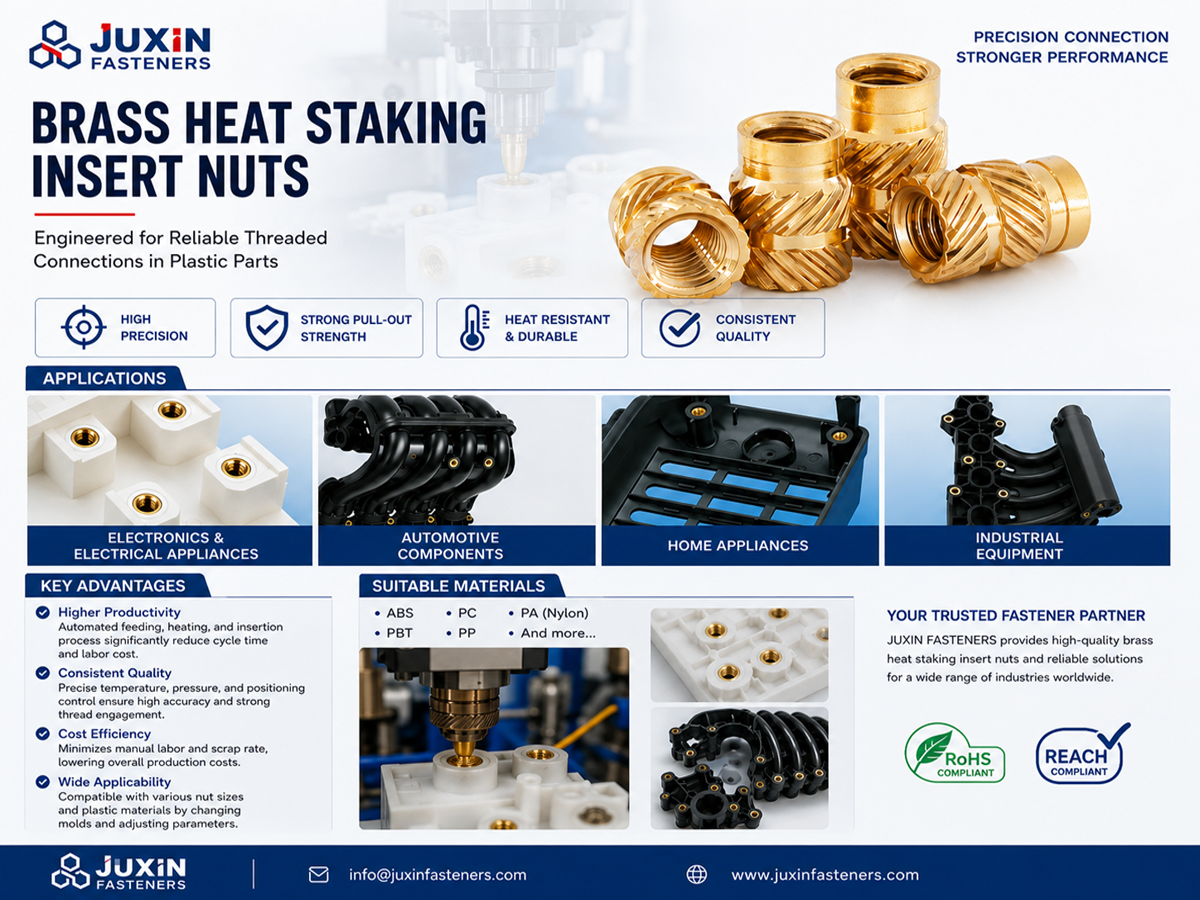
Heat staking threaded inserts are installed by heating the surrounding plastic so that the resin flows around the insert geometry.
This method is widely considered for thermoplastic housings and molded components.
It can be suitable for:
Electronics housings
Automotive plastic components
Medical equipment housings
Industrial enclosures
Consumer and handheld products
The insert geometry, boss design, temperature, pressure, dwell time, and plastic resin all influence the final joint.
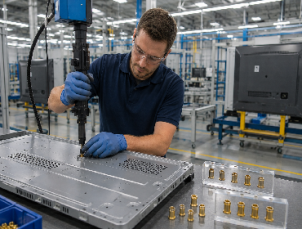
Ultrasonic threaded inserts use ultrasonic energy to generate localized heating and allow the surrounding thermoplastic to flow around the insert.
Ultrasonic installation can be attractive for applications requiring efficient post-mold assembly.
The correct ultrasonic process depends on:
Plastic resin
Insert geometry
Insert material
Knurl design
Boss geometry
Tooling
Frequency
Amplitude
Pressure
Cycle conditions
Universal ultrasonic parameters should not be applied without process validation.
Press-fit threaded inserts rely primarily on mechanical interference and insert geometry rather than thermal melting.
They can be considered when:
Thermal installation is undesirable
The plastic component is suitable for interference assembly
Production equipment favors mechanical installation
The insert design provides sufficient retention
The interference relationship between the insert and molded hole should be validated for the specific resin and component geometry.
Molded-in threaded inserts are installed directly during the molding process.
This approach can eliminate a separate post-molding insertion operation, but the insert must be designed for the molding process.
Important considerations include:
Insert positioning
Mold design
Resin flow
Insert geometry
Retention features
Thermal compatibility
Production cycle
Automation requirements

Corrosion requirements are one of the clearest reasons to compare brass and stainless steel.
Ask the following questions during design review:
Will the component be exposed to moisture?
Will it be used outdoors?
Will it contact cleaning chemicals?
Will it be exposed to salt or marine conditions?
Will the assembly operate in a high-humidity environment?
Will dissimilar metals be present nearby?
The answer may influence whether brass, stainless steel, or another material should be selected.
However, stainless steel is not automatically immune to every corrosion mechanism. Grade selection, surface condition, chemical environment, temperature, and contact with other materials must all be considered.
For electrical and electronic components, conductivity may become an important selection criterion.
Brass generally offers significantly higher electrical conductivity than stainless steel, which can make brass threaded inserts attractive for certain electrical assemblies.
Potential applications include:
Electrical housings
Control panels
Electronic enclosures
Sensors
Power equipment
Grounding-related components
Connector assemblies
Where the threaded insert forms part of an electrical grounding or bonding system, engineers should evaluate the complete electrical path rather than selecting a material based only on conductivity.
Contact resistance, surface treatment, mating materials, joint pressure, contamination, and assembly design may all affect actual electrical performance.
Temperature should be considered at the assembly level.
Plastic components may experience:
Heating and cooling cycles
Thermal expansion
Thermal contraction
Stress relaxation
Changes in polymer stiffness
Changes in insert retention behavior
The coefficient of thermal expansion of the plastic is different from that of brass or stainless steel.
For applications exposed to repeated temperature cycling, engineers should evaluate:
Plastic resin + insert material + insert geometry + boss design + installation process + operating temperature
rather than considering the insert material independently.
For high-temperature applications, the selected stainless steel grade may offer an advantage in some designs.
However, the temperature capability of the complete plastic assembly remains limited by the polymer and other components.
Some plastic housings are opened and closed repeatedly during:
Maintenance
Battery replacement
Equipment servicing
Filter replacement
Calibration
Inspection
Product upgrades
In these applications, relying on a molded plastic thread may create a durability concern.
A metal threaded insert provides a defined internal thread and can make the connection more suitable for repeated assembly.
Material selection should then consider:
Required assembly cycles
Fastener material
Thread size
Installation method
Insert geometry
Plastic boss design
Required tightening torque
Environmental exposure
Rather than choosing brass or stainless steel purely on material strength, engineers should evaluate the complete joint.
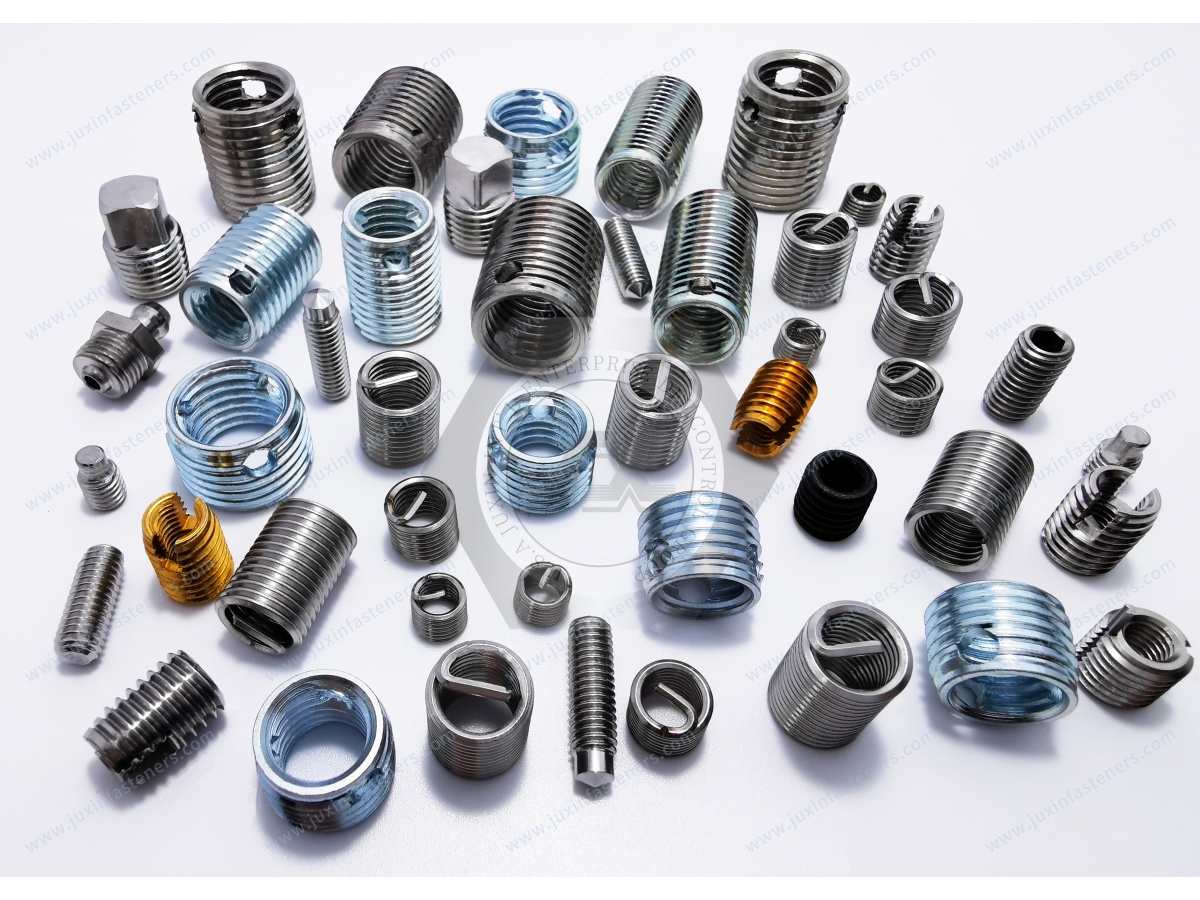
| Application | Brass Insert | Stainless Steel Insert |
|---|---|---|
| Electronic housing | Excellent candidate | Possible |
| Electrical enclosure | Excellent candidate | Possible |
| General industrial housing | Excellent candidate | Possible |
| Automotive plastic component | Common option | Application dependent |
| Medical equipment housing | Possible | Strong candidate for demanding environments |
| Outdoor equipment | Possible | Often attractive |
| Marine equipment | Application dependent | Often preferred |
| High-corrosion environment | Application dependent | Strong candidate |
| Electrical conductivity requirement | Strong advantage | Less suitable than brass |
| Cost-sensitive high-volume OEM part | Strong candidate | May increase material cost |
| Demanding environmental exposure | Evaluate carefully | Strong candidate |
| Custom precision insert | Excellent | Excellent |
This table should be used as an initial screening tool, not as a substitute for engineering validation.
Choosing brass instead of stainless steel does not automatically solve a retention problem.
The insert geometry has a major influence on how the plastic transfers load into the insert.
Important design features include:
Diamond knurl
Helical knurl
Opposing diagonal knurl
Longitudinal ribs
Annular undercuts
Flanges
Blind ends
Tapered pilots
Insert length
Thread diameter
Outer diameter
For example, an insert designed for axial pull-out resistance may use a different geometry from an insert primarily designed for rotational torque resistance.
This is why custom threaded inserts can be useful for OEM applications where standard catalog geometry does not provide the required combination of dimensions and retention behavior.
A common mistake is to select the threaded insert first and design the plastic boss afterward.
The better engineering workflow is:
Plastic resin → insert dimensions → insert geometry → installation method → boss geometry → assembly validation
The boss should provide enough surrounding plastic to support the insert without creating unnecessary stress concentration.
A useful starting principle is to maintain adequate boss wall thickness around the insert, but there is no single universal boss-diameter ratio that applies to every resin, insert geometry, and installation method.
For production parts, the actual geometry should be validated through prototype testing and application-specific DFM review.
For OEM sourcing, simply requesting:
“M4 brass threaded insert”
is often insufficient.
A better RFQ should specify:
Thread size
Thread standard
Insert length
Outer diameter
Head/flange configuration
Knurl geometry
Blind or through design
Material
Surface treatment
Required quantity
Resin grade
Glass-filled or unfilled
Molded hole diameter
Boss dimensions
Component wall thickness
Installation method
Pull-out requirement
Torque requirement
Assembly cycle requirements
Temperature range
Corrosion/environmental requirements
Electrical requirements where applicable
2D drawing
3D CAD model where available
Critical dimensions
Thread specification
Inspection requirements
Applicable standards
Packaging requirements
Providing this information allows the supplier to recommend an insert based on the actual application instead of simply quoting a standard part.
Consider brass threaded inserts for plastic when your application prioritizes:
Good machinability
Electrical conductivity
General corrosion resistance
Cost efficiency
Precision threaded geometry
High-volume OEM production
Electronics and electrical applications
General industrial plastic housings
Typical applications include:
Electronic housings → sensors → electrical enclosures → automotive plastic components → industrial controls → handheld equipment
Consider stainless steel threaded inserts for plastic when the application places greater emphasis on:
Environmental durability
Corrosion resistance
Moisture exposure
Outdoor service
Marine environments
Demanding industrial conditions
Application-specific temperature requirements
Specific mechanical requirements
Typical applications include:
Marine equipment → outdoor equipment → medical equipment → industrial machinery → demanding electronic equipment
The exact stainless grade should be selected according to the actual operating environment and engineering requirements.
There is no universal answer to the question:
“Is brass better than stainless steel for plastic threaded inserts?”
The better question is:
“Which insert material provides the required performance for this plastic assembly at the required production cost?”
A practical decision sequence is:
1. Identify the plastic resin.
2. Define the operating environment.
3. Determine the installation method.
4. Define the required thread size and insert geometry.
5. Evaluate corrosion and temperature exposure.
6. Determine whether electrical conductivity is important.
7. Evaluate repeated assembly requirements.
8. Validate boss geometry and installation conditions.
9. Compare material and manufacturing cost.
10. Validate the final assembly before production release.
This approach is more reliable than selecting brass or stainless steel based only on a material comparison table.
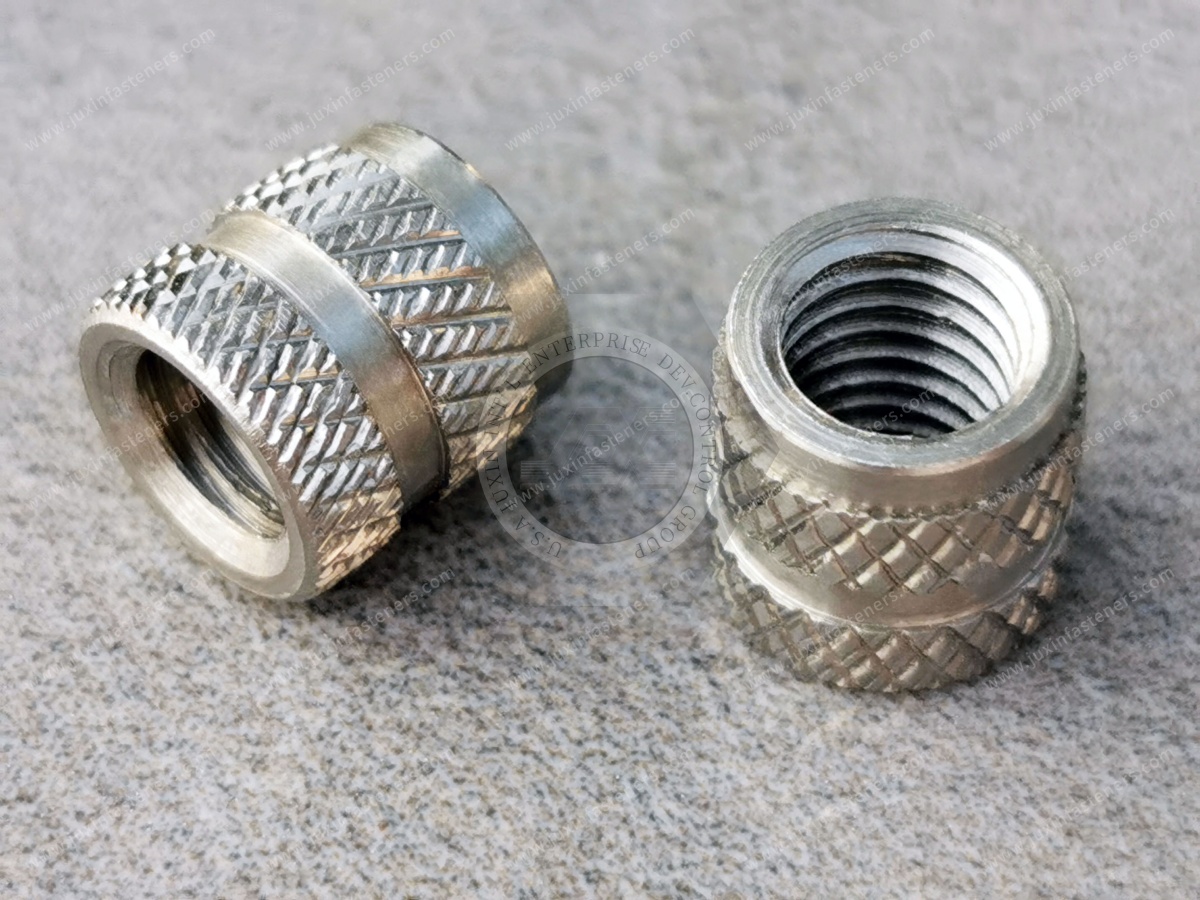
JUXIN Fasteners supplies custom threaded inserts for plastic components for OEM and industrial applications.
Available configurations include:
Brass threaded inserts
Stainless steel threaded inserts
Aluminum threaded inserts
Heat staking inserts
Ultrasonic threaded inserts
Press-fit threaded inserts
Molded-in inserts
Flanged threaded inserts
Flangeless inserts
Blind-end inserts
Diamond-knurled inserts
Helical-knurled inserts
Custom threaded bushings
Insert designs can be developed according to the required thread, length, outer diameter, flange configuration, knurl geometry, material, installation process, and plastic component requirements.
JUXIN supports applications involving engineering plastics such as ABS, PC, PA/Nylon, PA66, PA66-GF30, PBT, PET, POM and other thermoplastic materials, subject to application requirements and validation.
For OEM projects, providing a 2D drawing, 3D model, plastic resin specification, installation method and annual quantity helps establish the appropriate threaded insert design and quotation basis.
JUXIN threaded insert solutions can be considered for a broad range of industrial applications, including:
Threaded inserts can be integrated into molded plastic housings, brackets, covers, sensor components, electrical assemblies, and other automotive components.
Brass threaded inserts are particularly relevant to electronic housings, control enclosures, sensors, connectors, and other components where conductivity and machinability may be important.
Threaded inserts can provide metal threads inside molded plastic housings and equipment panels where controlled assembly and serviceability are required.
Industrial housings and machine components may use threaded inserts where molded plastic threads are insufficient for the required assembly design.
Stainless steel threaded inserts may be considered where moisture, corrosion, and environmental durability are significant design considerations.
Threaded inserts can be used in molded housings and enclosure components requiring repeatable threaded assembly.
Lightweight plastic components can use threaded inserts to create durable metal-thread attachment points for brackets, covers, sensors, and other components.
Before requesting a quotation, procurement teams should prepare:
Product: Threaded insert for plastic
Material: Brass / Stainless steel / other
Thread: M1.6–M10 or required imperial thread
Length: Required insert length
Installation: Heat staking / ultrasonic / press-fit / molded-in
Plastic: ABS / PC / PA66 / PA66-GF30 / PBT / POM / PEEK / other
Geometry: Knurl / rib / flange / blind-end / custom
Quantity: Annual and order quantity
Drawing: 2D / 3D CAD
Application: Automotive / EV / electronics / medical / industrial / marine / other
Environment: Indoor / outdoor / moisture / chemical / temperature / marine
Performance: Pull-out / torque / repeated assembly / electrical requirements where applicable
This information allows the supplier to evaluate the complete application rather than quoting a generic threaded insert.
Not universally. Brass is often attractive for electronics, electrical applications and cost-sensitive OEM assemblies because of its machinability and conductivity.
Stainless steel may be more appropriate for demanding environments where corrosion resistance and environmental durability are important.
Yes. Stainless steel threaded inserts can be designed for suitable thermoplastic components using installation methods such as press-fit or molded-in configurations, depending on the insert and plastic design.
Brass threaded inserts are commonly used in electronic housings, electrical equipment, automotive plastic components, industrial housings, sensors, and other molded plastic assemblies requiring a durable metal thread.
Both methods install a metal insert into a thermoplastic component, but they use different mechanisms to soften and displace the surrounding polymer.
The appropriate process depends on the resin, insert geometry, tooling, production requirements, and component design.
Threaded inserts can be used with PA66-GF30, but glass-filled nylon requires application-specific consideration of boss geometry, insert design, installation conditions, and resin behavior.
JUXIN provides custom threaded insert solutions based on OEM requirements.
Customization can include dimensions, thread, material, flange configuration, knurl geometry, insert length, and other design features subject to engineering review.
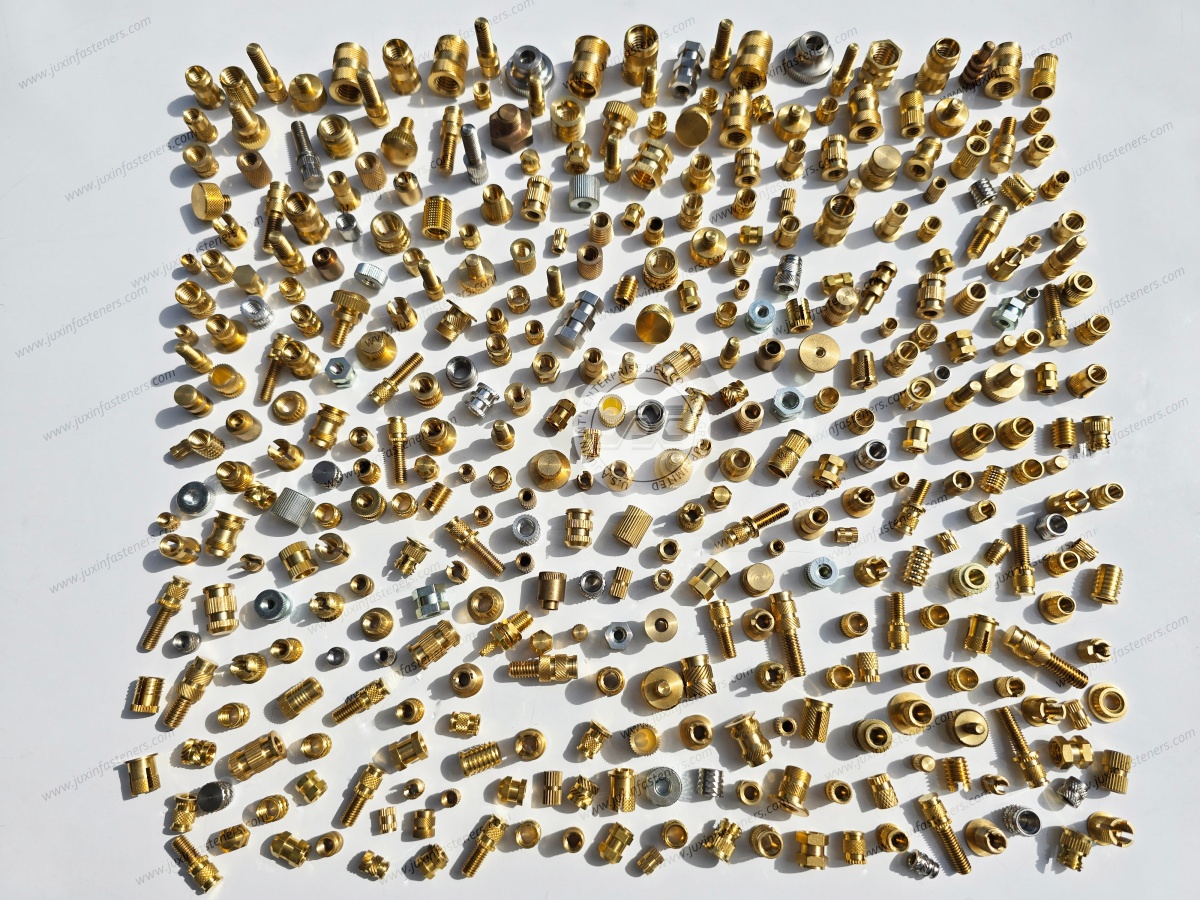
The choice between brass and stainless steel threaded inserts for plastic should be based on the complete application rather than material preference alone.
Brass is often a strong choice when machinability, electrical conductivity, cost efficiency, and general industrial performance are important.
Stainless steel can be a better candidate when corrosion resistance, environmental durability, or application-specific mechanical and temperature requirements become more critical.
For OEM engineers and procurement teams, the most reliable selection process considers:
Plastic resin + insert material + geometry + installation method + environment + performance requirements + production cost
This application-driven approach helps reduce the risk of thread stripping, insert loosening, boss damage, corrosion problems, and unnecessary component cost.
If you are selecting brass threaded inserts, stainless steel threaded inserts, heat staking inserts, ultrasonic inserts, press-fit inserts, or custom threaded inserts for a plastic component,
send your drawing and application requirements to JUXIN Fasteners.
Email: info@juxinfasteners.com
Website: www.juxinfasteners.com
Contact Us
Tel.:
+86 020 8621 0320
+86 020 3121 6067
E-mail:
Technical Support:
Navigation
SEND INQUIREY