
Call Us
+86 136 6007 9809
Call Us
+86 136 6007 9809

Aug. 11, 2026
Do spring lock washers really prevent bolts from loosening?
Should the spring washer go against the nut, against the flat washer, or against the joint surface?
And does reversing a split lock washer significantly change the reliability of a bolted joint?
These questions appear simple, but they involve several different engineering mechanisms that are frequently mixed together:
Load distribution
Surface protection
Preload
Embedment
Joint settlement
Transverse movement
Rotational loosening
Locking strategy
Assembly friction
The most important correction is this:
A flat washer and a split spring lock washer do not perform the same function.
A flat washer primarily provides a controlled bearing surface and distributes load.
A conventional split spring lock washer may add local spring action and surface interaction,
but it should not automatically be treated as a reliable vibration-locking device for a critical joint.
And there is no universal engineering rule that simply reversing the orientation of a conventional split lock washer transforms a weak joint into a reliable anti-loosening system.
The correct design question is not:
"Which way should the washer face?"
It is:
"What mechanism is preventing preload loss and self-loosening in this specific joint?"
This guide explains how engineers and procurement teams should evaluate flat washers, spring lock washers, washer sequence,
preload retention, vibration resistance, soft materials and alternative locking methods.
The original article focused heavily on orientation and claimed that orientation directly controlled anti-loosening performance.
A more useful OEM engineering approach is to evaluate the entire bolted joint.
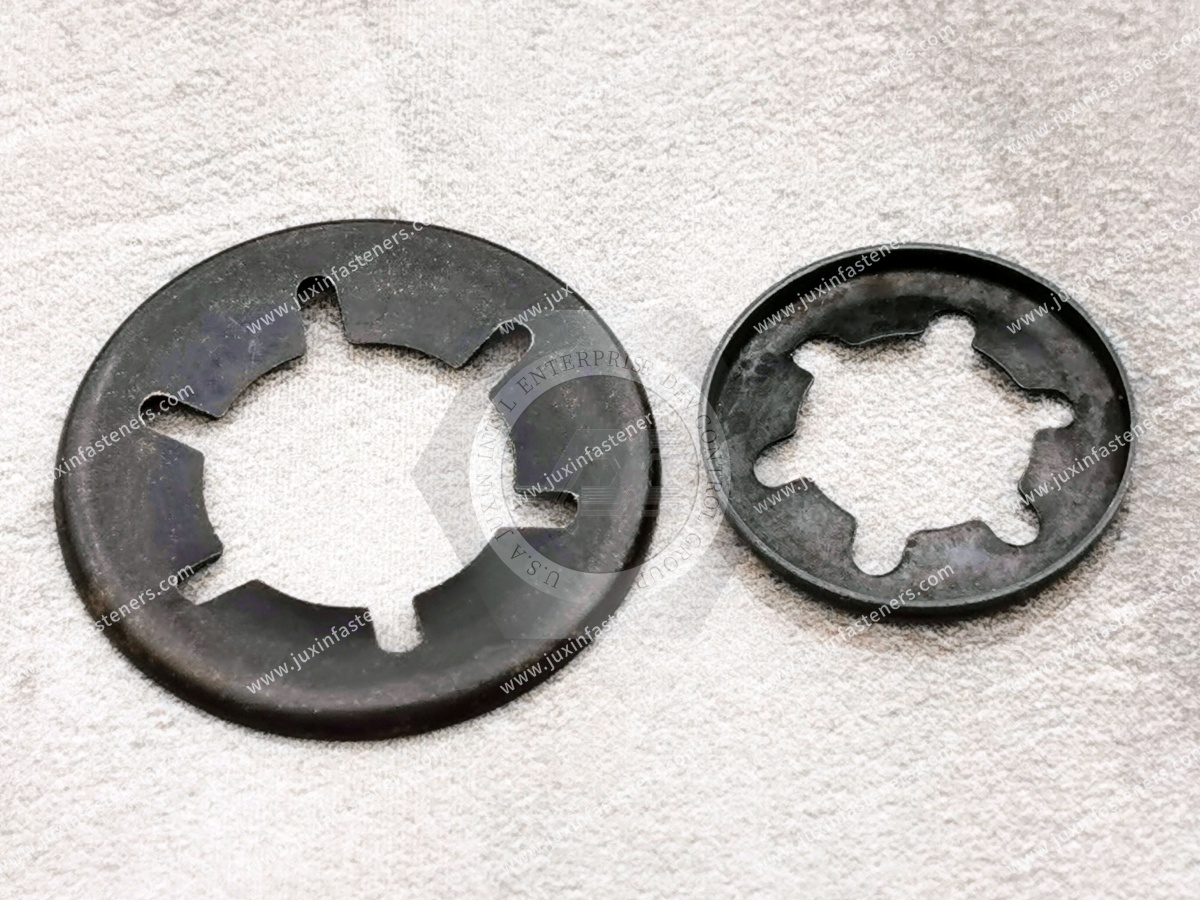
A flat washer primarily provides a bearing interface between the bolt head or nut and the joint surface.
Depending on the design, it can help:
Distribute bearing load
Protect the joint surface
Reduce local indentation
Provide a more consistent bearing surface
Bridge oversized or clearance holes where appropriately designed
Support joints using softer materials
A conventional split spring lock washer has a different geometry and is intended to provide spring action and local resistance at its contact surfaces.
However:
Spring washer ≠ guaranteed anti-loosening system.
Its effectiveness depends on the complete joint, including preload, joint stiffness, transverse movement, mating surfaces, material hardness and service loading.
For high-reliability vibration applications, engineers should evaluate the locking mechanism rather than assume that the presence of a split washer solves the problem.
| Engineering Function | Flat Washer | Conventional Split Spring Lock Washer |
|---|---|---|
| Load distribution | Primary function | Limited |
| Surface protection | Often useful | Can locally mark bearing surfaces |
| Controlled bearing interface | Often useful | Not its primary function |
| Spring action | Minimal for ordinary flat washer | Present, but limited by geometry |
| Prevents self-loosening by itself | No | Should not be assumed |
| Suitable as universal vibration lock | No | No |
| Soft-material support | Often useful when correctly sized | Direct contact may damage or embed into soft material |
| Preload control | Influences bearing interface/friction | Can influence tightening behavior but does not replace preload design |
| Orientation-sensitive by universal rule | Normally no | Do not assume one universal split direction determines joint reliability |
The selection must be based on the joint—not on washer tradition.
The phrase "bolt loosening" is often used for several different phenomena.
These should be separated.
A bolt can lose clamp load even when the nut or bolt has not rotated significantly.
Possible causes include:
Embedment
Surface settlement
Gasket relaxation
Polymer creep
Coating compression
Thermal effects
Plastic deformation
Joint material deformation
The threaded fastener can rotate relative to the mating component under certain dynamic conditions.
Transverse movement across the joint interface is a particularly important mechanism in vibration-related self-loosening.
Loss of function can also result from:
Thread stripping
Bolt yielding
Fatigue
Bearing failure
Joint separation
These mechanisms require different engineering responses.
Therefore:
Preload loss ≠ rotational self-loosening.
And:
Locking feature ≠ correct joint design.
A properly tightened bolt creates clamp force between the joint members.
That clamp force helps the joint resist separation and relative movement.
If preload is inadequate, the joint may become more susceptible to:
Separation
Slip
Dynamic bolt loading
Fatigue
Rotational loosening
But preload is not simply equal to tightening torque.
Remember:
Torque ≠ Preload.
A large portion of tightening torque is influenced by friction in:
Threads
Nut or bolt-head bearing surface
Washer interface
Coating
Lubricant
Therefore:
Same torque + different friction ≠ same preload.
Adding, removing or changing a washer can alter the bearing interface and therefore influence tightening behavior.
Flat washers such as those covered by standards including ISO 7089 and ISO 7090 are commonly used to provide a controlled bearing surface.
Their functions can include several important engineering roles.
A washer increases the effective bearing area beneath the bolt head or nut.
This can be valuable when the joint material is:
Aluminum
Plastic
Composite
Thin sheet
Coated material
Relatively soft metal
However, washer outside diameter, thickness and hardness must still be appropriate for the joint.
Washer present ≠ adequate bearing design.
A washer can reduce direct rotation of the nut or bolt head against a finished component surface.
This may help protect:
Paint
Plating
Coatings
Decorative surfaces
Softer substrates
But surface damage still depends on tightening load, washer hardness, burrs, friction and coating condition.
A suitable hardened washer can provide a more predictable interface beneath high-strength bolts or nuts where required by the applicable joint design.
This can help prevent local bearing deformation that would otherwise contribute to preload loss.
Not by itself.
A standard flat washer is primarily a bearing and load-distribution component.
It should not be specified as a standalone vibration-locking device.
This distinction matters because the original article correctly recognized the load-distribution role of flat washers but also attributed broad
anti-loosening behavior to the spring/flat-washer combination.
A joint requiring resistance to rotational loosening needs a locking strategy appropriate to its loading and service conditions.
A conventional split spring lock washer is formed with a helical split geometry.
During tightening, it compresses between the bearing surfaces.
Depending on the washer design and mating surfaces, it may create:
Local spring action
Surface interaction at the split ends
Additional frictional effects
However, once sufficiently compressed, its available spring deflection may be small relative to the elastic behavior of the complete bolted joint.
That is why engineers should be cautious about treating it as a universal preload-maintenance device.
The original article described split spring washers as providing elastic compensation for vibration, thermal movement and micro-settling.
That is too broad as a universal design assumption.
A spring washer may be part of an assembly, but:
Spring washer ≠ automatic preload retention.
Not in every joint.
This is one of the most important corrections to older fastening advice.
In dynamically loaded joints, self-loosening can occur when transverse movement reduces the frictional restraint that normally prevents relative rotation.
A split lock washer does not automatically eliminate that movement.
Its effectiveness depends on:
Joint preload
Joint stiffness
Washer geometry
Bearing-surface hardness
Surface finish
Coating
Lubrication
Vibration direction
Transverse displacement
External load
Joint design
For critical vibration applications, locking performance should be validated rather than assumed.
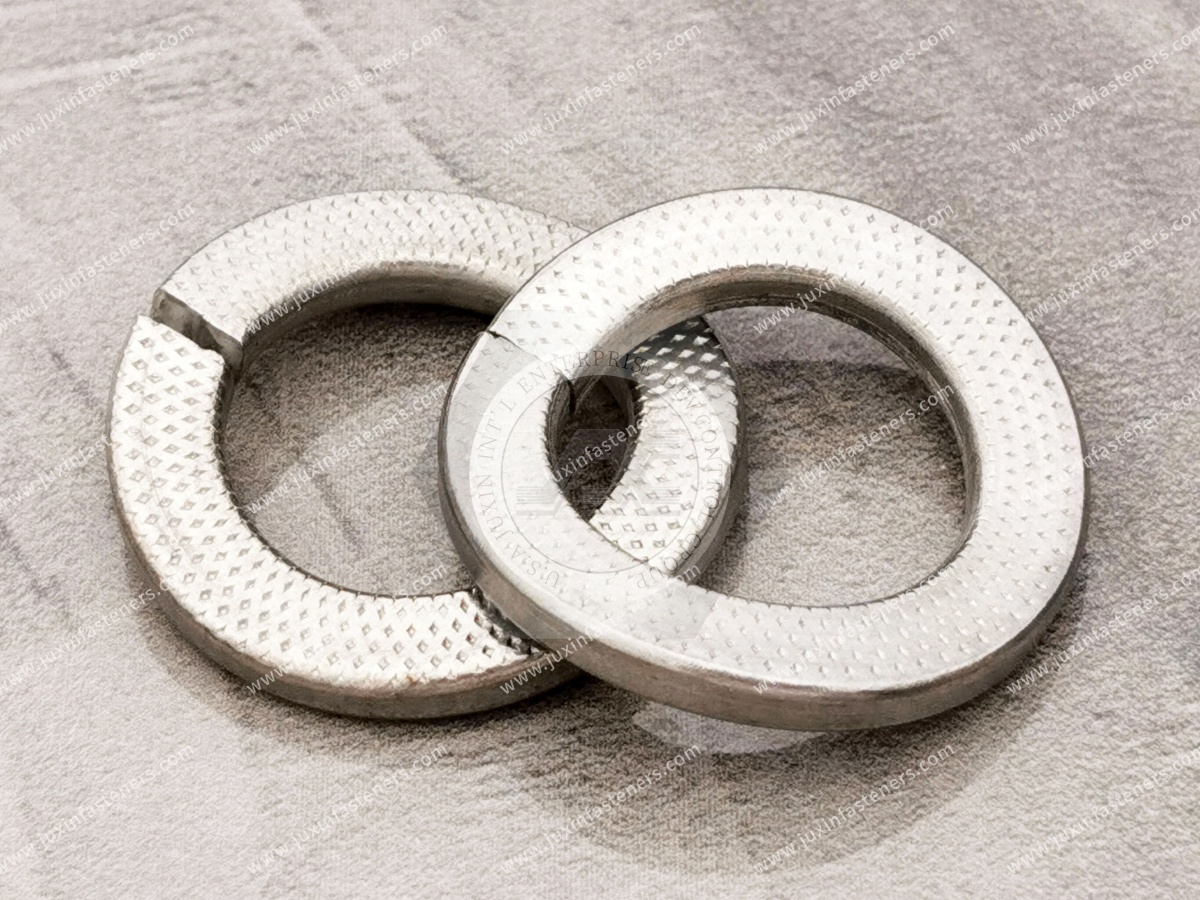
For a conventional split helical lock washer, engineers should not use a universal rule such as:
"The split must face the nut."
A split washer does not have a "split face" in the same sense that a directional wedge-locking washer or a conical spring washer has a deliberately engineered installation orientation.
The original article recommended a universal sequence and stated that the split should face the nut side for maximum locking performance.
That should not be used as a general engineering rule without a product-specific requirement.
If a particular washer has:
Directional teeth
Asymmetrical geometry
Cam surfaces
Belleville geometry
Manufacturer-defined top/bottom orientation
then orientation can be critical.
But that requirement comes from the specific washer design.
Directional locking washer ≠ conventional split lock washer.
There is no single universal stack order that should be applied to every bolted joint without understanding the purpose of each component.
A commonly encountered assembly may place a flat washer against the joint surface and another locking element closer to the rotating nut or bolt head.
But the correct arrangement depends on:
Which component rotates during tightening
Which surface requires load distribution
Which surface requires protection
Locking-device design
Joint material
Manufacturer instructions
Applicable assembly specification
The engineering sequence should be:
Define Function → Select Components → Define Stack → Validate Tightening → Validate Service Performance
Do not begin with a traditional washer stack and then assume the joint is protected.
Flat washers can be particularly important when fastening:
Aluminum
Plastics
Composites
Thin sheet
Coated panels
These materials may be susceptible to local bearing deformation.
A properly selected washer can spread the load over a larger area.
But soft-material joints introduce another problem:
Creep and stress relaxation.
Polymers in particular may continue deforming after installation, reducing clamp load over time.
A split spring washer may not provide enough travel to compensate for significant material relaxation.
Therefore:
Spring washer ≠ cure for plastic creep.
For plastic assemblies, engineers should evaluate:
Polymer type
Reinforcement
Temperature
Moisture
Creep
Boss geometry
Washer diameter
Tightening load
Inserts or compression limiters where applicable
A split washer can concentrate contact at relatively small areas.
Direct contact with soft materials may produce:
Indentation
Surface damage
Local yielding
Embedment
Preload loss
A suitable flat washer may help distribute the load, but the complete joint still requires engineering review.
This is why:
More hardware ≠ automatically more reliable joint.
Sometimes adding washers creates additional interfaces that can settle or alter friction.
A frequently overlooked point is that every additional component in a bolted stack creates more contact interfaces.
Those interfaces can experience:
Surface flattening
Coating compression
Embedment
Local deformation
This can contribute to preload loss after tightening.
Therefore, adding both a spring washer and flat washer is not automatically superior to a simpler joint.
A good bolted-joint design uses only the components needed to achieve defined functions.
A washer that is too soft for the bolt load may plastically deform beneath the bolt head or nut.
Consequences can include:
Bearing indentation
Reduced clamp load
Surface deformation
Loss of preload
High-strength bolted joints therefore require compatible bearing components where washers are used.
Do not specify a washer by diameter alone.
Review:
Washer standard
Material
Hardness
Thickness
Outside diameter
Hole diameter
Surface treatment
Mating fastener strength
Same washer dimensions ≠ functional equivalence.
A larger washer can distribute load over a larger area, but larger is not automatically better.
The joint may have:
Limited edge distance
Curved surfaces
Nearby features
Counterbores
Thin sections
A large washer may also introduce bending or uneven support if the underlying surface does not fully support it.
The correct bearing area must be matched to the actual geometry.
Washers may be supplied with finishes such as:
Zinc plating
Zinc-nickel
Black finishes
Stainless steel surface condition
Other customer-specified coatings
The finish influences more than corrosion.
It can also change friction beneath the rotating fastener component.
Remember:
Coating name ≠ friction specification.
And:
Same torque + different washer coating ≠ same preload.
If preload control matters, the washer should be included in the joint's friction and tightening evaluation.
Not automatically.
A metallic washer placed between dissimilar metals does not necessarily electrically isolate them.
For example, a standard steel or stainless washer between dissimilar metallic components can still participate in the galvanic system.
Therefore:
Metal washer ≠ electrical isolation.
If galvanic isolation is required, the assembly may need an engineered insulating component made from an appropriate material.
JUXIN FASTENERS also supports nonmetallic fastening and insulation components, including nylon washers and other plastic fastening components,
for applications where the material and service environment are appropriate.
But:
Plastic washer ≠ automatic system-level electrical compliance.
Material, temperature, creep, dielectric requirements, chemicals and geometry must all be evaluated.
One of the most important anti-loosening concepts is relative movement across the clamped joint.
If external transverse loading becomes sufficient to create slip at the interfaces,
the friction conditions preventing rotational movement can be disrupted.
Repeated cycles may then allow the threaded fastener to rotate.
This means the first anti-loosening strategy is often not "add a washer."
It is:
Maintain sufficient clamp load and joint stiffness to prevent harmful relative movement.
A locking device can provide additional security, but it does not replace sound joint design.
This principle applies to:
Spring washers
Nylon insert lock nuts
All-metal lock nuts
Wedge-locking washers
Thread-locking compounds
Serrated components
Prevailing-torque fasteners
A locking feature addresses a particular failure mechanism.
It does not automatically establish the required clamp load.
Therefore:
Prevailing Torque ≠ Preload.
And:
Locking Feature ≠ Correct Tightening.
The joint still requires an appropriate installation specification.
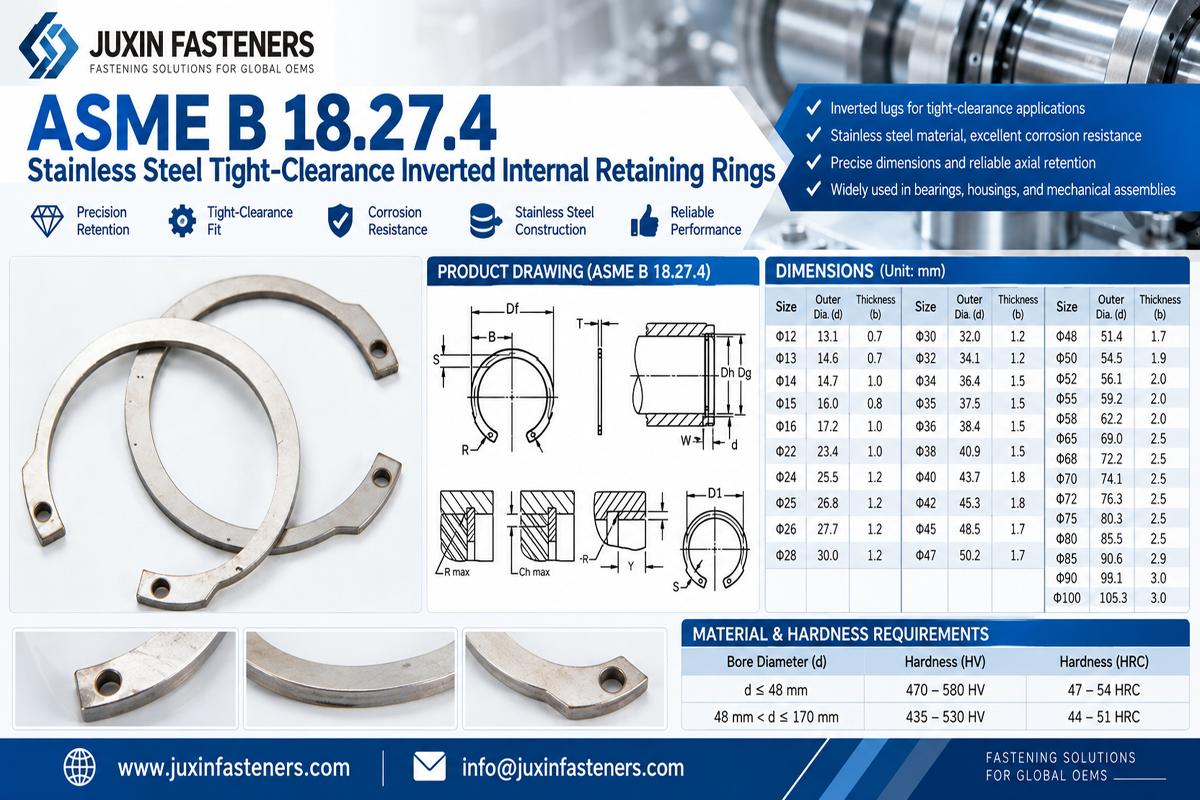
If vibration resistance is critical, engineers should compare alternative locking methods based on the actual failure mechanism.
Possible approaches include:
Examples include:
Nylon insert lock nuts
All-metal lock nuts
All-metal flange lock nuts
These create resistance to relative rotation through an engineered prevailing-torque feature.
JUXIN FASTENERS supplies several locking-nut families, including DIN 985-type nylon insert lock nuts and all-metal locking solutions for suitable applications.
But:
Prevailing torque ≠ clamp load.
Installation torque must account for the locking feature.
Wedge-locking designs use engineered cam geometry rather than relying on a conventional split spring effect.
They should be evaluated according to the specific product design and application.
Chemical locking can be useful in selected threaded assemblies.
Selection depends on:
Thread size
Material
Surface treatment
Temperature
Chemicals
Serviceability
Cure conditions
Certain applications may use:
Cotter pins
Tab washers
Safety wire
Lock plates
Castellated nuts
These provide positive mechanical retention but introduce their own design and assembly requirements.
Sometimes the best anti-loosening solution is to improve:
Joint stiffness
Clamp length
Preload
Bearing surfaces
Fastener size
Interface geometry
rather than adding another locking component.
These two solutions work differently.
A split washer acts at the bearing interface.
A nylon insert lock nut creates prevailing torque through interference with the bolt thread.
For assemblies where rotational resistance is required, the lock nut provides a more explicitly engineered prevailing-torque mechanism.
However, nylon insert nuts also have application limits involving:
Temperature
Chemicals
Reuse
Installation speed
Customer specifications
The correct solution depends on the joint.
All-metal lock nuts provide prevailing torque without a polymer insert.
They may be considered where:
Higher temperatures are involved
Polymer inserts are undesirable
Application specifications require an all-metal solution
JUXIN FASTENERS supplies all-metal lock nut designs, including flange locking configurations for drawing-based OEM applications.
Again:
All-metal lock nut ≠ automatically better joint.
Thread, preload, friction, installation and reuse requirements still matter.
A disc spring washer, commonly associated with Belleville-type geometry, has a different mechanical function from a conventional split lock washer.
Disc spring systems can provide engineered load-deflection characteristics.
They may be useful where controlled spring behavior is needed.
But they should not be treated as simple substitutes without calculating:
Load
Deflection
Stack configuration
Material
Fatigue
Temperature
Available installation space
Disc spring washer ≠ ordinary lock washer.
The original article recommended strict spring-washer orientation for high-strength Class 10.9 and 12.9 joints.
For high-strength bolted joints, the more important questions are usually:
Required preload
Fastener property class
Joint stiffness
Washer hardness
Bearing pressure
Friction
Tightening method
Fatigue loading
Surface treatment
Hydrogen embrittlement risk where applicable
A conventional split lock washer should not be assumed to provide the primary safety mechanism for a critical high-strength joint.
Automotive and EV assemblies can involve:
Dynamic loading
Vibration
Thermal cycling
Automated tightening
Corrosion exposure
Mixed materials
Depending on the application, fastening solutions may include:
Flat washers
Hardened washers
Nylon insert lock nuts
All-metal lock nuts
Flange lock nuts
Weld nuts
Self-clinching fasteners
Application-specific locking systems
But:
Washer present ≠ automotive vibration qualification.
And:
Locking feature ≠ vehicle-system safety qualification.
The complete joint must meet the applicable OEM requirements.
Railway assemblies may use washers and locking fasteners in:
Interior equipment
Lighting
Electrical cabinets
HVAC assemblies
Panels
Brackets
Secondary equipment
For vibration-sensitive assemblies, engineers should select a locking strategy according to the actual joint and project requirements.
Running gear, braking, crash structures and other primary safety-critical systems require formal OEM and project-specific validation.
Washer selection ≠ railway safety qualification.
Washers are frequently used in:
Electrical enclosures
Control cabinets
Telecom equipment
Communication infrastructure
Equipment racks
Power equipment
Flat washers can help manage bearing load and protect surfaces.
However:
Metal washer ≠ qualified electrical bond.
Plastic washer ≠ automatic electrical isolation qualification.
If grounding, bonding or dielectric isolation is required, the electrical function must be separately specified and validated.
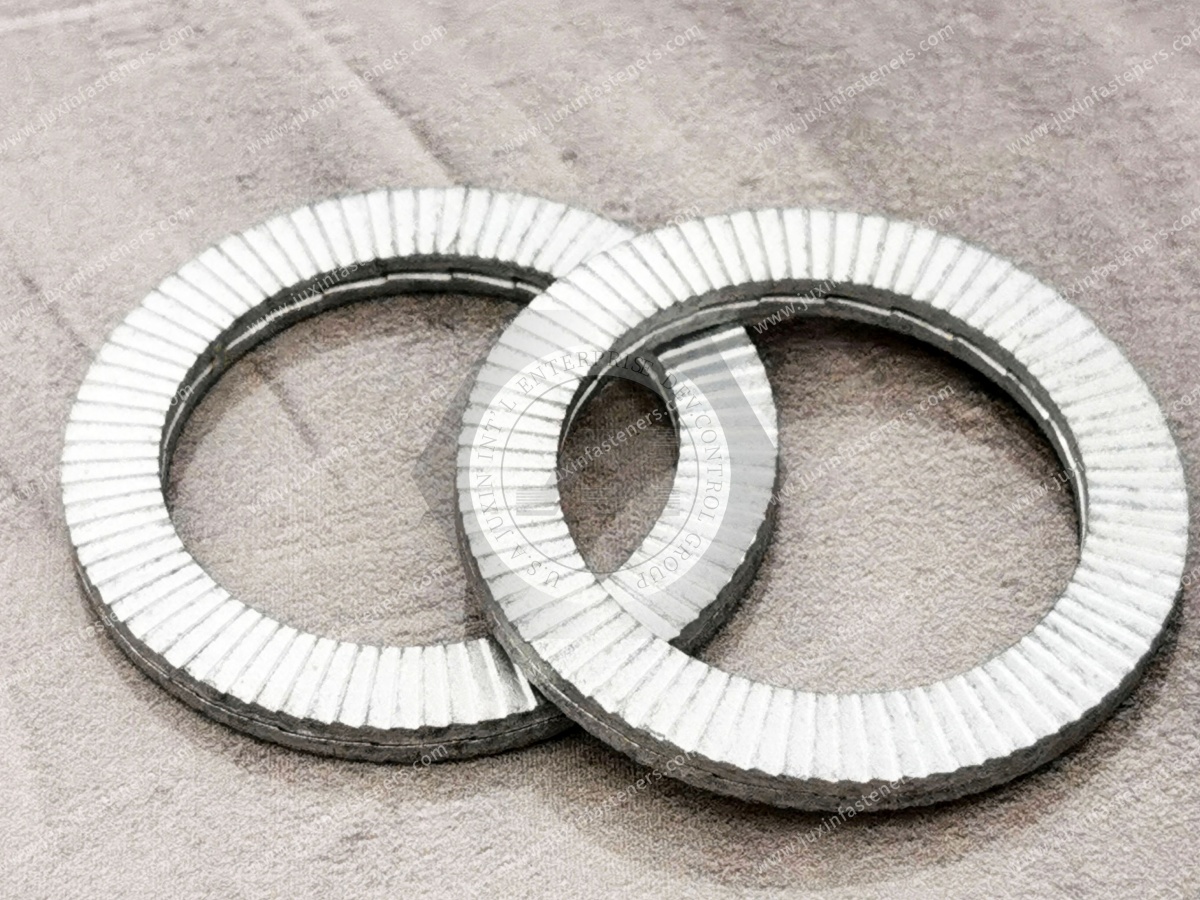
Industrial machinery commonly uses washers in:
Motors
Gearboxes
Guards
Covers
Frames
Automation equipment
Pumps
HVAC systems
The joint may experience vibration, repeated maintenance or thermal cycling.
For these applications, the designer should decide whether the washer is needed for:
Bearing load
Surface protection
Spacing
Spring behavior
Locking
Electrical isolation
One washer should not be expected to perform every function.
| Observed Problem | Possible Cause | Engineering Check |
|---|---|---|
| Bolt loosens under vibration | Insufficient preload, joint slip, inadequate locking strategy | Review complete joint and vibration mechanism |
| Clamp load decreases without rotation | Embedment, creep, coating compression, thermal effects | Investigate settlement and joint materials |
| Washer becomes permanently flat | Washer geometry/material or applied load incompatible | Verify washer specification and joint load |
| Soft panel becomes indented | Bearing pressure too high | Increase appropriate bearing area or redesign joint |
| Plastic joint loses clamp load | Creep/stress relaxation | Review polymer, compression limiter, insert and preload |
| Bolt preload changes after washer substitution | Bearing friction changed | Revalidate tightening process |
| Coated surface is damaged | Washer edges, burrs or high bearing pressure | Review washer quality and surface interface |
| High-strength joint settles | Washer or bearing surface too soft | Review hardness and bearing design |
| Lock washer present but bolt still rotates | Locking mechanism inadequate for dynamic joint | Evaluate alternative locking strategy |
| Galvanic corrosion occurs | Dissimilar materials and electrolyte present | Review complete material system |
Instead of starting with:
Bolt + Spring Washer + Flat Washer
start with five questions.
Is the objective:
Load distribution?
Surface protection?
Locking?
Spacing?
Spring behavior?
Electrical isolation?
This determines where a flat washer may be required.
If vibration is a concern, identify the actual locking mechanism.
Define:
Tightening method
Friction
Fastener strength
Joint stiffness
Target clamp load where applicable
Changing a washer can change:
Friction
Clamp length
Bearing pressure
Settlement
Installation torque
Validate the assembly rather than individual hardware pieces in isolation.
In high-volume production, washer-related errors can include:
Missing washer
Wrong washer type
Wrong diameter
Wrong thickness
Two washers instead of one
Incorrect locking component
Incorrect stack sequence
Error-proofing methods may include:
Controlled BOM
Assembly work instructions
Kitted hardware
Captive washer screws where appropriate
SEMS-type assemblies where appropriate
Vision inspection
Presence detection
Torque monitoring
The original article emphasized machine vision for washer orientation. For many production lines, however,
verifying the correct component and correct stack may be more important than trying to identify a universal orientation for a conventional split washer.
For high-volume OEM assembly, pre-assembled bolt-and-washer systems can reduce:
Missing components
Handling time
Assembly errors
Loose-part logistics
Depending on the design, a captive washer system can combine a screw or bolt with one or more retained washers.
The benefit is primarily assembly control and productivity.
It does not automatically improve vibration resistance.
Captive washer ≠ locking system unless specifically engineered as one.
Depending on the fastener and application, engineers may encounter standards and guidelines such as:
ISO 7089 — Plain washers, normal series
ISO 7090 — Plain washers with chamfer, normal series
DIN 127 — Legacy/common reference for split spring lock washer geometry
ISO 898-1 — Mechanical properties of carbon and alloy steel bolts, screws and studs
ISO 898-2 — Mechanical properties of nuts
VDI 2230 — Systematic calculation and design of highly stressed bolted joints
The applicable edition, product specification and customer requirements should be verified for each project.
A dimensional washer standard does not prove that the washer will prevent loosening in a particular joint.
Standard compliance ≠ application qualification.
Washers can look deceptively simple.
A second-source supplier should not be qualified by:
Inside diameter
Outside diameter
Thickness
Appearance
Unit price
alone.
Compare:
Drawing + Revision + Standard + Material + Hardness + Heat Treatment + Geometry + Thickness + Flatness + Surface Condition
+ Surface Treatment + Friction Where Relevant + Functional Requirement + Installation Behavior + Documentation + Change Control
For locking components, also compare:
Prevailing torque where applicable
Locking geometry
Reuse requirement
Temperature
Vibration requirement
Functional validation
Remember:
Same dimensions ≠ functional equivalence.
Procurement and supplier-development teams should ask:
Which washer standard applies?
What material is required?
Is hardness controlled?
What thickness tolerance applies?
What surface treatment is required?
Is the washer used for load distribution or locking?
Is friction relevant to tightening?
Is the washer used with high-strength fasteners?
What mating material is involved?
Is the joint subject to vibration?
Is functional testing required?
Is the locking component reusable?
Are restricted-substance requirements applicable?
What documentation is required?
How are process changes controlled?
These questions help distinguish a commodity washer RFQ from an engineered joint requirement.
A washer may be inexpensive, but a poorly specified washer can contribute to expensive assembly problems.
Consider:
Total Installed Cost = Part Price + Installation + Tooling + Inspection + Rework + Scrap + Downtime + Logistics + Warranty Risk + Supply Risk
Potential costs from an unsuitable washer include:
Surface damage
Assembly inconsistency
Preload variation
Joint settlement
Missing-part errors
Rework
Field loosening
For high-volume OEM programs, a slightly more expensive pre-assembled or engineered fastening solution may reduce total assembly cost.
Conversely, adding a spring washer to every joint "for safety" can increase cost and complexity without solving the actual failure mechanism.
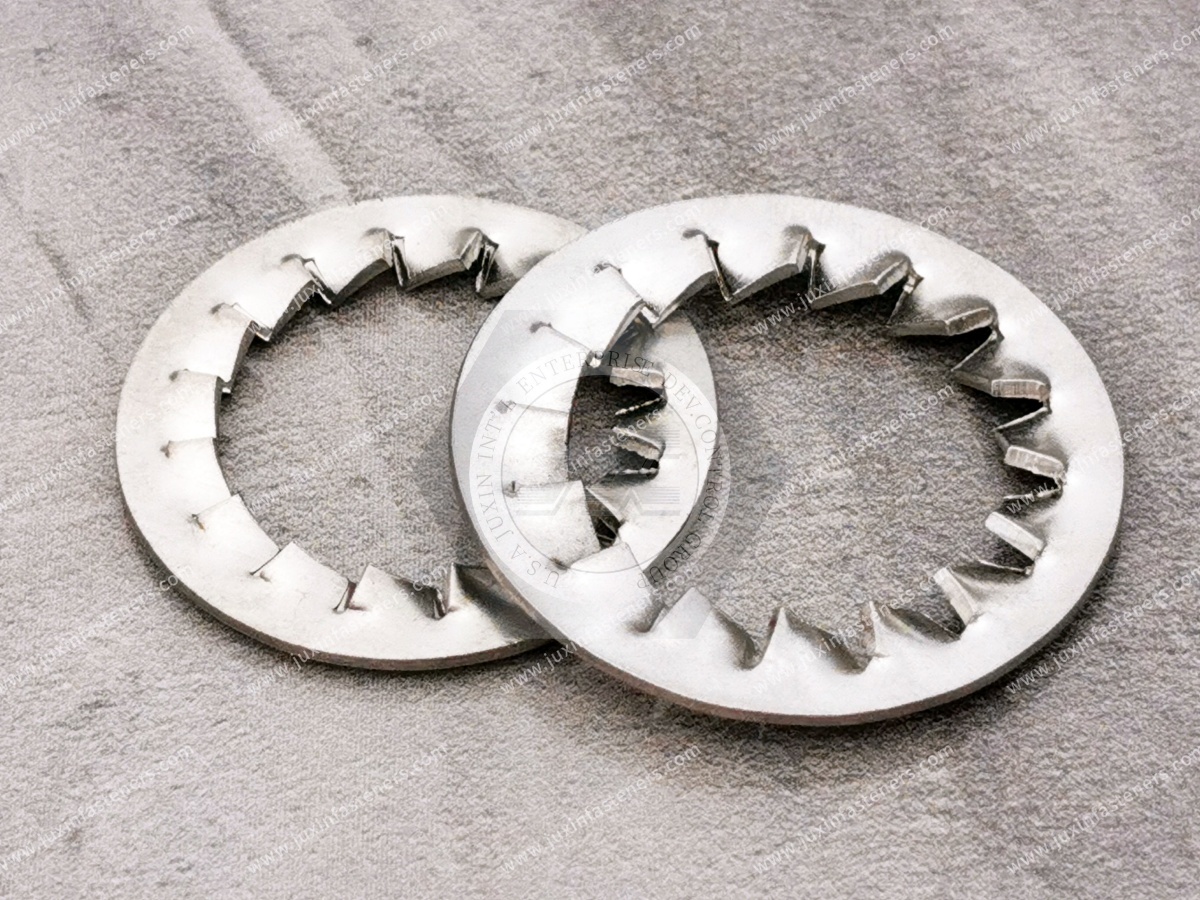
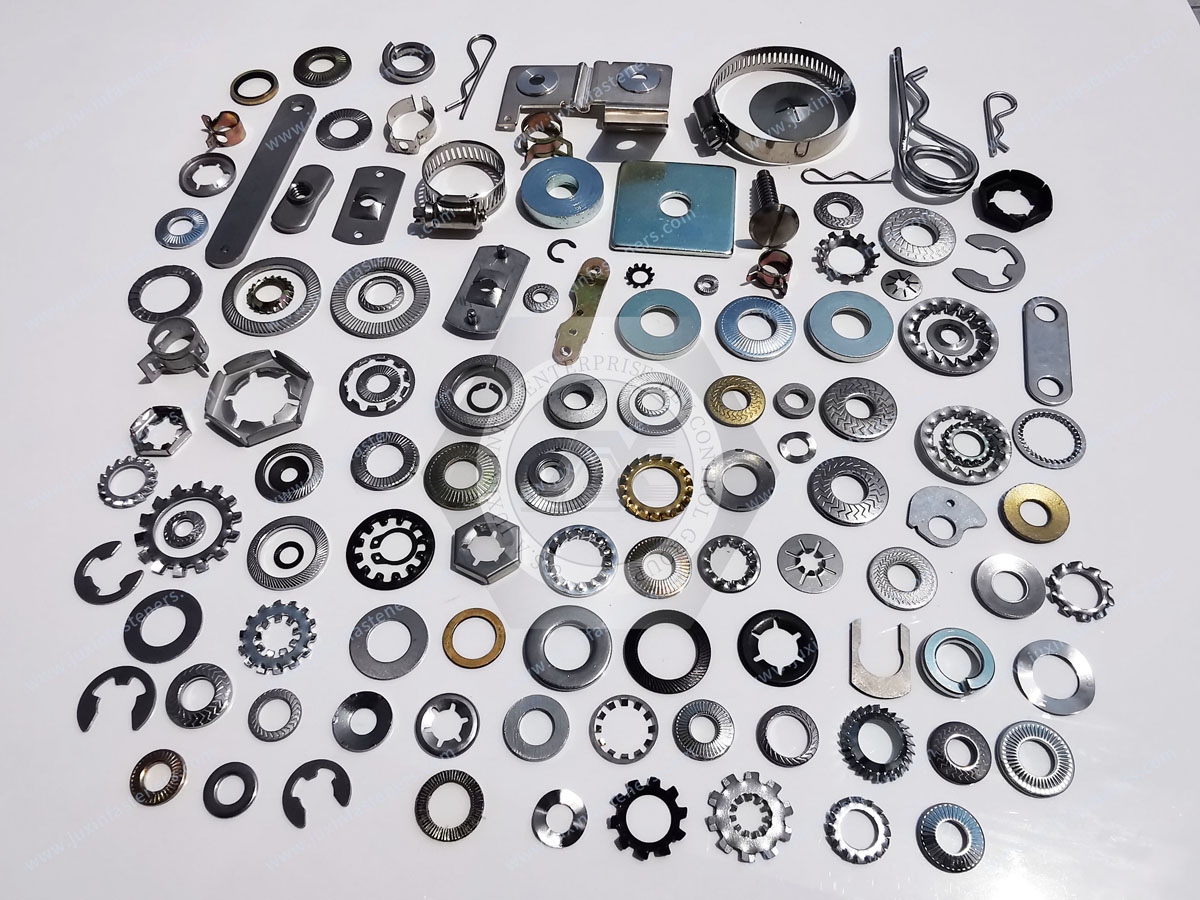
JUXIN FASTENERS supports standard and drawing-based fastening components for OEM and industrial applications, including:
Flat washers
Stainless steel washers
Precision thin washers
Insulation washers
Nylon washers
Spring washer requirements subject to drawing and application review
DIN 985-type nylon insert lock nuts
All-metal lock nuts
All-metal flange lock nuts
Bolts and screws
Weld nuts
Weld studs
Self-clinching nuts and studs
Custom cold-formed fasteners
CNC machined components
Plastic and nylon fastening components
Drawing-based OEM fasteners
Second-source fastener development
For vibration-sensitive joints, JUXIN FASTENERS can evaluate the requested component against the drawing, material, surface treatment, mating component and installation requirements.
The locking strategy itself should be defined and validated according to the application.
It should not be assumed to provide reliable anti-loosening performance in every joint. Effectiveness depends on the complete bolted joint and loading conditions.
A standard flat washer primarily distributes load and provides a bearing surface. It is not normally a standalone locking device.
Do not apply a universal directional rule to every conventional split lock washer. If a washer has manufacturer-defined directional geometry, follow that specification.
The correct stack depends on the function of each component, the rotating member, joint material and locking-device design. There is no universal stack that replaces engineering review.
Direct contact may create localized bearing damage or embedment. Plastic joints should be designed around bearing pressure, creep, stress relaxation and required clamp load.
Do not assume that its available elastic travel is sufficient to compensate for meaningful settlement or polymer creep.
Washer compatibility in high-strength joints must consider hardness, bearing pressure, preload, friction and the complete joint design.
A conventional split washer should not automatically be treated as the primary locking solution.
Not necessarily. Additional interfaces can introduce friction variation and settlement. Each washer should have a defined engineering function.
It can affect bearing-surface friction and therefore the relationship between tightening torque and preload.
There is no single universal solution. Depending on the joint, engineers may consider prevailing-torque nuts, all-metal lock nuts,
wedge-locking systems, thread-locking compounds, positive mechanical retention or joint redesign.
Dimensions alone may not establish functional equivalence. Material, hardness, thickness, geometry, surface treatment and applicable standards should also be compared.
Provide the drawing, washer standard, material, hardness where required, dimensions, surface treatment, mating fastener, joint material, application and annual volume.
No. The failure mechanism should first be identified. A spring washer may not solve insufficient preload, joint slip, creep or an unsuitable joint design.
JUXIN FASTENERS supports several relevant fastener families, including nylon insert lock nuts, all-metal lock nuts,
flange lock nuts and drawing-based components. The appropriate solution depends on the application.
Review installation torque, prevailing torque, target preload, temperature, mating thread, reuse, surface treatment,
vibration requirements and customer approval requirements.
For accurate engineering and commercial evaluation, provide:
2D drawing
3D model if available
Part number
Drawing revision
Washer or locking-component type
Applicable ISO, DIN or customer standard
Inside diameter
Outside diameter
Thickness
Material
Hardness where applicable
Heat treatment where applicable
Surface treatment
Corrosion requirement
Mating bolt or screw
Mating nut
Fastener property class
Joint material
Joint thickness
Soft-material or plastic details where applicable
Bearing-surface requirements
Tightening method
Installation torque
Target preload where applicable
Friction requirement where applicable
Vibration environment
Thermal cycling
Locking requirement
Prevailing-torque requirement where applicable
Reuse requirement
Surface-protection requirement
Electrical-isolation requirement where applicable
Functional testing
Customer-specific validation
PPAP or other required documentation where applicable
Annual volume
Existing approved sample for second-source development where available
If the project is intended to solve a loosening problem, also describe the observed failure:
Nut/bolt rotation
Preload loss without rotation
Joint separation
Fatigue
Surface indentation
Plastic creep
Thread failure
This information helps identify the correct fastening strategy rather than simply adding another washer.
This page should connect internally with existing JUXIN FASTENERS resources covering:
Bolt tightening and over-torque
Bolt and nut strength class matching
Torque, friction and preload
Fastener surface finish selection
Zinc plating and zinc-nickel coatings
Hydrogen embrittlement in high-strength fasteners
Nylon insert lock nuts
All-metal lock nuts
Fuji-style flange lock nuts
Stainless steel washers
Nylon and plastic washers
Automotive fastening solutions
Railway fastening solutions
Custom OEM fasteners
Second-source fastener qualification
Use the existing indexed JUXIN FASTENERS URL when implementing each internal link.
The intended content path is:
Bolted Joint Problem → Preload & Joint Movement → Washer Function → Locking Method → Installation Validation → Supplier Qualification → RFQ
The most important change in thinking is to stop asking:
"Which direction should the spring washer face so the bolt will not loosen?"
and start asking:
"Why is this joint losing clamp load or rotating, and which engineering mechanism will prevent it?"
A reliable joint should be evaluated through:
Joint Material → Fastener Strength → Bearing Surface → Washer Function → Friction → Preload → Joint Stiffness → External Loading → Locking Strategy → Installation → Validation
A flat washer can be extremely useful for load distribution and bearing control.
A spring washer can have a defined role in selected assemblies.
But neither should be expected to compensate automatically for inadequate preload, joint slip, plastic creep, poor bearing design or an unsuitable locking strategy.
For engineers, this approach reduces dependence on fastening traditions that may not match the actual failure mechanism.
For procurement and supplier-development teams, it creates clearer specifications and more reliable second-source qualification.
JUXIN FASTENERS supports OEM, Tier-1, Tier-2 and industrial manufacturers with precision washers, stainless steel washers,
insulation washers, nylon washers, nylon insert lock nuts, all-metal lock nuts, flange lock nuts, bolts, screws, weld nuts, self-clinching fasteners,
custom cold-formed fasteners and drawing-based fastening components.
For a washer selection, vibration-loosening problem, locking-fastener conversion, cost-reduction project or second-source qualification,
send your drawing, revision, mating fasteners, joint materials, surface treatment, tightening requirements, service conditions and annual volume for technical review.
JUXIN FASTENERS
Email: info@juxinfasteners.com
Website: www.juxinfasteners.com
Contact Us
Tel.:
+86 020 8621 0320
+86 020 3121 6067
E-mail:
Technical Support:
Navigation
SEND INQUIREY



