
Call Us
+86 136 6007 9809
Call Us
+86 136 6007 9809

Sep. 13, 2026
Modern automotive manufacturing programs rarely depend on a single type of fastening component.
A vehicle sub-assembly may require custom screws, bolts, nuts, washers, rivet nuts, weld nuts,
precision CNC components, pins, shafts, bushings, stamped parts, plastic retainers, clips, and other application-specific hardware.
When these components are sourced separately, procurement and supply-chain teams may need to coordinate multiple suppliers, manufacturing processes,
quality requirements, packaging specifications, and delivery schedules.
This creates an opportunity for multi-SKU automotive hardware sourcing.
Instead of viewing each part number as an isolated purchasing item, OEM and Tier-1 teams can evaluate whether technically compatible
component families can be coordinated through a qualified manufacturing partner.
JUXIN FASTENERS is an OEM-oriented supplier of customer-specific, non-standard, and application-specific automotive
fastening and precision components. Our product scope covers both metal and polymer fastening components,
including custom screws and bolts, nuts, washers, rivet nuts, weld nuts, threaded inserts, CNC-machined components,
shafts, pins, bushings, spacers, stamped components, plastic retainers, clips, and other application-specific hardware.
The practical sourcing model is:
Automotive BOM → Component Requirements → Product Family → Engineering Review → Material → Manufacturing Route → Quality Verification → Packaging → Delivery Coordination → OEM Supply
The objective is not to force every component into one manufacturing process.
The objective is to determine which components can be efficiently coordinated through a technically capable supplier while maintaining the engineering definition of each individual part.
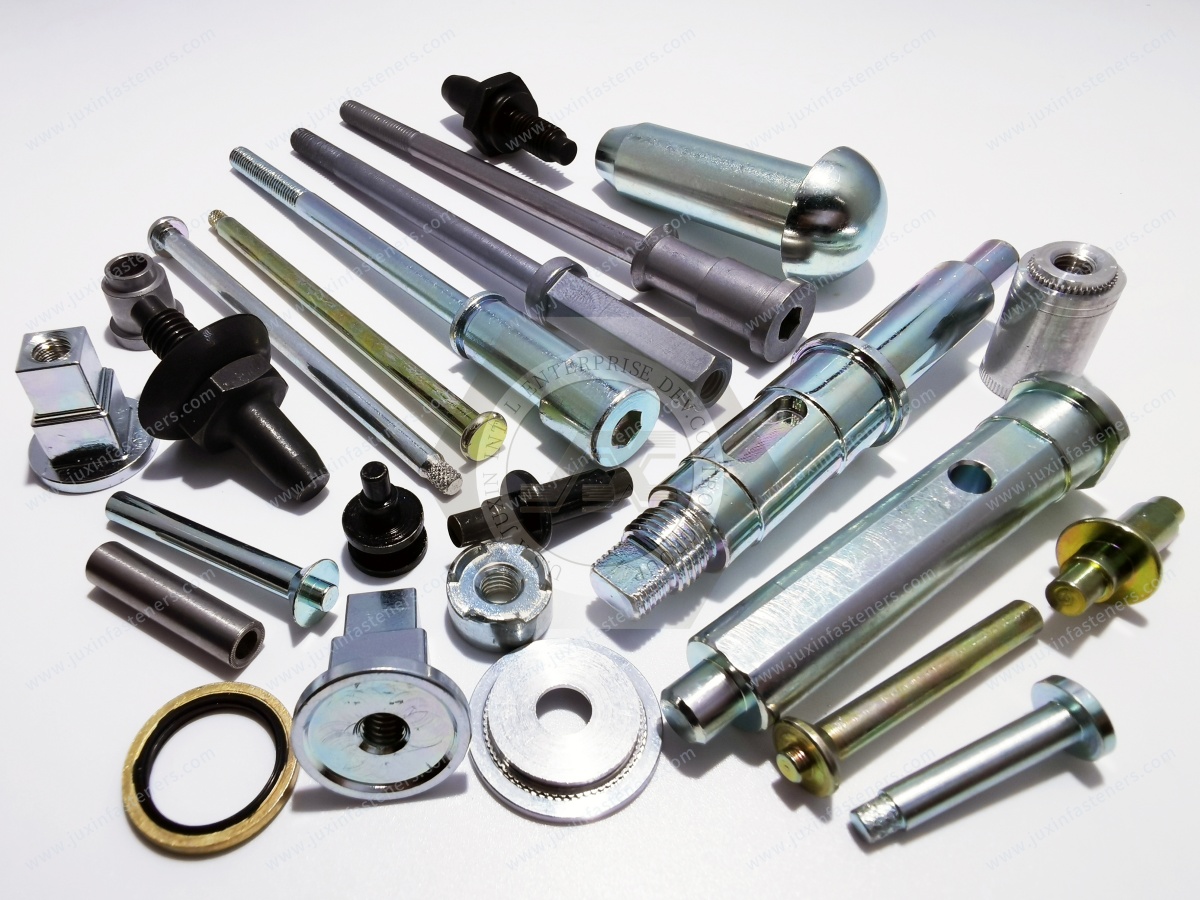
Multi-SKU automotive hardware sourcing is the coordinated sourcing of multiple automotive component part numbers from an appropriate manufacturing supplier.
A consolidated automotive BOM may contain different product families, such as:
custom screws
custom bolts
nuts
self-locking fasteners
washers
shims
rivets
rivet nuts
weld nuts
threaded inserts
CNC-machined shafts
precision pins
bushings
spacers
stamped components
plastic retainers
plastic clips
BOM consolidation does not mean that every part has the same material, production process, or engineering requirement.
Instead, the value comes from coordinating compatible product groups while preserving each component's individual specification.
This distinction is particularly important for OEM and Tier-1 supply chains.
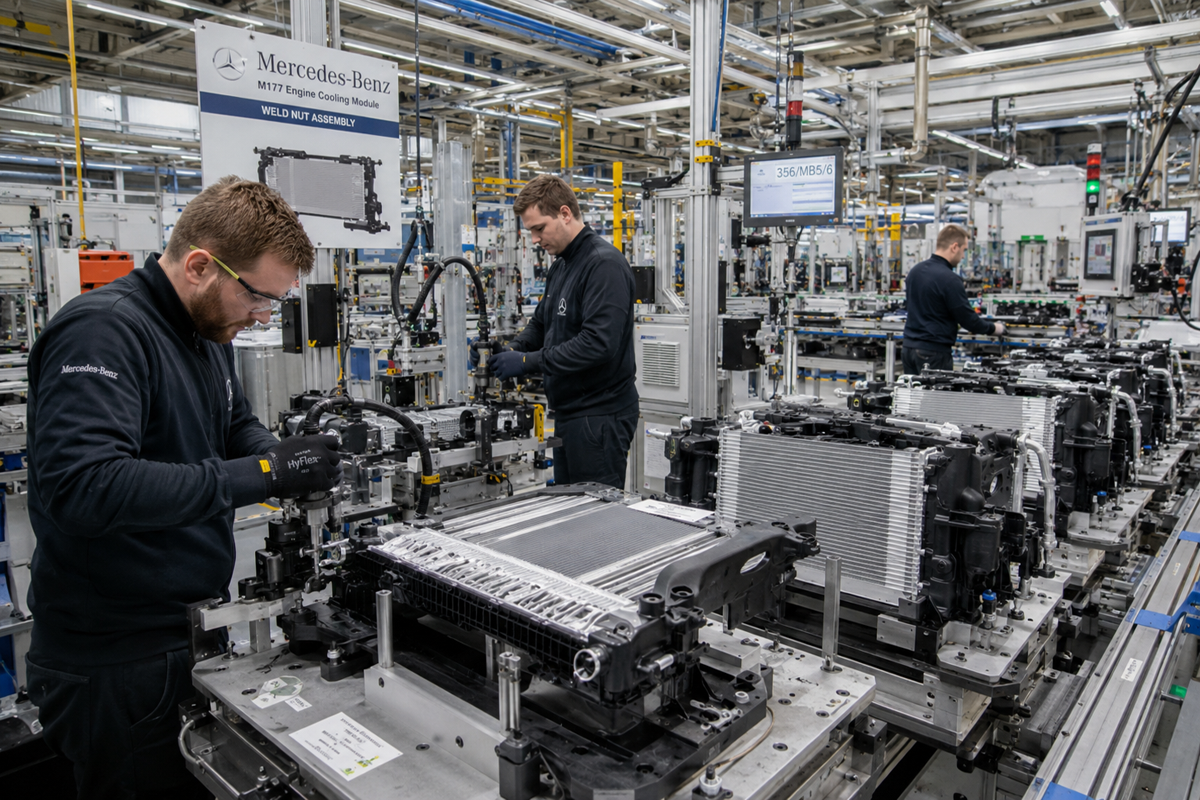
A single automotive module can contain many different mechanical interfaces.
A door module, for example, may contain structural brackets, plastic trim components, electronic housings, screws, washers, clips, and other fastening hardware.
A seat assembly may combine mounting bolts, washers, pivot components, pins, retainers, and mechanism hardware.
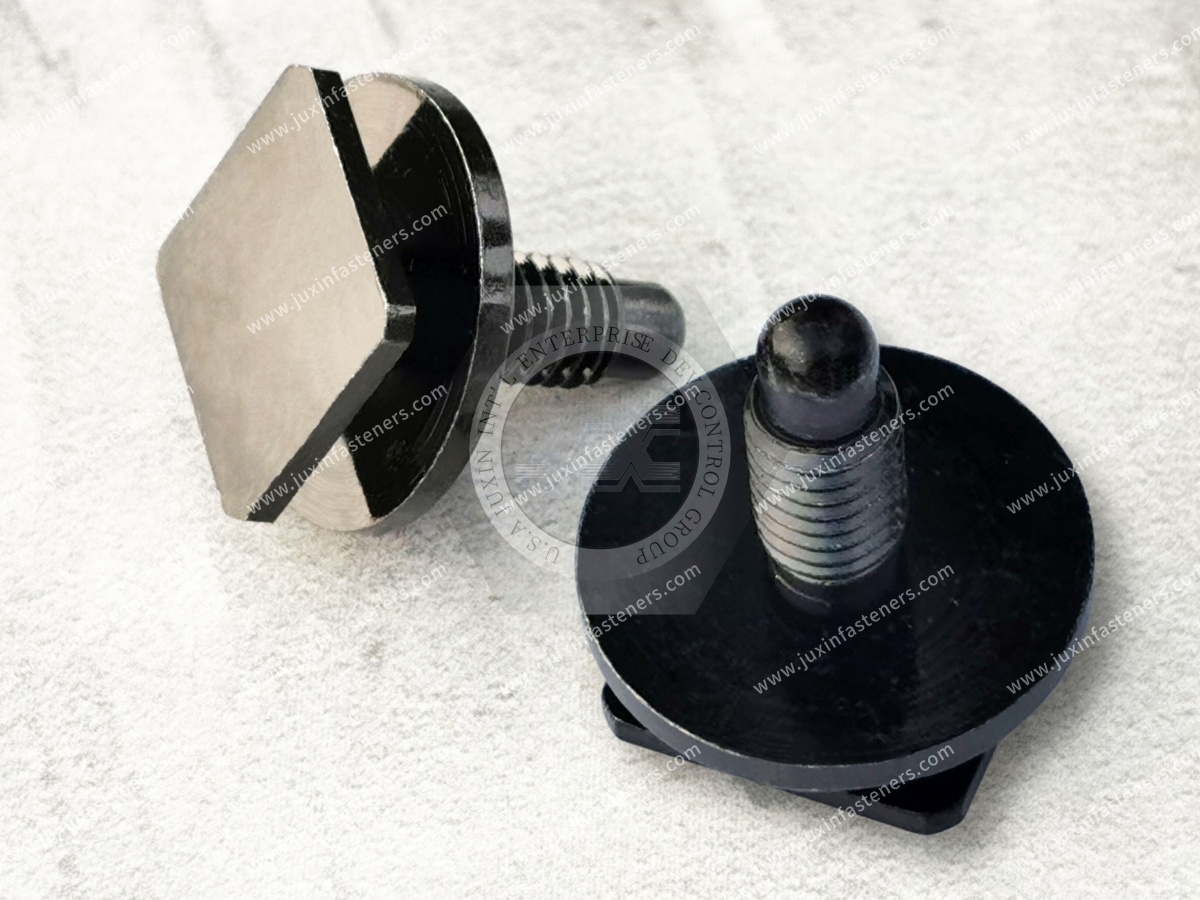
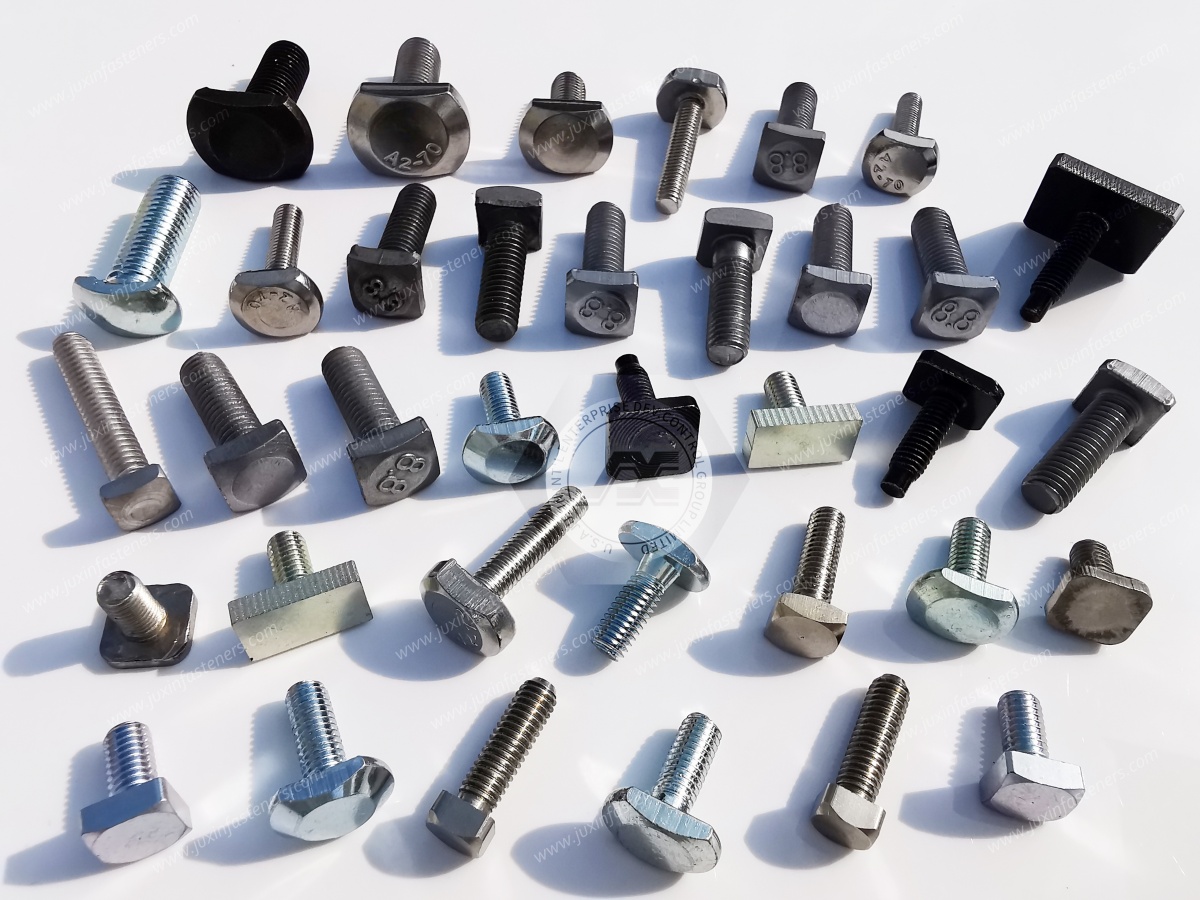
A rear spoiler can combine a plastic retaining component with a specially configured metal slide bolt.
A chassis assembly can combine rivet nuts, bolts, washers, brackets, and application-specific components.
These differences create multiple part numbers because each component performs a different function.
Therefore, multi-SKU sourcing should begin with the actual component architecture rather than simply reducing the number of suppliers.
When different component families are purchased from different suppliers, supply-chain management becomes more distributed.
For example:
Supplier A
→ Custom Screws
Supplier B
→ Washers
Supplier C
→ CNC Pins
Supplier D
→ Plastic Retainers
Supplier E
→ Rivet Nuts
This model can be appropriate when the components require highly specialized manufacturing capabilities.
However, some OEM programs may benefit from coordinating multiple related component families through one qualified supplier when the supplier has the appropriate manufacturing routes and technical capabilities.
Potential benefits may include:
fewer supplier interfaces
simplified communication
coordinated component development
consolidated commercial management
more consistent packaging coordination
easier communication around drawing revisions
coordinated production planning
simplified logistics for compatible part families
These benefits should be evaluated on a program-by-program basis rather than assumed automatically.
For broader supplier qualification considerations, see Custom Automotive Component Sourcing & Supplier Evaluation Protocol.
Multi-SKU sourcing involves two different but connected perspectives.
Engineers focus on whether each individual component remains technically suitable.
Key considerations can include:
component function
mating interface
drawing definition
material
geometry
tolerance
thread specification
surface treatment
assembly method
environmental conditions
inspection requirements
The engineering objective is not simply to reduce suppliers.
It is to maintain the technical definition of each component while determining whether multiple components can be manufactured and coordinated by the same supplier.
Procurement and supply-chain teams may focus on:
supplier consolidation
commercial coordination
delivery planning
packaging
purchase-order administration
inventory planning
production releases
supply continuity
supplier communication
The strongest multi-SKU sourcing model connects these two perspectives.
Engineering defines the component. Procurement coordinates the supply.
JUXIN FASTENERS approaches multi-SKU automotive programs through the actual product and manufacturing structure of the BOM.
Rather than treating every part number as an identical sourcing item, components can be grouped according to:
Examples include:
screws and bolts
nuts
washers
rivets
rivet nuts
weld nuts
threaded inserts
CNC components
shafts and pins
plastic retainers
clips
Examples may include:
carbon steel
alloy steel
stainless steel
aluminum alloys
brass where applicable
engineering polymers
Potential routes may include:
CNC machining
CNC turning
CNC milling
cold heading
cold forging
multi-stage forming
stamping
applicable plastic component manufacturing
Components can also be grouped according to the vehicle system in which they are used.
This approach creates a more practical BOM structure than simply counting part numbers.
A consolidated automotive BOM may contain both standard and customer-specific fastening components.
JUXIN FASTENERS supports applicable:
custom screws
custom bolts
nuts
self-locking fasteners
washers
shims
rivets
rivet nuts
weld nuts
weld studs
threaded inserts
A custom component may differ from standard hardware because of its:
head geometry
thread specification
shank geometry
length
flange
locking feature
mounting interface
material
surface treatment
application-specific dimensions
The component remains individually controlled even when it is commercially coordinated as part of a larger BOM.
For the broader product and manufacturing capability overview, see Custom Automotive Fasteners & Precision Components: OEM Engineering & Sourcing Solutions.
Many automotive BOMs contain mechanical components that are not conventional fasteners.
These may include:
shafts
pins
bushings
spacers
sleeves
adapters
precision turned components
milled components
application-specific mechanical parts
CNC machining can be appropriate for components requiring combinations of turned diameters, shoulders, holes, threads, grooves, slots, or other machined features.
Depending on geometry and production requirements, manufacturing may involve CNC turning, CNC milling, Swiss-type machining where applicable, drilling, tapping, threading, grooving, or turn-mill machining.
This creates an important opportunity for multi-SKU sourcing.
For example, an automotive mechanism may require:
Fastener + Pin + Shaft + Bushing + Spacer
These components do not need to use the same manufacturing process, but they may be evaluated and coordinated within the same supply program when technically appropriate.
For more detailed CNC component sourcing information, see CNC Automotive Part Sourcing: Engineering Specifications & RFQ.
Washers and shims are often small components, but they can represent a significant number of automotive part numbers.
A consolidated program may contain:
flat washers
precision washers
stamped washers
shims
spacer washers
application-specific profiles
The relevant requirements can include:
inside diameter
outside diameter
thickness
profile
material
surface treatment
dimensional tolerance
spacing function
The manufacturing route may depend on geometry, material, production quantity, and dimensional requirements.
See Custom Washer Sourcing: Engineering Specifications & Procurement for a detailed discussion of custom washer procurement.
One of the most useful applications of multi-SKU sourcing is the combination of metal and polymer components within the same vehicle assembly.
A single module may contain:
Metal Fastener + Plastic Retainer + Washer + Precision Component
Examples include:
Custom screws
washers
plastic trim clips
screw-type retainers
Rivet nuts
bolts
washers
application-specific metal components
Threaded inserts
screws
spacers
plastic retainers
Nylon Rear Spoiler Clip
Automotive Spoiler Slide Bolt
This is where a broad component portfolio can be commercially valuable.
The goal is not to claim that every component must come from one source.
The goal is to provide a technically practical option for coordinating multiple compatible component requirements.
For the broader polymer component structure, see Automotive Plastic Fasteners: Types, Applications & OEM Sourcing Guide.
JUXIN FASTENERS supports customer-specific fastening and precision-component requirements across multiple automotive systems.
Chassis and undercarriage assemblies may contain:
rivet nuts
bolts
washers
aluminum alloy components
threaded components
application-specific fasteners
Environmental conditions can include moisture, road contamination, salts, temperature changes, vibration, and contact between different materials.
Material and surface treatment selection should therefore be connected to the actual application.
See Automotive Chassis & Undercarriage Fastening Solutions.
Wiper mechanisms use moving linkages and pivot interfaces.
Potential components include:
stainless steel solid rivets
stainless steel shoulder rivets
step rivets
pivot pins
linkage fastening components
A multi-SKU program may coordinate these components with other automotive hardware where the supplier has the applicable manufacturing capability.
See Automotive Wiper System Fastening Solutions.
Gear-shifting mechanisms may contain:
shift shafts
shift pins
rolling shafts
fixed pivot shafts
swing or pivot shafts
shift sliding columns
rocker pivot shafts
ball pins
These components are typically defined by their mechanical interfaces and movement requirements rather than by generic fastener terminology.
See Automotive Shift System Fastening Solutions.
Sunroof and panoramic roof mechanisms may contain:
precision shafts
pivot pins
guide components
sliding components
application-specific fastening hardware
Relevant considerations include movement type, mating interface, package space, functional dimensions, material pairing, surface condition, and assembly method.
See Automotive Sunroof System Fastening Solutions.
Door modules can combine:
plastic retainers
trim clips
screw-type retainers
custom screws
washers
metal fastening components
The appropriate component depends on the actual door architecture and mating interfaces.
See Automotive Door System Fastening Solutions.
Seat assemblies may contain:
mounting bolts
washers
pins
pivot components
retainers
customer-specific mechanical hardware
Structural fastening components and adjustment-mechanism components should be evaluated according to their different functions.
See Automotive Seat System Fastening Solutions.
Rollover protection structures may use:
weld nuts
flange weld nuts
rivet nuts
self-locking nuts
customer-specific bolts
other structural fastening components
The appropriate component depends on the structural interface, parent material, installation process, and customer-defined validation requirements.
See Rollover Protection System Fastening Solutions.
The automotive rear spoiler is a useful example of a multi-SKU fastening application because plastic and metal components may work together within the same assembly.
A representative system may contain:
Nylon Rear Spoiler Clip + Automotive Spoiler Slide Bolt
The Automotive Spoiler Slide Bolt is available in applicable configurations including:
M5
M6
M6 × 14
M6 × 20
Applicable property classes include:
8.8
10.9
where specified for the relevant configuration.
Surface finish options include:
Color Zinc
Zinc-Nickel Alloy
Black Zinc
Certain configurations may also feature a pre-applied thread-locking patch where specified.
The special head geometry can engage a mounting slot, track, or channel.
The basic installation concept is:
Slide → Position → Engage → Tighten
Any anti-rotation effect depends on the actual mating geometry between the bolt head and mounting interface.
The Nylon Rear Spoiler Clip serves a different function and may provide locating, retaining, positioning, spacing, or fastening-interface support depending on the application design.
For the complete application system, see Automotive Rear Spoiler Fastening Components.
For the metal component specifically, see Automotive Spoiler Slide Bolts: Engineering, Mounting Design & OEM Sourcing Guide.
Multi-SKU sourcing does not mean that different part numbers should be subjected to identical inspection criteria.
Each component should retain its customer-defined quality requirements.
Depending on the component, verification may include:
dimensional inspection
thread inspection
hole diameter and position
material verification
hardness testing where applicable
surface treatment verification
functional inspection
visual inspection
lot identification
inspection documentation
The practical quality model is:
Component Requirement → Critical Characteristic → Inspection Method → Acceptance Criterion → Inspection Record
This allows different component families to remain individually controlled while being commercially coordinated.
For more information, see Custom Metal Component Quality & Inspection Requirements.
One of the important technical considerations in a multi-part supply program is drawing revision control.
A BOM can contain many related part numbers, but each part may have its own:
drawing number
revision
material specification
surface treatment
dimensional requirements
inspection criteria
A change to one component should therefore be controlled against its applicable drawing or specification rather than assumed to apply to the entire BOM.
This is particularly important when the BOM contains a mixture of standard, modified-standard, and fully customer-specific components.
Packaging requirements can also vary between part families.
For example:
bulk fasteners
individually separated precision components
labeled plastic clips
boxed CNC components
protective packaging for finished surfaces
application-specific kits
Where required by the customer program, packaging and labeling can be coordinated with the component structure and delivery requirements.
The practical objective is to connect:
Part Number → Packaging → Labeling → Quantity → Delivery Requirement
without changing the engineering definition of the component itself.
An important distinction in BOM consolidation is:
Consolidation is not the same as standardization.
A procurement team may consolidate multiple part numbers with one supplier while keeping every part number technically independent.
For example:
M6 bolt
custom M6 bolt
stainless steel shoulder rivet
aluminum spacer
stamped washer
Nylon Rear Spoiler Clip
CNC pivot pin
These components do not need to become one standardized product.
They can remain different components while being coordinated within one broader supply relationship where appropriate.
This is a more practical model for complex OEM programs.
JUXIN FASTENERS is an OEM-oriented supplier of customer-specific, non-standard, and application-specific automotive fastening and precision components.
Our scope includes applicable:
custom screws
custom bolts
nuts
self-locking fasteners
washers
shims
rivets
rivet nuts
weld nuts
weld studs
threaded inserts
CNC-machined components
shafts
pins
bushings
spacers
stamped components
plastic retainers
plastic clips
application-specific mechanical components
The value of a multi-SKU supply program comes from combining these capabilities where the product mix and manufacturing requirements are technically compatible.
The manufacturing route remains component-specific.
CNC components are evaluated according to their machining requirements.
Cold-formed fasteners are evaluated according to their forming geometry and material.
Stamped components are evaluated according to their sheet-metal geometry and production requirements.
Plastic components are evaluated according to their polymer, geometry, tooling, and application requirements.
This allows supply-chain coordination without sacrificing component-specific engineering control.
A practical evaluation model is:
BOM → Product Family → Application → Function → Mating Interface → Material → Manufacturing Route → Surface Treatment → Inspection → Packaging → Production Requirements
Identify the individual part numbers and their relationship to the assembly.
Group screws, bolts, washers, CNC components, plastic retainers, and other components according to their actual product type.
Understand where each component is used.
Determine whether the component provides fastening, spacing, positioning, pivoting, retention, alignment, or another defined function.
Evaluate the relevant hole, thread, slot, panel, bracket, shaft, housing, or other interface.
Review the specified material and its relationship to the application.
Determine whether CNC machining, forming, stamping, or another applicable process is appropriate.
Review customer-defined surface requirements and compatibility with the base material and assembly.
Identify the characteristics that require verification.
Coordinate packaging and identification requirements by part number.
Establish the applicable production and delivery requirements for each component family.
This creates a component-level technical structure while supporting a consolidated commercial relationship.
The same multi-SKU sourcing model can apply outside automotive manufacturing.
Potential component groups include:
custom fasteners
washers
threaded components
CNC parts
plastic retainers
mounting hardware
Potential component groups include:
self-clinching fasteners
rivet nuts
screws
washers
spacers
threaded inserts
plastic components
Potential component groups include:
shafts
pins
bushings
spacers
CNC components
custom fasteners
Potential component groups include:
screws
rivet nuts
washers
clips
sheet-metal fastening components
Potential component groups include:
threaded inserts
precision fasteners
spacers
plastic retainers
CNC components
mounting hardware
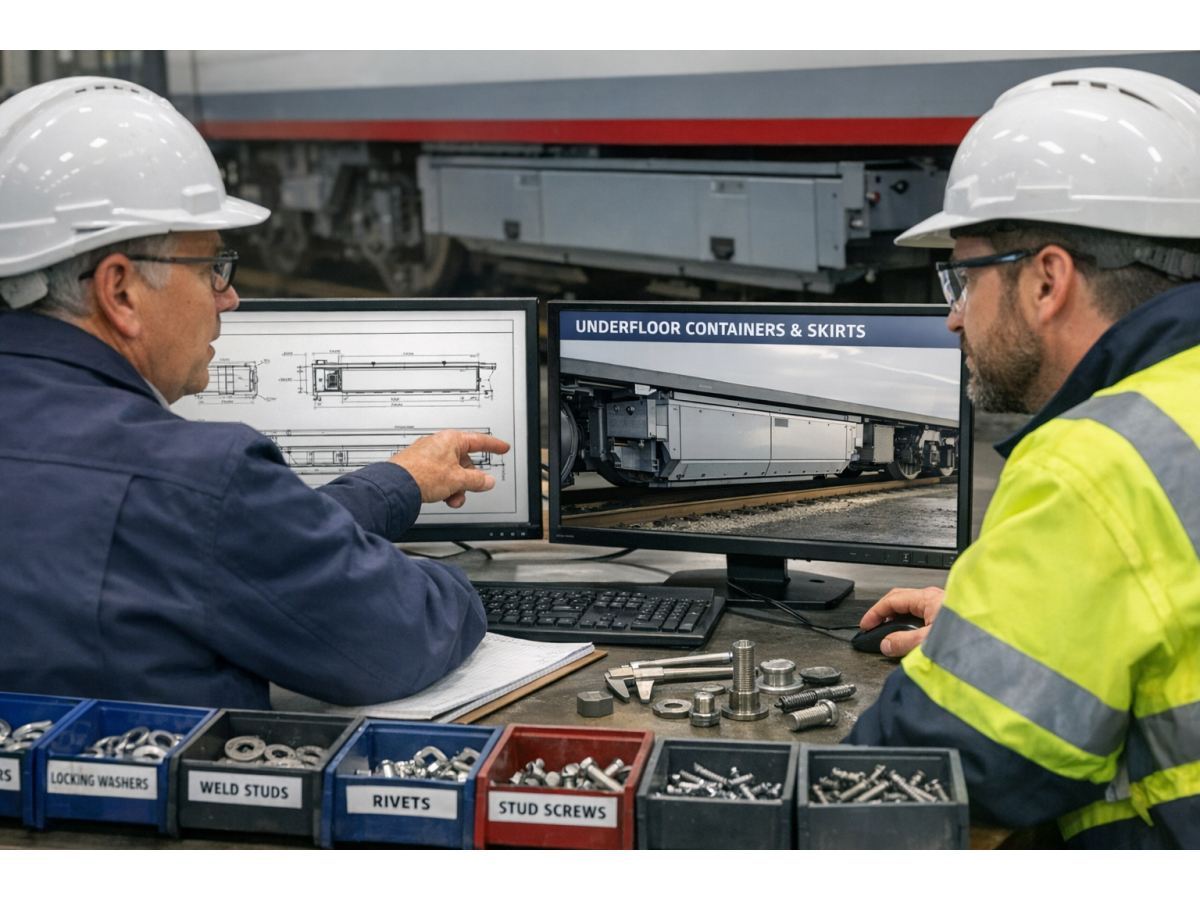
Where applicable, customer-specific fasteners and precision mechanical components can be coordinated according to project requirements,
engineering specifications, quality requirements, and production needs.
The actual manufacturing route and component selection remain application-specific.
A washer, CNC shaft, plastic retainer, and high-strength bolt require different engineering and manufacturing considerations.
Reducing supplier interfaces does not require changing the technical definition of each component.
Different components may require different manufacturing routes even when they are used in the same vehicle module.
Metal and polymer components require different material considerations, while different metal alloys may require different surface treatments.
Every customer-specific component should remain connected to its applicable drawing or specification revision.
Packaging requirements can differ significantly between bulk fasteners, precision components, plastic clips, and finished surfaces.
Multi-SKU automotive hardware sourcing is the coordinated procurement of multiple automotive fastening and precision-component part numbers through an appropriate manufacturing supply program.
Fastener BOM consolidation means coordinating multiple fastening part numbers and related components within a structured sourcing program while maintaining the individual technical requirements of each part.
JUXIN FASTENERS supports applicable standard, customer-specific, non-standard, and application-specific fastening and precision components according to the relevant customer requirements.
Where technically appropriate, JUXIN FASTENERS can support both metal and polymer fastening components within a coordinated supply program.
Depending on the application, a program may include custom screws, bolts, nuts, washers, rivets, rivet nuts, weld nuts, threaded inserts, CNC shafts, pins,
bushings, spacers, stamped components, plastic retainers, clips, and other application-specific components.
No. Different components may require different manufacturing routes. CNC machining, cold forming, stamping,
and applicable plastic component manufacturing can be evaluated separately according to the component requirements.
Yes. JUXIN FASTENERS supports customer-specific components for applications including chassis and undercarriage,
wiper systems, gear shifting, sunroof systems, door systems, seat systems, rollover protection structures, and rear spoiler systems.
Yes. A rear spoiler fastening system may combine a Nylon Rear Spoiler Clip with an Automotive Spoiler Slide Bolt, depending on the application design.
JUXIN FASTENERS supports OEM and Tier-1 customers seeking coordinated sourcing for customer-specific automotive fasteners, precision CNC components, washers,
stamped hardware, polymer retainers, and application-specific mechanical components.
A multi-SKU program can be evaluated according to the actual component mix, engineering requirements, manufacturing routes, quality requirements, packaging requirements, and production needs.
For a technical and commercial review of a multi-part automotive requirement, contact:
Visit:
JUXIN FASTENERS provides customer-specific fastening and precision-component solutions for automotive and industrial applications, connecting engineering requirements with practical manufacturing and OEM supply.
 MORE NEWS
Sep. 14, 2026
Sep. 13, 2026
Contact Us
Tel.:
+86 020 8621 0320
+86 020 3121 6067
E-mail:
Technical Support:
Navigation
SEND INQUIREY