
Call Us
+86 136 6007 9809
Call Us
+86 136 6007 9809

Sep. 30, 2026
Modern industrial assemblies increasingly combine different materials to reduce weight, improve corrosion resistance, control cost and meet structural requirements.
Common combinations include:
stainless steel fasteners in aluminum panels;
zinc-plated steel fasteners in aluminum structures;
carbon steel fasteners in coated steel;
stainless steel hardware in outdoor equipment;
aluminum structures joined to steel brackets;
metallic fasteners installed through composite or polymer assemblies.
These combinations are common in EV battery enclosures, commercial vehicles, renewable-energy equipment, railway systems, marine equipment, telecommunications cabinets and heavy machinery.
However, joining dissimilar metals can create an electrochemical corrosion mechanism known as galvanic corrosion.
The important engineering question is therefore not simply:
“Is this fastener corrosion resistant?”
It is:
“Is this fastener, coating and parent-material combination suitable for the complete joint and its operating environment?”
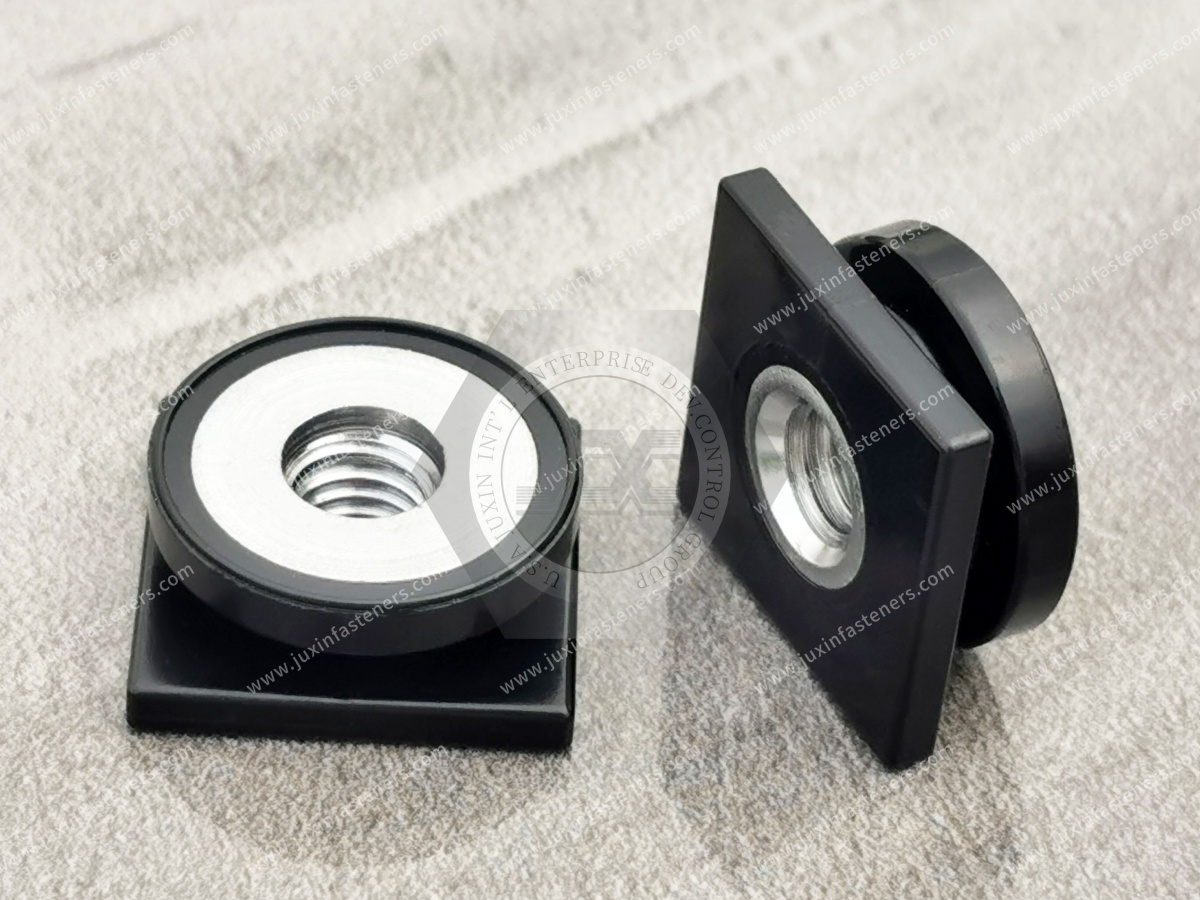
JUXIN FASTENERS supplies stainless steel fasteners, zinc and zinc-nickel coated fasteners, weld nuts and studs, insulating washers,
polymer isolation components and custom fastening hardware for multi-material industrial assemblies.
Galvanic corrosion requires several conditions to exist together:
two electrically dissimilar conductive materials;
electrical contact between them;
an electrolyte connecting the surfaces.
The electrolyte may be:
rainwater;
condensation;
road spray;
salt water;
de-icing solution;
industrial humidity;
contaminated process water.
When these conditions exist, the more active material can become the anode, while the more noble material behaves as the cathode.
Corrosion is accelerated at the anodic material.
This explains why an apparently corrosion-resistant fastener can still contribute to serious corrosion of the surrounding structure.
A common engineering question is:
Can stainless steel fasteners be used in aluminum?
Yes—but the complete joint must be evaluated.
Stainless steel is generally more noble than aluminum in many relevant environments.
When stainless steel and aluminum are electrically connected in the presence of a conductive electrolyte, the aluminum may become the anodic member of the galvanic couple.
The fastener itself may remain visually intact while corrosion develops in the aluminum surrounding:
the fastener hole;
washer interface;
countersink;
thread contact area;
exposed panel edge.
Therefore, inspecting only the stainless steel screw can give a misleading impression of joint condition.
Galvanic corrosion severity is influenced not only by the metals involved but also by their exposed surface areas.
A relatively small anodic area electrically connected to a large cathodic area can experience concentrated corrosion.
This matters around fastener holes.
For example, damage to a protective coating immediately around a fastener can expose a relatively small
area of active base metal while the surrounding fastener or structure provides a larger cathodic surface.
The result may be severe localized attack.
This is why engineers should evaluate:
Material Pair + Exposed Area Ratio + Electrolyte + Coating Condition
rather than relying only on a galvanic-series chart.
Galvanic-series data can help engineers compare the relative electrochemical behavior of metals in a specified environment.
However, it should not be treated as a universal pass/fail chart.
Actual corrosion behavior depends on:
electrolyte chemistry;
temperature;
chloride concentration;
oxygen availability;
surface condition;
coating;
passive-film stability;
exposed surface area;
geometry.
Therefore, arbitrary voltage-difference limits should not replace application-specific corrosion evaluation.
The first defense is appropriate material selection.
Possible fastener materials include:
carbon steel with protective coating;
304 stainless steel;
316 stainless steel;
aluminum alloys;
application-specific alloy fasteners.
Selection should consider both mechanical requirements and electrochemical compatibility.
A fastener should never be selected solely because one material is generally described as “more corrosion resistant.”
The question is whether it is suitable inside the actual material couple and service environment.
Metallic coatings can provide both barrier protection and, depending on the coating system, sacrificial protection.
Common industrial fastener finishes can include:
zinc plating;
zinc-nickel alloy coating;
mechanical zinc systems;
zinc-flake coatings;
application-specific conversion coatings and sealers.
Zinc-nickel systems are frequently selected for demanding automotive and industrial corrosion environments because properly specified systems can provide strong corrosion performance.
However, coating selection should consider:
substrate material;
mating material;
coating thickness;
topcoat/sealer;
friction requirements;
thread fit;
installation damage;
environmental exposure.
Coating thickness influences corrosion protection, but excessive coating can also affect threaded assembly.
For metric threaded fasteners, coating must be considered together with the specified thread tolerance.
Potential problems include:
thread interference;
increased installation torque;
inconsistent prevailing torque;
assembly seizure;
gauge rejection.
For precision fasteners, corrosion protection and dimensional fit must therefore be engineered together.
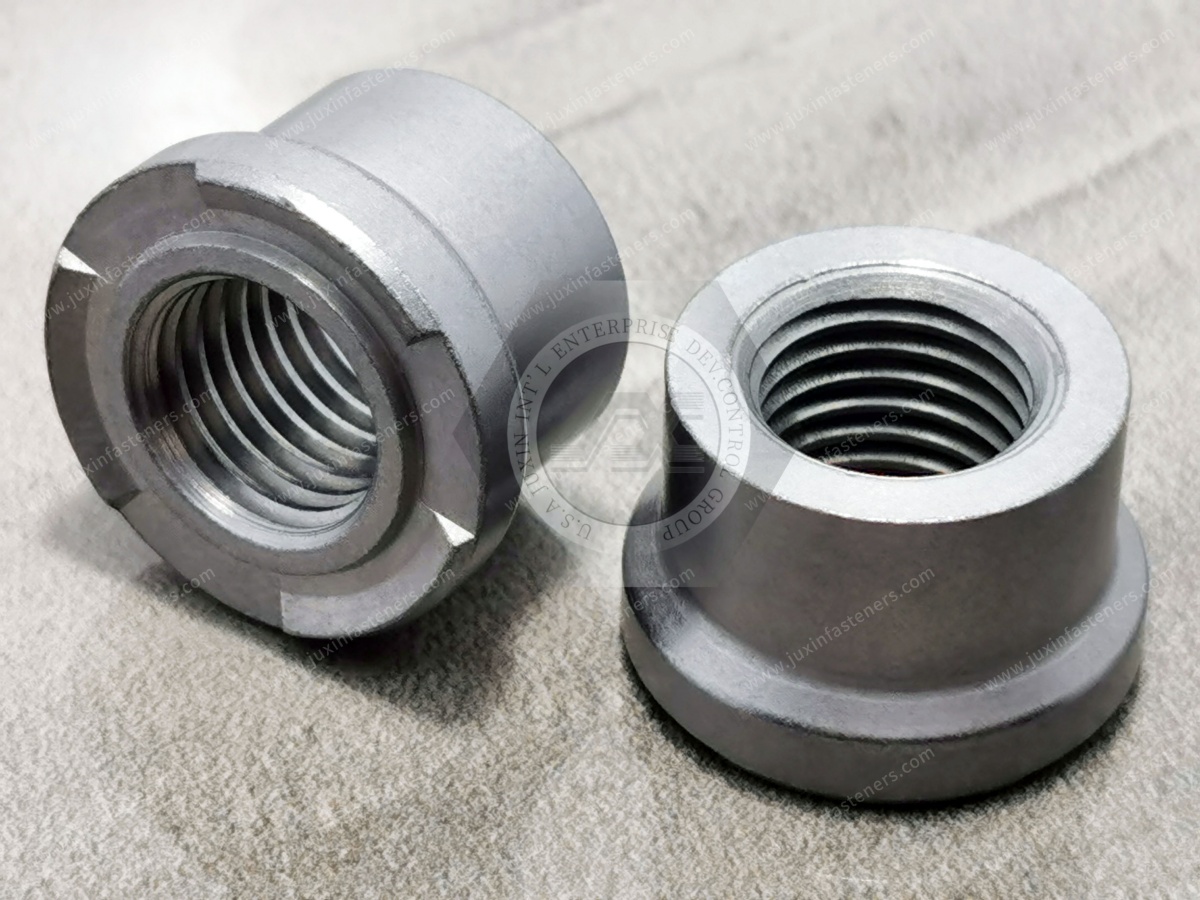
A coating can look excellent on the fastener head while being damaged during thread engagement.
During installation, contact between male and female threads can:
scratch coatings;
remove local plating;
expose base metal;
create new electrical contact points.
This is especially relevant when a coated carbon-steel fastener is installed into aluminum or another dissimilar metal.
Qualification should therefore consider the fastener after installation, not only before assembly.
Another approach is to interrupt the electrical path between the dissimilar metals.
Depending on the joint design, isolation components may include:
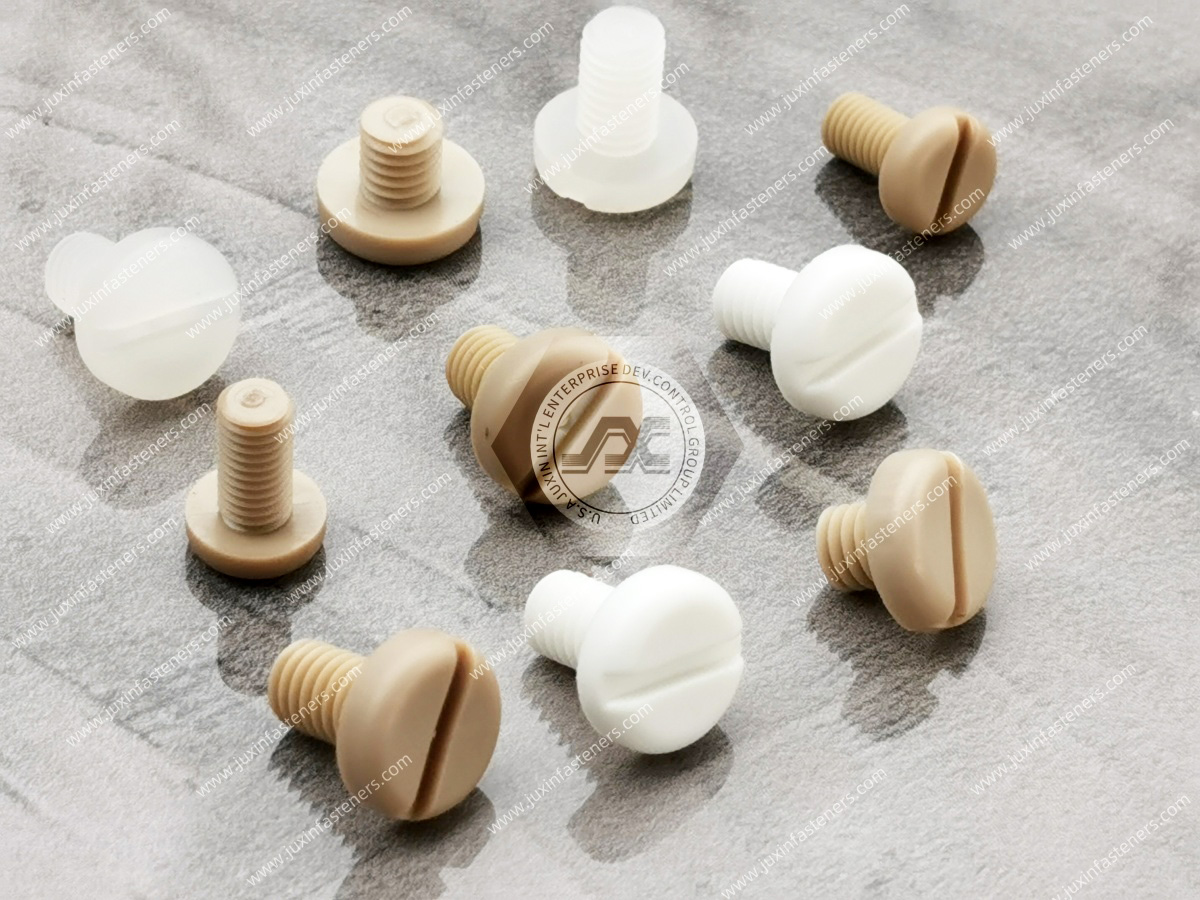
nylon flat washers;
plastic shoulder washers;
insulating bushings;
polymer sleeves;
engineered non-conductive spacers.
A shoulder washer can be particularly useful because it may isolate both the bearing face and part of the fastener shank from the panel hole.
However, electrical isolation must be sufficiently complete for the actual joint architecture.
Adding a plastic washer beneath the bolt head does not necessarily isolate the threads, shank or other metallic contact points.
Electrical isolation creates another design problem:
the polymer component becomes part of the mechanical joint.
Engineers must therefore consider:
compressive strength;
creep;
temperature;
moisture absorption;
chemical exposure;
washer thickness;
clamp-load retention.
A polymer washer that electrically isolates the joint but creeps excessively under preload can create a different failure mode.
Material selection should therefore balance:
Electrical Isolation + Mechanical Stability + Environmental Resistance
Different polymer materials provide different performance levels.
Nylon components may be appropriate for many industrial isolation applications because they offer electrical insulation, low weight and cost-effective molding.
For more demanding temperature, chemical or dimensional-stability requirements, other engineering polymers may be evaluated according to the application.
Material selection should be based on the actual operating environment rather than assuming one polymer is suitable for every isolated joint.
EV battery packs often combine:
aluminum enclosure structures;
steel brackets;
stainless steel hardware;
coated steel fasteners;
electrical components;
polymer isolation components.
This makes galvanic-corrosion management an important part of fastening design.
Fastening options may include:
projection weld studs;
weld nuts;
self-clinching fasteners;
rivet nuts;
threaded inserts;
coated screws and bolts;
insulating washers and bushings.
The correct solution depends on the enclosure material, electrical requirements, sealing strategy, assembly method and environmental exposure.
Marine and outdoor applications increase corrosion risk because electrolyte exposure may be frequent or continuous.
Important variables include:
chloride exposure;
standing water;
drainage;
crevices;
salt accumulation;
coating damage;
cleaning cycles.
A fastener material that performs well indoors may behave very differently in coastal or marine service.
Wind, solar and other outdoor energy systems can experience:
rain;
condensation;
salt-laden air;
temperature cycling;
UV exposure;
long maintenance intervals.
Fastener material and coating systems should therefore be evaluated for long-term environmental exposure as part of the complete assembly.
Construction and agricultural equipment can combine galvanic-corrosion risk with:
vibration;
mud;
fertilizer exposure;
road salt;
hydraulic fluids;
repeated pressure washing.
In these environments, both corrosion protection and mechanical retention matter.
The best solution may require combining:
Material Selection + Protective Coating + Sealing/Isolation + Vibration-Resistant Joint Design
These mechanisms are related to joint design but should not be confused.
Galvanic corrosion involves electrochemically dissimilar conductive materials connected through an electrolyte.
Crevice corrosion can develop within shielded regions where local chemistry and oxygen concentration differ from the surrounding environment.
Fastened joints can create crevices beneath:
bolt heads;
washers;
flanges;
overlapping sheets.
A joint may therefore experience more than one corrosion mechanism simultaneously.
ASTM B117 defines a standardized salt-spray/fog test environment.
It is commonly used to evaluate and compare coatings and corrosion-protection systems.
However:
ASTM B117 is a test method—not a universal prediction of real-world service life.
A specification such as “X hours salt spray” should identify:
substrate;
coating system;
coating thickness;
passivation/topcoat;
acceptance criterion;
white-corrosion requirement;
red-rust requirement.
Two fasteners advertised with the same salt-spray hours may not necessarily have equivalent coating systems or field performance.
This distinction is important for procurement teams.
Neutral salt-spray testing of an individual coated fastener does not automatically reproduce the electrochemical behavior of the complete assembled joint.
A galvanic couple includes:
fastener;
parent material;
exposed areas;
coating damage;
electrical contact;
electrolyte.
Therefore, high salt-spray performance of the fastener alone does not prove that an aluminum/stainless or aluminum/coated-steel assembly is galvanically compatible.
Certain high-strength steel fasteners require careful control when electroplated coating processes are used.
Hydrogen introduced during cleaning, pickling or electroplating can create delayed brittle failure in susceptible high-strength steels.
Where applicable, coating selection and processing should consider relevant international requirements and
customer specifications for hydrogen-embrittlement prevention and relief.
This issue is separate from galvanic corrosion but can influence the selection of corrosion-protection systems.
Procurement teams should not qualify a replacement fastener solely because both suppliers describe the finish as:
“Zinc-Nickel”
or
“Zinc Plated.”
Two nominally similar coatings may differ in:
alloy composition;
thickness;
conversion layer;
sealer;
topcoat;
friction coefficient;
corrosion performance;
appearance;
process control.
Therefore:
Same Coating Name ≠ Same Functional Performance
For second-source corrosion-resistant fasteners, compare:
base material;
material grade;
hardness;
coating type;
coating specification;
coating thickness;
passivation;
topcoat/sealer;
friction requirement;
thread tolerance;
corrosion-test requirement;
hydrogen-embrittlement controls where applicable;
dimensional requirements;
traceability.
If the fastener is used in a galvanically sensitive assembly, the mating material should also be identified.
A practical qualification sequence is:
Application Environment → Parent Materials → Fastener Material → Coating System → Electrical Contact Paths
→ Isolation Strategy → Mechanical Requirements → Corrosion Testing → Assembly Validation → Second-Source Approval
For critical multi-material assemblies, sample testing should use production-representative materials and installation conditions.
When requesting quotation or technical evaluation, provide:
2D drawing or 3D CAD model;
fastener type;
thread size and pitch;
fastener material;
parent material(s);
panel thickness;
coating requirement;
coating thickness where specified;
passivation/topcoat requirements;
corrosion test requirement;
operating environment;
temperature range;
exposure to salt, moisture or chemicals;
isolation requirements;
tightening torque where relevant;
annual usage;
batch quantity;
required material certificates;
inspection requirements;
traceability requirements.
For replacement or second-source projects, also provide:
existing supplier part number;
current drawing;
physical sample where available;
existing coating specification;
known field or corrosion problems.
For engineering teams:
Material Pair → Environment → Galvanic Risk → Fastener Material → Coating → Isolation → Mechanical Validation → Corrosion Validation
For procurement teams:
Existing Part → Material Verification → Coating Specification → Corrosion Requirement
→ Sample → Assembly Test → Documentation Review → Second-Source Approval → RFQ
The key engineering principle is:
Corrosion resistance belongs to the complete joint—not to the fastener alone.
Reliable fastening in multi-material assemblies requires evaluating the interaction between the fastener, parent material, coating, exposed area ratio,
electrical contact, electrolyte, joint geometry, installation process and service environment.
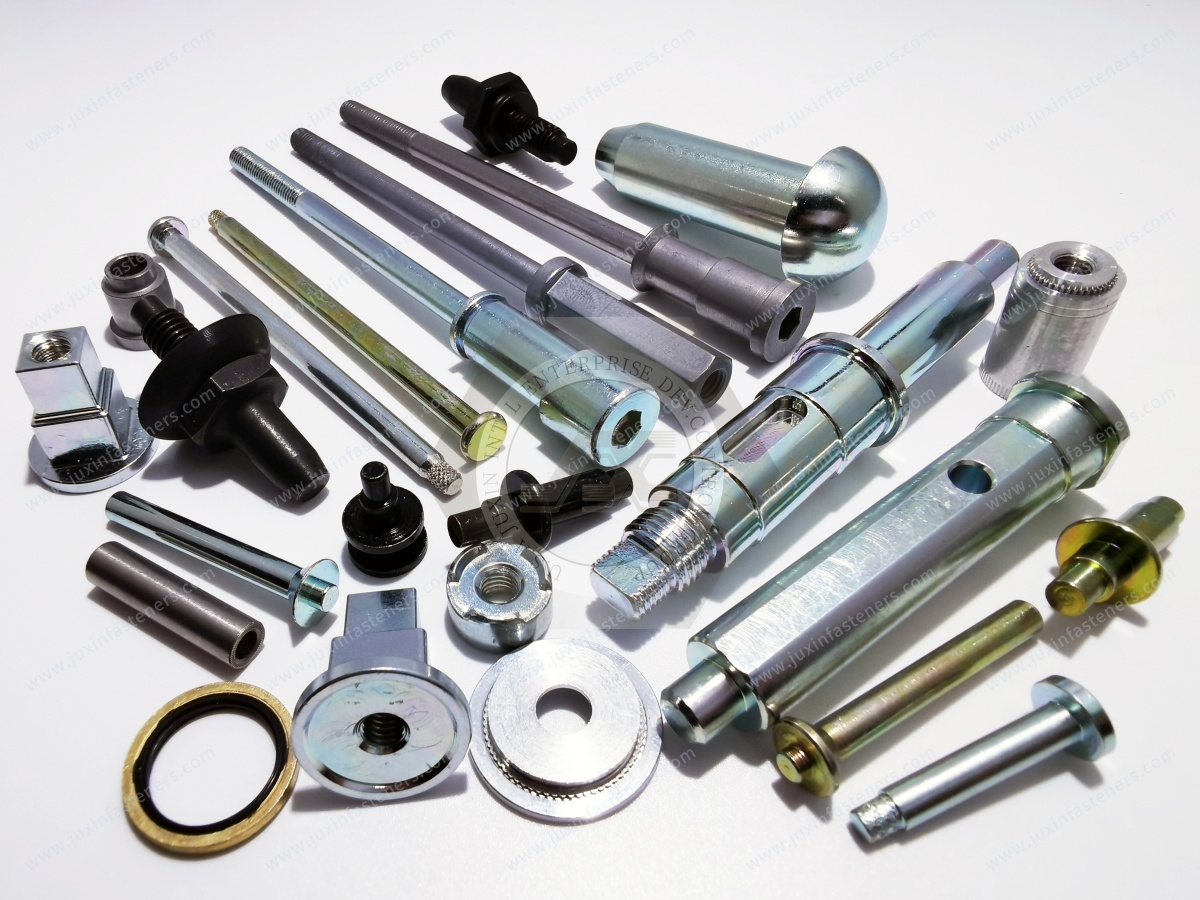
JUXIN FASTENERS supports engineering and procurement teams with drawing-based fastener evaluation, corrosion-resistant material and coating options,
insulating polymer components, sample development and second-source qualification for industrial OEM programs.
Email: info@juxinfasteners.com
Website: www.juxinfasteners.com
 MORE NEWS
Sep. 30, 2026
Sep. 30, 2026
Sep. 30, 2026
Contact Us
Tel.:
+86 020 8621 0320
+86 020 3121 6067
E-mail:
Technical Support:
Navigation
SEND INQUIREY