Call Us
+86 136 6007 9809
Call Us
+86 136 6007 9809

Sep. 07, 2026
Plastic fasteners are no longer limited to lightweight consumer products or basic non-structural assemblies.
In industrial equipment, electronics, electrical enclosures, plastic housings, instrumentation, automation systems and other engineered products,
polymer fasteners can provide useful alternatives to metal when the application requires electrical isolation,
reduced mass, galvanic isolation, surface protection or different assembly characteristics.
However, selecting a plastic fastener is not simply a matter of replacing a metal screw with a nylon screw.
Material grade, temperature, moisture exposure, chemical environment, sustained loading, thread design, dimensional stability,
assembly method and the surrounding plastic component can all affect fastening performance. For OEM applications,
the fastener therefore needs to be evaluated as part of the complete fastening system rather than as an isolated component.
JUXIN FASTENERS supports OEM-oriented evaluation of plastic and nylon fastening requirements,
including standard and custom plastic fasteners, material selection considerations, component specifications and application requirements.
This guide explains how engineers and procurement teams can evaluate custom plastic fasteners, custom nylon fasteners,
industrial plastic fasteners and OEM plastic components from material selection through sourcing and RFQ preparation.
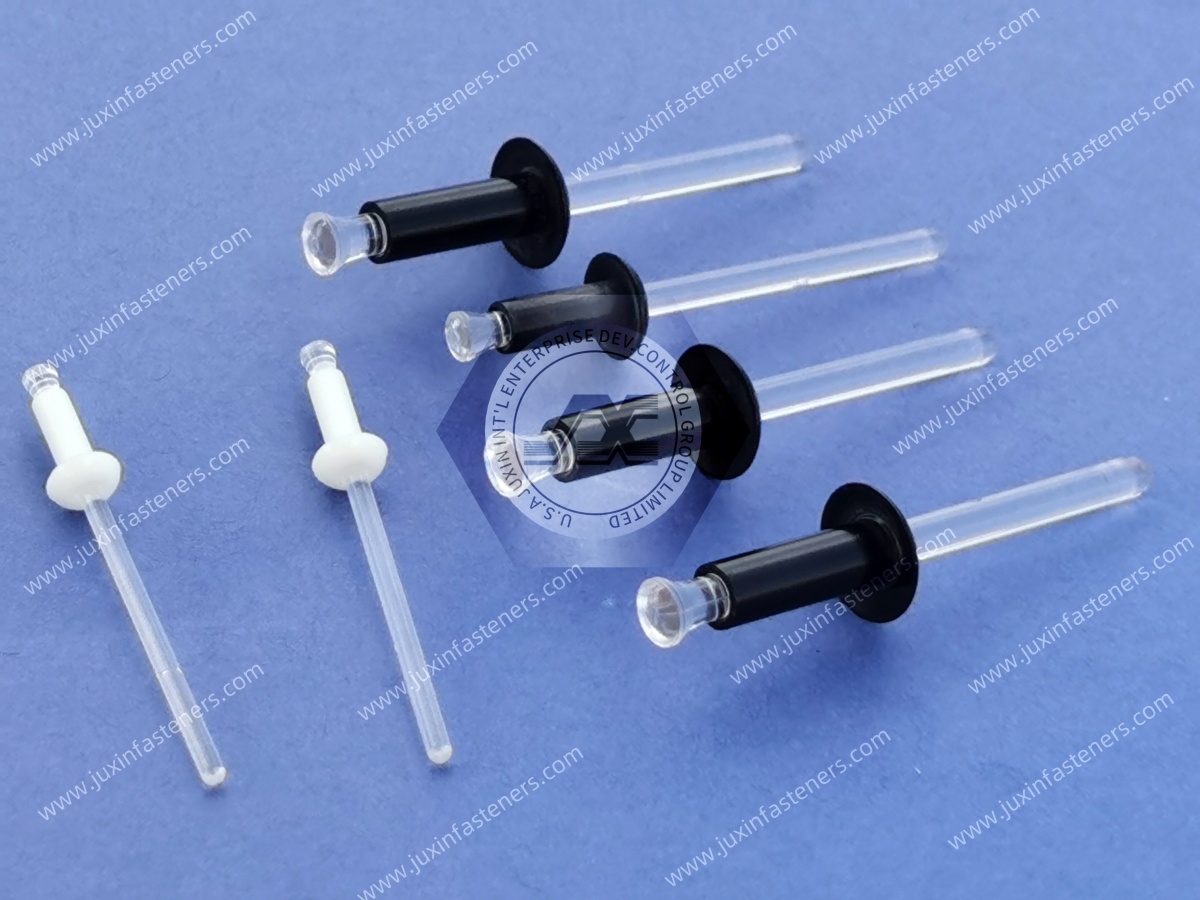
The decision between polymer and metal fasteners should begin with the function required from the connection.
Plastic fasteners can be considered when the properties of an engineered polymer provide an advantage for the application.
Metal fasteners may remain more appropriate when the connection requires high stiffness, sustained preload, demanding structural loading,
elevated continuous temperatures or severe wear and fatigue performance.
The following factors are commonly considered during the initial engineering assessment.
Polymer fasteners generally have lower density than steel and many other metals. In applications containing a large number of fasteners,
replacing selected metal components with plastic or nylon components can contribute to overall weight reduction.
This can be relevant to lightweight equipment, portable products, electronics, transportation-related components and assemblies where mass is an important design consideration.
The actual benefit depends on the fastener geometry, material, quantity and the mechanical requirements of the assembly.
Many plastic and nylon materials are electrically non-conductive compared with metallic fasteners.
This can make polymer fasteners useful when engineers need to isolate components electrically or reduce unintended conductive paths between components.
However, electrical performance should be evaluated against the specific material grade, electrical environment,
temperature, moisture exposure and applicable design requirements.
A plastic fastener should not automatically be treated as a complete solution for electrical safety or insulation without considering the complete assembly.
When dissimilar metals are connected in the presence of an appropriate electrolyte, galvanic corrosion can become a design consideration.
A polymer fastener can eliminate the metallic contact at the fastener itself and therefore may help engineers manage certain galvanic isolation requirements.
This does not mean that every plastic fastener is universally corrosion-proof or that the complete assembly is immune to corrosion. Other metallic interfaces,
coatings, moisture paths and environmental conditions still need to be considered.
Plastic fasteners can be considered where contact with a painted, coated, molded or finished surface creates concerns about scratching, marking or local surface damage.
The lower hardness and different surface characteristics of some polymer materials can be useful for selected assemblies where the fastener interface needs to be relatively gentle.
The suitability depends on the polymer, surface finish, assembly force and application conditions.
Some polymer materials have different frictional, elastic and damping characteristics from metals.
These characteristics can influence how a fastening system behaves during assembly and under vibration or cyclic loading.
However, plastic fasteners should not automatically be described as anti-loosening components.
Thread geometry, preload, joint design, material behavior, vibration conditions and assembly practice all influence resistance to thread back-out and joint movement.
Metal fasteners can remain the preferred solution where the application requires high stiffness, substantial sustained preload, demanding structural loading,
elevated continuous operating temperatures, severe wear resistance or specific fatigue performance.
The correct decision is therefore application-specific.
The objective is not to replace metal with plastic wherever possible.
The objective is to determine whether a polymer fastening system provides the required combination of mechanical, environmental, electrical and manufacturing performance.
A useful early-stage decision framework is to compare the functional requirements of the application rather than simply comparing material strength.
| Engineering Requirement | Plastic Fasteners | Metal Fasteners |
|---|---|---|
| Weight reduction | Often considered advantageous | Usually higher density |
| Electrical isolation | Often advantageous where non-conductive materials are suitable | Conductive unless an insulating system is introduced |
| Galvanic isolation | Can be advantageous | Requires material/coating/interface consideration |
| Surface protection | Can be advantageous for selected surfaces | Depends on material and surface treatment |
| High stiffness | Application-dependent | Often advantageous |
| High sustained preload | Requires polymer-specific evaluation | Often advantageous |
| Elevated temperature | Strongly grade- and application-dependent | Often advantageous for demanding conditions |
| Moisture exposure | Material-specific evaluation required | Material/coating-specific evaluation required |
| Chemical exposure | Polymer-specific compatibility assessment required | Metal/alloy/coating compatibility assessment required |
| Repeated assembly | Depends on thread material and design | Often advantageous, but application-specific |
This framework is intended as a screening tool rather than a universal material-selection rule.
For engineering applications, the next step is to identify the actual environmental and mechanical conditions before selecting the polymer family and fastener design.
A reliable plastic fastener specification should move through the following decision sequence.
First identify what the fastener is expected to do.
Is it retaining a cover, joining a housing, mounting an electronic component, positioning a panel, separating components, securing a cable-management element or creating a threaded connection?
The functional role determines which performance requirements matter most.
Determine whether the fastener is primarily subjected to tension, shear, compression, bending, installation stress, vibration or a combination of these conditions.
Sustained loading deserves particular attention because polymer behavior can change over time under stress.
Operating temperature, storage temperature, thermal cycling and localized heat sources can affect polymer stiffness, strength, dimensional behavior and long-term performance.
Temperature requirements should therefore be evaluated against the actual polymer grade rather than against the generic name of the material family.
Humidity, water contact, condensation and immersion can affect some polymers significantly.
This is particularly important for nylon because moisture absorption can influence dimensions and mechanical behavior.
Identify the actual substances that may contact the fastener.
This may include oils, lubricants, cleaning agents, fuels, solvents, process chemicals or other fluids.
Chemical compatibility should be evaluated according to the actual chemical, concentration, temperature, exposure duration and mechanical stress.
Determine whether the fastener must provide electrical isolation, avoid conductive contact or coexist with sensitive electronic components.
Electrical properties should be evaluated using the selected grade and the actual environmental conditions.
If the fastener controls component position, maintains a defined gap or interacts with precision interfaces, dimensional stability becomes an important design consideration.
Moisture sensitivity and temperature-dependent dimensional behavior should be included in the assessment.
Only after the environmental and functional requirements are understood should the engineer narrow the material family.
Nylon, POM, PP, PC, PVDF, PEEK and other engineering polymers can provide different combinations of mechanical, thermal, chemical and dimensional characteristics.
Material selection alone does not determine fastening performance.
Engineers should also evaluate whether the application requires plastic screws, plastic bolts, plastic nuts, plastic washers, plastic spacers, a molded thread, a tapped thread or a threaded insert for plastic.
Finally, document the application, drawing, material requirements, environment, thread specification, quantity, quality requirements and other commercial conditions.
A complete RFQ allows the supplier to assess the actual application rather than quoting a component based only on a generic product name.
Different engineering polymers offer different property profiles. The following comparison is intended as a material-selection starting point;
actual performance depends on resin grade, formulation, reinforcement, geometry, processing and application conditions.
| Material Family | Typical Engineering Considerations | Potential Applications |
|---|---|---|
| Nylon / PA6 / PA66 | Good combination of mechanical performance and processability; moisture absorption should be considered | Industrial fasteners, housings, brackets, general mechanical assemblies |
| POM / Acetal | Often selected where dimensional stability, low friction and wear performance are important | Precision components, mechanical assemblies, moving interfaces |
| PP | Low density and useful chemical resistance in many environments | Lightweight components, chemical-handling-related applications, housings |
| PC | Impact performance and useful electrical characteristics in selected grades | Electronics, electrical housings, equipment components |
| PVDF | Strong chemical and environmental resistance in appropriate grades | Chemical-processing-related components and demanding environments |
| PEEK | High-performance engineering polymer with strong thermal and chemical performance in suitable grades | Demanding industrial, chemical, electrical and high-temperature applications |
These descriptions should not be treated as universal material guarantees. Different grades within the same polymer family can behave differently, and reinforcement or additives can substantially change performance.
Where required, applicable international standards, customer specifications and material test requirements should be identified as part of the engineering review.
Nylon remains one of the most widely considered polymer families for industrial fasteners because it offers a useful balance of mechanical properties, processability,
electrical characteristics, weight and cost across many applications.
Nylon fasteners are available in forms such as nylon screws, nylon bolts, nylon nuts, nylon washers and nylon spacers.
PA6 and PA66 are common nylon families, but the actual behavior depends on grade, formulation, processing history and environmental conditioning.
Nylon can therefore be attractive for general industrial fastening, electrical isolation, lightweight assemblies and plastic housing applications.
At the same time, nylon should not be selected solely because it is commonly used. Moisture absorption, temperature, sustained loading,
chemical exposure and dimensional requirements should be evaluated against the actual application.
Moisture absorption is one of the most important environmental considerations when evaluating nylon fasteners.
Nylon can absorb moisture from its surrounding environment.
The amount and resulting dimensional or mechanical change depend on the specific resin grade, conditioning history, humidity, temperature and exposure conditions.
For applications with tight dimensional requirements, engineers should consider whether moisture-related changes could affect:
Thread fit
Component dimensions
Assembly consistency
Mechanical properties
Long-term joint behavior
Interface tolerances
This is especially important where a nylon fastener interacts with a precision plastic housing or another component with limited dimensional allowance.
A nylon material that performs well in a dry environment may require additional evaluation when used in a humid, wet or temperature-cycling environment.
Many polymer materials can experience time-dependent deformation when subjected to sustained stress.
Two concepts are particularly relevant:
Creep describes gradual deformation under a sustained load.
Stress relaxation describes a reduction in internal stress or clamping force over time when deformation is constrained.
For plastic fastening systems, these behaviors can influence joint performance when a fastener is expected to maintain sustained preload for long periods.
The actual behavior depends on the polymer grade, temperature, stress level, geometry, loading duration and surrounding joint design.
Therefore, a polymer fastener intended for a long-term clamped assembly should be evaluated as part of the complete joint rather than assessed only from the initial installation condition.
Where sustained preload is critical, engineers may need to consider alternative fastening architectures, joint geometry or threaded inserts for plastic depending on the application.
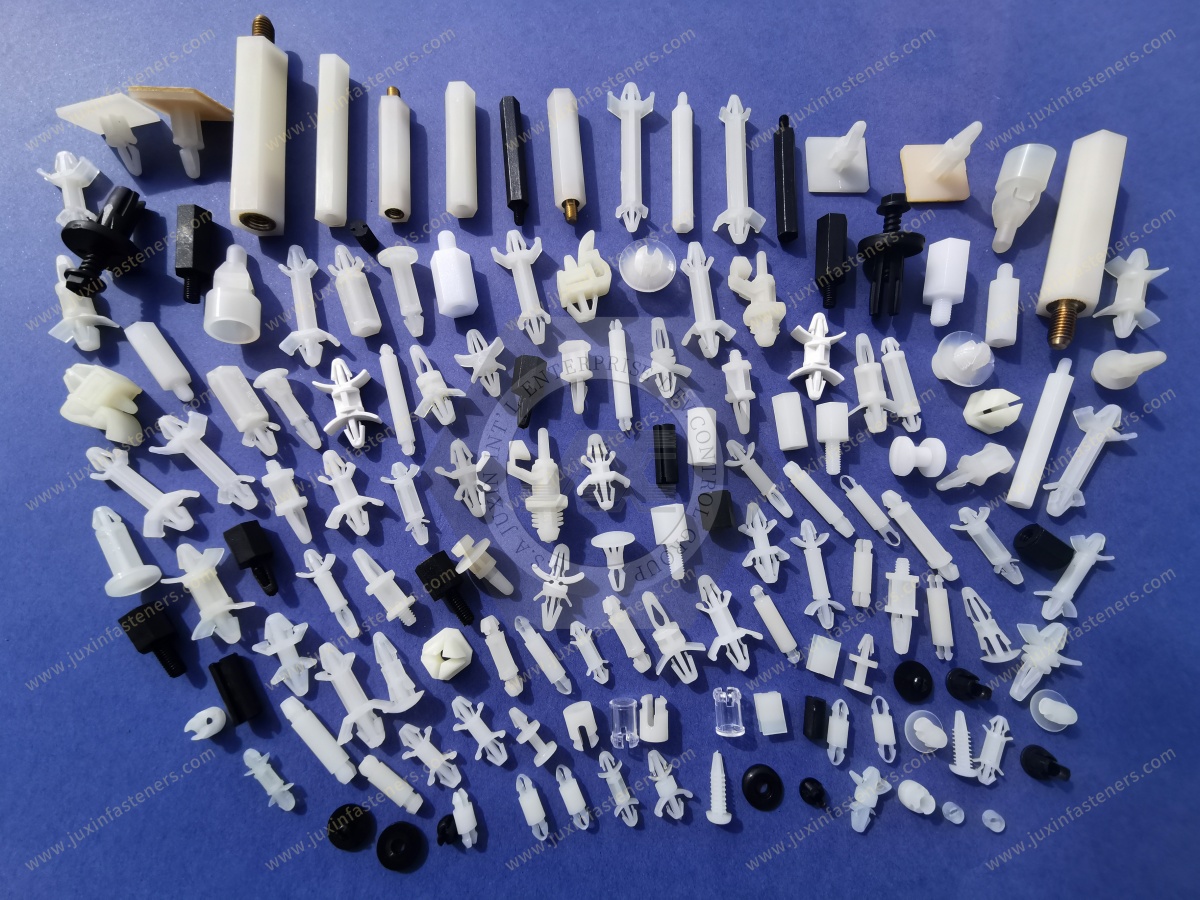
Temperature can influence polymer stiffness, strength, dimensional behavior and long-term deformation.
As temperature increases, many polymers become less stiff, although the degree of change depends strongly on the material grade and operating range.
Temperature cycling can also create dimensional changes between the fastener and surrounding components.
For this reason, the temperature evaluation should include:
Normal operating temperature
Maximum and minimum exposure
Thermal cycling
Heat generated by nearby components
Storage conditions
Duration of exposure
A material that appears suitable based on room-temperature behavior may require additional assessment when exposed to elevated temperatures for extended periods.
High-temperature applications should therefore be matched to an appropriate polymer grade rather than selected from a generic “plastic” category.
Chemical compatibility should be evaluated against the actual exposure conditions.
It is not sufficient to ask whether a material is simply “chemical resistant.”
The engineer should identify:
Chemical type
Concentration
Temperature
Exposure duration
Frequency of exposure
Mechanical stress during exposure
Cleaning or sterilization conditions where applicable
Nylon may perform well with many oils, greases and other substances in selected conditions, but compatibility can vary significantly depending on the chemical and environmental combination.
Other engineering polymers may be more appropriate when the application involves aggressive chemicals, elevated temperature or long-term exposure.
For OEM applications, chemical compatibility should therefore be part of the material-selection process rather than an assumption based only on the polymer family name.
Nylon is versatile, but it is not automatically the correct material for every plastic fastening application.
Engineers may need to consider alternatives when the application involves:
Significant moisture exposure combined with tight dimensional requirements
Sustained mechanical loading where creep or stress relaxation requires careful control
High continuous operating temperatures
Aggressive chemical environments
Very low moisture sensitivity requirements
Specific wear or friction requirements
Specialized electrical or environmental requirements
A demanding long-term retention requirement
In these situations, materials such as POM, PP, PC, PVDF, PEEK or another polymer family may warrant evaluation depending on the actual application.
The correct approach is to compare material properties against the real operating conditions rather than choosing a material based solely on familiarity or cost.
A plastic component does not always need to rely on a plastic thread.
When an assembly requires repeated installation and removal, a durable threaded interface or a different load path, engineers may consider threaded inserts for plastic.
Threaded inserts can provide a separate internal thread architecture within a polymer component.
Depending on the application, this can be useful where repeated thread engagement, local load concentration or long-term thread durability requires additional evaluation.
Several insert technologies are available, including threaded inserts designed for installation into plastic components and installation approaches such as heat staking or ultrasonic insertion.
If a plastic housing is opened repeatedly during servicing or maintenance, the thread interface can become an important design consideration.
A threaded insert may provide a different wear mechanism from repeatedly engaging a thread directly in the plastic.
The suitability depends on the plastic substrate, insert design, installation method and assembly requirements.
Directly molded or tapped polymer threads can be appropriate for many applications.
However, when repeated assembly creates concerns about thread wear, engineers can evaluate whether an insert-based design provides a more suitable threaded interface.
Threaded inserts can be considered in plastic housings, electrical enclosures, electronic assemblies and other molded components where the fastening interface needs to be integrated into the plastic structure.
Insert selection should consider the geometry of the molded component, surrounding wall thickness, installation process and expected assembly conditions.
The connection between a fastener and plastic housing creates a localized load path.
Where the application is sensitive to local deformation or thread retention, engineers can evaluate whether a threaded insert changes the load distribution and retention architecture in a useful way.
Depending on the component and manufacturing process, engineers may evaluate:
Threaded inserts for plastic
Heat-staking inserts
Ultrasonic inserts
Molded-in inserts
Post-mold installed inserts
Different insert materials and thread configurations
No single installation method is universally suitable. The correct insert technology depends on the plastic material, component geometry, production process, volume and performance requirements.
For detailed engineering considerations, JUXIN FASTENERS also provides resources covering threaded inserts for ABS, Nylon, PC, PBT and PEEK,
molded-in versus post-mold insert approaches, glass-filled plastics and composites, and threaded inserts versus tapped plastic threads.
Industrial housings and enclosures frequently combine polymer panels, covers, brackets, electronics and internal components.
Plastic fasteners can be considered when engineers need to manage weight, electrical isolation, surface contact or compatibility with polymer housings.
Typical components can include:
Plastic screws
Plastic bolts
Plastic nuts
Plastic washers
Plastic spacers
Nylon fasteners
Threaded inserts for plastic
The fastening system should be evaluated together with the enclosure material.
For example, the designer may need to consider thread engagement, local deformation, installation method, environmental exposure,
repeated servicing and dimensional changes caused by temperature or moisture.
The objective is to create a fastening architecture that is compatible with both the fastener and the enclosure rather than optimizing either component in isolation.
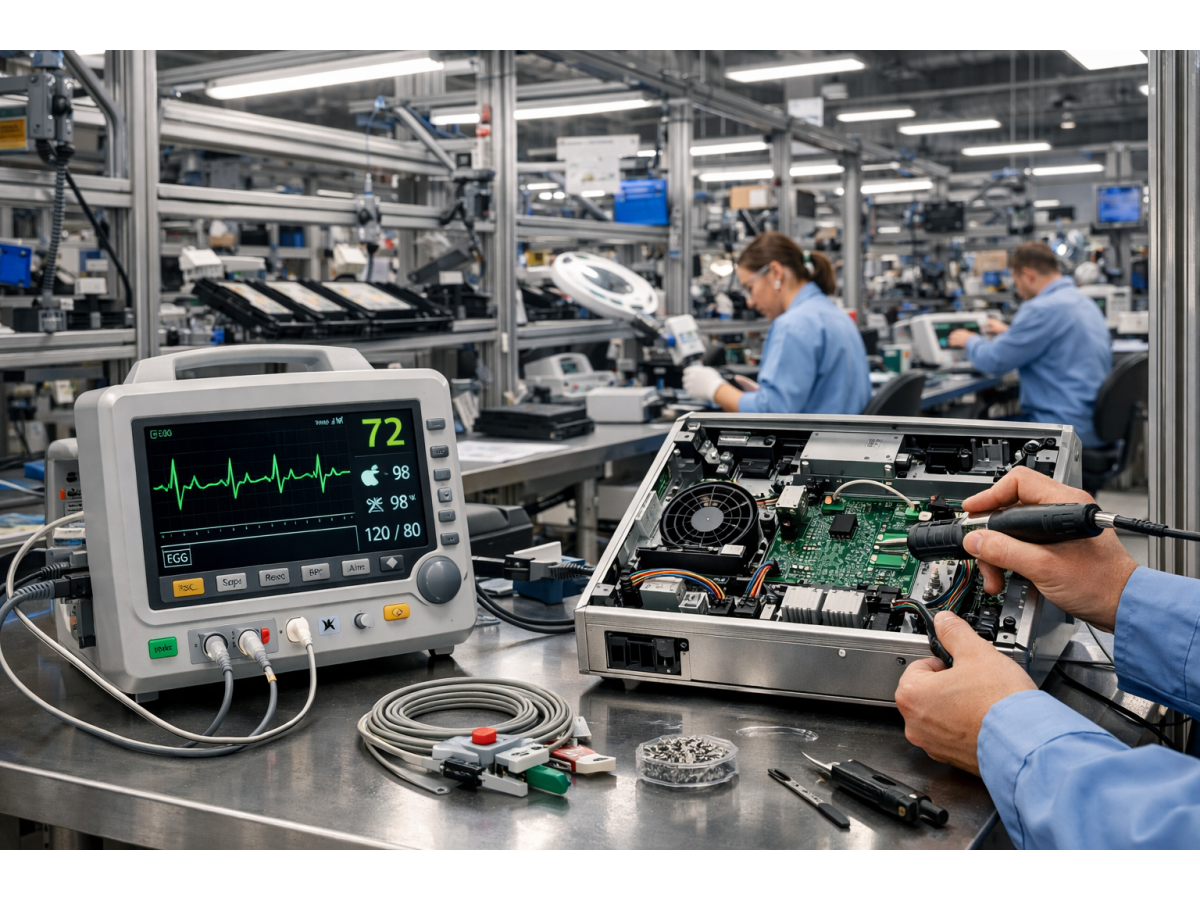
Electronics and electrical equipment can present a particularly strong case for evaluating polymer fastening solutions.
Potential considerations include:
Electrical isolation
Lightweight construction
Separation of conductive components
Plastic housing compatibility
Protection of finished surfaces
Cable and component spacing
Serviceability
Environmental exposure
Plastic fasteners can provide non-conductive isolation and help separate conductive components when properly incorporated into the assembly design.
However, the fastener should not be treated as an automatic solution for preventing short circuits.
Electrical clearances, creepage requirements, component geometry, environmental conditions and the applicable product standard remain important.
For electronic housings and electrical equipment, the fastener is only one element of the overall insulation and mechanical design.
Industrial equipment can use plastic and nylon fasteners in a wide range of non-structural and semi-structural applications.
Examples include:
Equipment covers
Protective guards
Sensor housings
Cable-management components
Lightweight panels
Instrumentation assemblies
Internal brackets
Plastic enclosures
Electrical equipment
Automation components
The engineering decision should be based on the function of the individual connection.
A plastic fastener may be appropriate for a cover while a metal fastener or an insert-based fastening system may be more appropriate for a highly loaded mounting point on the same machine.
This application-specific approach is particularly important for OEM equipment where multiple fastening architectures may coexist within the same product.
Reducing component mass can contribute to easier manual handling and may support broader lightweight product-design objectives.
For products containing a large number of fastening components, the lower density of polymer fasteners can contribute to overall assembly weight reduction.
Potential benefits may include easier handling, reduced component mass and simplified lightweight-product design.
However, logistics savings should not be assumed automatically. The actual impact depends on total component quantity, packaging, product weight, shipping method and the overall supply-chain structure.
For OEM product development, lightweighting should therefore be evaluated as part of the complete product architecture rather than based on fastener material alone.
A custom plastic fastener or component should be specified according to the actual engineering requirement rather than only by product name.
A useful OEM specification can include the following information.
Identify the required component:
Screw
Bolt
Nut
Washer
Spacer
Rivet
Insert
Custom molded component
Custom machined polymer component
Other fastening component
Provide a dimensioned drawing whenever possible.
The drawing should identify critical dimensions, thread requirements, interfaces, tolerances and any features that affect installation or assembly.
CAD data can also help suppliers understand the relationship between the fastener and the surrounding component.
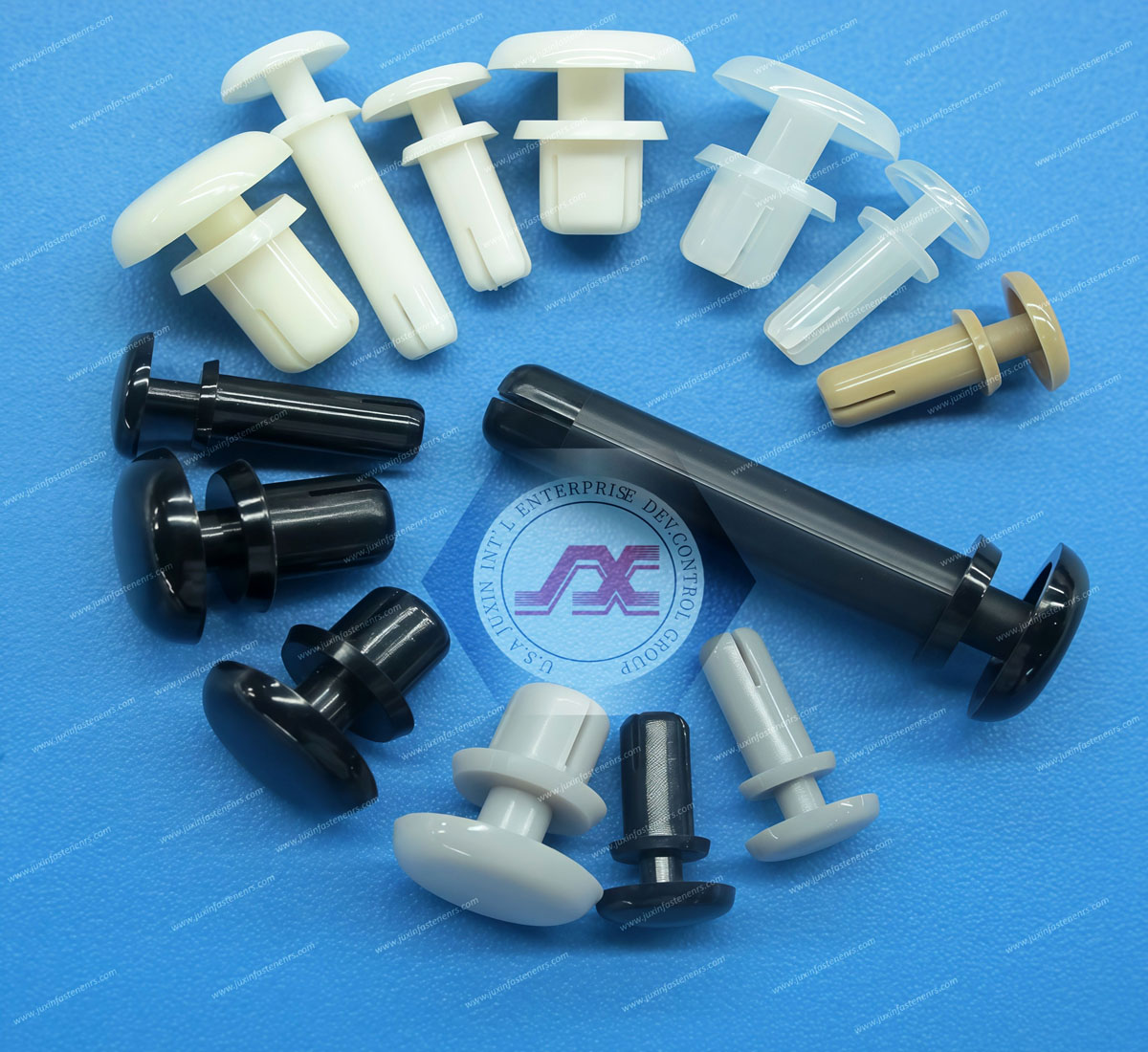
Specify the required polymer family or grade where known.
If the material has not yet been finalized, provide the application conditions so the supplier can assess suitable material options.
Important information may include:
Nylon / PA6 / PA66
POM
PP
PC
PVDF
PEEK
Other specified engineering polymer
Reinforced or modified material where required
Identify the functional mechanical requirements of the connection.
These may include loading direction, sustained loading, assembly frequency, vibration exposure, dimensional retention and other application-specific requirements.
Avoid specifying generic performance numbers unless they are supported by the actual material, component geometry, test method or customer specification.
Provide actual operating conditions where available:
Temperature range
Humidity
Water exposure
Chemical exposure
UV exposure
Cleaning conditions
Electrical environment
Storage conditions
Specify:
Thread type
Thread size
Thread form where applicable
Internal or external thread
Threaded insert requirement
Mating component
Assembly method
Where the thread is integrated into plastic, the surrounding material and geometry should also be considered.
OEM sourcing teams may also need to define:
Inspection requirements
Packaging requirements
Traceability requirements
Material documentation
Applicable standards
Drawing revision
Quantity
Annual demand
Prototype requirements
Production requirements
Delivery location
Commercial terms
Applicable international standards or customer specifications should be identified where required rather than assuming that one standard applies to every polymer fastener.
For a custom plastic or nylon fastener inquiry, the most useful information can be summarized as:
Application + Drawing + Material + Environment + Thread + Quantity + Quality Requirements
Explain where and how the component will be used.
Provide the latest dimensioned drawing or CAD information when available.
Specify the preferred polymer or explain the required properties if material selection is still open.
Describe temperature, moisture, chemicals, electrical conditions and other relevant exposures.
Specify internal or external thread requirements and the mating component.
Provide prototype, trial, annual or production quantities where available.
Identify inspection, documentation, packaging, traceability and applicable customer requirements.
Additional application information helps JUXIN FASTENERS assess the component requirements and establish an appropriate quotation and manufacturing basis.
The more clearly the engineering requirement is defined, the easier it is for an OEM supplier to evaluate feasibility, identify material considerations and determine the appropriate sourcing path.
Procurement teams sometimes evaluate fasteners as individual line items.
For polymer fastening applications, this can create an incomplete engineering picture.
The performance of a plastic fastener can depend on the interaction between:
Fastener Material → Fastener Geometry → Thread Design → Mating Material → Joint Geometry → Installation Method → Environment → Service Conditions
For example, changing from a metal fastener to a nylon fastener may change not only the fastener material but also thread friction, preload behavior, dimensional response,
environmental sensitivity and the way loads are transferred into the surrounding plastic.
Similarly, changing from a direct plastic thread to a threaded insert changes the fastening architecture.
For OEM procurement, this means supplier evaluation should include technical communication, material understanding, application requirements and the ability to review drawings and specifications.
The lowest unit price is not necessarily the lowest total sourcing risk if the selected component is poorly matched to the application.
Nylon fasteners do not experience metallic corrosion mechanisms in the same way as metal fasteners, and this can be useful in selected environments.
However, nylon is not universally resistant to every environmental condition. Moisture absorption, chemicals, temperature and mechanical loading should still be evaluated.
Yes, nylon fasteners are widely considered for industrial applications where their combination of weight, electrical characteristics, processability and mechanical properties is appropriate.
Suitability depends on the specific nylon grade and application conditions.
PA6 and PA66 are different nylon material families with different property profiles. Actual performance depends on grade, formulation, processing and conditioning.
The correct choice should therefore be based on the required mechanical, dimensional, thermal, moisture and environmental characteristics.
Some polymer materials absorb moisture, and nylon is particularly relevant to this consideration.
Moisture can influence dimensions and mechanical behavior depending on the grade and environmental conditions.
Many polymer materials can exhibit creep under sustained stress. The significance depends on material, temperature, stress level, geometry and duration.
Applications requiring long-term load retention should therefore include creep and stress-relaxation considerations during design.
Plastic fasteners can provide non-conductive isolation and may be useful in electrical and electronic assemblies.
However, the complete electrical design must still consider clearances, creepage, environmental conditions and applicable requirements.
A threaded insert can be considered when the application requires a different thread architecture, repeated assembly and disassembly,
or additional evaluation of thread retention and durability. The correct choice depends on the plastic material, component geometry, installation method and service conditions.
Custom plastic or nylon components should be evaluated from the actual drawing, material, environmental conditions, thread requirements, quantity and quality requirements.
These details provide the basis for an engineering and sourcing review.
For OEM projects involving custom plastic fasteners, custom nylon fasteners, plastic screws, plastic bolts, plastic nuts, plastic washers, plastic spacers,
threaded inserts for plastic or other custom plastic components, provide the available engineering information for review.
A practical RFQ sequence is:
Application + Drawing + Material + Environment + Thread + Quantity + Quality Requirements → Engineering Review → RFQ
The objective is to evaluate the fastening component in the context of the complete application, including material selection, environmental exposure, assembly requirements and OEM sourcing conditions.
Contact JUXIN FASTENERS:
info@juxinfasteners.com
Contact Us
Tel.:
+86 020 8621 0320
+86 020 3121 6067
E-mail:
Technical Support:
Navigation
SEND INQUIREY