Call Us
+86 136 6007 9809
Call Us
+86 136 6007 9809

Jan. 17, 2024
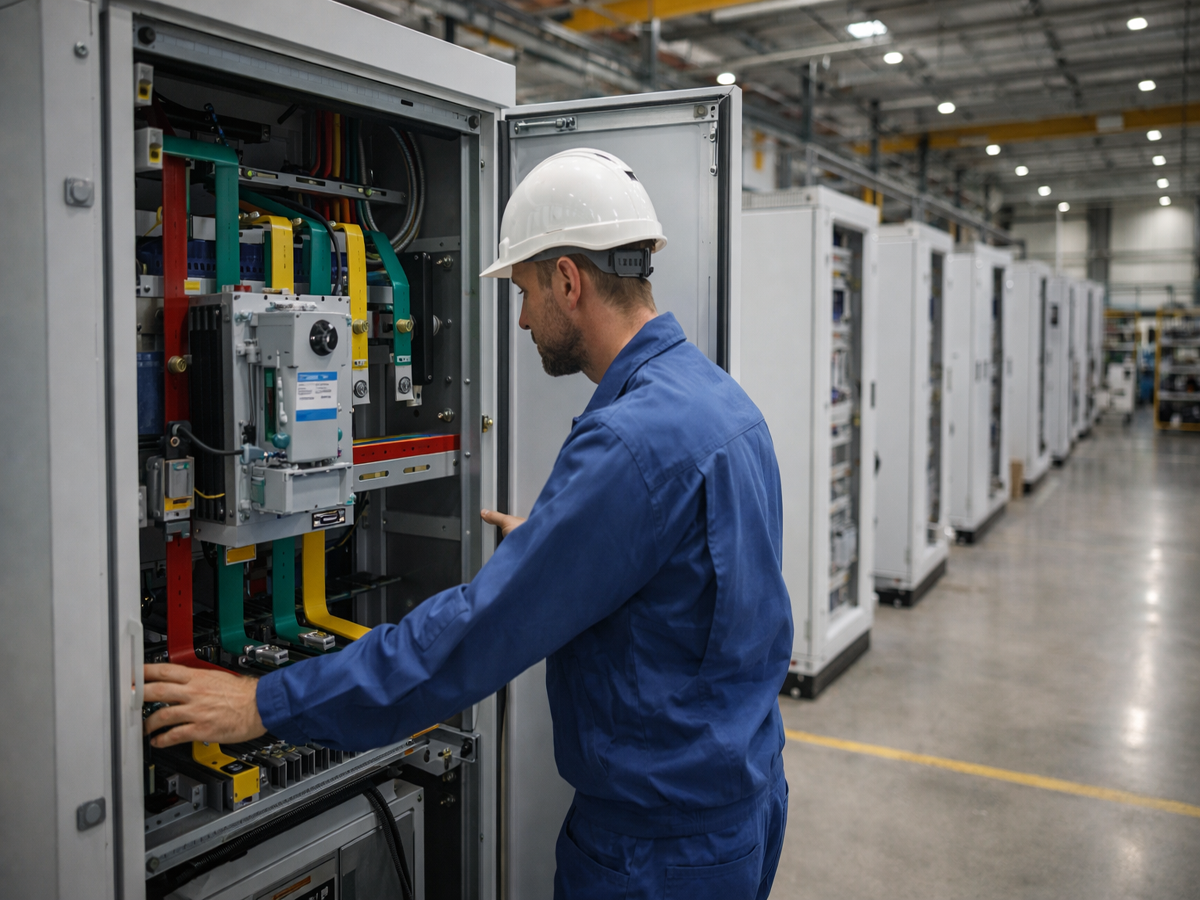
Electrical equipment depends on far more than screws holding panels together.
A modern electrical cabinet, power distribution enclosure, industrial control system, inverter, UPS, energy-storage system or power-electronics assembly may require different fasteners for:
Structural enclosure assembly
Thin-sheet threaded attachment
Removable access panels
PCB and electronic component mounting
Cable-management hardware
Insulating components
Equipment modules
Service covers
Internal brackets
Thermal-management components
The correct fastener therefore depends on what the connection must do.
For engineers, procurement managers and supplier-development teams, electrical equipment fastener selection should consider:
Joint Function + Sheet / Parent Material + Thickness + Installation Access + Load + Service Frequency + Vibration + Corrosion
+ Electrical Function + Insulation Requirement + Temperature + Manufacturing Process
JUXIN FASTENERS supplies standard and drawing-based fastening components for electrical and industrial equipment, including:
Self-clinching nuts
Self-clinching studs
Self-clinching standoffs
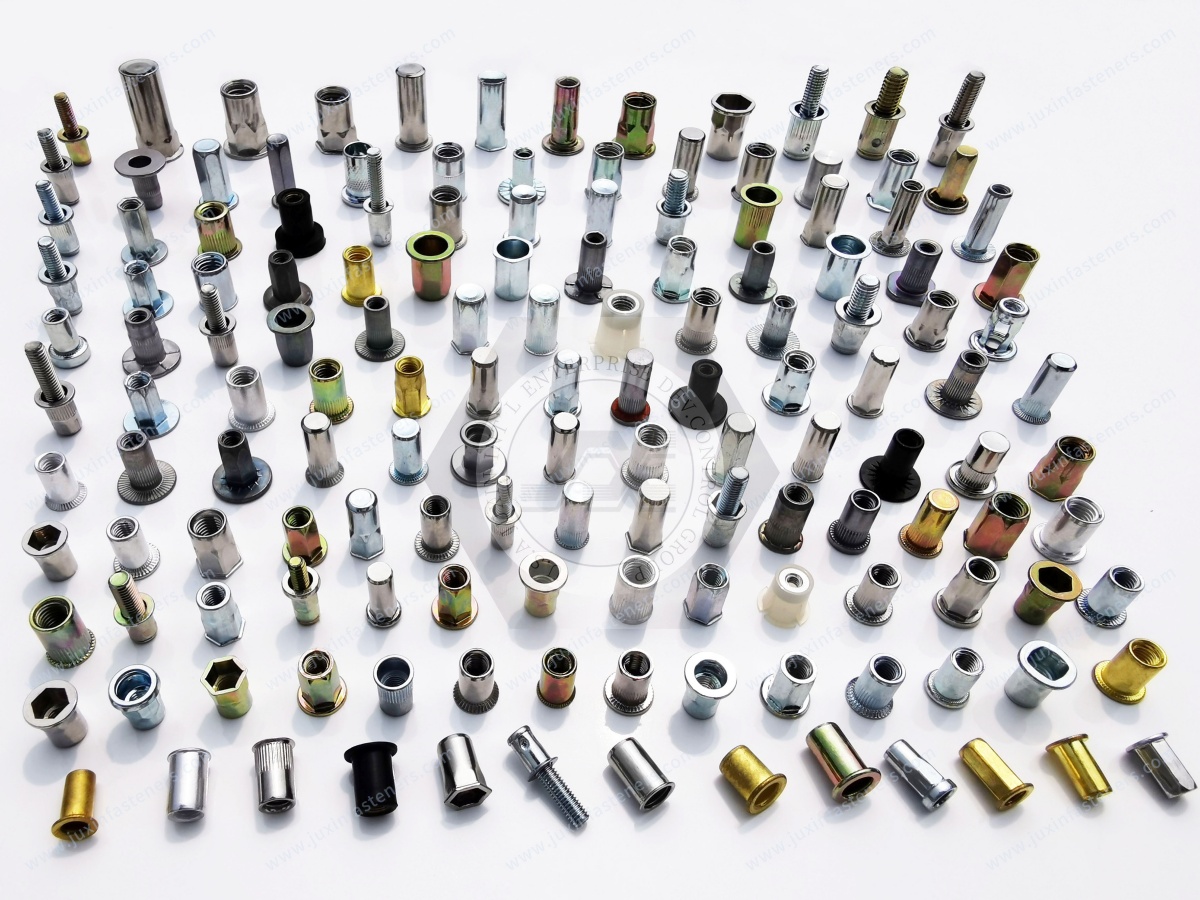
Rivet nuts
Blind rivets
Captive panel fasteners
Machine screws
Thread-forming screws
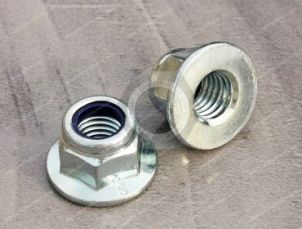
Lock nuts
Threaded inserts
Metal standoffs and spacers
Nylon and plastic fasteners
Insulating washers and components
Stainless steel fasteners
Corrosion-resistant coated fasteners
Custom OEM fastening components
The engineering objective is not simply to find a screw that fits the hole.
It is to create a fastening system that supports manufacturing, operation, maintenance and the electrical equipment architecture throughout its intended service conditions.
| Application | Main Requirement | Fastening Technologies to Evaluate |
|---|---|---|
| Thin sheet-metal cabinet | Reusable internal thread | Self-clinching nut / rivet nut |
| One-sided enclosure installation | Blind threaded attachment | Rivet nut |
| Permanent sheet-metal joining | Non-threaded joint | Blind rivet |
| Removable access panel | Serviceability / hardware retention | Captive panel fastener |
| PCB or electronic module | Controlled spacing | Standoff / spacer / screw |
| Repeated service thread | Durable internal thread | Threaded insert |
| Internal sheet-metal bracket | Captive attachment | Self-clinching stud / nut |
| Insulation requirement | Electrical separation | Suitable polymer fastener / insulating component |
| Outdoor electrical cabinet | Corrosion resistance | Stainless or engineered coated fastener |
| Vibration-sensitive equipment | Joint retention | Correct preload + appropriate locking strategy |
This table is a starting point.
The final decision should follow the actual equipment design.
A common sourcing mistake is beginning with:
“We need M5 screws for an electrical cabinet.”
But the thread size alone does not define the fastening problem.
The engineering team should first ask:
Is the joint permanent or removable?
Is the parent material thin sheet?
Is backside access available?
Will technicians open the panel repeatedly?
Is the fastener part of an electrical path?
Is electrical isolation required?
Is the equipment exposed to moisture?
Does vibration matter?
What is the expected service life?
Only then should the fastener technology be selected.
This is one of the most important principles in electrical equipment fastening.
A mechanically secure screw does not automatically establish:
Protective grounding
Electrical bonding
Current-carrying capability
Insulation performance
Creepage compliance
Clearance compliance
Enclosure safety
System certification
Therefore:
Mechanical Fastening Function ≠ Electrical Safety Function.
If a fastener is intended to perform an electrical function, that requirement must be explicitly defined and validated at assembly level.
Steel, stainless steel, brass and aluminum are conductive materials.
But material conductivity alone does not establish a qualified electrical connection.
Electrical performance may depend on:
Contact resistance
Contact pressure
Surface coating
Oxide layers
Paint
Washer design
Current
Temperature
Vibration
Corrosion
Joint aging
Therefore:
Conductive Material ≠ Qualified Electrical Connection.
A mechanical screw should not automatically be treated as a grounding or bonding connection.
Nylon and engineering-polymer fasteners can provide useful electrical isolation in selected applications.
Potential products include:
Nylon screws
Nylon nuts
Plastic rivets
Insulating washers
Plastic spacers
PCB supports
Custom polymer components
However:
Plastic Fastener ≠ System Electrical Compliance.
System-level electrical performance can also depend on:
Polymer grade
Voltage
Temperature
Moisture
Geometry
Creepage distance
Clearance
Flammability requirements
Applicable equipment standard
The complete electrical assembly must be evaluated.
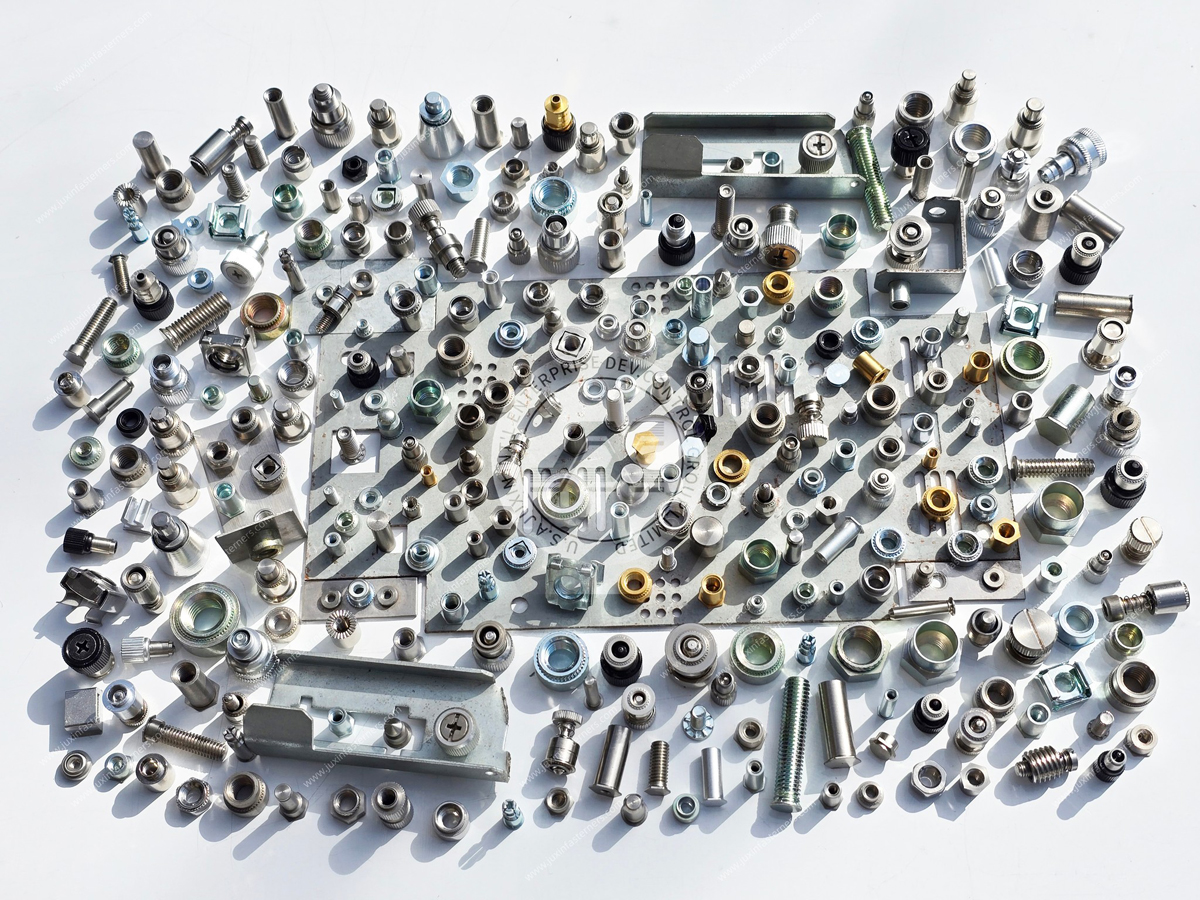
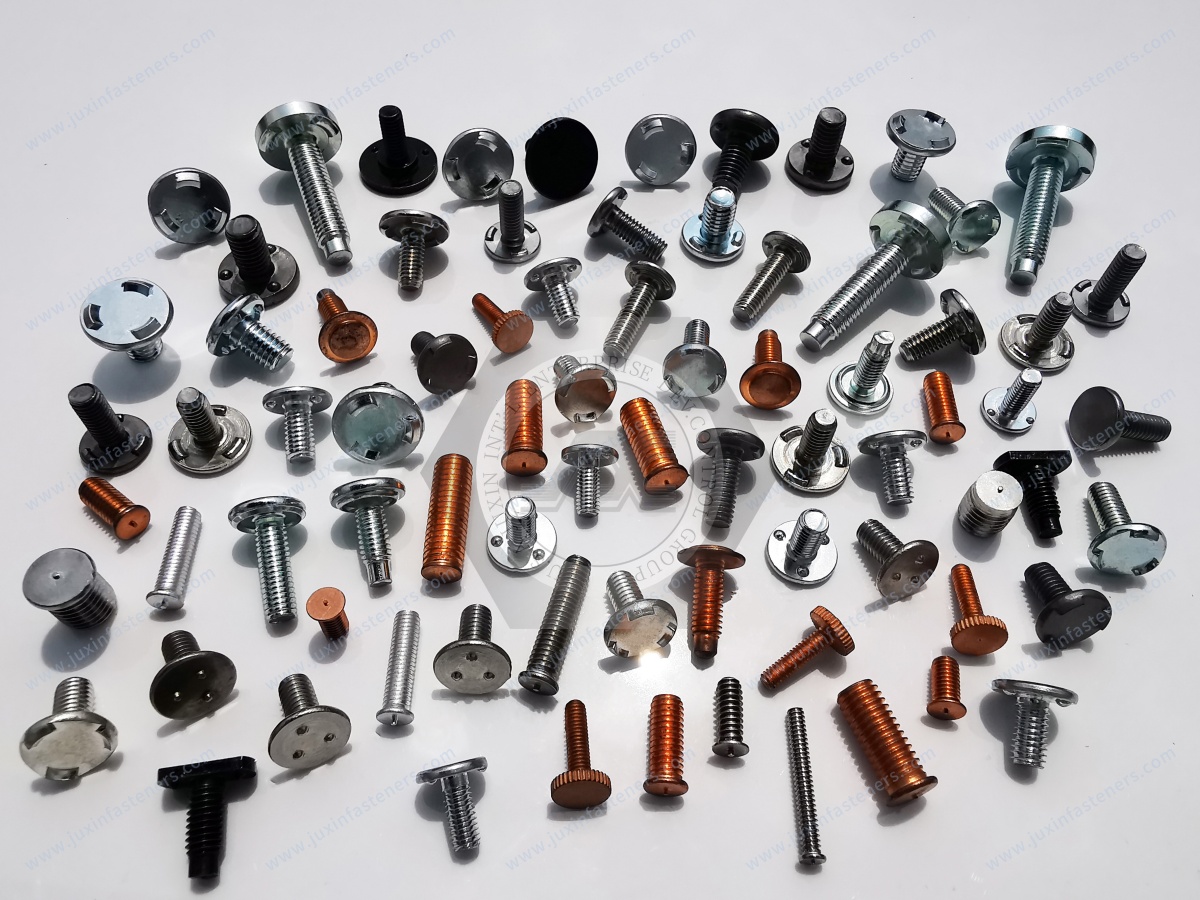
Self-clinching fasteners are widely used to create captive threaded attachment points in compatible sheet-metal components.
Potential products include:
Self-clinching nuts
Self-clinching studs
Self-clinching standoffs
Flush-mount fasteners
Potential applications include:
Electrical cabinets
Control panels
Power distribution equipment
Telecom enclosures
Automation equipment
Power-electronics housings
They can eliminate the need for loose nuts behind a panel and support efficient production assembly.
A self-clinching fastener works by displacing parent sheet material into engineered retention features.
Its installed performance therefore depends on:
Sheet material
Sheet hardness
Sheet thickness
Hole diameter
Edge distance
Fastener geometry
Tooling
Press force
This leads to an important principle:
Same Sheet Thickness ≠ Same Clinching Behavior.
A fastener that works in one steel sheet may not behave identically in:
Stainless steel
Aluminum
A different hardness condition
Parent-material compatibility must be checked.
Increasing installation force beyond the correct process window does not automatically improve retention.
Excessive press force can cause:
Sheet deformation
Fastener distortion
Panel marking
Dimensional problems
Reduced assembly quality
Therefore:
More Press Force ≠ Better Installation.
Self-clinching fastener performance may be evaluated through different functional modes.
Resistance to axial force attempting to remove the fastener from the sheet.
Resistance to rotation in the parent sheet.
These are different characteristics.
Push-Out ≠ Torque-Out.
For a threaded electrical enclosure assembly, both may matter.
Rivet nuts are useful when an electrical enclosure needs a reusable internal thread but:
Sheet is relatively thin
Backside access is unavailable
Welding is undesirable
Press access for self-clinching installation is limited
Potential applications include:
Electrical cabinets
Control boxes
Outdoor enclosures
HVAC electrical equipment
Battery-related equipment
Telecom cabinets
Power-electronics housings
Rivet nut selection should consider:
Sheet thickness
Grip range
Hole size
Body geometry
Head style
Fastener material
Installation tool
Specifying only:
“M6 rivet nut”
does not fully define the product.
Therefore:
Correct Thread + Wrong Grip Range = Wrong Rivet Nut.
Rivet nut retention involves different possible failure modes.
Pull-out describes axial removal from the parent sheet.
Spin-out describes rotation of the rivet nut in the hole.
These are not equivalent.
Pull-Out ≠ Spin-Out.
For electrical equipment requiring repeated panel servicing, spin-out performance can be especially important because technicians may repeatedly remove and reinstall screws.
A rivet nut rotating in the sheet and a screw loosening from vibration are different failure mechanisms.
Therefore:
Spin-Out ≠ Screw Self-Loosening.
The corrective action must match the failure mode.
Rivet nut installation depends on controlled deformation.
Excessive setting can damage:
Rivet nut
Thread
Parent sheet
Coating
Installed geometry
Therefore:
More Setting Force ≠ Better Installation.
Tool setup should be validated for the actual fastener and sheet.
Closed-end rivet nuts can help close the internal end of the fastener body.
This may be useful in selected enclosure designs.
However:
Closed-End Rivet Nut ≠ Waterproof Enclosure.
Water resistance depends on the complete interface, including:
Fastener head
Hole
Sheet surface
Gasket
Sealant
Installation
Enclosure design
If the equipment requires an IP-rated enclosure, the completed assembly must satisfy the applicable enclosure requirements.
Electrical cabinets often require repeated access for:
Inspection
Maintenance
Fuse replacement
Module replacement
Wiring
Troubleshooting
A loose panel screw can be lost during servicing.
Captive panel fasteners remain attached to the panel after disengagement.
Potential applications include:
Electrical cabinet doors
Access covers
Server equipment
Telecom equipment
Power electronics
Industrial control systems
A captive fastener and a locking fastener solve different problems.
Captive hardware prevents loss of the screw.
A locking system resists unwanted loosening.
Therefore:
Captive Fastener ≠ Anti-Loosening Fastener.
Some applications may require both functions.
Threaded inserts can provide durable internal threads in selected:
Aluminum housings
Plastic housings
Machined components
Equipment frames
They can be useful when:
Direct parent threads are insufficient
Repeated servicing is expected
Thread wear is a concern
Stronger reusable attachment is required
Possible technologies include:
Wire thread inserts
Solid threaded inserts
Self-tapping inserts
Press-fit inserts
Inserts for plastics
The correct technology depends on the parent material.
An insert may be manufactured from high-strength steel or stainless steel.
But installed performance can still be limited by the surrounding:
Aluminum
Plastic
Cast material
Therefore:
Strong Insert ≠ Strong Parent Material.
The complete insert-to-parent-material system must support the load.
Machine screws remain fundamental in electrical assemblies.
Potential applications include:
Cabinet panels
Internal brackets
Terminal covers
Electronic modules
Control units
Equipment housings
Possible drive systems include:
Phillips
Hex socket
Torx
Slotted
Customer-specific drive systems
Drive selection should consider:
Assembly tooling
Torque transfer
Access
Automation
Service requirements
Torx-type drive systems can provide useful torque transmission and reduced cam-out compared with some conventional drive geometries.
This can support:
Automated assembly
Controlled installation
Repeated service
However, drive style alone does not determine joint quality.
Better Drive Engagement ≠ Correct Preload.
Thread-forming screws can reduce separate tapping operations in suitable materials.
Potential parent materials may include selected:
Sheet metal
Plastics
Other compatible materials
But thread-forming geometry must match the parent material.
Important variables include:
Material
Thickness
Pilot hole
Screw geometry
Installation torque
Repeated service requirement
A generic self-tapping screw should not automatically be substituted for an engineered thread-forming fastener.
Different thread-forming or self-tapping screw designs interact differently with:
Steel
Aluminum
Plastics
The wrong combination can cause:
Stripped threads
Excessive installation torque
Cracking
Poor retention
Parent-material-specific selection is important.
Standoffs and spacers are used to control:
Component spacing
PCB position
Module height
Mechanical separation
Possible materials include:
Steel
Stainless steel
Aluminum
Brass
Nylon
Engineering plastics
The material should follow both mechanical and electrical requirements.
Metal standoffs are conductive.
Therefore:
Metal Standoff ≠ Electrical Isolation Component.
If electrical isolation is required, the assembly may need:
Nylon standoffs
Plastic spacers
Insulating washers
Other engineered insulating components
Polymer fasteners can be useful where the application requires:
Electrical isolation
Low mass
Non-metallic attachment
Protection of sensitive surfaces
Potential products include:
Nylon screws
Nylon nuts
Plastic rivets
Snap rivets
PCB supports
Card guides
Screw grommets
Insulating washers
Custom plastic components
But polymer selection must consider:
Temperature
Moisture
Creep
Stress relaxation
Chemical exposure
Required load
Engineering polymers can exhibit creep and stress relaxation under sustained load.
This can reduce clamp force over time.
Therefore:
Initial Tightness ≠ Long-Term Clamp Retention in Plastic.
Where a polymer fastener carries sustained mechanical load, long-term service conditions must be considered.
Nylon can provide useful electrical insulating properties, but its behavior can be influenced by:
Moisture absorption
Temperature
Polymer grade
Reinforcement
Geometry
Therefore:
Nylon ≠ Universal Insulation Solution.
Material selection should match the actual electrical and environmental requirement.
Electrical equipment may operate in:
Indoor industrial environments
Outdoor environments
Coastal locations
High-humidity areas
Chemical-processing facilities
Renewable-energy installations
Potential material and surface solutions include:
Stainless steel
Zinc-plated steel
Zinc-nickel coated steel
Zinc-flake coated steel
Other specified coating systems
The correct choice depends on:
Environment
Mechanical requirement
Friction
Mating material
Corrosion mechanism
Cost
304- or 316-type stainless steel fasteners may be evaluated for selected corrosion-sensitive electrical equipment.
But:
Stainless Steel ≠ Corrosion-Proof.
And:
316 ≠ Automatically Better.
Grade selection should follow the actual environment.
Zinc-nickel coated steel fasteners can provide a useful combination of:
Steel mechanical capability
Engineered corrosion protection
Controlled surface characteristics
They may be considered for selected:
Outdoor equipment
Automotive electrical systems
Power equipment
Industrial enclosures
But coating selection must also consider:
Friction
Thread fit
Thickness
Mating material
An RFQ saying only:
“Zn-Ni coating”
may not fully define the requirement.
Depending on the project, coating specifications may include:
Thickness
Passivation
Topcoat
Color
Corrosion requirement
Friction requirement
Therefore:
Coating Name ≠ Complete Coating Specification.
A salt spray requirement can provide controlled comparative information.
But:
Salt Spray Hours ≠ Field Service Life.
Actual electrical equipment may experience:
Condensation
Wet/dry cycles
Chemicals
Temperature
Coating damage
Dissimilar metals
Corrosion strategy should reflect the actual environment.
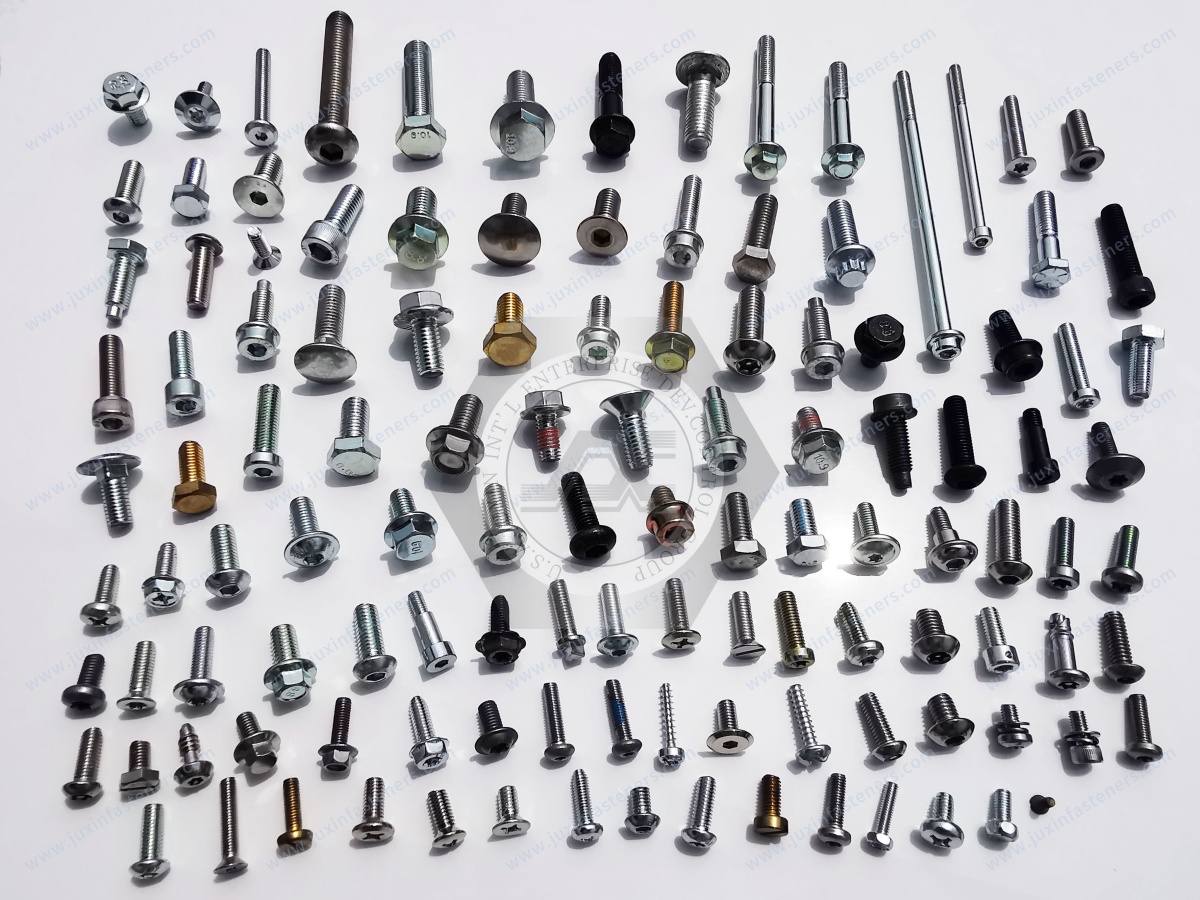
Electrical equipment frequently combines:
Aluminum housings
Steel frames
Stainless fasteners
Copper conductors
Coated components
Dissimilar-metal combinations can create galvanic corrosion risk when an electrolyte is present.
Therefore:
Corrosion-Resistant Fastener ≠ Corrosion-Resistant Assembly.
This is particularly important in outdoor electrical and power equipment.
Industrial electrical equipment can experience vibration from:
Machinery
Fans
Pumps
Cooling systems
Transportation
Nearby equipment
Fastener loosening should not be addressed by simply adding a washer.
Engineers should consider:
Preload
Joint stiffness
Interface movement
Fastener geometry
Friction
Thermal cycling
A simplified conceptual relationship can be represented as:
T = K × F × d
where:
T = tightening torque
K = friction-related torque coefficient
F = preload
d = nominal diameter
The important principle is:
Torque ≠ Preload.
Applying a torque value does not directly measure the clamp force in the joint.
Possible locking strategies may include:
Prevailing-torque nuts
Thread-locking features
Serrated interfaces
Wedge-locking systems
Application-specific locking methods
But:
Locking Feature ≠ Correct Preload.
The joint should first be designed to generate and retain appropriate clamp load.
A plain washer can perform useful functions such as:
Load distribution
Surface protection
Spacing
But:
Washer ≠ Automatic Anti-Loosening Device.
Its function should be clearly defined.
Typical electrical cabinet assemblies can require different fastening technologies within the same enclosure.
Potential solutions:
Panel screws
Captive fasteners
Blind rivets
Potential solutions:
Self-clinching nuts
Self-clinching studs
Rivet nuts
Potential solutions:
Machine screws
Standoffs
Spacers
Potential solutions:
Nylon screws
Plastic spacers
Insulating washers
The enclosure should therefore be treated as a fastening system rather than a single-fastener application.
Power distribution systems may include:
Switchgear enclosures
Distribution cabinets
Control cabinets
Busbar support structures
Monitoring equipment
Mechanical fasteners can support:
Panels
Covers
Brackets
Modules
Insulators
Internal structures
But where a fastener participates in an electrical current path or grounding function, the electrical requirement must be separately specified.
A fastener used to mount a cover and a fastener used in a current-carrying busbar interface do not have the same engineering requirements.
Busbar connections can involve:
Contact resistance
Contact pressure
Thermal cycling
Conductive materials
Surface condition
Electrical current
Therefore:
Mechanical Fastener Specification ≠ Electrical Busbar Joint Specification.
This distinction should be explicit in RFQs.
Power electronics equipment can include:
Inverters
Converters
Rectifiers
Power supplies
UPS equipment
DC-DC systems
AC-DC systems
Potential fastening applications include:
Enclosures
PCB assemblies
Heat sinks
Fans
Control modules
Internal brackets
Relevant fastener types may include:
Machine screws
Self-clinching hardware
Standoffs
Rivet nuts
Captive fasteners
Insulating components
Fasteners used around heat sinks may influence:
Contact pressure
Mechanical retention
Thermal-interface compression
But a metal screw's thermal conductivity does not automatically qualify it as part of a thermal-management design.
The complete interface should be evaluated.
AI data centers and high-performance computing infrastructure contain extensive:
Server equipment
Power distribution
UPS systems
Cooling equipment
Electrical cabinets
Network hardware
Power-conversion systems
Fastener requirements can include:
Rapid assembly
Serviceability
Captive hardware
Corrosion resistance
Controlled component spacing
Thin-sheet attachment
Potential JUXIN FASTENERS products include:
Captive panel fasteners
Self-clinching hardware
Rivet nuts
Standoffs
Machine screws
Insulating components
Energy storage equipment may combine:
Battery enclosures
Electrical cabinets
Power electronics
Cooling systems
Monitoring equipment
Potential fastening solutions include:
Rivet nuts
Self-clinching fasteners
Stainless screws
Coated screws
Captive hardware
Plastic insulating components
However:
Fastener ≠ Battery-System Safety Qualification.
Electrical safety, sealing, thermal performance and structural requirements must be validated at system level.
Potential applications include:
Solar inverters
Outdoor control cabinets
Energy-storage cabinets
Monitoring equipment
Power-conversion equipment
Outdoor exposure makes the following especially important:
Corrosion
Water ingress strategy
UV exposure for polymer components
Dissimilar metals
Temperature cycling
A corrosion-resistant screw alone does not establish outdoor enclosure durability.
Automation equipment may require fastening for:
Control cabinets
Robot controllers
Sensors
Machine interfaces
Safety covers
Electronic modules
Potential technologies include:
Machine screws
Self-clinching hardware
Threaded inserts
Rivet nuts
Captive screws
Standoffs
Selection should reflect both assembly efficiency and maintenance requirements.
Semiconductor and precision equipment can contain:
Electrical cabinets
Control systems
Precision electronics
Power modules
Equipment enclosures
Fastening requirements may include:
Controlled materials
Precision geometry
Serviceability
Clean assembly
Special requirements such as:
Cleanroom compatibility
Vacuum compatibility
Particle control
Outgassing
must be defined by the customer.
A standard industrial fastener should not automatically be described as semiconductor-qualified.
Selected railway applications can include:
Electrical cabinets
Interior control equipment
Passenger-information systems
Lighting equipment
Secondary equipment enclosures
Fasteners may require consideration of:
Vibration
Corrosion
Serviceability
Project-specific requirements
Primary structural, braking, running gear, crash-related and other safety-critical railway applications require separate engineering and formal project validation.
Electric vehicles contain increasing amounts of:
Power electronics
Electrical control units
Battery-related equipment
Thermal-management systems
Sensors
Electronic modules
Potential fastener products include:
Machine screws
Rivet nuts
Self-clinching fasteners
Threaded inserts
Standoffs
Insulating components
However:
Fastener Material ≠ Electrical-System Qualification.
Mechanical and electrical requirements must be specified independently.
Electrical equipment is often designed for years of maintenance.
A fastening system that works during factory assembly may become problematic during field service if:
Screws are easily lost
Threads wear
Rivet nuts spin
Panels become difficult to align
Fasteners seize
Replacement parts are unavailable
Therefore, engineers should consider:
Production Assembly + Field Maintenance
during initial fastener selection.
If a panel will be opened frequently, consider:
Captive hardware
Durable threaded inserts
Appropriate thread material
Galling risk
Tool access
If the joint will never be serviced, a permanent joining method may be more economical.
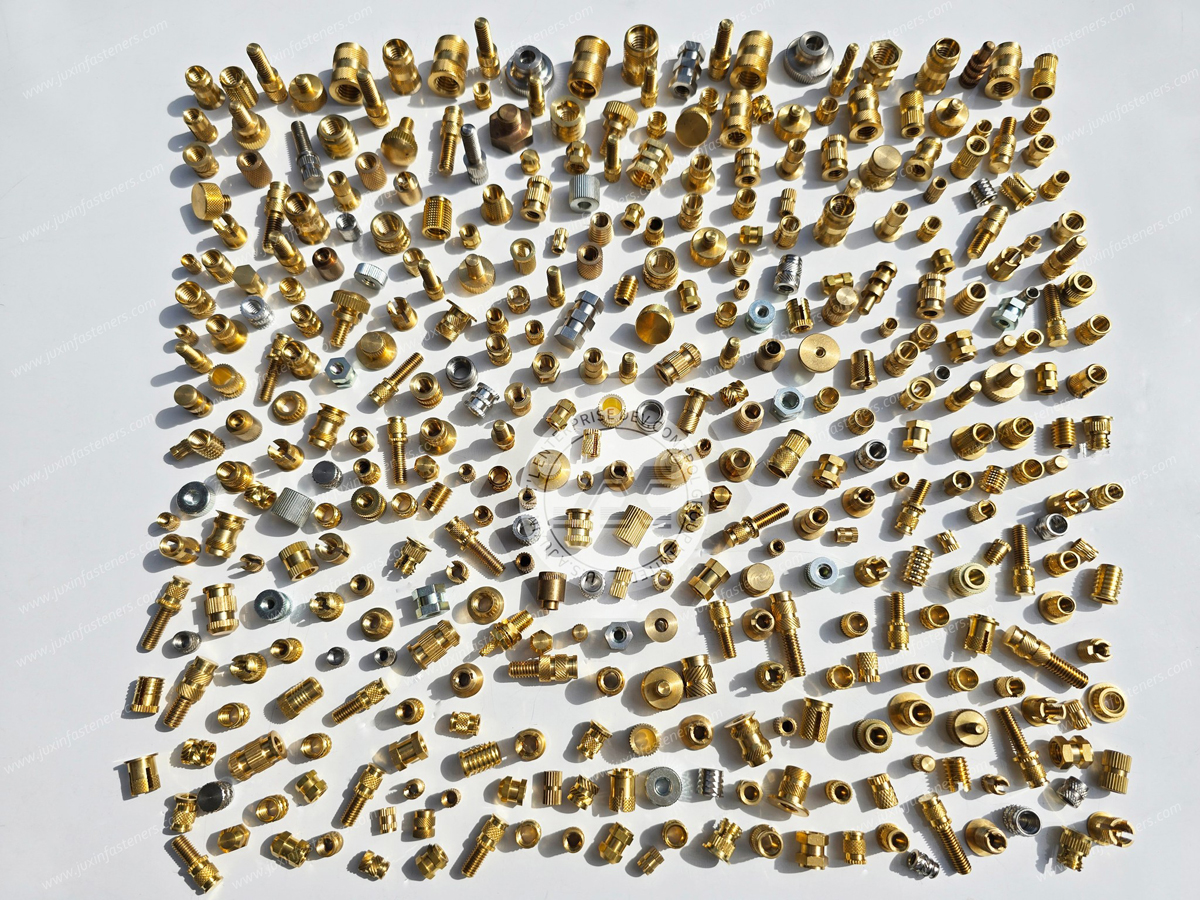
A practical decision sequence is:
Equipment Function → Joint Function → Parent Material → Thickness → Access → Service Frequency → Load
→ Fastening Technology → Corrosion → Electrical Requirement → Installation → Validation
This prevents the design process from beginning with a catalog part number.
Procurement may compare:
Self-clinching nut
Rivet nut
Threaded insert
Conventional nut and bolt
The cheapest individual component may not create the lowest-cost assembly.
Each option can require different:
Hole preparation
Tooling
Labor
Inspection
Rework
Maintenance
Therefore:
Lowest Fastener Price ≠ Lowest Installed Cost.
A useful sourcing model is:
Total Installed Cost = Part Price + Hole Preparation + Installation + Tooling + Inspection + Rework + Scrap + Downtime + Maintenance + Logistics + Supply Risk
For high-volume electrical equipment, small assembly-efficiency improvements can have significant production impact.
For an effective engineering and commercial review, provide:
2D drawing
3D model where available
Part number
Drawing revision
Equipment application
Joint function
Parent material
Sheet thickness
Thread
Hole size
Mating component
Load requirement
Installation access
Service frequency
Surface treatment
Corrosion environment
Temperature
Electrical function, if any
Insulation requirement, if any
Installation method
Annual volume
Sample quantity
Validation requirements
Applicable ISO, DIN, EN, ASTM, ASME/ANSI, SAE or customer specification
Provide:
Sheet material
Sheet hardness where relevant
Sheet thickness
Hole diameter
Edge distance
Installation method
Push-out requirement
Torque-out requirement
Provide:
Sheet thickness
Grip range
Hole size
Body style
Head style
Material
Installation method
Pull-out requirement
Spin-out requirement
Provide:
Polymer requirement
Temperature
Mechanical load
Moisture environment
Chemical exposure
Electrical insulation requirement
Flammability requirement where applicable
Assembly method
Do not specify only:
“nylon fastener.”
The polymer grade and application matter.
A second-source fastener should not be approved only because:
Dimensions match
Thread matches
Appearance looks similar
Qualification should compare:
Drawing revision
Material
Mechanical properties
Thread
Geometry
Surface treatment
Friction where relevant
Installation behavior
Functional testing
Product-specific characteristics should also be reviewed.
Compare:
Grip range
Hole requirement
Setting behavior
Pull-out
Spin-out
Compare:
Parent-material compatibility
Hole requirement
Press installation
Push-out
Torque-out
Compare:
Polymer grade
Reinforcement
Moisture behavior
Temperature capability
Mechanical performance
Therefore:
Same Dimensions ≠ Functional Equivalence.
Inspection should follow the product and application requirement.
Depending on the fastener, control may include:
Material verification
Dimensional inspection
Thread inspection
Mechanical testing
Coating inspection
Functional testing
Installation testing
Appearance inspection
Traceability
Not every fastener requires every test.
The control plan should reflect the actual product risk.
The original equipment design determines whether vibration testing is necessary.
It should not be presented as a routine test performed on every electrical fastener.
Where vibration performance matters, the complete joint or defined fastening system may require application-specific validation.
Possible evaluation may include:
Corrosion testing
Temperature cycling
Humidity exposure
Chemical compatibility
But test selection should follow the actual equipment environment.
More Testing ≠ Better Engineering if the tests do not represent the failure mechanism.
Standard hardware is not always sufficient.
Custom fasteners may be required because of:
Limited installation space
Special head geometry
Captive function
Integrated spacer geometry
Non-standard thread
Assembly automation
Insulation requirement
Material compatibility
JUXIN FASTENERS can review customer drawings for:
Geometry
Material
Thread
Tolerance
Surface treatment
Manufacturing process
Annual volume
Potential manufacturing routes include:
Cold heading
CNC machining
Stamping
Injection molding for suitable polymer components
Secondary machining
Surface treatment
A prototype electrical fastener may initially be CNC-machined.
At higher production volumes, engineering may evaluate:
Cold forming
Stamping
Injection molding
Hybrid manufacturing
to improve production economics.
Therefore:
Prototype Process ≠ Final Production Process.
A controlled development process can follow:
Application Review → Joint Function → Parent Material Review → Fastener Technology Selection → Drawing / DFM → Material & Surface Selection
→ Sample → Installation Trial → Functional Validation → Approval → Production
For electrical equipment, any electrical function should be defined separately from the mechanical fastening function.
This page should function as the dedicated Electrical Equipment Fasteners / Cabinet & Panel Fastening resource.
Recommended internal links include:
Fasteners for Aluminum → fastening aluminum electrical cabinets and housings
Aluminum Fasteners → lightweight aluminum fastening components
Stainless Steel Fasteners → corrosion-resistant fastening solutions
Fastener Surface Treatment & Coating Selection → corrosion and friction engineering
Zinc-Nickel Coated Fasteners → Zn-Ni coated fasteners
Zinc vs Zinc-Nickel Plating → coating-selection comparison
Rivet Nuts → grip range, pull-out and spin-out
Self-Clinching Fasteners → sheet compatibility, push-out and torque-out
Plastic & Nylon Fasteners → electrical isolation and polymer selection
Threaded Inserts → reusable reinforced threads
Custom Fastener Manufacturing → cold forming, CNC machining and DFM
Fastener Failure Modes → root-cause engineering
Use the existing indexed JUXIN FASTENERS URL when implementing these internal links.
Common solutions include self-clinching nuts and studs, rivet nuts, captive panel fasteners, machine screws, threaded inserts, standoffs and selected insulating components.
The correct choice depends on sheet material, access, load and service requirements.
Rivet nuts are particularly useful when installation is available from only one side or press installation is impractical.
Self-clinching fasteners can be highly efficient when the sheet material is compatible and press access is available.
No. Stainless steel can be appropriate, but grade, mating material, galvanic corrosion, mechanical requirements and cost should be evaluated.
Engineered coated-steel fasteners may be suitable in other applications.
No. Closed-end construction alone does not establish an IP rating or waterproof assembly. The complete hole, head interface, sealing system and enclosure must be validated.
Nylon is generally electrically insulating, but system electrical compliance depends on polymer grade, geometry, voltage, environment, creepage, clearance and applicable equipment requirements.
A metal fastener is conductive, but conductivity alone does not qualify it as a grounding or bonding connection.
Contact pressure, surface condition, electrical resistance and applicable equipment requirements must be considered.
Self-clinching fasteners and rivet nuts are common candidates when reusable threads are required. Selection depends on sheet material, thickness, access, hole geometry and required retention.
Captive panel fasteners can reduce lost hardware and improve serviceability. Thread durability and any required anti-loosening function should also be considered.
Captive describes retention of the screw to the panel, not necessarily resistance to loosening. If vibration resistance is required, locking behavior must be evaluated separately.
Not automatically. Parent-material strength, thickness, hole geometry, grip range and installation behavior can affect pull-out and spin-out performance.
No. Excessive torque can damage the fastener, mating thread, thin sheet or plastic component. The objective is appropriate preload, not maximum torque.
No. Testing should follow the actual application risk and specification. Where vibration matters, the relevant joint or fastening system should be validated under defined conditions.
Provide the drawing, application, parent material, sheet thickness, thread, hole size, mating component, load, installation access, service frequency, corrosion environment,
electrical or insulation requirement, annual volume and validation requirements.
The most important principle is:
Electrical equipment fastening is not one product category—it is a system of mechanical connections with different functions.
A cabinet may require:
Self-clinching nuts for internal structures
Rivet nuts where only one side is accessible
Captive fasteners for service panels
Standoffs for electronic modules
Polymer components where electrical isolation is required
Corrosion-resistant fasteners for outdoor exposure
The correct solution therefore comes from matching:
Joint Function + Parent Material + Thickness + Access + Serviceability + Load + Environment + Electrical Requirement + Installation Process
And the boundaries must remain clear:
Mechanical Fastening ≠ Electrical Safety
Conductive Material ≠ Qualified Electrical Connection
Plastic Fastener ≠ System Electrical Compliance
JUXIN FASTENERS supports OEM and industrial customers with electrical equipment fastening components including:
Self-clinching nuts, studs and standoffs
Rivet nuts
Blind rivets
Captive panel fasteners
Machine screws
Thread-forming screws
Threaded inserts
Metal standoffs and spacers
Nylon and plastic fasteners
Insulating washers and components
Stainless steel fasteners
Corrosion-resistant coated fasteners
Custom drawing-based components
If you are designing an electrical cabinet, control panel, power distribution system, inverter, UPS, energy-storage cabinet,
power-electronics assembly or industrial automation system, send the technical package for engineering and commercial review.
For an effective RFQ, provide:
2D Drawing + 3D Model + Part / Revision + Equipment Application + Joint Function + Parent Material + Sheet Thickness + Thread + Hole Size
+ Mating Component + Load + Installation Access + Service Frequency + Surface Treatment + Environment + Annual Volume
Where relevant, also provide:
Electrical Function + Insulation Requirement + Temperature + Corrosion Requirement + Grip Range + Pull-Out / Spin-Out + Push-Out / Torque-Out + Locking Requirement + Functional Validation
JUXIN FASTENERS
Electrical Equipment Fasteners | Electrical Cabinet Fasteners | Panel Fasteners | Self-Clinching Fasteners | Rivet Nuts | Captive Fasteners | Custom OEM Fasteners
Email: info@juxinfasteners.com
Website: www.juxinfasteners.com
Contact Us
Tel.:
+86 020 8621 0320
+86 020 3121 6067
E-mail:
Technical Support:
Navigation
SEND INQUIREY