
Call Us
+86 136 6007 9809
Call Us
+86 136 6007 9809

Sep. 13, 2026
Global automotive OEMs, Tier-1 suppliers, sub-assembly manufacturers, and specialized vehicle developers operate within continuously evolving product-development environments.
Vehicle platforms can undergo multiple engineering revisions between prototype development, validation, pilot production, and serial manufacturing.
During these stages, design engineers may revise a fastener's geometry, material, tolerance, thread specification, mating interface, surface finish, or application requirements.
A change to one drawing can also affect tooling, manufacturing processes, inspection characteristics, inventory, packaging, and production timing.
This makes engineering change management for fasteners more than a document-control activity. For customer-specific screws, bolts, precision-machined components,
stamped hardware, washers, rivet nuts, weld nuts, weld studs, plastic retainers, and other application-specific components, an engineering revision can have direct manufacturing and supply-chain consequences.
JUXIN FASTENERS operates as an engineering-oriented supplier of customer-specific, non-standard, and application-specific fastening and precision components.
Our manufacturing scope includes custom metal fasteners, CNC machined components, washers and auxiliary hardware, and applicable polymer fastening components for automotive and industrial applications.
For an engineering change, JUXIN FASTENERS can evaluate the relationship between the revised drawing, mating interface, material, geometry, manufacturing route, tooling,
inspection requirements, and production transition. This supplier-side engineering approach helps connect design changes with practical manufacturing execution.
Engineering change management in custom fastener programs is the structured process used to review, document, manufacture, inspect,
and transition a revised version of a customer-specific fastener or precision component.
For drawing-based products, an engineering change can involve much more than changing a revision letter or drawing number. Depending on the modification, it may affect:
Part geometry
Thread dimensions
Head configuration
Shank length
Hole dimensions
Tolerances
Material
Heat treatment
Surface finish
Mating interface
Assembly method
Manufacturing process
Tooling
Inspection requirements
Existing inventory
Production timing
Packaging and identification
A professional supplier-side change management process therefore connects drawing revision control with manufacturing impact analysis.
The objective is not simply to produce a new version of the part.
The objective is to establish a controlled manufacturing transition from the previous revision to the revised component according to the applicable engineering and commercial requirements.
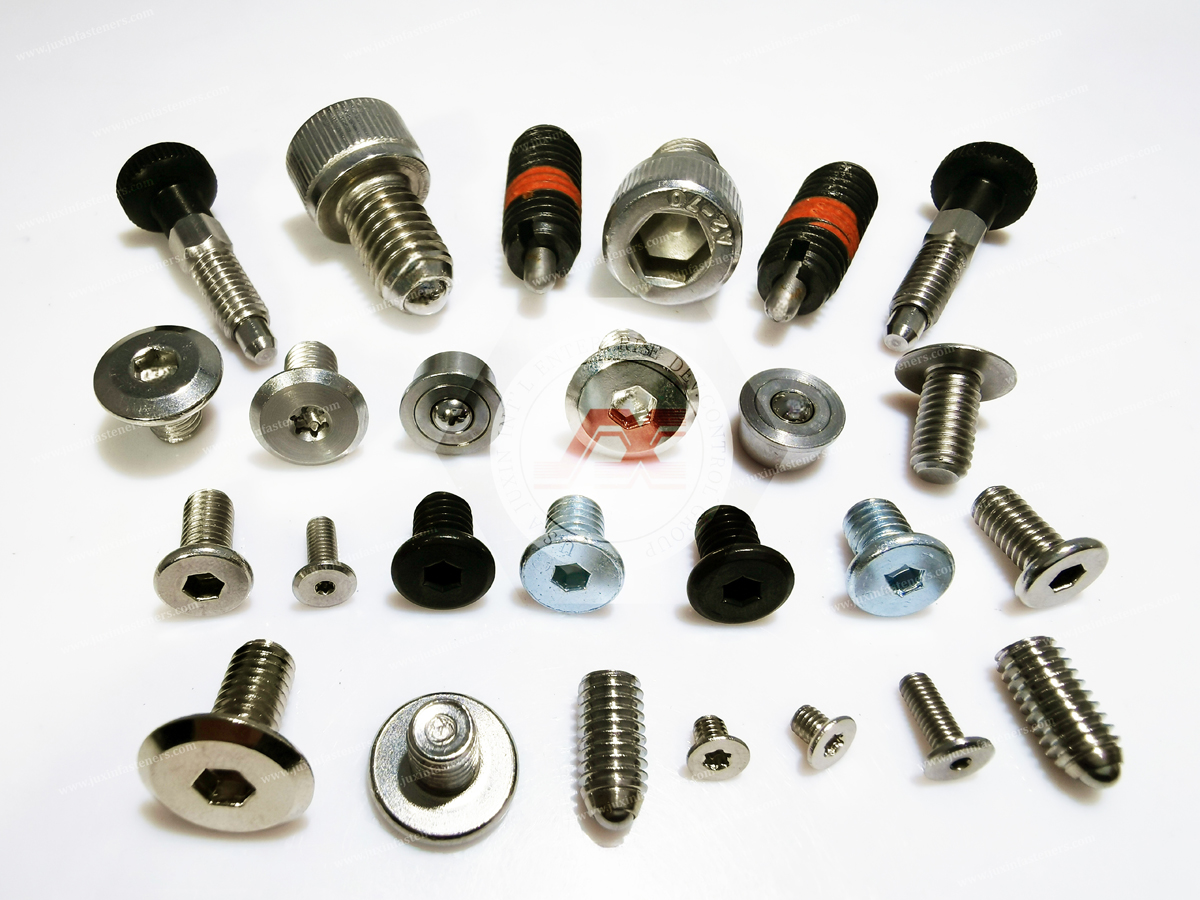
Custom automotive components often remain in production while engineering teams continue improving the vehicle platform.
A revision may therefore occur while tooling, raw materials, work-in-process inventory, finished goods, and purchase orders associated with the previous version are already active.
Several areas require particular attention.
A revised 2D drawing, 3D CAD model, specification, or engineering change document may introduce different technical requirements.
For customer-specific fasteners, the relationship between the drawing and the actual manufacturing definition
is particularly important because seemingly small changes can affect forming, machining, stamping, threading, inspection, or assembly.
JUXIN FASTENERS can review the applicable revision information and identify manufacturing characteristics affected by the change.
A change to head geometry, shank length, thread configuration, washer interface, slot geometry, or other dimensions may require a review of the existing manufacturing route.
Depending on the product, the manufacturing route may involve:
Cold heading or multi-stage forming
CNC turning
CNC machining
CNC milling
Swiss-type machining
Stamping
Drilling
Tapping
Threading
Grooving
Turn-mill machining
Applicable polymer manufacturing processes
Not every drawing revision requires new tooling. Some changes can be accommodated through process or program adjustments, while others may require tooling modification or new tooling.
JUXIN evaluates this distinction based on the actual component geometry and manufacturing route.
When a revision becomes effective, existing work-in-process and finished goods may correspond to the previous drawing revision.
The transition therefore needs to consider the relationship between:
Previous Revision → Existing Production → Existing Inventory → Change Effective Point → Revised Production
Where applicable, JUXIN can review the status of existing material, WIP, finished goods, and production scheduling in relation to the revised part.
A drawing change may occur while the previous version is still required for ongoing vehicle production.
This creates a practical transition requirement between legacy and revised components. The appropriate implementation point depends on the customer's program timing,
engineering approval, inventory position, and manufacturing feasibility.
JUXIN can coordinate manufacturing planning around the agreed revision and production requirements rather than treating the drawing revision as an isolated engineering document.
Revision-controlled manufacturing is particularly important for customer-specific components.
The relevant manufacturing definition may include the drawing revision, material specification, process requirements, inspection characteristics, production batch, and applicable identification or packaging information.
Where required and agreed, JUXIN can support appropriate lot identification and inspection documentation for production control and supplier quality processes.
Engineering change management affects both technical and commercial functions.
Design and manufacturing engineers are primarily concerned with whether the revised component remains technically suitable for the intended application.
Typical engineering considerations include:
Geometry
Tolerance changes
Thread specifications
Mating interfaces
Material requirements
Surface treatment
Mechanical requirements
Assembly interfaces
Functional dimensions
Critical-to-function characteristics
Manufacturing feasibility
For example, changing the length of a custom screw can affect not only the screw itself but also thread engagement, available installation space, mating components, and assembly conditions.
Procurement and supply-chain teams are concerned with the commercial and operational consequences of the same revision.
These may include:
Existing inventory
Tooling costs
Tooling modification requirements
New production timing
Sample requirements
Inspection documentation
Production transition
Packaging identification
Purchase-order implementation
Delivery coordination
A supplier capable of connecting these technical and commercial considerations can provide greater practical value than a supplier that treats each drawing revision only as a new quotation request.
For broader supplier evaluation considerations, see the JUXIN FASTENERS guide to Custom Automotive Component Sourcing and Supplier Evaluation.
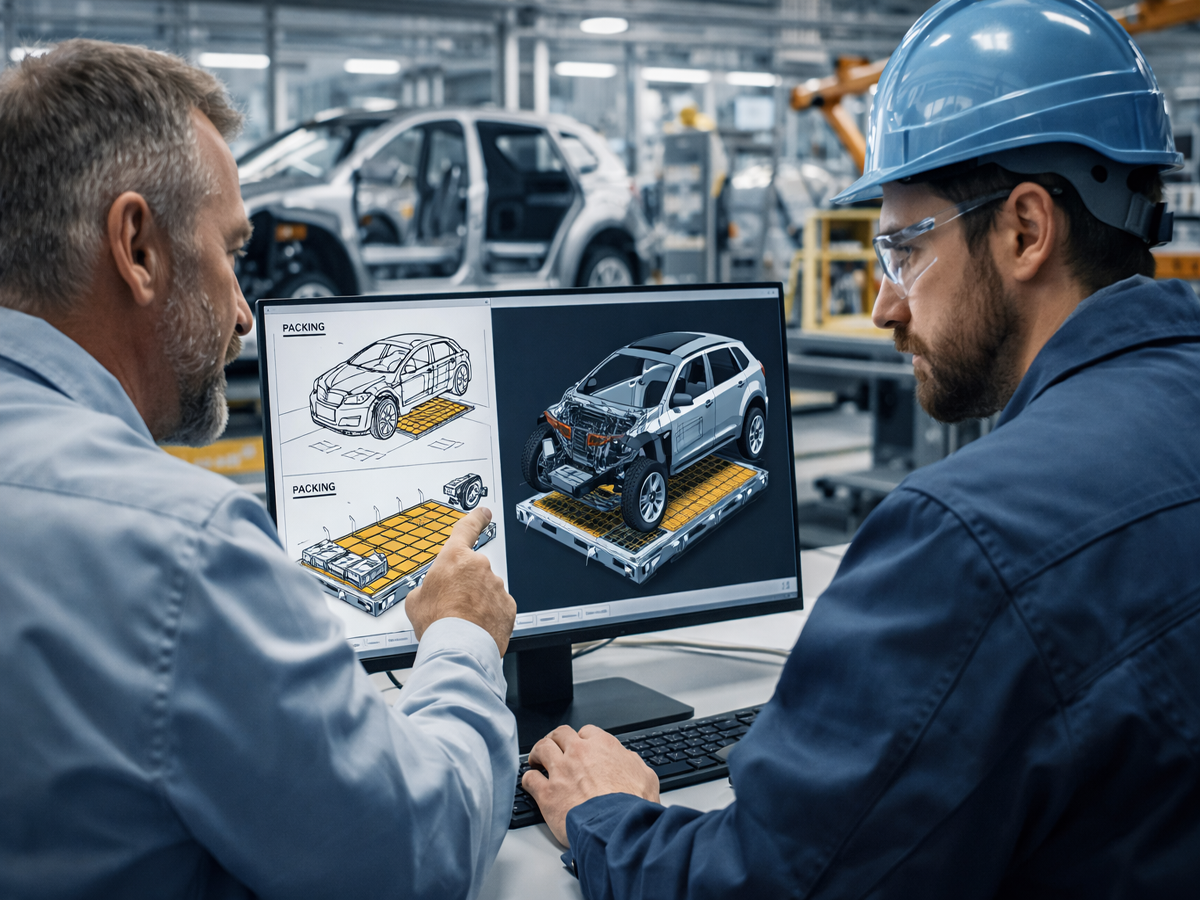
When a customer-specific fastener or precision component enters an engineering revision, JUXIN FASTENERS can structure the supplier-side review around five main stages.
The first stage is identifying the relationship between the previous and revised component definitions.
Depending on the available engineering information, the review may cover:
Drawing revision
2D dimensional changes
3D CAD geometry
Material changes
Thread changes
Tolerance changes
Surface finish
Functional requirements
Mating interfaces
The purpose is to establish which manufacturing characteristics have changed and which remain unchanged.
The next stage is determining how the revision interacts with the existing manufacturing route.
For formed fasteners, the review may involve heading or forming tooling.
For stamped components, the review may involve dies, punches, forming operations, or secondary processes.
For CNC components, the review may involve machining programs, tooling, workholding, cutting operations, threading, drilling, or inspection methods.
For polymer fastening components, the manufacturing route and tooling requirements depend on the specific component design and material.
This review helps distinguish a drawing change that can be implemented through process adjustment from one that requires additional manufacturing preparation.
Where existing production is active, the previous revision and revised version need to be considered as part of the same supply transition.
JUXIN can evaluate applicable:
Raw material status
Work-in-process
Finished goods
Production orders
Tooling status
Sample requirements
Delivery timing
The implementation point can then be coordinated according to the applicable customer revision and production requirements.
When a revision affects important dimensions or functional characteristics, an updated sample or inspection activity may be appropriate.
Depending on the component, verification can include:
Dimensional measurement
Thread inspection
Hole diameter and position
Surface finish
Material verification
Hardness
Torque or tension testing where specified
Functional inspection
Critical-to-function characteristics
For more information on custom component inspection, see Custom Metal Component Quality and Inspection Requirements.
After the applicable engineering approval and commercial transition requirements are established, manufacturing can proceed according to the revised component definition.
The production implementation may involve updated:
Manufacturing instructions
CNC programs
Tooling
Inspection requirements
Production records
Packaging identification
Part revision references
This creates a practical connection between the customer's engineering revision and the supplier's manufacturing execution.
Modern automotive assemblies frequently combine different component materials and manufacturing technologies.
A single assembly may contain:
Custom metal screws
Bolts
Washers
Rivet nuts
Weld nuts
Weld studs
CNC-machined components
Plastic retainers
Nylon clips
Other application-specific fastening hardware
A design change affecting one component may therefore influence the mating interface of another component.
For example, a change to a metal mounting screw may affect the required engagement or retention characteristics of a mating polymer component.
Similarly, a change to a plastic retainer may require a review of the corresponding screw, bolt, clip, or mounting interface.
JUXIN FASTENERS can evaluate applicable metal and polymer fastening components together when they are part of the same customer-specific application.
For a broader overview of automotive polymer hardware, see Automotive Plastic Fasteners: Types, Applications & OEM Sourcing Guide.
Engineering change management can apply across many automotive fastening applications.
Chassis and undercarriage assemblies can use customer-specific high-strength fasteners, washers, spacers, rivet nuts, weld nuts, weld studs, and precision components.
Drawing revisions may affect thread geometry, dimensions, material, surface treatment, or mating interfaces.
Explore Automotive Chassis & Undercarriage Fastening Solutions.
Automotive wiper systems can incorporate precision pins, rivets, shafts, linkage components, washers, and application-specific fasteners.
A design revision may affect dimensional relationships between rotating or mating components.
See Automotive Wiper System Fastening Solutions.
Shift mechanisms can require precision shafts, pins, bushings, sliding components, threaded hardware, and other custom-machined parts.
A revision involving shaft diameter, length, groove geometry, thread dimensions, or mating features can affect the manufacturing route and inspection plan.
See Automotive Shift System Fastening Solutions.
Sunroof mechanisms can incorporate precision pins, shafts, sliding hardware, brackets, washers, and application-specific fasteners.
Engineering revisions may involve dimensional adjustments associated with moving interfaces and mounting points.
Explore Automotive Sunroof System Fastening Solutions.
Automotive door modules can combine custom screws, bolts, retainers, clips, rivet nuts, stamped components, and other fastening hardware.
When a door module is redesigned, both metal and polymer mating components may require coordinated engineering review.
See Automotive Door System Fastening Solutions.
Seat assemblies can include high-strength bolts, washers, pins, bushings, brackets, and other customer-specific fastening components.
Depending on the revised requirement, engineering review can cover dimensions, material, mechanical properties, surface treatment, and manufacturing feasibility.
Explore Automotive Seat System Fastening Solutions.
Rollover protection applications can incorporate customer-specific weld nuts, weld studs, bolts, brackets, and other metal fastening components.
Because these components can be application-specific, drawing revision control and manufacturing review are important when geometry, material, or mechanical requirements change.
See Rollover Protection System Fastening Solutions.
Automotive rear spoiler assemblies provide a useful example of coordinated engineering change management.
A spoiler assembly can combine polymer components with application-specific metal fastening hardware.
JUXIN FASTENERS supplies Automotive Spoiler Slide Bolts and Nylon Rear Spoiler Clips for applicable rear spoiler fastening applications.
The Automotive Spoiler Slide Bolt, also referred to as a Spoiler Bolt or Automotive Spoiler Slide Bolt, uses a specialized head configuration designed to engage with a corresponding mounting slot, track, or channel.
Applicable configurations include M5 and M6 versions, with representative products such as:
Spoiler Bolt M6 × 14
Spoiler Bolt M6 × 20
Applicable configurations can include property classes 8.8 and 10.9.
Available surface finish options include:
Color Zinc
Zinc-Nickel Alloy
Black Zinc
Selected configurations may also incorporate a pre-applied thread-locking patch where specified.
The mating polymer component can be supplied as a Nylon Rear Spoiler Clip, also known as a Rear Spoiler Clip or Rear Spoiler Retainer Clip, depending on the actual application and design.
An engineering revision to the spoiler bolt may involve:
Thread length
Overall length
Head geometry
Slot engagement
Surface finish
Thread-locking specification
A revision to the rear spoiler clip may involve:
Retention geometry
Grip range
Locating features
Mating interface
Material specification
The important engineering point is that the two components can form part of the same fastening interface. When one component changes,
the mating relationship can be reviewed rather than treating each part as an isolated SKU.
Learn more through Automotive Rear Spoiler Fastening Components and Automotive Spoiler Slide Bolts: Engineering, Mounting Design & OEM Sourcing Guide.
CNC-machined automotive components require a different change-control approach from cold-formed or stamped fasteners.
JUXIN FASTENERS supports custom CNC machining for prototypes, low-volume programs, repeat OEM production, and applicable larger-volume requirements.
Depending on geometry, CNC manufacturing may include:
CNC turning
Swiss-type machining
CNC milling
Drilling
Tapping
Threading
Grooving
Turn-mill machining
Automotive applications can include:
Precision shafts
Pins
Bushings
Threaded adapters
Sensor-related components
Connector components
Mounting interfaces
Custom mechanical components
A drawing revision may therefore require review of machining programs, cutting operations, workholding, dimensional inspection, thread inspection, and functional characteristics.
See CNC Automotive Part Sourcing: Engineering Specifications & RFQ for more information.
Engineering change management should connect revision control with the applicable quality requirements.
Depending on the component and customer specification, JUXIN FASTENERS can support quality verification covering:
Dimensional inspection
Thread inspection
Material verification
Hardness
Mechanical testing where specified
Surface-related inspection
Torque or tension testing where applicable
Functional inspection
Automated optical inspection where applicable
Lot identification
Production documentation
The inspection scope should correspond to the actual component and its engineering requirements rather than applying the same inspection package to every fastener.
For customer-specific components, critical dimensions and functional characteristics can receive appropriate inspection attention based on the applicable drawing and quality requirements.
This approach connects revision control → manufacturing → inspection → production release.
For non-standard fasteners, the engineering drawing is often the central technical definition of the product.
A revision may change one characteristic while leaving dozens of other characteristics unchanged.
For example:
Revision A
M6 × 20
Property Class 8.8
Specified Surface Finish
Defined Head Geometry
may become:
Revision B
M6 × 22
Property Class 8.8
Same Surface Finish
Modified Head Geometry
Although the nominal thread size and property class remain unchanged, the manufacturing impact can still be significant because both overall length and head geometry may affect forming, tooling, inspection, and assembly.
This is why professional revision management should focus on what changed and what the change affects, rather than simply recording that the revision number changed.
JUXIN FASTENERS can review the technical differences between applicable revisions and evaluate the corresponding manufacturing implications.
Tooling is an important part of custom fastener manufacturing.
Depending on product design, tooling can include:
Heading dies
Punches
Forming tools
Threading tools
Stamping dies
CNC tooling
Fixtures
Gauges
Inspection equipment
A drawing modification does not automatically mean that all tooling must be replaced.
The appropriate response depends on:
Geometry
Material
Tolerance
Forming sequence
Machining process
Existing tooling design
Production quantity
Inspection requirements
JUXIN FASTENERS evaluates the applicable manufacturing route before determining whether tooling adjustment, tooling modification, process adjustment, or new tooling is appropriate.
This can be particularly important for custom automotive fasteners where tooling is closely connected to part geometry and production economics.
One of the practical challenges in an engineering change is managing the period in which the previous and revised versions exist within the supply chain.
The transition can involve:
Previous Revision
↓
Existing Production / Inventory
↓
Engineering Change Effective Point
↓
Revised Manufacturing
↓
Sample / Inspection Where Applicable
↓
Revised Serial Production
The exact transition structure depends on the customer's engineering release, purchasing schedule, inventory status, and production requirements.
JUXIN FASTENERS can coordinate the manufacturing side of this transition according to the applicable approved revision and agreed delivery requirements.
This is particularly relevant for automotive programs where the same component may be used across prototypes, pilot builds, service parts, and serial production.
Engineering changes are not always limited to one part number.
A vehicle sub-assembly may contain multiple related SKUs from different manufacturing routes.
For example, a fastening package can include:
Custom bolts
Washers
Rivet nuts
Weld nuts
CNC spacers
Plastic clips
Retainers
Brackets
Pins
An engineering update to one part can therefore require a broader BOM-level review.
This is where JUXIN FASTENERS' broader custom-component manufacturing capability becomes commercially relevant.
Instead of evaluating only one isolated SKU, applicable programs can be reviewed across related product families and manufacturing routes.
For multi-SKU sourcing and BOM consolidation, see Multi-SKU Automotive Hardware Sourcing: BOM Consolidation and Supply Chain Solutions for OEMs.
JUXIN FASTENERS is an engineering-oriented supplier of customer-specific, non-standard, and application-specific fasteners and precision components.
Our product scope includes:
Custom screws and bolts
Self-clinching fasteners
Rivet nuts
Weld nuts
Weld studs
Threaded insert nuts
Washers and shims
CNC machined components
Precision pins
Shafts
Bushings
Plastic fasteners
Nylon retainers and clips
Automotive spoiler slide bolts
Rear spoiler clips
Other customer-specific mechanical components
Depending on the product, manufacturing can involve cold heading and forming, stamping, CNC machining, specialized threading processes,
applicable polymer manufacturing processes, heat treatment, surface finishing, inspection, and production packaging.
The appropriate process is determined by the actual component design rather than by forcing every custom part into the same manufacturing route.
A useful supplier-side engineering model is:
Drawing Revision → Mating Interface → Material → Geometry → Tolerance → Manufacturing Route → Tooling → Inspection → Inventory → Production Transition → Delivery
This sequence reflects an important principle of engineering change management:
A drawing revision is a technical change, but its consequences can extend across manufacturing, quality, inventory, and supply coordination.
JUXIN FASTENERS evaluates these relationships according to the actual component and customer-specific requirements.
The same engineering change and custom-component manufacturing principles apply beyond automotive programs.
Electric vehicle and battery systems can use custom fasteners, rivet nuts, self-clinching hardware, washers, precision components, and application-specific mounting hardware.
Engineering revisions may involve enclosure interfaces, mounting geometry, material requirements, or electrical-system-related component interfaces.
Electrical cabinets and sheet-metal enclosures commonly use self-clinching fasteners, rivet nuts, washers, custom screws, and other installation hardware.
Drawing changes can affect hole geometry, thread size, panel thickness, fastener dimensions, and installation requirements.
Robotic systems and industrial machinery can require precision pins, shafts, bushings, threaded adapters, spacers, and custom CNC components.
Engineering revisions may require corresponding changes to machining programs and dimensional inspection.
Medical equipment can incorporate customer-specific screws, precision components, washers, brackets, and other fastening hardware.
Depending on the application, engineering changes may involve material, corrosion resistance, geometry, surface requirements, or functional interfaces.
Aerospace and rail applications can require drawing-specific fasteners and precision mechanical components with defined material, dimensional, and mechanical requirements.
Revision control is particularly relevant where components are subject to detailed engineering specifications and controlled manufacturing processes.
HVAC equipment and sheet-metal assemblies can use self-clinching fasteners, rivet nuts, washers, custom screws, clips, and other application-specific hardware.
Design revisions may involve panel thickness, mounting geometry, thread requirements, or installation interfaces.
Several issues can complicate custom fastener revision transitions:
A marked-up drawing can communicate engineering intent, but manufacturing implementation is more reliable when the applicable approved revision and technical definition are clear.
When the dimensional drawing and CAD model do not represent the same revision, manufacturing interpretation can become difficult.
A small geometry change can affect heading, stamping, machining, threading, tooling, or inspection.
Existing tooling may or may not remain suitable after a geometry change. The actual manufacturing impact should be evaluated.
When both versions exist in inventory or production, revision identification and transition timing become important.
Some revisions require substantial tooling or process changes. Others may require only limited manufacturing adjustments.
A professional supplier evaluates the actual change rather than automatically assuming the highest level of manufacturing intervention.
Engineering change management for custom fasteners is the structured supplier-side process for evaluating and implementing revisions to drawing-specific fasteners and
precision components, including technical changes, manufacturing impact, tooling, inspection, inventory transition, and production implementation.
Revision control connects the approved engineering definition with manufacturing and inspection. It helps distinguish previous and revised component versions and provides a controlled basis for production transition.
Yes. Where applicable, JUXIN FASTENERS can support engineering review and manufacturing coordination for both metal fastening components and polymer fastening
components, including customer-specific screws, bolts, CNC components, plastic retainers, clips, and related fastening hardware.
No. The requirement depends on the actual geometry change, manufacturing route, existing tooling, tolerances, material, and production method.
JUXIN FASTENERS evaluates the applicable manufacturing impact before determining whether tooling modification or new tooling is necessary.
Where an active production revision is being replaced, JUXIN FASTENERS can review applicable raw material, WIP, finished goods, production status,
and transition timing according to the agreed engineering and supply requirements.
Yes. A revision to dimensions, tolerances, holes, threads, grooves, shafts, bushings, or other machined features can affect CNC programming, tooling,
machining operations, inspection, and production planning.
Where the components are part of a related sourcing program, JUXIN FASTENERS can evaluate multiple customer-specific fasteners and precision components across applicable product families and manufacturing routes.
Depending on the application, JUXIN FASTENERS can review custom screws, bolts, washers, rivet nuts, weld nuts, weld studs,
self-clinching fasteners, CNC-machined pins, shafts, bushings, spacers, plastic retainers, clips, and other customer-specific mechanical components.
Engineering and procurement teams can contact JUXIN FASTENERS with the applicable revised component information and project requirements for supplier-side engineering evaluation,
manufacturing feasibility review, and quotation where appropriate.
Engineering changes are a normal part of automotive and industrial product development. The critical issue is how effectively the revised engineering definition is connected to manufacturing reality.
For custom fasteners and precision components, this connection can involve drawing revision control, geometry review, manufacturing-route evaluation, tooling assessment, material verification, inspection, inventory transition, packaging identification, and production scheduling.
JUXIN FASTENERS provides customer-specific fastening and precision component manufacturing for automotive and industrial applications, including custom screws and bolts, CNC-machined components, washers, rivet nuts, weld nuts, weld studs, self-clinching fasteners, plastic retainers, clips, and application-specific mechanical hardware.
For a new design, engineering revision, replacement component, or multi-SKU sourcing program, JUXIN FASTENERS can evaluate the applicable technical and manufacturing requirements and develop the appropriate production route.
Contact JUXIN FASTENERS at info@juxinfasteners.com for engineering consultation, custom component sourcing, supplier evaluation, or an OEM quotation.
 MORE NEWS
Sep. 14, 2026
Sep. 13, 2026
Contact Us
Tel.:
+86 020 8621 0320
+86 020 3121 6067
E-mail:
Technical Support:
Navigation
SEND INQUIREY