
Call Us
+86 136 6007 9809
Call Us
+86 136 6007 9809

Sep. 13, 2026
Global automotive OEMs, Tier-1 suppliers, sub-assembly manufacturers, and specialized vehicle developers frequently require components that cannot be selected solely from standard catalog hardware.
Vehicle architecture can involve application-specific screws, bolts, nuts, washers, rivet nuts, weld nuts, weld studs, self-clinching fasteners,
CNC-machined components, precision pins, shafts, bushings, plastic retainers, clips, and other customer-specific mechanical parts.
These components may be used across chassis systems, body structures, doors, seats, wiper mechanisms, sunroofs, shift systems,
rear spoilers, electrical assemblies, battery enclosures, interiors, and other vehicle applications.
For engineering and procurement teams, the challenge is not simply finding a fastener.
It is finding a manufacturing supplier capable of understanding the relationship between the application, mating interface,
geometry, material, manufacturing route, quality requirements, and production requirements.
JUXIN FASTENERS is an engineering-oriented supplier of customer-specific, non-standard, and application-specific fastening and precision components.
Our manufacturing scope includes custom metal fasteners, CNC-machined components, washers and auxiliary hardware, and applicable polymer fastening components.
This page serves as a commercial gateway to JUXIN FASTENERS' automotive custom-component manufacturing capabilities, connecting product families,
vehicle applications, engineering review, quality verification, multi-SKU sourcing, and OEM procurement.
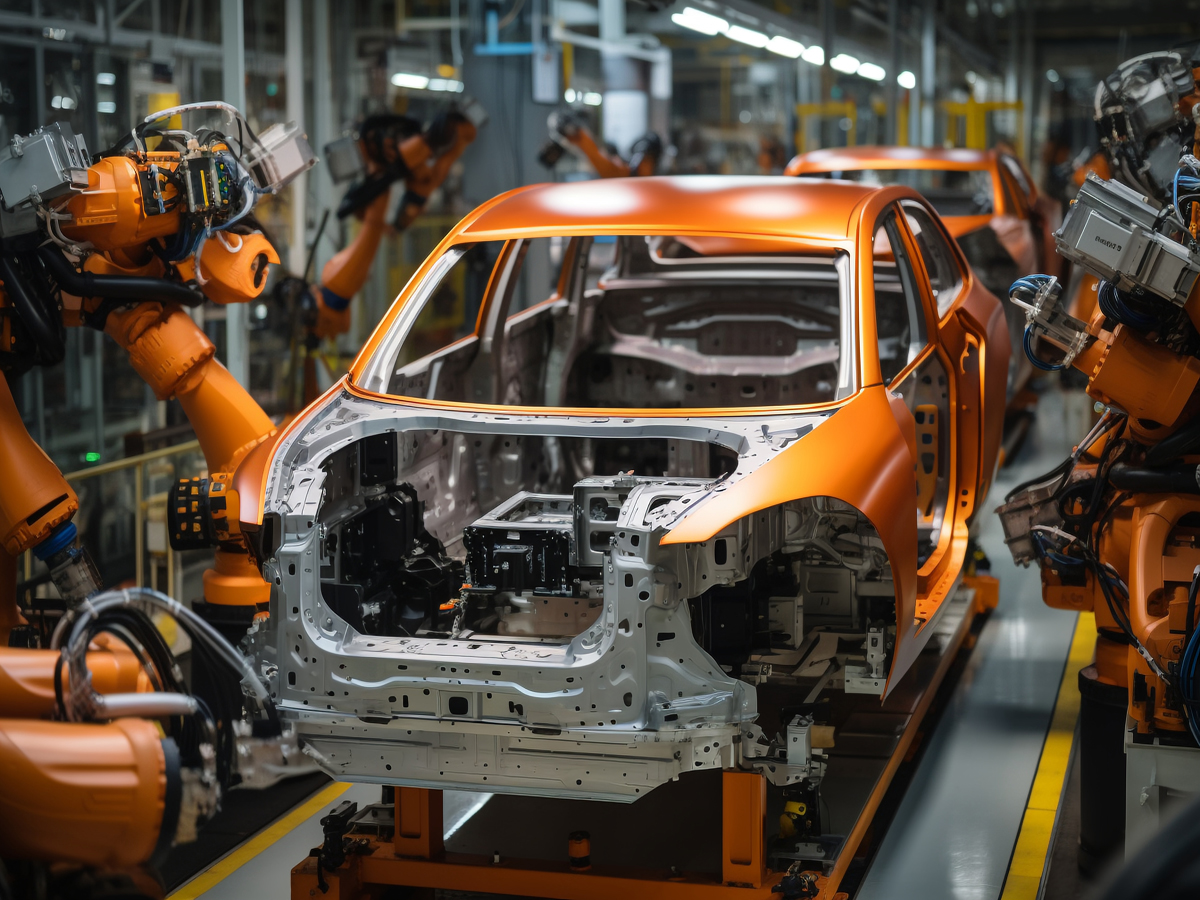
OEM custom automotive components are drawing-specific or application-specific fasteners and mechanical components manufactured
according to defined engineering requirements rather than selected only from standard catalog dimensions.
They can include:
Custom screws and bolts
Custom nuts
Self-clinching fasteners
Rivet nuts
Weld nuts
Weld studs
Threaded insert nuts
Washers and shims
CNC-machined components
Precision pins
Shafts
Bushings
Spacers
Plastic retainers
Nylon clips
Application-specific automotive fastening components
Depending on the application, these components can be manufactured according to customer drawings, specifications, material requirements,
mating interfaces, functional requirements, production volumes, inspection requirements, and applicable international or customer-defined standards.
The important distinction is that OEM custom component sourcing begins with the engineering application and component definition, not simply with a generic fastener name.
A customer-specific component can be evaluated through a structured engineering sequence:
Application → Function → Mating Interface → Geometry → Material → Manufacturing Route → Surface Treatment → Assembly → Inspection → Production
This sequence creates an important connection between engineering and procurement.
For engineers, it connects the component to the mechanical interface and functional requirement.
For procurement and supply-chain teams, it connects the same component to manufacturing feasibility, tooling, quality, production planning, packaging, and commercial sourcing.
JUXIN FASTENERS uses this application-to-manufacturing logic when evaluating custom automotive fasteners and precision components.
For broader custom automotive component sourcing, see Custom Automotive Fasteners & Precision Components: OEM Sourcing Guide.
JUXIN FASTENERS supports multiple automotive component categories rather than focusing only on one fastener family.
Custom screws and bolts can be manufactured with application-specific:
Head geometries
Overall lengths
Thread specifications
Shank dimensions
Under-head configurations
Drive features
Surface finishes
Thread-locking requirements where specified
These components can be developed for body, chassis, interior, seating, spoiler, mechanical, electrical, and other automotive applications.
The applicable material, mechanical property class, surface treatment, and dimensional requirements depend on the customer-specific component definition.
Custom nuts can include application-specific profiles, flange configurations, locking features, and other non-standard geometries.
Depending on the design, locking can be achieved through mechanical geometry or other specified methods, including applicable pre-applied thread-locking solutions.
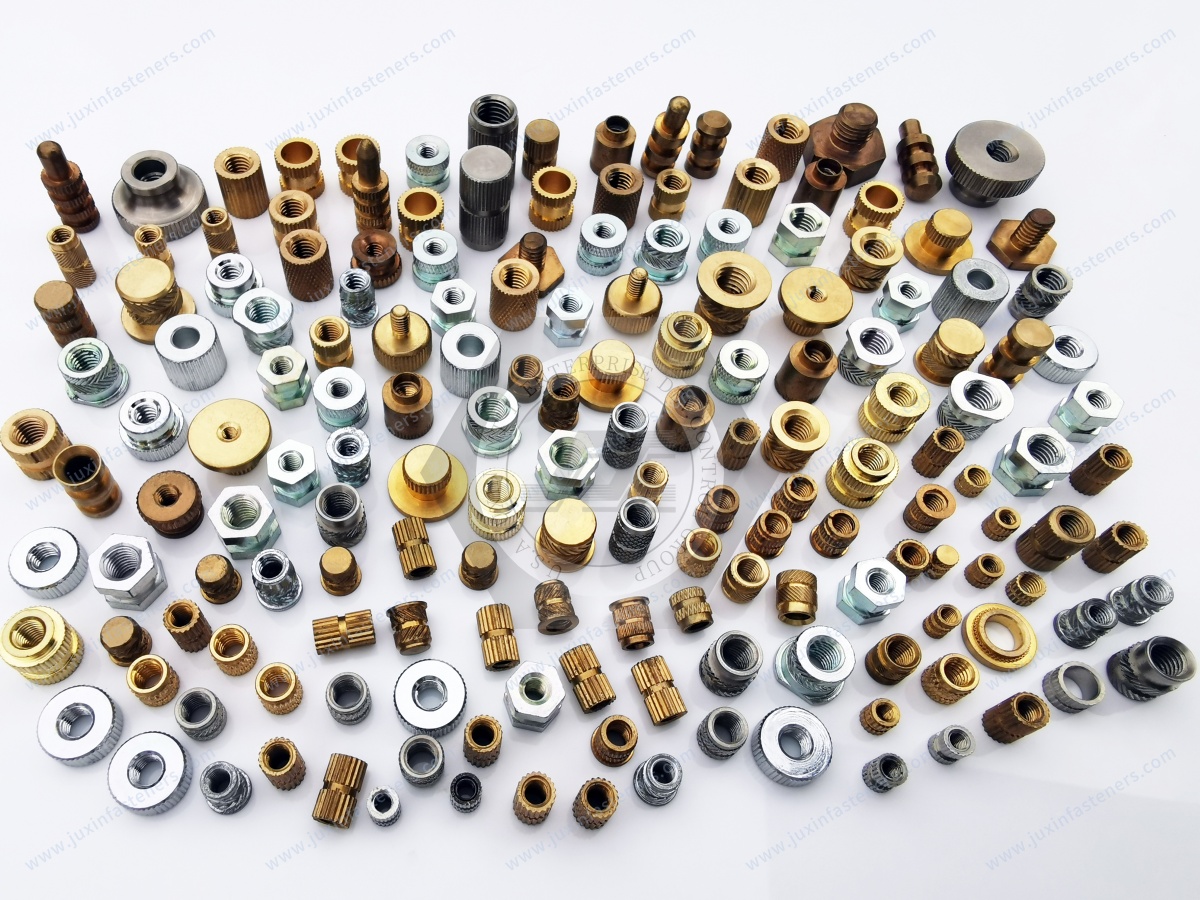
Rivet nuts and threaded insert nuts provide threaded fastening interfaces for applications where conventional nuts may not be practical.
They can be relevant to:
Sheet-metal assemblies
Enclosures
Automotive body panels
Interior structures
Electrical assemblies
Thin-wall components
Applications requiring an installed threaded interface
JUXIN FASTENERS can evaluate the appropriate insert or rivet-nut configuration according to panel thickness, thread specification, installation method, geometry, and application requirements.
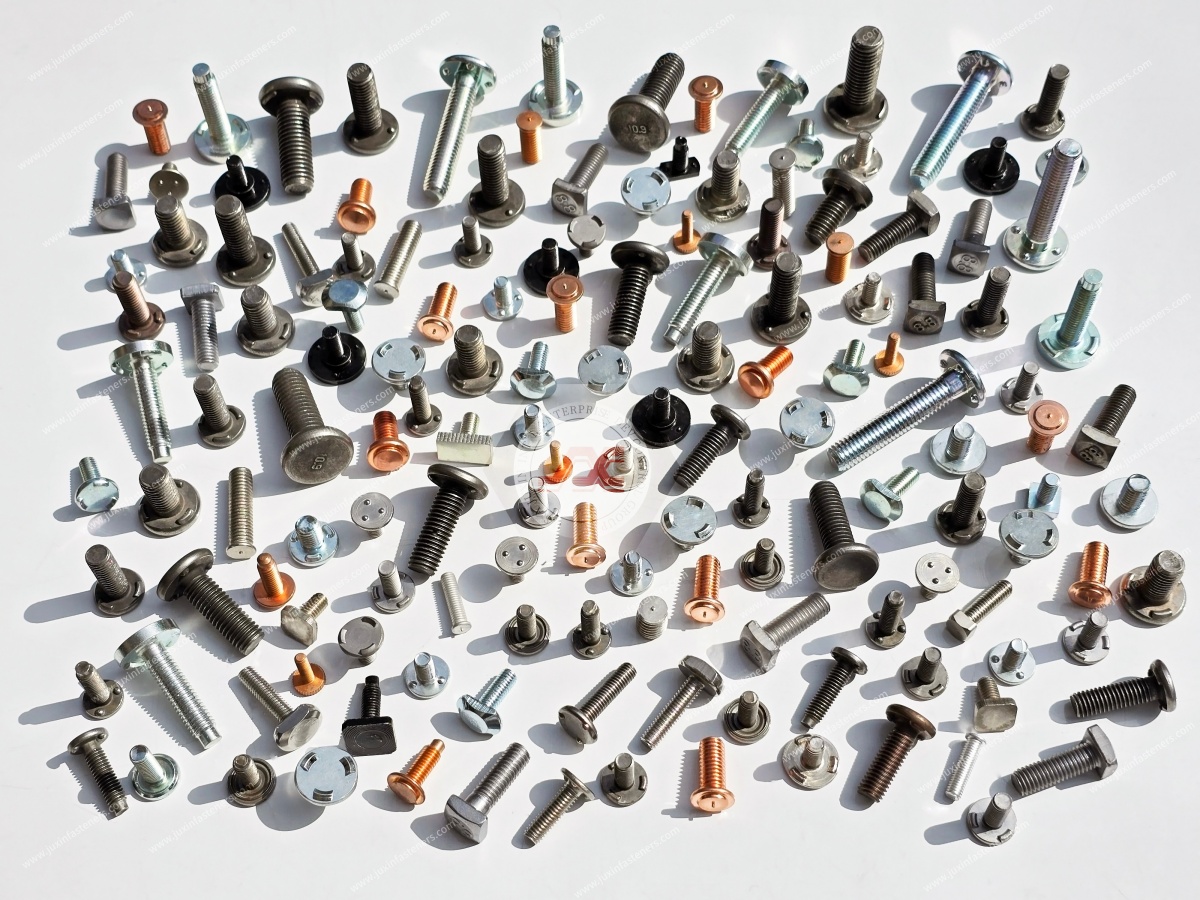
Weld nuts and weld studs provide permanent fastening interfaces that can be integrated into metal assemblies.
They can be used in automotive body structures, brackets, sheet-metal assemblies, rollover protection applications, chassis-related assemblies, and other customer-specific applications.
The appropriate weld configuration depends on the mating material, geometry, welding method, thread requirement, and engineering specification.
Washers and shims can be simple-looking components but may have important dimensional and assembly functions.
JUXIN FASTENERS supplies standard and custom washer configurations, including application-specific flat washers, precision washers, spacing components, and stamped hardware.
Depending on the design, washers and shims can contribute to:
Load distribution
Spacing
Dimensional compensation
Interface protection
Assembly positioning
For detailed sourcing considerations, see Custom Washer Sourcing: Engineering Specifications & Procurement.
Not every automotive component is best manufactured through cold forming or stamping.
Complex or precision components may require CNC machining.
JUXIN FASTENERS supports custom CNC machining for prototypes, low-volume production, repeat OEM requirements, and applicable larger-volume programs.
Depending on geometry, manufacturing can include:
CNC turning
Swiss-type machining
CNC milling
Drilling
Tapping
Threading
Grooving
Turn-mill machining
Automotive CNC components can include:
Precision pins
Shafts
Bushings
Spacers
Threaded adapters
Sensor-related components
Connector components
Mounting interfaces
Other customer-specific mechanical parts
The appropriate manufacturing route depends on the geometry, material, dimensional requirements, quantity, and production characteristics of the component.
For more detailed information, see CNC Automotive Part Sourcing: Engineering Specifications & RFQ.
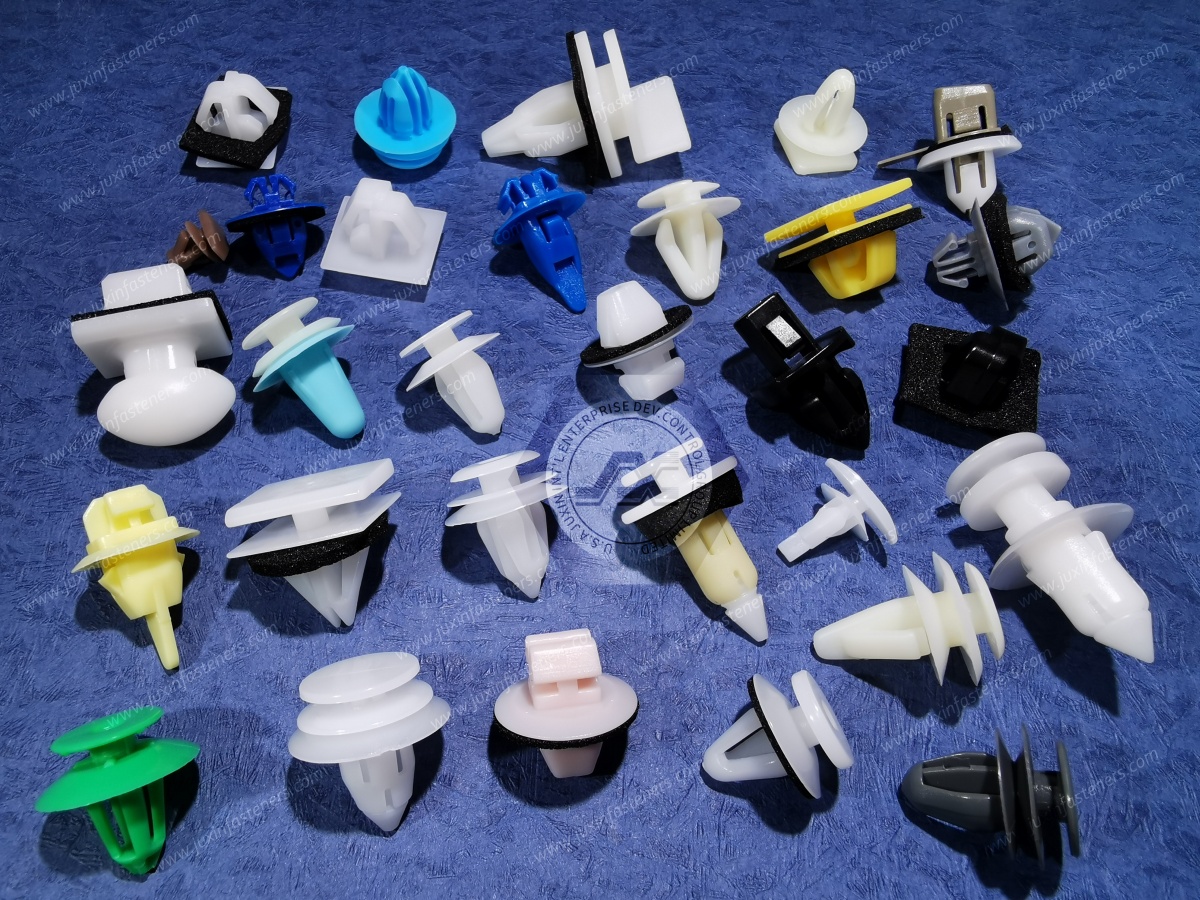
Automotive assemblies frequently combine metal hardware with polymer fastening components.
Depending on the application, JUXIN FASTENERS supplies applicable plastic and nylon hardware such as:
Plastic retainers
Nylon clips
Push-type retainers
Plastic rivets
Cable clamps and holders
Application-specific plastic fastening components
These components can support body, trim, interior, electrical, harness, and other automotive assemblies.
The correct polymer component depends on the actual geometry, material specification, retention mechanism, mating interface, temperature environment, assembly method, and application requirements.
Explore the broader Automotive Plastic Fasteners Guide.
One of the practical advantages of a broader component-sourcing approach is the ability to evaluate related metal and polymer components as part of the same assembly.
A vehicle sub-assembly may contain:
Metal Bolt → Washer → Polymer Retainer → Sheet-Metal Panel
or:
CNC Pin → Bushing → Bracket → Fastener
Each component can require a different manufacturing process.
The objective is therefore not to force different parts into one process.
The objective is to evaluate whether related component requirements can be coordinated through an appropriate manufacturing and sourcing structure.
This distinction is particularly important for OEM procurement teams managing multiple suppliers and multiple part numbers.
JUXIN FASTENERS supports custom fastening and precision-component requirements across multiple vehicle systems.
Chassis and undercarriage applications can include custom bolts, washers, rivet nuts, weld nuts, weld studs, spacers, and precision mechanical components.
The appropriate component depends on the mounting interface, material, mechanical requirements, assembly method, and engineering specification.
See Automotive Chassis & Undercarriage Fastening Solutions.
Wiper mechanisms can require precision pins, shafts, rivets, washers, linkage components, and application-specific fasteners.
The relationship between rotating, pivoting, and mating components makes dimensional accuracy and interface control important.
Explore Automotive Wiper System Fastening Solutions.
Shift systems can incorporate precision shafts, pins, bushings, sliding components, threaded hardware, and custom-machined parts.
Changes in shaft diameter, groove geometry, length, threading, or mating features can affect the manufacturing route.
See Automotive Shift System Fastening Solutions.
Sunroof mechanisms can include precision pins, shafts, sliding hardware, washers, brackets, and other application-specific fastening components.
Dimensional relationships between moving components and mounting interfaces are important considerations during component development.
Explore Automotive Sunroof System Fastening Solutions.
Door modules can combine custom screws, bolts, rivet nuts, clips, retainers, washers, and other application-specific hardware.
Both metal and polymer components can be evaluated according to the mating interface and assembly requirements.
See Automotive Door System Fastening Solutions.
Automotive seat assemblies can incorporate bolts, washers, pins, bushings, brackets, and other customer-specific fastening components.
Depending on the application, engineering review can cover dimensions, material, mechanical requirements, surface treatment, and manufacturing feasibility.
Explore Automotive Seat System Fastening Solutions.
Rollover protection applications can involve customer-specific weld nuts, weld studs, bolts, brackets, and other metal fastening components.
These components require application-specific engineering definitions rather than generic hardware selection.
See Rollover Protection System Fastening Solutions.
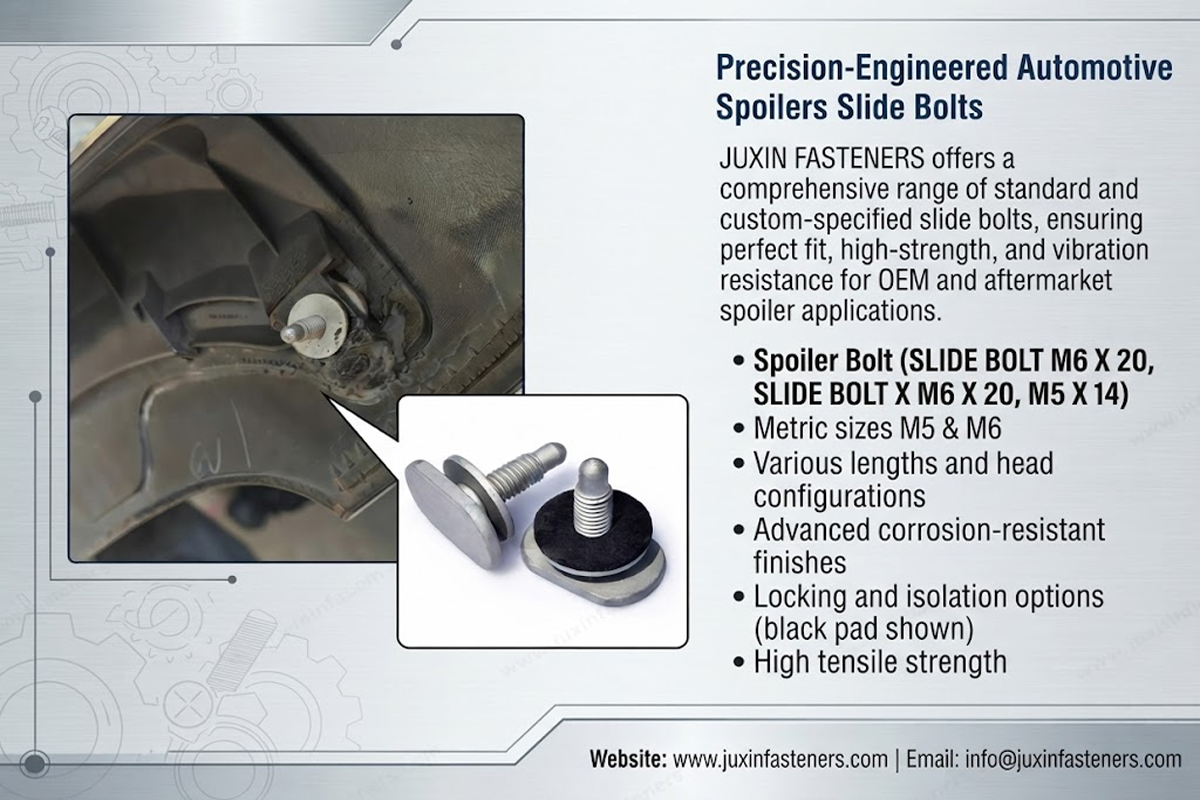
Rear spoiler assemblies demonstrate how different fastening technologies can work together within one vehicle sub-assembly.
JUXIN FASTENERS supplies Automotive Spoiler Slide Bolts and Nylon Rear Spoiler Clips for applicable rear spoiler fastening applications.
The metal component is commonly referred to as a Spoiler Bolt, Slide Bolt, or Automotive Spoiler Slide Bolt.
Applicable configurations include M5 and M6 versions, with representative examples including:
Spoiler Bolt M6 × 14
Spoiler Bolt M6 × 20
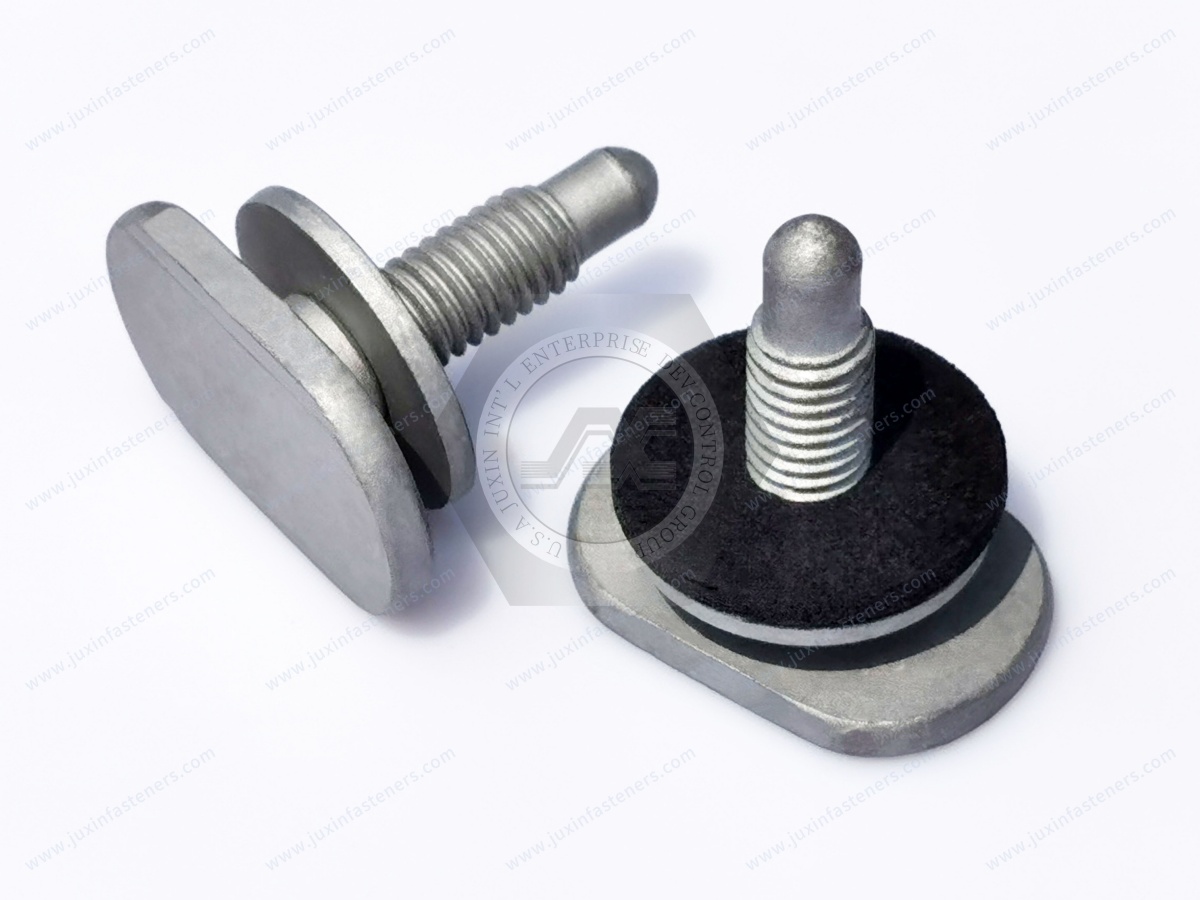
Applicable configurations can include property classes 8.8 and 10.9.
Surface finish options include:
Color Zinc
Zinc-Nickel Alloy
Black Zinc
Selected configurations may also include a pre-applied thread-locking patch where specified.
The corresponding polymer component can be supplied as a Nylon Rear Spoiler Clip, Rear Spoiler Clip, or Rear Spoiler Retainer Clip, depending on the actual design and application.
This type of assembly illustrates why OEM component sourcing can benefit from considering the complete fastening interface rather than evaluating each component only by its generic product name.
Learn more through Automotive Rear Spoiler Fastening Components and Automotive Spoiler Slide Bolt Guide.
OEM programs rarely consist of one isolated fastener.
A vehicle platform can contain hundreds or thousands of component part numbers across different assemblies and manufacturing processes.
Within a smaller sourcing program, a related BOM may include:
Custom bolts
Nuts
Washers
Rivet nuts
Weld nuts
Weld studs
CNC spacers
Precision pins
Bushings
Plastic clips
Retainers
JUXIN FASTENERS can evaluate applicable multiple-SKU requirements across these product families.
The important sourcing principle is technical compatibility before supplier consolidation.
Different components may require different manufacturing routes, materials, tooling, and inspection methods.
Supplier coordination should therefore be based on the actual component requirements rather than assuming that every part should be manufactured in the same way.
For more information, see Multi-SKU Automotive Hardware Sourcing: BOM Consolidation and Supply Chain Solutions for OEMs.
Automotive component programs can change after initial sourcing.
A revised drawing may change:
Geometry
Length
Thread
Tolerance
Material
Surface treatment
Mating interface
Functional dimensions
The manufacturing impact may extend to tooling, machining programs, inspection methods, inventory, packaging, and production timing.
JUXIN FASTENERS can evaluate applicable engineering changes from the supplier-side manufacturing perspective.
The review can connect:
Drawing Revision → Geometry → Manufacturing Route → Tooling → Inspection → Inventory → Production Transition
This is particularly relevant for long-running OEM programs where components move through prototype, pilot, and serial production stages.
See Engineering Change Management in Custom Automotive Fasteners.
Quality requirements for custom automotive components depend on the component definition and customer specification.
JUXIN FASTENERS can support applicable inspection and verification activities including:
Dimensional inspection
Thread inspection
Hole diameter and position
Material verification
Hardness
Mechanical testing where specified
Torque or tension testing where applicable
Surface-related inspection
Functional inspection
Automated optical inspection where applicable
Lot identification
Production documentation
The inspection approach can be structured around the characteristics that matter for the actual component.
For example, a CNC shaft may require dimensional, diameter, groove, concentricity, and functional inspection,
while a stamped washer may focus on outside diameter, inside diameter, thickness, flatness, and material requirements.
This application-specific approach avoids treating every custom component as though it has the same inspection profile.
See Custom Metal Component Quality & Inspection Requirements.
OEM components may reference different technical standards depending on product type, application, market, and customer engineering requirements.
Applicable requirements may include relevant:
ISO standards
DIN standards
EN standards
SAE standards
ASTM standards
ASME standards
ANSI standards
BS standards
Customer-specific engineering specifications
A standard should be applied according to the actual component and requirement.
JUXIN FASTENERS does not treat every standard as universally applicable to every fastener. Instead,
manufacturing and inspection requirements can be evaluated against the applicable engineering specification, product standard, material requirement, and customer-defined quality requirements.
This is particularly important for drawing-based OEM components where the drawing and referenced specifications establish the technical definition of the part.
For a customer-specific automotive component, JUXIN FASTENERS evaluates the relationship between several technical layers:
Application
↓
Mating Interface
↓
Geometry
↓
Material
↓
Tolerance
↓
Manufacturing Route
↓
Tooling
↓
Surface Treatment
↓
Inspection
↓
Production Requirements
This model provides a common engineering language between design engineering, manufacturing engineering, procurement, supplier development, and supply-chain teams.
It also helps identify whether a component is best approached as a standard fastener, modified standard component, custom fastener,
CNC-machined part, stamped component, plastic fastening component, or another application-specific mechanical part.
The commercial pathway for a custom component can therefore be viewed as:
Application Requirement
→
Component Definition
→
Engineering Review
→
Manufacturing Feasibility
→
Tooling / Process Planning
→
Sample or Prototype Where Applicable
→
Inspection
→
Production
→
Packaging
→
OEM Supply
This process is applicable to both individual custom components and broader multi-SKU sourcing programs.
JUXIN FASTENERS can support the engineering and manufacturing side of this process for customer-specific fasteners and precision components.
JUXIN FASTENERS' custom fastening and precision-component manufacturing capabilities extend beyond automotive applications.
EV and battery systems can use custom bolts, rivet nuts, self-clinching fasteners, washers, precision components, and application-specific mounting hardware.
Potential applications include battery enclosures, electrical assemblies, brackets, covers, and related mechanical interfaces.
Electrical cabinets and switchgear assemblies can use:
Self-clinching fasteners
Rivet nuts
Washers
Custom screws
Studs
Sheet-metal mounting hardware
These components can support enclosure and panel assembly according to specified sheet thickness, hole geometry, thread requirements, and installation methods.
Robotic and machinery applications can require:
Precision shafts
Pins
Bushings
Spacers
Threaded adapters
Custom screws
CNC-machined components
The manufacturing route can be selected according to component geometry, material, tolerance, and quantity.
Medical equipment can incorporate customer-specific fastening hardware and precision mechanical components.
Depending on the application, requirements may include specific materials, corrosion resistance, dimensional control, surface requirements, and application-specific inspection.
Aerospace and rail applications can require drawing-specific fasteners and precision mechanical components with defined material, dimensional, mechanical, and manufacturing requirements.
The applicable specification depends on the component and customer program.
HVAC equipment and sheet-metal assemblies can use self-clinching fasteners, rivet nuts, washers, custom screws, clips, and other application-specific hardware.
These components can support enclosure, panel, bracket, duct, and equipment assembly applications.
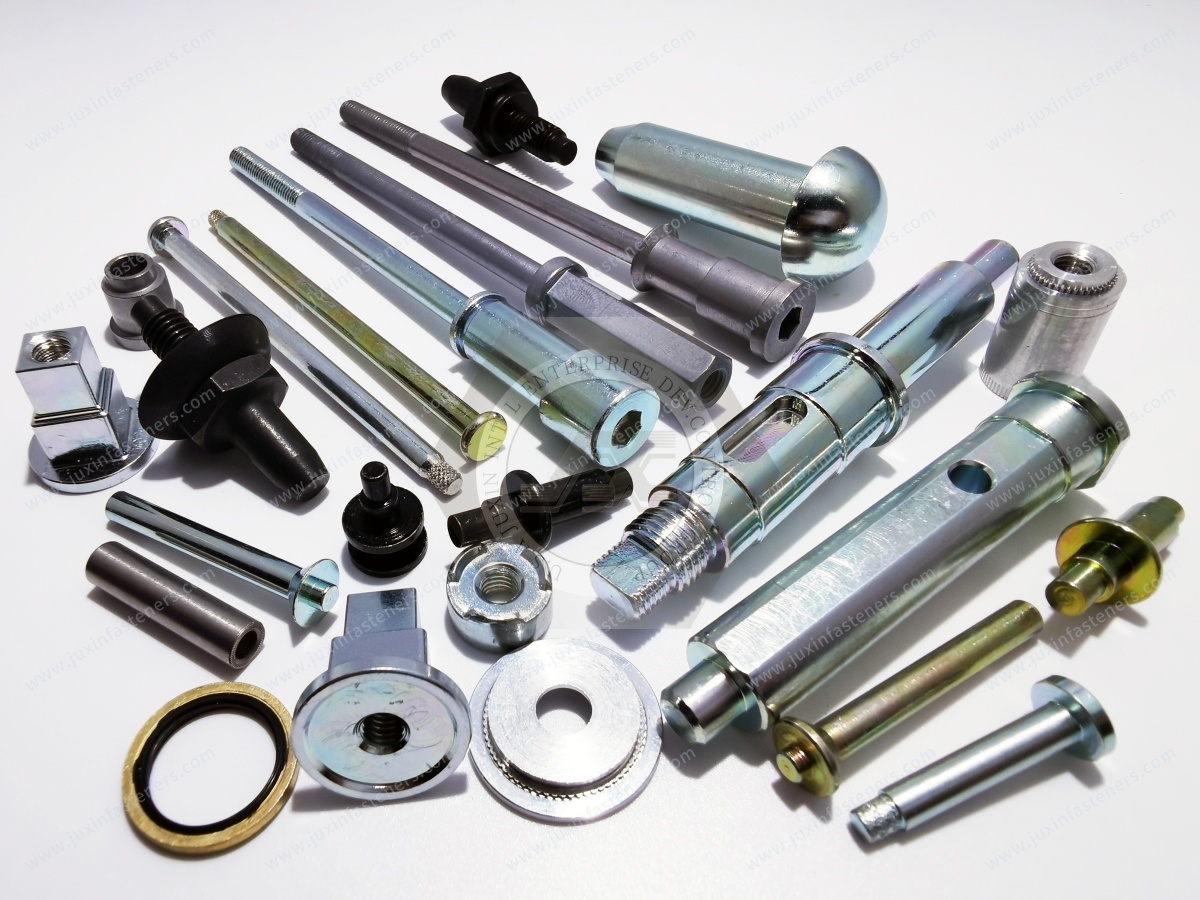
The value of an OEM custom-component supplier is not determined only by the number of products listed on a website.
For engineering and procurement teams, the more relevant question is whether the supplier can connect:
Product Knowledge + Engineering Review + Manufacturing Process + Quality Control + Production Planning + Supply Coordination
JUXIN FASTENERS combines multiple fastening and precision-component manufacturing categories within one sourcing platform.
This includes custom fasteners, CNC-machined components, washers, inserts, weld hardware, plastic fastening components, and application-specific automotive components.
This broader capability can be particularly useful when a vehicle program contains multiple related part numbers across different manufacturing routes.
Several common approaches can create unnecessary technical or commercial complications.
A component described simply as a “bolt,” “washer,” “clip,” or “pin” may have application-specific geometry that is not captured by the generic name.
The component cannot always be evaluated independently from the panel, bracket, shaft, retainer, slot, hole, or other mating component.
A cold-formed bolt, CNC shaft, stamped washer, weld nut, and nylon clip require different manufacturing approaches.
A drawing can be technically defined but still require manufacturing-route evaluation before production.
A revision can affect tooling, inspection, inventory, production planning, and packaging as well as the drawing itself.
For custom OEM components, the commercial evaluation can also involve tooling, engineering review, inspection, packaging, production quantity, delivery requirements, and long-term supply considerations.
OEM custom automotive components are drawing-specific or application-specific fasteners and mechanical parts manufactured according to defined engineering and production requirements.
They can include custom screws, bolts, nuts, washers, rivet nuts, weld nuts, weld studs, CNC components, pins, shafts, bushings, plastic retainers, clips, and other specialized hardware.
JUXIN FASTENERS supplies customer-specific screws, bolts, nuts, self-clinching fasteners, rivet nuts, weld nuts, weld studs, threaded insert nuts, washers, and other application-specific fastening components.
Yes. JUXIN FASTENERS supports custom CNC machining for applicable automotive components including precision pins, shafts, bushings, spacers,
threaded components, connector-related parts, and other customer-specific mechanical components.
Yes. Depending on the application, JUXIN FASTENERS can supply both metal fastening components and polymer fastening hardware such as plastic retainers, nylon clips,
push-type retainers, plastic rivets, and cable-management components.
Yes. Applicable multi-SKU programs can include different component families such as custom fasteners, washers, CNC parts, inserts, weld hardware, and polymer fastening components.
Yes. JUXIN FASTENERS can conduct supplier-side engineering and manufacturing reviews for applicable drawing revisions, including geometry, material,
tolerance, tooling, inspection, inventory, and production-transition considerations.
Depending on component geometry and production requirements, manufacturing can include cold heading and forming, CNC turning,
CNC machining, milling, drilling, tapping, threading, grooving, stamping, and applicable polymer manufacturing processes.
In addition to automotive and EV applications, JUXIN FASTENERS supports applications in battery systems, electrical cabinets, switchgear, robotics,
industrial machinery, medical equipment, aerospace, rail transit, HVAC, sheet-metal fabrication, electronics, communications, and other industrial sectors.
Applicable components can be manufactured and inspected according to the relevant product standards, material specifications, engineering drawings,
and customer-defined requirements, including applicable ISO, DIN, EN, SAE, ASTM, ASME/ANSI, or BS references.
JUXIN FASTENERS can evaluate applicable engineering drawings, CAD data, samples, specifications, material requirements, quantities, application information,
and production requirements where available. The engineering and commercial review can then determine the appropriate manufacturing route and quotation basis.
Modern vehicle programs require more than standard catalog fasteners.
They require customer-specific components that fit defined interfaces, manufacturing processes, materials, tolerances, assembly conditions, and production requirements.
JUXIN FASTENERS supports this requirement through a broader portfolio of custom automotive fasteners and precision components, including:
Custom screws and bolts
Custom nuts
Self-clinching fasteners
Rivet nuts
Weld nuts
Weld studs
Threaded insert nuts
Washers and shims
CNC-machined components
Precision pins
Shafts
Bushings
Spacers
Plastic fasteners
Nylon retainers and clips
Automotive spoiler slide bolts
Rear spoiler clips
Other customer-specific mechanical components
Our engineering-oriented sourcing model connects the application, mating interface, geometry, material, manufacturing route, tooling, inspection, production, and supply requirements.
For individual components, engineering changes, replacement parts, prototypes, repeat OEM production, or multi-SKU sourcing programs,
JUXIN FASTENERS can evaluate the applicable technical and manufacturing requirements and develop an appropriate production solution.
If your automotive or industrial program requires custom fasteners, precision metal components, CNC-machined parts, washers, inserts, weld hardware, plastic retainers,
or other drawing-specific components, contact JUXIN FASTENERS for engineering and sourcing evaluation.
Email: info@juxinfasteners.com
Website: www.juxinfasteners.com
JUXIN FASTENERS supports customer-specific component development, engineering review, prototype and production sourcing, multi-SKU programs,
and OEM manufacturing requirements across automotive and industrial applications.
 MORE NEWS
Sep. 14, 2026
Sep. 13, 2026
Contact Us
Tel.:
+86 020 8621 0320
+86 020 3121 6067
E-mail:
Technical Support:
Navigation
SEND INQUIREY