
Call Us
+86 136 6007 9809
Call Us
+86 136 6007 9809

Sep. 21, 2026
As electric vehicle battery-pack architecture evolves toward higher energy density, modular construction and increasingly integrated thermal and electrical systems,
mechanical fastening decisions must distinguish carefully between different functional zones of the battery enclosure.
Primary battery-pack structures can carry demanding requirements involving:
crash loads;
enclosure stiffness;
sealing;
environmental protection;
high-voltage safety;
thermal management;
structural durability.
At the same time, battery systems may also contain appropriate auxiliary components such as:
service-access panels;
inspection covers;
protective shields;
wiring-support brackets;
thermal-management guards;
auxiliary sheet-metal brackets.
Where these components use an accessible sheet-metal edge or flange and the application requirements permit a removable mechanical attachment,
clip-on nuts for EV battery pack service panels can provide a practical threaded fastening architecture.
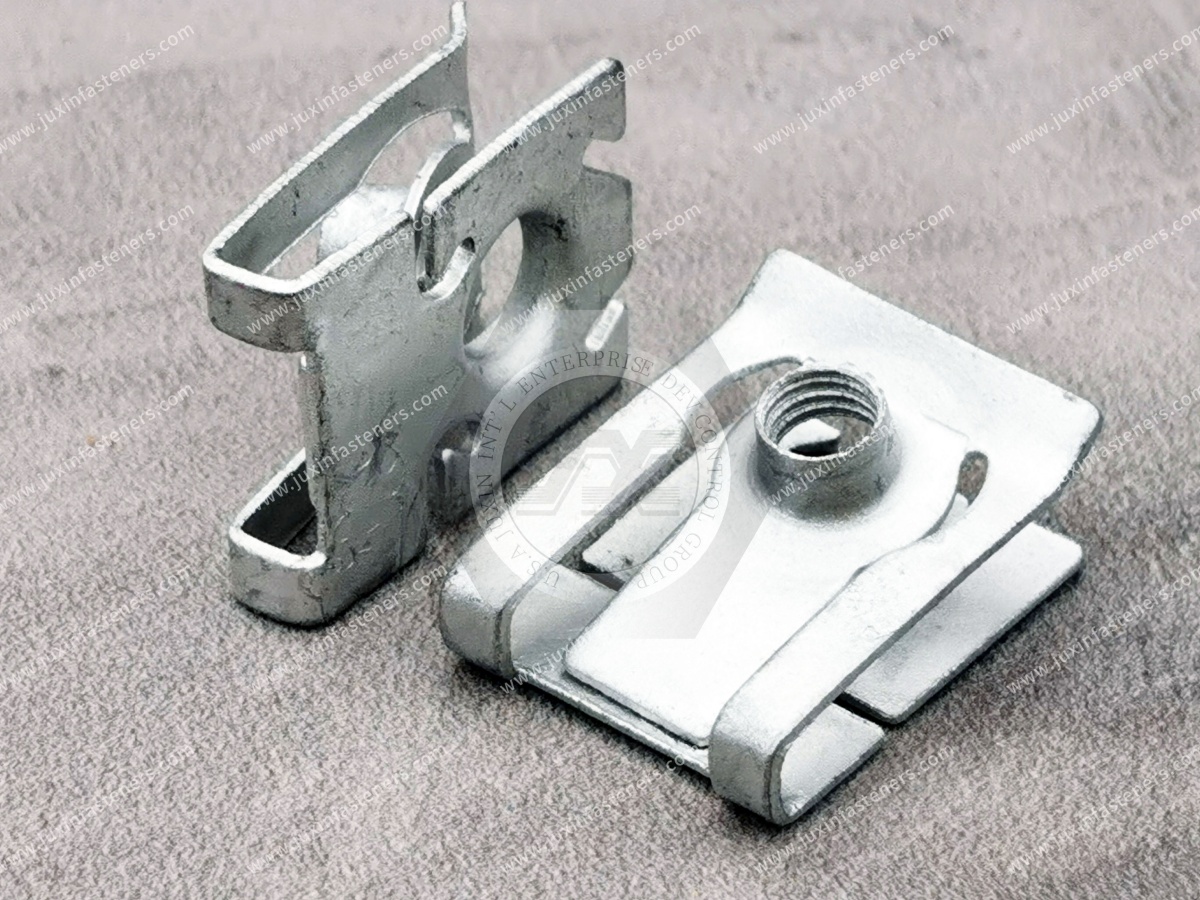
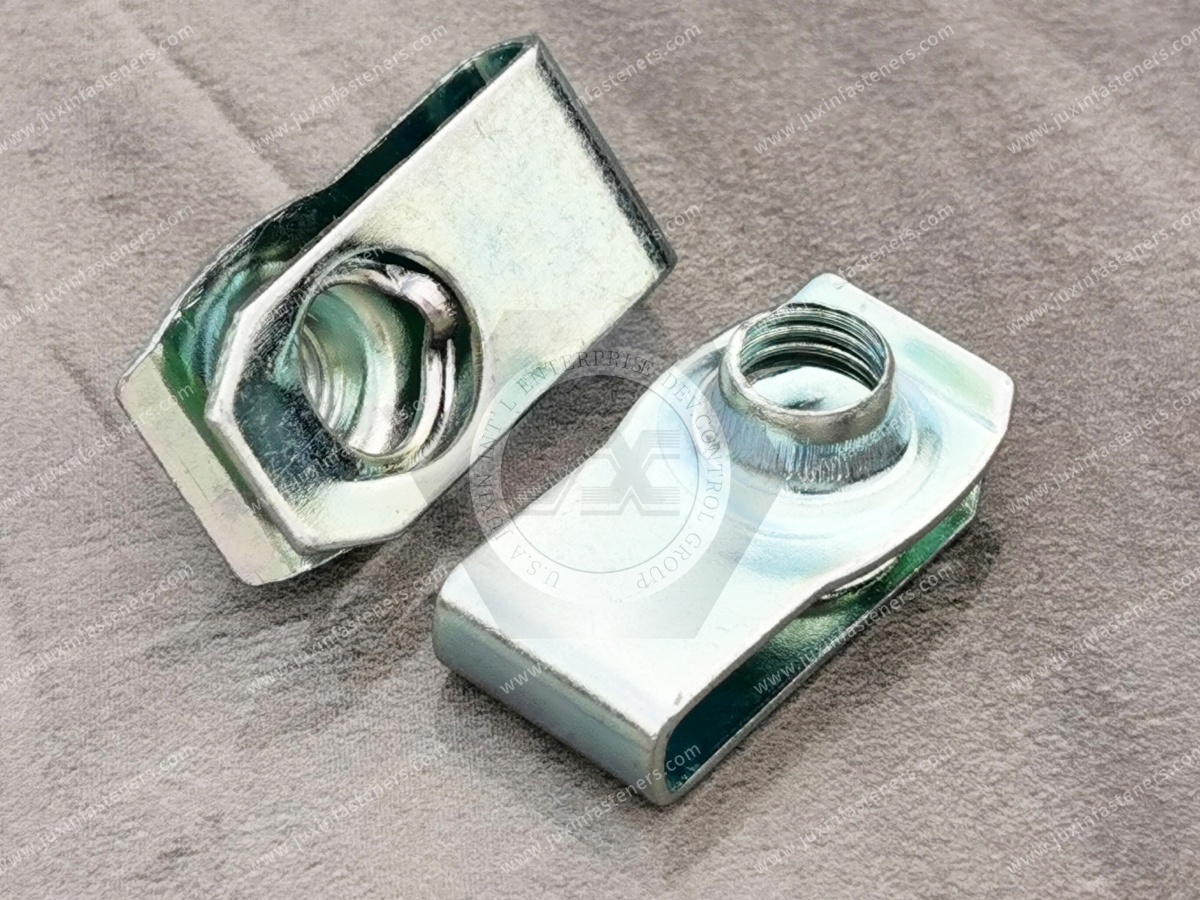
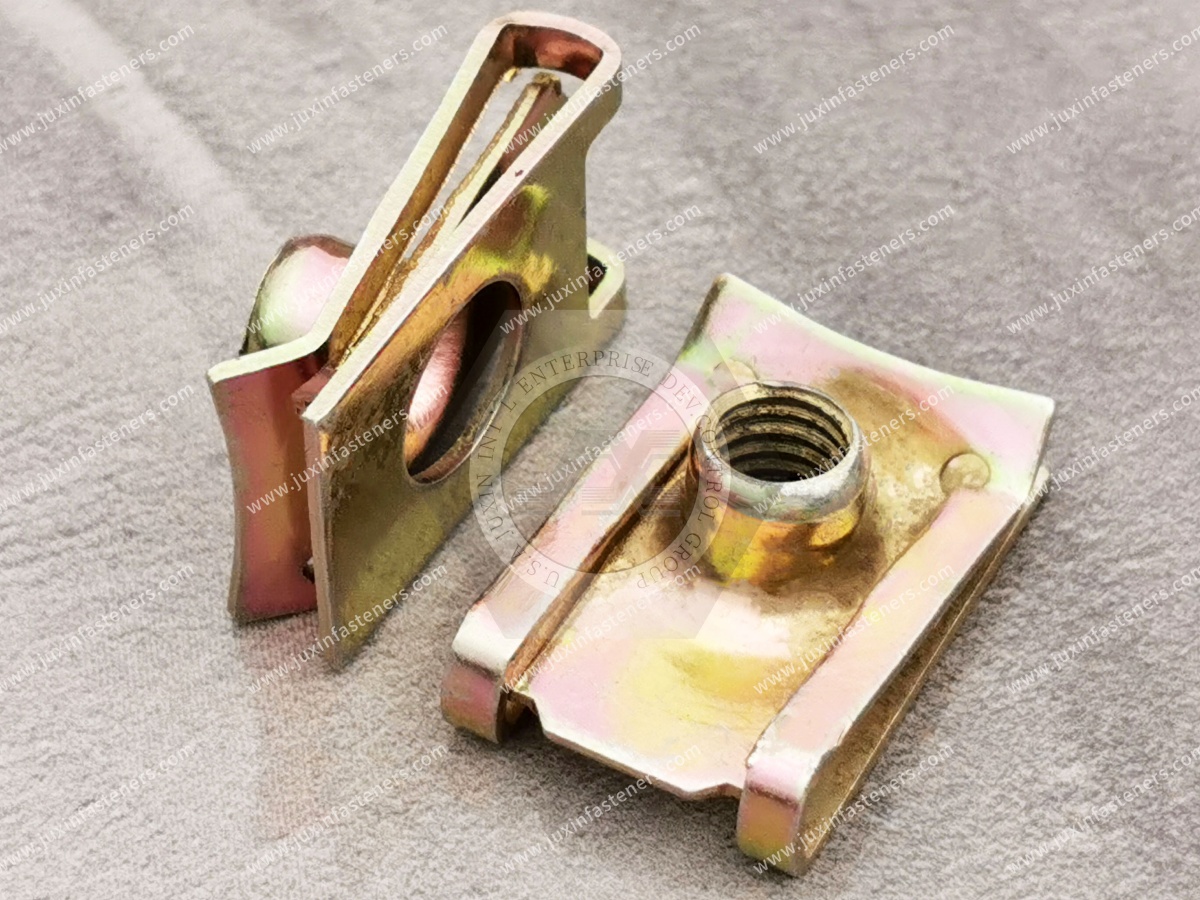
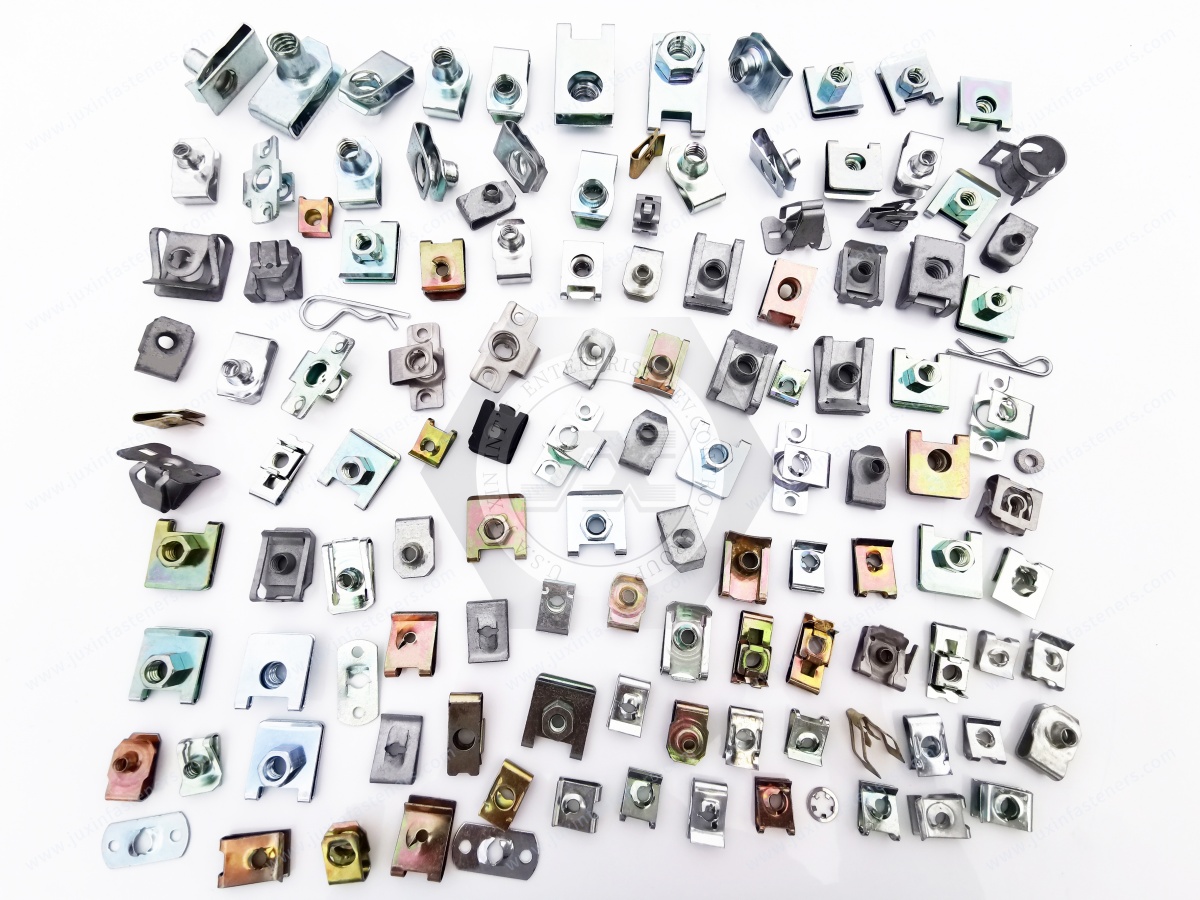
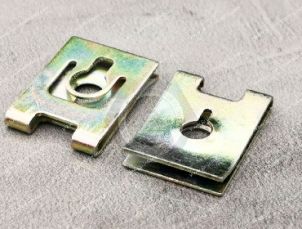
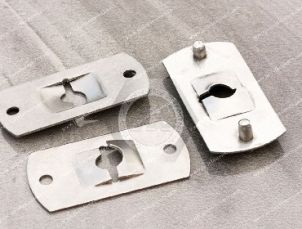
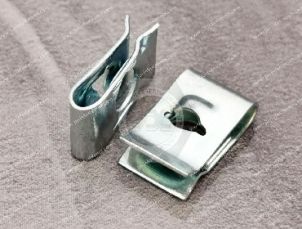
Clip-on nuts—including U-nuts, J-nuts, barrel-style clip nuts and enclosed-thread spring clips—can provide mechanically retained threaded points without requiring a conventional loose nut behind the panel.
However, their role must be defined correctly.
A standard clip-on nut should not automatically be treated as:
a battery-pack structural fastener;
a sealing fastener;
an IP67/IP68 component;
a busbar fastener;
a high-voltage electrical component;
a grounding device;
an EMI shielding component.
The correct engineering question is therefore not:
“Can clip-on nuts be used in EV battery packs?”
It is:
“Which battery-pack attachment zones can use an edge-mounted removable threaded fastener without assigning it structural, sealing or electrical functions beyond its validated capability?”
One of the most useful ways to evaluate battery-pack fasteners is to separate the enclosure into functional zones.
These can include joints involved in:
major enclosure structure;
crash-load paths;
pack-to-vehicle attachment;
structural cross-members;
primary load-bearing connections.
These locations require dedicated structural engineering and validation.
A generic clip-on nut should not be selected merely because it is convenient to assemble.
These can include joints controlling:
water ingress;
dust ingress;
gasket compression;
enclosure sealing;
other environmental protection requirements.
Fasteners in these areas interact with the complete sealing architecture.
A clip-on nut may form part of a mechanically validated assembly in some designs, but the clip itself is not the sealing element.
These may involve:
busbars;
high-voltage terminals;
grounding/bonding;
electrical contact interfaces;
insulation systems;
high-voltage safety features.
These require dedicated electrical and mechanical requirements.
Generic clip-on nuts should not automatically be assigned these functions.
This is the zone where clip-on nuts can become particularly relevant.
Potential applications can include appropriate:
inspection covers;
service panels;
protective shields;
non-structural brackets;
wiring-support brackets;
thermal-management guards;
auxiliary sheet-metal covers.
This creates a useful engineering rule:
Primary Structural / Sealing / Electrical Function → Dedicated Validated Fastening Architecture
Auxiliary Serviceable Mechanical Function → Clip-On Nut May Be a Candidate
There is no universal fastener category called an “EV battery clip nut” that automatically satisfies all battery-pack requirements.
The component is fundamentally an edge-mounted spring fastener selected for a particular battery application.
Possible configurations include:
U-nuts;
J-nuts;
barrel clip-on nuts;
enclosed hex clip-on nuts;
low-profile clip nuts;
drawing-specific spring fasteners.
Selection depends on the actual:
Panel + Edge + Thread + Screw + Environment + Functional Requirement
Where the design permits them, clip-on nuts can provide several manufacturing and lifecycle advantages.
Potential benefits include:
no loose backside nut during final screw assembly;
no welding at the clip installation location;
rapid installation onto suitable panel edges;
replaceability in accessible locations;
potential post-finish installation;
compatibility with serviceable covers;
suitability for manual or automated assembly depending on design.
These advantages can be especially useful where a battery-pack auxiliary component must be removed during inspection, repair or component replacement.
Battery-pack service strategies differ between vehicle programs.
Some components may never be intended for routine field access.
Others may require controlled service access.
Where repeated removal is expected, the fastening design should define:
expected removal/reinstallation cycles;
screw replacement policy;
clip replacement policy;
inspection criteria;
panel-edge condition;
gasket replacement requirements where applicable.
A clip-on nut should not simply be assumed to withstand unlimited service cycles.
A clip may survive initial assembly but behave differently after repeated screw installation and removal.
Potential changes include:
thread wear;
clip deformation;
coating wear;
panel-edge damage;
loss of retention;
screw-thread damage.
Therefore:
Removable ≠ Unlimited Reusability
If lifecycle removal is important, the expected service sequence should be included in validation.
Potential service-panel applications can include appropriate:
diagnostic access covers;
inspection windows;
auxiliary equipment covers;
local protective shields.
The actual suitability depends on the battery architecture.
A top cover or large perimeter cover should not automatically be categorized as a simple service panel.
In many battery designs, major enclosure covers can participate directly in:
structural behavior;
environmental sealing;
stiffness;
crash performance.
Such applications require dedicated engineering.
Clip-on nuts can be useful for suitable shields where:
the fastener is located near an accessible edge;
the shield is non-structural;
service removal is required;
the load is within the validated joint capability.
Possible examples include protective guards around auxiliary components.
Battery packs contain complex electrical routing.
Clip-on nuts may support appropriate mechanical brackets associated with:
wiring;
low-voltage harness routing;
sensor-related hardware;
protective guides.
However, the clip should not automatically be treated as an electrical bonding or grounding device.
Battery thermal-management systems can include:
coolant lines;
manifolds;
sensors;
valves;
protective guards;
support brackets.
Clip-on nuts may be useful for suitable non-pressure-retaining auxiliary attachments.
They should not automatically be used as:
coolant seals;
pressure-vessel fasteners;
cooling-plate structural joints.
Battery busbars can carry significant electrical current and may have specific requirements involving:
electrical contact resistance;
joint pressure;
thermal cycling;
insulation;
creepage and clearance;
locking strategy.
A generic clip-on nut should therefore not be promoted as a busbar fastening solution unless the exact component and joint have been specifically engineered and validated for that function.
A clip-on nut can eliminate the need to hold a conventional loose nut behind the panel during final screw installation.
This can be useful where backside tool access is difficult.
However, the clip normally still requires access to an appropriate panel edge during installation.
Therefore:
Captive Thread Without Backside Nut Handling ≠ Universal Blind-Hole Fastening
If the thread must be located away from an accessible edge and only one side is available, a blind rivet nut or another fastening architecture may be more appropriate.
For broader comparison, see Sheet-Metal Fastener Selection Guide.
This is one of the most important engineering boundaries for this application.
A clip-on nut performs a mechanical fastening function.
A sealing system performs an environmental protection function.
These functions can interact, but they are not the same.
Therefore:
Clip Retention ≠ Enclosure Sealing
and:
Threaded Fastening ≠ Automatic IP Rating
Ingress-protection performance belongs to the tested enclosure or assembly configuration.
A standard clip-on nut does not independently create an IP67 or IP68 seal.
The sealing system may involve:
gasket;
sealant;
enclosure flange;
cover stiffness;
fastener spacing;
screw clamp;
assembly process.
The complete enclosure must satisfy the applicable requirement.
When a service cover compresses a gasket, tightening the screws does more than simply hold the cover in place.
The joint may need to generate and distribute sufficient compression across the gasket.
A simplified mechanical path can be viewed as:
Screw → Threaded Fastener → Panel / Flange → Cover → Gasket
The actual load distribution depends on the complete design.
A common mistake is to assume:
Specified Screw Torque = Correct Gasket Compression
In reality, the resulting gasket compression can depend on:
screw preload;
friction;
fastener spacing;
cover stiffness;
flange stiffness;
gasket stiffness;
gasket thickness;
compression stops where present;
assembly sequence.
Therefore the clip-on nut should be evaluated as part of the entire sealed-joint architecture.
Where a threaded joint contributes to gasket compression, insufficient clamp may lead to uneven gasket contact.
Potential contributors include:
insufficient screw preload;
excessive fastener spacing;
flexible cover;
flexible flange;
poor joint geometry.
Excessive tightening can potentially cause:
thread damage;
clip deformation;
panel deformation;
cover distortion;
gasket over-compression.
Therefore:
More Torque ≠ Automatically Better Seal
A service-cover sealing design cannot be evaluated from one clip-on nut alone.
The distance between fasteners affects how clamp load is distributed along the cover perimeter.
Large spacing combined with a flexible cover may allow local lifting between fastening points.
Therefore battery-pack sealing analysis should consider:
Fastener + Spacing + Cover Stiffness + Flange Stiffness + Gasket
rather than only fastener torque.
The spring body grips the panel edge.
That function helps retain the clip before and during assembly.
It does not automatically lock the screw against service loosening.
Therefore:
Spring Grip on Panel ≠ Prevailing Torque on Screw
The final threaded joint must be evaluated separately.
Battery packs experience vehicle-level mechanical excitation from:
road input;
suspension;
drivetrain;
pumps;
compressors;
thermal-management equipment;
structural movement.
The appropriate vibration requirement depends on the vehicle and subsystem.
A clip-on nut should not be described as universally “vibration-proof.”
Joint stability can depend on:
initial clamp;
thread engagement;
joint stiffness;
transverse movement;
friction;
panel stiffness;
thermal cycling;
locking strategy where required.
The clip's panel-retention force is only one part of the assembly.
Battery systems can experience temperature changes from:
ambient environment;
charging;
discharging;
thermal-management operation;
vehicle use.
Different materials expand at different rates.
This can affect:
hole alignment;
joint stack;
gasket compression;
fastener loading;
interface movement.
Many EV battery architectures use aluminum in parts of the enclosure.
Steel spring clips can potentially be used with aluminum where the complete interface is appropriately engineered.
However, engineers should evaluate:
panel strength;
local deformation;
surface treatment;
clip coating;
galvanic compatibility;
environmental exposure.
Compared with steel, aluminum can have different:
elastic modulus;
hardness;
local bearing behavior;
thermal expansion;
corrosion behavior.
The same clip geometry should not automatically be assumed to perform identically on both materials.
If a spring clip applies excessive local force to a thin or relatively soft panel edge, possible consequences include:
indentation;
coating damage;
edge deformation;
reduced retention consistency.
Therefore:
Maximum Clip Force ≠ Optimum Clip Selection
When steel and aluminum are electrically connected in the presence of an electrolyte, galvanic interaction may become relevant.
The actual risk depends on:
material combination;
exposed area;
coatings;
surface treatments;
moisture;
salt;
coating damage;
joint geometry.
A coated steel clip may still establish local metal contact through:
installation contact;
edges;
scratches;
coating damage.
Therefore:
Protective Coating ≠ Guaranteed Electrical Isolation
If galvanic isolation is a design requirement, it must be addressed and validated at assembly level.
Specification-controlled carbon spring steel can provide the elastic behavior required for many clip-on fastener designs.
Final performance depends on:
material grade;
thickness;
forming;
heat treatment;
final geometry.
Material name alone does not establish fastener performance.
Stainless spring materials may be considered where their mechanical and corrosion characteristics fit the application.
However:
Stainless ≠ Corrosion-Proof
and:
Stainless ≠ Automatic Solution to Aluminum Galvanic Compatibility
The complete material interface still requires evaluation.
Surface treatment can influence:
corrosion resistance;
dimensional fit;
friction;
appearance;
galvanic interaction.
The required finish should be specified by the applicable customer drawing or engineering requirement.
Clip-on nuts interact with the finished panel surface.
Coating thickness on either the clip or panel can influence:
effective grip;
insertion force;
retention;
local contact.
This becomes particularly important near the limits of a clip's grip range.
If laboratory salt-spray testing is specified, ISO 9227 provides recognized salt-spray test methods.
However, the standard does not create a universal required exposure duration for EV battery clip-on nuts.
The required:
test method;
duration;
acceptance criteria
must come from the applicable customer or product specification.
Real battery-pack exposure can involve combinations of:
wet/dry cycling;
road salts;
condensation;
temperature cycling;
contamination;
coating damage.
Laboratory salt-spray results should therefore be interpreted within the applicable qualification framework.
For susceptible hardened or high-strength steel clips, manufacturing and electroplating processes may require hydrogen-embrittlement controls.
Risk depends on:
material;
strength/hardness;
processing;
coating route;
applied stress.
There is no universal baking procedure that should be specified for every battery-pack clip.
Battery-pack packaging can be space-constrained.
Different clip architectures can help solve different geometry problems.
Can be considered where available installation height is limited.
Can be considered where the application benefits from a dedicated threaded nut element incorporated into the spring clip architecture.
The correct choice depends on:
thread engagement;
available envelope;
panel thickness;
throat depth;
required torque;
service requirement.
For related architectures, see Strong-Grip Clip-On Barrel Nuts / U-Nuts and Strong-Grip Clip-On Enclosed Hex Nuts.
Clip-on nut selection should use the actual finished panel interface.
Relevant variables include:
base sheet thickness;
manufacturing tolerance;
coating;
paint;
conversion treatment;
local forming.
For detailed selection guidance, see Panel Thickness Selection Guide.
For an edge-mounted clip, the distance between the panel edge and the intended screw/thread center is critical.
Incorrect hole setback can cause:
misalignment;
cross-threading;
abnormal torque;
clip migration.
The panel drawing and clip drawing should therefore be reviewed together.
For metric battery-pack programs, define:
nominal thread diameter;
pitch;
mating screw requirement.
Do not specify only:
M5
or:
M6
when the complete thread requirement is available.
Two M6 clip-on nuts can differ substantially in:
grip range;
throat depth;
hole setback;
thread architecture;
overall height;
spring geometry;
material;
coating.
Therefore:
Same Thread ≠ Same Battery-Pack Clip
Where a service panel is intended to be opened multiple times, a useful validation plan can examine the actual production assembly through the required service sequence.
Potential observations include:
insertion/removal torque behavior;
thread damage;
clip retention;
panel-edge condition;
coating damage;
clip deformation.
The number of cycles should come from the actual program requirement rather than a generic marketing claim.
A practical validation sequence can include:
Initial Installation → Assembly Inspection → Environmental / Mechanical Exposure as Required → Removal → Component Inspection → Reinstallation → Final Evaluation
The exact test plan should follow the OEM or Tier customer's requirements.
These fastener families solve different problems.
Useful where:
accessible edge exists;
removability is valuable;
fastener replacement is desired.
May be evaluated where:
the thread is away from the edge;
one-side installation is required;
the selected insert architecture supports the application's environmental design.
However, even a sealing rivet nut should not automatically be described as creating an IP67/IP68 enclosure without assembly-level validation.
For more detail, see Sealing Blind Rivet Nuts for EV Battery Enclosures.
Clip-on nuts avoid welding at the fastener installation location and may simplify service replacement.
Weld nuts can be appropriate where the battery structure and manufacturing route require a welded threaded attachment.
The choice depends on:
location;
structural requirement;
material;
serviceability;
production process.
Self-clinching nuts create installed threaded points in suitable sheet materials and locations.
Clip-on nuts remain edge-dependent but can offer easier replacement.
Selection should consider:
thread location;
panel material;
panel thickness;
installation equipment;
service strategy.
Potential issues include:
clip migration;
panel-edge damage;
coating damage;
hole misalignment;
cross-threading;
thread stripping;
corrosion;
service loosening;
service-cycle wear.
For detailed troubleshooting, see Clip-On Nut Failure Analysis.
Possible contributors include:
incorrect grip range;
panel thickness variation;
unsuitable geometry;
coating thickness;
installation error.
Possible contributors include:
excessive tightening;
incorrect screw;
insufficient engagement;
cross-threading;
misalignment.
Do not immediately conclude that the clip itself “leaked.”
Investigate the complete sealing system:
gasket;
flange;
cover;
fastener spacing;
screw clamp;
assembly sequence;
surface condition.
The clip may influence the mechanical load path without being the sealing element.
Investigate:
clip coating;
panel treatment;
coating damage;
screw coating;
moisture path;
contamination;
material combination.
Do not assume switching automatically to stainless steel solves the problem.
| Engineering Requirement | Clip-On Nut Consideration |
|---|---|
| Auxiliary removable cover | Strong candidate where edge geometry permits |
| Accessible panel edge | Required for conventional edge clip |
| Mid-panel blind thread | Another fastener architecture may be better |
| Structural crash load | Dedicated structural validation required |
| Primary pack-to-vehicle joint | Do not default to generic clip-on nut |
| Gasketed service panel | Evaluate complete clamp/sealing architecture |
| IP67/IP68 requirement | Validate enclosure, not clip alone |
| Aluminum panel | Evaluate local deformation and mixed-metal corrosion |
| Road vibration | Validate complete screw joint |
| Thermal cycling | Evaluate material stack and clamp behavior |
| Repeated service | Define and test required service cycles |
| Busbar attachment | Dedicated electrical/mechanical design required |
| Grounding/bonding | Electrical validation required |
| EMI shielding | Enclosure-level design requirement |
Is the attachment:
structural;
sealing-related;
electrical;
auxiliary mechanical?
Is it a:
service cover;
shield;
bracket;
guard;
wiring support?
Specify:
steel;
stainless steel;
aluminum alloy;
other material.
Include applicable coatings and surface treatments.
Specify:
flange width;
edge radius;
hole setback;
throat depth.
Specify:
diameter;
pitch;
screw length;
screw material/property requirement;
screw finish.
Specify:
whether removal is expected;
required lifecycle removal cycles;
replacement policy.
Specify:
temperature range;
thermal cycling;
vibration;
moisture;
salt;
chemical exposure.
Clarify whether the fastener contributes mechanically to a gasketed cover.
Do not assign sealing performance to the clip itself.
Test the actual:
Clip + Finished Panel + Screw + Cover + Gasket Where Applicable + Production Assembly Process
A clip that fits several prototype panels has only demonstrated initial geometric compatibility.
Production introduces:
panel tolerance;
coating variation;
clip lot variation;
screw lot variation;
automated assembly;
environmental exposure;
service cycles.
Qualification should represent the actual program requirements.
Two suppliers can both describe a component as:
M6 Battery Enclosure U-Nut
while the products differ in:
grip range;
spring geometry;
throat depth;
hole setback;
thread geometry;
material condition;
coating.
Therefore:
Same Description ≠ Same Functional Part
Supplier transitions should be validated against the controlled assembly specification.
A weak RFQ says:
“Need M6 clip nut for EV battery.”
A useful RFQ explains:
“M6 edge-mounted clip nut for removable auxiliary service cover, finished aluminum flange thickness X–Y, hole setback Z,
mating screw drawing attached, expected service cycles defined, environmental requirement attached.”
This allows suppliers to evaluate the actual application.
Battery engineers may search:
EV battery pack clip-on nuts;
battery enclosure clip nuts;
battery service panel fasteners;
EV battery access cover fasteners;
battery shield spring nuts;
battery enclosure U-nuts;
aluminum battery housing fasteners;
removable EV battery cover fasteners;
gasketed service panel fasteners.
These searches indicate engineering and application-selection intent.
Sourcing teams may search:
EV battery clip nut supplier;
battery enclosure fastener manufacturer;
EV battery spring nut supplier;
custom battery pack clip nuts;
battery service panel fastener supplier;
metric EV battery clip nut manufacturer.
These searches indicate commercial sourcing intent.
When requesting engineering and commercial evaluation from JUXIN FASTENERS, provide where applicable:
battery-pack application;
functional zone;
component being retained;
2D drawing;
3D model where available;
assembly drawing;
current fastener sample;
current supplier part number;
required thread size;
thread pitch;
mating screw specification;
screw material;
screw finish;
panel material;
aluminum alloy or steel specification where required;
nominal panel thickness;
panel thickness tolerance;
finished panel thickness;
panel surface treatment;
flange width;
edge radius;
hole diameter;
hole setback;
throat-depth requirement;
available fastener envelope;
required positional accommodation;
clip-retention requirement where defined;
joint mechanical requirements;
service-removal requirement;
expected service cycles;
temperature range;
thermal-cycling requirement;
vibration requirement;
corrosion environment;
coating specification;
corrosion-test method;
test duration where specified;
acceptance criteria;
mixed-metal corrosion considerations;
gasket information where applicable;
sealing requirement at assembly level;
fastener spacing;
cover material and thickness;
installation method;
screwdriving method;
automated-feeding requirement;
packaging requirement;
inspection requirements;
documentation requirements;
sample quantity;
prototype quantity;
production quantity;
estimated annual demand;
program timing;
customer-specific requirements.
Yes, they can be considered for appropriate auxiliary and serviceable mechanical attachments where the panel geometry and engineering requirements permit them.
They should not automatically be applied to structural, sealing-critical or high-voltage functional joints.
Potential applications include suitable service panels, inspection covers, protective shields and auxiliary brackets located near accessible sheet-metal edges.
That depends on the enclosure architecture. Major covers can be structural and/or part of the primary sealing boundary, so they require dedicated engineering rather than generic clip selection.
No. A standard clip-on nut does not independently provide an IP rating. Ingress protection is validated at enclosure or assembly level.
A threaded joint incorporating clip-on nuts can contribute to cover clamping, but gasket compression depends on the complete cover, flange, gasket, fastener spacing, screw preload and assembly process.
Not necessarily. Excessive tightening can damage threads, deform panels or covers and over-compress the gasket.
Potentially, but local panel behavior, coatings, galvanic interaction and the service environment must be evaluated.
No. Stainless steel is not corrosion-proof and does not automatically eliminate galvanic-corrosion concerns.
Not automatically. Panel retention and screw-joint stability are different functions.
Some may support repeated service, but the required number of removal/reinstallation cycles should be defined and validated. Removable does not mean unlimited reuse.
Generic clip-on nuts should not automatically be specified for busbar electrical joints. Those connections require dedicated electrical and mechanical engineering.
Not automatically. Grounding, bonding and EMI performance are separate electrical/enclosure design requirements.
JUXIN FASTENERS can review available drawings, samples, panel material, finished thickness, mating screw, environmental requirements,
service requirements and production demand to identify suitable candidate clip-on nut configurations for evaluation.
A procurement request may begin with:
“Need M6 clip nut for EV battery enclosure.”
That does not define the application sufficiently.
The engineering team should first answer:
Is the Joint Structural, Sealing-Related, Electrical or Auxiliary?
What Component Is Being Retained?
Is the Fastener Near an Accessible Edge?
What Is the Panel Material?
What Is the Finished Panel Thickness?
What Is the Hole Setback?
What Screw Is Used?
Is a Gasket Involved?
How Is Clamp Distributed Across the Cover?
How Many Service Cycles Are Required?
What Vibration and Thermal Requirements Apply?
What Corrosion Environment Applies?
Is There a Steel-Aluminum Interface?
Does the Joint Have Electrical Requirements?
The sourcing process then becomes:
Battery Functional Zone → Mechanical Function → Panel → Edge Geometry → Screw → Service Requirement → Environment
→ Sealing Boundary → Clip Architecture → Sample Validation → Controlled Specification → Production RFQ
This prevents an auxiliary mechanical fastener from being incorrectly specified for a safety-critical battery function.
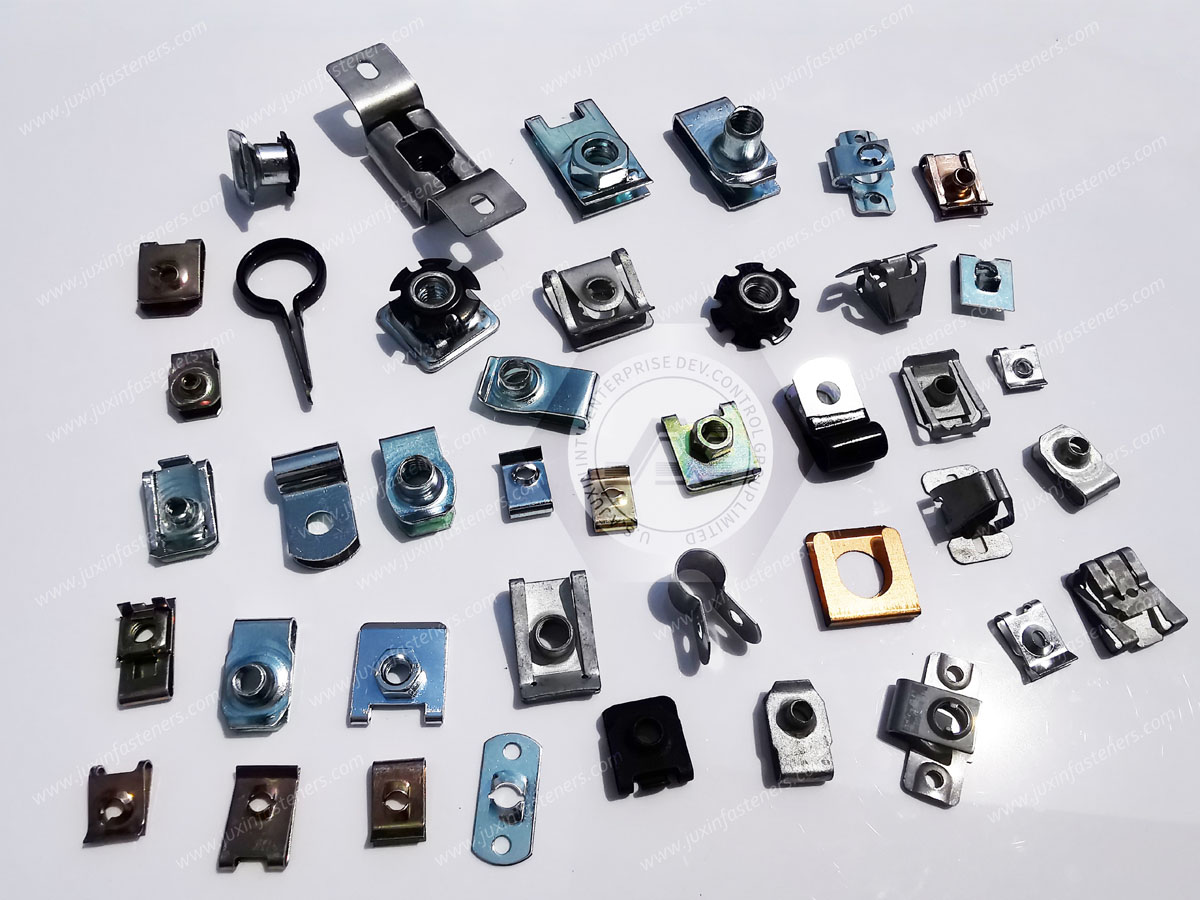
JUXIN FASTENERS supports OEM and industrial sourcing for appropriate battery-pack auxiliary fastening applications, including:
clip-on nuts;
U-nuts;
J-nuts;
barrel clip-on nuts;
enclosed hex clip-on nuts;
low-profile clip nuts;
metric clip-on nuts;
carbon spring-steel clips;
stainless spring clips where appropriate;
drawing-based spring fasteners.
Potential applications include appropriate:
battery service-access panels;
inspection covers;
protective shields;
auxiliary brackets;
wiring-support brackets;
thermal-management guards;
other non-structural sheet-metal attachments.
For related engineering guidance, see:
EV Clip-On Nuts for Electrical Enclosures & Electronics
Strong-Grip Clip-On Barrel Nuts / U-Nuts
Strong-Grip Clip-On Enclosed Hex Nuts
Panel Thickness Selection Guide
Sheet-Metal Fastener Selection Guide
Sealing Blind Rivet Nuts for EV Battery Enclosures
Closed-End Sealing Blind Rivet Nuts for EV Batteries
For an EV battery-pack clip-on nut RFQ or engineering review, send your application drawing, functional zone, panel material,
finished panel thickness, edge geometry, hole setback, mating screw specification, gasket information where applicable,
environmental requirements, expected service cycles, sample quantity and estimated annual demand to:
For EV battery-pack fastening, the safest and most useful sourcing question is not simply:
“Which clip nut fits this battery enclosure?”
It is:
“Is this attachment truly an auxiliary mechanical joint, and if so, which clip geometry, panel interface, screw, material,
finish and service requirement match the validated battery-pack architecture?”
 MORE NEWS
Contact Us
Tel.:
+86 020 8621 0320
+86 020 3121 6067
E-mail:
Technical Support:
Navigation
SEND INQUIREY