
Call Us
+86 136 6007 9809
Call Us
+86 136 6007 9809

May. 25, 2026
Railway signal equipment operates at the intersection of mechanical reliability, outdoor environmental exposure, electrical safety and long-term field maintenance.
Trackside signal lights, control cabinets, equipment housings, junction boxes, mounting brackets and signaling support structures may be exposed to rain, condensation,
dust, temperature cycling, vibration, maintenance access and corrosive contaminants.
Selecting a fastener for these applications therefore requires more than choosing a stainless steel screw from a catalog.
The engineering path should be:
Equipment Function → Joint Function → Parent Material → Installation Access → Load → Fastener Technology → Preload / Retention
→ Vibration → Corrosion → Electrical Requirement → Sealing Interface → Maintenance → Validation
JUXIN FASTENERS supports OEM and drawing-based fastening requirements for selected railway signaling,
electrical and trackside equipment with stainless steel fasteners, coated steel fasteners, bolts, screws, lock nuts, washers, rivet nuts, blind rivets,
self-clinching fasteners, weld nuts and studs, threaded inserts, grounding studs, clips, clamps and custom fastening components.
The correct solution depends on the joint—not simply on whether the equipment is used beside a railway.
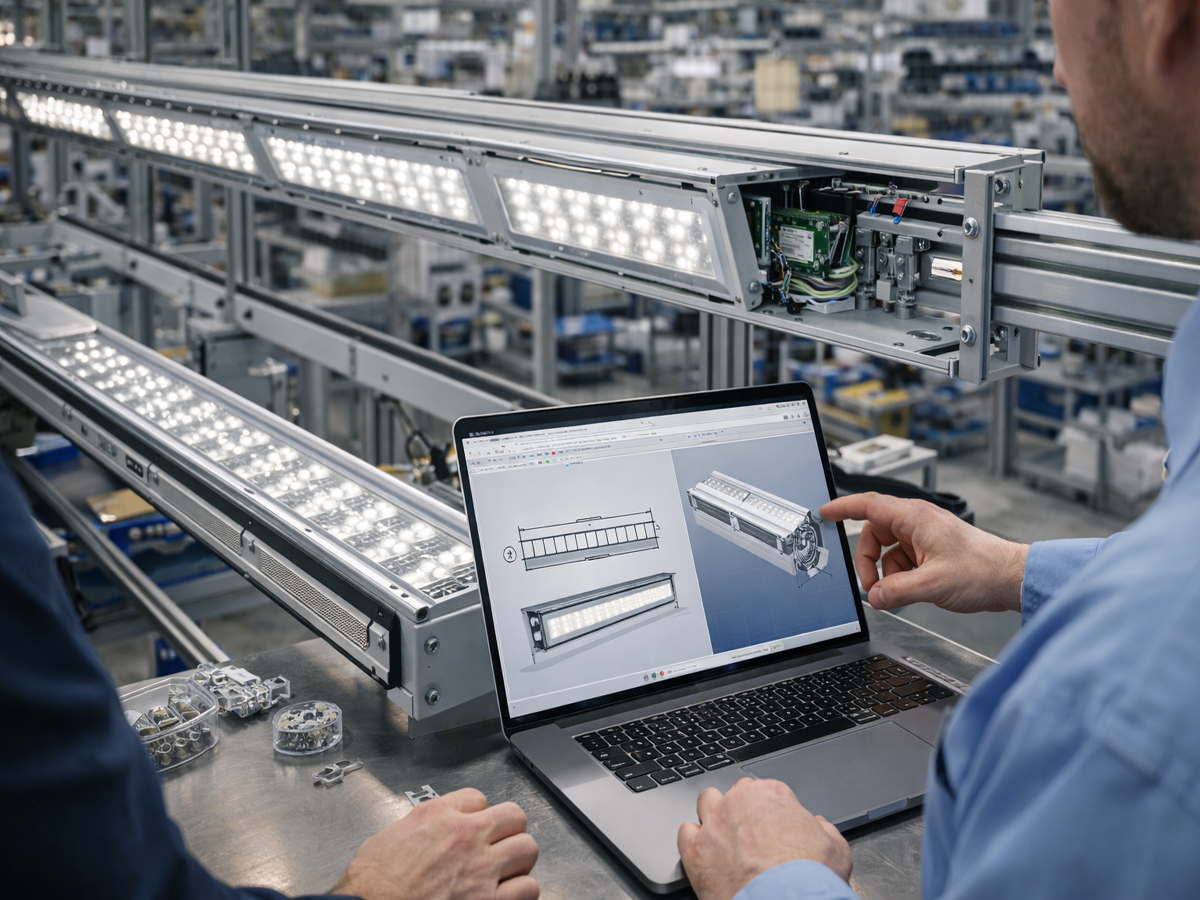
Depending on the equipment design, railway signal assemblies may use:
Machine screws
Hex bolts
Flange bolts
Standard nuts
All-metal lock nuts
Nylon-insert lock nuts
Flat washers
Locking washers
Rivet nuts
Blind rivets
Self-clinching nuts
Self-clinching studs
Weld nuts
Weld studs
Threaded inserts
Grounding studs
Standoffs and spacers
Retaining rings
Pins and clips
Cable and hose clamps
Plastic fastening components
Custom drawing-based fasteners
These components perform different functions.
Same Equipment ≠ Same Fastener Requirement.
A removable signal-light cover, permanent enclosure seam, grounding connection and mast-mounting bracket should not automatically use the same fastening strategy.
| Railway Signal Application | Typical Engineering Need | Possible Fastener Technologies |
|---|---|---|
| Signal-light housing | Outdoor corrosion, service access | Stainless screws, coated screws, lock nuts |
| Protective cover / sunshield | Lightweight attachment, removal | Machine screws, captive hardware, blind rivets |
| Thin-sheet cabinet | Reusable thread | Rivet nuts, self-clinching nuts |
| Permanent sheet assembly | One-sided installation | Blind rivets |
| Internal equipment plate | Threaded mounting | Self-clinching nuts / studs |
| Cast aluminum housing | Durable internal thread | Threaded inserts |
| Mounting bracket | Clamp retention, vibration | Bolts, flange nuts, locking systems |
| Grounding / bonding point | Mechanical + electrical interface | Grounding studs, washers, nuts |
| Cable support | Retention without damage | Clamps, clips |
| PCB / electronic module | Spacing and support | Standoffs, spacers, plastic hardware |
This table is a starting point.
Final selection must follow the actual drawing, loads, materials and railway project requirements.
An engineer searching for “railway signal light fasteners” may actually need to solve one of several different problems:
Attach a removable housing cover
Join thin sheet
Mount a cabinet to a bracket
Create a reusable internal thread
Prevent rotational loosening
Provide electrical bonding
Support cables
Maintain enclosure sealing
Attach internal electronics
Each problem leads to a different fastener architecture.
Outdoor signal-light housings often require repeated access for:
Inspection
Replacement
Wiring
Cleaning
Maintenance
This makes serviceability important.
A permanent joining method may be appropriate for one enclosure seam while a reusable threaded connection may be better for the maintenance cover.
Therefore:
Permanent Joint ≠ Better Joint for Every Signal Assembly.
Engineers should consider:
Housing material
Fastener material
Thread engagement
Corrosion
vibration
installation torque
service frequency
sealing strategy
If the housing is aluminum, for example, simply installing the strongest available steel screw may not improve reliability.
The limiting element may be the internal thread in:
Aluminum
Zinc casting
Polymer
Thin sheet
Therefore:
Fastener Strength Must Be Matched to the Parent Material.
Trackside cabinets may contain:
Signal controllers
Relays
Power supplies
Communication equipment
Terminal blocks
Electronic modules
Their fasteners can perform several functions:
Attach enclosure panels
Mount internal equipment
Support cable systems
Create grounding points
Secure removable access panels
This is why “cabinet fastener” is not one single product category.
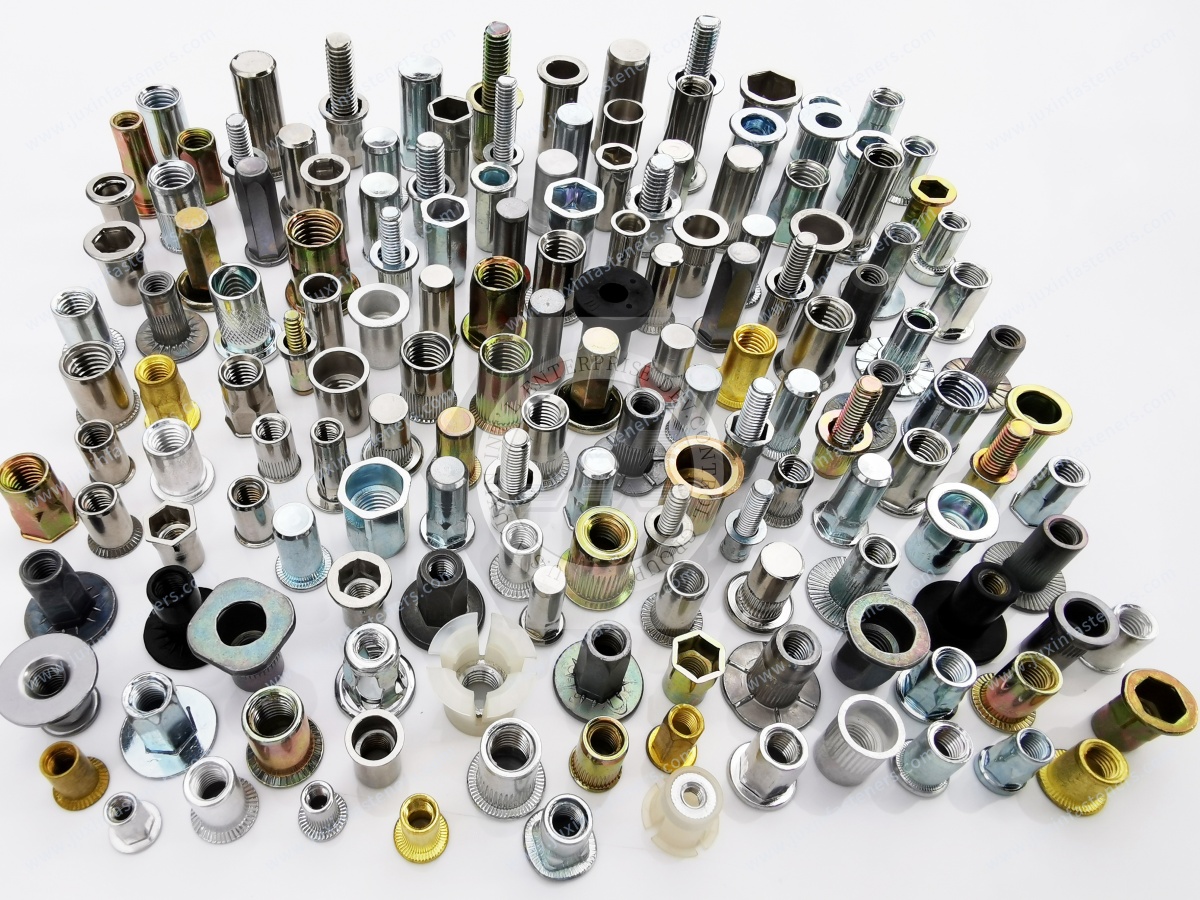
Rivet nuts are useful where engineers need:
Thin Sheet + Reusable Thread + One-Sided Installation
They can be considered for selected:
Electrical cabinets
Junction boxes
Equipment housings
Sheet-metal brackets
But selecting a rivet nut requires more than specifying the thread.
Important variables include:
Grip range
Hole size
Hole shape
Parent material
Body style
Flange
Installation tool
Setting condition
An M6 rivet nut is not automatically suitable simply because the mating screw is M6.
The installed performance depends heavily on the sheet and installation condition.
Body geometry affects installation behavior.
Depending on the parent structure and manufacturing design, engineers may consider:
Round body
Knurled body
Half-hex body
Full-hex body
A hex body can provide strong rotational restraint when installed into a properly designed matching hole.
But:
Hex Rivet Nut ≠ Automatic Anti-Loosening Joint.
It helps prevent the rivet nut body from rotating in the sheet.
It does not automatically prevent the mating screw from loosening.
Two important rivet-nut failure modes are:
Pull-Out — axial removal from the parent material.
Spin-Out — rotational movement of the installed rivet nut.
They should be evaluated separately.
And:
Spin-Out ≠ Mating Screw Self-Loosening.
Over-setting can damage:
Rivet nut
Sheet
Internal thread
Under-setting can produce insufficient retention.
Therefore installation should use a validated process window.
Closed-end rivet nuts can help reduce an open path through the rivet-nut body.
However:
Closed-End Rivet Nut ≠ Waterproof Enclosure.
And:
Closed-End Rivet Nut ≠ Automatic IP Rating.
Enclosure ingress protection depends on the complete system, including:
Joint geometry
Gasket
Sealing washer
Interface
installation
enclosure design
A fastener supplier should not assign an enclosure IP rating based on the rivet nut alone.
Self-clinching nuts, studs and standoffs can be useful in suitable sheet-metal equipment.
Applications may include:
Internal mounting plates
Electronic equipment brackets
Terminal assemblies
Equipment panels
Their performance depends on controlled material flow around the clinching feature.
Important variables include:
Sheet material
Sheet hardness
Sheet thickness
Hole diameter
Edge distance
Fastener geometry
Press tooling
A 1.5 mm aluminum sheet and a 1.5 mm steel sheet do not necessarily behave the same during clinching.
Therefore:
Parent Material Is Part of the Fastener Specification.
Excessive force can damage the sheet or clinching feature.
Self-clinching installation requires a controlled process rather than maximum force.
Self-clinching fastener validation may include different functional characteristics.
Push-Out evaluates resistance to axial displacement.
Torque-Out evaluates rotational resistance.
These should not be treated as the same property.
Blind rivets can provide permanent one-sided joining for selected:
Covers
Brackets
Sheet-metal housings
Internal supports
Selection should consider:
Rivet diameter
Grip range
Total material stack
Hole size
Parent material
Rivet material
Head style
Shear load
Tensile load
Installation tooling
Diameter alone does not define a blind rivet application.
The grip range must match the actual material stack.
A rivet may have different capacity under shear and tensile loading.
The relevant failure direction must be identified before selecting the rivet.
A product marketed as a structural blind rivet may offer higher mechanical capability than a standard blind rivet.
But application qualification still depends on:
Parent material
joint geometry
loading
installation
project specification
A blind rivet creates a permanent joint.
A rivet nut creates a reusable threaded attachment.
They should not be treated as interchangeable products.
Stainless steel fasteners are commonly considered for outdoor equipment because of their corrosion resistance.
Typical industrial grades can include:
A2 / 304-type stainless steel
A4 / 316-type stainless steel
depending on the applicable product specification and environment.
However:
Stainless Steel ≠ Corrosion-Proof.
The correct selection depends on environment.
Can be suitable for many general atmospheric and moderately corrosive applications.
May offer improved resistance in certain chloride-containing or more aggressive environments.
But:
316 ≠ Automatically Best.
Factors include:
Chloride exposure
Industrial pollution
Temperature
Crevices
mating material
galvanic interaction
cost
A stainless steel screw installed into an aluminum signal housing creates a mixed-metal interface.
Environmental exposure can create galvanic-corrosion considerations.
Therefore engineers must evaluate the complete assembly.
Stainless threaded fasteners can be susceptible to galling under certain conditions.
Risk can be influenced by:
Material pairing
Thread fit
Surface finish
Lubrication
Installation speed
Therefore:
Stainless Steel ≠ Install Like Carbon Steel by Default.
If a stainless fastener begins to gall, installation torque can rise without producing the intended clamp force.
Therefore:
Torque ≠ Preload.
Stainless steel is not the only corrosion-resistant solution.
Depending on:
Mechanical requirement
Environment
cost
mating materials
engineers may consider appropriately coated carbon or alloy steel fasteners.
Possible systems can include:
Zinc
Zinc-nickel
Zinc-flake
where appropriate to the application and specification.
For engineering and sourcing, a coating specification may also include:
Thickness
Topcoat
Friction requirement
Corrosion requirement
Appearance
depending on the project.
Salt-spray testing can support coating comparison and qualification.
It does not directly predict years of railway field service.
Actual environments can include:
Wet / dry cycling
Chlorides
pollutants
crevices
temperature changes
Therefore:
Laboratory Corrosion Test ≠ Exact Field Lifetime.
Signal installations near:
Coastal areas
Road crossings
Salt-treated transport corridors
may experience greater chloride exposure.
Material and coating selection should therefore be based on the real service environment rather than a generic “outdoor” classification.
Passing trains, equipment operation and structural response can expose trackside signal assemblies to dynamic loading.
But it is technically incorrect to say:
Railway Vibration Automatically Causes Fastener Loosening.
The more accurate engineering relationship is:
Vibration + Insufficient Clamp / Transverse Movement + Joint Conditions → Potential Self-Loosening Risk
A correctly designed and installed joint may tolerate substantial vibration.
The key variables include:
Preload
Joint stiffness
Transverse movement
friction
locking method
parent material
A joint can lose clamp load because of:
Settlement
Embedment
Creep
Thermal effects
without the nut or screw necessarily rotating.
Self-loosening is a different mechanism.
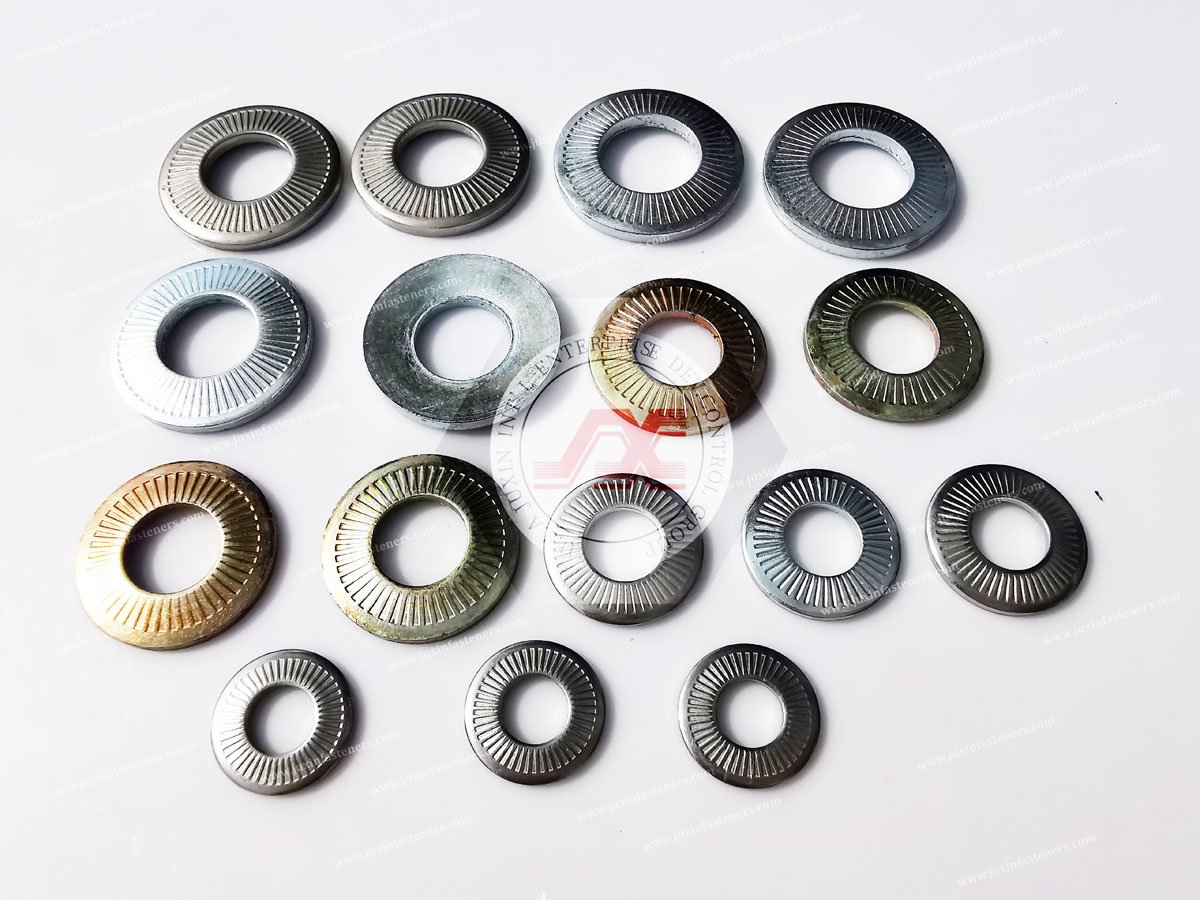
Depending on the joint, engineers may consider:
All-metal prevailing-torque nuts
Nylon-insert lock nuts
Deformed-thread lock nuts
Wedge-locking washer systems
Serrated systems
Thread-locking compounds
where appropriate.
But:
Anti-Loosening Product ≠ Vibration-Proof Joint.
All-metal prevailing-torque nuts can be useful where:
Polymer inserts are unsuitable
Elevated temperature is relevant
Prevailing torque is required
But:
All-Metal Lock Nut ≠ Universal Railway Solution.
The actual joint and reuse requirements must be considered.
Polymer-insert lock nuts can provide prevailing torque in suitable temperature and chemical environments.
But:
Nylon Insert ≠ Universal Temperature Solution.
The polymer and service environment must be checked.
The resistance felt while turning a lock nut is not the same as the clamp force holding the joint together.
This is important for both engineers and maintenance technicians.
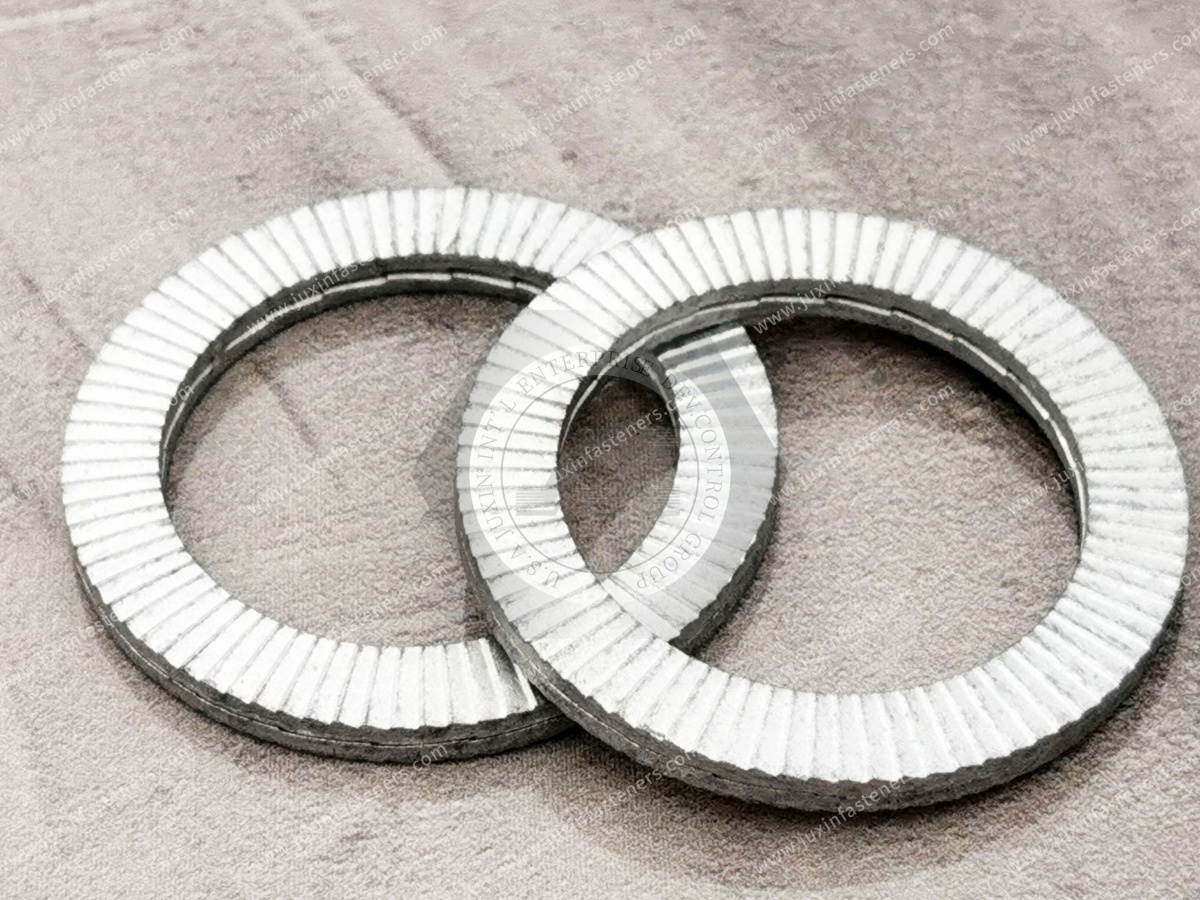
Wedge-locking systems can provide strong resistance to rotational loosening in suitable bolted joints.
But:
Wedge-Locking Washer ≠ Automatic Railway Qualification.
And:
Wedge-Locking Washer ≠ Correct Preload.
The bolted joint still requires correct installation.
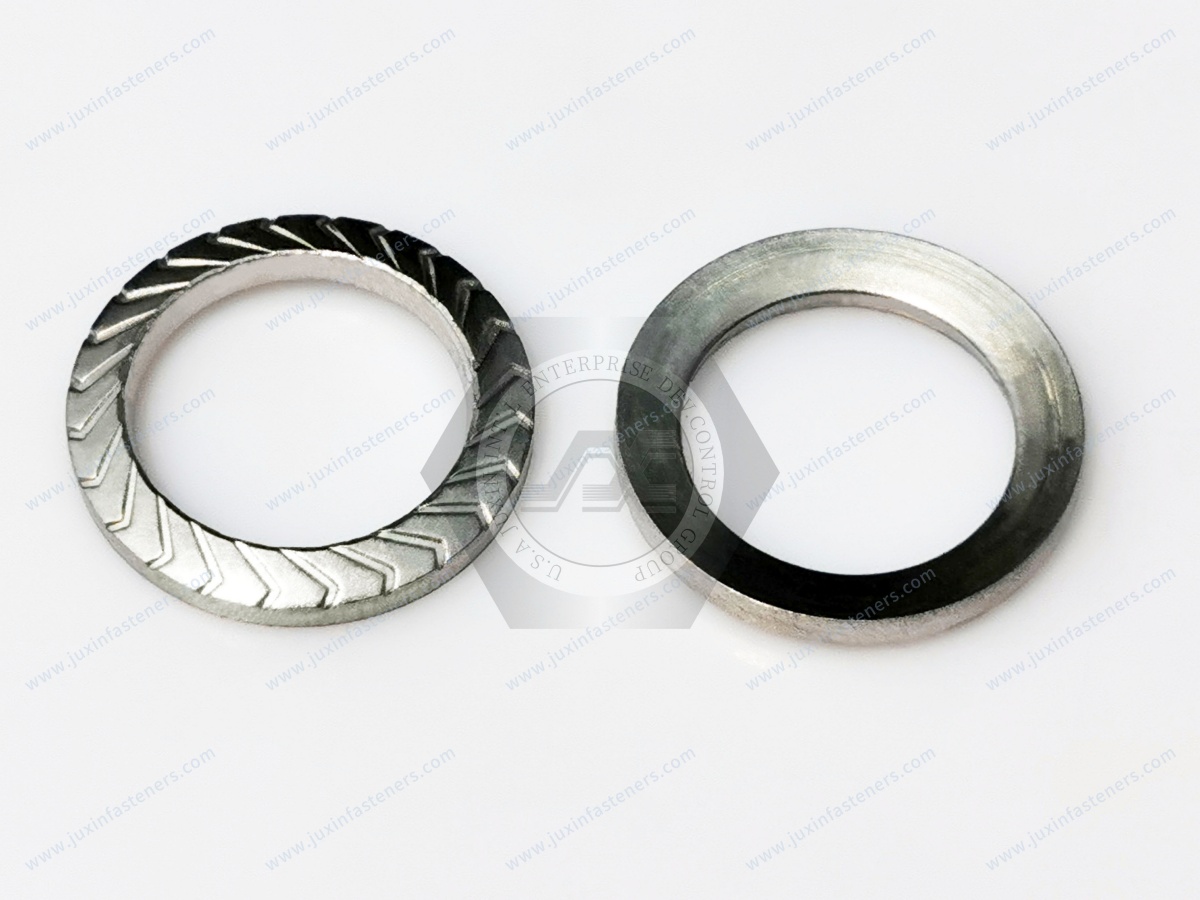
Serrations can increase resistance to relative movement by interacting with the contact surfaces.
But aggressive serrations can also affect:
Coatings
Surface finish
Aluminum surfaces
Electrical contact
Therefore:
More Aggressive Serration ≠ Automatically Better Joint.
Trackside cabinets and signaling equipment may require dedicated grounding or bonding points.
Grounding studs can form part of these systems.
However:
Grounding Stud ≠ Qualified Grounding System.
The complete electrical path matters.
A mechanically secure stud does not automatically guarantee:
Electrical continuity
Fault-current capability
Grounding performance
These functions must be validated at system level.
Selecting copper, stainless steel or another conductive material does not by itself establish an acceptable electrical bond.
Contact resistance depends on the interface.
A grounding assembly may involve:
Structure → Grounding Stud → Contact Surface → Washer → Cable Lug → Nut
Engineers may need to consider:
Surface coating
oxide layer
contact pressure
corrosion
vibration
installation
electrical requirement
A protective coating may improve corrosion resistance while increasing electrical resistance at a required bonding interface.
Therefore:
Best Corrosion Coating ≠ Best Electrical Contact Surface.
The electrical and corrosion requirements must be engineered together.
Fasteners can influence enclosure sealing but do not create the enclosure rating by themselves.
The sealing system can include:
Gaskets
O-rings
sealing washers
thread seals
enclosure geometry
depending on the design.
An enclosure may be designed and tested to a specified ingress-protection requirement.
That rating belongs to the tested assembly.
Over-tightening can:
Crush gaskets
distort thin covers
damage polymer housings
strip threads
Therefore sealing joints need controlled compression.
Aluminum is commonly used where low weight and corrosion behavior are important.
But aluminum parent material changes the fastening design.
Important considerations include:
Thread strength
Bearing stress
Galvanic compatibility
Thread engagement
Surface treatment
If the aluminum thread strips before the bolt reaches its intended load, increasing bolt strength provides no benefit.
Possible engineering responses include:
More thread engagement
Threaded inserts
Rivet nuts
Alternative joint design
Threaded inserts can provide a more durable internal thread where repeated service is required.
Possible insert technologies include:
Wire-thread inserts
Solid threaded inserts
Self-tapping inserts
depending on the parent material and application.
JUXIN FASTENERS should not represent third-party proprietary brands as its own products.
The installed performance still depends on:
Parent material
Hole
Engagement
Installation
Load direction
Some self-tapping insert systems form or cut their own mating thread during installation.
That does not mean the parent component requires no correctly sized installation hole.
Some signal assemblies may use:
Retaining rings
Clips
Pins
Custom stamped parts
for positioning and retention.
These components require their own engineering logic.
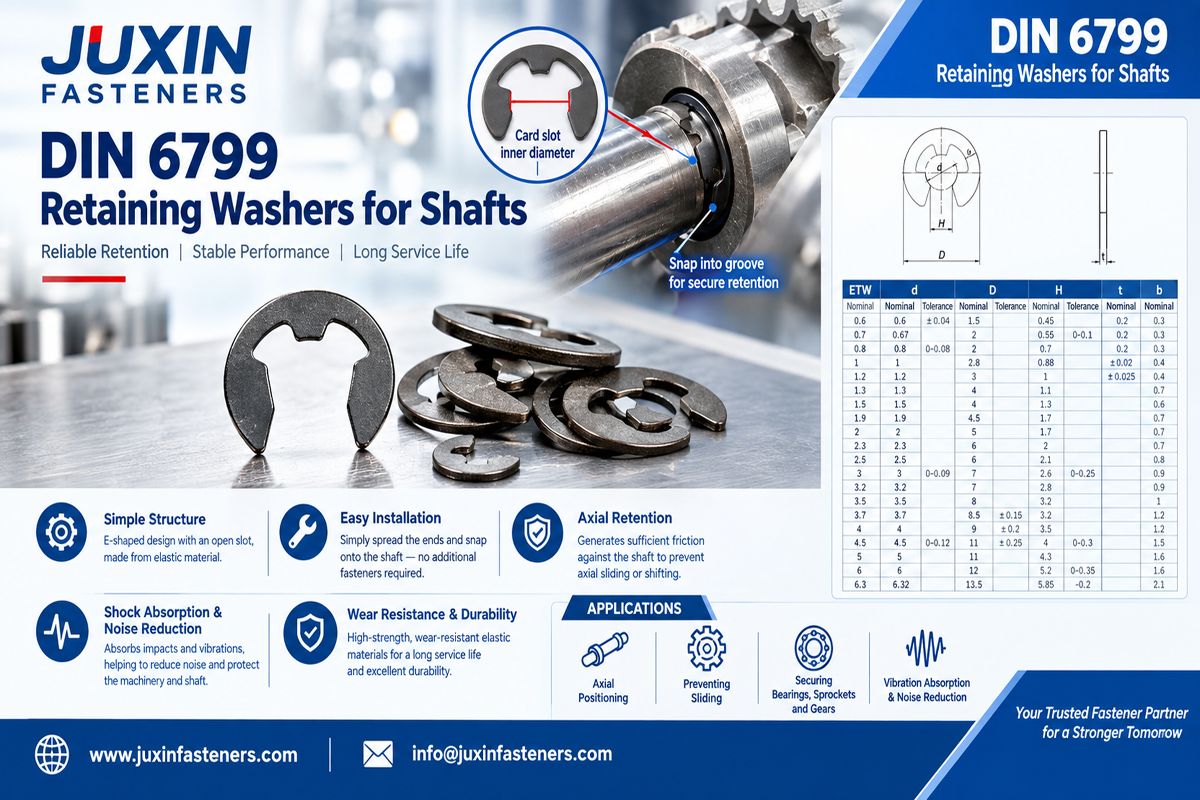
A retaining ring normally provides axial retention in a groove.
It does not create the same clamping function as a bolted joint.
Groove geometry is part of the retention system.
Important dimensions can include:
Groove diameter
Groove width
Edge geometry
Axial clearance
depending on the design.
Railway signaling equipment can require secure routing of:
Electrical cables
Protective conduit
Pneumatic lines
depending on the system.
Clamps and clips should provide retention without damaging the routed component.
Excessive clamp force can damage:
Cable insulation
conduit
hose
Therefore:
Retention ≠ Crushing.
Where a clamp is used on a hose, sealing performance depends on the complete hose, fitting and clamp system.
The clamp alone should not be described as creating a guaranteed leak-proof system.
Signal equipment may remain in service for many years and require repeated field access.
Therefore engineers should consider:
Tool access
Captive hardware
Replacement availability
Corrosion after long exposure
Fastener reuse
risk of dropped hardware
A permanent joint may reduce initial assembly cost.
But if technicians must drill out the joint during every service operation, lifecycle cost may increase.
Captive fasteners can help retain hardware with the access panel during maintenance.
This can be useful where dropped fasteners create:
Maintenance delay
Foreign-object concerns
difficult retrieval
But:
Captive ≠ Anti-Loosening.
Captivity and rotational locking are separate functions.
| Condition | Possible Direction | Key Risk |
|---|---|---|
| General outdoor exposure | Stainless or coated steel | Environment-specific corrosion |
| Chloride exposure | A4/316-type stainless or engineered coating | Galvanic / crevice corrosion |
| Aluminum housing | Compatible fastener / insert | Galvanic corrosion, thread stripping |
| Thin steel cabinet | Rivet nut / self-clinching | Pull-out, spin-out, clinching |
| Repeated maintenance | Threaded attachment | Wear, galling, reuse |
| High vibration | Engineered preload + locking | Self-loosening |
| Electrical bonding | Grounding stud system | Contact resistance |
| Sealed enclosure | Fastener + sealing architecture | Leakage / distortion |
This matrix is a decision aid, not a substitute for project engineering.
Railway signaling projects may reference different standards depending on:
Equipment
Country
operator
location
electrical architecture
project specification
Fastener requirements should therefore be mapped to the actual equipment scope.
EN 50155 addresses electronic equipment used on rolling stock.
It should not be presented as a generic certification requirement for every trackside signal fastener.
Therefore:
EN 50155 ≠ Generic Trackside Fastener Certification.
Where rolling-stock electronic equipment falls within its scope, system requirements may influence the mechanical design.
But the individual screw or rivet nut does not automatically become “EN 50155 certified.”
Where applicable, railway equipment may be evaluated for shock and vibration requirements.
But:
Equipment Vibration Requirement ≠ Generic Fastener Certification.
The mounting configuration and complete equipment assembly matter.
For applicable carbon and alloy steel bolts, screws and studs, ISO 898-1 can define relevant mechanical property requirements within its scope.
But:
ISO 898-1 Compliance ≠ Railway Signal Joint Qualification.
Applicable parts of ISO 3506 can define mechanical properties for corrosion-resistant stainless steel fasteners within their respective scopes.
But:
Stainless Fastener Standard ≠ Corrosion Qualification for Every Railway Environment.
Where specified by the railway project, DIN 25201-2 may provide relevant engineering guidance for bolted joints in railway vehicles and components.
It is not a generic part number or certification for every signal-equipment fastener.
IATF 16949 is associated with automotive quality management.
It should not be presented as a mandatory railway signal fastener certification.
Railway customers may instead define their own supplier-quality and project requirements.
A fastener can comply with an ISO or DIN product requirement while the final signaling equipment still requires separate:
Environmental
vibration
electrical
ingress-protection
functional
validation.
The strongest testing strategy is:
Failure Risk → Requirement → Test → Acceptance Criteria
Not:
Perform Every Available Test → Assume Reliability
Depending on the fastener and project, validation may include:
Dimensional inspection
Mechanical property testing
Torque-tension evaluation
Prevailing-torque testing
Rivet-nut pull-out
Rivet-nut spin-out
Self-clinching push-out
Self-clinching torque-out
Blind-rivet shear / tensile
Coating thickness
Corrosion testing
Assembly validation
A generic statement such as:
“Every railway signal fastener must survive 5 million cycles.”
is not technically responsible.
The required:
Load
Frequency
Cycle count
Acceptance criteria
must come from the actual project or test specification.
A test must represent the intended failure mechanism and application.
Procurement should evaluate more than unit price.
A supplier should be able to control the characteristics that matter to the joint.
A practical qualification framework is:
Drawing + Revision + Material + Mechanical Properties + Heat Treatment + Thread + Critical Geometry + Surface Treatment
+ Friction + Installation Behavior + Functional Testing + Documentation + Change Control
A rivet nut can match its drawing but fail because it is installed into the wrong hole.
A lock nut can match dimensions but have different prevailing-torque behavior.
A coated bolt can match dimensions but produce different preload because friction changed.
Therefore:
Dimensional Compliance ≠ Functional Equivalence.
Railway signaling OEMs may need alternative sources for:
Supply continuity
lead-time reduction
cost management
localization strategies
But:
Same Dimensions ≠ Functional Equivalence.
A second-source review should compare:
Material
Mechanical properties
Heat treatment
Thread
Critical geometry
Coating
Friction
Locking behavior
Installation
Functional testing
A few acceptable samples do not prove that the supplier can repeatedly control production.
Supplier qualification should also evaluate:
Production process
Process controls
Inspection
traceability
change management
Railway signal fasteners can be manufactured through different routes, including:
Cold heading
Thread rolling
Stamping
Wire forming
CNC machining
Secondary machining
The correct process depends on:
Geometry
Material
Volume
Functional requirements
CNC machining can be appropriate for:
Complex geometry
Precision components
Low-volume custom parts
Cold forming and thread rolling can be more suitable for many high-volume fasteners.
Therefore:
Manufacturing Process Should Follow Function + Geometry + Volume.
A ±0.003 mm tolerance should not be specified merely because a manufacturing process can theoretically achieve it.
Tolerance should follow function.
Unnecessary precision increases:
Cost
Inspection
Scrap
without necessarily improving reliability.
Design, mechanical and structural engineers searching for railway signal fasteners may be asking:
Which fastener should I use for a trackside signal housing?
What is the best attachment for a thin-sheet railway cabinet?
Should I use a rivet nut or self-clinching nut?
Should outdoor signal fasteners be 304 or 316 stainless steel?
How do I prevent signal-bracket bolts from loosening?
How do I fasten into an aluminum signal housing?
Can a closed-end rivet nut make the enclosure waterproof?
How should a grounding stud be designed?
The correct answers depend on the joint rather than a universal product recommendation.
Procurement, sourcing and supplier-development teams may search for:
Railway signal fastener manufacturer
Railway signal fastener supplier
Signal cabinet fasteners
Railway rivet nut supplier
Stainless steel railway fasteners
Railway lock nut manufacturer
Grounding stud supplier
Custom railway fasteners
Railway equipment fastener manufacturer
Second-source fastener supplier
Their RFQ should communicate both the part and the functional requirements.
Define:
Signal light
Trackside cabinet
Junction box
Control enclosure
Mounting bracket
Internal equipment
Grounding point
Cable support
Identify:
Carbon steel
Stainless steel
Aluminum
Polymer
Composite
Cast housing
Determine whether the fastener must provide:
Clamp load
Permanent joining
Reusable thread
Positioning
Electrical bonding
Cable retention
Panel retention
Specify:
Indoor / outdoor
Humidity
Condensation
Chlorides
Industrial pollution
Temperature
UV exposure where polymers are involved
Define:
Front-side access
Rear-side access
Installation tool
Torque
Setting process
Maintenance access
Define:
Mechanical requirement
Vibration / shock
Corrosion
Electrical requirement
Sealing requirement
Functional test
This produces a much stronger RFQ than simply asking for “railway-grade fasteners.”
For quotation and engineering review, provide:
2D drawing
3D model where available
Part number
Revision
Signal-equipment application
Joint function
Parent material
Sheet thickness where applicable
Mating component
Fastener type
Thread
Material
Mechanical properties
Heat treatment where applicable
Surface treatment
Coating thickness where applicable
Friction requirement where applicable
Locking requirement
Grip range where applicable
Hole size
Installation method
Tightening requirement
Load requirement
Vibration / shock requirement
Temperature
Corrosion environment
Electrical / grounding requirement
Sealing requirement
Maintenance frequency
Validation requirement
Prototype quantity
Annual volume
Applicable ISO, DIN, EN, IEC, ASTM, SAE, ASME/ANSI or OEM/project specification
Failure photographs
Joint drawing
Current fastener
Parent material
Hole dimensions
Coating
Installation method
Torque or setting data
Evidence of corrosion
Evidence of rotation
Evidence of thread stripping
Evidence of rivet-nut spin
Maintenance history
The objective is to determine whether the root cause is:
Fastener → Parent Material → Corrosion → Installation → Vibration → Electrical Interface → Joint Design
rather than automatically blaming the bolt.
This page should serve as the dedicated Railway Signal Equipment Fasteners application resource.
Recommended internal links include:
Railway Fasteners → rolling-stock application hub
Railway Electrical Equipment Fasteners → cabinets, power supplies and onboard electrical equipment
Railway Grounding Studs → electrical bonding and grounding connections
Railway Fastener Engineering → vibration, preload and anti-loosening design
Railway Anti-Loosening Fasteners → locking technology selection
Railway Fastener Installation → torque, preload and tightening control
Stainless Steel Fasteners → corrosion-resistant industrial fastening
Fastener Surface Treatment & Coating Selection → coating and friction selection
Zinc-Nickel Coated Fasteners → Zn-Ni engineering
Fasteners for Aluminum → aluminum parent-material fastening
Aluminum Fasteners → lightweight fastener selection
Automotive Blind Rivets vs Rivet Nuts → blind attachment technology comparison
Automotive Thin Sheet Fasteners → weld nut vs rivet nut vs self-clinching selection
High-Strength Bolts & Washers → preload and bolted-joint design
Custom Fastener Manufacturing → drawing-based production and DFM
Fastener Quality Control → supplier qualification and traceability
Use the existing indexed JUXIN FASTENERS URL when implementing these internal links.
Depending on the joint, common technologies can include machine screws, bolts, lock nuts, rivet nuts,
blind rivets, self-clinching fasteners, threaded inserts, grounding studs, clips and clamps.
No. Stainless steel can be appropriate for many outdoor applications,
but coated carbon or alloy steel may be more suitable for some joints depending on mechanical, corrosion, cost and mating-material requirements.
No. 316/A4 can offer improved resistance in certain chloride-containing environments, but selection should follow the actual environment and assembly.
Yes. Stainless steel is corrosion-resistant, not corrosion-proof.
Mixed stainless/aluminum assemblies can create galvanic-corrosion considerations under suitable environmental conditions and should be reviewed as a system.
They can be useful for thin-sheet cabinets requiring a reusable thread and one-sided installation, provided grip range, hole geometry, parent material and setting process are correct.
No. It can reduce an open path through the fastener body, but enclosure sealing and IP performance depend on the complete assembly.
No. Hex geometry can improve rotational retention of the rivet nut body, but it does not automatically prevent the mating screw from loosening.
A blind rivet creates a permanent mechanical joint. A rivet nut creates a reusable internal thread.
No. Sheet material, hardness, thickness, hole geometry and edge distance must be compatible with the clinching fastener.
No. Locking strategy should follow the actual joint mechanics, vibration environment, maintenance requirements and approved design.
No. It can provide strong rotational locking performance in suitable joints, but correct preload and joint design remain necessary.
No. The complete bonding path, contact surfaces, conductor, installation and electrical requirements must be validated.
No. IP performance belongs to the complete tested enclosure assembly.
No. EN 50155 concerns electronic equipment used on rolling stock within its scope.
It should not be presented as a generic certification for individual trackside fasteners.
Not automatically. Equipment-level shock and vibration requirements relate to the tested assembly and mounting configuration.
No. Test loads, cycles and acceptance criteria should come from the applicable project or engineering requirement.
JUXIN FASTENERS can support selected drawing-based fasteners and precision components according to material, geometry,
surface treatment, functional requirements and production volume.
The weak sourcing process is:
Railway Application → Choose “Railway-Grade” Fastener → Ask for Certification
A stronger engineering process is:
Equipment → Joint Function → Parent Material → Access → Load → Fastener Technology → Installation → Vibration
→ Corrosion → Electrical / Sealing Function → Maintenance → Validation → Supplier Qualification
The key principles are:
Same Equipment ≠ Same Fastener Requirement
Permanent Joint ≠ Better Joint for Every Signal Assembly
Stronger Screw ≠ Stronger Housing Thread
Correct Thread + Wrong Grip Range = Wrong Rivet Nut
Hex Rivet Nut ≠ Automatic Anti-Loosening Joint
Pull-Out ≠ Spin-Out
Spin-Out ≠ Mating Screw Self-Loosening
More Setting Force ≠ Better Rivet Nut Installation
Closed-End Rivet Nut ≠ Waterproof Enclosure
Closed-End Rivet Nut ≠ Automatic IP Rating
Same Sheet Thickness ≠ Same Clinching Performance
Parent Material Is Part of the Fastener Specification
More Press Force ≠ Better Installation
Push-Out ≠ Torque-Out
Correct Diameter + Wrong Grip = Wrong Blind Rivet
Shear ≠ Tensile
Structural Blind Rivet ≠ Automatically Qualified Railway Structural Joint
Blind Rivet ≠ Rivet Nut
Stainless Steel ≠ Corrosion-Proof
316 ≠ Automatically Best
Stainless Fastener ≠ Corrosion-Resistant Assembly
Stainless Steel ≠ Install Like Carbon Steel by Default
Torque ≠ Preload
High Installation Torque ≠ High Preload
Coating Name ≠ Complete Coating Specification
Salt Spray Hours ≠ Field Service Life
Vibration ≠ Automatic Self-Loosening
Preload Loss ≠ Self-Loosening
Anti-Loosening Product ≠ Vibration-Proof Joint
All-Metal Lock Nut ≠ Universal Railway Solution
Nylon Insert ≠ Universal Temperature Solution
Prevailing Torque ≠ Preload
Wedge-Locking Washer ≠ Automatic Railway Qualification
Wedge-Locking Washer ≠ Correct Preload
More Aggressive Serration ≠ Automatically Better Joint
Grounding Stud ≠ Qualified Grounding System
Mechanical Fastening ≠ Electrical Safety
Conductive Material ≠ Qualified Electrical Connection
Best Corrosion Coating ≠ Best Electrical Contact Surface
Fastener ≠ IP Rating
More Tightening ≠ Better Seal
Stronger Steel Bolt ≠ Stronger Aluminum Joint
Strong Insert ≠ Strong Installed Joint
Self-Tapping Insert ≠ No Hole Preparation
Retaining Ring ≠ Bolt
Correct Retaining Ring + Wrong Groove = Wrong System
More Clamp Force ≠ Better Cable Retention
Retention ≠ Crushing
Hose Clamp ≠ Guaranteed Leak-Proof Connection
Permanent Fastening ≠ Lowest Lifecycle Cost
Captive ≠ Anti-Loosening
EN 50155 ≠ Generic Trackside Fastener Certification
Equipment Vibration Requirement ≠ Generic Fastener Certification
ISO 898-1 Compliance ≠ Railway Signal Joint Qualification
Stainless Fastener Standard ≠ Corrosion Qualification for Every Railway Environment
Automotive QMS ≠ Railway Requirement
Fastener Product Standard ≠ Equipment Compliance
More Test Cycles ≠ Automatically Better Qualification
Drawing Compliance ≠ Installed Performance
Dimensional Compliance ≠ Functional Equivalence
Same Dimensions ≠ Functional Equivalence
Sample Match ≠ Production Qualification
CNC ≠ Automatically Better Fastener
Tighter Tolerance ≠ Better Railway Fastener
For design engineers, the objective is not to find one “railway-grade” fastener that solves every signaling application.
It is to match the fastening technology to the actual joint, material, environment and maintenance requirement.
For procurement and supplier-development teams, the objective is not merely to compare dimensions and unit price.
It is to qualify the material, manufacturing process, coating, installation behavior and functional characteristics that determine field performance.
JUXIN FASTENERS supports selected railway signal, electrical and industrial equipment programs with:
Machine screws and bolts
Standard nuts
All-metal lock nuts
Nylon-insert lock nuts
Washers
Rivet nuts
Blind rivets
Self-clinching nuts and studs
Weld nuts and weld studs
Threaded inserts
Grounding studs
Stainless steel fasteners
Zinc-nickel coated fasteners
Aluminum fasteners
Plastic fasteners
Retaining rings
Pins and clips
Cable and hose clamps
Drawing-based special fasteners
Cold-formed components
CNC precision components
OEM / ODM fastener development
Second-source fastener development
For a railway signal equipment RFQ, provide:
2D Drawing + 3D Model + Part / Revision + Signal Equipment Application + Joint Function + Parent Material + Sheet Thickness
+ Mating Component + Load Requirement + Fastener Material + Mechanical Properties + Thread + Surface Treatment
+ Friction Requirement + Grip Range / Hole Geometry Where Applicable + Locking Requirement + Installation Method
+ Vibration / Shock + Temperature + Corrosion Environment + Electrical / Grounding Requirement + Sealing Requirement
+ Maintenance Requirement + Validation Requirement + Prototype Quantity + Annual Volume
JUXIN FASTENERS
Railway Signal Fasteners | Electrical Cabinet Fasteners | Rivet Nuts | Lock Nuts | Stainless Steel Fasteners | Custom OEM Fasteners
Email: info@juxinfasteners.com
Website: www.juxinfasteners.com
Contact Us
Tel.:
+86 020 8621 0320
+86 020 3121 6067
E-mail:
Technical Support:
Navigation
SEND INQUIREY



